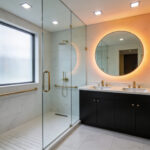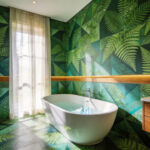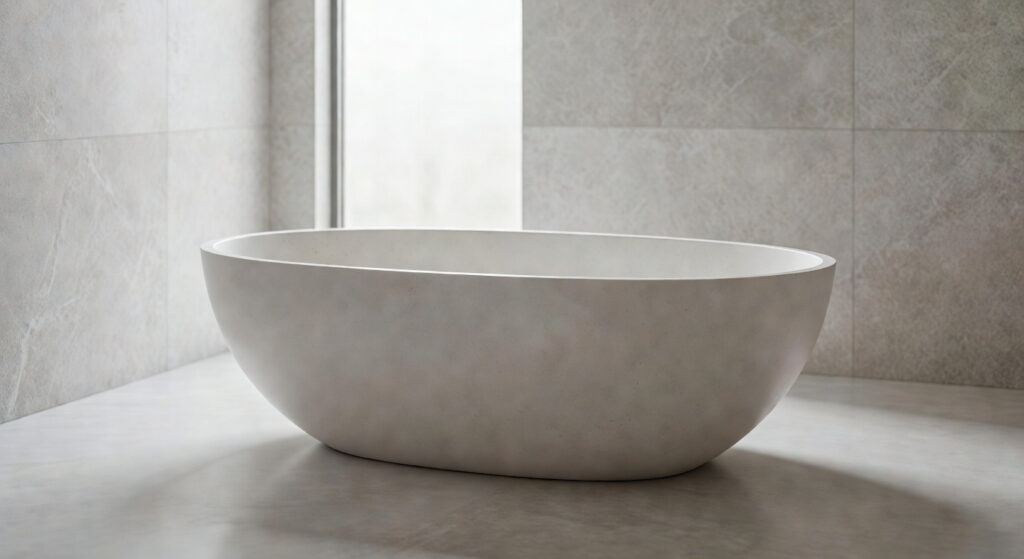
Most homeowners view the freestanding “egg” tub as the ultimate symbol of bathroom luxury. Indeed, design magazines praise these sculptural pieces endlessly. However, they rarely mention the ergonomic reality of these expensive bathtubs. Without foresight, many premium bathtubs often become inaccessible obstacles within a decade. Their steep sides and narrow rims make entering dangerous. Also, their isolation from walls prevents the installation of hidden, stable grab bars. As a result, a relaxing soak turns into a physically demanding, risky event.
As a Universal Design specialist, I often see high-end renovations demolished prematurely. Homeowners frequently rip out unlivable bathrooms after just five years. This waste stems from the persistent myth that safety conflicts with style. Yet, ignoring accessibility is a poor financial decision. Research shows that accessible renovations yield a high return on investment. True luxury, therefore, must account for the user’s changing needs over time.
You do not have to sacrifice aesthetics for functionality. Modern design integrates features like zero-threshold showers and reinforced decks seamlessly. These elements create a spa-like environment that remains safe for everyone. This guide reveals 16 principles to curate a bathing sanctuary that lasts a lifetime. Here is how to achieve enduring elegance through smart, invisible safety.
Section 1: The Foundation – Reimagining Materials and Mechanics
The modern bathtub has evolved beyond simple acrylic sheets or heavy cast iron. The industry now prioritizes meticulously engineered composites. For instance, volcanic limestone composite represents a major leap forward in material science. This unique blend combines natural minerals with high-quality resins. As a result, it offers an exceptional strength-to-weight ratio compared to traditional stone. Designers can create thinner walls and deeper profiles without managing excessive weight. Plus, the material possesses superior heat retention for a longer, more comfortable soak.
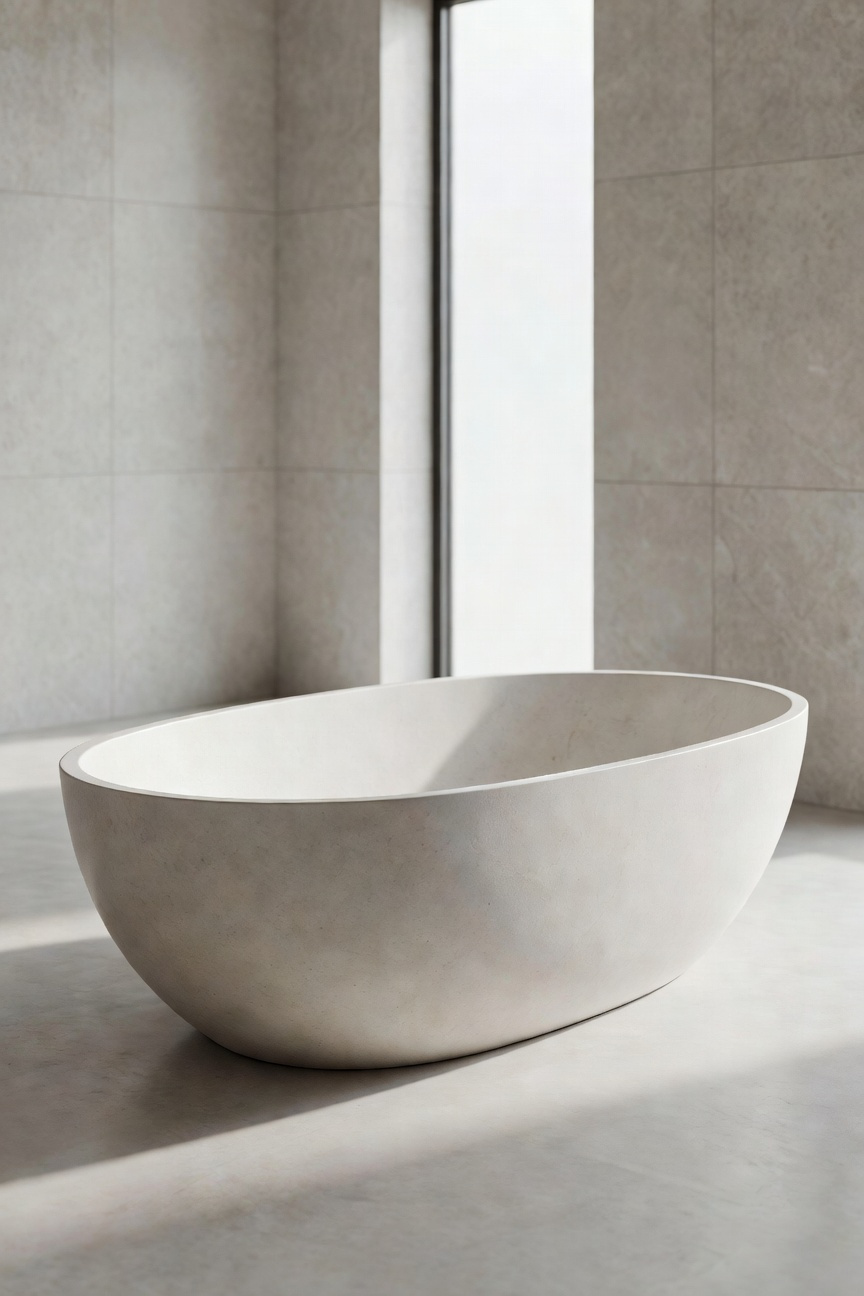
Solid surface and stone resin tubs offer a distinct sensory experience. These materials feel luxuriously smooth and warm to the touch. Unlike hollow acrylic, they are cast as a dense, solid structure throughout. Consequently, the dense body insulates water effectively. This shift from vacuum-forming to liquid casting fundamentally improves durability. Because the material is solid, homeowners can easily buff out minor scratches. Also, the non-porous nature of these composites offers a significant health advantage. The surface is inherently antimicrobial and resistant to common mold. Thus, the foundation of the modern bath is cleaner and safer. These innovations successfully merge sophisticated style with accessible, lasting function.
1. Beyond Acrylic: Why Cast Stone Resin Offers Superior Heat Retention and Stability
The fundamental difference between these materials lies in their construction. Cast stone resin is a solid-body composite. It blends crushed natural minerals with high-performance polymer resin. Acrylic tubs, however, are simply thin plastic sheets vacuum-formed over a mold. Stone resin offers a substantial wall thickness of 18-25mm. This density eliminates the unstable flexing often felt in acrylic models. The tub provides a solid, reassuring foundation for every bather.
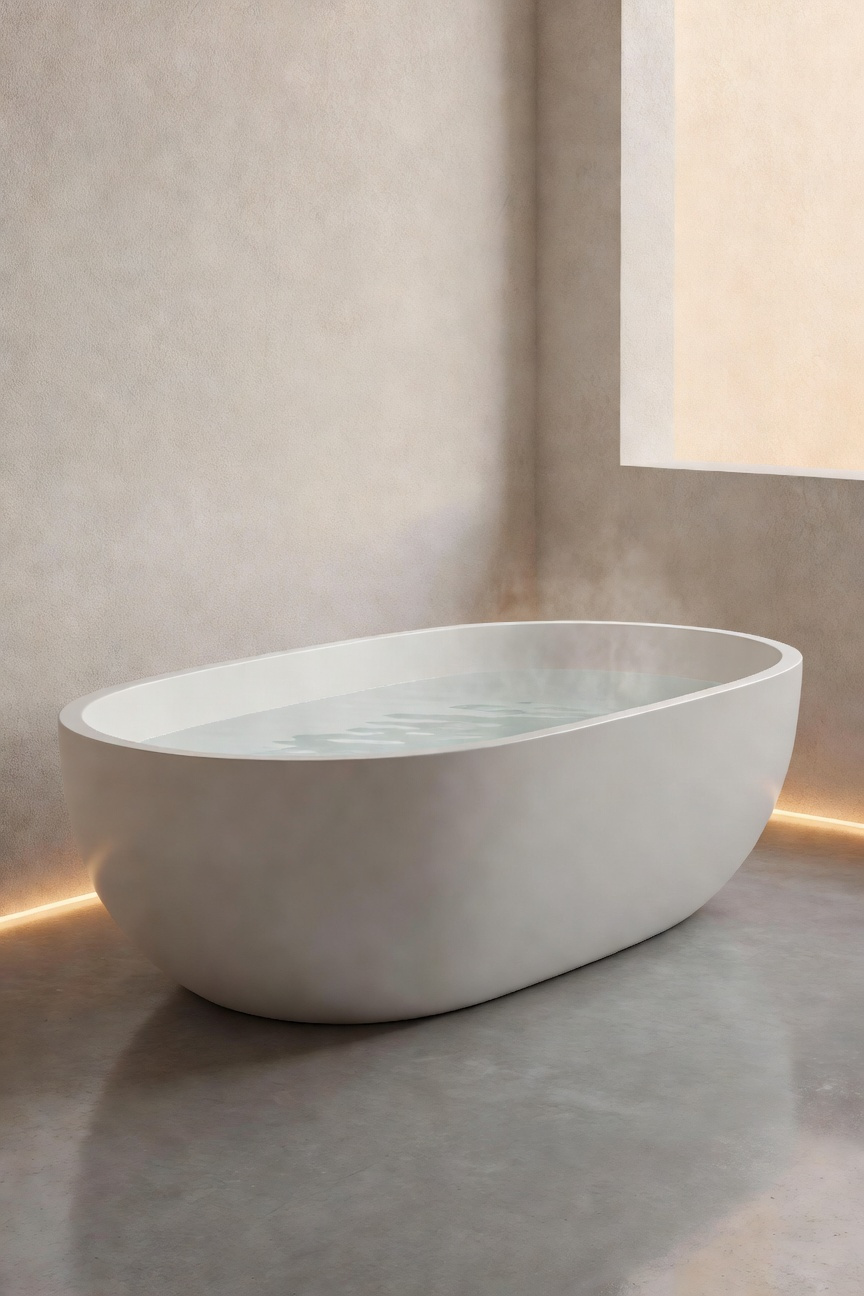
This density drives exceptional heat retention. The high concentration of natural stone creates significant thermal mass. The material absorbs heat energy without dissipating it rapidly into the air. Acrylic, in contrast, generally lacks this thermal density due to its polymer structure. Consequently, bathwater in a stone resin tub stays warm for a significantly longer period. You will not need to constantly top up the hot water during a soak.
Longevity distinguishes these materials considerably. Stone resin resists scratches and stains far better than soft plastic. Also, the finish consists of the same material throughout the tub’s body. Minor marks can be easily sanded out to renew the surface. This unique repairability ensures a lifespan of over 20 years.
2. The Friction Factor: Selecting Textures That Balance Sensory Comfort with Anti-Slip Safety
Safety standards often fail to capture real-world risks. The long-standing ASTM F462 standard requires a friction coefficient of only 0.04. Research on human biomechanics, however, indicates we actually need a friction level around 0.23 to maintain balance. Thus, a legally “compliant” tub might still feel dangerously slippery to a user. This discrepancy creates a dangerous paradox for homeowners seeking safety.
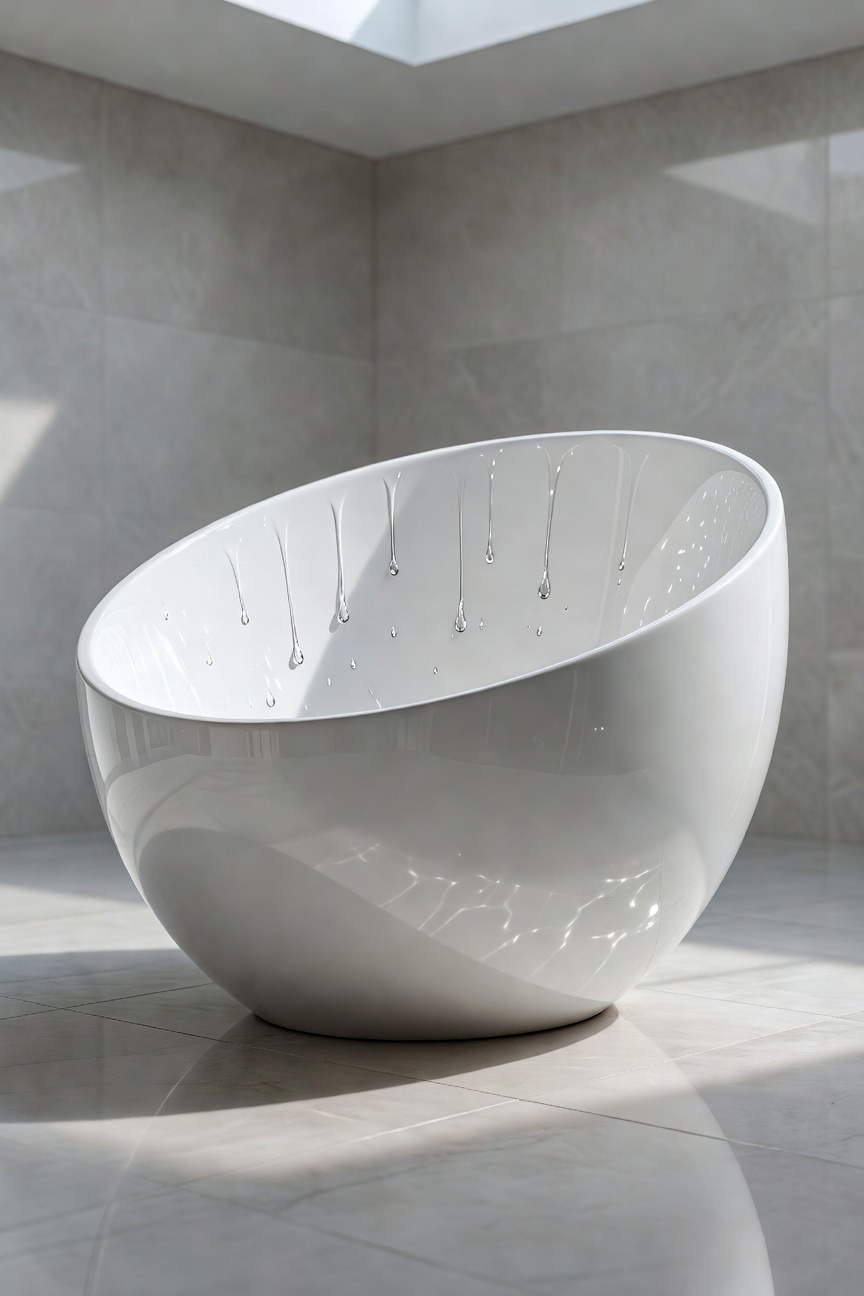
Adding necessary friction often creates a sensory penalty. Manufacturers typically use molded textures to increase grip. These abrasive surfaces can feel unpleasant against the skin during a relaxing soak. Also, this “grit” creates a significant maintenance nightmare. The surface’s micro-roughness traps soap scum and mineral deposits aggressively. The tub may look dirty even after a thorough cleaning.
These permanent textures also introduce hardware conflicts. Standard suction-cup bath mats cannot create a vacuum seal against rough, molded patterns. Users are often forced to choose between an uncomfortable integrated texture or a loose, unstable mat. Recently, chemical etching has emerged as a modern alternative. These treatments microscopically roughen the surface to improve wet traction without visible grit. Even these invisible solutions can wear down over time. You must carefully select textures that balance critical traction with tactile comfort.
3. Thermal Comfort Dynamics: Understanding Insulation Ratings for Prolonged Soaking Sessions
Achieving a stable, prolonged soak requires understanding the physics of thermal dynamics. Insulation ratings, or R-values, measure the system’s resistance to heat flow. The experience actually begins with the material’s thermal mass. Cast iron acts as a significant thermal buffer over time. Yet, it initially feels cold, rapidly stealing heat from fresh water. Acrylic, on the other hand, feels instantly warm to the touch. This polymer naturally insulates, preventing immediate heat loss from your skin.
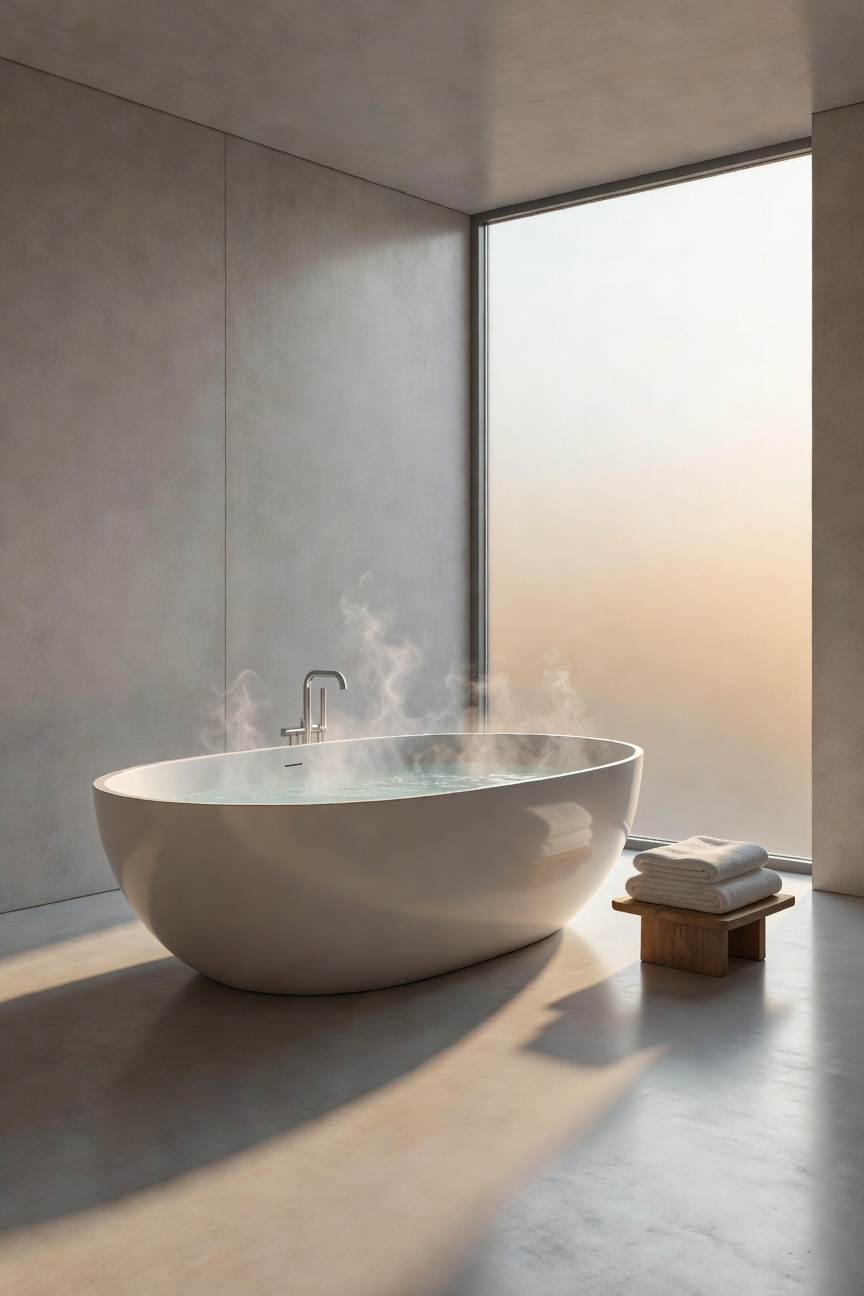
Keeping water hot involves fighting three distinct enemies. While insulation combats conduction through the walls, evaporation at the surface remains a significant challenge. Maximizing the resistance to conductive loss becomes the primary engineering goal for tub shells. Premium manufacturers now look beyond simple material thickness.
Advanced systems often borrow technology from the hot tub industry. Full-foam polyurethane fills cavities to eliminate convective air movement. This approach creates a seamless thermal envelope. It prevents thermal bridging, where heat escapes through uninsulated structural supports. A high-quality installation ensures the insulation performs effectively for years.
4. Structural Integrity: Floor Reinforcement Requirements for Heavy, High-End Materials
Luxury bathtubs often defy standard building code assumptions. The International Residential Code (IRC) mandates a minimum live load of 40 pounds per square foot (psf). A water-filled stone tub, however, can easily exert over 200 psf. Standard dimensional framing often fails under this immense pressure. For true design connoisseurs, understanding the foundation of style is key, especially when considering Bathroom Design Classics That Will Never Go Out of Style.
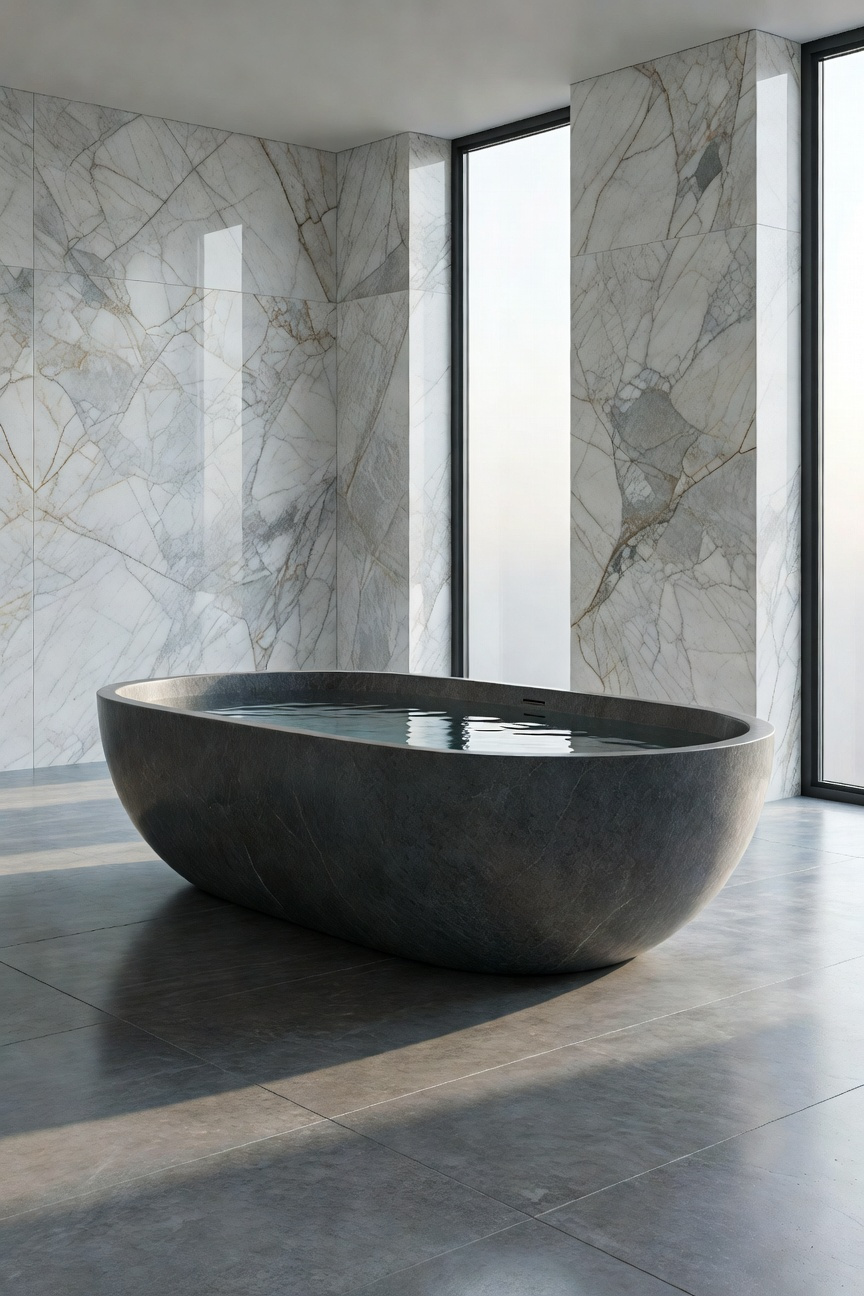
The primary risk isn’t usually catastrophic collapse. Engineers worry about deflection, or the floor’s tendency to sag and bounce. Even slight vertical movement can crack brittle finishes like tile and grout. Reinforcement focuses on stiffness rather than just raw strength. To achieve this rigidity, builders often employ “sistering.” This process involves bolting new joists alongside existing ones to reduce flex. Engineers may also specify Laminated Veneer Lumber (LVL) beams. Because these engineered woods are denser, they resist bending far better than standard lumber.
The specific reinforcement method depends entirely on the tub’s design. Classic cast iron clawfoot tubs create intense “point loads” at their four small feet. Without solid blocking installed directly beneath them, these metal feet can physically crush softer subfloors. Modern solid-stone tubs distribute their massive weight across a wider, flat footprint. In this case, full-span structural support becomes essential to prevent the entire room from bowing. Verifying structural integrity ensures your sanctuary remains both beautiful and safe.
Section 2: Intermediate – The Ergonomics of Form
The true comfort of a bathtub is defined by its internal geometry rather than its exterior style. The calculated relationship between the backrest slope and the internal floor length dictates your posture. The backrest angle, for instance, serves a distinct functional purpose. An upright slope, typically 15 to 20 degrees, optimizes the “bathing well” for legroom. This design is ideal for reading or maximizing space in a shower-tub combination.
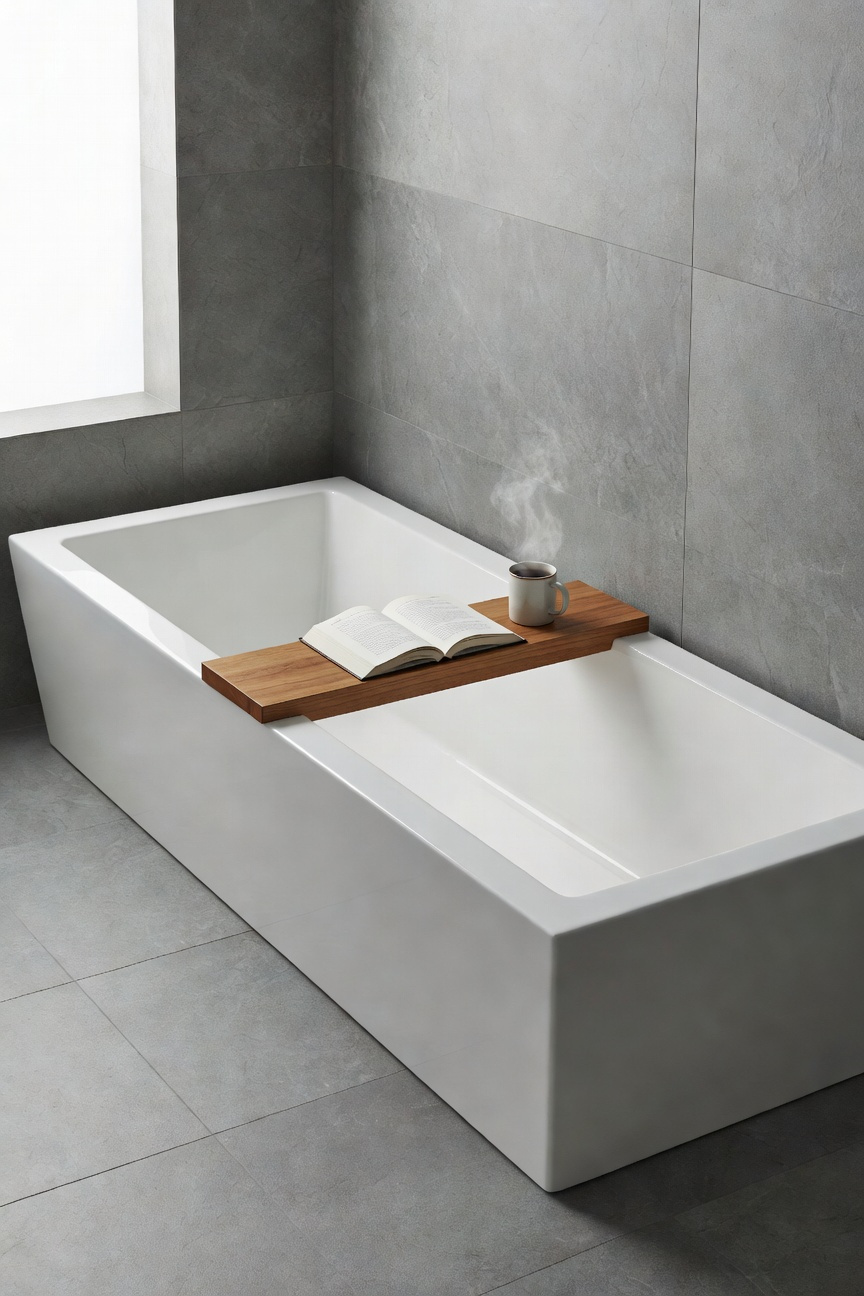
Deep relaxation often requires a different approach. A reclined angle of 25 to 35 degrees offers the “lounge-style” sweet spot for full spinal support. This ergonomic benefit creates a critical design trade-off. A steeper incline drastically shortens the available floor length. The tub must be long enough for the bather’s feet to reach the end to anchor their body.
This brings us to the hidden dimension known as the bathing well. Thick insulating materials often reduce the interior space significantly compared to the external footprint. A seemingly large tub might cramp an adult if the internal well is too short. Also, the curvature of the form plays a vital sensory role. Expert consensus largely favors oval shapes because they provide continuous, contoured support for the back and shoulders.
Water depth is crucial for true immersion. To effectively reduce body pressure through buoyancy, the ideal soaking depth generally sits between 14 and 20 inches. The shift from rigid cast iron to materials like acrylic allowed these ergonomic, human-centric forms to evolve.
5. The geometry of Comfort: Evaluating Lumbar Slope angles (115-125 Degrees)
True relaxation in a bathtub relies heavily on precise geometry. The optimal lumbar slope falls strictly between 115 and 125 degrees. This specific range represents a calculated ergonomic compromise. Biomechanically, this angle moves beyond simple hygiene to support genuine spinal health. A rigid 90-degree upright posture actually increases stress on the lower back. A gentle 115-degree recline effectively transfers upper body weight to the tub wall. This encourages a neutral posture where muscles can fully disengage.
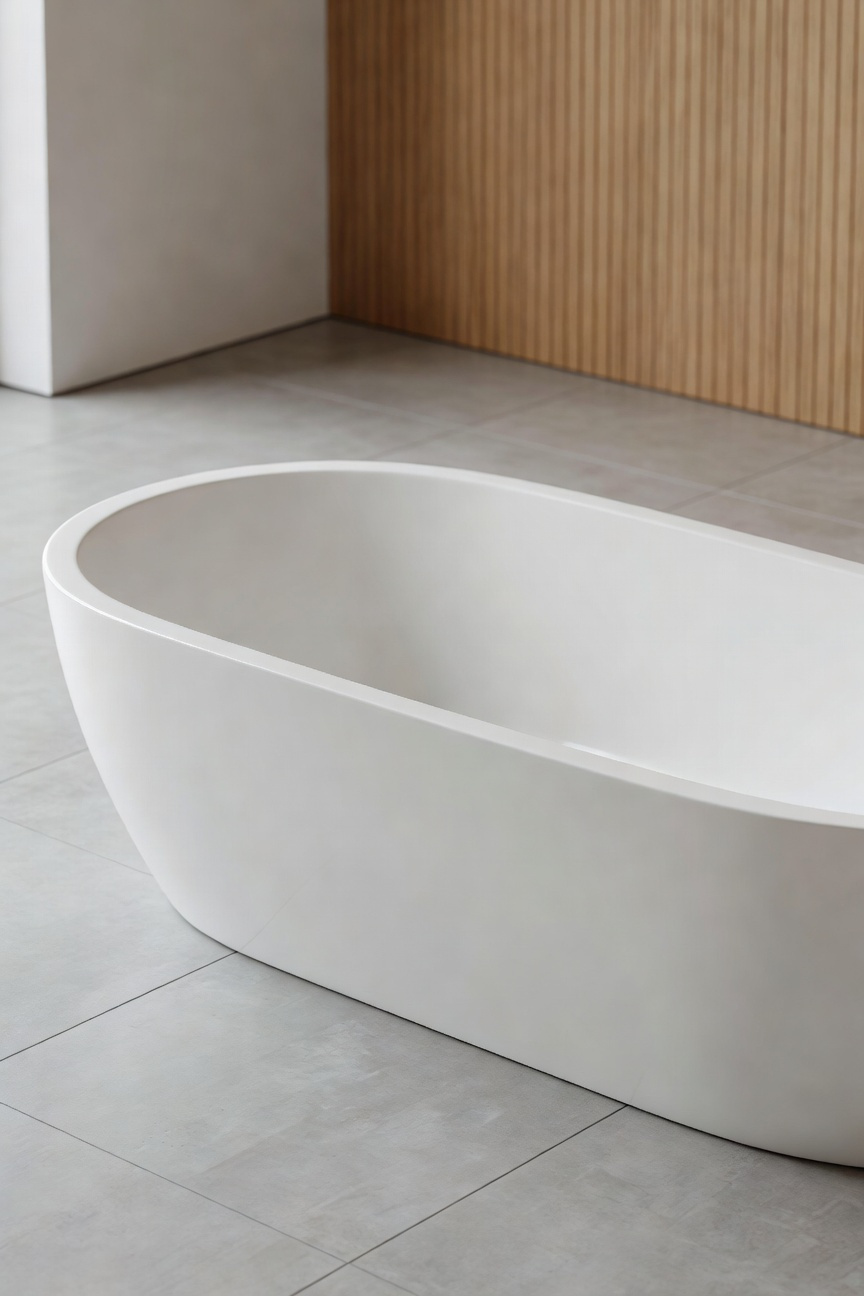
Selecting the right angle involves a practical trade-off. A steeper, more relaxed backrest naturally shortens the interior floor length. Water creates buoyancy, which fundamentally changes how we sit compared to a dry chair. If the bathing well is too short, you will simply float away. The bather needs enough legroom to anchor comfortably against the tub’s end. For standard-sized tubs, 115 degrees often provides the safest balance. It offers significant lumbar relief without requiring muscular effort to prevent sliding.
Modern design has evolved to meet these needs. While vintage cast iron tubs were limited to vertical shapes, new materials allow for better contours. Thermoformed acrylics enable the complex curves required for this ergonomic sweet spot. These sloping sides transform a utility fixture into a piece of restorative spa furniture.
6. Rim Width and Weight Bearing: The Crucial Role of ‘Deck’ Space for Entry and Exit
When designing for safety, you must distinguish between a factory rim and a structural deck. Standard acrylic rims are often structurally deceptive. These thin lips are rarely rated to support a person’s full body weight. Using them as a transfer seat can cause dangerous flexing or material fatigue. A standard rim simply cannot handle that concentrated pressure.
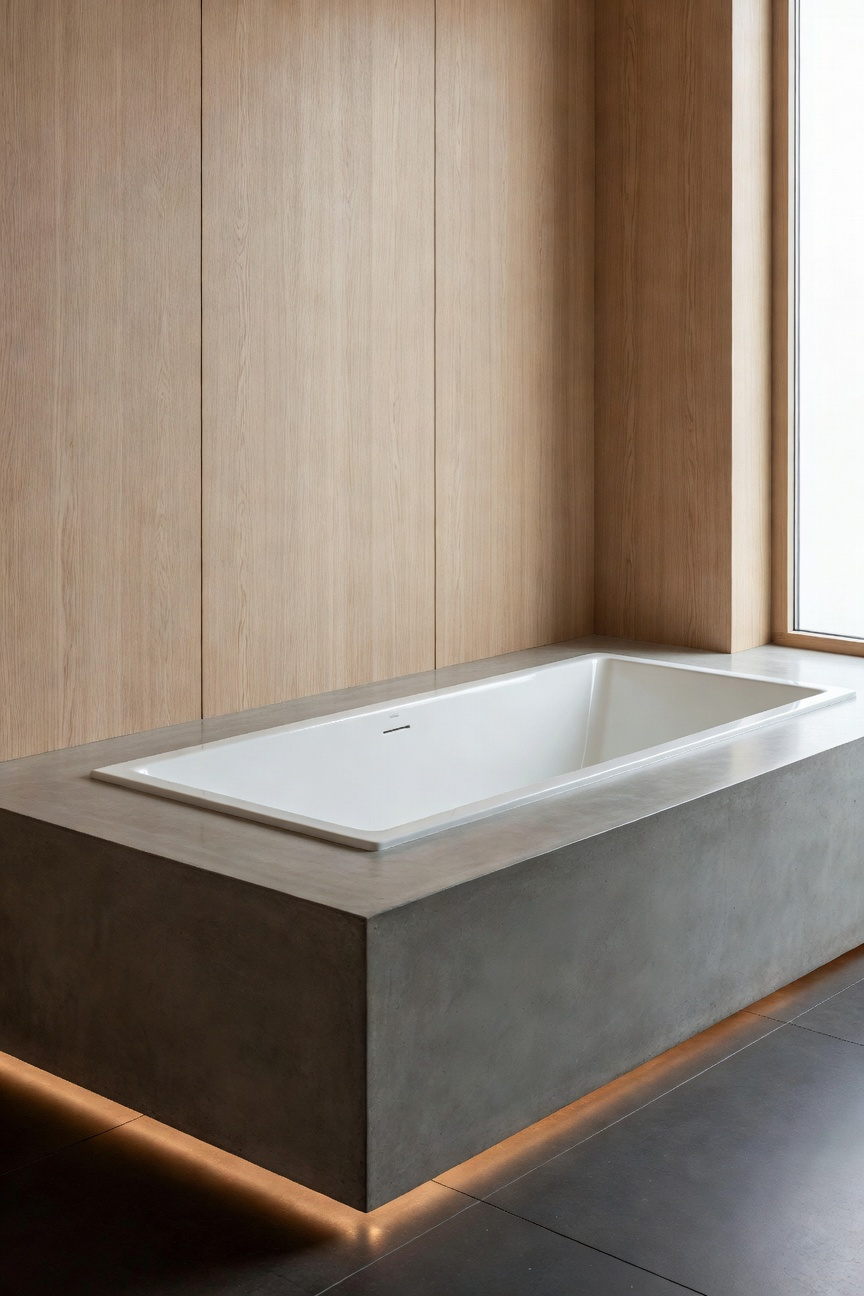
Universal design relies on the engineered deck instead. By framing a drop-in tub with lumber, you create a verified weight-bearing platform. This built-in shelf safely handles the dynamic load of sitting and pivoting. The deck transforms a precarious step-over zone into a secure transition station.
Safety codes highlight this critical distinction. Because plastic rims are unreliable, the ADA mandates wall-anchored grab bars capable of holding 250 pounds. A proper deck functions like a built-in transfer bench, replacing uncertainty with stability.
Wide decks also elevate the room’s visual appeal. A broad stone perimeter mimics the look of a high-end spa. Ideally, this space holds bath accessories while anchoring the tub architecturally. A wide deck merges essential safety with luxury design.
7. The Low-Profile Revolution: Modern Freestanding Tubs with Accessible Step-Over Heights
The low-profile freestanding tub represents a major shift in modern bathroom design. These fixtures prioritize minimalism and wellness over sheer size. Unlike bulky skirted tubs, these sleek designs act as subtle, sculptural focal points. The uninterrupted sightlines make even smaller bathrooms appear significantly larger and more open.
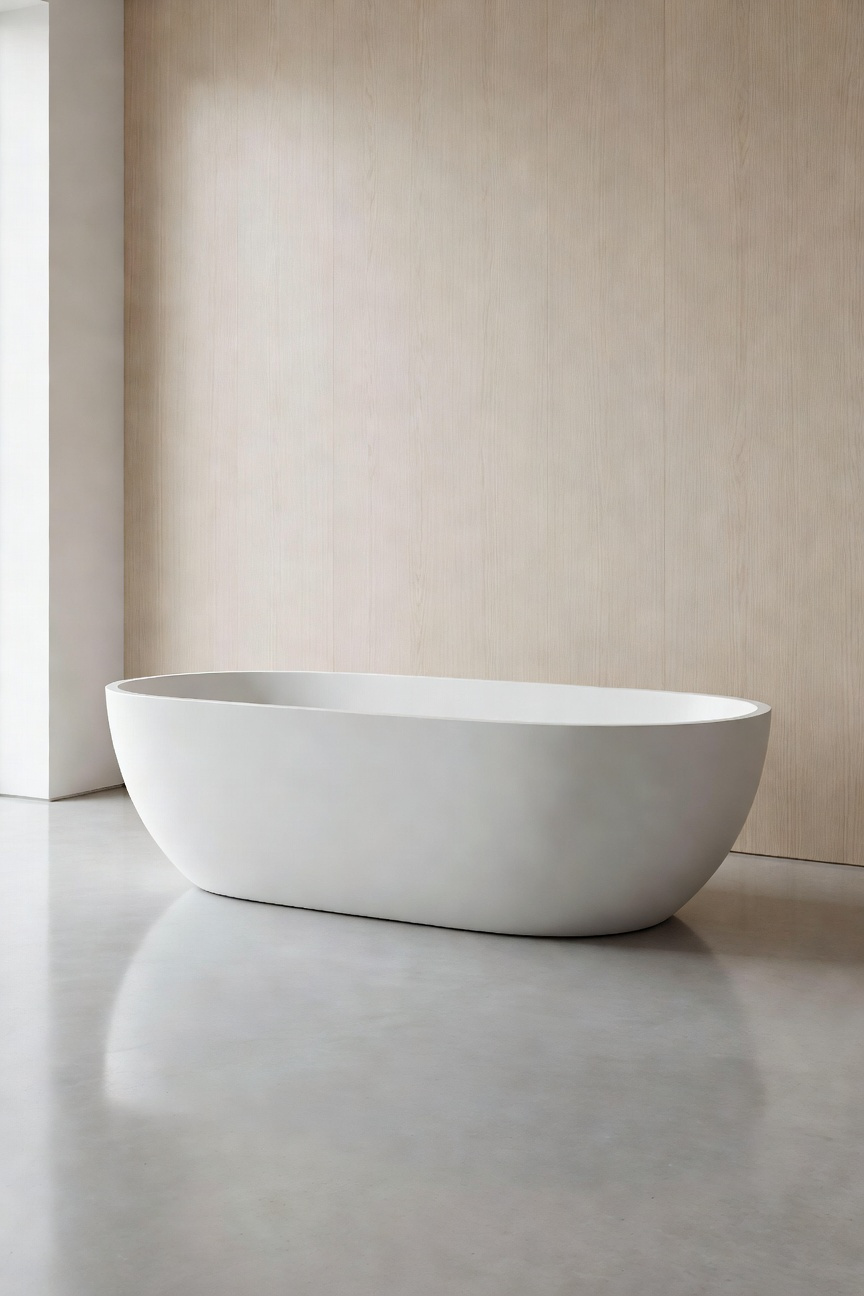
Structurally, this aesthetic is powered by advancements in solid surface materials. High-density composite stone allows for incredibly thin rims without sacrificing durability. The result is a seamless, monolithic form that feels velvety to the touch. Integrated flush hardware eliminates visual clutter, enhancing the “uncluttered” spa atmosphere.
Most importantly, this design trend offers a critical benefit for universal design. Typically, these modern tubs feature step-over heights between 22 and 24 inches. This range is significantly more manageable than traditional deep-soaking vessels. They effectively reduce the fall risks associated with climbing over high walls. Low-profile tubs allow for “aging-in-place” without the stigma of clinical safety equipment. They blend perfectly into open wet-room architectures, proving that safety and style can coexist beautifully.
8. Integrated Seating: The Rise of ‘Internal Bench’ Sculpted Tubs
The concept of the “internal bench” fundamentally redesigns the traditional bathing posture. Instead of the Western standard of a shallow recline, these tubs encourage an upright, ergonomic sit. This design draws inspiration from the Japanese Soaking Tub, or *O-Furo*. Consequently, bathers enjoy full shoulder immersion even within compact, urban footprints.
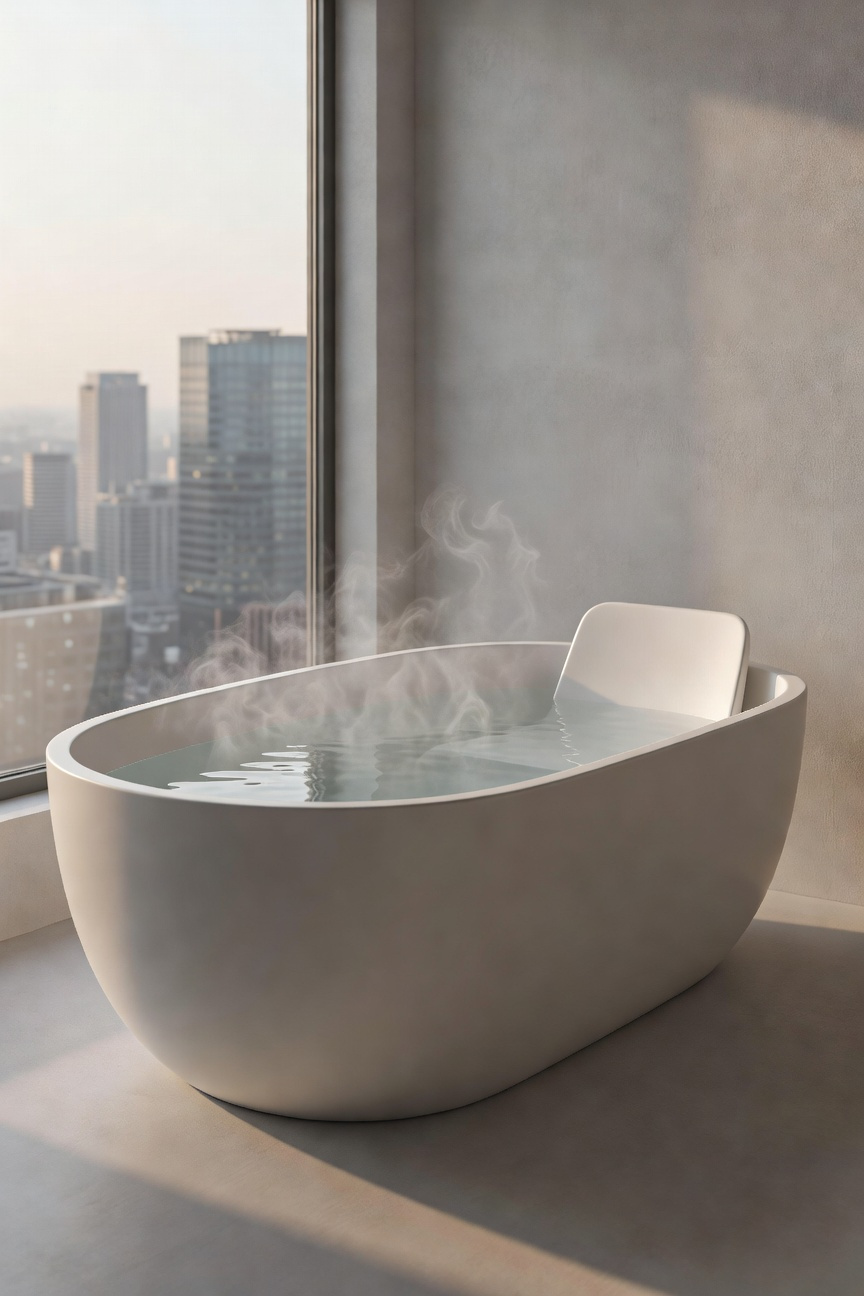
This structural innovation relies heavily on advanced manufacturing materials. Solid surface casting allows for a monolithic, seamless form without visible joints or grout lines. Unlike cold cast iron, this composite material feels naturally warm to the touch. The material’s high density ensures excellent heat retention for prolonged, therapeutic soaks.
This trend bridges the gap between high-end luxury and universal design. Functionally, the bench serves as a stable transfer point for those with limited mobility. Entering and exiting the deep water becomes significantly safer and easier. This integrated safety feature avoids the clinical look of removable medical accessories. The internal bench transforms a functional necessity into a sleek, architectural element suitable for any “forever home.”
Section 3: Advanced – Sensory and Therapeutic Integration
Advanced bathtub design now creates fully integrated, multi-sensory environments. The technology moves beyond simple hydrotherapy to introduce Microbubble Therapy. Unlike traditional jets, this system infuses water with billions of air-rich bubbles. These bubbles measure significantly smaller than average human skin pores. They gently penetrate the skin for deep cleaning and exfoliation. The collapse of these bubbles super-saturates the water with oxygen. This process stimulates collagen production while keeping the water warmer longer.
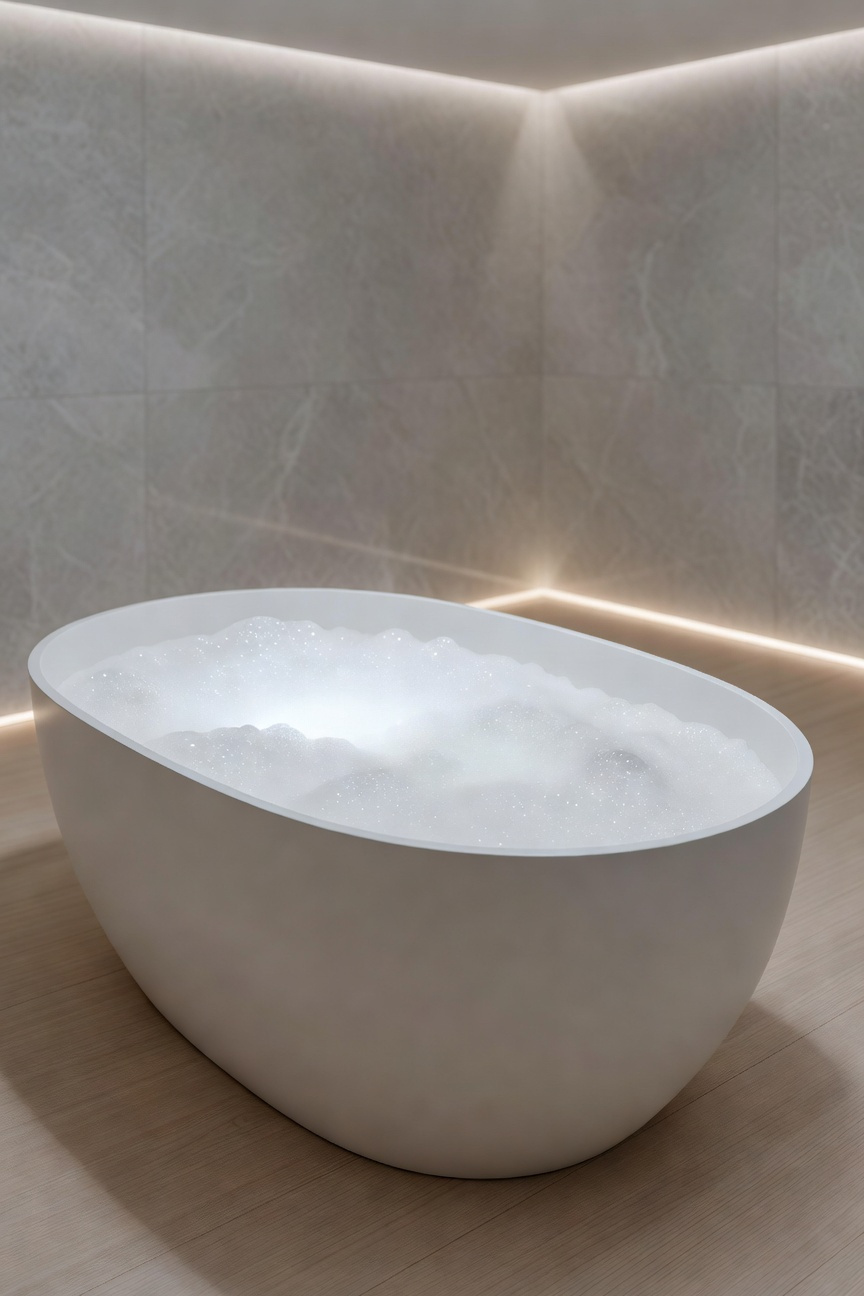
The experience extends beyond the skin to the mind. Chromatherapy utilizes underwater LEDs to bathe the bather in specific colors. Blue light, for example, creates calming electrical impulses in the brain. Simultaneously, automated aromatherapy releases scents to directly soothe the limbic system.
Advanced audio systems turn the water itself into a speaker. Transducers attached to the shell send sound waves through the water. The user feels the music through full-body bone conduction. These low-frequency vibrations stimulate the Vagus Nerve to reduce stress. This shifts the nervous system into a state of deep rest.
9. Architectural Support: Integrating Weight-Bearing Rails That Double as Towel Warmers
Merging safety with luxury requires navigating a complex architectural conflict. We must balance structural integrity against electrical requirements. Standard safety rails must withstand at least 250 pounds of force. To achieve this, manufacturers usually rely on heavy-gauge stainless steel. However, introducing heating elements creates unique engineering challenges.
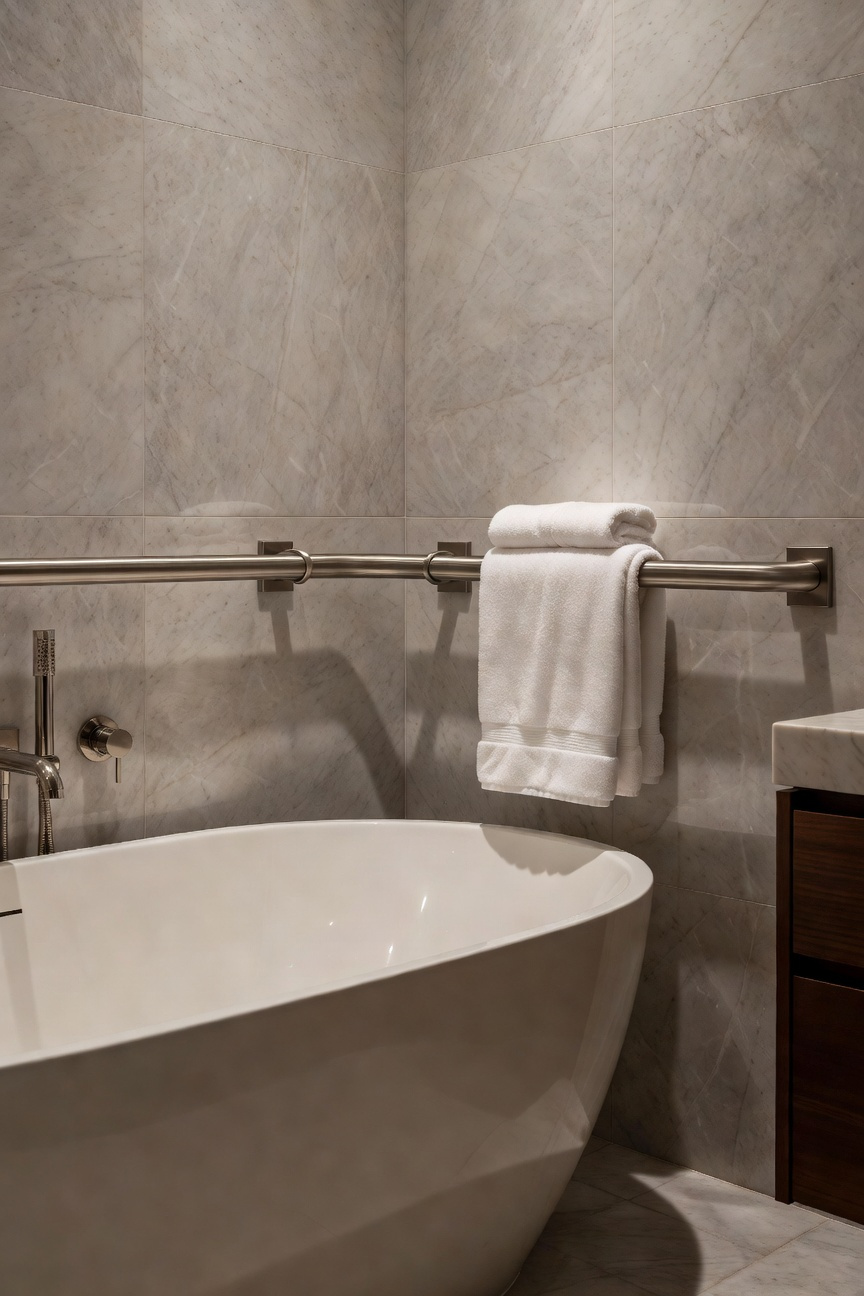
True architectural support happens behind the drywall. During the rough-in stage, builders must install solid blocking between studs. This infrastructure ensures the rail anchors to wood, not just tile. Without it, even the strongest rail becomes a liability. Precise placement is critical for dual functionality. The rail must be reachable for support while remaining convenient for towels.
Water safety is paramount near the bathtub. You must select units with an IP-44 rating or higher. This certification guarantees protection against water splashes from any angle. This integration transforms the bathroom experience. It effectively removes the clinical aesthetic of traditional grab bars. Instead, you gain a sleek fixture that promotes wellness. The heat dries damp towels rapidly, minimizing bacteria growth. The space becomes hygienically superior and aesthetically pleasing.
10. Hydrotherapy Systems: Air Baths vs. Whirlpools for Sensitive Skin and Muscle Recovery
Whirlpools utilize a centrifugal pump to recirculate water through large, wall-mounted jets. They deliver deep, targeted hydro-massage akin to a firm thumb’s pressure. This force effectively targets chronic pain, joint stiffness, and muscle knots. Historically, this technology was invented specifically for arthritis relief. Whirlpools remain the superior choice for deep tissue remediation and breaking muscle spasms.
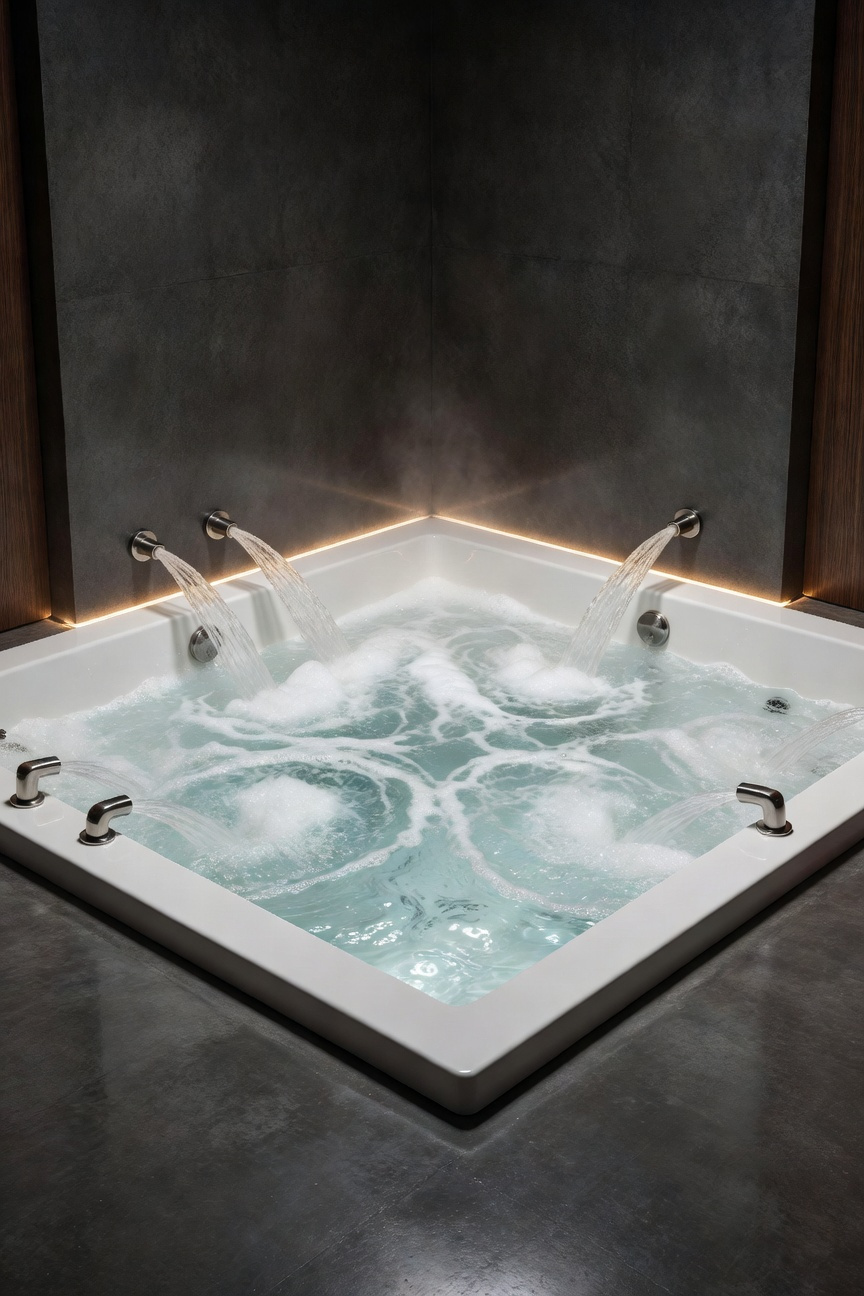
Air baths, in contrast, employ a blower to push warm air through tiny floor jets. The sensation is an effervescent, “champagne-like” caress rather than a punch. This gentle approach serves a vital purpose. The subtle vibration stimulates lymphatic drainage, helping to reduce swelling and flush metabolic waste.
For users with sensitive skin, hygiene creates a critical distinction between these systems. Traditional whirlpools recirculate bathwater, potentially harboring bacteria within their internal pipes if not vigorously maintained. Air baths are inherently cleaner and safer for compromised immune systems. Their systems often feature an automatic purge cycle to completely dry air channels after use.
Advanced air bath models now offer Microbubble Therapy. This technology infuses the water with billions of oxygen-rich bubbles to boost skin hydration significantly. It provides a soothing solution for conditions like eczema without applying aggressive mechanical friction.
11. Chromotherapy and Circadian Lighting: Designing for Mood and Visual Acuity
Integrating light into bath design transforms a simple soak into a comprehensive therapeutic ritual. Modern systems offer a dual function: psychological immersion and physiological support. Ancient practices inspire chromotherapy, which uses colored light to influence mood within the sanctuary of the tub. Deep blues and greens are universally programmed to calm the nervous system. These cool tones aid effectively in de-stressing after a long day.
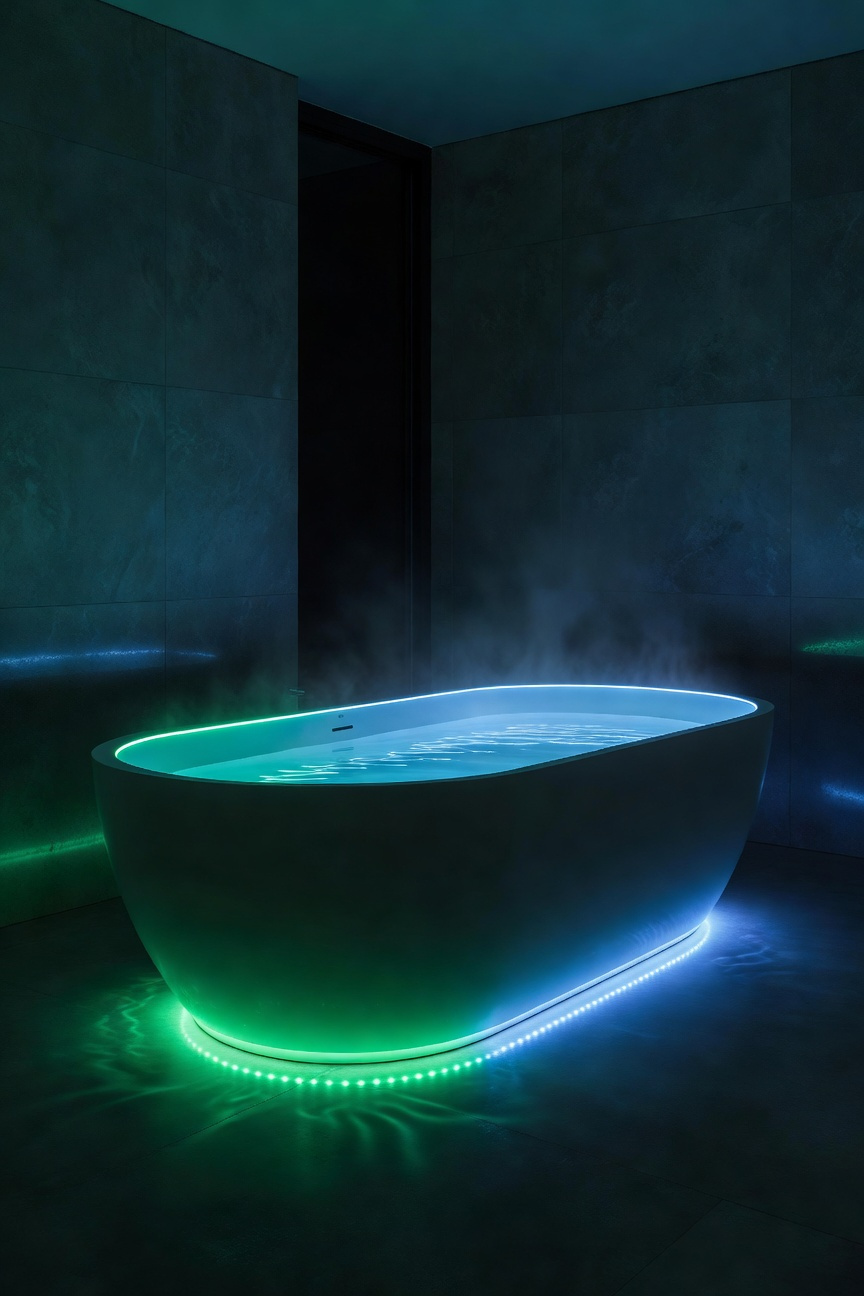
Red and orange wavelengths act as energizers. When combined with warm hydrotherapy, these warm colors stimulate blood flow and promote potential cellular regeneration. The water becomes a medium for physical recovery as well as mental escape.
Beyond color, circadian lighting synchronizes your body’s internal clock with natural rhythms. Technology now shifts white light temperatures dynamically throughout the day. In the morning, cool, blue-rich light boosts alertness and provides high visual acuity for tasks. Evening settings should transition to a warm, amber glow between 1500K and 3000K. This shift is crucial because it suppresses melatonin disruption, signaling your body to prepare for sleep.
Accessible design requires careful attention to visual comfort. Traditional lighting often causes harsh glare for a bather looking upward. Sophisticated tubs utilize indirect or deep-recessed fixtures. By illuminating the water rather than shining into the user’s eyes, the space remains a visually soothing environment for all abilities.
12. Acoustic Dampening: Reducing Motor Noise for a Truly Sensory-Friendly Experience
Creating a truly therapeutic sanctuary requires more than just physical accessibility. We must address the invisible barrier of sound. For individuals with auditory sensitivities, the mechanical whine of a motor often triggers anxiety. This disrupts the relaxation intended by hydrotherapy. The objective is isolating that harsh mechanical drone while preserving the soothing swirl of water.
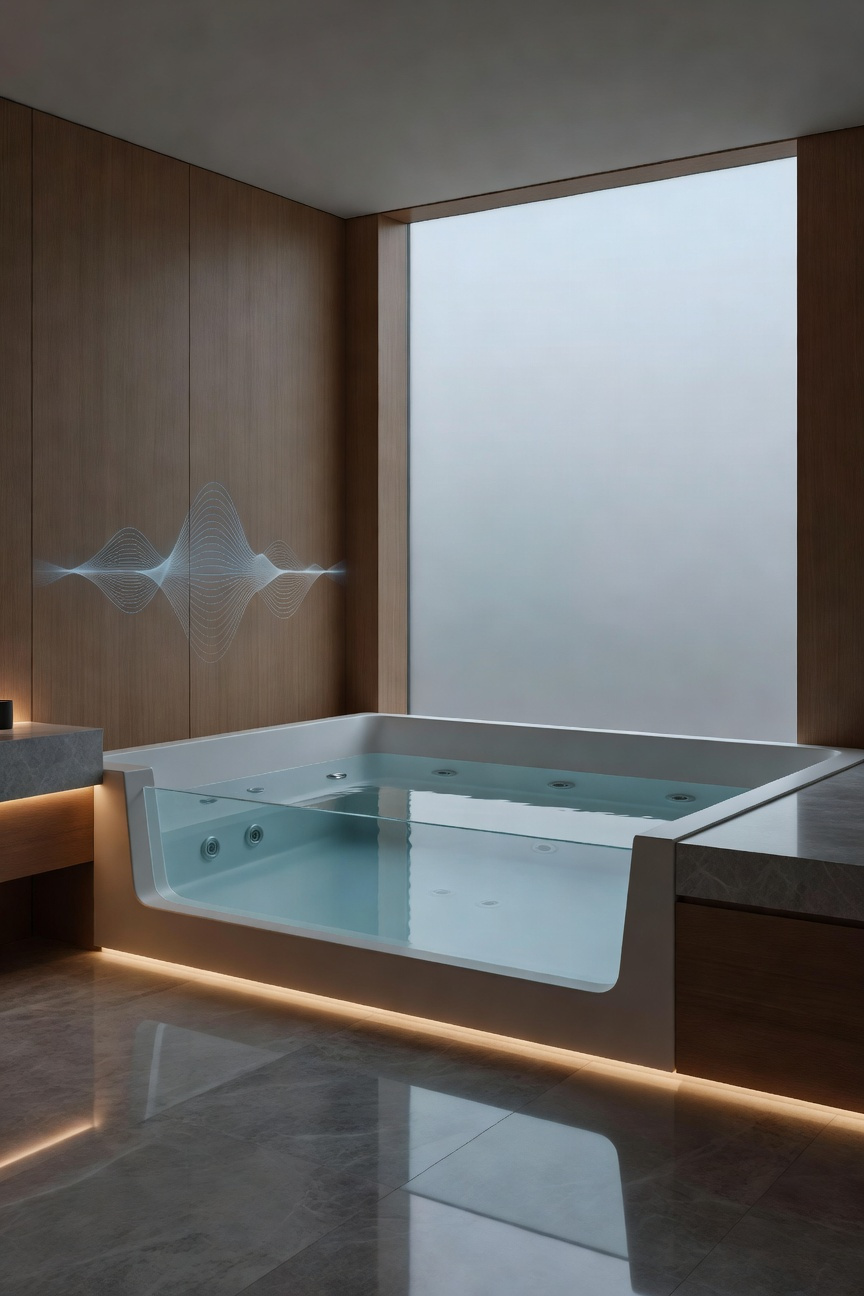
Manufacturers now utilize advanced vibration isolation hardware to achieve this. Essentially, the pump motor is “decoupled” from the tub shell and the floor. Rubber flanges and isolator feet absorb energy before it travels into hard surfaces. This effectively prevents structure-borne noise, which is vibration traveling through the physical materials.
Material science plays a crucial role in modern dampening. Dense materials, like Mass-Loaded Vinyl (MLV), often line motor compartments to block sound transmission. Sound insulation profiles between the rim and wall interrupt the path of vibration.
Some luxury models invert the noise issue entirely using acoustic transducers. These devices turn the tub shell into a speaker, transmitting music directly into the water. Bathers feel bass frequencies through their bodies, overriding any residual mechanical hum. This creates a full-sensory experience where the technology disappears, leaving only relaxation.
13. Digital Valets: Smart Faucets with Precision Temperature Control and Auto-Fill
Traditionally, preparing a bath required a tedious song and dance. You hovered nearby to monitor water levels and hand-test temperatures. Now, however, “digital valets” transform this manual chore into a completely hands-off ritual. These sophisticated systems, such as the Kohler PerfectFill, represent a significant leap from mechanical thermostatic valves. Instead of relying on a simple dial, they utilize electronic digital thermostatic technology. They manage two critical variables with incredible accuracy: temperature and depth.
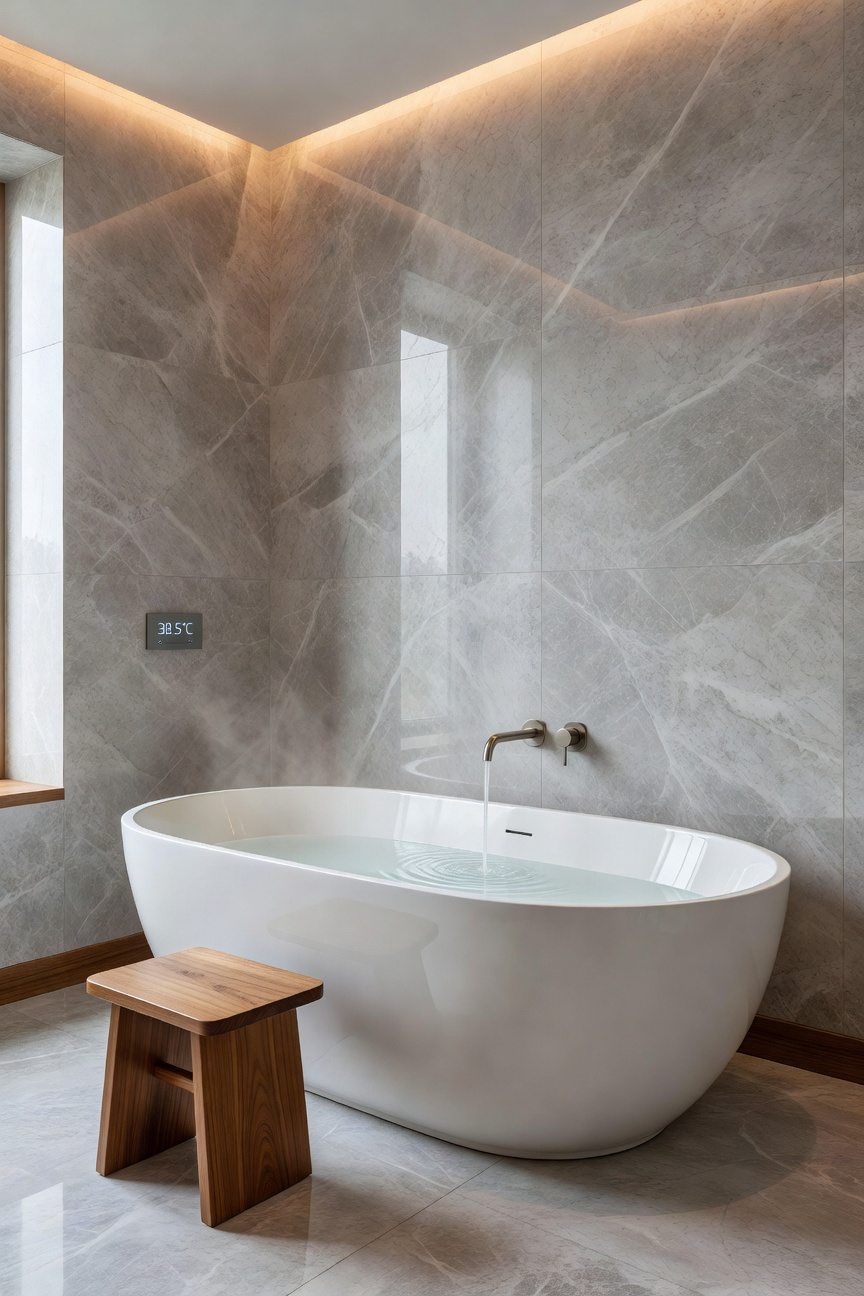
Through a smartphone app or voice command, you simply request your preferred soak. Instantly, the system mixes water to your exact degree specifications. Users can program up to ten distinct presets. You might save a “Deep Soak” for yourself and a cooler, shallower setting for children.
Beyond mere luxury, this technology offers profound safety benefits for all ages. Notably, the precision control virtually eliminates scalding risks, while smart drain sensors prevent accidental flooding. Although the price point remains high, the resulting peace of mind is invaluable. This technology acts as a modern butler, delivering a perfectly safe, consistent experience every time.
Section 4: Mastery – Holistic Space Integration
True mastery moves beyond simple functional placement. Instead, it treats the bathing vessel as a comprehensive wellness centerpiece. The bathtub shifts from a utilitarian fixture to a sculptural focal point. Ideally, you might position a freestanding tub centrally or on a raised platform. This placement physically separates the act of bathing as a deliberate, ceremonial ritual. Integrating the exterior view creates a seamless connection to nature. Drawing from Japanese *Onsen* traditions, this biophilic approach frames the outside world to promote tranquility.
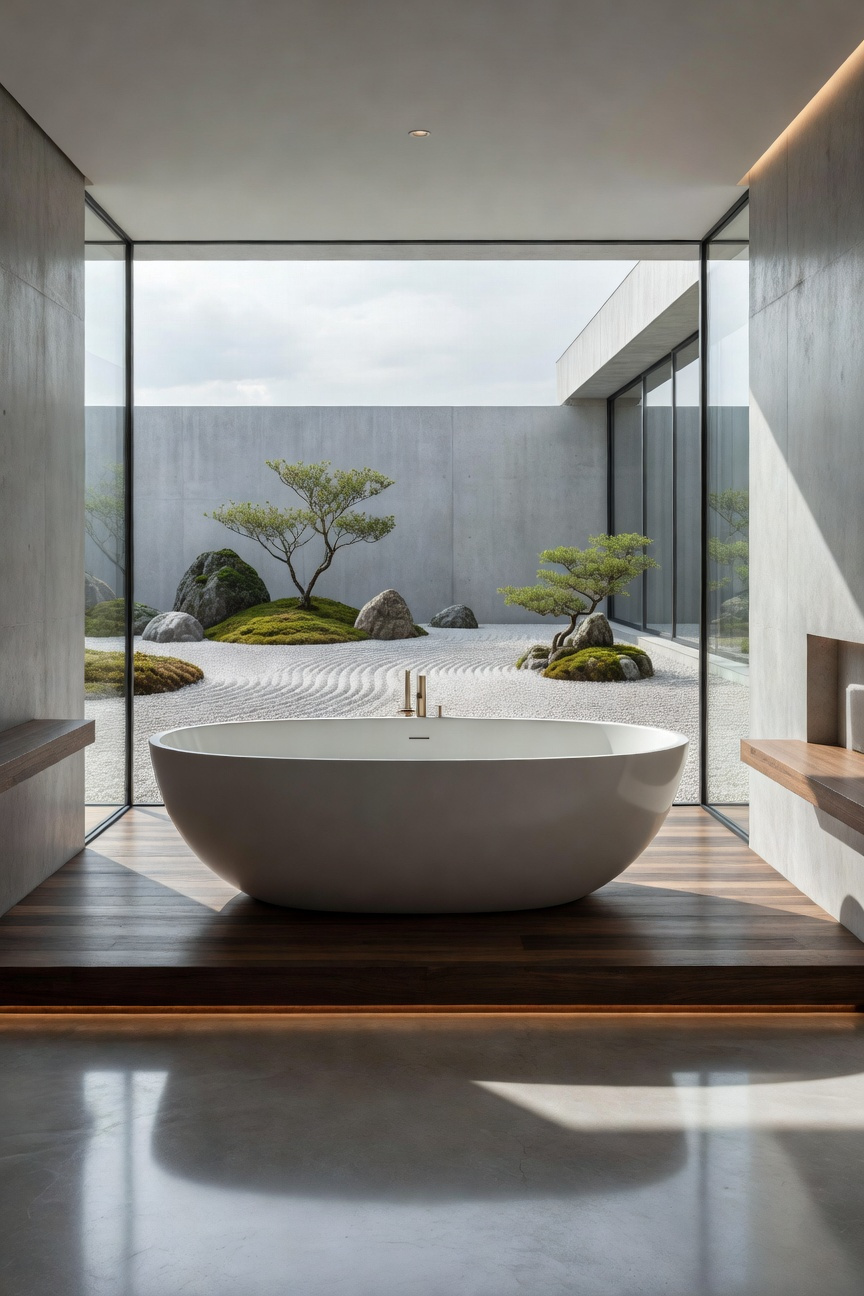
Holistic integration demands multi-sensory materials. Move past cold, clinical surfaces toward tactile luxury. For instance, pair a smooth stone basin with textured fluted timber or zellige tiles. This contrast softens hard surfaces, creating the lavishness found in exclusive spas. Materials like copper hold heat differently, enhancing the feeling of therapeutic immersion.
Lighting acts as a critical atmospheric design element. Treat illumination as a tool to induce specific mental states. During the day, diffuse natural light through blinds for a sense of openness. Use low-level LED strips at night to highlight architectural features. Up-lighting the floor mimics soothing night lights. This tiered approach creates a serene setting focused entirely on restoration.
14. The ‘Wet Room’ Configuration: Placing the Tub Inside the Shower Zone for Barrier-Free Access
Integrating a bathtub into the shower zone borrows heavily from the Japanese *Ofuro* tradition. Historically, this design separates the act of cleansing from the ritual of soaking. The entire area becomes a waterproof vessel designed to handle water efficiently. For universal design, this configuration represents the pinnacle of accessibility. It removes the hazardous 14-inch wall typical of standard bathtubs. A zero-threshold entry offers seamless access for users of all ages. The open plan naturally provides the 30-by-60-inch clear floor space required for safe wheelchair transfers.
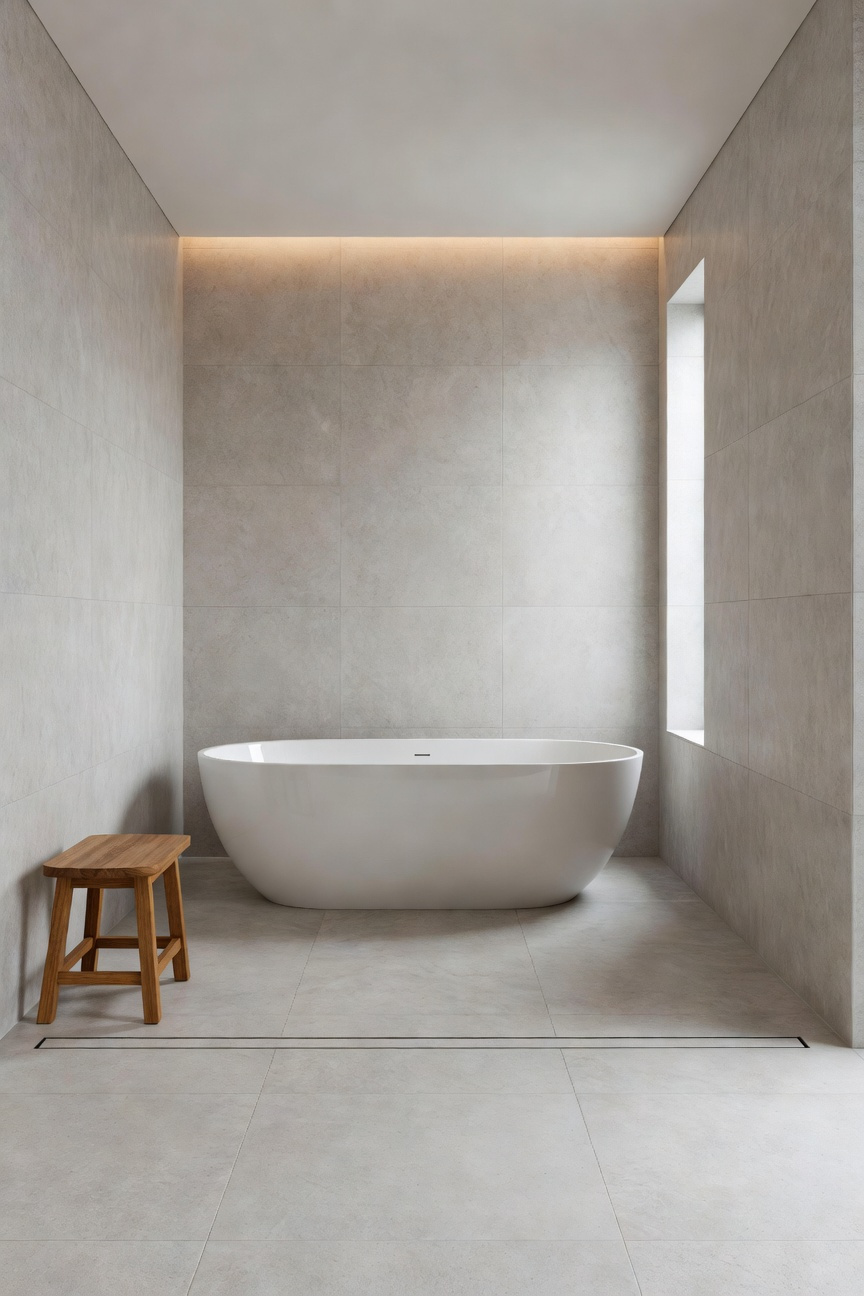
Executing this seamless look presents a unique technical conflict. Showers demand a floor sloped at roughly 1/4 inch per foot for proper drainage. A freestanding tub requires a perfectly level foundation to prevent structural damage. Builders must often complexly recess the subfloor to accommodate both the slope and the waterproofing layers. Beyond mechanics, the all-tile environment transforms the sensory experience. The hard surfaces amplify the sound of water, creating an immersive, spa-like acoustic resonance. This contained “steam room” effect requires high-capacity ventilation to manage humidity and prevent mold.
15. Reach Radii: Positioning Controls for Seated Access and Effortless Operation
The placement of bathtub controls is more than a mere aesthetic choice. Ideally, it serves as a critical ergonomic necessity for safety. Faucets were historically centered on the wall, forcing users to lean over slippery rims. This awkward “lean-in” creates a significant risk for slips and falls. Modern Universal Design principles advocate for offsetting controls by six to seven inches toward the entry side.
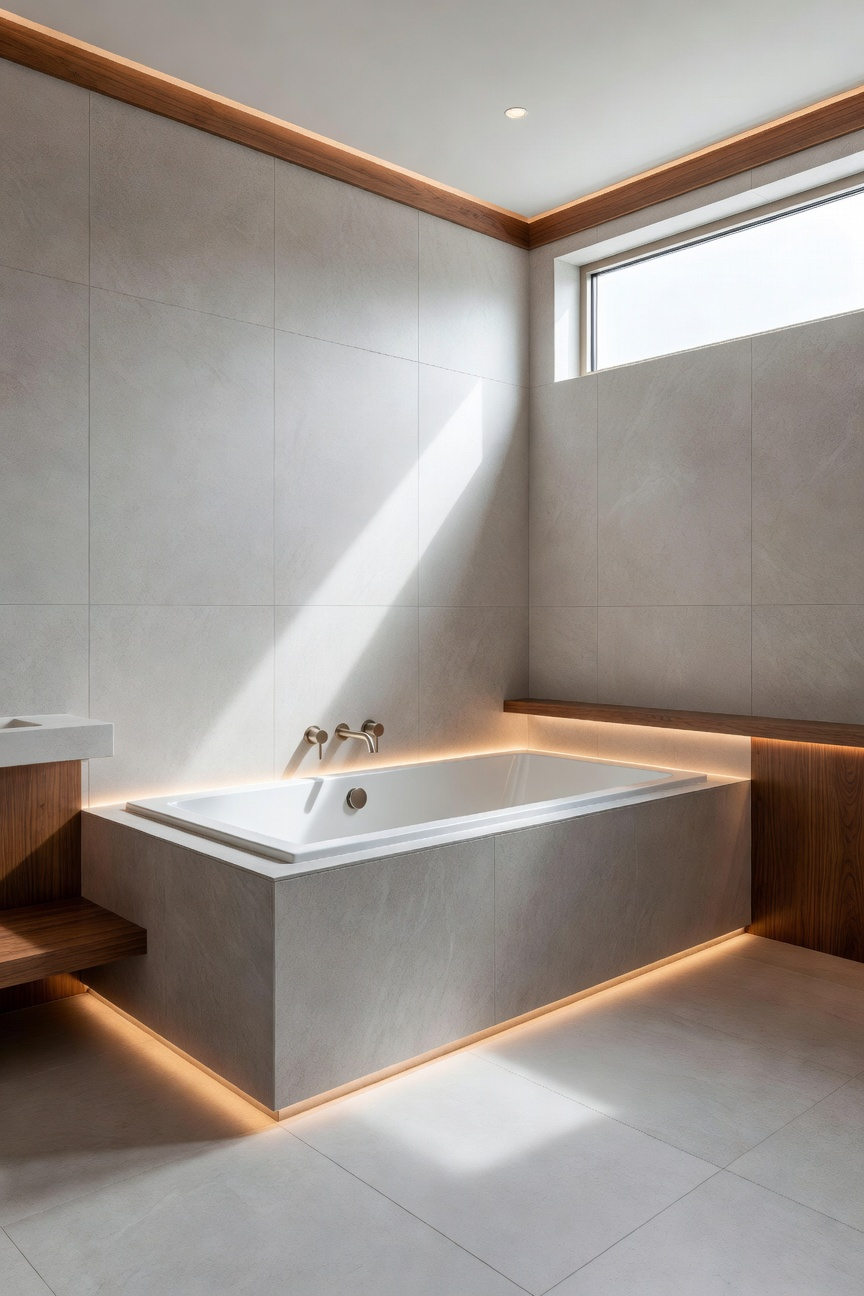
This strategic shift transforms the bathing experience. It allows a user to access faucets from outside the tub. Thus, you can safely set the water temperature before stepping inside. This “tolerance for error” effectively prevents dangerous scalding incidents. This positioning keeps controls within a reachable range for seated users.
Beyond placement, the control mechanism itself demands attention. To ensure truly effortless operation, fixtures must not require tight grasping or wrist twisting. Lever-style handles are superior to traditional round knobs. Standards dictate that controls should activate with less than five pounds of force. This ensures accessibility for people with limited grip strength or arthritis.
Walk-in bathtubs require a specialized approach to reach radii. Since users enter a dry tub and sit before filling it, wall-mounted controls become impractical. These fixtures are typically deck-mounted directly on the rim. Ideally, they are positioned near the bather’s hip for immediate access. Whether wall-mounted or deck-mounted, the goal remains minimizing strain and maximizing control.
16. Aesthetic Longevity: Choosing Timeless Finishes That Accommodate Adaptive Equipment Later
True aesthetic longevity merges style with practical foresight. The finish you choose today impacts future safety and usability. High-gloss surfaces often create harsh glare under bright bathroom lights. This reflection can disorient individuals with age-related vision changes. Consider matte finishes on stone resin or solid-surface tubs. These materials absorb light, offering a calm, spa-like atmosphere. Their velvety texture provides better tactile grip than slick porcelain.
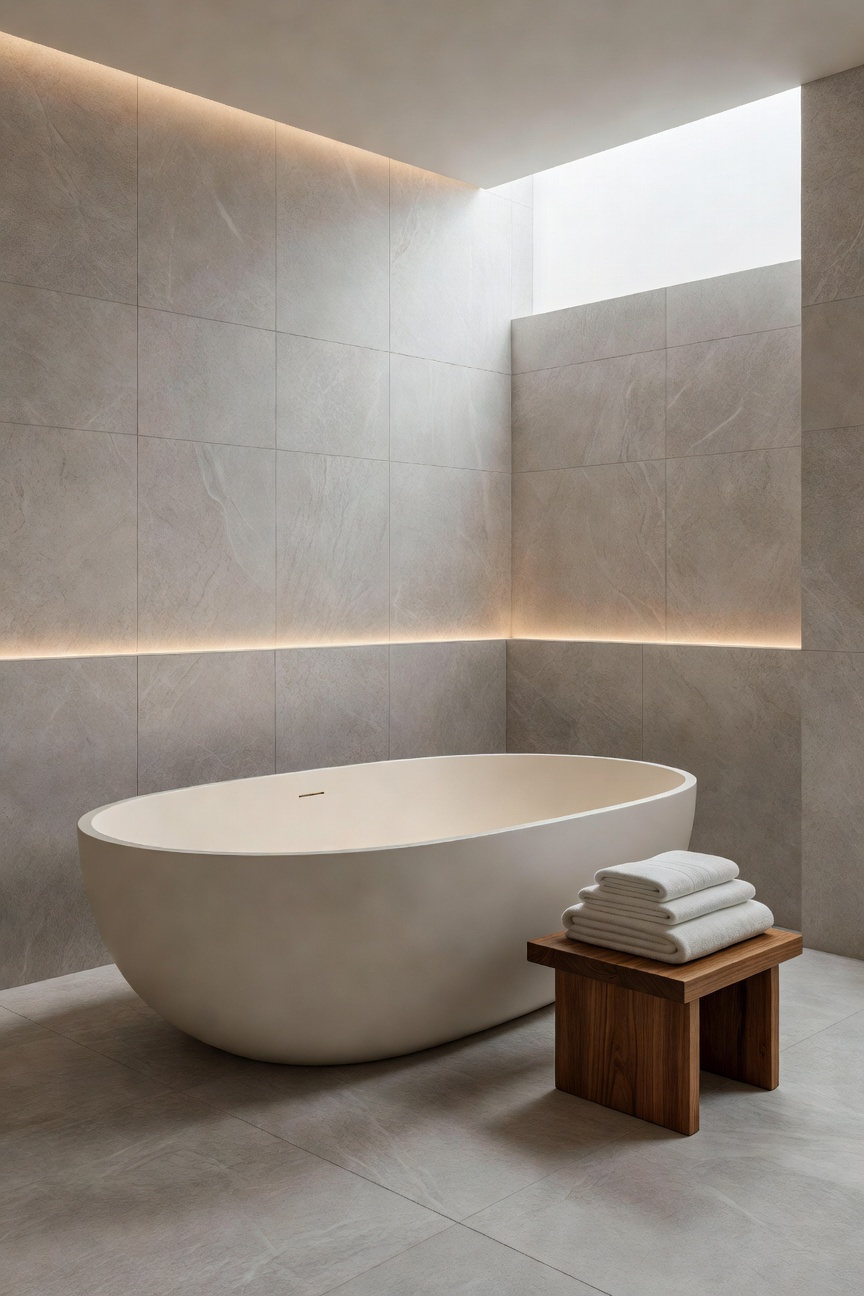
The core material determines the tub’s lifespan. Eventually, you may need to attach tub-side transfer benches or lifts. Structural rigidity is paramount. Cast iron and stone resin withstand the heavy stress of clamps without flexing. Standard acrylic shells may crack under such localized pressure. Solid-surface materials allow you to sand out scratches easily. This repairability ensures the tub maintains its beauty despite heavy equipment use.
Hardware selection plays a pivotal role in seamless adaptation. To avoid an institutional look later, select timeless finishes like brushed nickel or chrome now. These blend easily with designer ADA-compliant grab bars. Alternatively, choose matte black for high-contrast visibility. This helps users with low vision distinguish safety elements against light tiles. The most vital finish is the one you cannot see. Install structural blocking behind walls during construction. This invisible reinforcement ensures future grab bars have a secure anchor without damaging your tile.
Conclusion: True luxury isn’t just about how a tub looks on day one; it’s about how it welcomes you on day 5,000.
True luxury extends far beyond a showroom’s initial gleam. It is defined by enduring material quality and thoughtful engineering. Materials like enameled cast iron retain warmth and beauty for decades. Modern universal design seamlessly integrates safety into these spa-like sanctuaries. Features like wide rims become elegant details rather than clinical additions. Choosing resilience ensures your bathroom remains a welcoming retreat on day 5,000. These principles are key to future-proofing your home.
This design approach for high-quality bathtubs is an investment in your future autonomy. Quick fixes often fail as mobility changes, but a thoughtful space adapts. Prioritizing universal principles preserves your dignity and comfort for a lifetime. A barrier-free environment supports independence without ever sacrificing sophistication. Look at your current space with a fresh, long-term perspective. Begin by consulting a certified designer to identify seamless, supportive upgrades for your home.
- **
Frequently Asked Questions
What are the best materials for luxury bathtubs?
The most luxurious and durable materials today are high-density composites such as volcanic limestone composite and cast stone resin. Unlike thin acrylic, these materials are solid-body structures, which gives them superior thermal mass for exceptional heat retention and allows for easy sanding to repair minor scratches, ensuring aesthetic longevity. Enameled cast iron remains a classic choice known for its strength and heat properties.
How much do high-end freestanding bathtubs weigh when full?
Luxury freestanding bathtubs, especially those made from solid stone or composite materials, can be significantly heavy. While standard acrylic tubs weigh around 300–400 lbs when filled, a granite or solid stone resin tub can easily exceed 1,000–1,500 lbs when filled with water and a bather. Always consult a structural engineer to ensure your floor framing is adequately reinforced for loads exceeding 40 pounds per square foot, particularly on upper floors.
What is the ideal soaking depth for a therapeutic experience?
For true therapeutic immersion, where the water pressure assists in reducing body pressure through buoyancy, the ideal soaking depth generally sits between 14 and 20 inches, measured from the tub floor to the overflow drain. Tubs designed with an internal bench (like Japanese soaking tubs) can achieve full shoulder immersion even with a slightly shallower profile due to the upright sitting position.