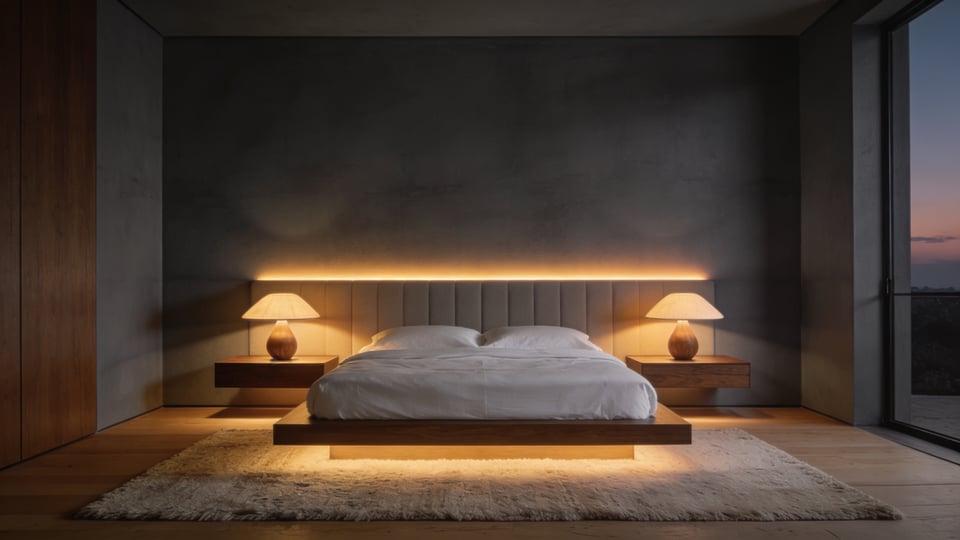
Many homeowners believe that luxury bedding alone guarantees a restful night. You may possess high-thread-count sheets and curated art. Yet, true relaxation often remains elusive despite these expensive investments. Consequently, the bedroom feels like a functional sleeping quarter rather than a genuine retreat. The secret to achieving deep tranquility and the finest bedroom lighting inspiration is not found in additional furniture. Instead, it lies in the psychological application of ‘lightscaping,’ which offers brilliant bedroom lighting ideas for your sanctuary.
This sophisticated design approach transforms a room into a sanctuary for the mind. Biologically, flat overhead lighting acts as a stress signal to the nervous system. Specifically, cool, high-intensity light suppresses melatonin and keeps the brain alert. Conversely, warm light between 2200K and 3000K mimics the natural cues of a sunset. Thus, the correct color temperature harmonizes directly with your body’s circadian curve. Similarly, creating distinct ‘pools of light’ adds essential depth and softness to the environment. In fact, proper layering combats the anxiety often caused by harsh, uniform brightness.
Therefore, we must abandon the reliance on single-source fixtures. This guide reveals how to effectively layer ambient, task, and accent lighting. Next, we explore the crucial role of dimmers in controlling the room’s emotional atmosphere. Furthermore, we discuss selecting fixtures that diffuse light to reduce visual strain. Ultimately**, mastering these sensory controls ensures your space promotes wellbeing and restorative sleep.
1. The Circadian Sync: Understanding how Kelvin temperatures (2700K vs. 3000K) dictate your melatonin production and sleep quality.
Biologically, your sleep cycle relies heavily on specific light cues. Specifically, specialized cells in your retina track blue wavelengths to regulate your internal clock. When triggered, these cells signal your brain to suppress melatonin production. Consequently, the choice between 2700K and 3000K becomes physiologically significant. While both are warm, 3000K contains measurably more blue energy than its lower-Kelvin counterpart. Therefore, 2700K sends a “quieter” signal to the brain. It offers a safer choice for deep rest.
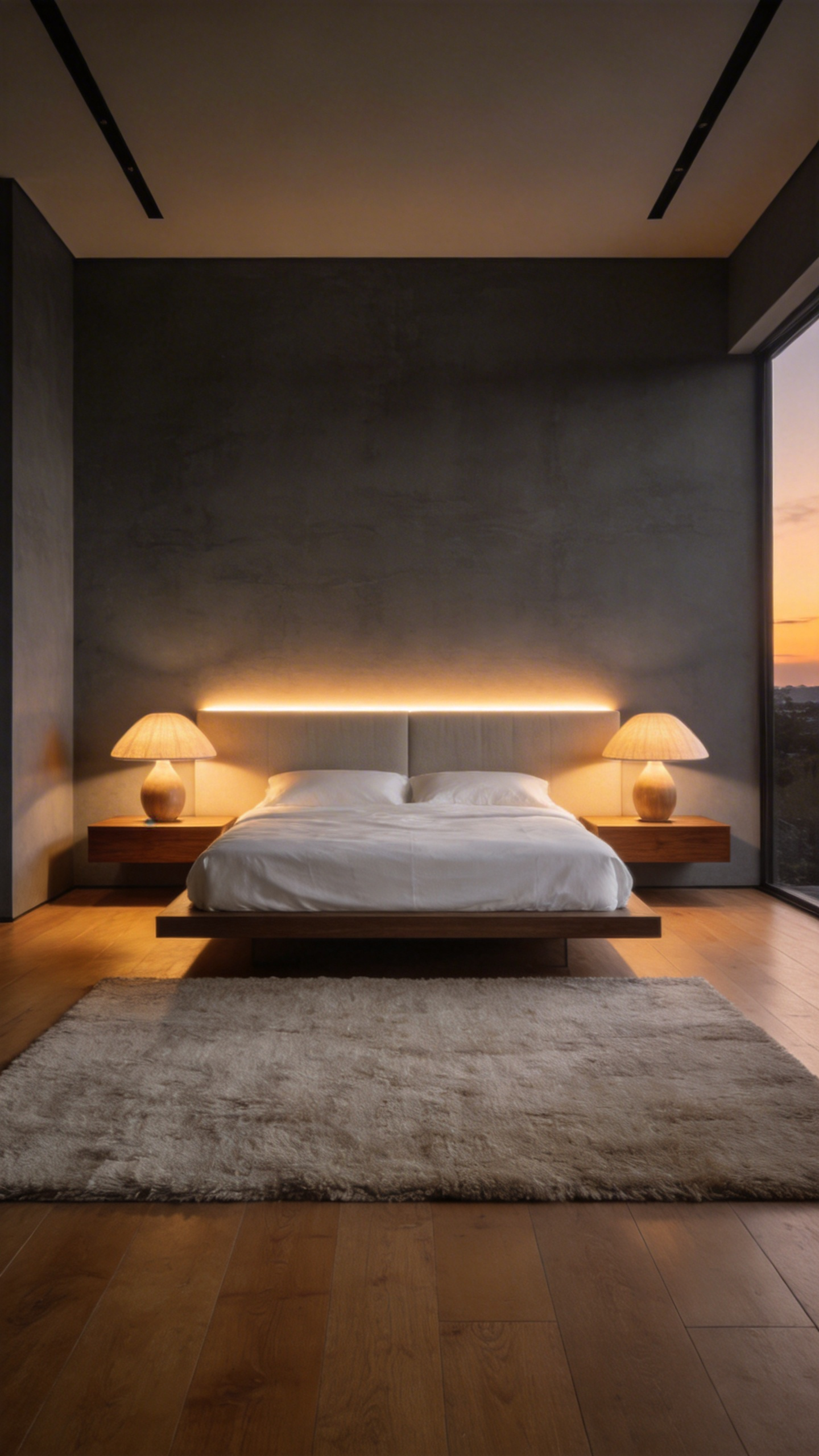
However, color temperature is not the only variable to consider. In fact, experts agree that overall brightness, or lux, is equally critical. If you keep lighting dim, both temperatures generally remain below the threshold for circadian disruption. Thus, maintaining low-intensity ambiance is essential regardless of the bulb you choose.
Psychologically, 2700K offers a distinct advantage for pure relaxation. Historically, this deep, amber glow mimics the comfort of candlelight and traditional filaments. Naturally, this primal association helps the mind unwind and prepare for sleep. Conversely, 3000K provides a slightly “crisper” and cleaner appearance. As a result, it serves better in task-oriented zones, such as reading nooks or vanity areas. Ultimately, understanding these nuances allows you to balance biological needs with functional design.
2. The Color Rendering Index (CRI) Factor: Why your carefully chosen paint color looks wrong at night and how high-CRI bulbs fix it.
Many homeowners experience disappointment when their perfect daytime hue falls flat at night. Surprisingly, the paint formula isn’t the culprit. Instead, the blame lies with the light source’s quality. Specifically, this phenomenon is linked to the Color Rendering Index (CRI).
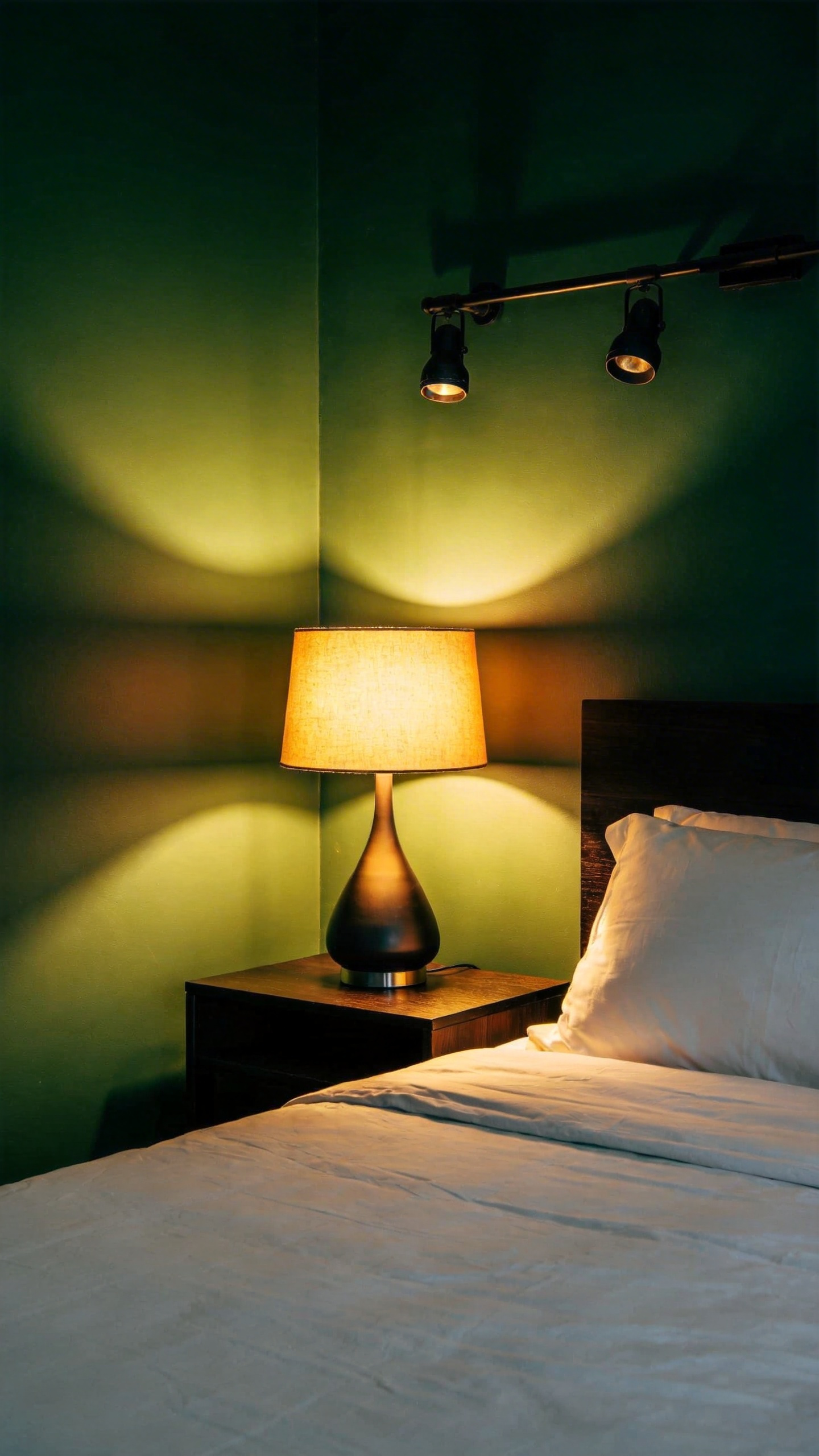
Natural daylight possesses a smooth, continuous spectrum. In contrast, standard bulbs often have “spiky” distributions with missing data. Therefore, if your paint relies on deep red pigments, standard lights cannot “see” them. As a result, rich colors appear dull or shift toward gray.
Furthermore, standard CRI scores can be misleading. They average eight pastel colors but exclude saturated red, known as the R9 value. However, this deep red spectrum is vital for interior design. Without high R9, skin tones appear sickly, and wood finishes look muddy.
Fortunately, high-CRI bulbs (rated 90+) bridge this gap effectively. By filling spectral voids, they restore the depth and dimension of your palette. Ultimately, choosing high-CRI lighting ensures your bedroom feels as harmonious at midnight as it does at noon.
3. Shadow Play Philosophy: Embracing darkness as a design element to create intimacy and visual depth.
We often equate good interior design with maximum brightness. However, the Shadow Play Philosophy challenges this modern obsession. Instead of uniformly flooding a room, it embraces darkness as a vital architectural tool. Consequently, this approach cultivates a psychological “cocoon effect” essential for wellbeing. By reducing visual sharpness, heavy shadows blur perceived depth and distance. Therefore, the mind naturally shifts focus from sharp sight to tactile sensation. This promotes the low arousal state necessary for deep sleep and intimacy.
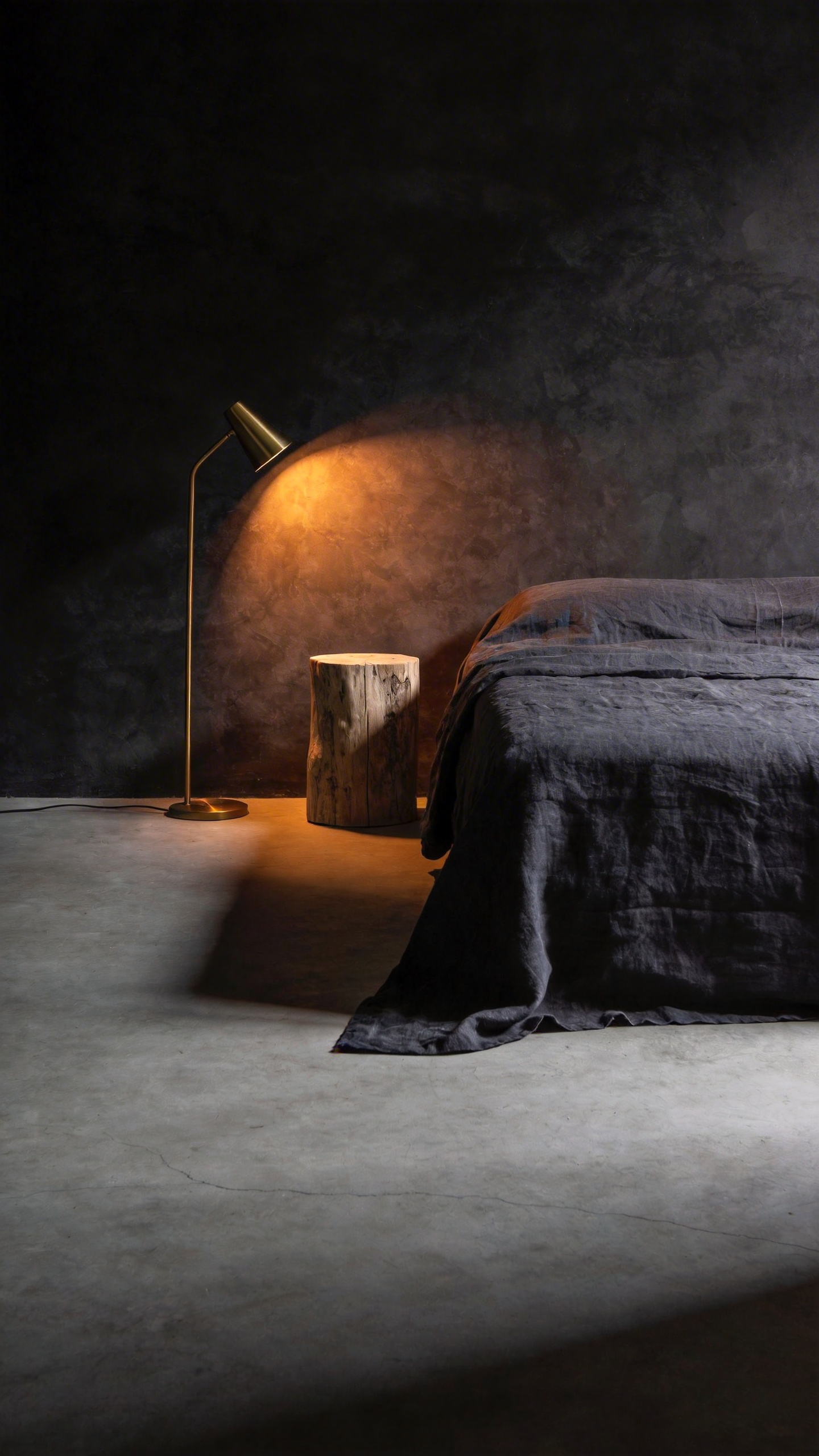
Design-wise, this method mimics the classic art of *Chiaroscuro*. Specifically, you use darkness to sculpt dramatic visual depth. Rather than lighting every corner, allow the room’s periphery to fade into shadow. Simultaneously, use focused light sources to carve out specific moments. For instance, a small pendant might illuminate only a headboard or reading nook. Thus, darkness becomes “negative space” where the eyes can rest.
Furthermore, shadows serve as instruments to reveal texture. Ideally, position a light source close to a surface to create “grazing.” This technique creates long, raking shadows that exaggerate materials like brick or plaster. In fact, this turns flat walls into sophisticated, sculptural canvases. Just ensure you utilize warm color temperatures between 2700K and 3000K. Ultimately, this balance ensures the deep shadows feel inviting rather than cold or foreboding.
4. The Foundation Layer: Dimmable overhead fixtures that provide an ‘ambient wash’ without the harsh ‘interrogation room’ effect.
Historically, residential lighting relied on a single central fixture for maximum utility. Unfortunately, this approach creates harsh, distinct shadows under the eyes and chin. Designers frequently refer to this unsettling, high-contrast look as the “interrogation room” effect. To counter this, the modern goal is creating a soft, diffuse “ambient wash.” This technique effectively transforms a small, harsh point of light into a soothing plane.
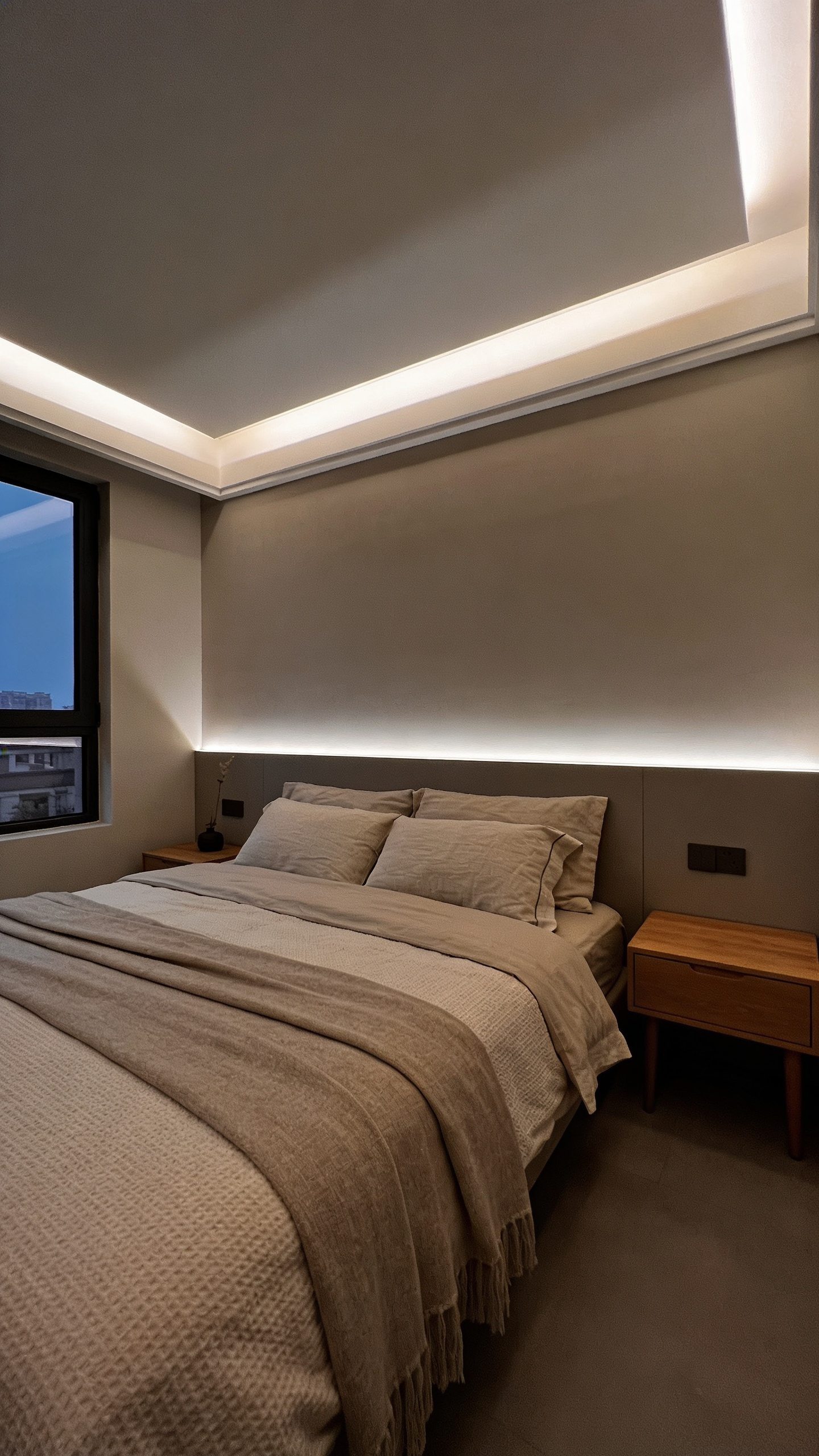
For instance, architectural cove lighting conceals fixtures behind molding to reflect light upward. The ceiling subsequently acts as a large diffuser, filling the room with a shadowless glow. Similarly, selecting fixtures with opal glass or fabric shades expands the light source significantly. A larger surface area naturally creates softer, more relaxing illumination by adhering to the inverse rule of diffusion.
However, the emotional impact relies heavily on the technical quality of the bulb. Standard dimmers often leave the light feeling cold and grey even at low levels. Therefore, we prioritize “Dim-to-Warm” technology to maintain psychological comfort. Specifically, these advanced LEDs shift from a functional neutral white to a golden 1800K as they dim. Consequently, this mimics the natural, primitive warmth of candlelight or sunset. This warm spectrum signals the body to release melatonin. It essentially prepares the brain for restorative sleep.
5. Precision Task Lighting: Articulated reading lights that focus lumens strictly on the page, preserving your partner’s sleep environment.
Sharing a bed should never require sacrificing your nightly reading habit or your partner’s deep rest. In fact, preserving a pitch-black sleep environment is a matter of physical health, not just preference. Studies indicate that exposure to merely 5 lux of light can disrupt critical circadian rhythms. Consequently, the interior design solution lies in “precision task lighting.”
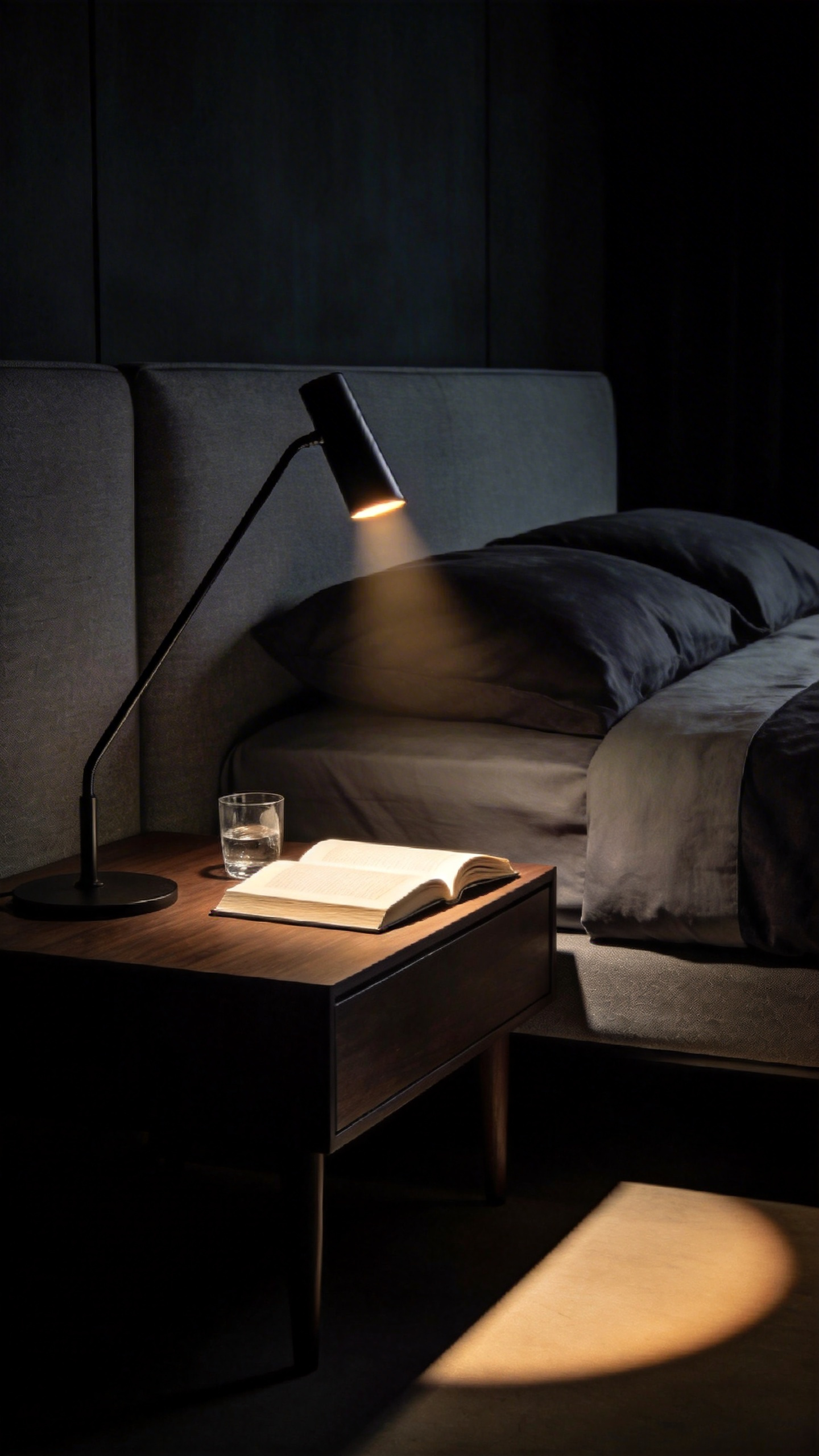
These fixtures utilize articulated arms, a design lineage tracing back to the 1932 Anglepoise lamp. Originally derived from automotive suspension technology, constant tension springs allow for silent, effortless adjustment. You can position the beam exactly where needed without tightening knobs or creating noise. Specifically, the goal is strictly controlling the “spill” of light.
A proper directional shade acts like a spotlight. It focuses lumens exclusively on your book’s footprint. Therefore, your partner remains in a zone of effectively zero lux. Furthermore, the quality of that light is equally critical for your own psychological wellbeing. Opt for warm LEDs in the 2,500K to 3,000K range to minimize stimulating blue light. Ultimately, this specific setup creates a personal sanctuary while leaving the adjacent sleeping zone completely undisturbed.
6. The ‘Low-Glow’ Theory: Implementing under-nightstand or cove lighting for safe navigation that maintains a sleepy state.
The “Low-Glow Theory” elegantly merges physical safety with biological necessity. Specifically, it utilizes ultra-low-intensity light to guide nighttime navigation. Biologically, our bodies remain highly sensitive to illumination during sleep. Consequently, sudden brightness triggers the eyes to suppress melatonin. Expert consensus suggests keeping light under 10 lux for quick tasks. Ideally, however, ambient exposure should stay below the 3 lux threshold.
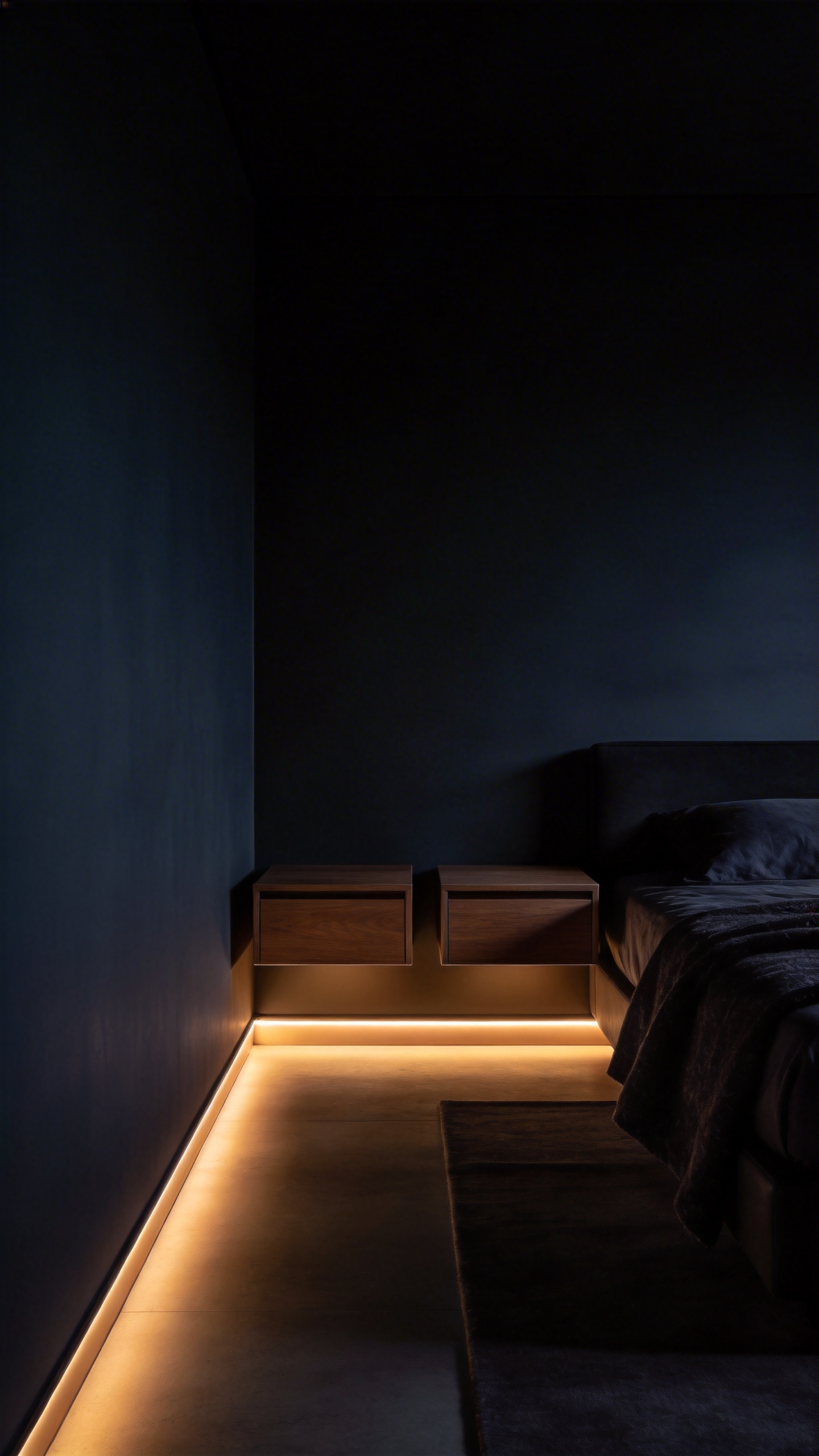
Therefore, spectral composition becomes a critical design element. Standard evening bulbs usually sit around 2700K. Yet, the Low-Glow approach favors a “FlameWarm” spectrum. Specifically, this mimics a campfire’s deep amber glow at roughly 1250K. In fact, these red-biased wavelengths create a primal sense of comfort.
Architecturally, the implementation requires hiding the actual light source. Thus, the goal is indirect, non-glaring illumination. For example, install flexible LED strips under floating nightstands. This casts a gentle glow downward onto the floor. Alternatively, use architectural coves to reflect light off the ceiling. By doing so, you create a soft visual runway. Ultimately, this prevents the brain from shifting into alertness. You navigate safely without breaking your sleepy state.
7. Sculptural Asymmetry: Breaking the matching lamp rule to create dynamic visual tension and personality.
Traditionally, matching bedside lamps offer a polished, hotel-like aesthetic. However, this symmetry can sometimes feel safe or predictable. Consequently, designers increasingly embrace “sculptural asymmetry” to introduce dynamic visual tension. Specifically, this technique breaks the monotony. It makes a bedroom feel alive and full of personality. Instead of identical fixtures, treat your lighting as an art installation. For instance, you might pair a sleek, architectural sconce with a curvy, organic table lamp.
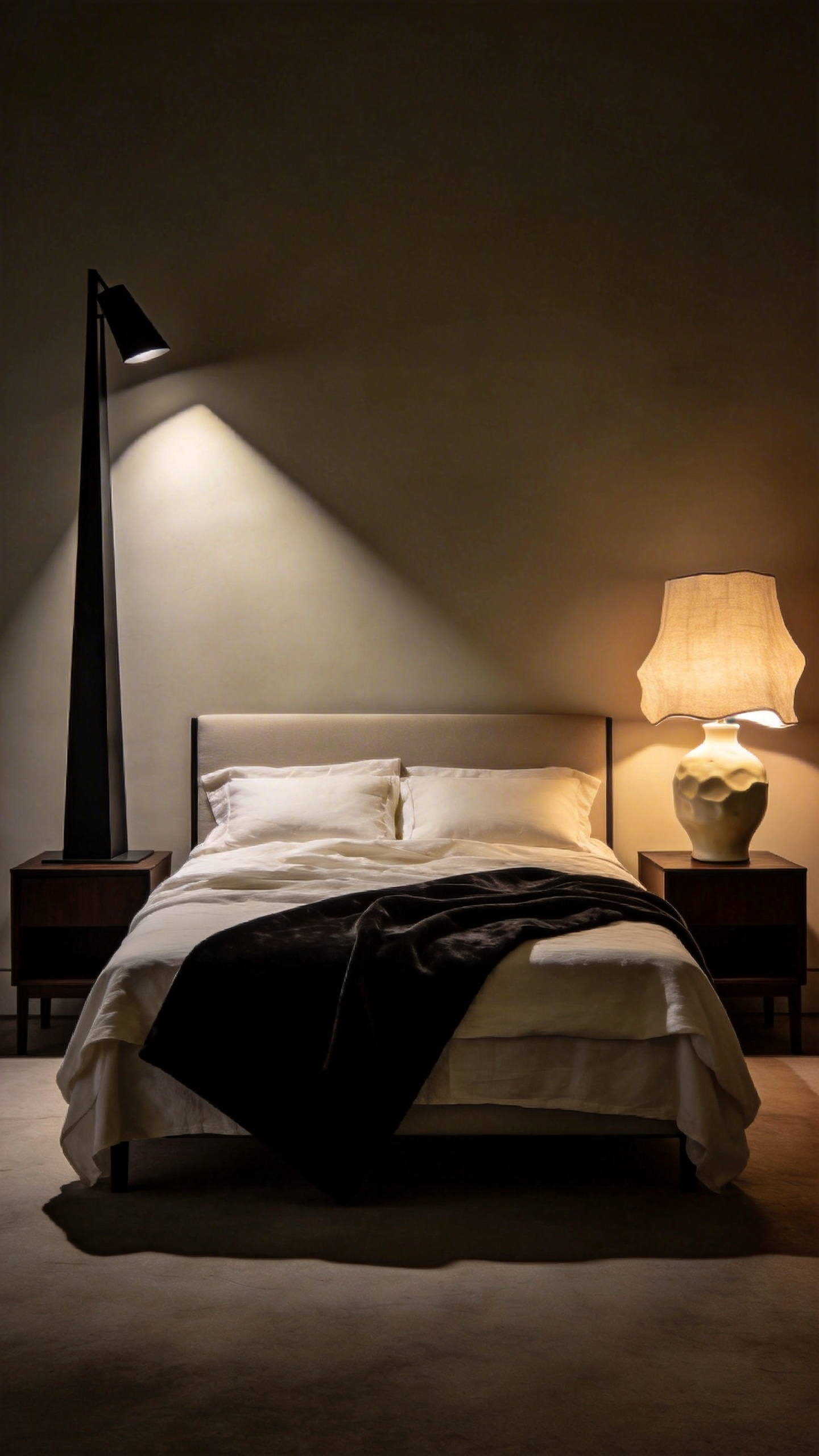
Furthermore, this approach supports the unique needs of each person. One side may feature a focused task light for reading. Conversely, the other side might utilize a soft, ambient pendant for relaxation. Nevertheless, the mismatched look requires careful curation to avoid chaos. Therefore, establish a “common thread” to unify the disparate elements. Typically, this means maintaining a consistent finish, like warm brass, on both sides. Finally, consider the vertical scale. Ensure the light sources sit at roughly the same height to balance the visual weight. Thus, the room remains harmonious despite the playful forms.
8. Material Warmth: Selecting shades (linen, alabaster, wood) that diffuse light to soften the room’s psychological edge.
The psychological impact of bedroom lighting relies heavily on diffusion. Specifically, naked bulbs create stark shadows that trigger subconscious alertness. To counter this, selecting the right shade material softens the room’s emotional edge. Consequently, the goal is mimicking the safety of a natural sunset.
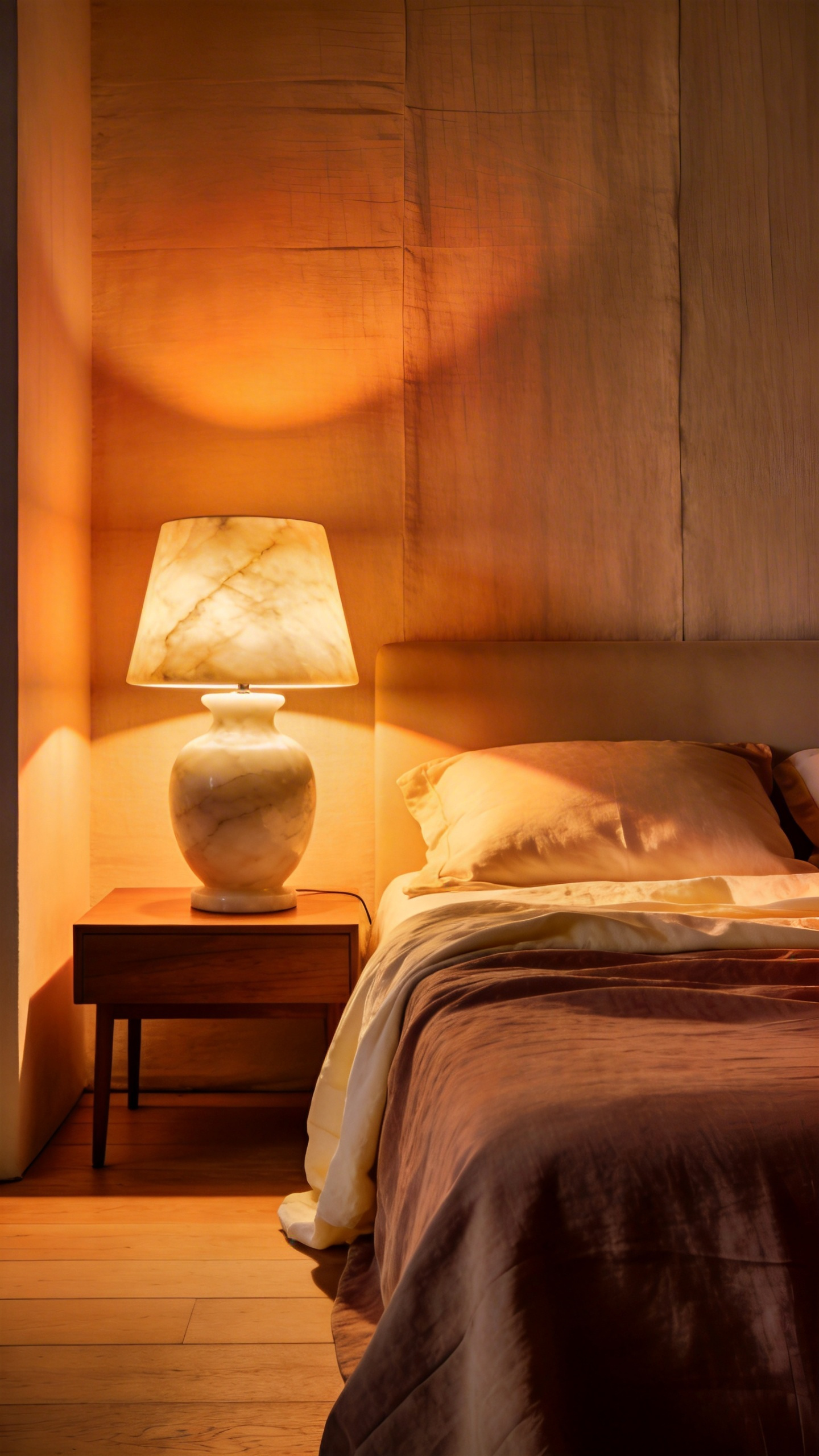
Alabaster remains a premier choice for this specific calming effect. Historically, Romans used this translucent stone to gently filter raw sunlight. Today, it transforms harsh electric light into a creamy, candle-like glow. As light passes through, it highlights unique mineral veining without casting hard shadows. Therefore, the fixture becomes a source of ethereal comfort.
Beyond stone, organic textures like wood and linen engage our senses. For instance, thin wood veneers cast a warm, luxuriant coloration. Biophilic studies suggest this visual grain actually lowers physiological stress markers. Alternatively, linen shades offer a distinct, tactile softness. The light seeps through the nubby weave to create a deeply relaxed ambiance. Furthermore, this texture contrasts beautifully with harder furniture elements. Ultimately, these materials reduce visual noise to promote deep restoration.
9. The Statement Pendant: Utilizing a central fixture as a focal point that anchors the room’s energy even when switched off.
The modern statement pendant is a direct descendant of the historical chandelier. Historically, these central fixtures symbolized status and wealth in grand homes. Today, however, they serve a more psychological function by anchoring the bedroom’s energy. Even when switched off, a pendant acts as a permanent structural centerpiece. This mirrors the approach taken when choosing sculptural bedroom furniture inspiration for luxury living.
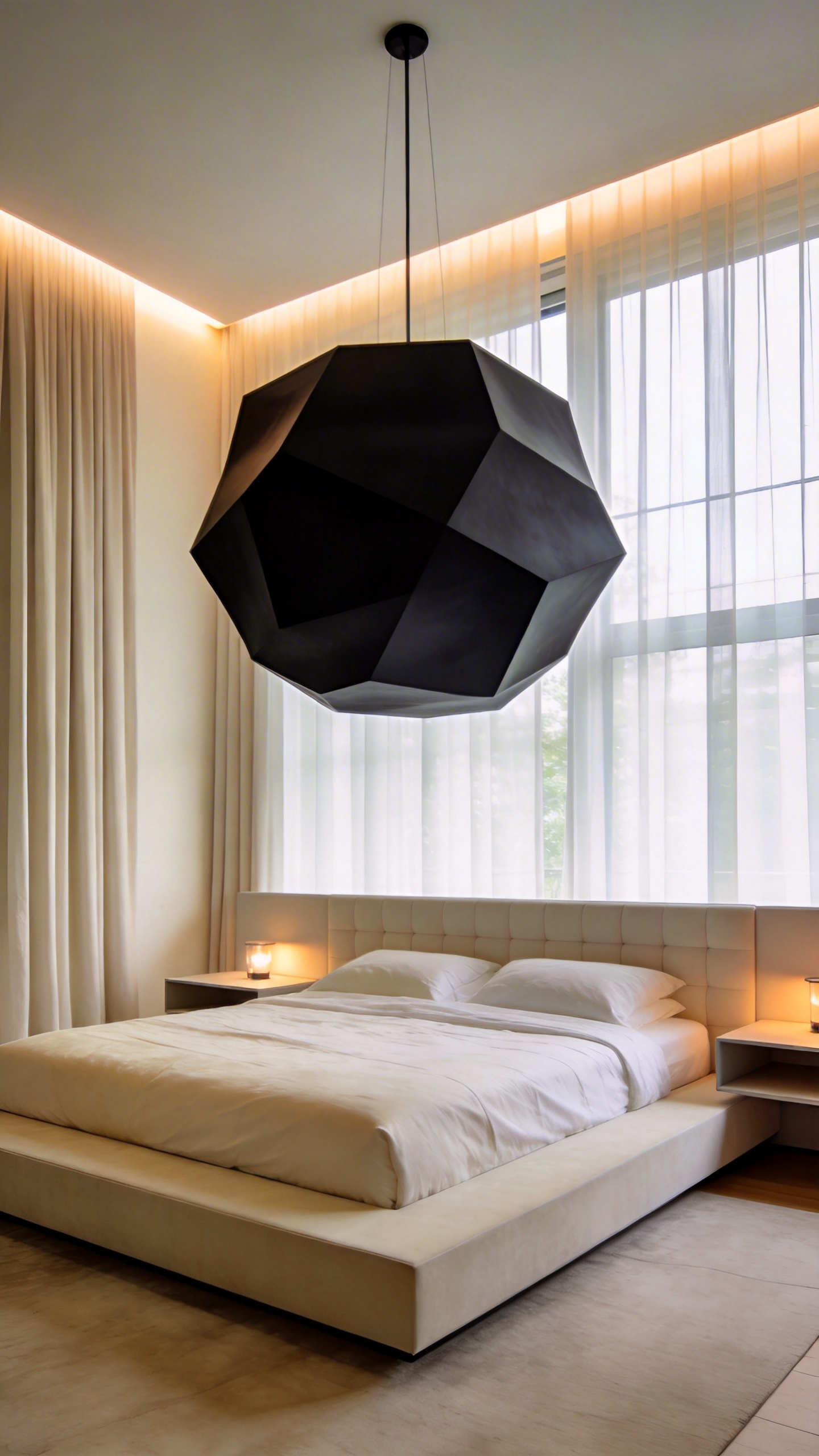
This phenomenon is governed by the interior design principle of “visual weight.” Essentially, this concept measures how heavy an object appears, regardless of actual physical mass. Therefore, an oversized fixture naturally distributes balance across a space. Furthermore, complex forms and darker colors grab attention more readily than simple, light designs. By leveraging these traits, the fixture creates a focal point that invites stillness.
Consequently, effective bedroom lighting now blurs the line between fixture and suspended sculpture. The focus shifts from mere illumination to texture and material expression. Specifically, designers increasingly utilize tactile materials like hand-blown glass, woven natural fibers, or patinated metals. Thus, the object’s unlit shape carries significant emotional weight. A piece made of organic materials transmits feelings of coziness and serenity simply by existing. Ultimately, this transforms the room’s atmosphere without requiring a single watt of electricity.
10. Wall-Washing Sconces: Directing light upward or across walls to visually expand the space and highlight texture.
Wall-washing sconces offer a sophisticated method for manipulating spatial perception in your bedroom. Fundamentally, this technique involves bathing a vertical surface in uniform light. By illuminating walls from top to bottom, you draw the eye outward and upward. Consequently, this eliminates the sharp shadows that usually define distinct corners. The room immediately feels higher, brighter, and significantly more expansive.
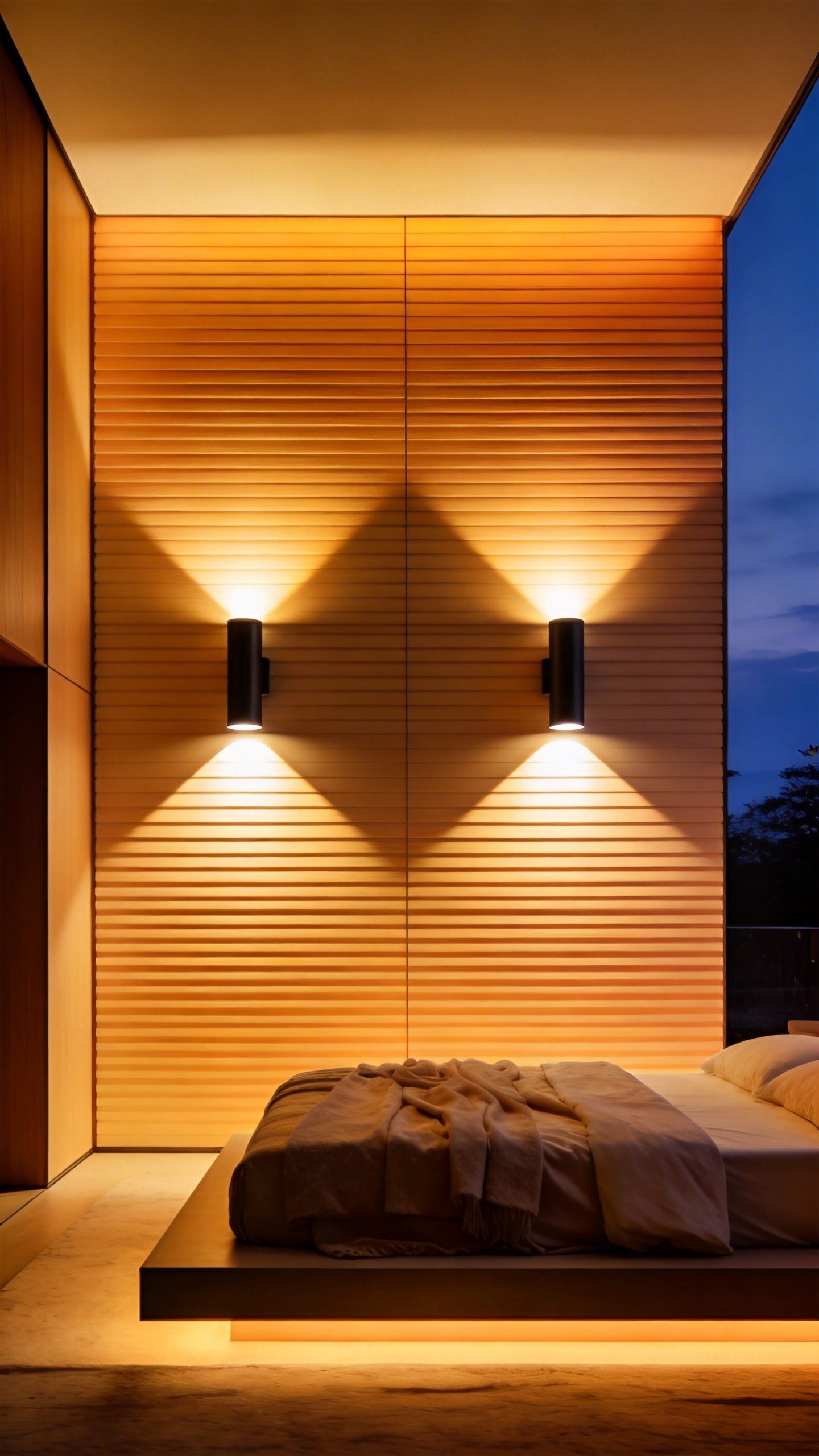
Beyond mere size, this approach fundamentally alters the room’s emotional atmosphere. Specifically, the illuminated wall acts as a massive reflector. It diffuses light back into the space. Therefore, the resulting glow is soft and entirely glare-free, which is ideal for relaxation.
However, placement is critical for defining visual texture. For instance, mounting sconces closer to the surface creates a dramatic “grazing” effect. This acute angle highlights the depth in materials like Venetian plaster or reclaimed wood. Conversely, placing the fixture further away produces a true, smooth “wash.” In this case, the light hides minor imperfections to create a sleek, serene backdrop. Ultimately, utilizing these asymmetric optics transforms your walls into a comforting visual horizon.
11. Texture Interaction: How grazing light across velvet, bouclé, or grasscloth wallpaper changes the room’s tactile perception.
Lighting profoundly influences the tactile perception of a bedroom. Specifically, the technique of “grazing” transforms visual texture into a physical experience. By placing fixtures close to the wall, light strikes surfaces at a steep angle. Consequently, this creates a stark interplay of shadow and highlight. Unlike flat wall washing, grazing emphasizes depth for a rich, cocooning effect.
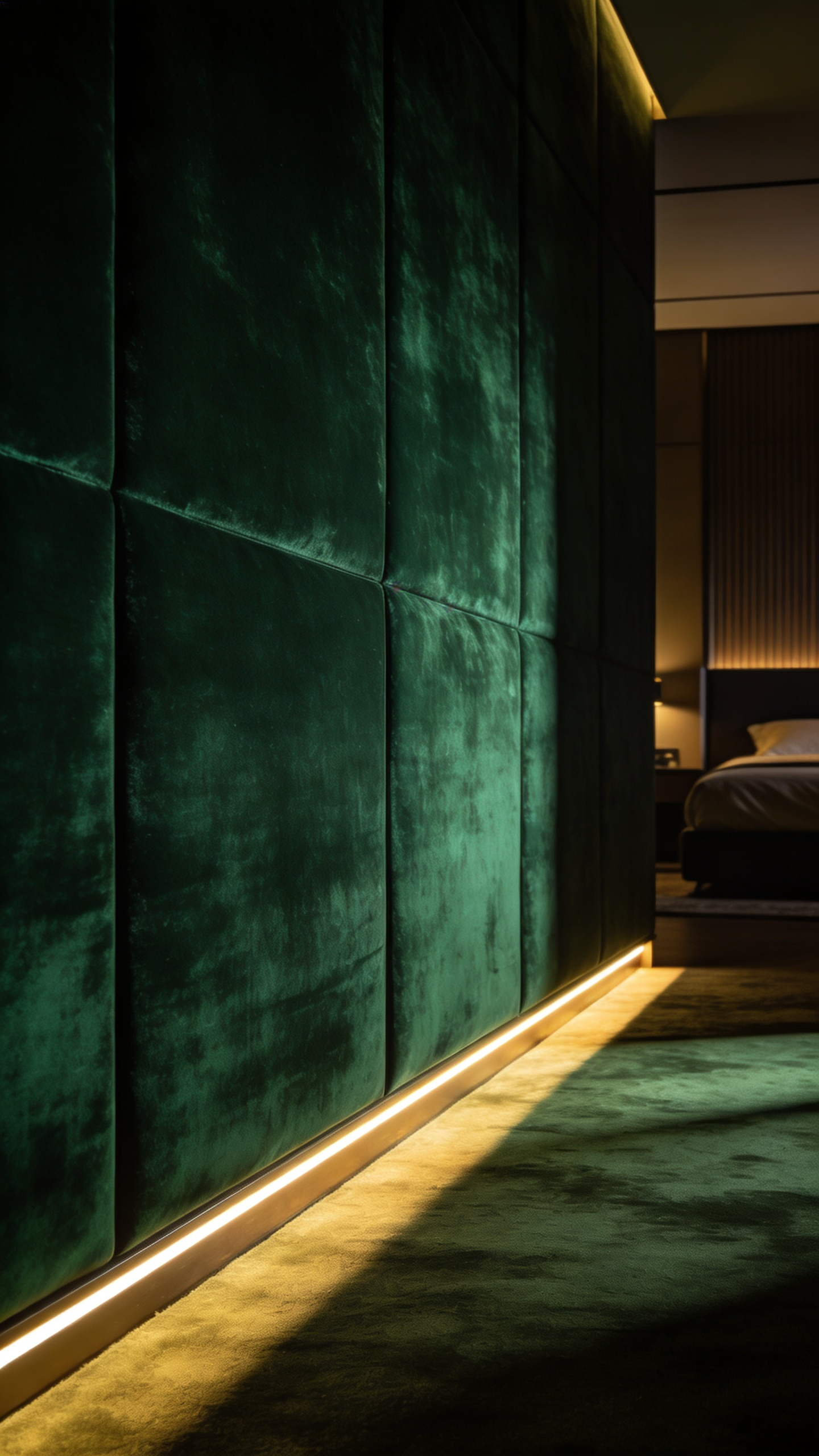
Consider the psychological impact of velvet wallcoverings. Because the dense fibers act like tiny mirrors, grazing light creates a “kinetic” ambience. Therefore, the fabric appears to shift and move as you walk by. For dark tones, this dynamic interaction deepens visual warmth, fostering deep intimacy.
Conversely, natural materials offer a grounding contrast. For instance, grasscloth wallpaper typically features horizontal weaves. When vertical light skims these filaments, it highlights organic imperfections. As a result, the distinct shadows create a calming artisan feel. This can subtly exaggerate the room’s perceived width.
Finally, bouclé provides a gentle, matte alternative. Unlike reflective surfaces, its looped yarn diffuses light evenly. Thus, grazing light scatters across the texture without causing harsh glare. This interaction results in a soft, sculptural quality ideal for a serene sanctuary. Ultimately, distinct texture interactions help ground the space in physical comfort.
12. The Cordless Revolution: Portable, rechargeable LED lamps for flexible mood lighting on vanities or reading nooks.
The rise of high-design portable lamps represents a significant psychological shift in bedroom decor. Fundamentally, this trend is about reclaiming visual freedom. Designers often view visible cords as “garish unsightliness” that creates subconscious stress. Therefore, eliminating wires establishes a refined, clutter-free environment essential for mental clarity. In fact, these rechargeable LEDs act as “modern candles,” allowing you to create intimate pockets of light exactly where needed.
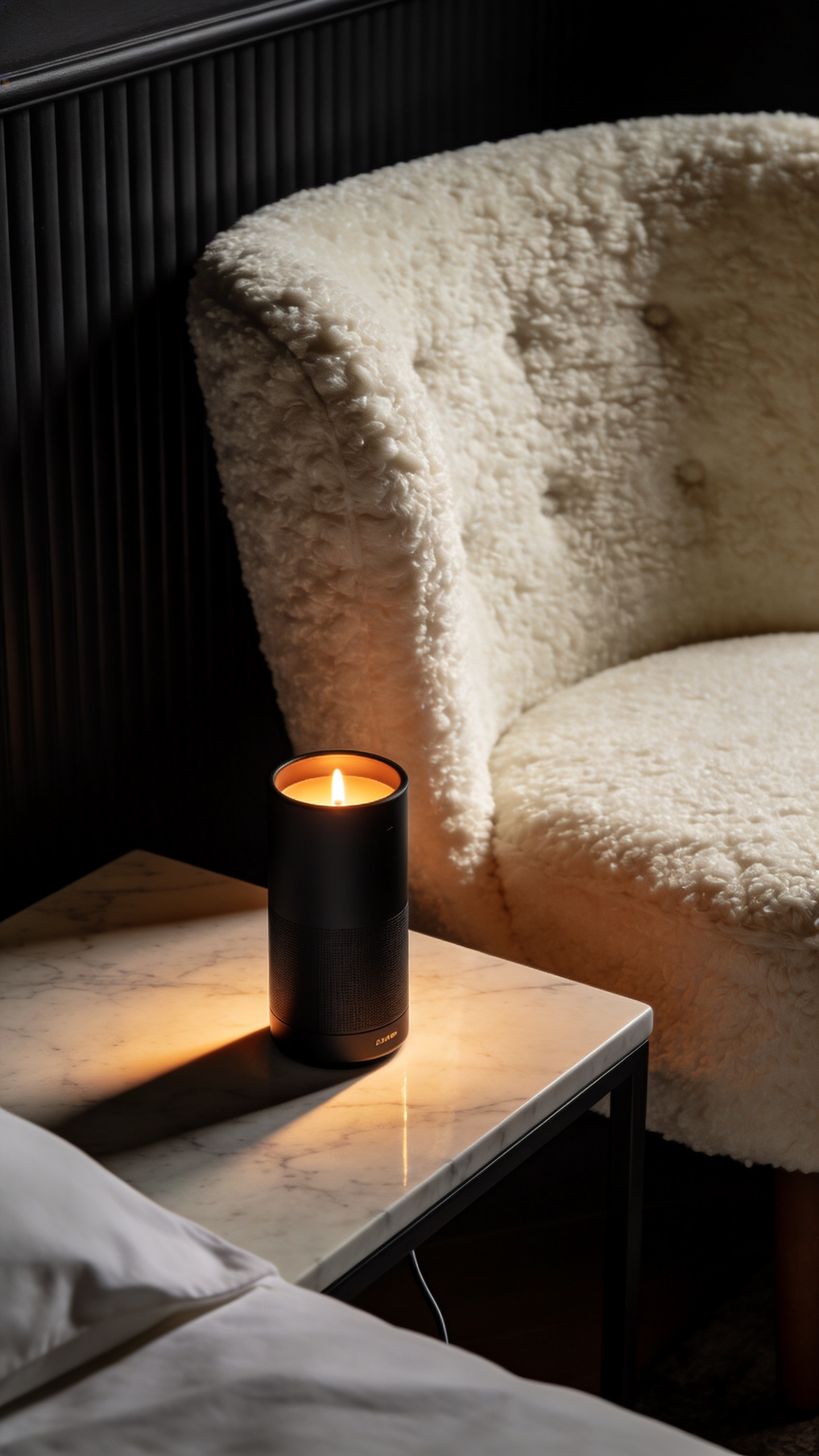
Beyond aesthetics, the emotional impact of these lamps depends heavily on technical specifications. For example, vanity lighting requires precise clarity to boost confidence. Consequently, experts recommend a Color Rendering Index (CRI) of 90 or higher. Furthermore, a neutral temperature of 4000K–4500K mimics daylight for authentic makeup application. Conversely, a reading nook demands a much softer approach. Here, a warmer 2700K glow promotes relaxation and protects sleep cycles from harsh blue light.
Finally, these devices have evolved into sophisticated decor objects. Major brands like Flos and Louis Poulsen now offer sculptural forms that stand alone as art. Thus, the lamp becomes a focal point rather than just a utility. Ultimately, this flexibility allows you to curate your room’s mood effortlessly.
13. Digital Detox Zones: Using warm, non-blue light sources to signal the brain to disconnect from technology.
Creating a digital detox zone transforms bedroom lighting from simple décor into a form of architectural therapy. Consequently, light becomes the primary tool to signal a deliberate physiological shift away from the stimulating world of technology. Biologically, our internal clocks are highly sensitive to the blue-cyan spectrum found in modern screens. Unfortunately, this light actively suppresses melatonin, the hormone required for sleep.
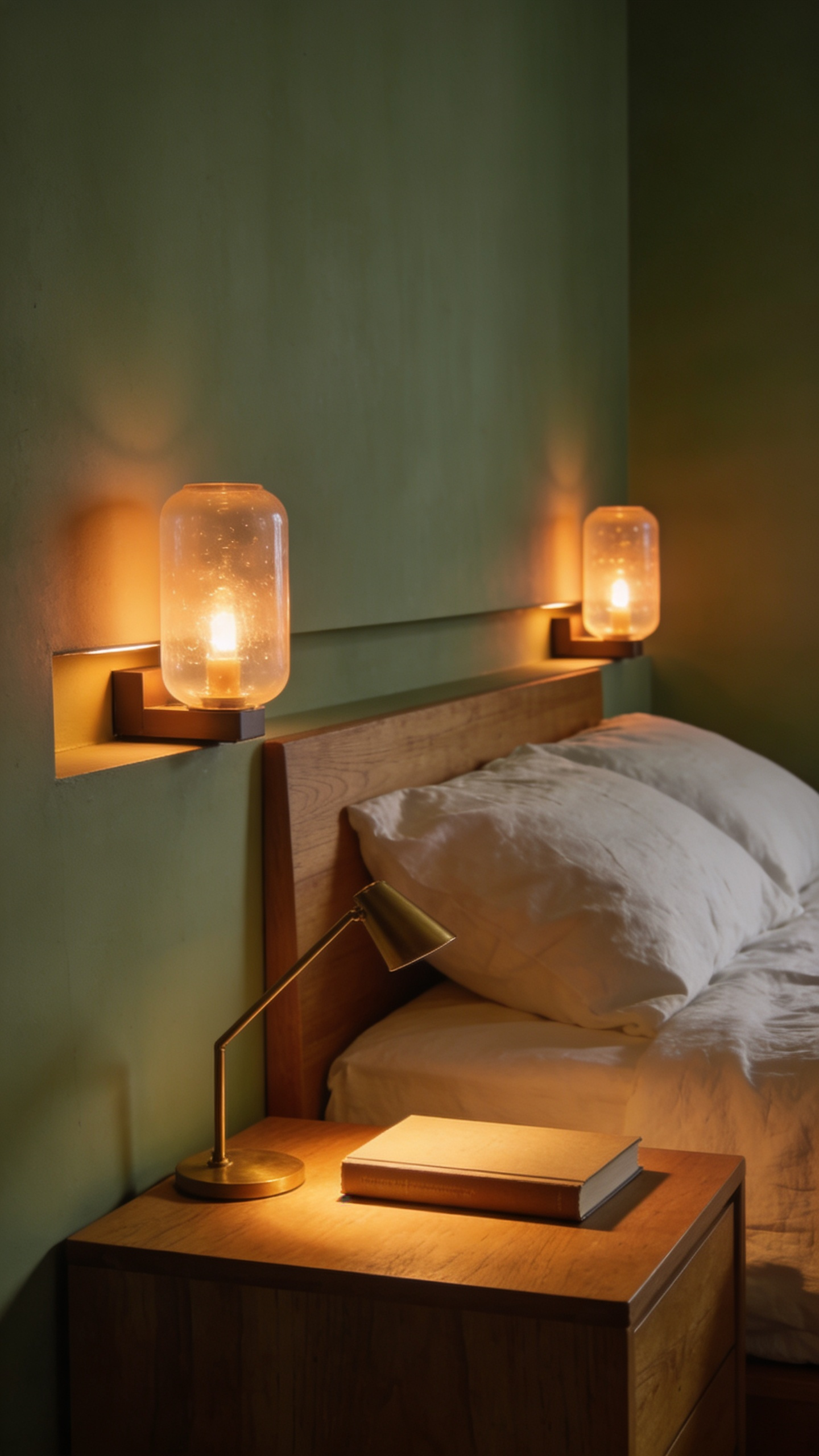
Therefore, to encourage genuine rest, we must mimic humanity’s oldest evening light sources: firelight and candlelight. Specifically, utilizing deep amber tones triggers an “atavistic cue,” subconsciously telling the body that the workday is done. To achieve this, aim for bulbs in the ultra-warm 1800K to 2200K range. However, getting the color right is only half the battle.
Intensity matters just as much as hue. In fact, research shows that high brightness can increase vigilance even when using warm colors. Thus, you must manage “Melanopic Lux” by keeping the overall light levels extremely low. Design-wise, think of this strategy as intentional “cocooning.”
Use table lamps with opaque shades or floor-standing uplights to create a soft, contained glow. Conversely, avoid harsh overhead lighting completely during these evening hours. Ultimately, this warm, amber atmosphere frames the act of disconnecting not as a restriction, but as a luxurious, comforting ritual, providing perfect cozy bedroom inspiration.
14. Smart Scene Setting: Programming ‘Wind Down’ and ‘Wake Up’ protocols that automate your environment’s emotional transition.
Smart lighting automation offers significantly more than simple convenience. Fundamentally, it facilitates your body’s emotional transitions by actively manipulating your internal circadian rhythm. Specifically, light acts as the primary “emotional governor” of your environment, signaling your brain to either rest or perform.
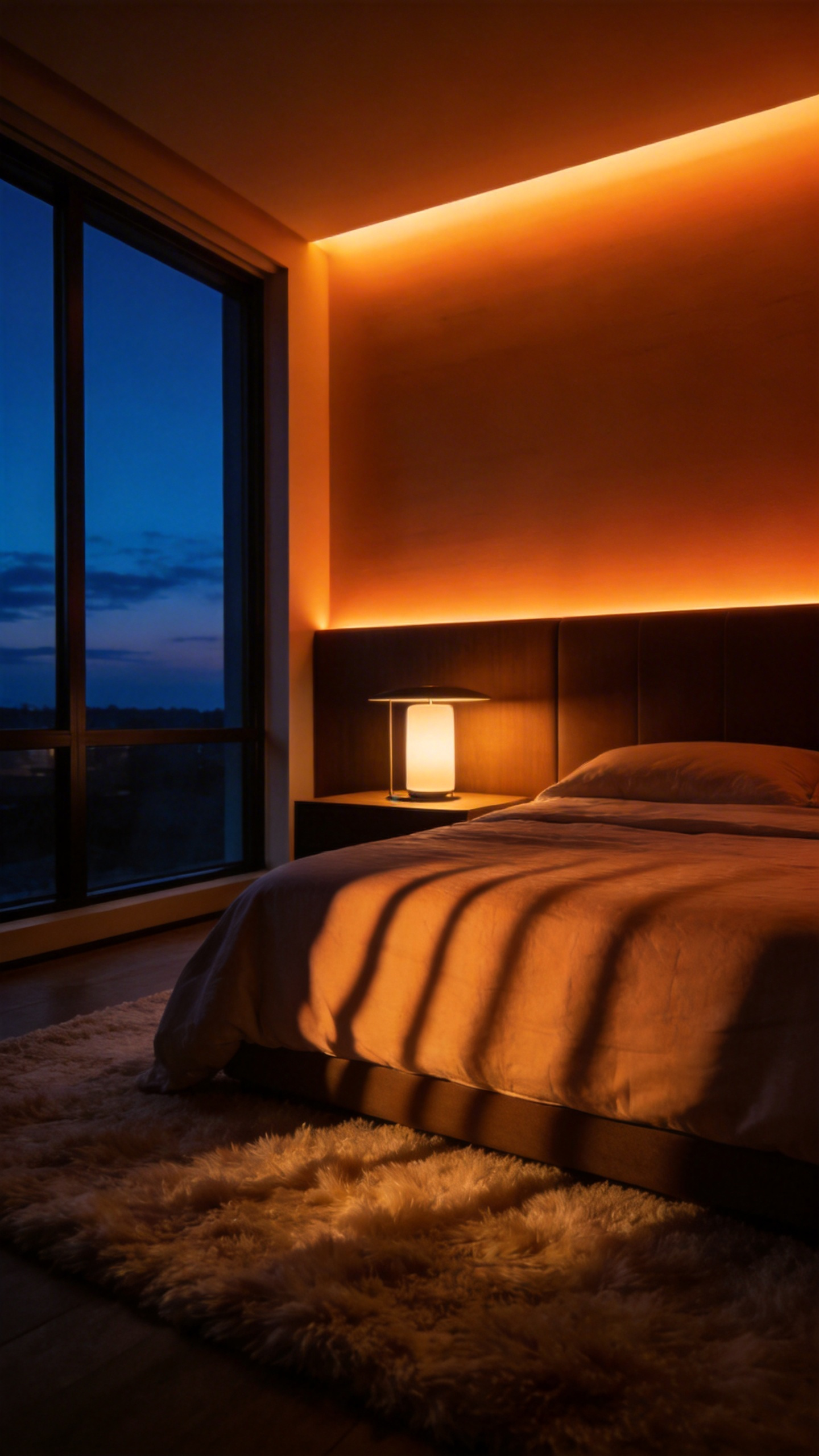
For the evening, a programmed “Wind Down” protocol is essential for mental hygiene. Ideally, this scene begins 30 to 45 minutes before your intended sleep time. It works by gradually shifting color temperature from neutral white to a deep, amber glow. Consequently, this “red-shift” mimics the physics of a natural sunset. It signals your brain to produce melatonin, the critical sleep hormone. Therefore, the room feels intimately comforting rather than mentally stimulating. This allows you to drift effortlessly into relaxation.
In contrast, the morning requires a sensory ascent to alertness. A “Wake Up” protocol replaces the jarring shock of an audible alarm with a gentle rise in intensity. Starting at just 1% brightness, the light slowly climbs to full illumination over 15 to 30 minutes. Simultaneously, the hue shifts to a cool, blue-enriched white. Thus, this spectrum mimics the clarity of a midday sky. Physiologically, this “blue-boost” suppresses residual melatonin and triggers cortisol release. Ultimately, you transition from deep rest to focused productivity with natural, biological ease.
15. Reflective Surfaces: Positioning mirrors to bounce warm light into dark corners without creating glare.
Dark corners in a bedroom can often feel confining or oppressive. However, strategically introducing reflective surfaces transforms these shadows into inviting, luminous nooks. The primary goal is achieving illumination without creating visual irritation. Specifically, you must mitigate “specular glare,” which is the sharp, painful reflection of a bright bulb. Therefore, think of your mirror as a light projector rather than a spotlight.
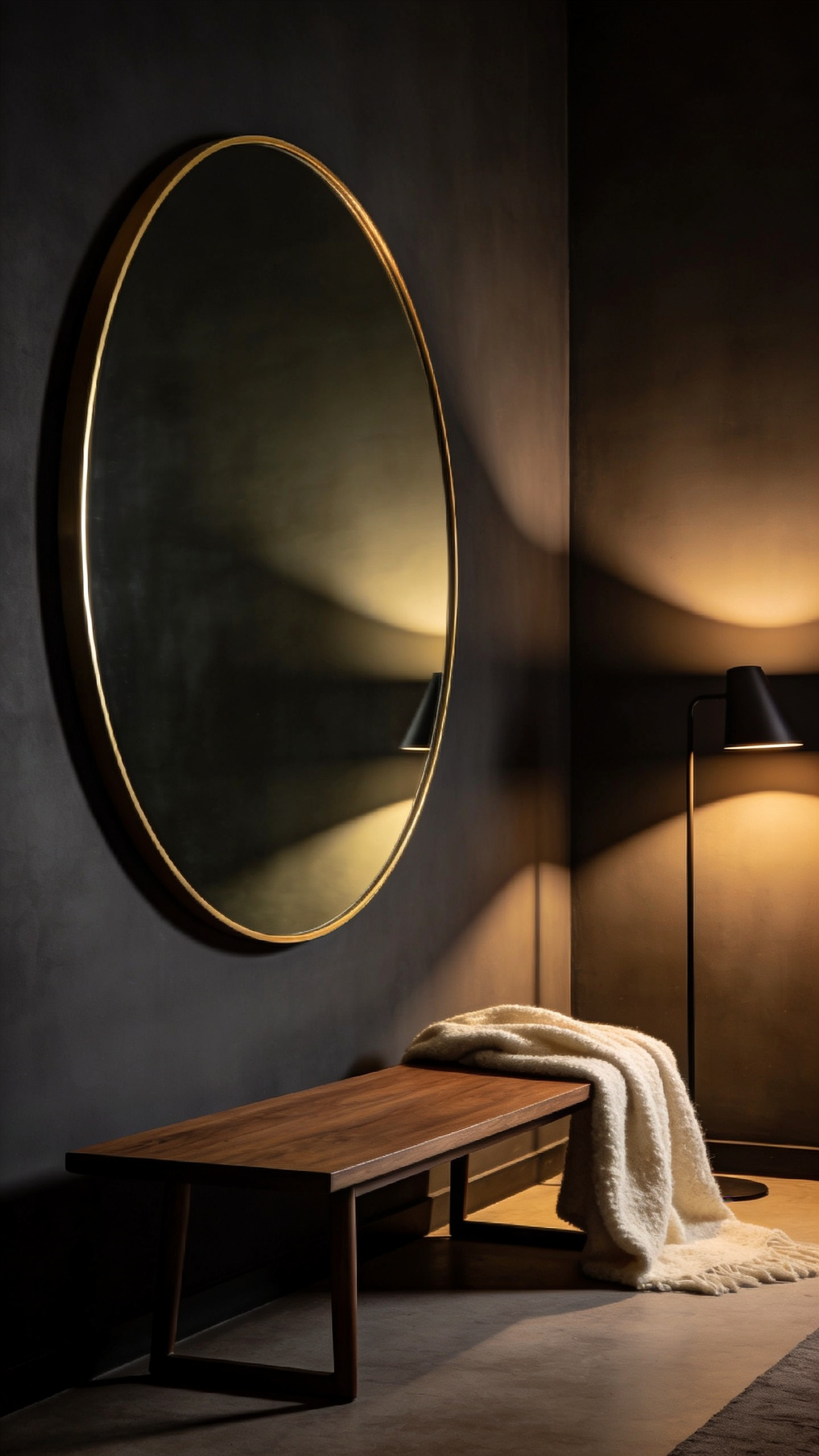
Ideally, angle the glass so the light beam hits a wall or ceiling first. This indirect path converts a harsh beam into a soft, diffuse glow. Consequently, the light source itself matters immensely. For a soothing, restorative atmosphere, stick to a warm color temperature range. Bulbs rated between 2700K and 3000K produce a relaxing “golden glow” that signals the brain to unwind. Effectively, placing a medium-sized mirror directly behind a shaded bedside lamp amplifies this warmth. It creates an illusion of depth while spreading ambient light into the room’s periphery.
Moreover, the mirror’s texture plays a significant psychological role. Distinctively, high-definition modern glass can sometimes feel too clinical for a sleep sanctuary. As a softer alternative, utilize antiqued or “foxed” mirrors. Their smoky patina naturally scatters light reflections. The intentional imperfections break up the beam, replacing harsh hot spots with a dappled, vintage radiance. Ultimately, this approach balances practical visibility with emotional comfort, ensuring the space feels expansive yet cozy.
16. Seasonal Adaptation: Adjusting lighting layers to combat winter gloom or enhance summer twilights.
Seasonal lighting adaptation creates a vital link between our biology and our environment. Historically, humans naturally adjusted their sleep cycles to match the sun. However, constant electric lighting has disrupted this essential rhythm. Therefore, we must intentionally manipulate light layers to restore internal balance.
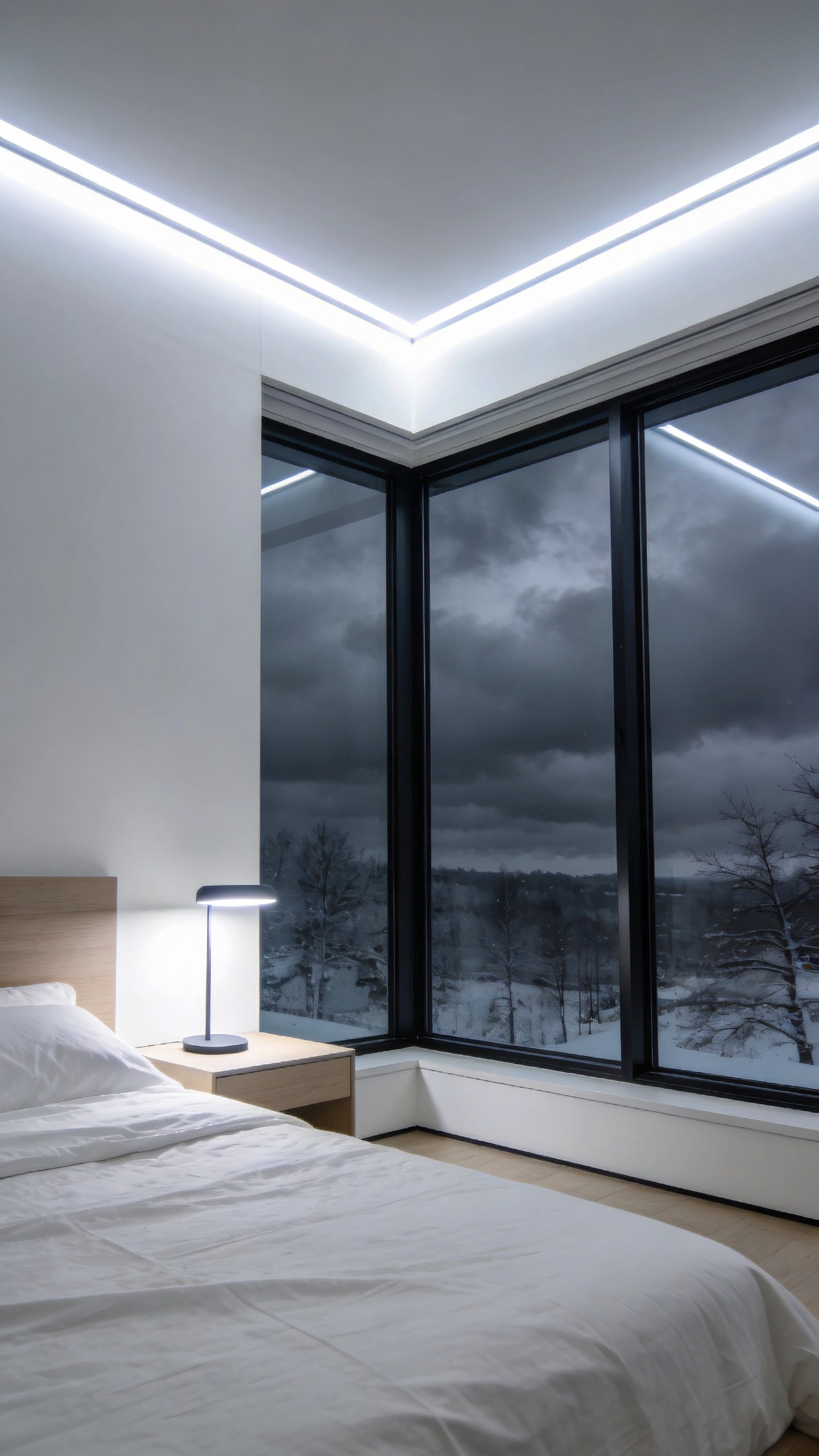
Specifically, combating winter gloom requires a technical approach to color temperature. Upon waking, utilize cool-toned light between 4000K and 5700K. Consequently, this mimics bright daylight signals, effectively counteracting seasonal lethargy. In contrast, winter evenings demand a drastic shift toward comfort. Switch exclusively to warm, low-level lamps to form a “cozy sanctuary.” Furthermore, swapping standard shades for heavier fabrics creates a softer, more focused glow.
Conversely, summer strategies should aim to enhance the lingering twilight. Instead of dimming lights early, maintain a warmer-neutral range to extend the day’s perceived length. For a dramatic touch, designers often employ a specific “golden hour” technique. Simply position a directional lamp low to the ground with an ultra-warm bulb. As a result, this casts long, orange-hued shadows across the floor, mimicking a setting sun. Ultimately, these sensory adjustments transform a bedroom from a static space into a living, responsive environment.
17. The Master Switch: The psychological comfort of controlling the entire room’s mood from a single bedside point.
Beyond mere convenience, a master bedside switch anchors your psychological well-being. Specifically, this feature satisfies the fundamental human need for an “internal locus of control.” Consequently, you feel a deep sense of mastery over your environment, which is crucial for a master bedroom sanctuary. In fact, research indicates that clearly defining and controlling your personal space reduces physical stress markers. Therefore, the ability to “lock down” the room without leaving the warmth of your sheets creates a profound sense of security. You are not just turning off lights; you are asserting safety.
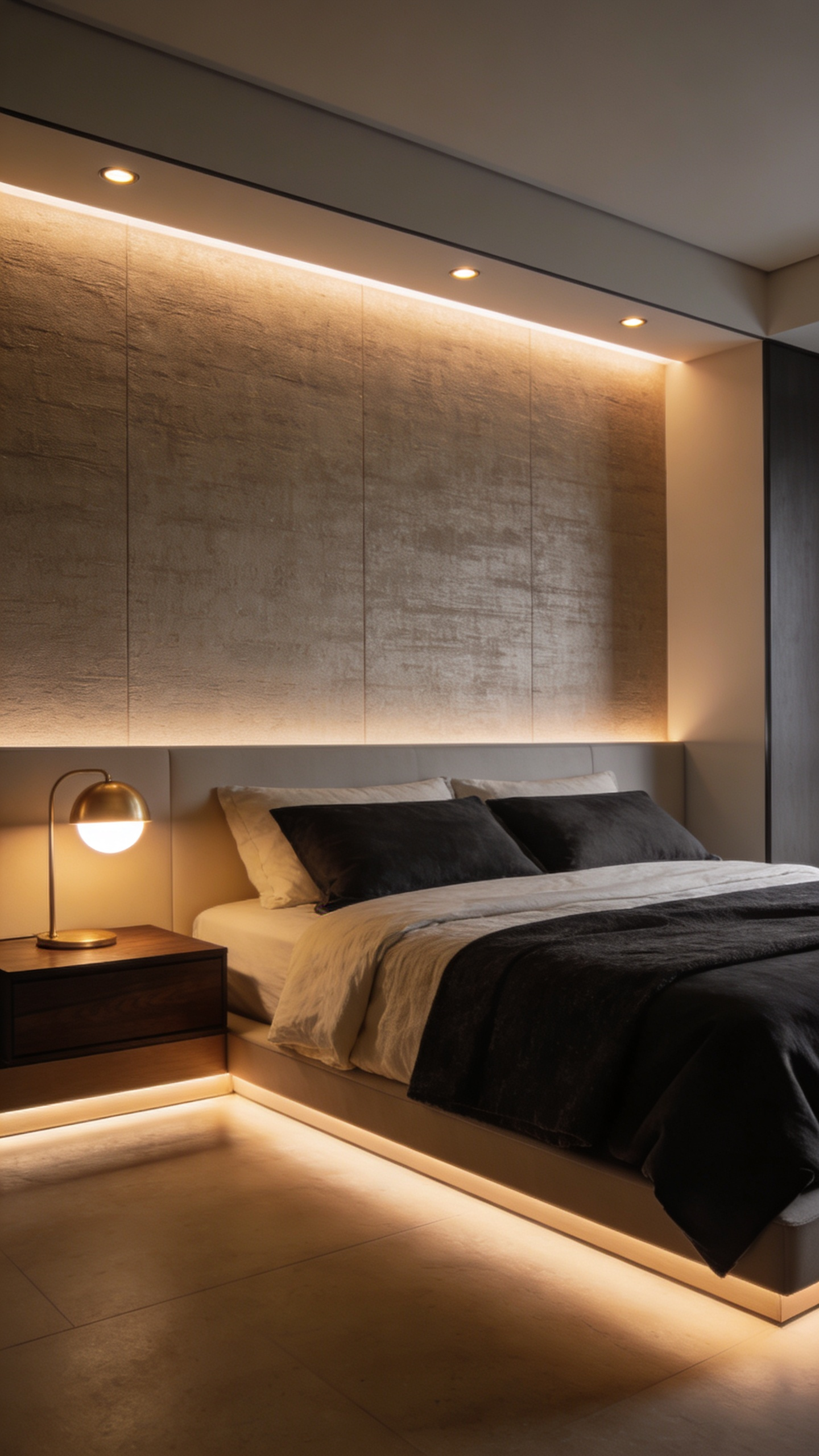
Furthermore, this single interaction acts as a mood orchestrator. Instead of managing multiple separate devices, a “Good Night” scene reduces cognitive load immediately. Thus, your brain can decouple from the day’s decision fatigue. Biologically, this automated shift is vital for sleep hygiene. For instance, the switch can simultaneously lower light intensity and shift color temperature to a warm, amber glow. As a result, this mimics a natural sunset, effectively signaling your body to produce melatonin.
Finally, the physical nature of the switch offers a distinct comfort. Unlike fumbling for a phone app, a dedicated wall button provides reliable, tactile feedback. This deliberate click offers a sensory assurance that the digital world is officially paused. Ultimately, local control means your sanctuary remains stable, even if the internet fails. It creates an unshakeable trust in your personal space.
Conclusion: Lighting is not just utility; it is the ultimate wellness tool that defines the emotional architecture of your rest.
Ultimately, lighting transcends simple utility to become a profound instrument for physical wellness. In fact, it shapes the invisible emotional architecture of your personal sanctuary. By deliberately selecting warm temperatures and soft diffusion, you directly signal safety to your nervous system. Therefore, your bedroom evolves from a static space into a partner in restorative health. This acts as a biological command, guiding your body seamlessly toward sleep.
This approach redefines the future of mindful living. Our homes must prioritize psychological balance alongside visual appeal. Hence, creating a restorative environment requires more than just installing new fixtures. It demands a thoughtful evaluation of how light impacts your mood. Auditing your space for cool, stimulating color temperatures and layering warm, dimmable sources ensures you harness the full power of bedroom lighting inspiration to curate a deeply restful atmosphere.
Frequently Asked Questions
H3: Why is 2700K light recommended for bedrooms instead of 3000K?
The Kelvin temperature measures the color of light. While both 2700K and 3000K appear warm, 3000K contains measurably more blue wavelengths. This blue light spectrum signals the brain to suppress melatonin production, which is counterproductive to sleep. 2700K (or lower, like 2200K) produces a deeper, softer amber glow that mimics firelight, sending a “quieter” signal to the nervous system, thereby supporting the body’s natural circadian rhythm and promoting better sleep quality.
H3: What is the ideal Color Rendering Index (CRI) for a luxury bedroom?
For a luxury bedroom where material quality and curated color palettes are paramount, the ideal CRI should be 90 or higher, with a specific focus on the R9 (saturated red) value being above 50 (ideally 80+). High-CRI lighting ensures that paint colors, wood finishes, and skin tones are rendered accurately and vibrantly, restoring the depth and dimension of your chosen palette that standard, low-CRI bulbs often wash out or flatten.
H3: How do designers use asymmetrical lighting in a master bedroom?
Designers use sculptural asymmetry to create dynamic visual tension and cater to functional needs. Instead of matching lamps, different fixtures (e.g., a tall floor lamp on one side and a short sculptural table lamp on the other) are paired. This approach prevents the design from feeling predictable and allows one partner to have precision task lighting for reading while the other side maintains soft, ambient illumination for undisturbed rest.