Phase I: The Philosophical Anchor – The Psychology of Rest
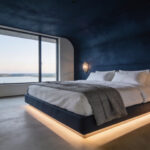
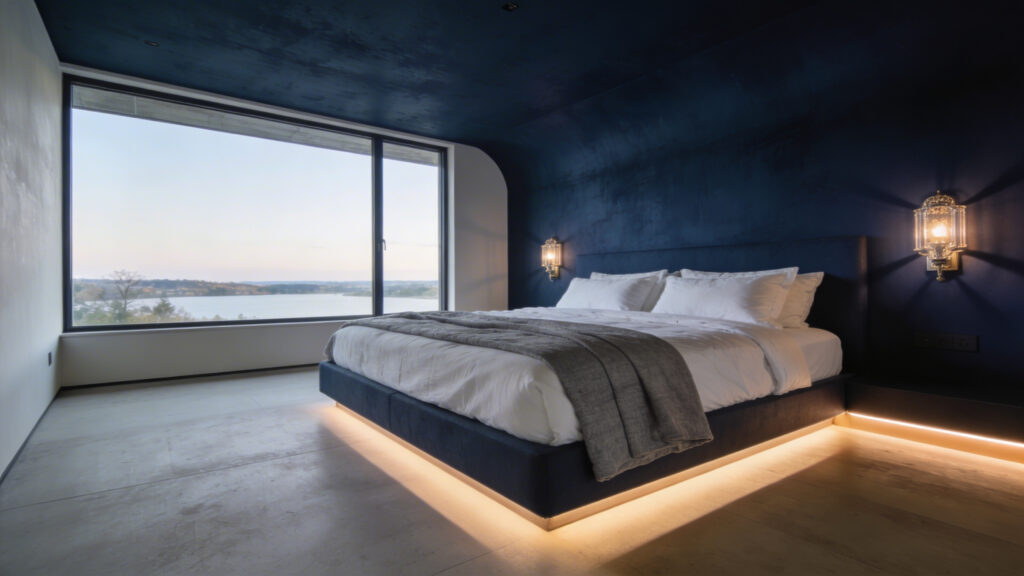
A bedroom is more than just a place to sleep. It acts as a critical psychological de-escalation zone. Therefore, your architectural and color choices directly impact your nervous system. When exploring various bedroom makeover ideas, remember that humans crave spaces offering both prospect and refuge. Specifically, anchoring your bed against a solid wall creates a feeling of profound safety. Next, try painting that back wall in a dark, receding color. You can also incorporate sophisticated bedroom wall ideas to simulate a secure cave. In fact, this simple change reduces nighttime hyper-vigilance.
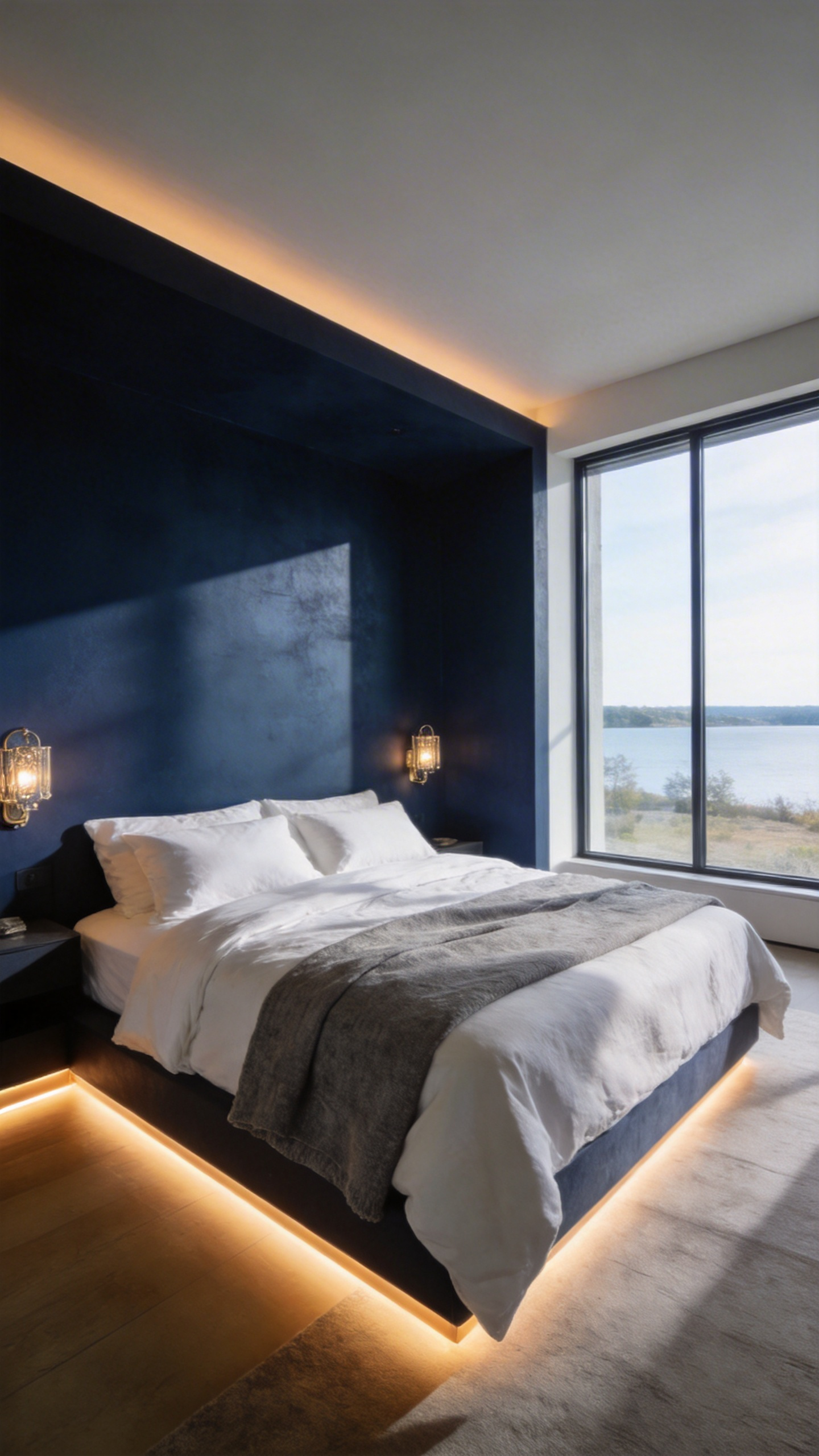
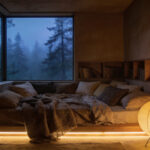
Similarly, achieving visual silence lowers your daily cognitive load. Everyday clutter constantly signals unfinished business to a tired mind. Therefore, implementing closed storage is a psychological necessity. Monochromatic color layering also provides tactile interest without adding visual noise. Next, consider how your lighting design acts as a vital dimmer switch for anxiety. Harsh blue lighting stimulates the brain and blocks healthy melatonin production. However, keeping low-level amber lamps below eye level perfectly mimics a natural sunset. This technique is an essential component of bedroom lighting ideas. Indeed, this biological sunset triggers immediate parasympathetic down-regulation.
Haptic grounding directly engages your crucial somatosensory system. Natural, varied textures physically anchor a racing mind to the present moment. For instance, try pairing crisp, cool linen sheets with a heavily weighted faux-fur throw. In fact, this added weight provides soothing deep pressure stimulation to clinically lower cortisol. Ultimately, you must treat your space as a sacred threshold. Removing modern work cues ensures your brain knows it is finally time to rest.
1. The Cognitive Impact of Color: Shifting Your Space from Wakefulness to Rest
Transforming a bedroom requires more than simply choosing a pretty color. You must engineer a space that actively signals the brain to rest. For example, interior design blogs often champion blue for sleep. However, vibrant blues can actually keep your brain in a state of alert readiness. Therefore, utilize desaturated, muddy blues like slate or indigo-grey. Specifically, these pigments have a lower light reflectance value. In turn, this reduces the visual noise your brain must process before shutting down.
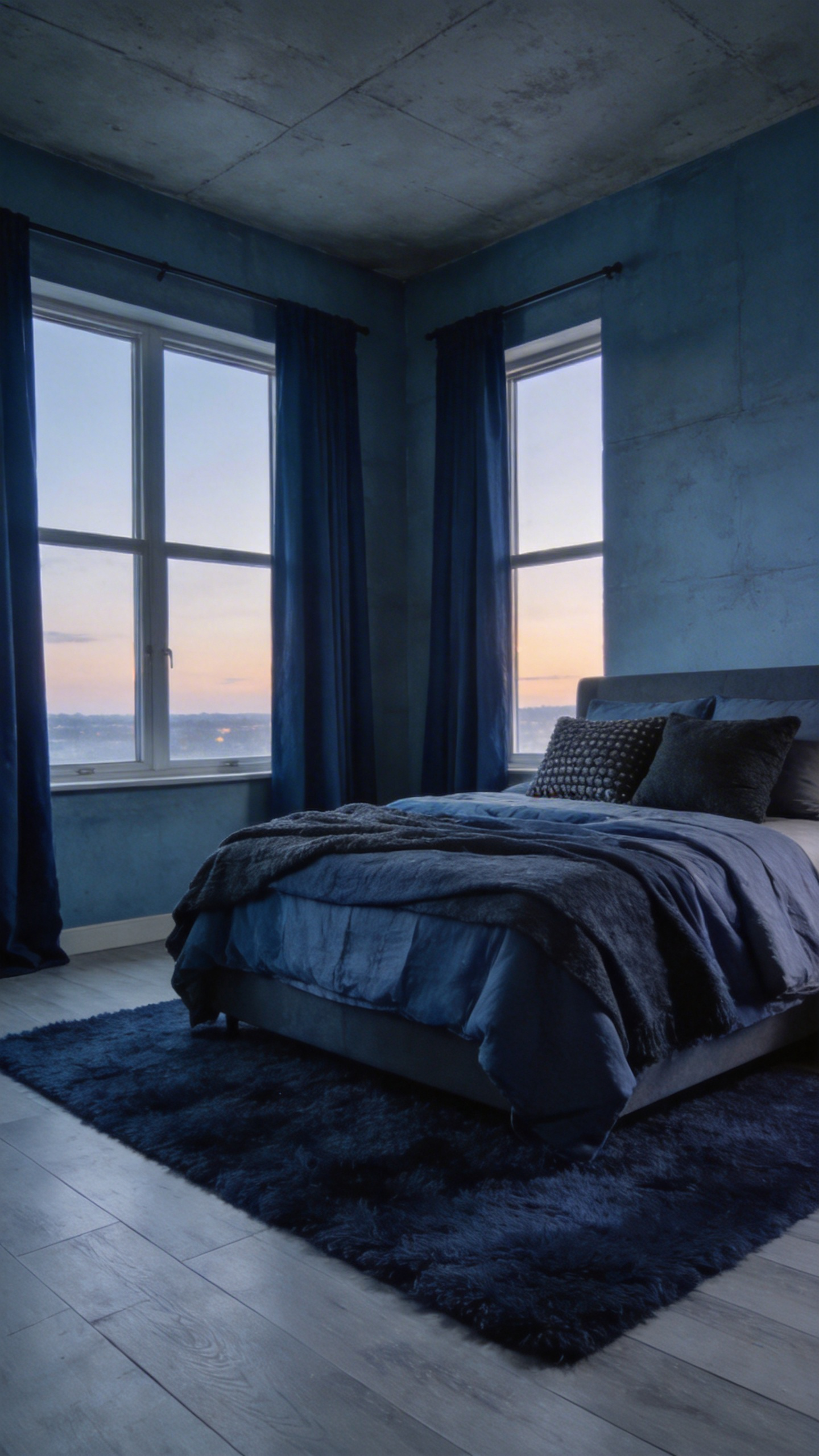
Creating a true sanctuary also involves embracing the enclosure effect. Humans feel cognitively safest in darker, enclosed refuges. Therefore, deep colors like forest green signal to the amygdala that the environment is secure. Next, minimizing sharp color transitions creates essential visual silence. High contrast forces your visual cortex to constantly map room geometry. Instead, paint your walls and trim in analogous shades to erase these sharp edges. In fact, this helps your autonomic nervous system de-escalate and lower your heart rate.
The physical finish of your paint matters immensely. Glossy surfaces create hot spots of light that imply active movement. However, ultra-matte finishes scatter light diffusely to create a velvet-like texture. Indeed, this lack of visual movement allows your mind to slip peacefully into sleep.
2. Defining Your Sleep Sanctuary: Establishing an Emotional Baseline for Your Makeover
Establishing an emotional baseline requires reclaiming the bedroom’s core purpose. Historically, this space was a bustling, communal hub. However, modern psychology dictates we must restore its status as a private refuge. Therefore, you need to mentally categorize the room as a bedroom that’s a true sanctuary from the outside world. Specifically, this shift creates a foundation for deep biological safety.
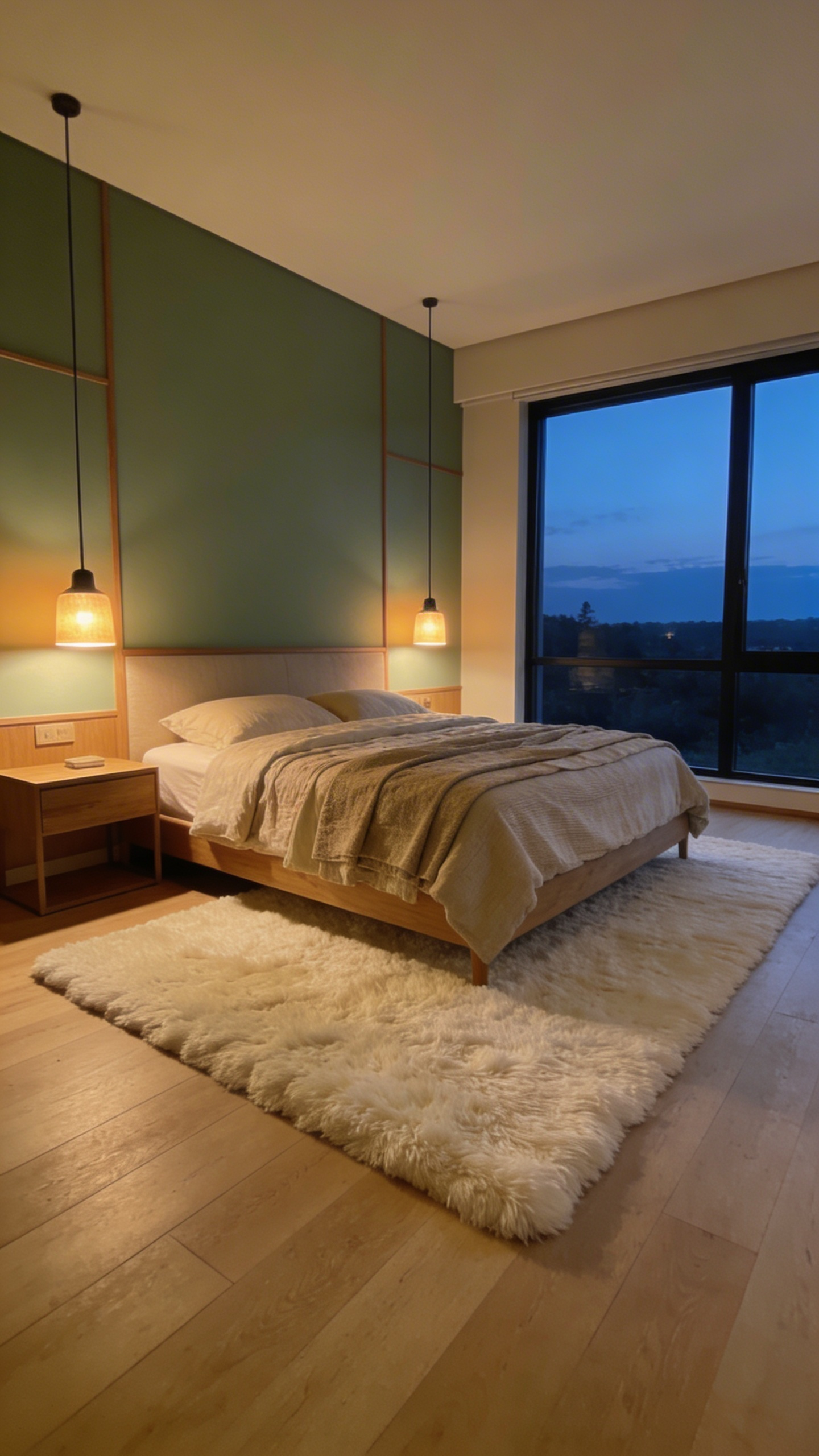
Biologically, your brain relies on sensory discipline to wind down. For instance, harsh blue light actively suppresses melatonin and elevates stress. Therefore, layering warm, low-kelvin lighting mimics a setting sun. This chromatic signaling tells your body to initiate a restful sequence. Next, cooling the room to around 65°F acts as a physical trigger for coziness.
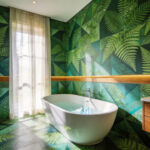
Visually, integrating biophilic design acts as an emotional anchor. Natural fractal patterns in wood grain or stone gently stimulate the mind. In fact, these subtle details reduce mental fatigue without demanding focus. Organic textures like grounding clay or chunky wool blankets also actively lower your pulse. Contextually, color choices should always evoke personal feelings of safety. Slate blue is widely calming, but a warm terracotta might feel profoundly safer to you.
Curating this sanctuary requires strict temporal and spatial boundaries. For example, implementing a digital sunset eliminates glowing gadgets before bed. Therefore, you cultivate the acoustic and visual silence strictly necessary for luxury sleep. Indeed, every carefully curated scent and texture communicates deep rest to your nervous system.
3. The Myth of Pure White: Why Stark Bedroom Walls Can Disrupt Melatonin Production
Many people believe pure white walls create a peaceful sanctuary. However, this clinical hue actually sabotages your sleep hygiene. Specifically, brilliant white paints have a Light Reflectance Value exceeding 85%. Therefore, your walls act as giant mirrors for stray light. This bouncing effect increases melanopic lux in the room. In fact, this hidden brightness stops your brain from producing melatonin.
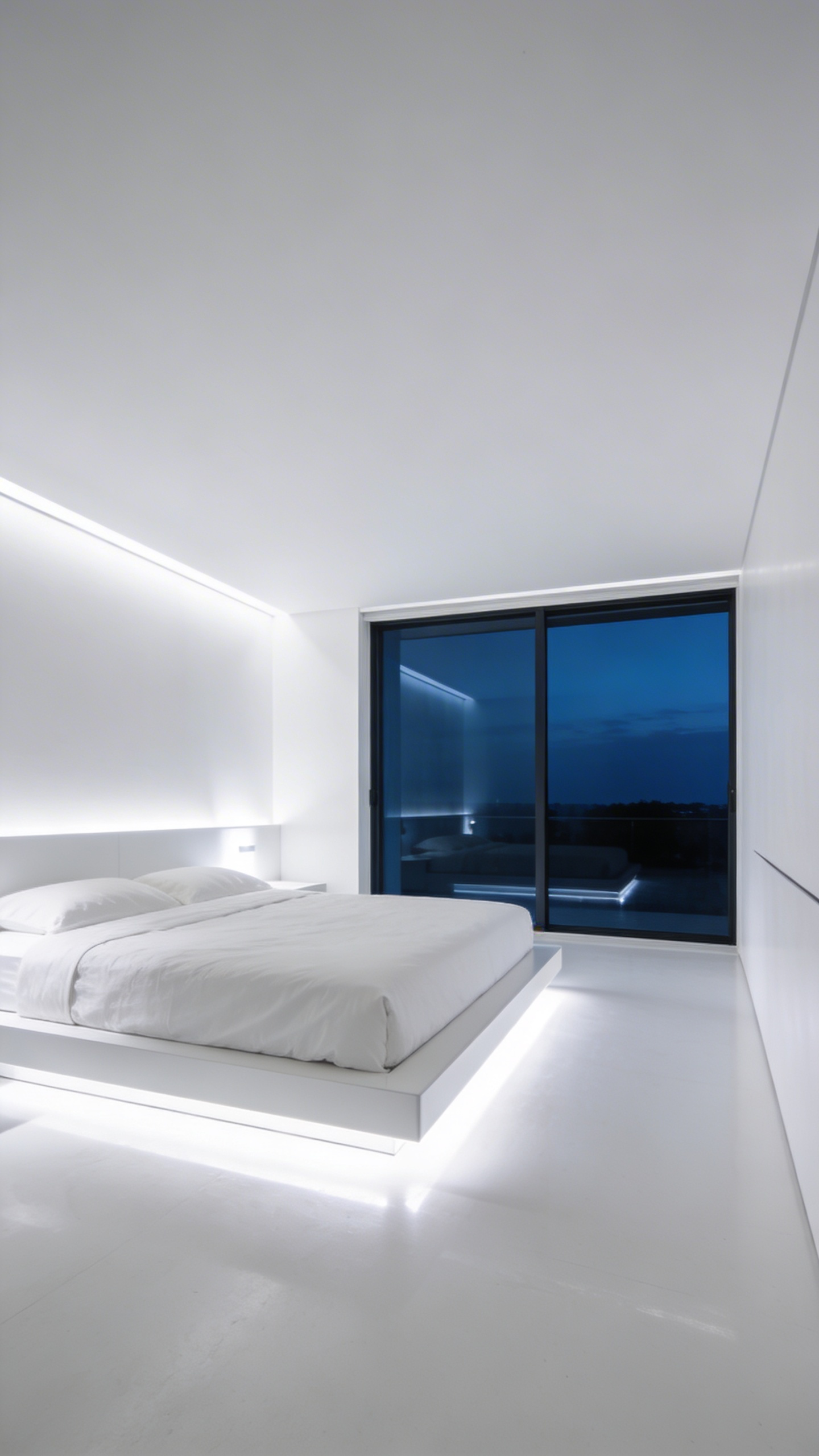
Modern white paint owes its brilliance to Titanium Dioxide. Scientifically, this pigment efficiently scatters shorter blue-violet light wavelengths. Therefore, your warm bedside lamp reflects as a cooler tone. Unfortunately, this diffractive scattering bathes you in alertness signals. Historically, this stark aesthetic stems from the 19th-century Sanitary Movement. Back then, reformers prized white spaces for exposing hidden dirt. Today, this hospital association subconsciously triggers vigilance rather than relaxation.
Standard white walls also suffer from high specular reflection. Specifically, eggshell or satin finishes create sharp, contrasting light spots. Therefore, your ocular muscles constantly strain to adjust at night. Instead, transition to low-arousal neutrals with matte finishes. For example, warm creams, greige, or sage provide diffuse reflection. These softer hues spread light evenly across the space. Ultimately, choosing colors with a lower reflectance mimics natural dusk. Indeed, this cozy atmosphere signals your brain to rest.
4. Chromatic Temperature Control: Balancing Warmth and Coolness for Anxiety Reduction
Color temperature has long influenced our physiological state. For instance, the ancient physician Avicenna used cool light to calm agitated spirits. Today, we understand this through neurochemical responses to the Kelvin scale. Cool wavelengths around 5000K boost serotonin to prevent morning brain fog. However, warm wavelengths near 2700K safely trigger melatonin release. Therefore, balancing these temperatures is vital for anxiety reduction.
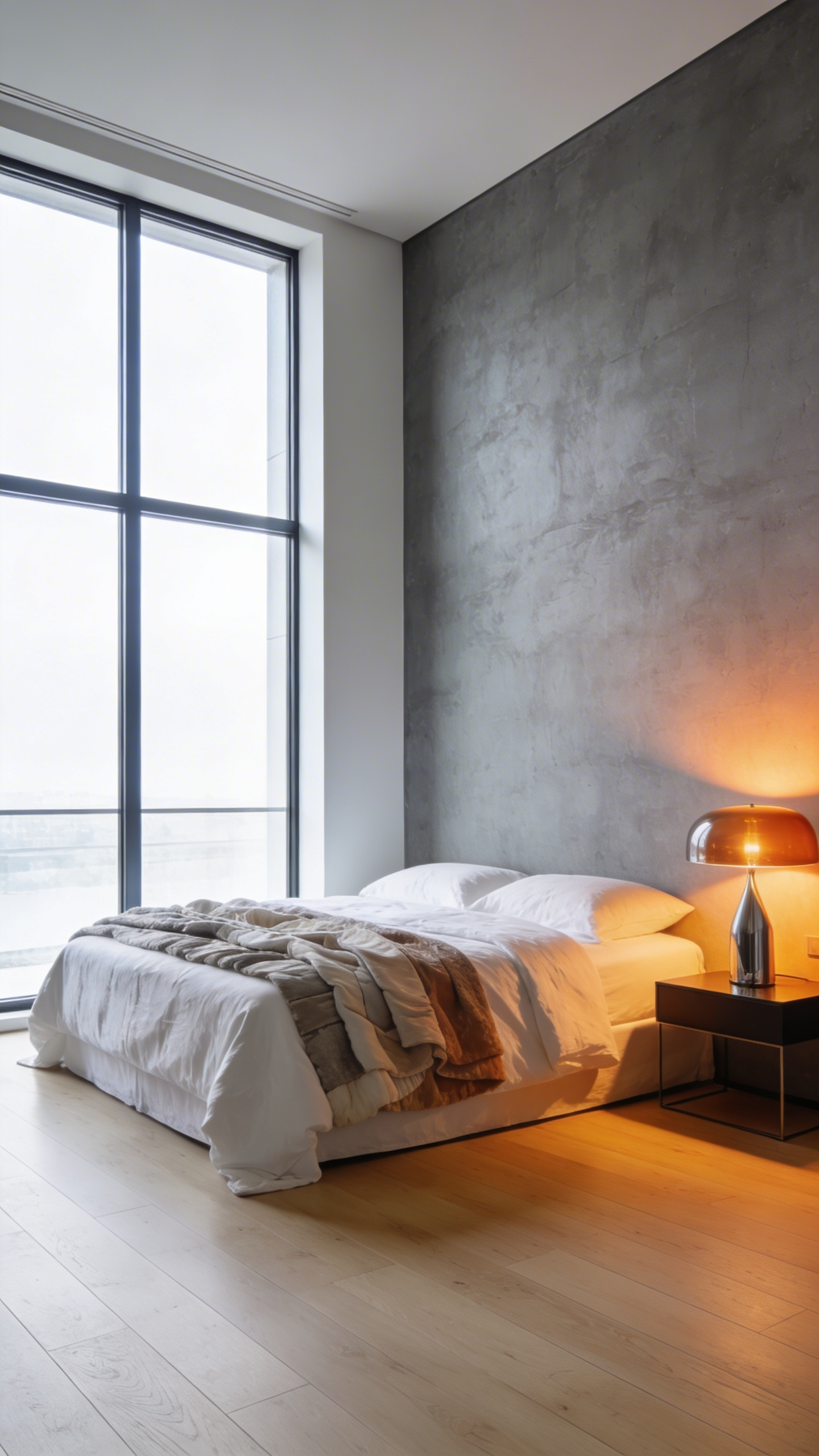
Environmental psychologists often grapple with the “Blue Paradox.” Specifically, cool blues lower perceived stress but biologically disrupt sleep. Therefore, interior designers employ a “cool pigment, warm photon” strategy. You can paint walls in a receding dusty mineral blue. Next, overlay this cool surface with warm 2200K low-intensity lighting. This creates psychological tranquility while protecting vital melatonin levels.
You can also achieve thermal balance through Japandi design principles. Specifically, the 60-30-10 rule provides an ideal anxiety-reduction ratio. First, use a warm greige base for sixty percent of the room. Then, add cool secondary tones like deep forest green for thirty percent. Next, incorporate tactile warmth using raw oak for the remaining ten percent. This careful balance prevents a space from feeling overly sterile.
Modern technology can seamlessly automate this chromatic drift. Tunable white LEDs remove the decision fatigue of mood lighting. Gradually, these smart systems shift from crisp daylight to warm evening candlelight. Indeed, this automation creates a supportive circadian bridge for the human body. As a result, your nervous system gently downshifts into a deeply restorative state.
Phase II: Material and Textural Exploration – Sensory Makeovers
Moving beyond layout, we now focus on the materiality of your space. Specifically, this phase transforms a visual concept into a functional sensory refuge. I personally prioritize materials that actively regulate your nervous system. Engaging our sense of touch requires more than just mixing fabrics. Therefore, we must consider both passive and active touch. Passive touch includes the stationary feel of smooth silk sheets against your skin. However, active touch involves the resistance of a thick wool rug beneath your feet. In fact, this grounding haptic feedback signals safety to your brain and reduces cortisol levels.
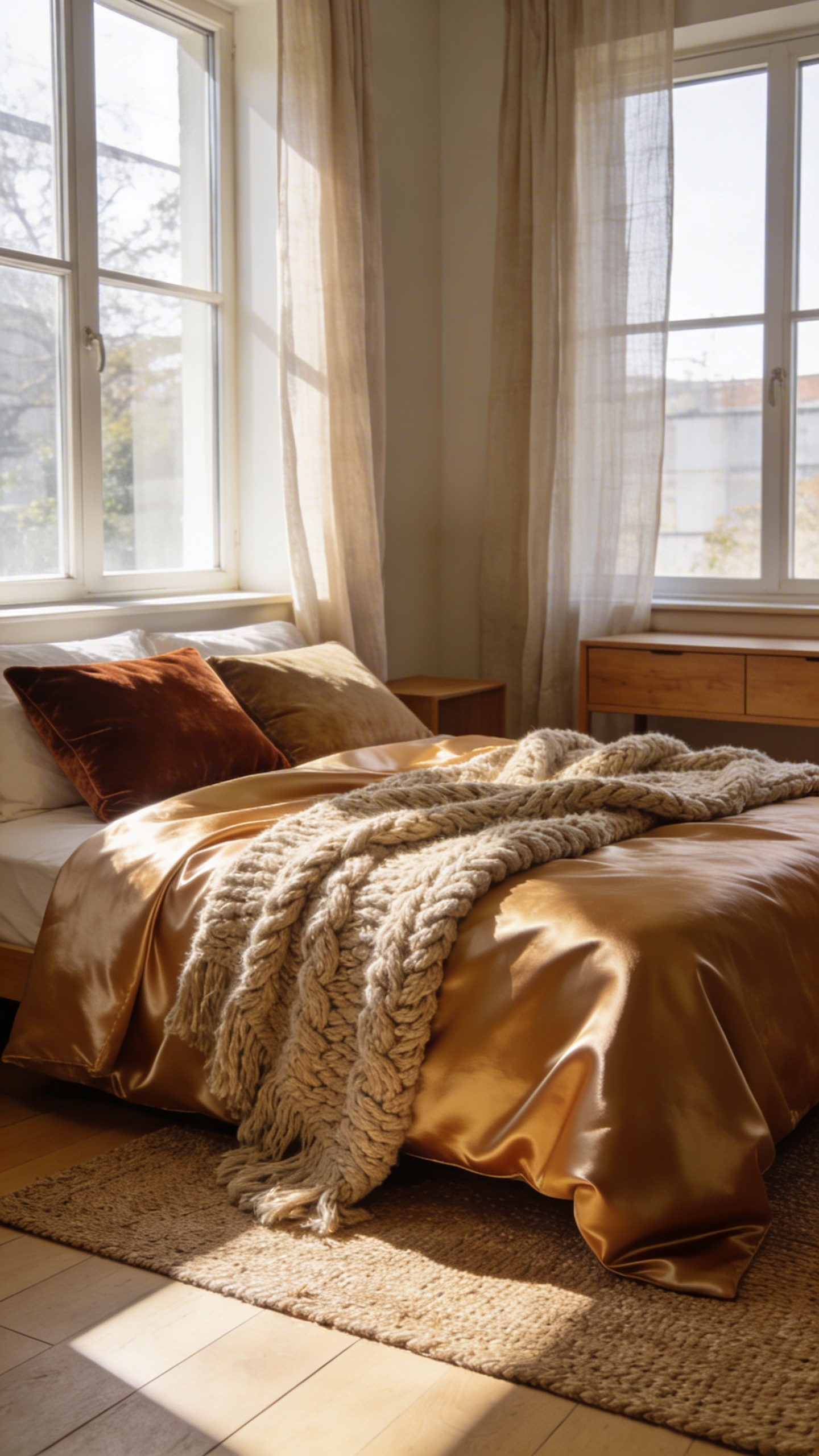
Visual harmony remains crucial to preventing sensory overload. Therefore, I recommend blending low-contrast textures with similar color values. This creates tactile intrigue for the hands while maintaining visual silence for the eyes. Materials also serve as vital tools for acoustic hygiene. We aim for sound dampening rather than creating an eerie, deadened room. Specifically, using heavy velvet or soft plaster absorbs high-frequency noise without causing sensory deprivation.
Thermal intelligence is also essential for deep, restorative sleep. Therefore, avoid synthetic polyesters that trap heat and disrupt your core temperature drop. Instead, choose breathable linen or thermoregulating silk to support your body naturally. True luxury is no longer about outward status. Indeed, it focuses entirely on your personal serenity and psychological well-being.
5. Tactile Color Theory: How Bouclé, Silk, and Linen Alter Our Perception of Hue
Color perception goes far beyond the simple dye used in a fabric. Specifically, geometric structure actively alters how we experience hue. For example, bouclé features looped fibers that naturally create thousands of tiny micro-shadows. These shadows blend together to visually soften bold colors. Therefore, a dark green bouclé headboard feels remarkably airy rather than spatially oppressive.
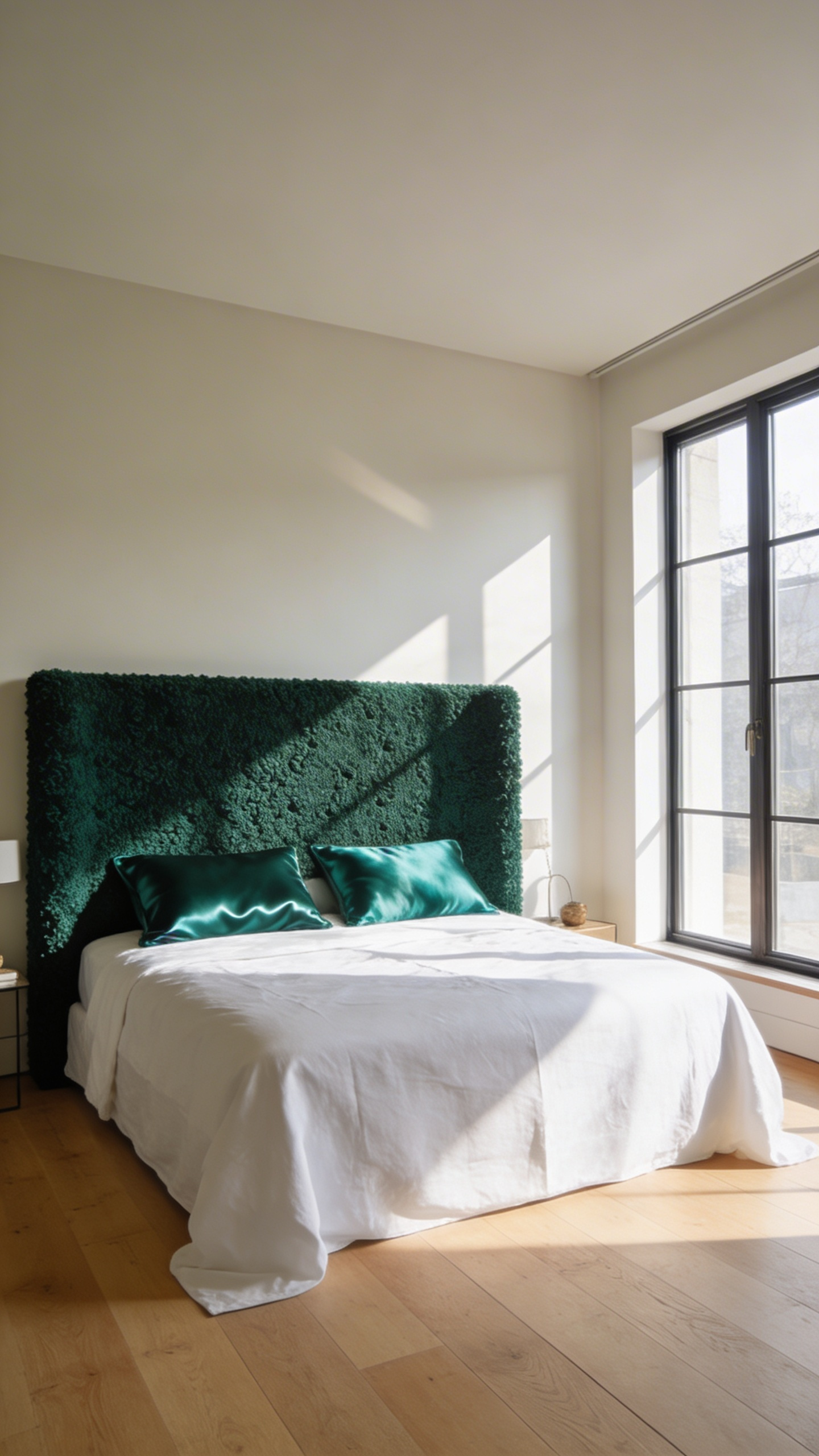
However, silk utilizes specular reflection to craft a highly dynamic hue. In fact, its triangular fibers bounce light in concentrated directions. As a result, a navy silk pillowcase shines almost silver along its highlights. This light-multiplying effect prevents rich colors from dying in low-light bedrooms. Next, consider how linen acts as the absolute antithesis to shimmering silk. Its hollow fibers drink in light through soft diffuse reflection. Therefore, a terracotta linen duvet always looks grounded, earthy, and profoundly relaxing for sleep.
Interestingly, our brains also assign subtle temperatures to these specific textures. This powerful psychological phenomenon is known as the haptic-visual loop. A cool grey silk feels significantly colder to the eye than bouclé. Because bouclé implies trapped warmth, it visually heats up otherwise chilly color palettes. Therefore, bedroom design requires a strategic blend of these materials.
To prevent textural monotony, you must curate a deliberate light-reflection gradient. Initially, use matte linen for expansive background elements to anchor the room. Next, introduce a bouclé accent chair to provide deep visual complexity. Finally, add pure silk throw pillows to create eye-catching focal highlights. Indeed, these tactile choices fundamentally transform how light and emotion behave within your sanctuary.
6. The Acoustic and Visual Benefits of Heavy, Pigmented Window Treatments
Heavy, pigmented window treatments fundamentally transform the sensory experience of a bedroom. Specifically, fabrics like velvet or wool absorb up to 90 percent of ambient noise. This high absorption rate eliminates disruptive flutter echoes. Dense materials weighing at least 32 ounces per yard also provide crucial mass. Therefore, they actively block the low-frequency rumble of outside traffic.
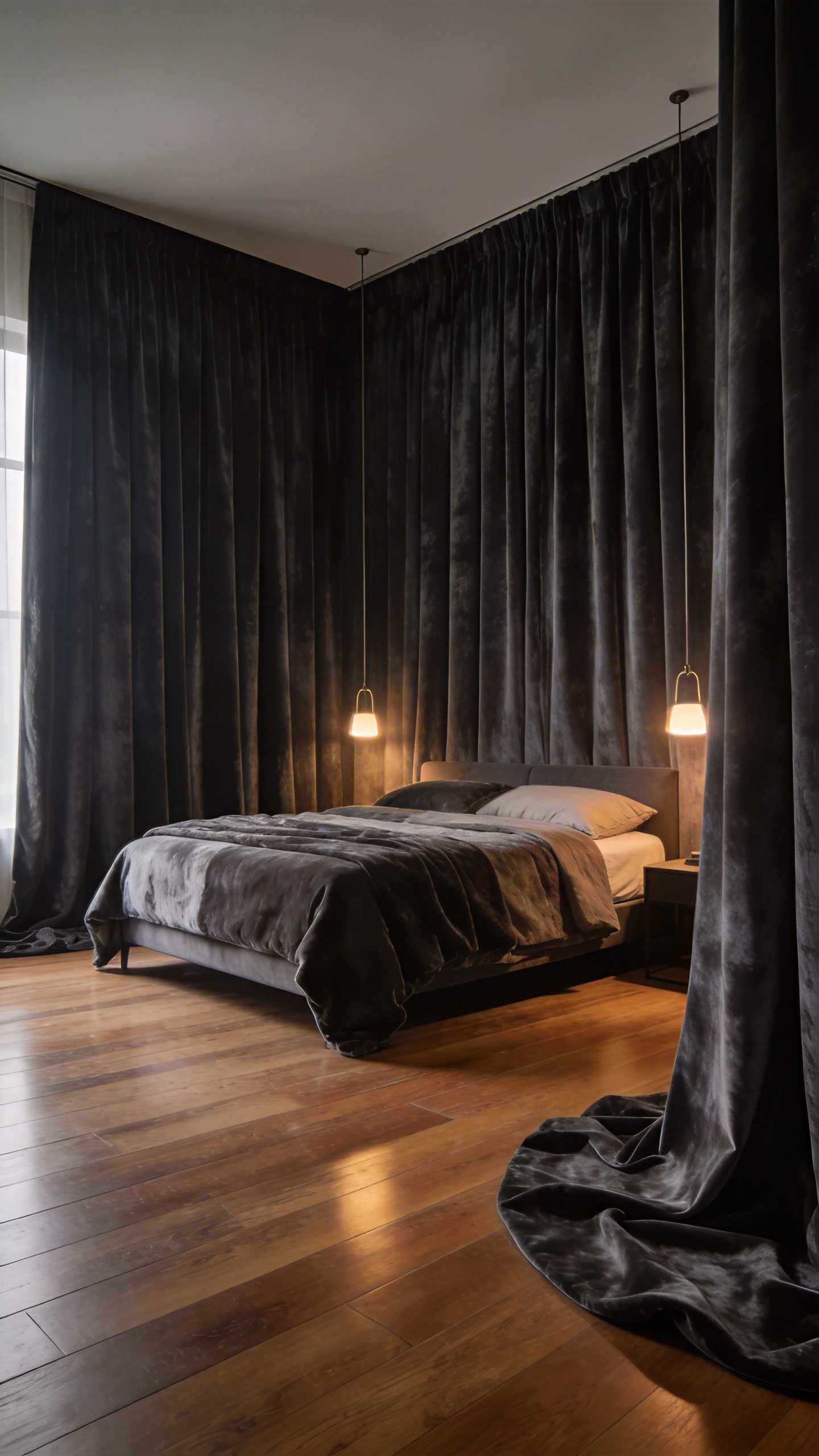
Swapping airy sheers for heavy drapes creates an enveloping cocooning effect. Indeed, deep saturated pigments like indigo or madder swallow light rather than simply blocking it. This profound chromatic depth signals the brain to produce melatonin. Therefore, the resulting visual warmth lowers heart rates and promotes deep rest. Under warm evening lamplight, velvet piles create a luminous, sophisticated sheen. Sweeping folds of thick fabric also soften the harsh architectural lines of standard bedrooms. In fact, this fluid texture breaks up the rigid geometry of the space.
However, heavy drapery must be properly balanced to avoid feeling oppressive. For instance, designers employ the high-and-wide rule for a harmonious layout. Specifically, curtain rods should extend 10 to 12 inches beyond the window frame. This allows dense fabrics to stack back gracefully during the day. Installing a dual-track system also provides ultimate functional versatility. A gauzy linen sheer filters gentle daylight to keep the room breathable. However, pulling the heavy velvet closed becomes a grounding, tactile ritual at night. Ultimately, this thoughtful layering secures absolute privacy while nurturing your psychological wellbeing.
7. Anchoring with Earth Tones: Grounding the Room via Natural Wood and Woven Jute
Integrating earth tones goes far beyond simple aesthetics. It actually acts as a psychological strategy for creating sanctuaries. Specifically, incorporating natural wood leverages our biological connection to nature. In fact, viewing wood grain actively lowers human blood pressure. This visual cue gently stimulates your parasympathetic nervous system. Therefore, the body prepares effectively for deep, restorative sleep. Visually, grain patterns also provide a comforting narrative of time. Real wood provides a safe, grounded tactile bedroom experience. Unlike laminates, natural timber retains thermal warmth beautifully upon touch.
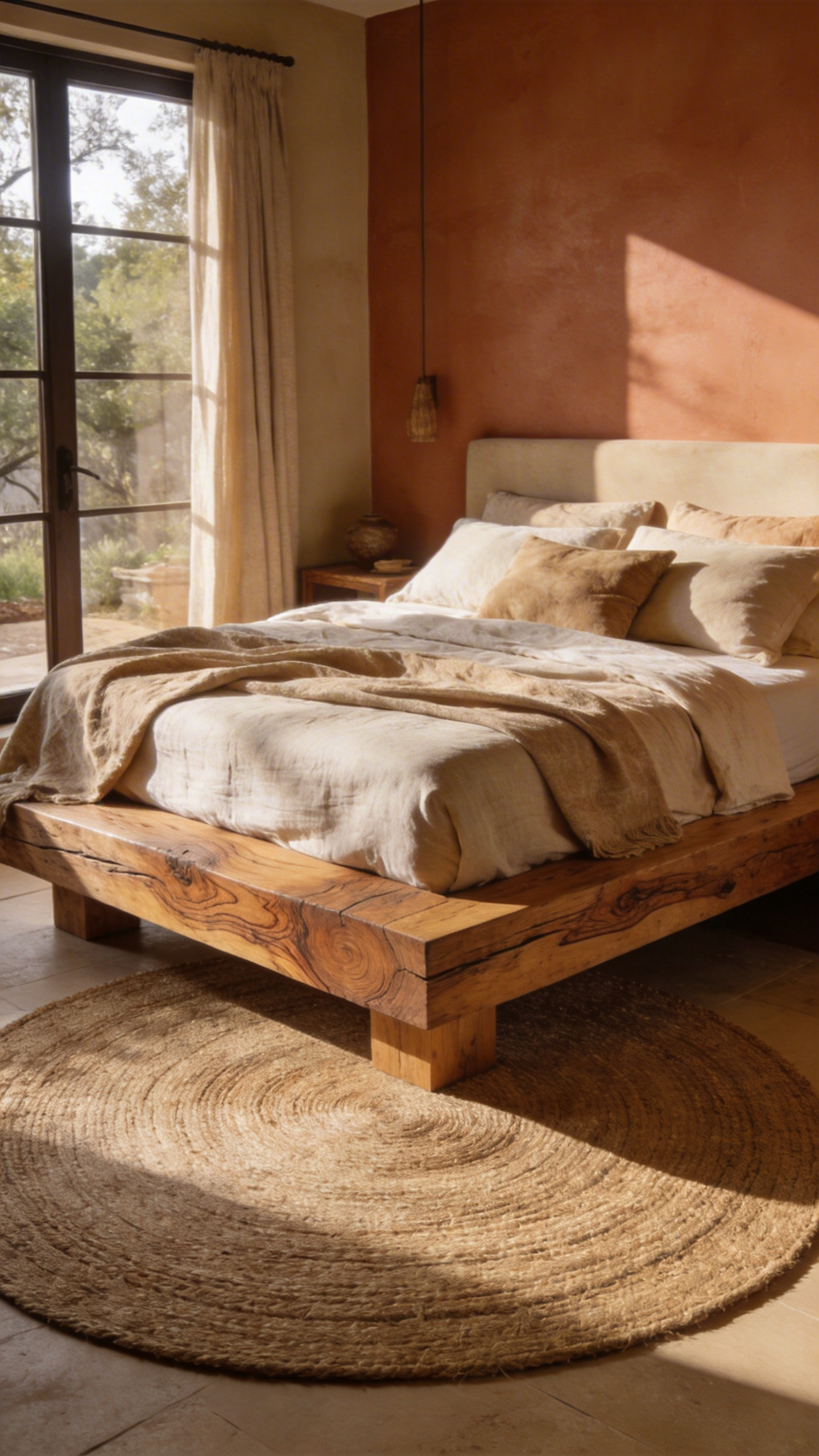
Woven jute also offers profound emotional and sensory benefits. Originally used for utility, this fiber brings crucial visual weight. Therefore, a heavy jute rug pulls the eye downward instantly. This prevents bedroom furniture from floating visually. Jute possesses thick fibers that swallow harsh room echoes. As a result, the sleeping space feels instantly more private and enclosed.
Together, these two elements create a perfect biophilic symbiosis. Smooth wood surfaces contrast beautifully with rough jute weaves. Interestingly, this specific micro-contrast mimics a peaceful forest floor. Our brains find this visual complexity entirely safe. Both materials also naturally absorb and release ambient room moisture. Therefore, they gently regulate humidity to prevent stale bedroom air. Layering jute under wood beautifully delineates a restful zone. Indeed, stepping from warm wood onto jute physically grounds you. Your mind immediately recognizes a clear psychological boundary for detachment.
8. Metallic Accents as Light Modulators: The Psychological Difference Between Brass and Nickel
In a bedroom makeover, metallic accents act as subtle light modulators. Specifically, these finishes shift the room’s color temperature and its psychological impact. For instance, brass reflects light within the warm visual spectrum. This metal beautifully mimics the glow of a low-angle sunset. Neurologically, this warm wavelength reduces cortisol and boosts your calming serotonin. Therefore, brass accents create a sense of profound biological security and intimacy. However, nickel acts as a luminous neutral with trace gold undertones. Instead of adding warmth, it gently refines the existing room light. Indeed, nickel provides calm, architectural clarity for a meditative sleep retreat.
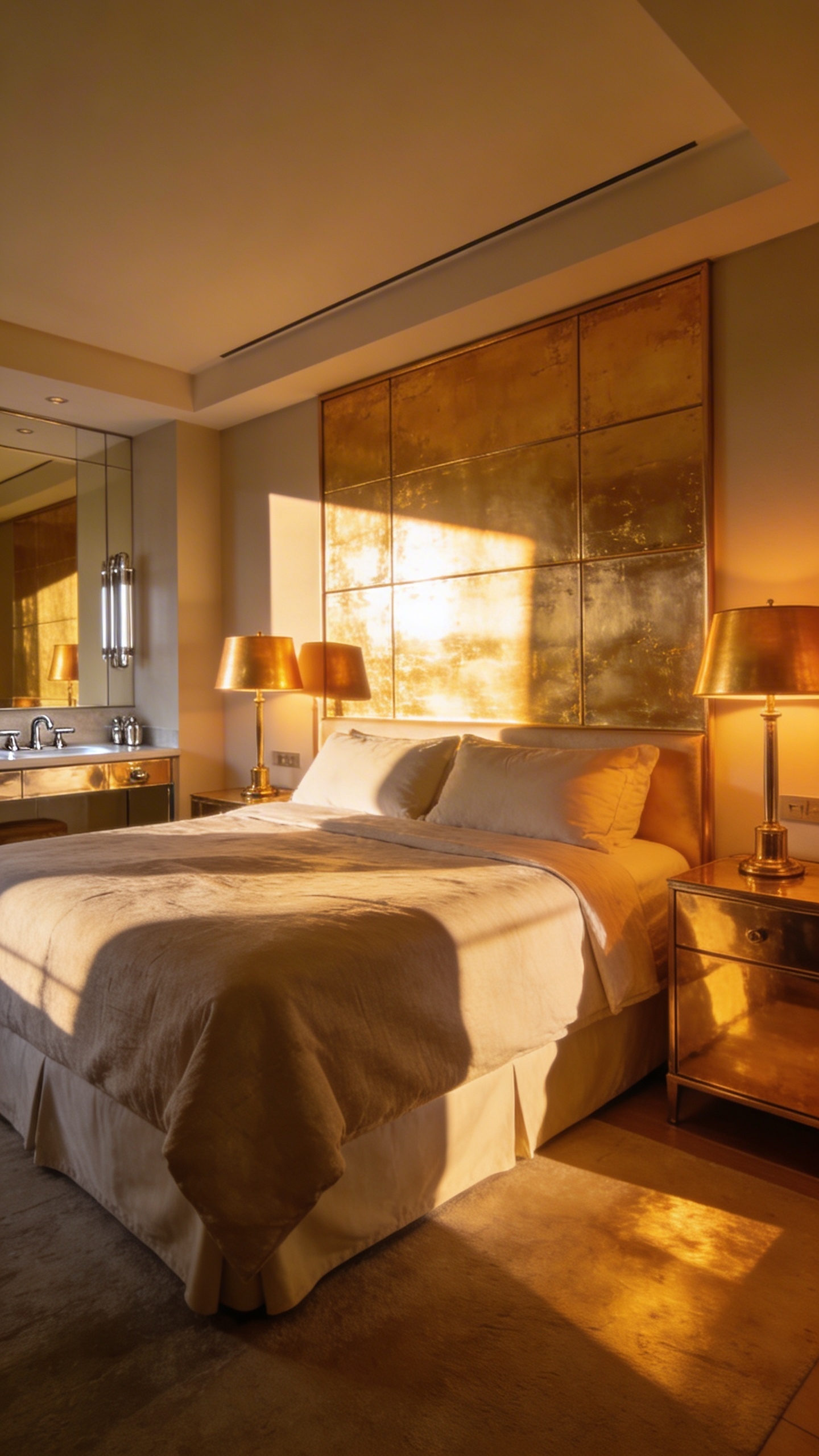
The historical context of these metals also shapes our psychological perception. Historically, brass symbolized quiet grandeur and lasting Victorian era status. Over time, unlacquered brass develops a rich, living visual patina. It records a deeply personal history of heritage and renewal. Physically, solid brass also offers a satisfying, heavy tactile gravity. Indeed, this heft signals subconscious durability, safety, and stable craftsmanship.
Alternatively, polished nickel evokes modernist precision born from the Machine Age. This smooth finish promotes efficient restraint and quiet emotional confidence. Tactilely, nickel feels incredibly crisp and precise to the touch. Therefore, this exceptionally clean surface reduces evening anxiety and sensory noise.
Finally, these distinct metals dramatically alter your paint color interactions. Visually, brass pops against saturated jewel tones like rich navy blue. Therefore, it adds luxurious opulence to create a cozy cocoon effect. Nickel serves as an intelligent design bridge for a room. Specifically, it balances cool grays and crisp whites without feeling sterile. Because of its underlying warmth, nickel brings light into spaces quietly. Indeed, it creates an airy openness inside smaller or darker bedrooms.
Phase III: Spatial Application – Structural and Visual Interventions
Moving into technical execution requires specific bedroom inspirations master tips to alter the room’s physical bones. Specifically, this phase targets the psychological boundaries of rest. Historically, bedrooms functioned as public spaces. Today, modern designers build intimate structural inner sanctums. For example, installing non-load-bearing partition walls creates a highly private vestibule. In fact, this geometric shift naturally signals the brain to unwind completely.
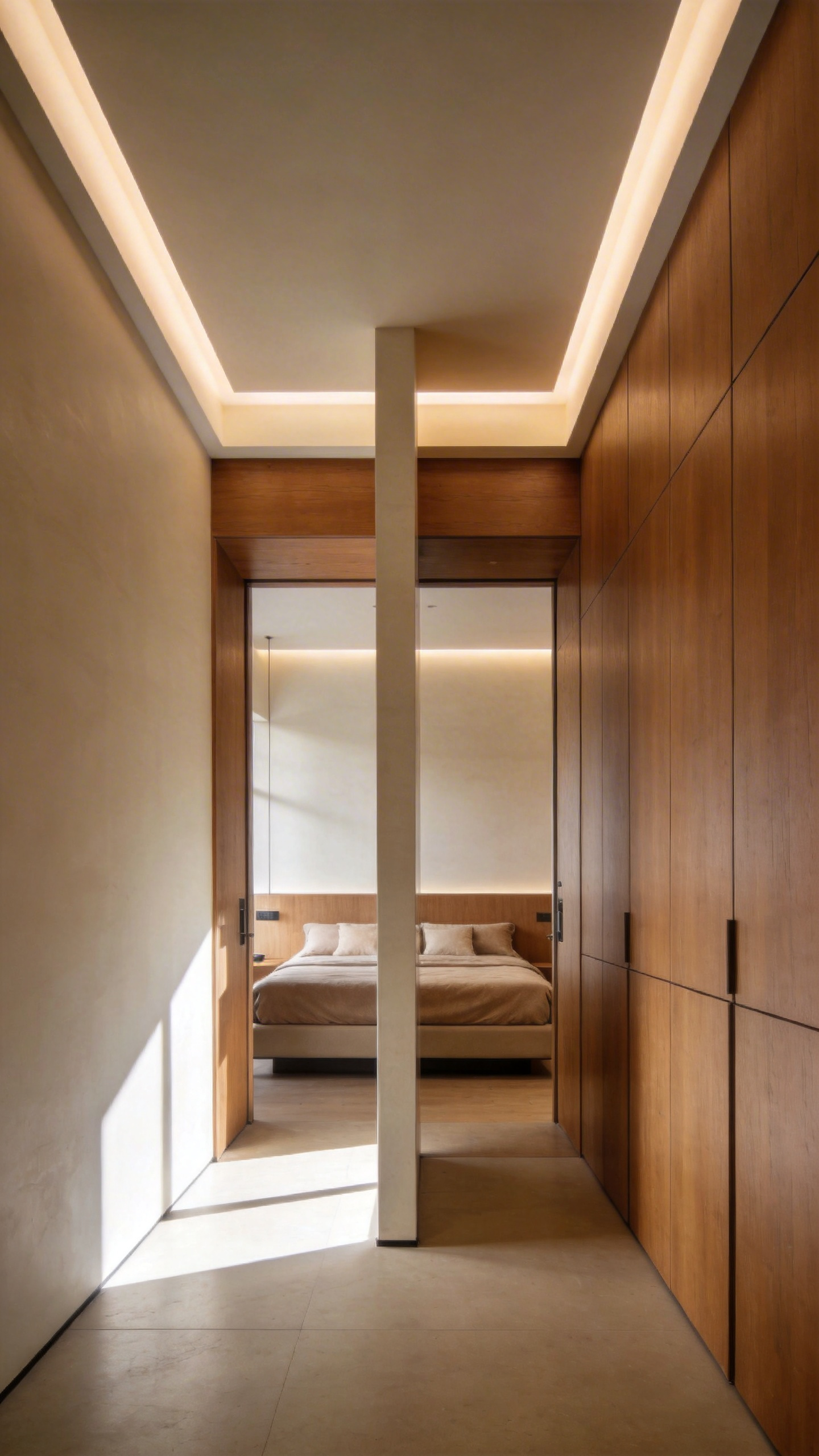
High-end renovations treat storage as a vital structural intervention. Seamless custom built-ins are completely essential. Utilizing moisture-resistant plywood for wall-to-wall cabinetry permanently eliminates distracting visual noise. Removing gaps between furniture and walls drastically reduces your cognitive load. In fact, neurological studies show this mental reduction reaches forty-five percent. Therefore, the bedroom feels inherently restful.
Clever visual interventions can successfully correct tricky spatial puzzles in fixed-plane rooms. The Nordic Envelope strategy is brilliant here. Visually, painting walls and ceilings in uniform warm neutrals makes boundaries recede. Interestingly, varying the paint finishes maximizes how natural light bounces across surfaces. This reflective color technique creates a continuous, harmonious visual flow.
Strategic lighting also acts as an invisible boundary in studio layouts. Narrow-beam pendants define the sleeping zone without physical dividers. Therefore, surrounding shadows act as comforting, protective walls. Physical materiality heavily influences our internal hormonal states. Soft sensory interventions like high-slub linens trigger soothing oxytocin upon contact. However, excessive glossy surfaces create stressful tactile dissonance. Ultimately, aligning these structural and tactile choices ensures a truly restorative spatial narrative.
9. The ‘Fifth Wall’ Approach: Color-Drenching the Ceiling to Lower Visual Heart Rate
Traditionally, a white ceiling acts as a harsh visual lid. This high-contrast line keeps the brain subtly alert. In interior design, we measure this via visual heart rate. Specifically, this dictates how fast eyes process room transitions. Therefore, painting the ceiling and walls one hue is transformative. Without sharp boundaries, your rapid eye movements become highly fluid. Indeed, this profound visual quiet engages the parasympathetic nervous system.
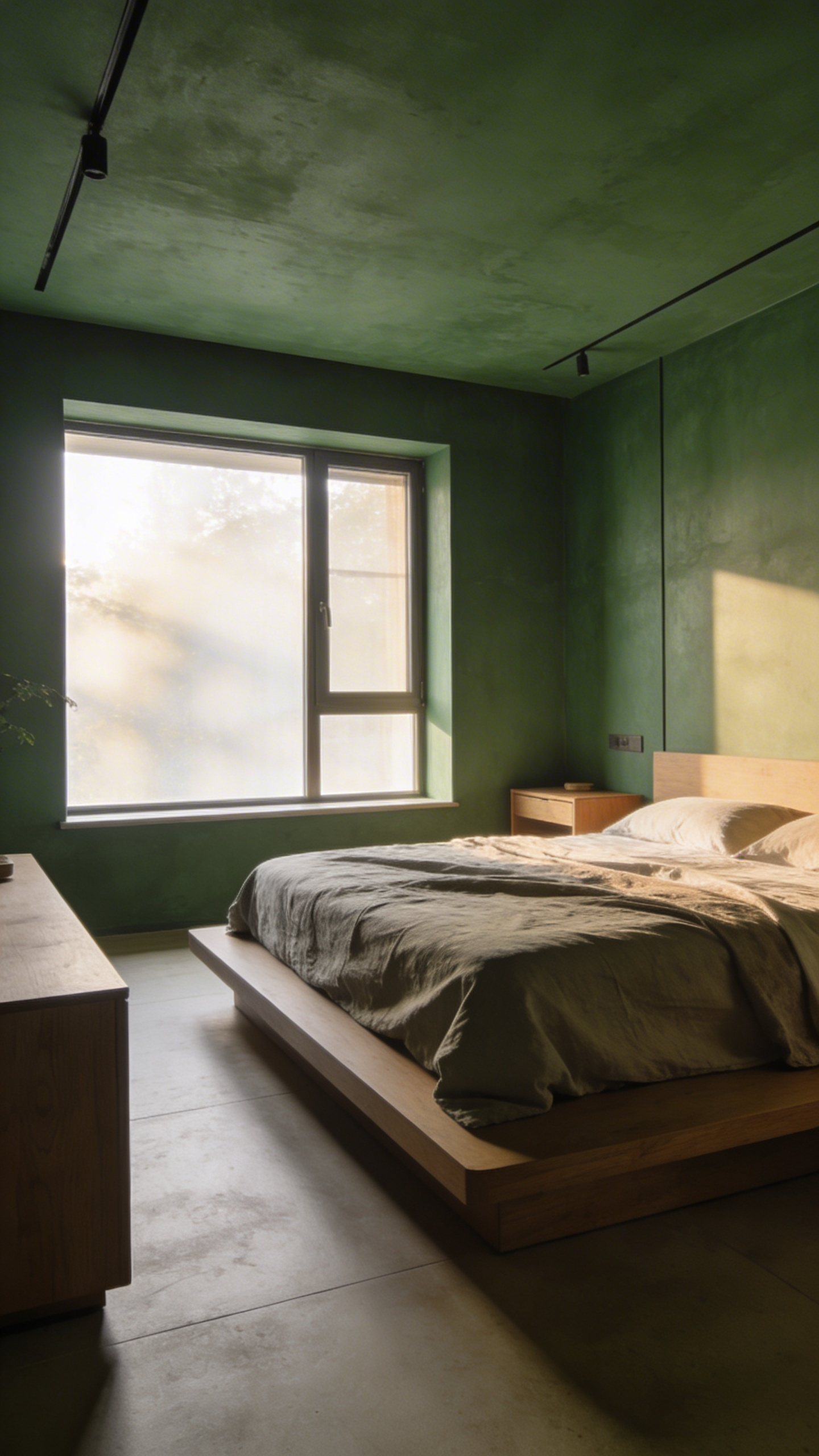
Bedrooms rely heavily on this critical fifth wall. After all, you spend hours viewing it from a supine perspective. Historically, bright white ceilings merely maximized cramped artificial light. Today, we know white surfaces also bounce disruptive blue light. However, a color-drenched ceiling absorbs excess light beautifully. Deep tones like rich terracotta effectively signal physical rest. Extending wall color upward gently blurs harsh architectural edges. As a result, the space feels like a soothing cocoon.
However, successful execution relies entirely on proper sheen variance. For instance, always select a flat or matte ceiling finish. This deadens the surface to make it appear velvety. Next, use a satin finish for your baseboards and trim. Therefore, you maintain a seamless color line while adding depth. You might also explore a modern double drench approach. Specifically, this pairs saturated walls with a slightly lighter ceiling. Psychologically, this canopy effect lowers stress by mimicking natural skies.
10. Psychological Color Blocking: Visually Separating Sleep Zones from Dressing Areas
Our brains naturally associate specific environments with distinct neurochemical states. Therefore, combining a high-cognition dressing area with a restorative sleep space creates conflict. To solve this, we use psychological color blocking as a visual threshold. Specifically, this technique separates your active morning routine from your evening wind-down.
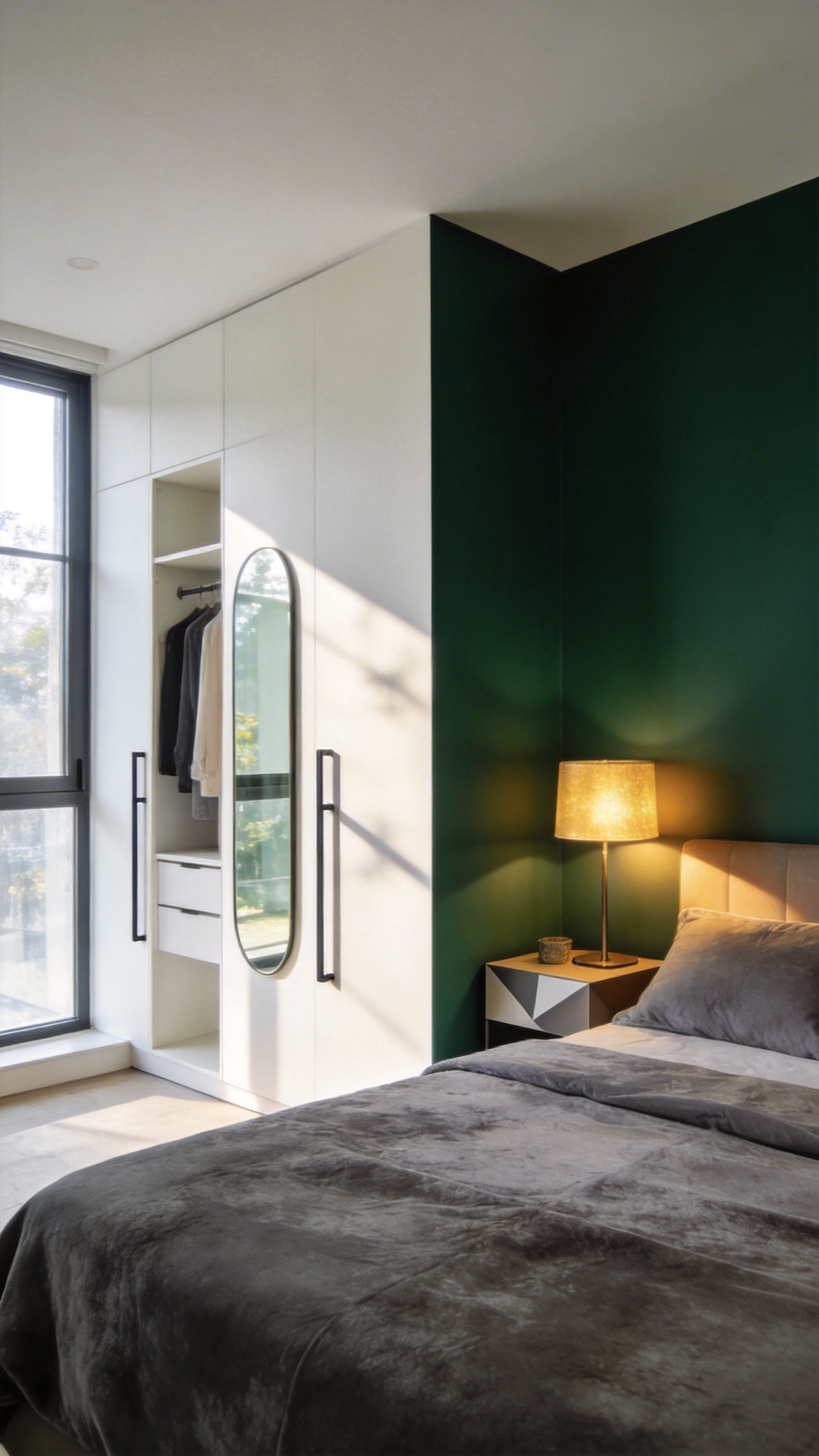
A dressing area naturally demands high-energy activity and decision-making. Therefore, you should apply pale, high-reflectance colors like crisp white or light blush here. These active hues stimulate cortisol production to help you wake up. However, your sleep zone requires deep, recessive shades like matte charcoal or forest green. These darker, light-absorbing colors signal the pineal gland to produce melatonin.
Altering paint finishes also enhances this crucial sensory contrast. A satin finish in the dressing nook mimics a bright, clean boutique. Meanwhile, an ultra-matte finish around the bed softens harsh corners into a calming sanctuary. In fact, this visual blurring profoundly relaxes the optic nerve before sleep.
Painting an overarching color block replicates historic architectural luxury without construction. However, sharply contrasting colors might create anxiety in smaller bedroom spaces. Instead, try using a tonal gradient to separate these two distinct zones. For instance, pairing a light sage vanity with a deep olive headboard works perfectly. Ultimately, this gentle transition provides necessary psychological separation without adding jarring visual noise.
11. Asymmetrical Paint Techniques to Correct Challenging Bedroom Proportions
Symmetrical rooms can sometimes feel stagnant to the human brain. However, asymmetrical paint techniques force cognitive engagement. This visual engineering creates a lived-in dynamism. Therefore, a cramped bedroom suddenly feels expansive and energized. Perfectly square rooms often feel boxy and institutional. Diagonal color blocking easily breaks these rigid corners. Specifically, painting a large diagonal block creates a forced perspective. This visually elongates the space to make short rooms deeper. A dark corner triangle effortlessly isolates a modern workspace.
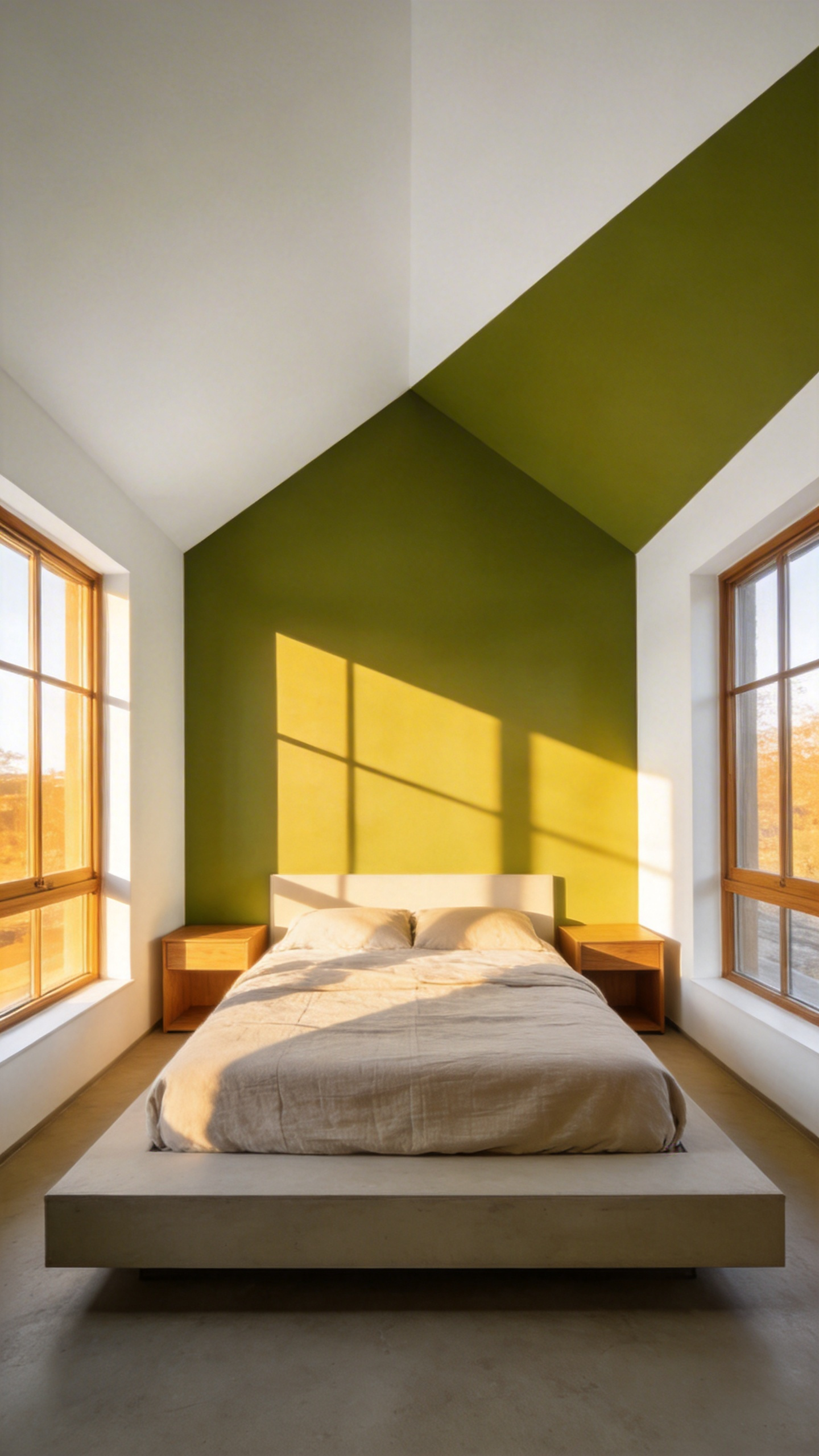
Narrow rooms or cavernous ceilings also benefit from asymmetrical tricks. To fix low ceilings, an off-center vertical band visually lifts the space. Meanwhile, an asymmetrical lower wall dado adds grounding visual weight. Design experts frequently apply the 60/40 rule here. Therefore, a neutral background gently anchors a bold color block. Awkward attic slants also require careful psychological consideration. Highlighting a slanted ceiling with vibrant color fosters a tent-like enclosure. Indeed, this cocooning effect is perfectly ideal for restful sleep.
Alternatively, painting the slope a light neutral makes it recede. This simple trick mimics an airy, expansive open sky. Finally, corner wrapping resolves awkward off-center bed placements. Painting an L-shape around the bed physically hugs the furniture. This echoes the Japanese concept of “Ma” or negative space. In fact, it provides a deep, comforting sense of primordial safety.
12. Architectural Illusions: Using Deep, Saturated Tones to Recede Awkward Bulkheads
Awkward bulkheads often disrupt the peaceful atmosphere of a bedroom. Specifically, sharp shadows draw attention to these structural intrusions. Therefore, standard white paint only highlights their heavy geometric angles. Instead, deep and saturated tones offer a brilliant architectural solution. Rich pigments absorb incident light almost completely across the surface. The hard edges vanish into a seamless shadow. In fact, the brain perceives infinite depth rather than a bulky box.
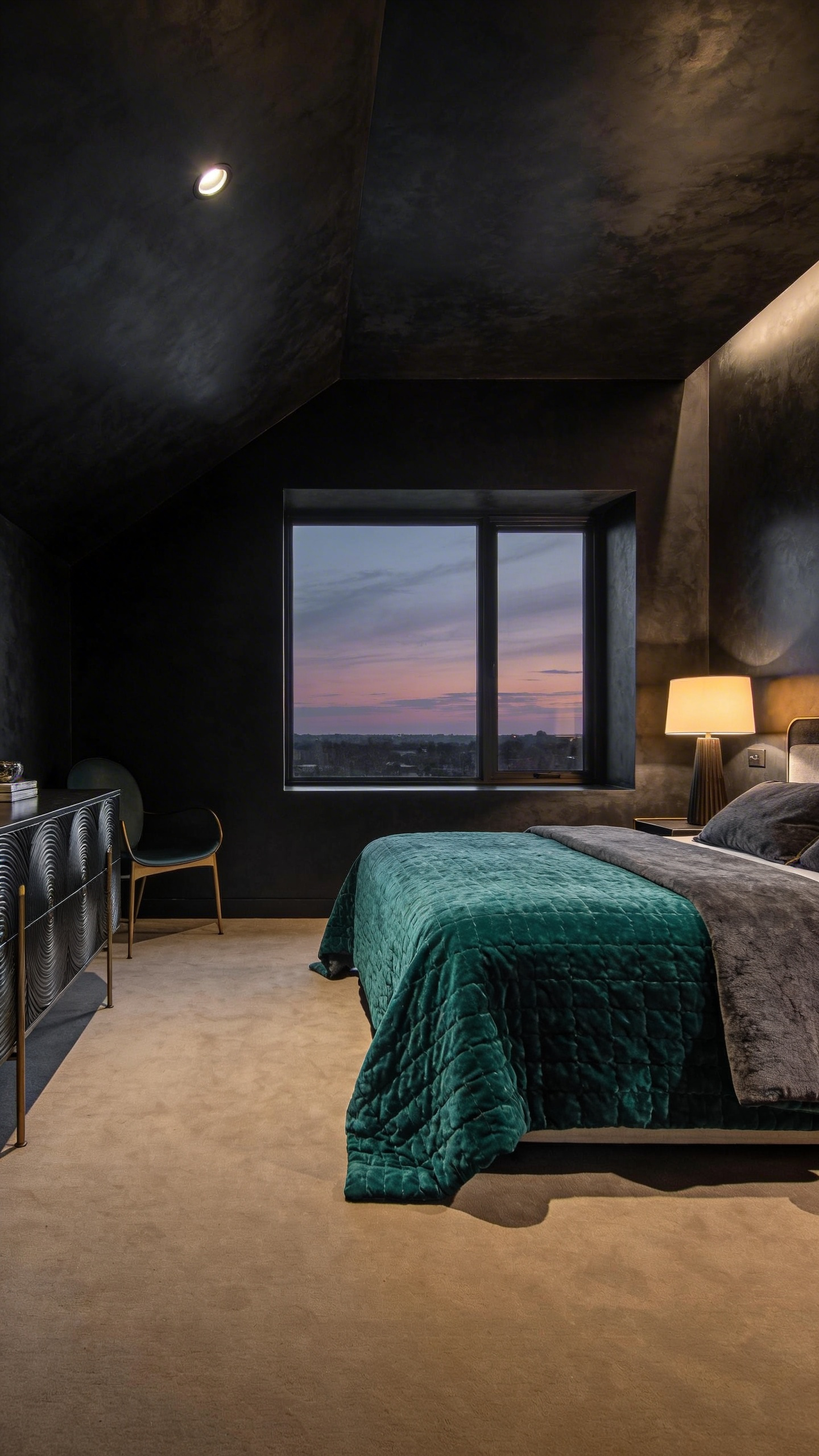
Victorian designers used dark tones to blur spatial boundaries. Modern color drenching applies this exact psychological principle today. Simply put, you paint the bulkhead, wall, and ceiling identically. This erases the visual line separating the walls from the ceiling. Therefore, the room instantly transforms into a soothing, protective cocoon. This enveloping technique prevents the space from feeling squat or compressed.
However, selecting the correct paint finish is absolutely critical. Glossy highlights from satin finishes will instantly ruin the illusion. Instead, you must use a pigment-rich, ultra-matte paint. This dead-flat surface mimics the soft texture of velvet. Therefore, it creates a sense of tactile quietude perfect for restorative sleep. When selecting specific hues, prioritize cool tones like deep teal. These recessive shades push the structural protrusion away visually. In fact, a bulky soffit above your headboard transforms into an infinite sky.
13. Transition Palettes: Seamlessly Blending the Primary Bedroom with the En Suite
Instead of simply matching paint, designers now use analogous colors. This prevents flat or institutional feelings. Specifically, moving between spaces triggers a psychological micro-shift. Therefore, adjacent hues signal a functional change without jarring the senses. For example, a dusty sage bedroom naturally flows into a sea-mist bath. Experts recommend flipping color ratios for visual balance. Indeed, if a bedroom is predominantly navy, the bathroom becomes mostly white. As a result, this mirror-image effect feels cohesive yet distinctly zoned.
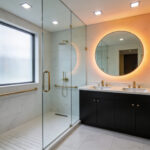
Historically, en suites were hidden, utilitarian spaces. Today, glass partitions replace walls to maximize natural light. This wellness architecture helps regulate your circadian rhythm. Tactile consistency also anchors this spatial harmony. Notably, brass bedroom hardware must exactly echo the bathroom faucets. Similarly, a sleek brass inlay strip beautifully bridges flooring transitions.
Authoritative design considers the invisible sensory palette. For instance, scent acts as a powerful emotional bridge. Calming bedroom lavender and energizing bathroom eucalyptus share woody bases. Sound-insulating bedroom drapery also gently softens echoing bathroom tile acoustics.
Finally, layered lighting acts as the ultimate visual glue. Specifically, continuous LED cove lighting seamlessly synchronizes both rooms. Therefore, dimming the entire suite creates one unified, tranquil sanctuary.
Phase IV: Lifestyle Integration – Dynamic and Atmospheric Adaptations
In this final design phase, the bedroom becomes a dynamic landscape tailored to human biology. Layout shifts toward functional configuration rather than traditional theatrical arrangements. Designers position beds as central islands to allow complete spatial movement. High-sided furniture acts as a sensory gate to block out domestic chaos. In fact, this visual narrowing creates a profound psychological sanctuary for the occupant.
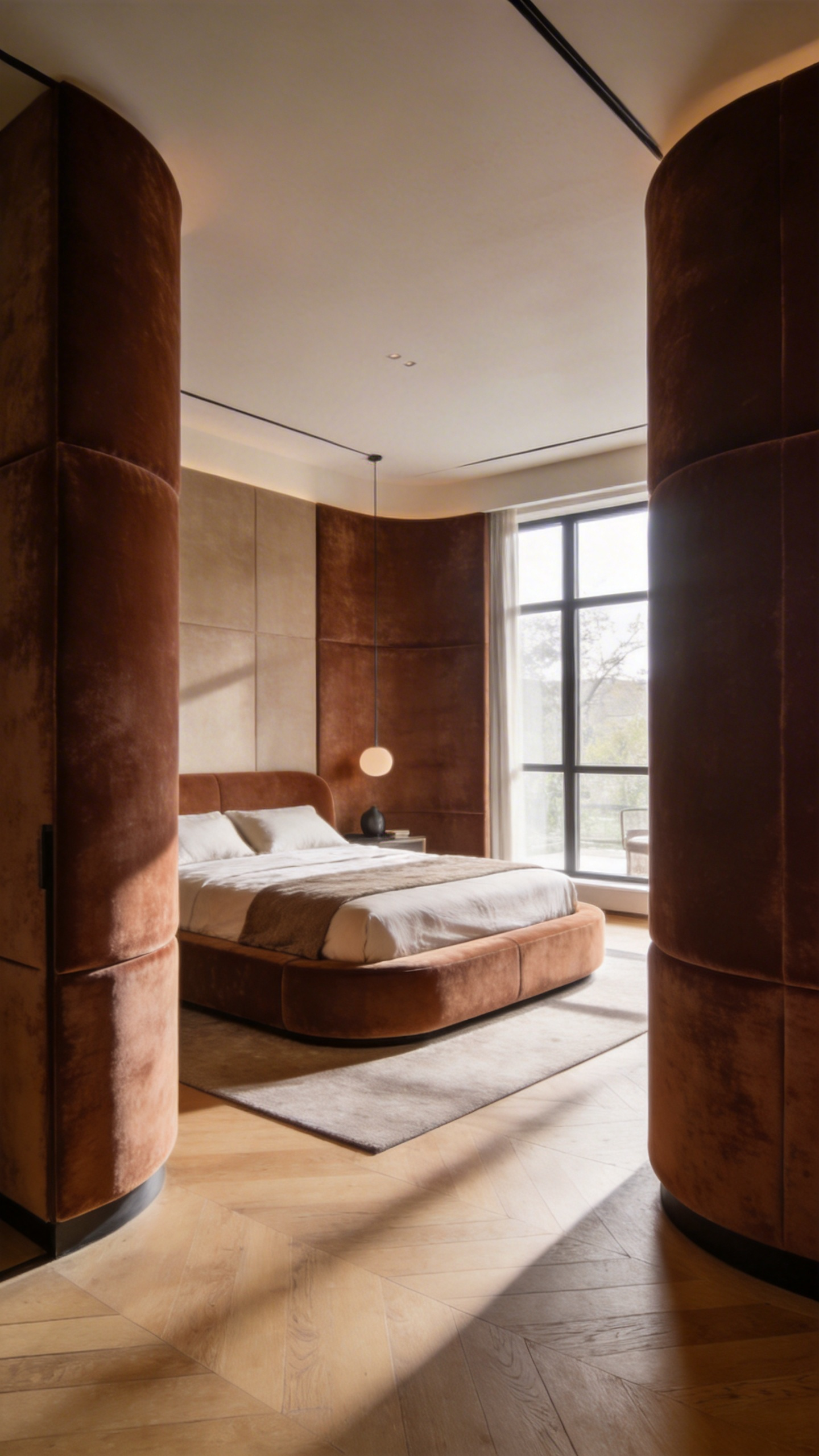
Atmospheric chromatics actively shift the emotional weight of the room. Materials with a directional nap change appearance based on lighting conditions. Specifically, a deep sapphire velvet headboard transitions into a soothing midnight black under evening lamplight. This modern chiaroscuro effect ensures the space never feels emotionally static. Precision engineering replaces artificial aesthetics to elevate daily sensory feedback. Unlacquered brass drawer pulls with precision knurling offer a distinct tactile snap. Over time, these living finishes develop a rich patina that evolves alongside you.
Light also serves as non-physical architecture to outline functional relaxing zones. For example, automated circadian lighting shifts from stimulating midday blue to calming sunset amber. This color temperature change perfectly aligns with natural melatonin production. Ultimately, biophilic sensory layering completes this wellness-focused psychological integration. High-pile wool wall panels naturally absorb high-frequency electronic chatter. Meanwhile, unpolished natural stone plinths provide a thermal anchor to gently lower body temperature. Indeed, physical cooling is a biological prerequisite for entering restorative, deep REM sleep.
14. Circadian Lighting Design: Selecting Smart Bulbs that Enhance Your Chosen Paint Palette
For a bedroom prioritizing well-being, circadian lighting is a biological necessity. Modern smart bulbs actually manipulate your internal biological clock. However, selecting them without considering paint causes unintended emotional shifts. Your relaxing space might suddenly feel sterile or muddy. This visual disconnect happens due to a scientific phenomenon called metamerism. Essentially, tunable smart bulbs shift from bright morning daylight to warm evening glows. Therefore, a sophisticated greige paint might look perfectly balanced at noon. However, it can develop a muddy yellow undertone at night. Designers recommend choosing light bridging neutrals. Indeed, shades with high light reflectance absorb these shifts beautifully without losing their identity.
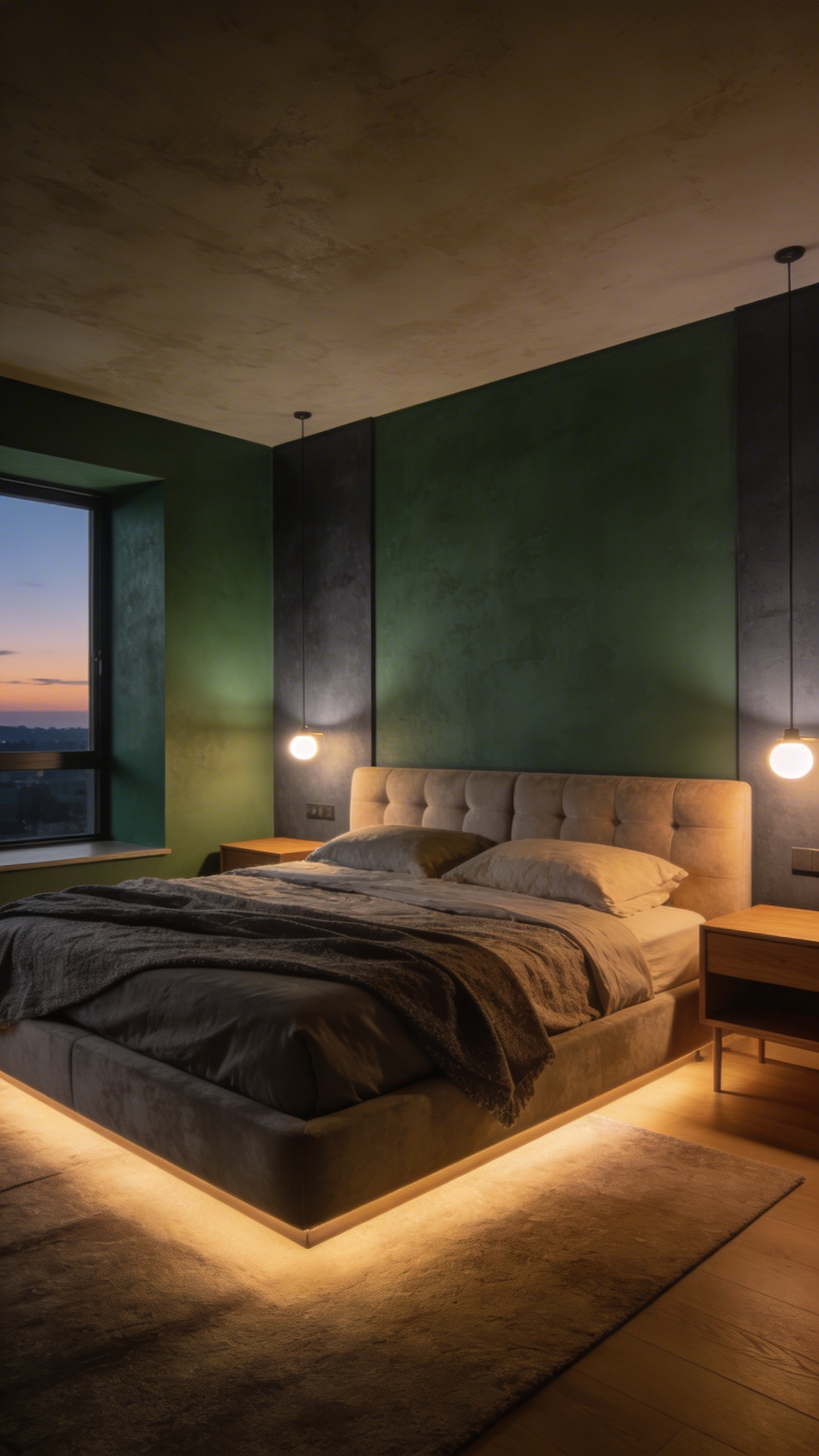
You must carefully consider the bulb’s color rendering technology. Traditionally, standard smart bulbs relied heavily on blue-pump LEDs. Unfortunately, these create flat, dull color rendering in the evening. Instead, evaluate smart bulbs using the rigorous TM-30 color standard. Look for high fidelity and gamut scores near one hundred. Advanced violet-pump LEDs maintain deep visual richness without disrupting melatonin. Therefore, your dark accent walls easily retain their intended color fingerprint.
The physical sheen of your paint directly impacts your circadian response. Glossy finishes reflect light sharply like a hidden mirror. As a result, they create harsh hot spots of high-intensity melanopic lux. This intense visual glare can accidentally keep you awake. Therefore, always opt for matte or flat paint finishes indoors. Matte surfaces provide a soft, diffuse reflection across the room. In fact, the shifting illumination feels exactly like a calming, natural sunset.
15. Seasonal Color Layering: Adapting the Room’s Mood with Rotational Bedding and Throws
Seasonal color layering goes far beyond a simple aesthetic choice. In fact, it functions as a powerful psychological reset for your mind. Rooted in the Japanese ritual of Koromogae, this practice reduces seasonal transition anxiety. By updating your textiles, you signal your brain that the environment is prepared. Therefore, your bedroom becomes a deeply harmonious space.
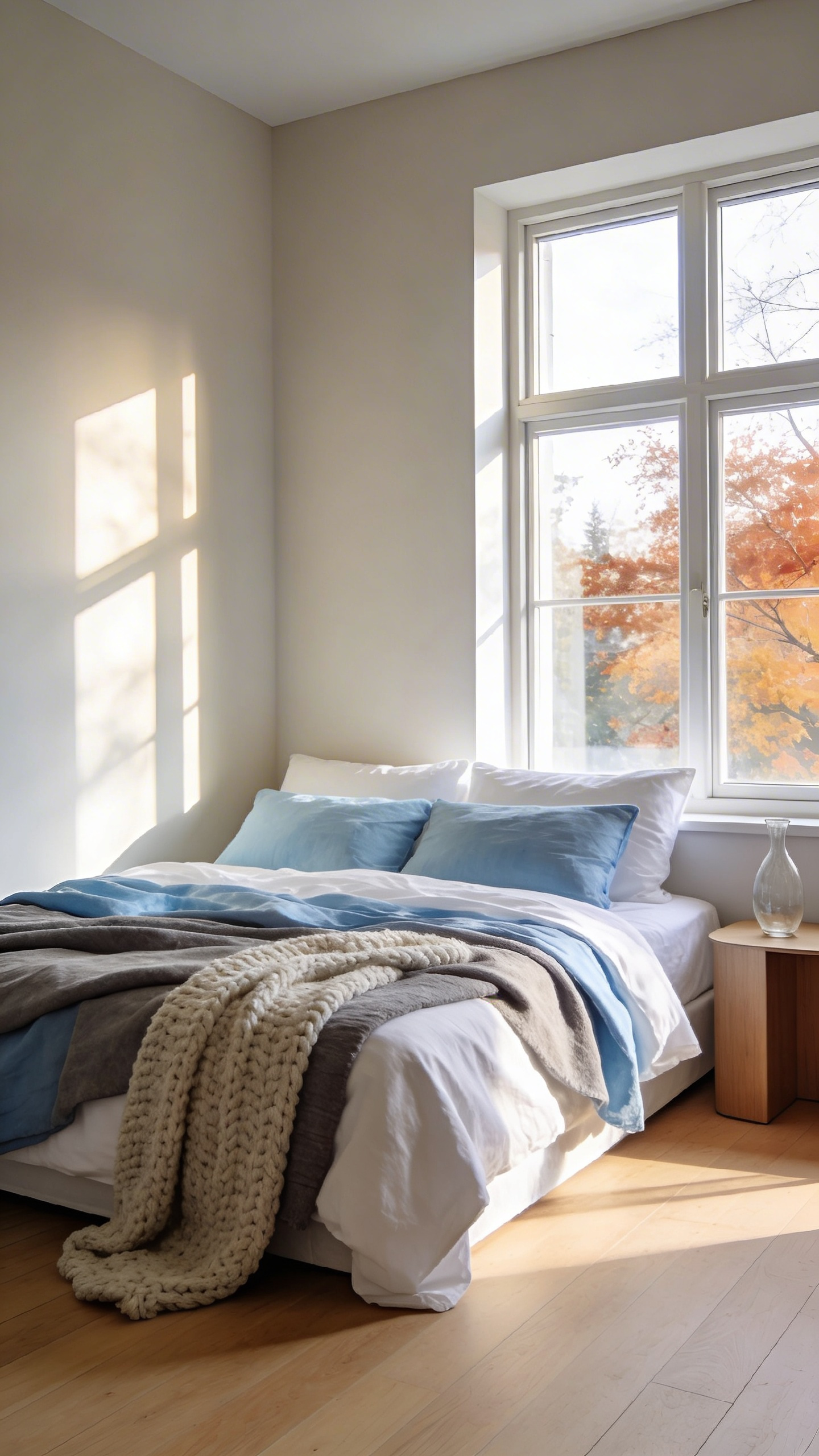
Color physically manages both visual and actual room temperature. For instance, high-reflectance colors like ice blue actively repel summer solar radiation. However, warm hues like terracotta actually increase your perceived body temperature. Therefore, you feel cozy in winter without constantly adjusting the thermostat. Textures also greatly amplify these emotional color impacts. Winter palettes demand heavy, dark shades like forest green or navy. Chunky wool blankets create an enveloping, acoustic softness. Alternatively, summer rotations favor weightless colors like lavender or sage. Smooth linen creates a frictionless, cooling sensory experience.
Seasonal changes dramatically alter your room’s natural lighting. Winter sunlight typically casts a cool, blue-toned hue across your space. Therefore, layering warm rust throws actively prevents a depressing atmosphere. Summer light casts sharp shadows that add depth to crisp textiles.
Implementing a three-layer rotation rule simplifies this entire process. Initially, maintain a breathable cotton base sheet year-round. Next, add a medium-weight quilt in a soothing, neutral anchor color. You only need to rotate your top mood layer. For example, swap a heavy faux-fur blanket for a lightweight spring throw. Indeed, updating just ten percent of the room completely transforms its mood.
16. The ‘Tech-Free Zone’ Aesthetic: Minimizing Digital Clutter with Color Camouflage
Creating a truly restful bedroom requires minimizing digital clutter. Specifically, our brains are hardwired to detect high-contrast shapes. A black television against a white wall creates subconscious visual noise. This stark contrast can raise cortisol levels and disrupt sleep. To solve this, interior designers utilize a psychological technique called color drenching. For example, try painting your walls, trim, and media furniture the same deep, matte hue. Therefore, the eye no longer snags on the sharp outlines of modern devices.
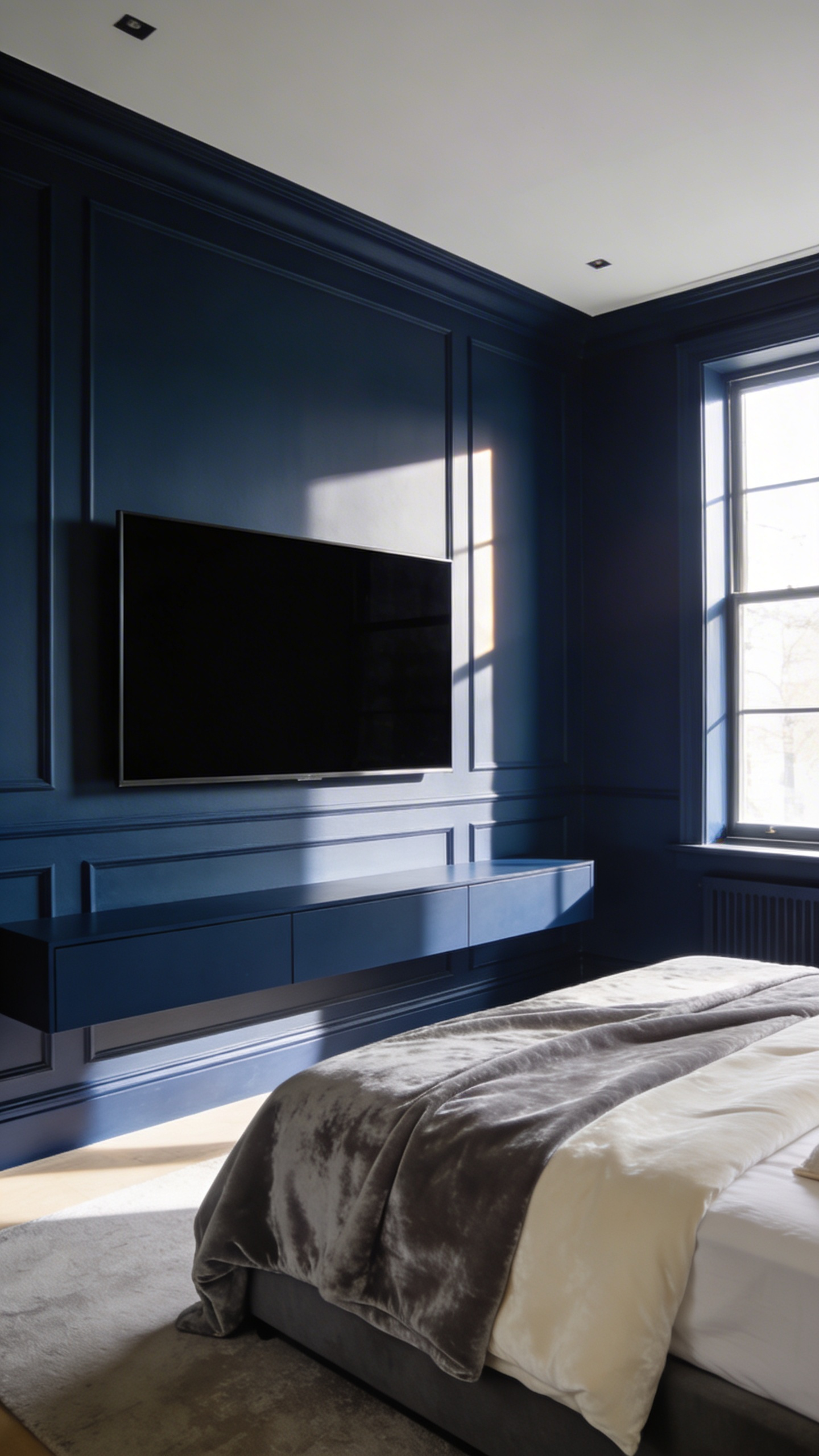
Beyond color, we must also address the glossy glare of plastic screens. Even a hidden cord is revealed when bedside lamps catch its reflective surface. Therefore, experts strongly recommend using dead-matte paint finishes. Incorporating micro-textured fabrics like linen helps absorb ambient light. Next, it is crucial to maintain device functionality while optically hiding it. Fortunately, you can use acoustically and wave-transparent textiles for this purpose. For instance, a wooden frame wrapped in dyed speaker cloth conceals a router perfectly.
This stealthy design approach relies on a refined three-tone camouflage rule. First, let your dominant matte wall color cover ninety percent of the space. Then, add seven percent textural variation using the exact same color. Finally, reserve three percent for a visual decoy like natural brass or raw wood. Consequently, your gaze is immediately drawn toward these living elements instead of the hidden technology.
17. Therapeutic Synchronicity: Matching Aromatherapy Scents to Your Bedroom’s Hue Profile
To truly optimize your bedroom, consider the neuro-aesthetics of cross-modal perception. The brain naturally processes sensory input collectively. Matching your room’s scent to its color profile actively reduces computational load. Therefore, this alignment beautifully induces processing fluency. In fact, this harmony creates a sensory anchor that signals your nervous system to rest.
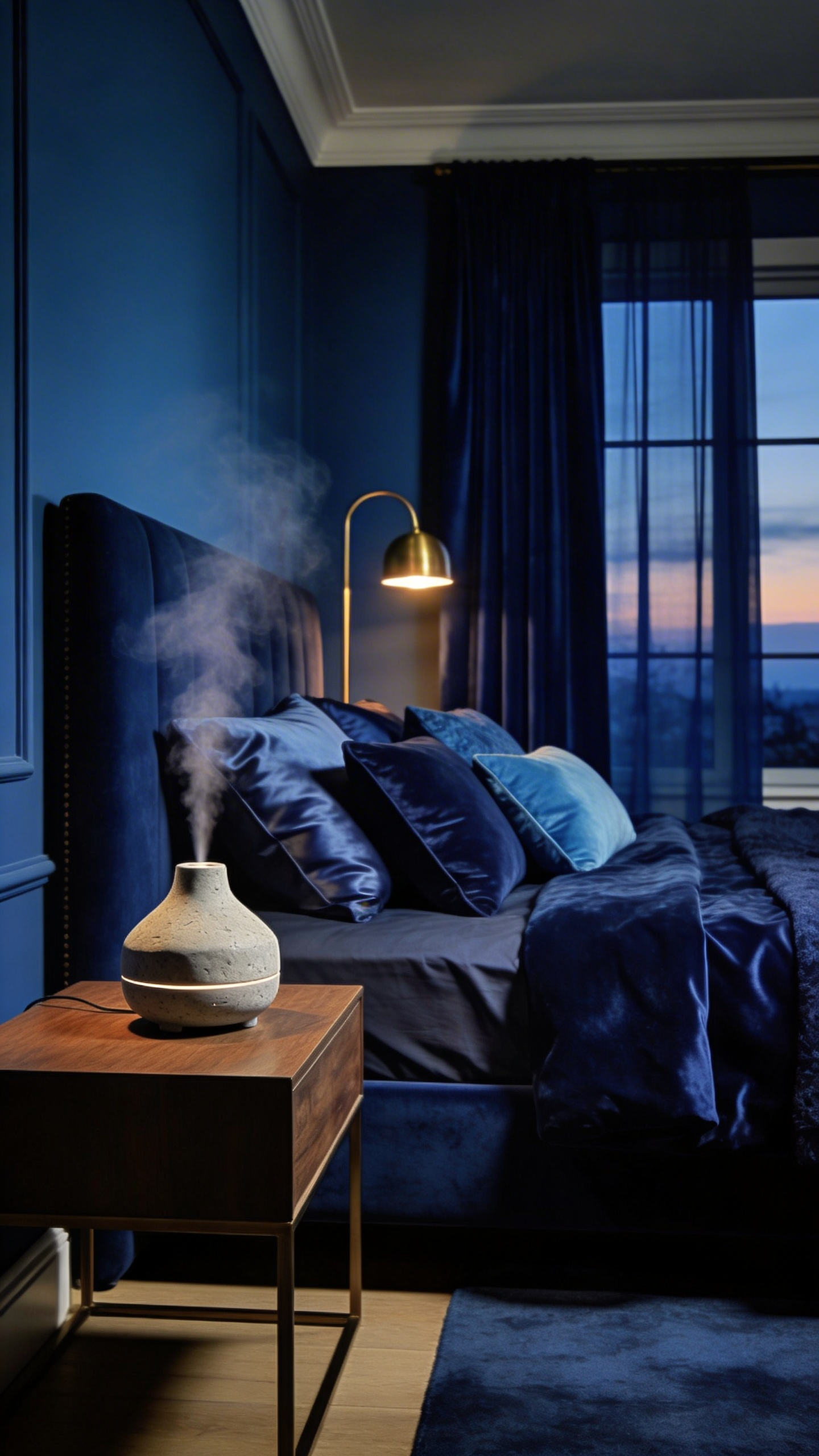
Deep indigo walls carry immense visual weight. They require a scent with equal molecular density. Specifically, heavy florals like ylang-ylang or night-blooming jasmine work perfectly. Together, they create a comforting velvet embrace. However, a sharp lemon scent in a dark room causes perceptual discordance. This subtle micro-stressor can severely inhibit melatonin production.
Warm terracotta spaces beautifully evoke a sense of primitive safety. Pairing these earthy hues with grounding resins like vetiver is ideal. Interestingly, this combination mimics the comforting scent of a damp forest floor. As a result, this cocooning bio-sync dramatically relieves any racing thoughts.
Sage green is currently a highly popular modern neutral. Introducing silver fir or cypress maximizes its therapeutic value. Indeed, these robust oils contain phytoncides that actively lower cortisol levels. The visual softness and resinous scent help the brain complete a nature circuit. Ultimately, this synchronicity lowers sympathetic nerve activity far better than color alone.
Pristine white rooms often risk feeling sterile or overly clinical. However, professional aromatherapists quickly counter this harshness with neroli or bergamot. These transparent, citrusy-floral scents match the visual airiness perfectly. They also contain linalool, which acts as a gentle sedative. This thoughtful pairing creates a weightless cloud effect. Therefore, visual brightness suggests absolute cleanliness, while delicate warmth guarantees gentle rest.
18. The Final Transformation: Measuring Your Aesthetic Makeover’s Impact on Daily Energy and Wellbeing
A bedroom makeover is not just a stylistic upgrade. Rather, it engineers a restorative ecosystem for deep recovery. Specifically, reducing visual noise directly lowers morning cortisol levels. When you prioritize cohesive color palettes, your brain easily rests. Choosing deep sea teals provides genuine visual silence. Therefore, your mind stops scanning mismatched objects all night.
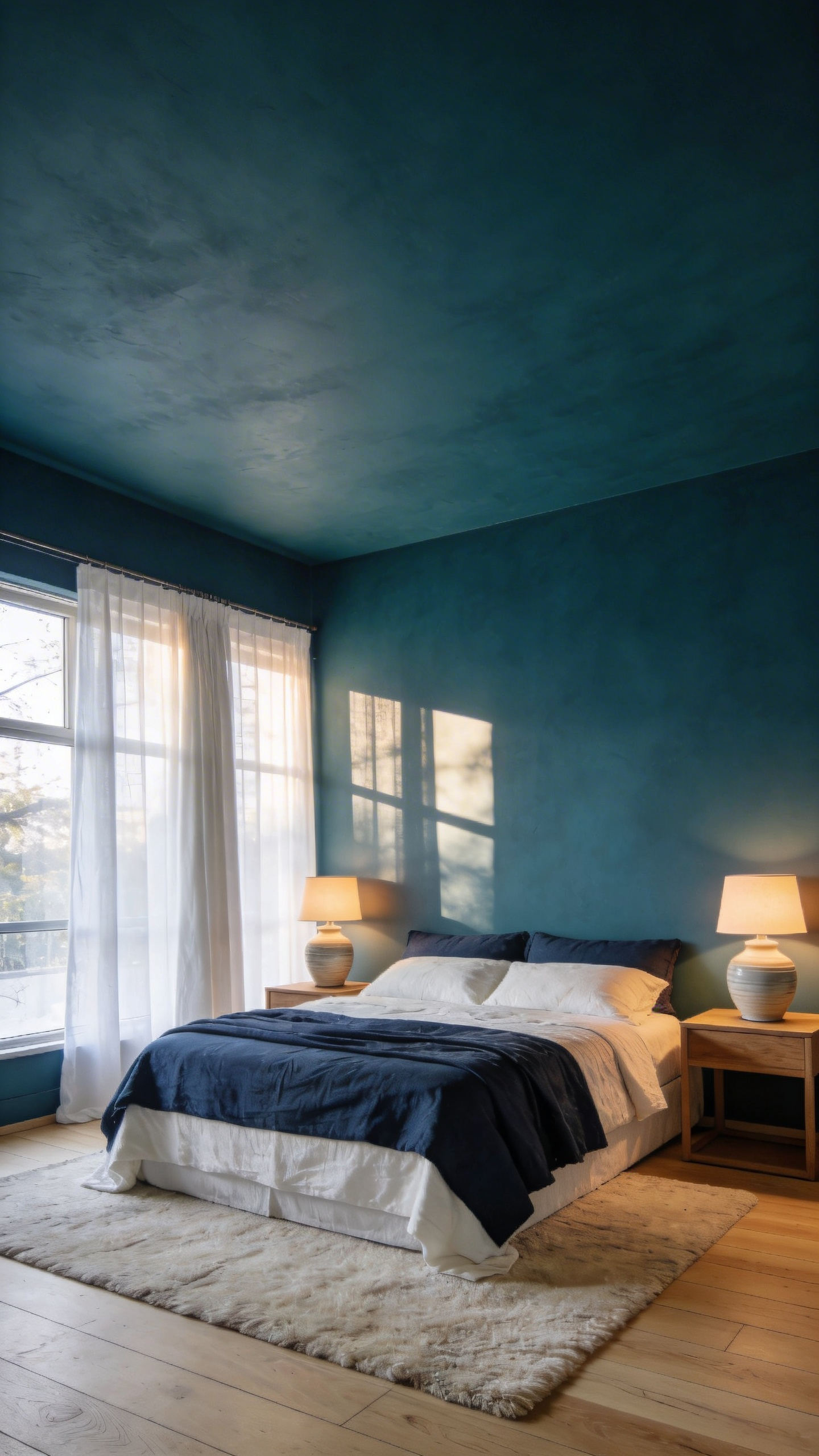
Your bedroom also acts as a comforting third skin. Tactile choices profoundly impact your nervous system. For example, stone-washed linen sheets naturally regulate body temperature. Similarly, high-pile wool rugs prevent subtle fight-or-flight stress responses. Indeed, these breathable natural fibers keep you in deep sleep.
Intentional lighting design must mimic a natural biological sunset. Historically, humans spent cozy evenings bathed in warm firelight. Harsh overhead bulbs actively suppress your natural melatonin. Instead, layer amber sconces to dramatically reduce sleep latency.
Curated earthbound ochres create a powerful narrative anchor. This soft fascination allows your tired mind to fully recover. Interestingly, warm color schemes actually make rooms feel physically cozier. As a result, you can keep the physical thermostat medically low. This physical coolness combined with visual warmth maximizes metabolic rest. Ultimately, implementing these bedroom makeover ideas allows your space to transition from a mere room into a vital tool for daily recovery.
Frequently Asked Questions
How can I make my bedroom look more expensive on a budget?
To achieve a premium look without a complete overhaul, focus on high-impact sensory changes. Swapping standard hardware for solid brass, using “color drenching” to hide architectural bulkheads, and layering mismatched high-quality textiles like linen and bouclé can create an expensive, curated atmosphere.
What are the best colors for a relaxing bedroom makeover?
Research suggests that desaturated, “muddy” tones like slate blue, sage green, and charcoal are ideal for relaxation. These colors have a lower light reflectance value, which reduces visual noise and signals the brain to produce melatonin for restorative sleep.
How do I create a tech-free sanctuary in my bedroom?
You can minimize digital clutter through “color camouflage.” Painting your walls and media console in the same dark, matte hue allows black screens and wires to blend into the background. Therefore, you reduce the high-contrast visual noise that triggers alertness.