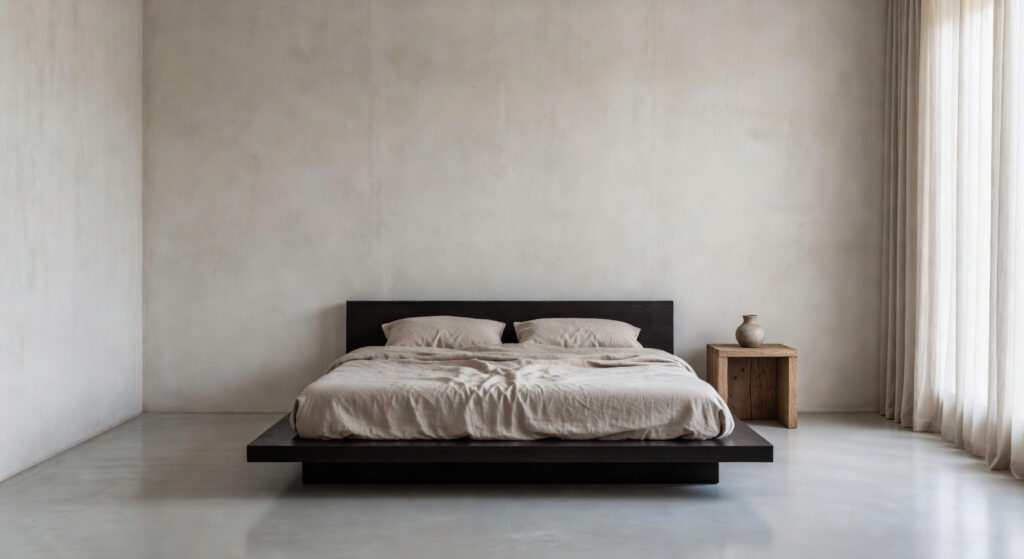
Many people mistake minimalism for a cold, sterile aesthetic. They see empty walls and assume a lack of personality. However, true minimalist bedroom design serves as the external discipline for internal virtue. As Stoic philosophy teaches, contentment stems from wanting less, not acquiring more. Therefore, a minimalist bedroom acts as the architectural manifestation of mental clarity. It prioritizes character development and deep rest over material accumulation.
Moreover, this design approach directly influences physiological well-being. In fact, environmental psychology links cluttered spaces to elevated cortisol levels. As a result, a chaotic room maintains the body in a low-grade fight-or-flight state. Every non-essential item acts as visual noise, which drains limited cognitive resources. By intentionally clearing physical clutter, we effectively practice nervous system care. Thus, the external void provides essential mental breathing room for the weary mind.
This guide reveals how to engineer tranquility through deliberate reduction. Specifically, we will explore utilizing sensory elements like soft lighting and tactile, natural textures. Additionally, we examine how “negative space” fosters genuine mindfulness and emotional balance. Next, we discuss shifting the room’s focus from quantity to quality. Ultimately, a true minimalist bedroom transforms from a functional space into a restorative sanctuary.
Phase 1: The Psychology of Reduction (Philosophical Anchor)
Designing a minimalist bedroom begins with a deliberate philosophical choice. Specifically, we must look beyond mere tidiness to embrace the psychology of reduction. This concept, famously championed by the Bauhaus movement, suggests that “less is more.” Consequently, subtraction becomes an act of meticulous refinement rather than deprivation. Similarly, Eastern traditions like *wabi-sabi* equate this simplicity with spiritual clarity. Therefore, by removing superfluous elements, we reveal the room’s true essence.
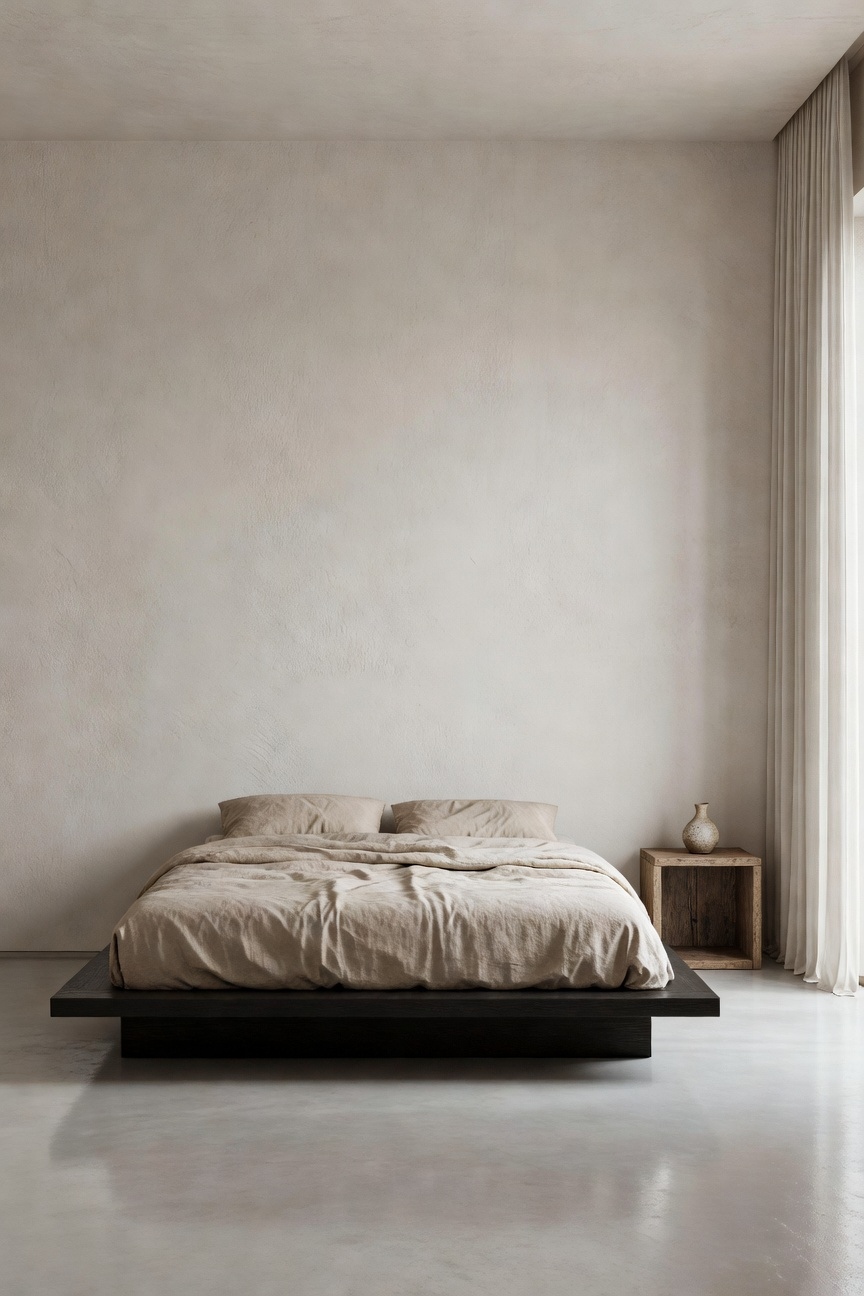
Beyond aesthetics, this approach directly impacts our neurology. Indeed, every object in a living space creates “visual noise.” In fact, your brain constantly monitors these stimuli, which drains mental energy. By actively removing clutter, we significantly lower this cognitive load. Thus, the brain stops processing unnecessary micro-decisions about organization or maintenance. Instead of subconsciously asking, “Where does this go?”, the mind finds immediate “breathing room.”
Ultimately, this reduction fosters a state of authentic “dwelling.” As philosopher Martin Heidegger noted, true shelter allows us to simply *be*. When we strip away excess, the environment naturally promotes mindfulness. The bedroom transforms from a storage unit for possessions into a sanctuary for the self. Consequently, the space supports deep introspection and, most importantly, restorative sleep.
1. The Cognitive Load of Clutter: Why Your Brain Craves Empty Space
Your bedroom functions primarily as a sanctuary for rest. However, physical clutter acts as a silent, persistent stressor. Specifically, the human brain interprets visual disorder not just as a mess, but as “unfinished business.” Seeing piles of laundry or scattered knick-knacks triggers a low-grade fight-or-flight response. Studies confirm that living in cluttered environments creates elevated levels of cortisol, the stress hormone. Therefore, instead of winding down, your nervous system remains on high alert.
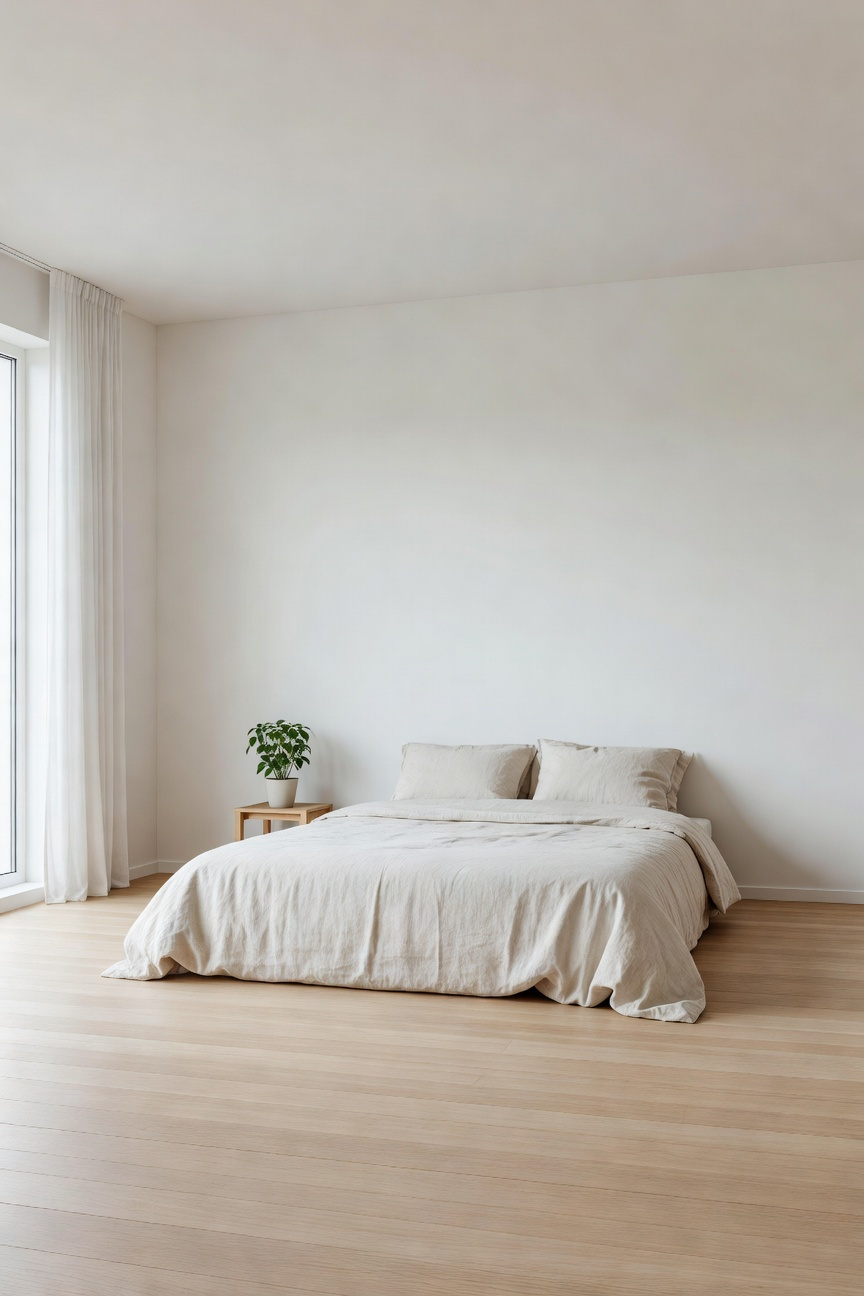
Beyond hormonal shifts, disorder creates “visual noise” that tires the mind. In fact, research indicates that clutter actively competes for your neural attention. Essentially, your brain must continuously filter out unnecessary stimuli to focus. As a result, this constant filtering process overwhelms your working memory. When your visual field is crowded, your capacity for mental clarity significantly diminishes. Thus, a chaotic room creates a measurable cognitive drain.
Conversely, minimalist design utilizes “negative space” as a deliberate tool for cognitive rest. Designers often refer to this emptiness as the “breathing room effect.” By intentionally leaving areas void of objects, you significantly reduce the brain’s processing load. Furthermore, this scarcity signals a sense of value and tranquility to the subconscious. Ultimately, prioritizing empty space creates a mental buffer. This allows true restorative sleep to occur.
2. Visual Silence: Reframing ‘Negative Space’ as ‘Breathing Room’
In the world of interior design, we often refer to empty areas technically as “negative space.” However, psychologically, this concept is better understood as essential “breathing room.” Specifically, visual clutter acts as “noise” that triggers subconscious stress. In fact, research suggests that decluttered environments help reduce cognitive load and lower cortisol levels. Therefore, a visually quiet bedroom is critical for fostering restorative sleep.
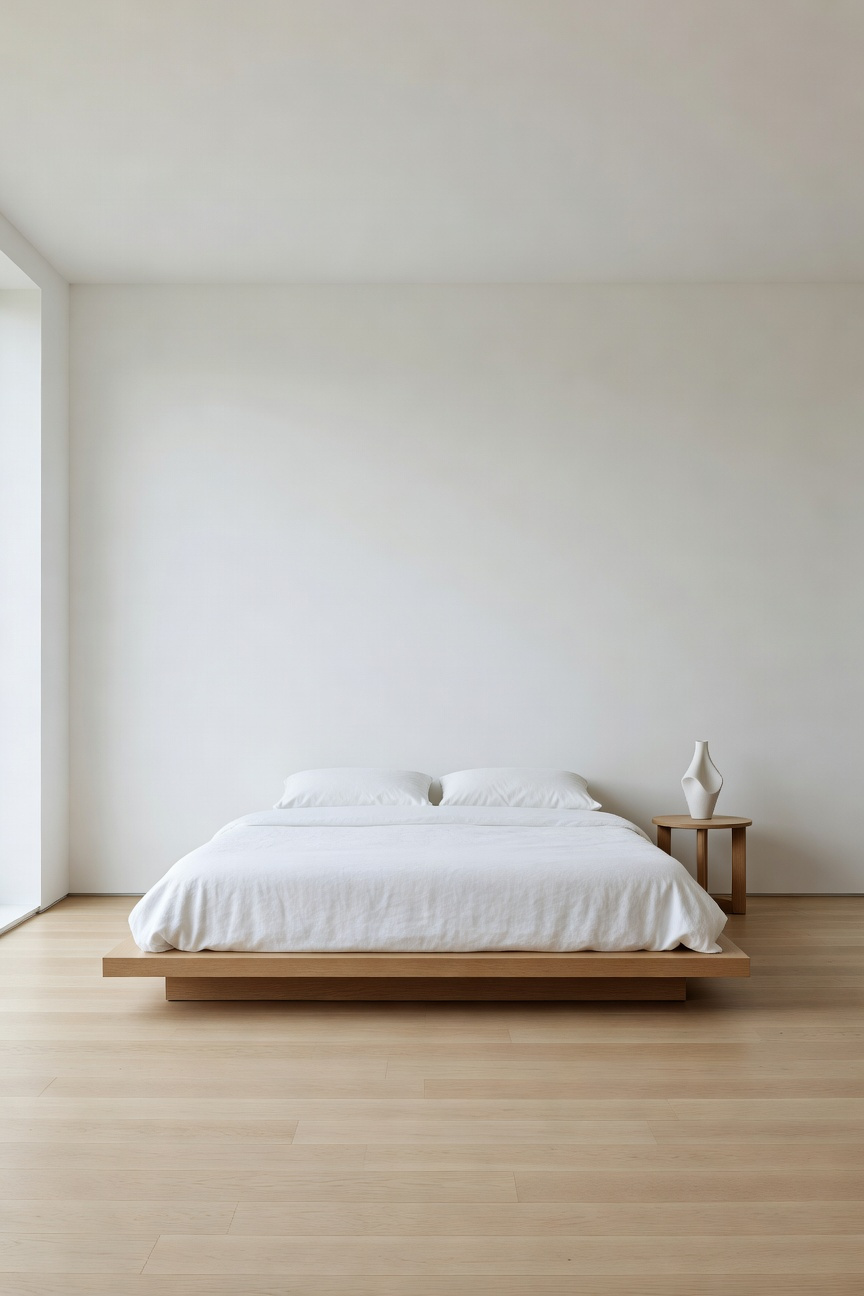
Furthermore, this approach mirrors the Japanese philosophy of *Ma*. Rather than a mere void, *Ma* represents an active “pause” or interval. Consequently, this intentional gap creates a vital opportunity for contemplation. It allows the mind to rest by removing competing visual stimuli. Thus, the space invites introspection rather than demanding attention.
Additionally, visual silence elevates the few items that remain. By surrounding key pieces with space, you frame them as significant design elements. For example, a single pendant light gains importance when given room to breathe. Moreover, this restraint shifts focus to texture and material quality. Suddenly, the eye notices the rich grain of wood or the soft shadow on linen. Ultimately, this emptiness is never a lack of design; it is the design itself.
3. The Myth of Sterility: Distinguishing Clinical from Calming
Many people mistakenly equate minimalism with absolute emptiness. However, there is a critical distinction between a sterile environment and a calming sanctuary. Specifically, this difference often relies on the “sensory temperature” of the room rather than just object count.
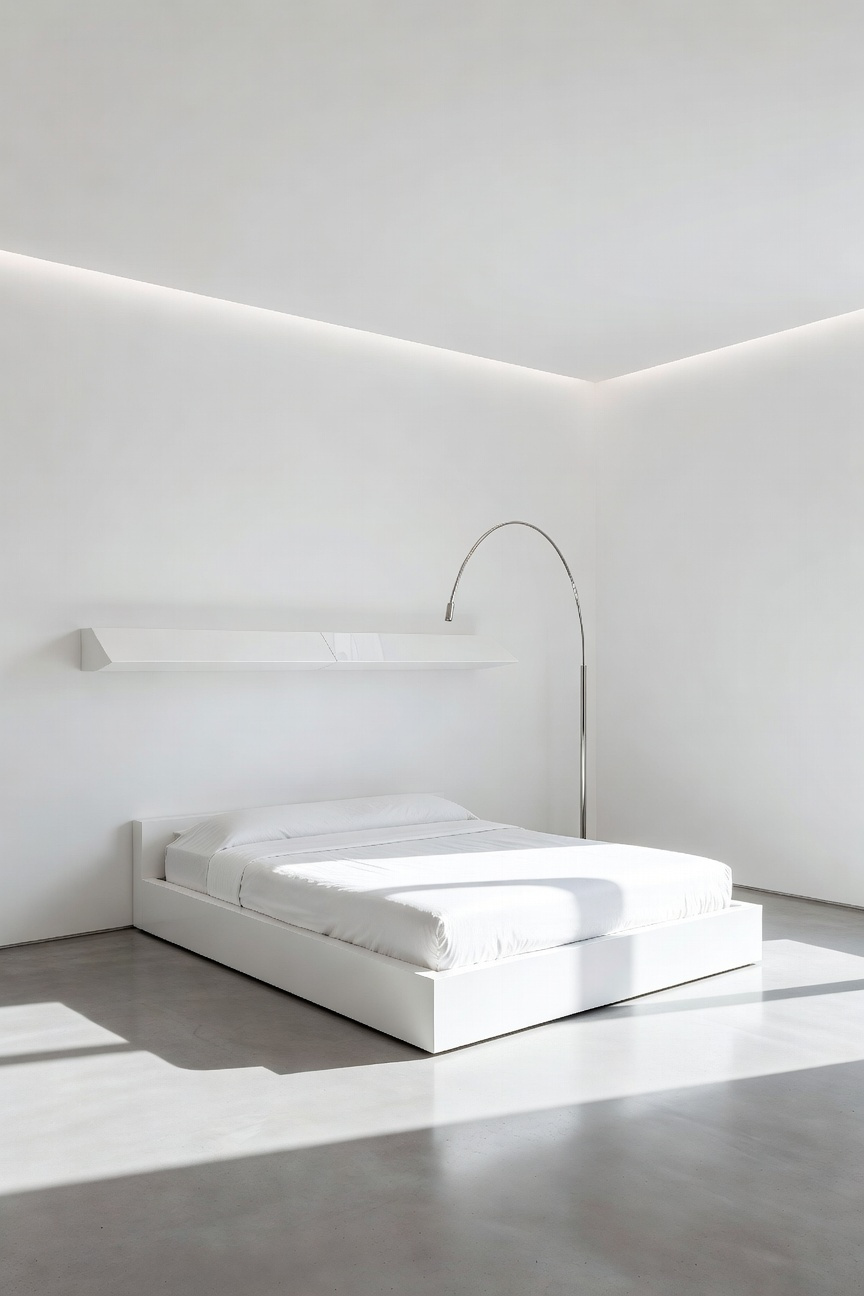
First, consider the psychological impact of color. “Cold Minimalism” typically utilizes stark, high-chroma whites. Consequently, these spaces can feel institutional, laboratory-like, or emotionally flat. Conversely, “Warm Minimalism” shifts the palette toward off-neutrals like gentle creams, warm grays, and beige. These warmer tones blend seamlessly with natural light. This encourages the mind to settle.
Furthermore, a sterile room often suffers from a sensory deficit. Smooth, glossy surfaces offer no physical comfort to the occupant. To counter this, calming design prioritizes haptic input through texture. For instance, layering natural materials like raw wood, linen, and wool adds necessary depth. Thus, the space feels grounded and rich rather than barren.
Lighting also plays a pivotal role in this distinction. Harsh, blue-white overhead lights signal “work mode” and disrupt natural circadian rhythms. In contrast, restorative spaces rely on soft, indirect amber lighting. Therefore, using low-level lamps helps the body transition gently into rest.
Finally, true minimalism is about intention, not just removal. Clinical design often strips a room bare of personality. However, a calming approach welcomes curated elements, such as a meaningful piece of art. Ultimately, the goal is to eliminate visual noise to reduce anxiety, not to create an emotionless box.
4. Intentionality vs. Scarcity: The Mindset Shift Required for True Minimalism
True minimalism in the bedroom requires a fundamental psychological shift. Specifically, it involves moving from a scarcity mindset to one of profound intentionality. Scarcity thinking is rooted in deep-seated fear and anxiety regarding limited resources. Consequently, we often keep unused items “just in case” they are needed later. Unfortunately, this creates visual clutter that serves no current purpose.
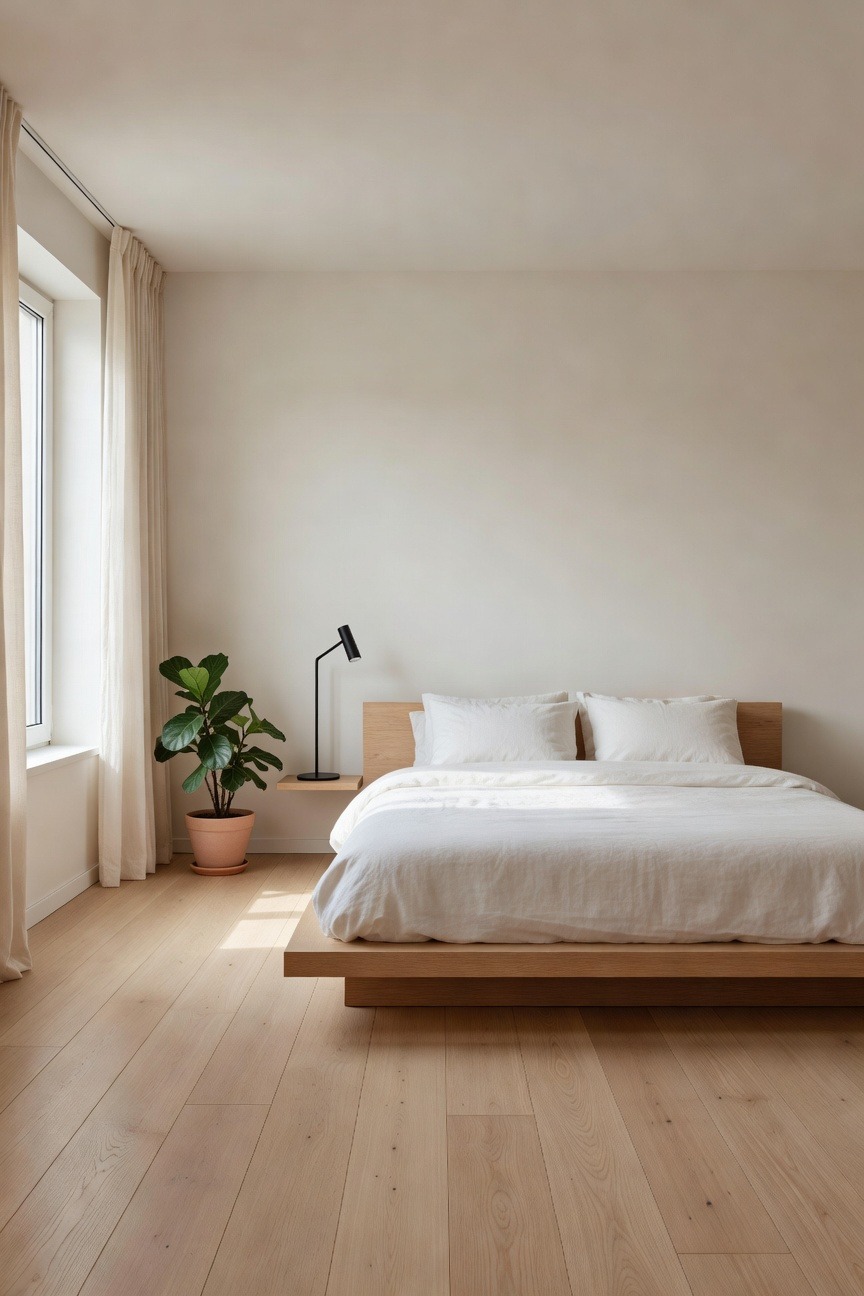
Conversely, an intentional mindset operates from a strong position of abundance. Here, the primary resources being protected are your time, attention, and mental clarity. Therefore, true minimalism is not merely the removal of everything. Instead, it is the deliberate promotion of the things you value most.
In the bedroom, this distinction drastically affects your cognitive load. Visual noise forces the brain into a tiring state of selective attention. As a result, the mind cannot fully switch off for restorative sleep. Intentional design, however, aligns with the brain’s natural inclination for order. This creates a serene environment that encourages deep, restorative mindfulness.
Practically, this means favoring the room’s purpose over mere potential utility. For example, you might exclude work distractions to protect the sanctuary of sleep. Furthermore, elevate essentials like lighting based on sensory experience rather than cost. Ultimately, this shift redefines richness as the abundance of peace gained.
Phase 2: The Palette of Rest (Material Exploration)
Creating a “Palette of Rest” requires viewing color as atmospheric engineering. Specifically, we move beyond basic whites to “emotional neutrals.” For instance, warm undertones like cream make a room feel cozy and safe. Conversely, cool greys offer an airy, architectural clarity that aids mental focus. Therefore, your choice depends on the desired psychological mood.
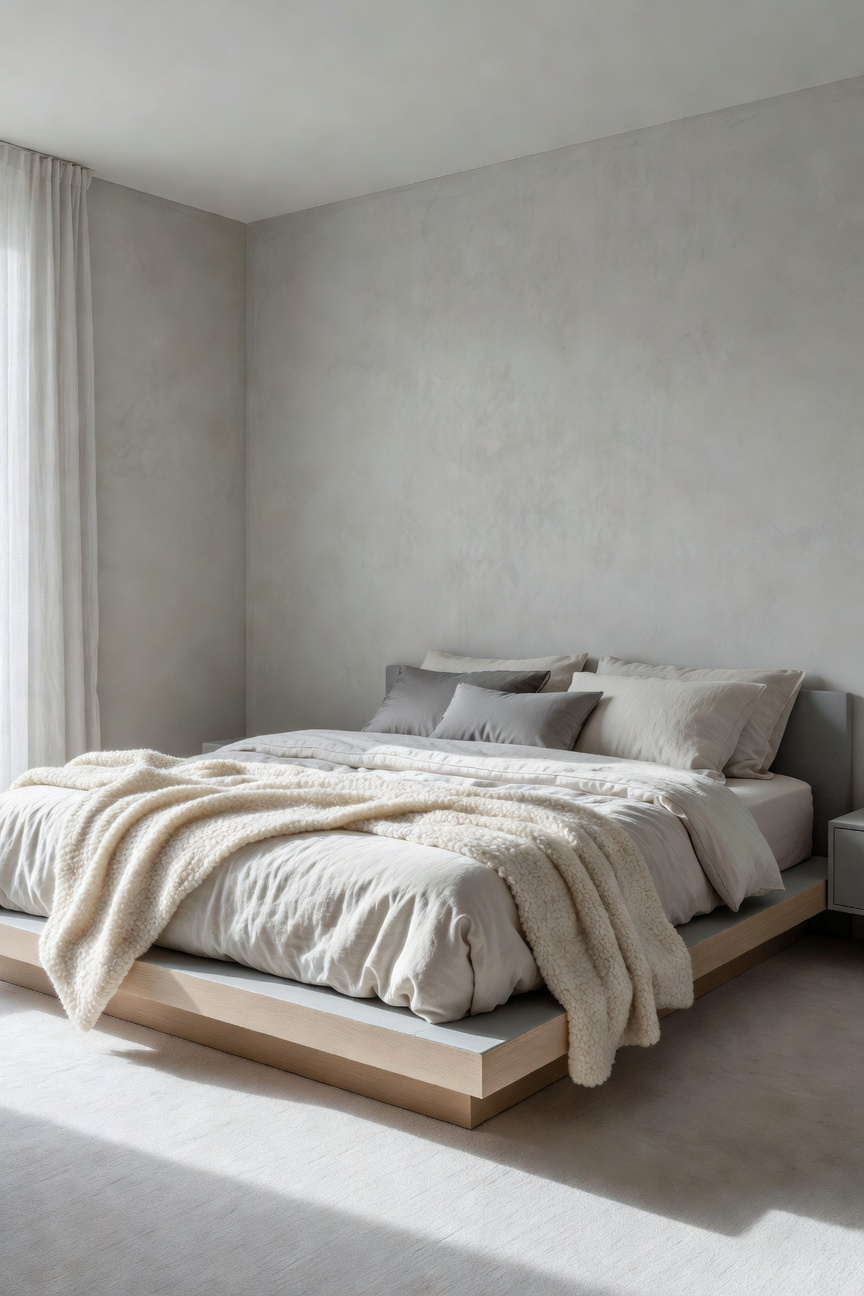
However, a neutral palette must not feel sterile. Consequently, tactile variation becomes essential. In practice, this means layering contrasting textures to invite touch. For example, pair breathable linen sheets with a heavy velvet pillow. Furthermore, these soft materials serve a functional purpose. Notably, thick curtains and wool rugs dampen sound, effectively silencing the outside world.
Finally, true rest involves connecting with natural elements. Ideally, select materials that showcase visible craftsmanship. In particular, untreated wood or raw plaster introduces organic warmth. In fact, distinct woods like walnut even provide a subtle, grounding scent. Ultimately, combining these sensory details fosters a deep, psychological sense of sanctuary.
5. Beyond Stark White: Embracing the Psychology of ‘Warm Minimalism’
Traditional minimalism often prioritizes visual clarity through cool whites and sharp geometry. While effective for focus, these environments can occasionally feel sterile or impersonal. In contrast, warm minimalism shifts the goal from intellectual decluttering to emotional grounding. Specifically, this style utilizes earthy neutrals like clay, cream, and mushroom to create a nurturing sanctuary. Consequently, the space feels safer and more conducive to vulnerability.
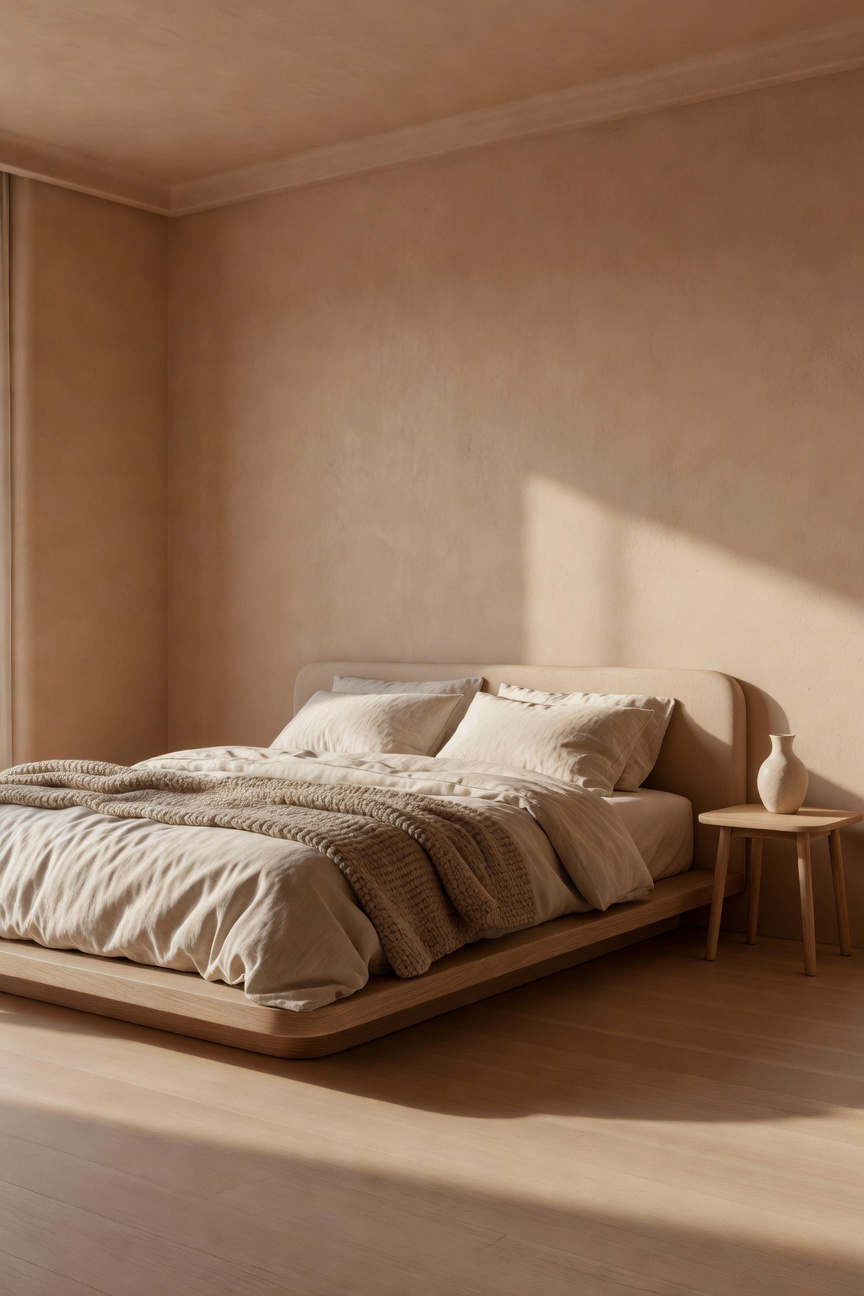
Rather than relying on decorative objects, this aesthetic creates depth through tactile layering. Drawing from Japanese *Wabi-Sabi*, it values authenticity over polished perfection. For example, replacing shiny chrome with patinated bronze adds a subtle, hand-touched quality. Furthermore, heavy linens and raw wools invite touch, effectively absorbing light to create a “cocooning” effect. Even the walls contribute, as honed plaster adds a softness that flat paint simply cannot achieve.
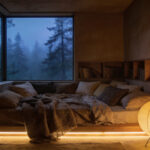
Finally, lighting plays a non-negotiable role in regulating our biological rhythms. Warm minimalism aims to replicate the “Golden Hour,” signaling the body to wind down. Therefore, designers recommend bulbs between 2700K and 3000K to mimic a calming sunset glow. Additionally, layered ambient lighting is preferred over harsh overhead fixtures. Ultimately, this combination of texture and light fosters a deep sense of unhurried calm.
6. Monochromatic Depth: Using Texture to Replace Pigment Saturation
When pigment saturation is stripped away, light becomes your primary design tool. Consequently, texture transforms from a minor detail into a critical architectural component. Rough surfaces, such as textured plaster or ribbed textiles, do not reflect light uniformly. Instead, they cast complex micro-shadows that shift subtly with the time of day. Therefore, the natural variation in shadow intensity effectively replaces the bold contrast usually provided by vibrant colors.
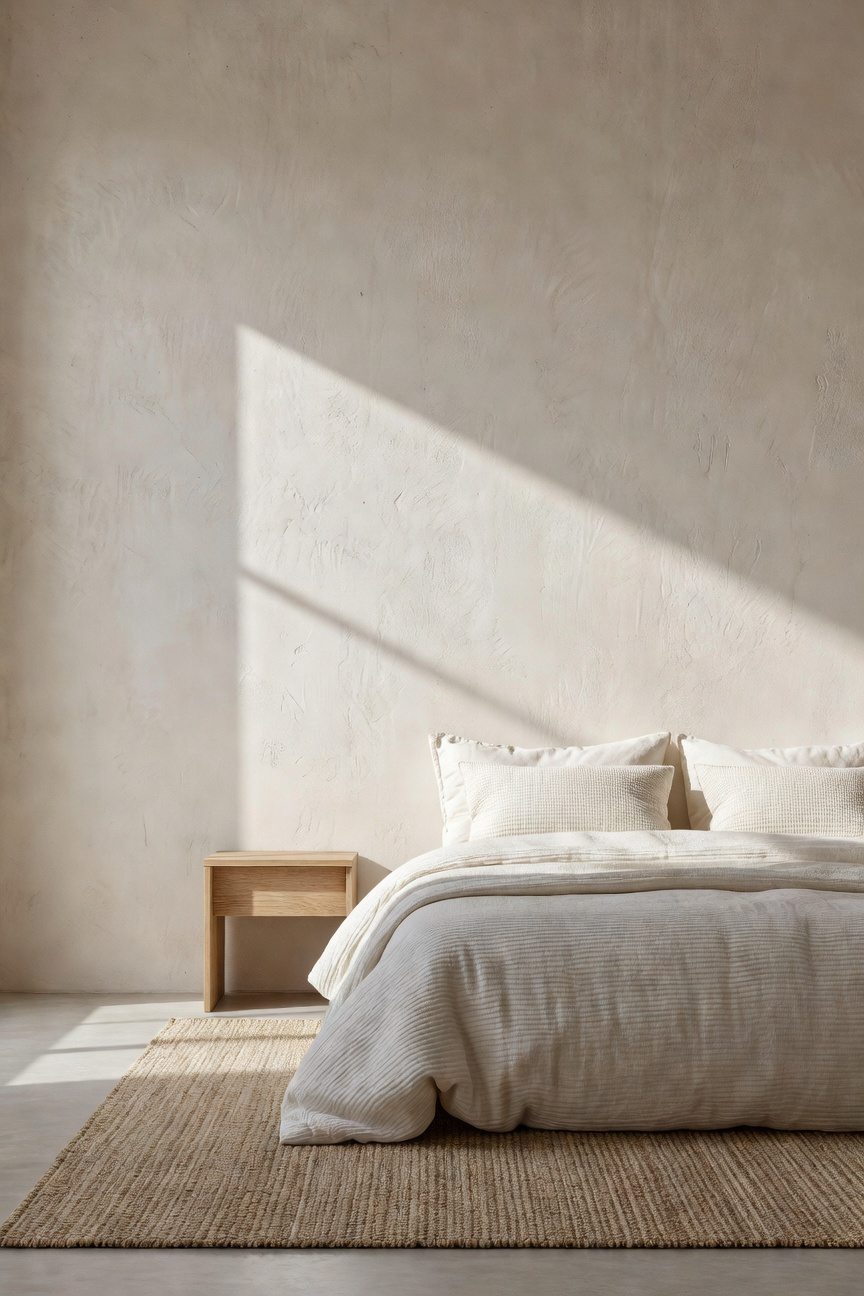
Furthermore, strategic texture use prevents a minimalist space from feeling cold or clinical. Psychologically, this “sensory warmth” is essential for promoting deep rest and well-being. For instance, high-touch items like chunky wool knits or washed linen signal immediate physical comfort. Conversely, structural elements like raw wood beams provide a necessary, grounded feeling. Thus, the room becomes a restorative sanctuary rather than a sterile box.
Finally, this technique creates an authentic narrative often missing in modern design. Specifically, it draws influence from the Japanese philosophy of *Wabi-Sabi*, finding profound beauty in imperfection. Materials like rough-spun linen or weathered wood bear the unique marks of time. As a result, the design remains inviting because it focuses on inherent material quality over flawless finish. Ultimately, these subtle, tactile flaws anchor the room in reality.
7. The 60-30-10 Rule Adapted for Low-Contrast Serenity
Traditionally, the classic 60-30-10 rule relies on high contrast to create visual excitement. However, distinct color clashes can actually stimulate the brain rather than soothe it. Therefore, to prioritize psychological calm, we must adapt this formula for “visual quietude.” Specifically, this approach reduces visual noise, allowing the eye to drift effortlessly across the room.
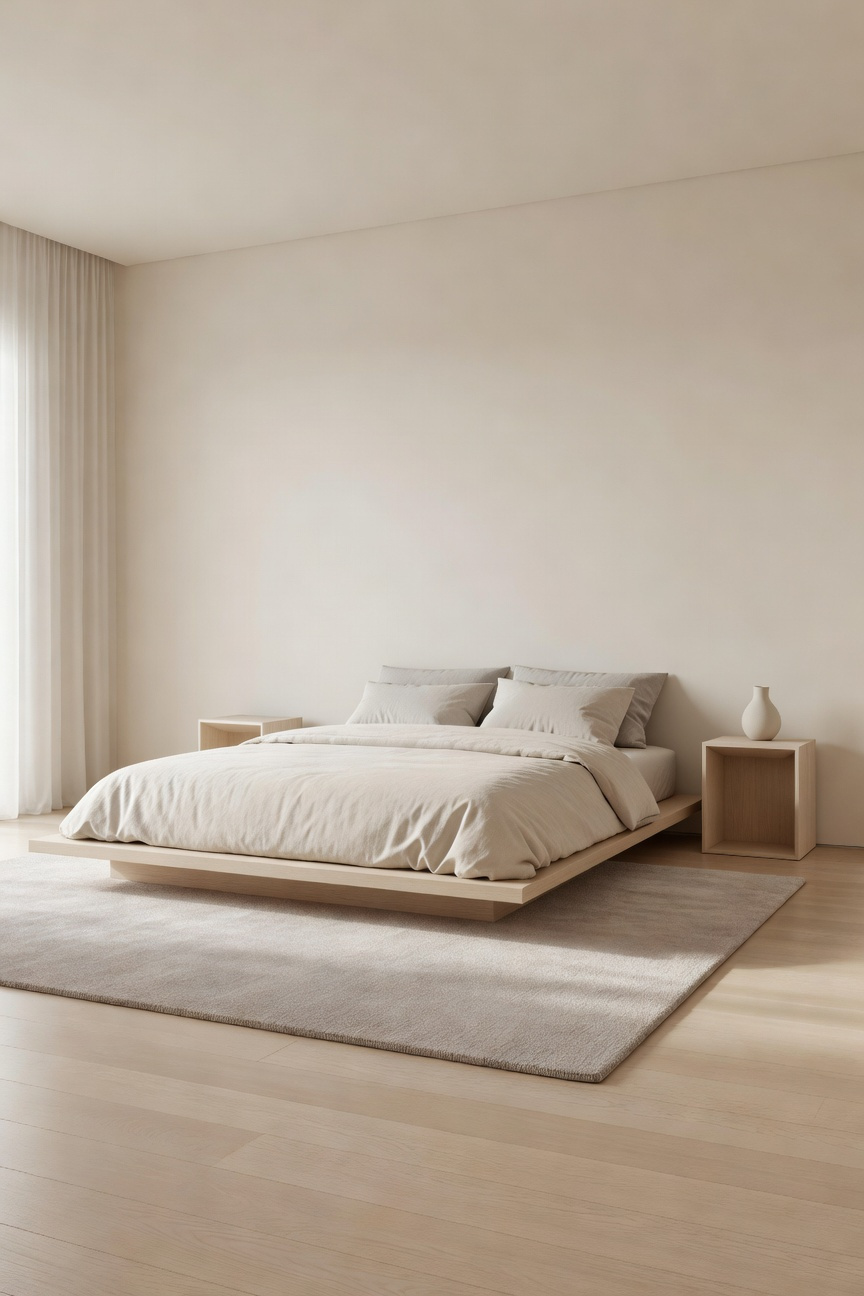
For the dominant 60% and secondary 30%, aim for tonal cohesion. Instead of selecting opposite colors, choose monochromatic or analogous shades. For example, pair a creamy wall color with soft, warm taupe bedding. Consequently, the space feels harmonious rather than competitive. This subtle shift significantly reduces mental processing, directly aiding relaxation.
Finally, the 10% accent undergoes the most significant transformation. Typically, this element serves as a bold pop of vibrant color. In a low-contrast scheme, however, we substitute hue with texture or finish. For instance, introduce a chunky wool throw or a satin chrome lamp. Thus, the accent provides tactile interest and depth without disrupting the room’s serenity. Ultimately, you achieve a space that feels layered yet profoundly peaceful.
8. Material Authenticity: How Natural Woods and Linens Ground the Nervous System
Incorporating natural wood offers more than just visual warmth; it acts as a direct physiological trigger. Scientifically, visible wood grain activates the Parasympathetic Nervous System. Specifically, this branch controls the body’s restorative “rest and digest” state. Research indicates that exposure to wood surfaces significantly lowers cortisol levels. Moreover, heart rates drop when compared to sterile, synthetic environments. This reaction stems from biophilic design principles. Essentially, the brain recognizes organic grain patterns as safe and non-threatening. Therefore, uncoated or lightly finished woods are ideal. They maintain a raw texture that feels authentically grounding to the touch.
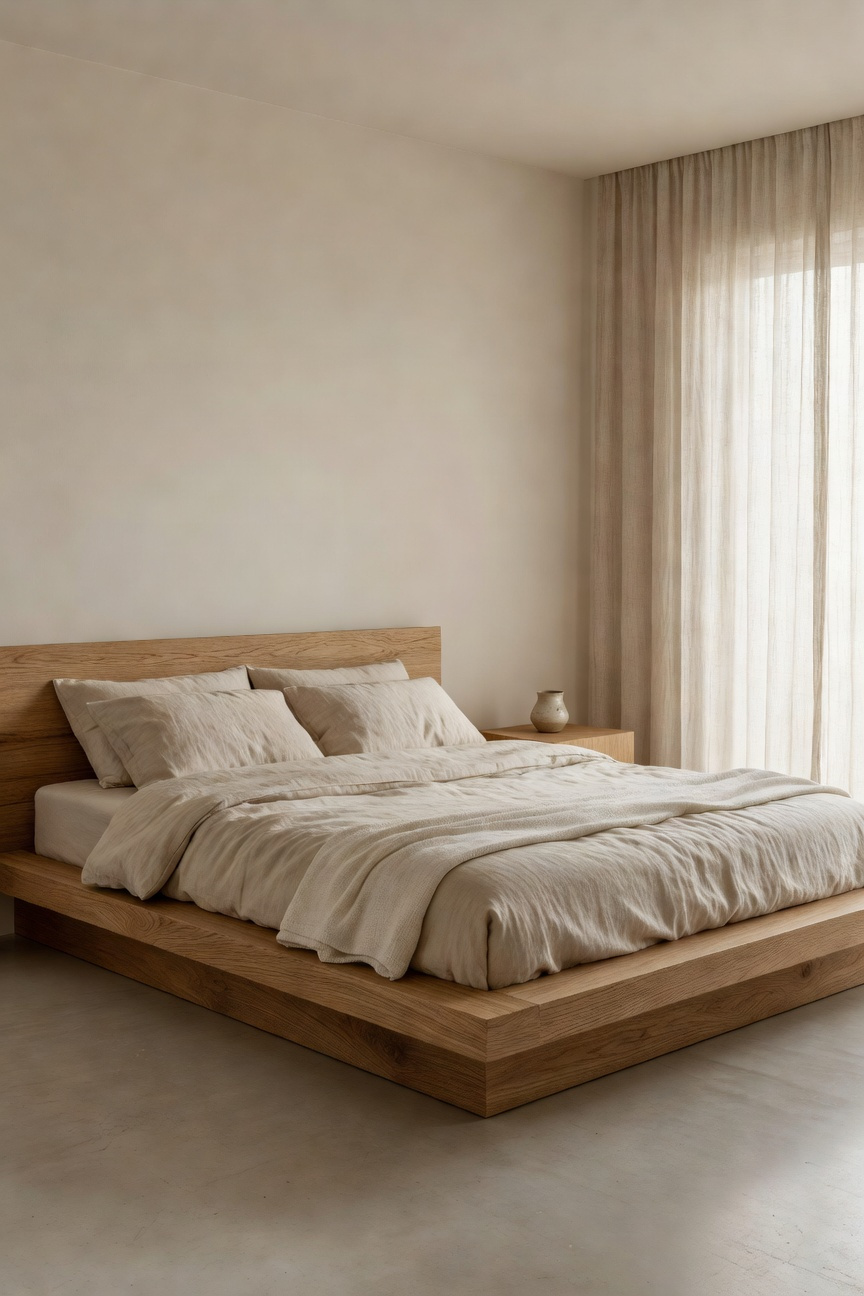
Similarly, linen bedding supports deep restoration through tactile authenticity. Unlike synthetics, linen is derived from the flax plant. Thus, its hollow fiber structure provides exceptional thermal regulation. Quality sleep requires the body’s core temperature to drop naturally. Linen facilitates this by circulating air and absorbing moisture without feeling damp. Furthermore, the fabric’s unique texture offers a distinct haptic experience. It feels crisp yet soft, avoiding the slippery sensation of artificial materials. Interestingly, linen softens with every wash. This creates a comforting sense of longevity and “lived-in” security.
Ultimately, these materials provide an antidote to modern sensory pollution. Minimalist design seeks to eliminate cognitive clutter. Therefore, natural materials reduce the processing load on the brain. They offer a truthful sensory feedback loop. Touching solid wood or textured linen confirms reality. Consequently, this consistency creates a stable environment. By prioritizing material authenticity, you transform the bedroom into a true physiological sanctuary.
Phase 3: Spatial Curation (Spatial Application)
Spatial curation transforms simple emptiness into intentional space. Specifically, this phase relies on the concept of *Ma*. In Japanese aesthetics, this translates to ‘the space between’. However, this is not merely an unused area. Instead, it serves as a charged, active element. Consequently, this negative space gives the nervous system a necessary break. By reducing cognitive load, the room allows the mind to rest. Ultimately, we are sculpting with silence to create calm.
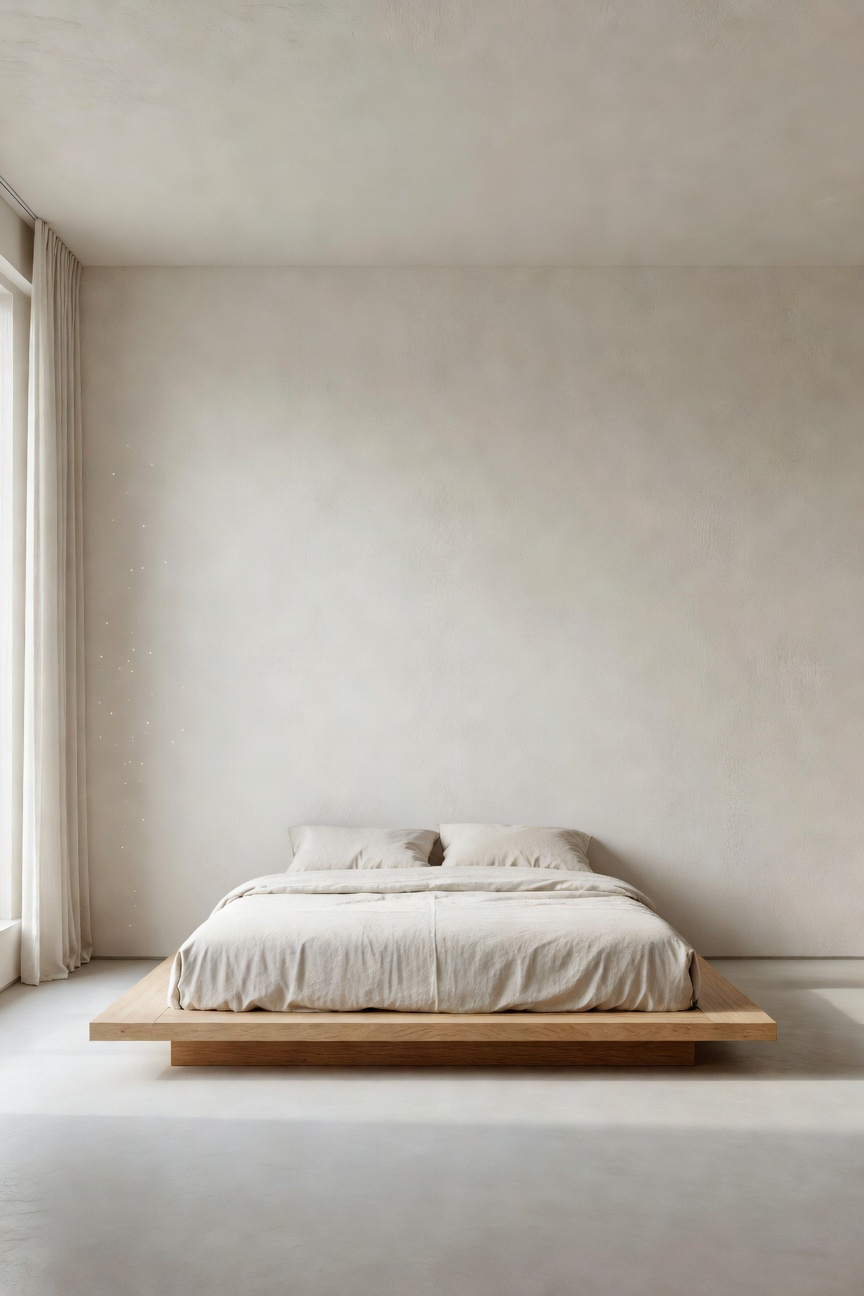
Furthermore, minimalist application requires rigorous precision. Every element must serve both an aesthetic and ergonomic purpose. For instance, consider the logical flow between functional points. You must measure the path from the bed to the wardrobe carefully. Similarly, placing a bed near a window maximizes natural light. This connection with nature enhances well-being significantly. Thus, the bedroom becomes a functional “machine for living in.” Here, we balance emotional instinct with mathematical alignment.
Finally, the few remaining objects must act as tactile anchors. Therefore, select items that function as domestic sculptures. Consider the grounded weight of stoneware or rough linen. Alternatively, look for the luminous quiet of glass. These textures create a “warm” minimalism rather than a clinical atmosphere. In fact, each piece becomes a statement of intentional consumption. This ensures visual clarity while deepening the room’s emotional impact.
9. The Low-Profile Anchor: Grounding the Room with Platform Beds
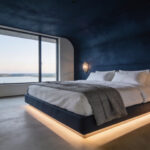
In minimalist design, the bed typically dominates the room’s visual weight. However, a low-profile platform bed fundamentally alters this dynamic. Specifically, by lowering the center of gravity, you increase vertical negative space above the mattress. Consequently, even standard ceilings appear significantly higher. Thus, the room feels more expansive and airy than its actual dimensions suggest, which is crucial for those implementing design in smaller spaces.
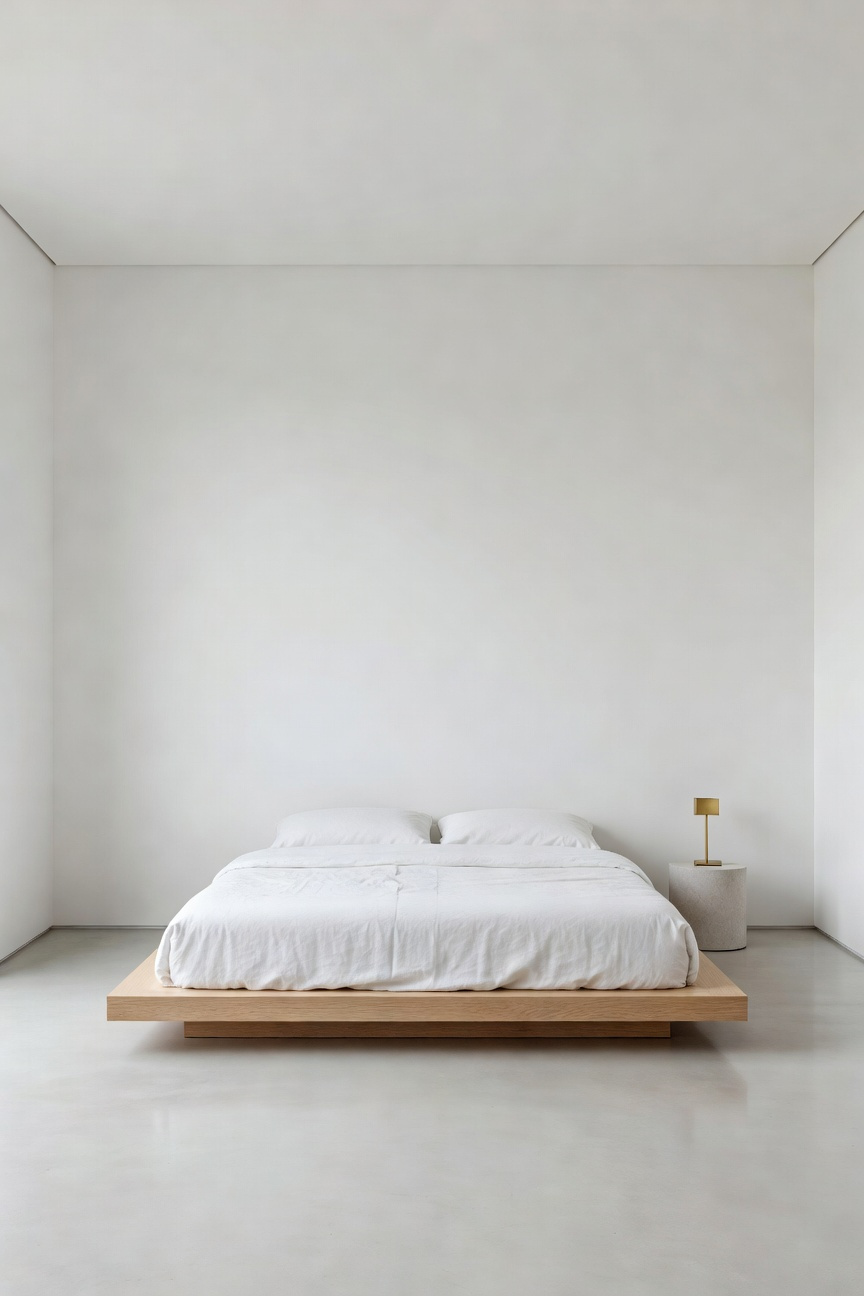
Furthermore, this design choice is rooted in psychological stability. Drawing inspiration from Japanese interiors and the *Japandi* aesthetic, low beds facilitate a “grounded calm.” In fact, remaining close to the floor fosters a subconscious connection to the earth. Therefore, the bed becomes a stable sanctuary rather than an imposing obstacle. This creates a distinct, uninterrupted horizontal plane that visually quiets the space.
Additionally, the lower visual plane directs attention downward to foundation materials. Suddenly, the grain of timber flooring or the weave of a textured rug becomes a focal point. By framing these elements, the bed enhances the room’s sensory richness. Moreover, this streamlined structure eliminates the need for bulky box springs or cluttered dust ruffles. Ultimately, this enforces a “less is more” mindset, keeping the visual field uninterrupted and tranquil.
10. Light as a Material: Circadian Rhythm Design for Sleep Hygiene
In minimalist bedrooms, treat light as an invisible material rather than a mere decorative fixture. Fundamentally, this approach sculpts your internal environment to actively optimize human biology. Specifically, the eyes contain non-visual cells that communicate directly with the brain’s master clock. When these receptors detect blue-rich light, they suppress melatonin, signaling the body to stay alert. Therefore, design choices must focus on spectral content to support healthy sleep hygiene.
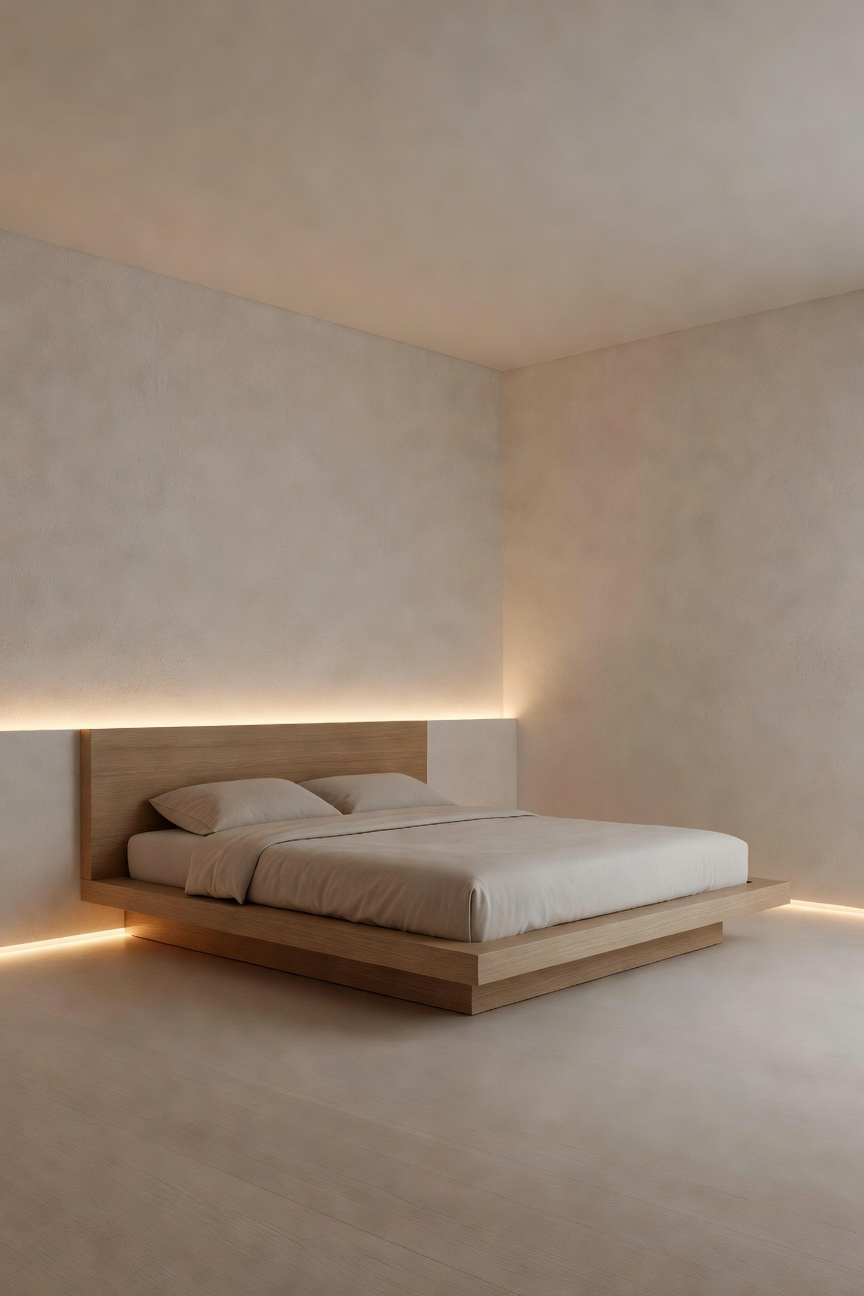
Instead of relying on visible bulbs, utilize color-tunable LED systems hidden within architectural coves. Ideally, the light quality should shift seamlessly throughout the day. For instance, cooler temperatures around 4000K maximize alertness during waking hours. Conversely, evening illumination must drop below 3000K to successfully mimic the setting sun. Eventually, pre-sleep settings should reach an ultra-warm 1800K, creating a protective, intimate atmosphere.
Aesthetically, this technique mirrors the diffuse glow of traditional Japanese *shoji* screens. Rather than casting harsh beams, the light becomes a soft, glare-free wash. Consequently, hard shadows disappear, eliminating potential sources of visual and physiological tension. Furthermore, embracing this deliberate darkness connects the body to natural lunar cycles. Ultimately, this “invisible lighting” fosters slower movement and heightened awareness as you prepare for rest.
11. Hidden Storage Architecture: The ‘Out of Sight, Out of Mind’ Phenomenon
Hidden storage extends far beyond mere tidiness; fundamentally, it acts as a robust psychological strategy. Research suggests that visible clutter creates constant “background noise” for the brain. Consequently, this visual stimuli chips away at focus and drains mental energy. Even neatly stacked items often feel surprisingly overwhelming. Therefore, we leverage the “Out of Sight, Out of Mind” phenomenon to combat this.
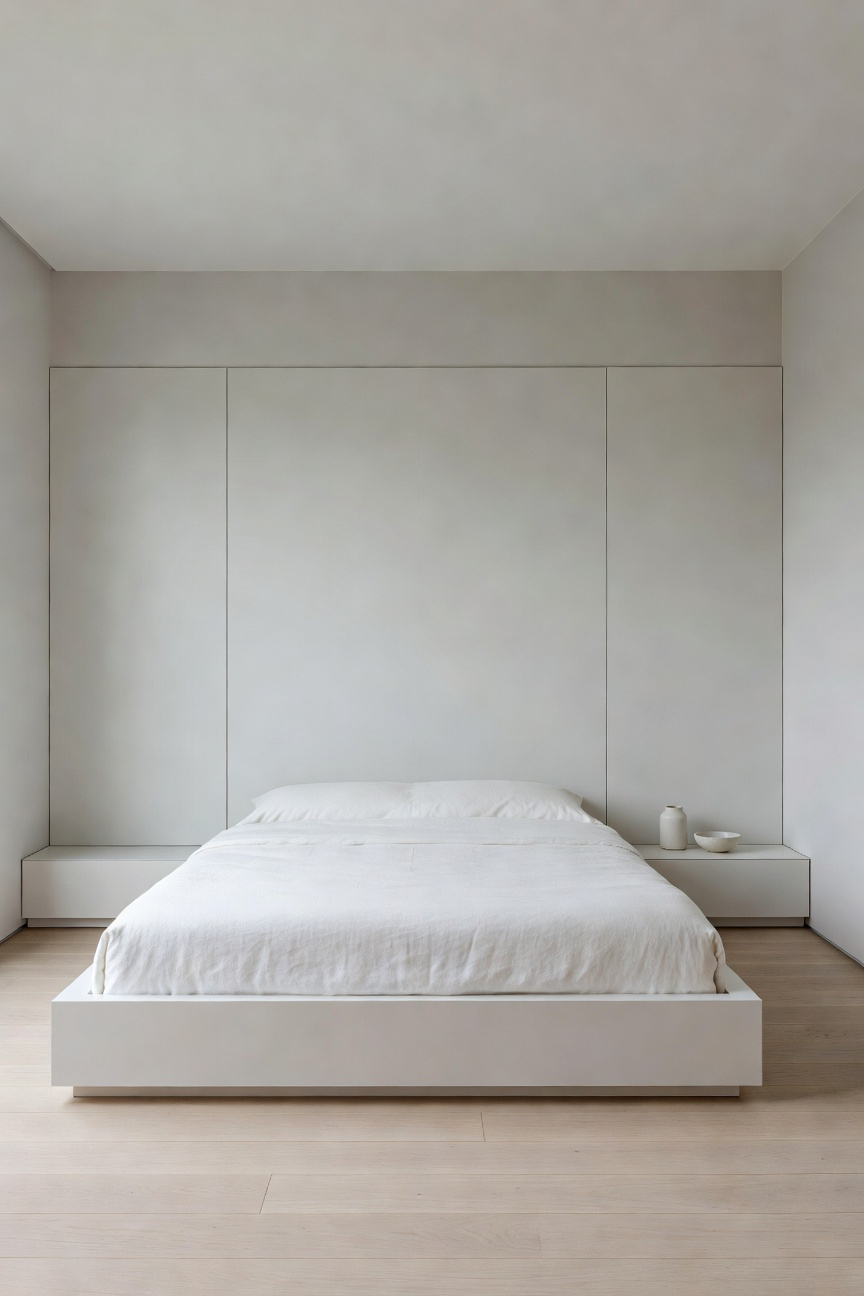
Specifically, this concept connects to Hermann Ebbinghaus’s research on the Forgetting Curve. By removing items from view, we effectively reduce their perceived importance. Thus, a closed door offers an instantaneous mental reset. It creates a physical boundary that reinforces the bedroom as a sanctuary.
Architecturally, achieving this requires seamless integration. Modern design transforms furniture into part of the room’s geometry. For example, built-in wardrobes with flush, push-to-open doors create a monolithic form. These elements appear as sculptural silhouettes rather than storage units. Furthermore, zero-visual profile solutions, like under-bed hydraulics, hide utility completely. For more strategies on maximizing efficiency, review our essential Bedroom Storage Solutions.
Interestingly, this philosophy is not a modern invention. It echoes the Shaker principle of “simplicity, utility, and honesty.” Similarly, traditional Japanese *Tansu* chests utilized structural dead space for maximum efficiency. Ultimately, hidden storage fosters deep calm by quieting the visual environment.
12. The Single-Statement Art Piece: Focusing Attention to Induce Calm
In a minimalist bedroom, a single art piece moves beyond simple aesthetics. Fundamentally, it serves to reduce cognitive load. When walls are uncluttered, the brain stops scanning for competing stimuli. Consequently, this visual simplicity allows the mind to enter a state akin to meditation. Furthermore, the artwork functions as an intentional visual anchor. Instead of demanding attention, it offers a soft place for the eye to land. Research suggests this specific focus helps lower cortisol levels, effectively signaling safety to the body.
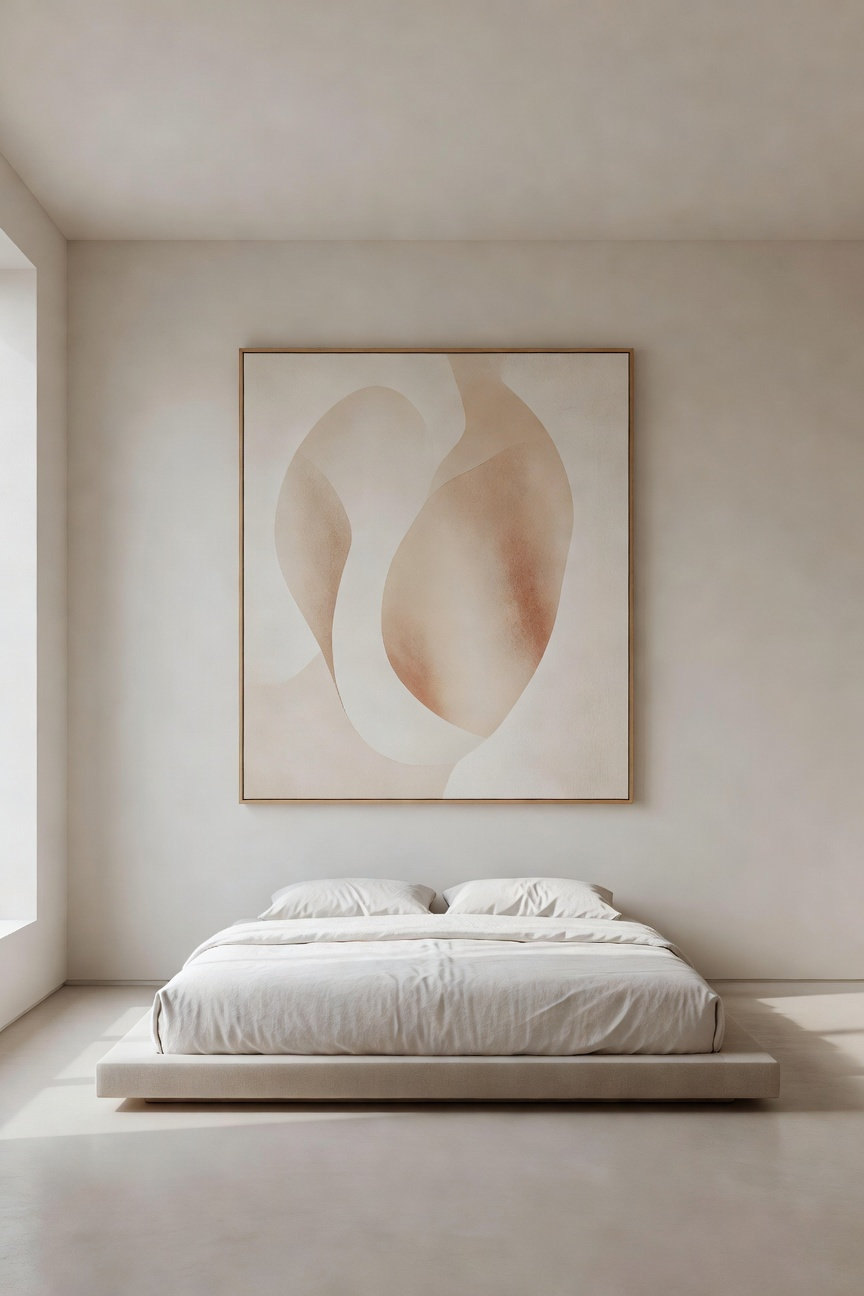
Historically, this concept mirrors the Japanese tradition of the *tokonoma*. Specifically, this is a recessed alcove designed to display just one scroll or arrangement. Therefore, the object exists to evoke a spiritual presence rather than to decorate. This approach aligns closely with *Wabi-Sabi* philosophies, celebrating imperfection and natural beauty. By choosing one meaningful item, you prioritize intention over accumulation. Ultimately, this curation fosters a sense of mindfulness within the sleeping environment. Learn more about how curated elements help Craft a Bedroom That’s a True Sanctuary.
To truly induce calm, the artwork’s composition requires careful selection. Ideally, select pieces with monochromatic or analogous color schemes. For instance, soft blues and greens create peaceful transitions that the eye processes easily. Additionally, horizontal lines are particularly effective. Because they mimic the natural horizon, they provide a deep sense of balance. Finally, you must surround the piece with generous negative space. In Japanese aesthetics, this void, known as *Ma*, allows the art to breathe.
13. Biophilic Accents: The Psychological Impact of a Solitary Plant
Placing a solitary plant in a minimalist bedroom serves a specific psychological purpose. Specifically, this design choice leverages Attention Restoration Theory (ART) to promote mental recovery. Unlike cluttered spaces, a single green element provides “soft fascination.” Consequently, the brain rests from the intense focus required by daily tasks. In this sparse setting, the plant functions as a living sculpture. Its complex, fractal leaf patterns draw the eye immediately. Thus, the viewer experiences a measurable drop in heart rate and blood pressure.
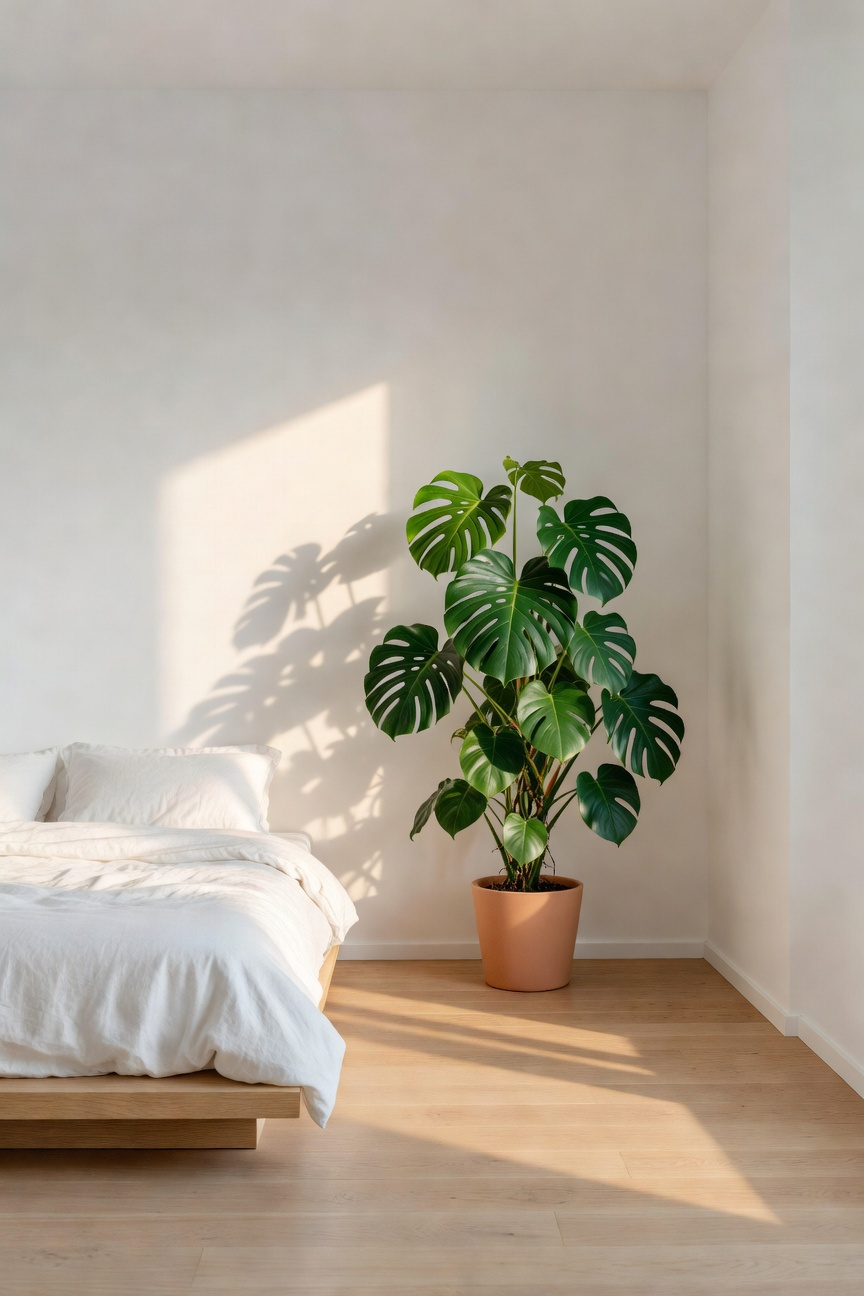
Beyond physiology, this arrangement echoes the Japanese philosophy of *Wabi-Sabi*. Ideally, the solitary plant represents the beauty of impermanence. As it grows and shifts toward the light, it embodies continuous change. Therefore, observing this quiet evolution cultivates a mindset of non-attachment. This acceptance is crucial for emotional resilience and stress reduction. In fact, the contrast of living texture against smooth walls heightens sensory mindfulness.
Furthermore, the biological impact on sleep quality is significant. Research indicates that mere visual exposure to nature lowers cortisol levels. As a result, the body transitions more easily into a restorative state. Additionally, knowing a living organism is purifying the air enhances subconscious feelings of safety. Ultimately, a single plant transforms a bedroom into a true psychological refuge.
Phase 4: Ritual and Maintenance (Lifestyle Integration)
Ultimately, a minimalist bedroom is not merely a static aesthetic achievement. Rather, it functions as behavioral architecture. Specifically, the design actively supports a lifestyle of simplicity and rest. Therefore, the aesthetic becomes a natural byproduct of daily habits.
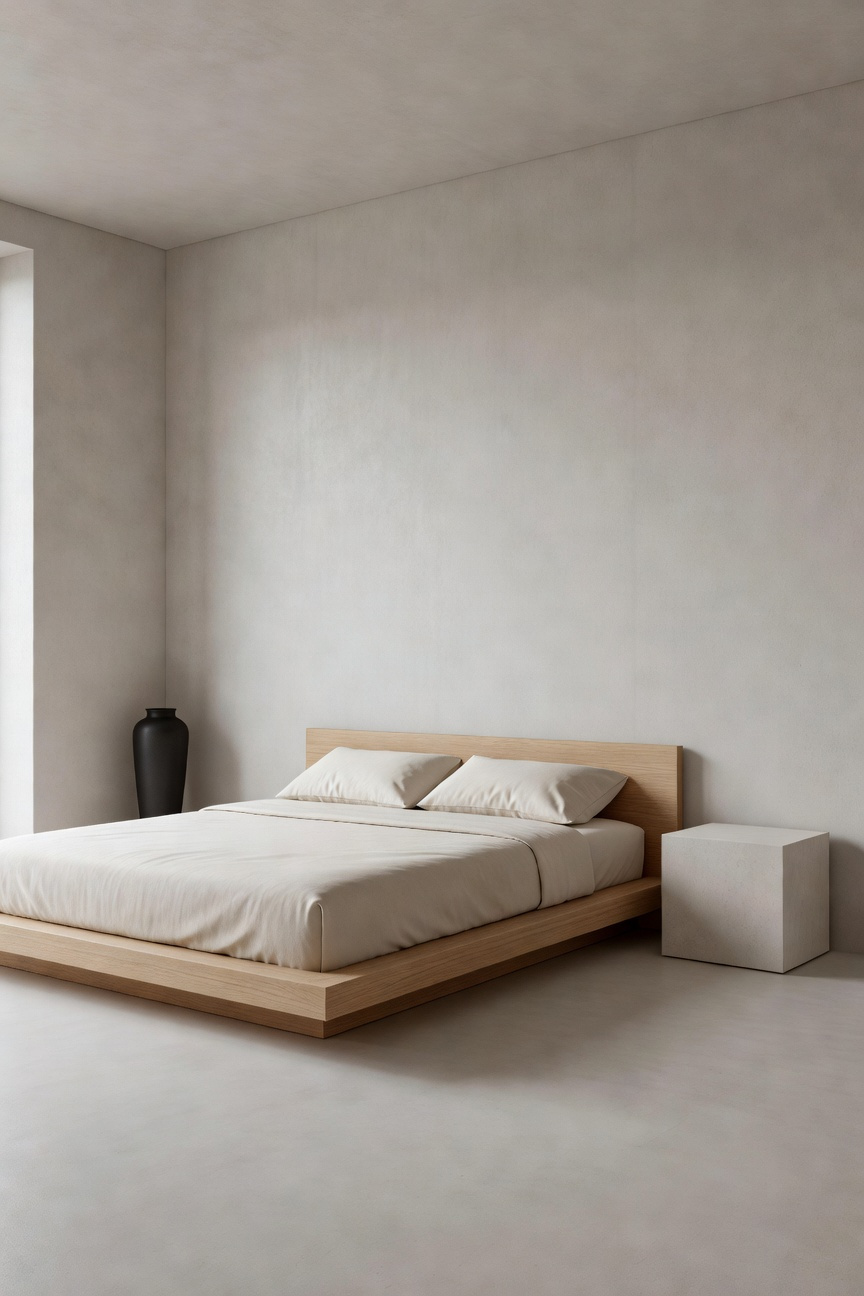
Fundamentally, this phase centers on reducing your cognitive load. By investing in quality, you minimize the “psychological tax” of caring for fragile items. For instance, choosing seamless stone over high-maintenance tile eliminates stressful cleaning sessions. Additionally, extensive closed storage serves as a visual clutter eliminator. Placing items out of sight instantly reduces mental noise.
Consequently, maintenance shifts from a chore to a restorative ritual. Simple acts, like making the bed, effectively signal the completion of a sleep cycle. In fact, this routine regulates the nervous system, preparing the mind for the day ahead. Thus, the space facilitates a transition into internal focus.
Finally, sustaining this atmosphere requires the “one in, one out” rule. This policy prevents the gradual re-accumulation of objects. As a result, you preserve the calming sensory qualities of negative space and natural textures.
14. The Digital Detox Layout: Design Choices That Ban Blue Light
Designing a restorative sanctuary requires more than just aesthetics; specifically, it demands a “Charging Station Exit.” This layout choice deliberately places phones and laptops outside the bedroom door. Consequently, you remove the anxiety associated with constant digital availability. In fact, this exclusion represents the purest form of minimalism. By eliminating digital noise, the room instantly becomes an analog oasis for quiet reflection.
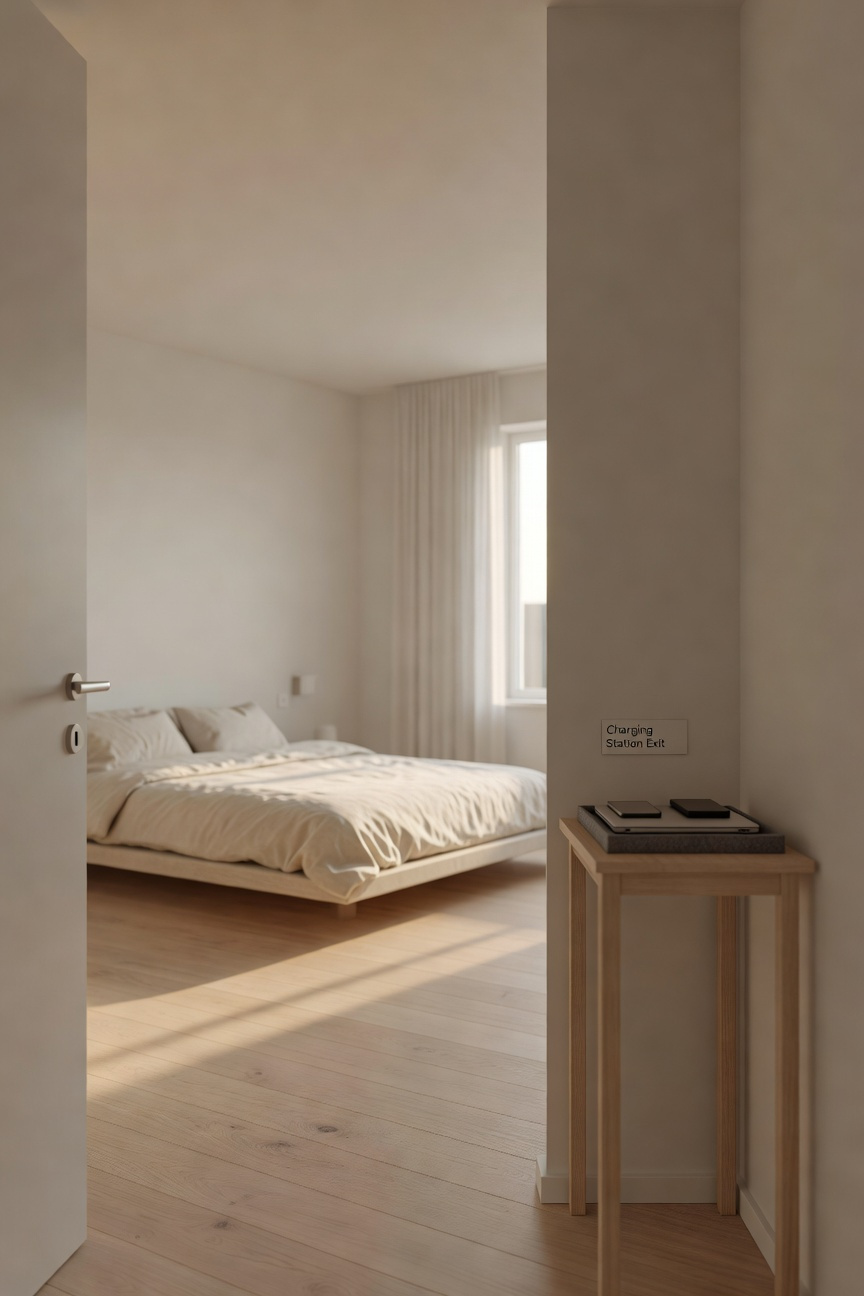
Furthermore, the lighting fixtures must enforce a strict ban on blue wavelengths. Chronobiologists agree that blue light suppresses melatonin, which disrupts natural sleep cycles. Therefore, you should exclusively select bulbs rated at 2700 Kelvin or lower. This specific temperature emits a warm, golden glow similar to traditional candlelight. As a result, the atmosphere shifts from a sterile workspace to a soothing, spa-like environment.
Finally, you must control external light sources to achieve true architectural darkness. Historically, sleep environments prioritized total darkness to ensure optimal rest. Thus, installing blackout roller shades is essential to block intrusive streetlights. Additionally, consider using deep wall colors like charcoal or navy to aid this process. These hues naturally absorb stray light rather than reflecting it. Ultimately, this creates a restful visual void that signals to the brain that it is time to sleep.
15. The Nightstand Edit: Limiting Surface Objects to Essentials
The nightstand serves as your bedroom’s primary visual anchor. Specifically, it is the last thing you see before sleep and the first upon waking. Consequently, its composition disproportionately impacts your mental state. Research suggests that a cluttered environment triggers cognitive overload. In fact, the brain subconsciously perceives clutter as a collection of unfinished tasks. Therefore, this visual noise creates elevated stress, preventing your nervous system from downshifting.
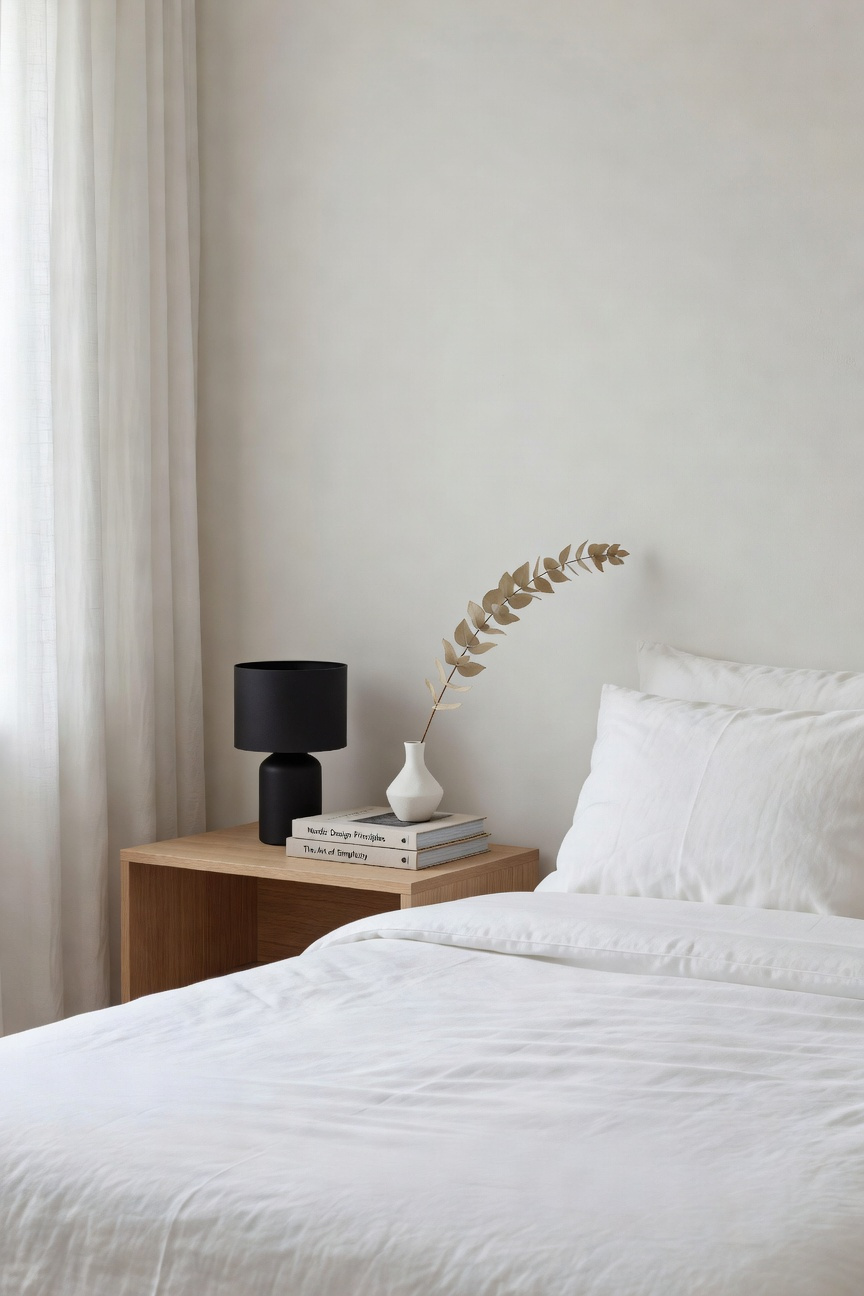
To reclaim your sanctuary, view the nightstand as a “low-demand zone.” Ideally, limit surface objects to the “Rule of Three.” For instance, display only a light source, a single book, and a water carafe. Historically, early nightstands were purely functional cabinets designed to conceal chamber pots. Similarly, the modern “Nightstand Edit” returns to this strict utility. However, today we hide chargers and lotions instead of sanitary items.
Functionally, this requires furniture with ample concealed storage. Furthermore, wall-mounted sconces can replace bulky table lamps. This adjustment introduces negative space, making the room feel airier. Ultimately, a clear surface signals to the brain that the day is concluded. Thus, the environment actively facilitates restorative rest.
16. Maintenance as Meditation: Designing a Room That Resets Itself
True sanctuary design reframes maintenance as a calming ritual rather than a burden. This concept draws deeply from *Karesansui*, the Japanese Zen garden tradition. There, raking gravel isn’t just cleaning; it is an act of cultivation. Similarly, a minimalist bedroom should invite a daily “reset.” Specifically, smoothing your linen sheets mimics the meditative raking of sand. Consequently, this brief, repetitive motion clears the mental slate for the day ahead. Psychologically, this small win provides a sense of environmental control, effectively reducing anxiety.
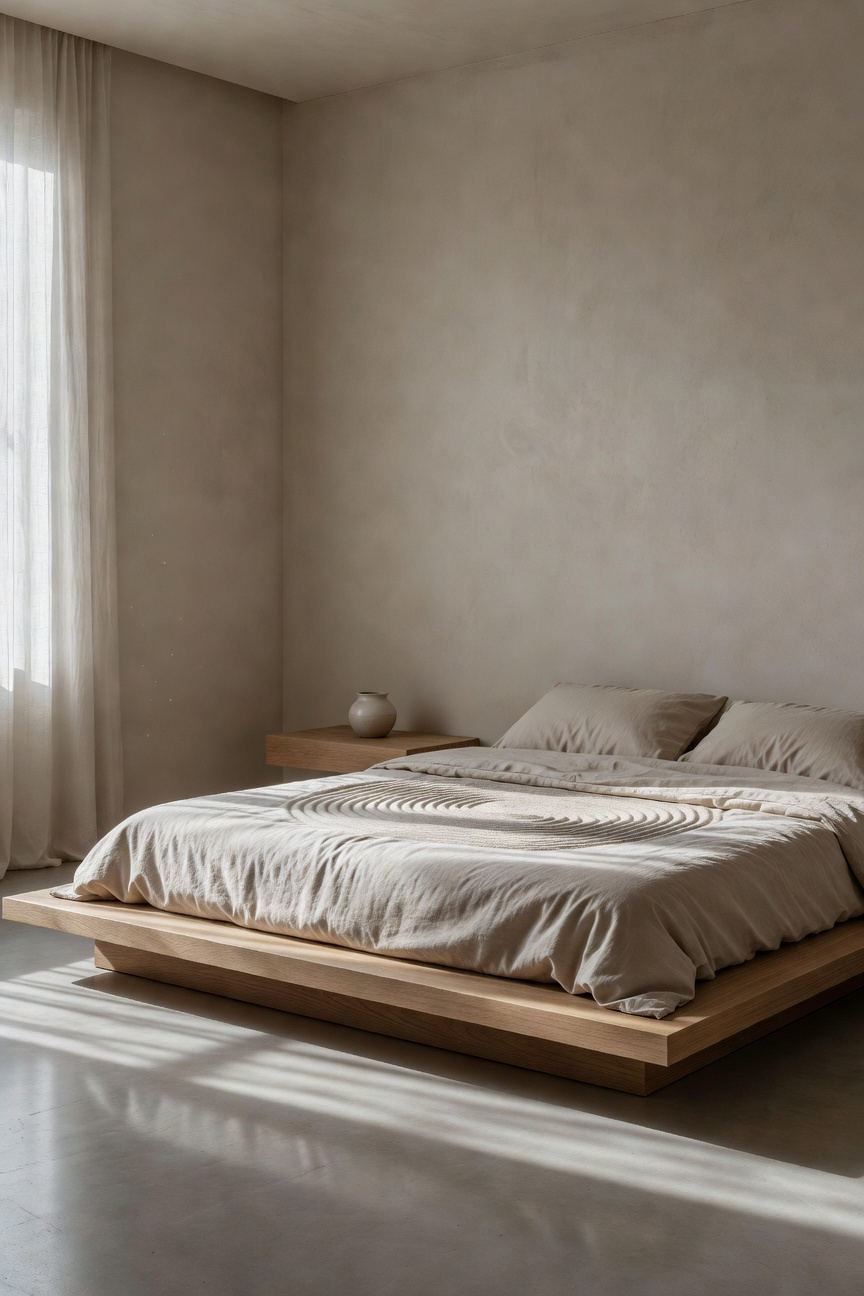
However, this ritual requires a supportive architectural framework. To make disorder difficult to sustain, prioritize built-in, handleless millwork. For instance, push-to-open cabinets create a monolithic wall surface that hides visual noise. Furthermore, integrated storage solutions, like platform beds with hydraulic lifts, eliminate the need for bulky chests. These elements ensure the room naturally reverts to a clean, architectural block.
Ultimately, the goal is a “self-resetting” space that minimizes decision fatigue. Select simple geometric forms that allow for a “one-sweep” dusting motion. Therefore, wide nightstands with drawers are preferable to open shelves. They allow you to instantly stash items, restoring a zero-clutter state. This simplicity ensures maintenance remains a soothing, restorative practice rather than a chore.
Conclusion: Designing for the Person You Are When You Close Your Eyes
Ultimately, implementing sophisticated minimalist bedroom design is not merely an aesthetic choice. In fact, it is a profound act of psychological self-care. By reducing visual noise, you directly lower your daily cognitive load. Consequently, the room creates a secure boundary against external stress. This intentional whitespace allows your mind to truly decompress. Therefore, the design supports the vulnerable, introspective self that emerges at night.
Looking ahead, your sanctuary should prioritize sensory comfort over material accumulation. Ideally, your environment will act as a tool to nurture mental well-being. Thus, true luxury becomes defined by texture, natural light, and silence. To start this journey, begin by auditing your bedside table today. Remove any item that demands your attention or signifies work. Finally, reclaim your space for the person you are when you close your eyes.
Frequently Asked Questions
H3: How does minimalist design reduce stress and anxiety?
A minimalist aesthetic directly addresses the concept of “visual noise.” Studies show that physical clutter elevates cortisol (the stress hormone) levels in the body because the brain must constantly process unnecessary stimuli. By removing non-essential objects and maximizing negative space, minimalist design reduces cognitive load. This allows the nervous system to relax and enter a restorative state.
H3: How can I make a minimalist bedroom feel warm instead of sterile?
Avoid high-chroma, stark white paint, and glossy or chrome finishes. Instead, embrace “Warm Minimalism” by utilizing an emotional palette of off-neutrals, such as gentle creams, warm taupes, and earthy clay tones. Crucially, layer tactile variation using natural, organic materials like linen, thick wool, matte wood, and textured plaster. These elements absorb light and invite touch, creating a grounded, nurturing environment.
H3: What are the three most essential elements of a high-end minimalist master bedroom?
For a luxurious and functional minimalist master bedroom, focus on these three elements: 1) A Low-Profile Platform Bed: This grounds the room, creates expansive vertical negative space, and eliminates the need for bulky bedding like dust ruffles. 2) Hidden Storage Architecture: Seamless, handle-less built-in cabinetry that eliminates all visible clutter and transforms storage into part of the architectural shell. 3) Circadian Lighting Design: Utilizing indirect, warm-toned LED lighting (below 3000K in the evening) that supports natural melatonin production and improves restorative sleep hygiene.