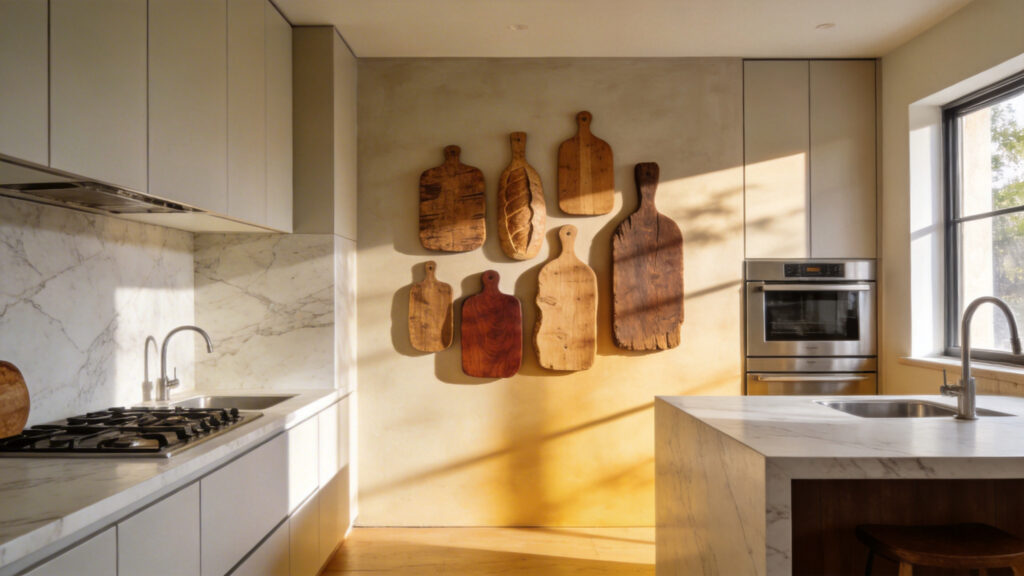
Many people view kitchen wall decor as a way to fill blank space. However, these vertical surfaces offer a chance to completely change how your cooking space feels. Specifically, they set the background tone for the daily rhythm of chopping and stirring. Therefore, a well-designed kitchen wall goes beyond simple decoration. I always tell clients that it reclaims the domestic space as an area of true creative power. Previously, the kitchen was often dismissed as a place of hidden labor. Today, we recognize it as the heart of the home where curated design meets heavy utility.
Next, consider the actual psychology of cooking. Indeed, repetitive actions like dicing onions can create a meditative state of flow. Because of this, the visual rhythm of your wall decor provides a much-needed mental anchor. For instance, framing a handwritten family recipe visually connects you to your culinary history. Meanwhile, rich wall colors create a calming sanctuary for meal prep. In fact, your walls often dictate both the room’s mood and your workflow pattern. Thoughtful design prevents sensory overload from sizzling pans and sharp smells. Naturally, this mental space allows genuine inspiration to strike between tasks.
This guide reveals how to harness the authority of your kitchen walls. Specifically, we will explore the impact of sensory zoning. Then, we will examine ways to blend personal style with optimal workflow patterns. You will find various kitchen wall decor ideas for every style along the way. Next, we will discuss adding meaningful clusters of art that actually make sense. Ultimately, you will learn to transform those blank spaces into an organized command center.
The Culinary Anchor: Why kitchen wall decor must bridge the gap between hardworking function and soulful aesthetics
Historically, kitchens were cramped and hidden workrooms. However, modern open-concept layouts put these spaces on public display. As a result, kitchen walls now act as highly visible markers of your identity. Indeed, they are often the most prominent vertical planes in our homes.
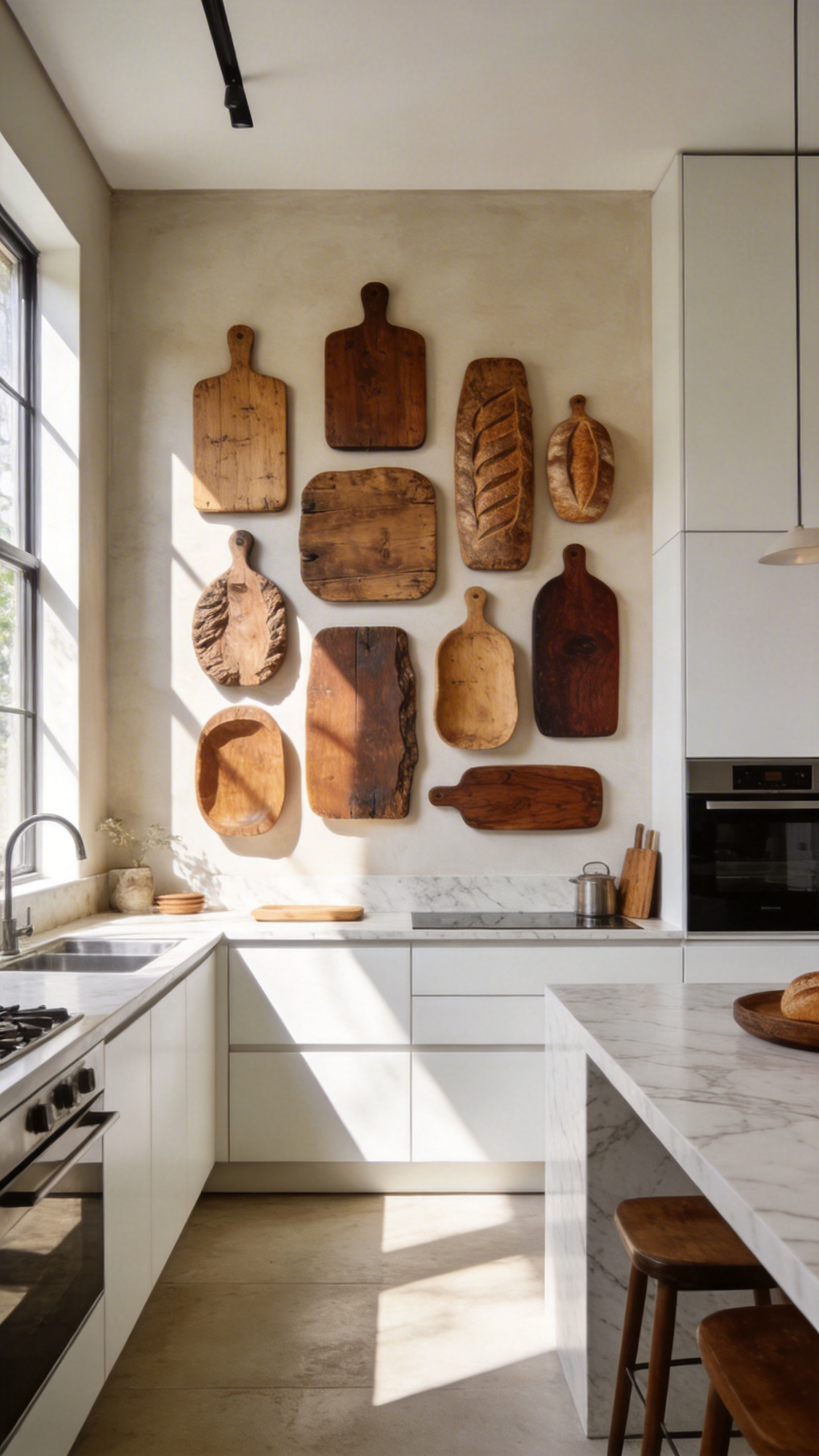
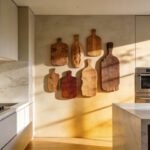
Specifically, kitchens are dominated by cold, hard surfaces like stone and steel. Therefore, your wall decor must provide necessary visual softening. For example, hanging textured wooden breadboards adds immediate warmth. These organic materials break up the monotony of sleek cabinetry. In fact, successful designers often rely on the “patina principle.” Materials like unlacquered brass and worn wood actually improve with heavy use.
Meanwhile, displaying your actual tools inspires daily cooking. Indeed, hanging a well-used copper pot invites immediate culinary creativity. Naturally, it still acts as a high-performance cooking vessel. At the same time, it reflects warm light to create an inviting glow in the room. Of course, we must address the kitchen’s hostile atmosphere. Notably, airborne grease and steam will quickly destroy traditional canvas art. Thus, functional ephemera often serves as the ideal design solution. For instance, a handwritten recipe framed beneath tempered glass survives these conditions perfectly. Ultimately, an active wall establishes the true rhythm of your home. Instead of sterile surfaces, it offers a soulful, functional calm.
Navigating the Elements: Expert guidelines for selecting art and materials that withstand heat, humidity, and daily cooking
Kitchens constantly combine intense heat and humidity. Therefore, curating art for these spaces requires careful material selection. Specifically, unglazed acrylic paintings are a hidden trap. Because they have a low glass transition temperature, they get tacky near 160°F. Consequently, microscopic grease particles become permanently embedded as the paint cools. Instead, conservation experts strongly suggest glazing these works. However, standard acrylic glazing warps easily near heavy moisture. Therefore, tempered glass remains the professional standard for high-heat cooking zones. Indeed, it safely withstands thermal shifts up to 470°F without cracking. Additionally, installing hidden frame spacers prevents condensation from touching your artwork.
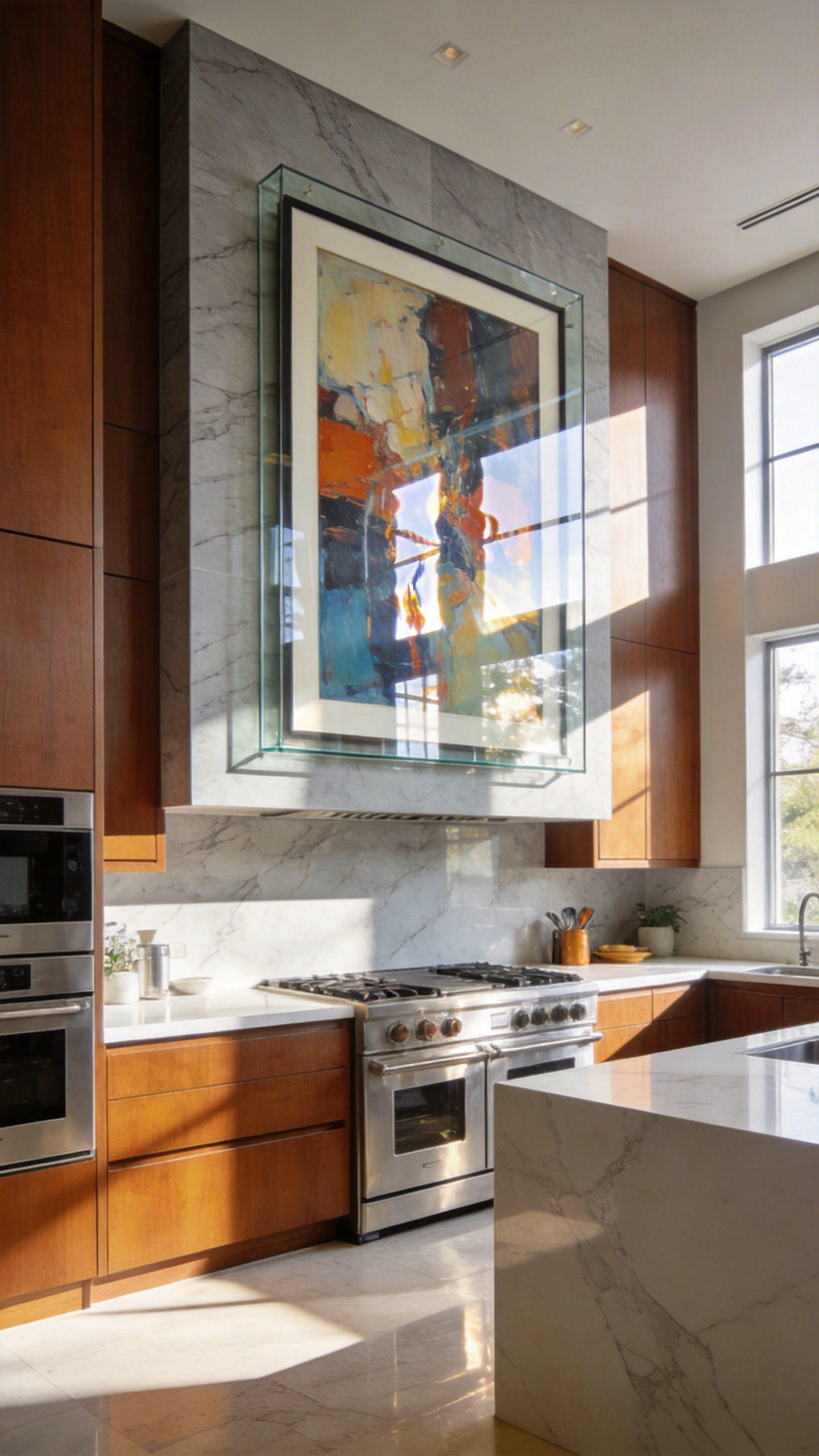
Historically, Victorian homes solved this environmental challenge beautifully. For example, Lincrusta wallcoverings merged ornate style with absolute utility. This oxidized linseed oil material was practically indestructible. Before deciding on frames, consider 12 kitchen backsplash ideas to transform your space to create a durable foundation. Today, maintaining a gallery-fresh look requires very specific framing choices. For instance, chemically sealed anodized aluminum frames perfectly resist high heat. Conversely, raw brass will quickly develop a dark, uneven patina from steam. In fact, professional framers often use aluminized film to line wooden frames. This barrier blocks acid migration caused by humid kitchen air.
Finally, strategic placement protects your decor over the long term. Specifically, try to avoid hanging valuable pieces on exterior-facing walls. The temperature contrast can create a dangerous dew point behind warm frames. As a result, rapid mold growth can ruin the hidden backboard. Instead, display your collection safely on stable interior partitions. Ideally, keep them at least four feet from the busy range. Likewise, ensure they completely avoid the direct path of rising dishwasher steam.
Material Exploration I: The Authentic Iron & Copper Display (Hanging heritage cookware as sculptural metallic art)
Kitchens today proudly embrace heritage iron and copper cookware. Specifically, these heavy pieces function beautifully as sculptural metallic art. Historically, a wall of polished copper silently indicated immense household wealth. Today, hanging antique pans simply creates authentic culinary storytelling. In fact, the subtle clink of heavy metal often triggers a comforting sense of domestic routine.
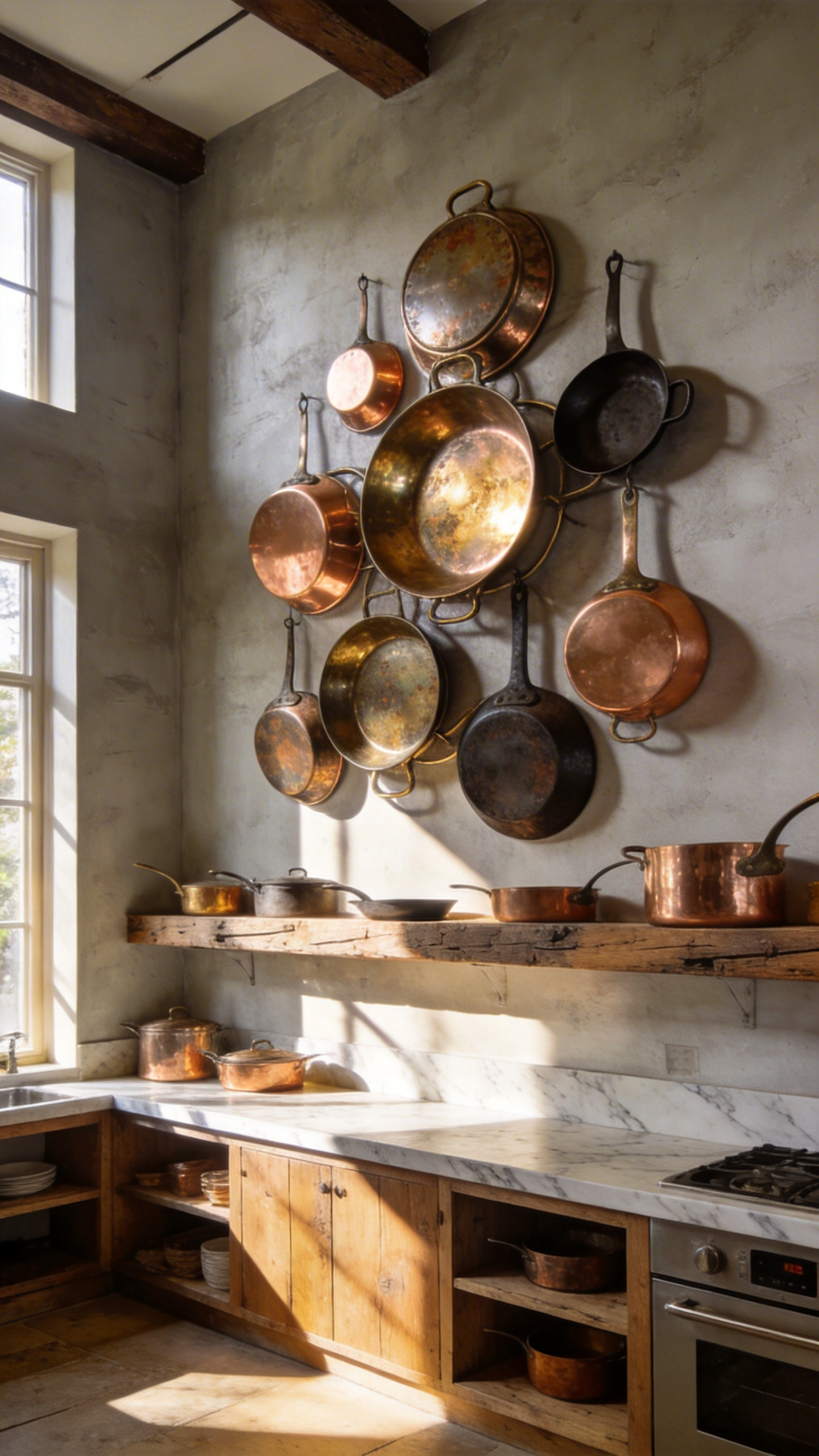
Modern designers, however, frequently debate the correct surface finish for these displays. Currently, I see experts increasingly favoring the unprotected, living copper patina. Indeed, this natural oxidation creates a beautiful visual record of actual use. Conversely, polished copper acts as a warm-toned mirror. Therefore, it easily softens the look of clinical modern quartz countertops.
Treating cookware as sculpture requires understanding their unique geometric silhouettes. For example, a rare diamond-shaped turbot pan offers notably sharp angles. Meanwhile, a massive rectangular braiser provides a robust grounding presence on the wall. Next, mixing straight saucepans and flared skillets creates a beautiful descending visual rhythm.
Structurally, transitioning these heavy pieces into art requires immense care. In fact, a solid copper pan can easily weigh over fifteen pounds. Thus, expert installers always recommend adding sturdy wood blocking behind your drywall. Visually, individual brass hanging pins create a striking floating effect. Finally, curators warn against hanging these displays directly over active stoves. Otherwise, aerosolized cooking grease will permanently ruin the delicate metallic oxidation.
Material Exploration II: Architectural Floating Shelves (Balancing accessible dishware storage with curated styling)
Modern kitchens treat open shelving as functional architectural jewelry. Specifically, advanced interlocking systems are replacing basic floating shelf kits. Heavy-duty hidden brackets safely support large stacks of heavy dishware. Therefore, these modern shelves can hold up to 100 pounds per foot. Installing these brackets before tiling creates a clean, monolithic appearance. As a result, the shelves appear to emerge directly from the backsplash itself.
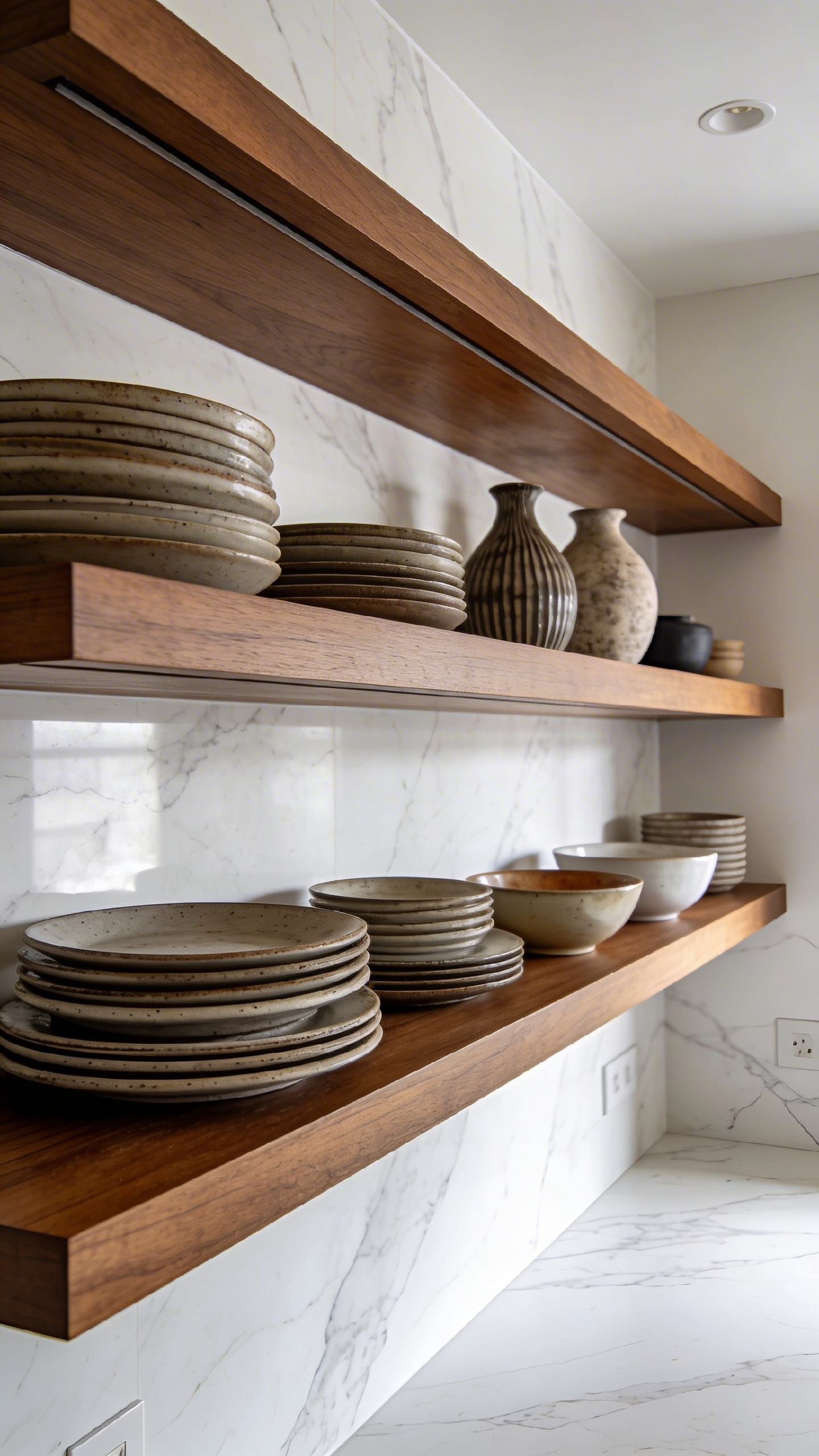
Indeed, material choices deeply impact the sensory experience of cooking. Cool, honed marble offers a tranquil and classic culinary surface. Conversely, wire-brushed oak introduces a remarkably warm and tactile contrast. Alternatively, fluted glass provides elegant discretion for your basic utilitarian supplies. Additionally, integrated LED lighting elevates these materials into illuminated art. Concealed light channels allow hosts to adjust room color temperatures easily. Specifically, crisp white light illuminates detailed and intricate vegetable prep. Later, warm amber tones create a beautiful, relaxed ambiance for entertaining guests.
However, successful open storage requires careful attention to visual balance. The classic 60/40 rule recommends keeping forty percent of the shelf completely empty. Consequently, this intentional negative space prevents visual fatigue and stressful clutter. Similarly, the “triangle method” anchors your heaviest items on the bottom shelves. Lighter decorative pieces then rest effortlessly near the top apex. Psychologically, clear visual accessibility drastically reduces daily search times. Homeowners can effortlessly locate tools for an optimized culinary workflow. Ultimately, this public-facing storage encourages a highly intentional curation mindset. Therefore, a well-designed shelf merges essential daily function with distinct personal style.
Material Exploration III: The Living Botanical Wall (Integrating vertical indoor herb gardens and trailing greenery)
Living botanical walls represent an incredible fusion of culinary function and interior design. Historically, this concept evolved from simple potted herbs sitting on a windowsill. Today, modular wall systems integrate greenery directly into the bespoke cabinetry grid. Therefore, living plants function as a primary material finish similar to wood veneer. Visually, these organic textures provide a sharp contrast against clinical kitchen surfaces. Specifically, irregular trailing leaves soften the visual harshness of ultra-matte finishes or sintered stone. Specialized recycled felt substrates allow plant roots to breathe without messy soil spills. This ensures your active cooking workspace remains clean and highly efficient.
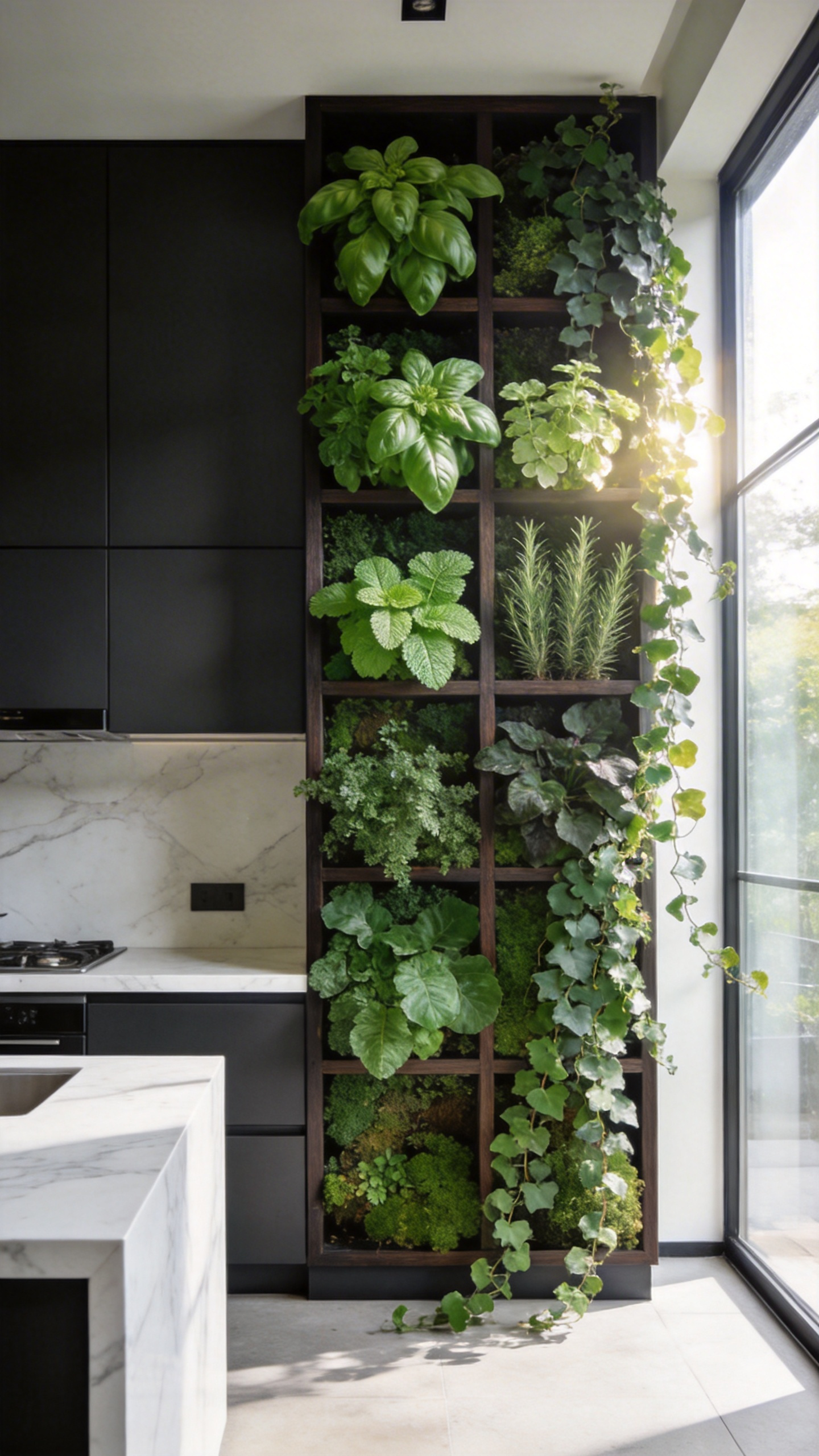
However, maintaining these vertical gardens requires invisible technical mastery. Standard kitchen lighting simply cannot sustain healthy indoor herb growth. Consequently, authoritative designs integrate full-spectrum LED grow lights. These specialized lights deliver precise photosynthetic radiation for lush, vibrant leaves. Additionally, silent hydroponic irrigation systems keep the plants hydrated automatically. This seamless integration perfectly supports an optimal, low-stress workflow.
Beyond aesthetics, a living wall offers a dynamic sensory experience. Psychologically, viewing trailing greenery actually reduces cognitive overload during complex meal prep. At the same time, dense plantings actively filter volatile organic compounds from the indoor air. Strategically, placing basil and mint at chest height creates an olfactory architectural feature. Indeed, ambient heat from the nearby stove naturally diffuses their delicate essential oils. Ultimately, regular harvesting keeps the wall dense while elevating your daily culinary creations.
Material Exploration IV: Vintage Culinary Archives (Framing handwritten family recipes, antique menus, and botanical prints)
Transforming a kitchen into a living archive merges history with functional design. Specifically, framing handwritten family recipes preserves a powerful personal legacy. Naturally, handwritten script captures a direct emotional link to our ancestors. Grease splatters trapped in the paper fibers become sensory markers of past successful meals. Consequently, these delicate imperfections act as a tangible culinary time capsule. Similarly, antique menus offer fascinating glimpses into typographic history. For instance, framing a vintage menu from a 1920s ocean liner signifies past celebrations. Additionally, these curated pieces reveal how our dietary habits have evolved over decades.
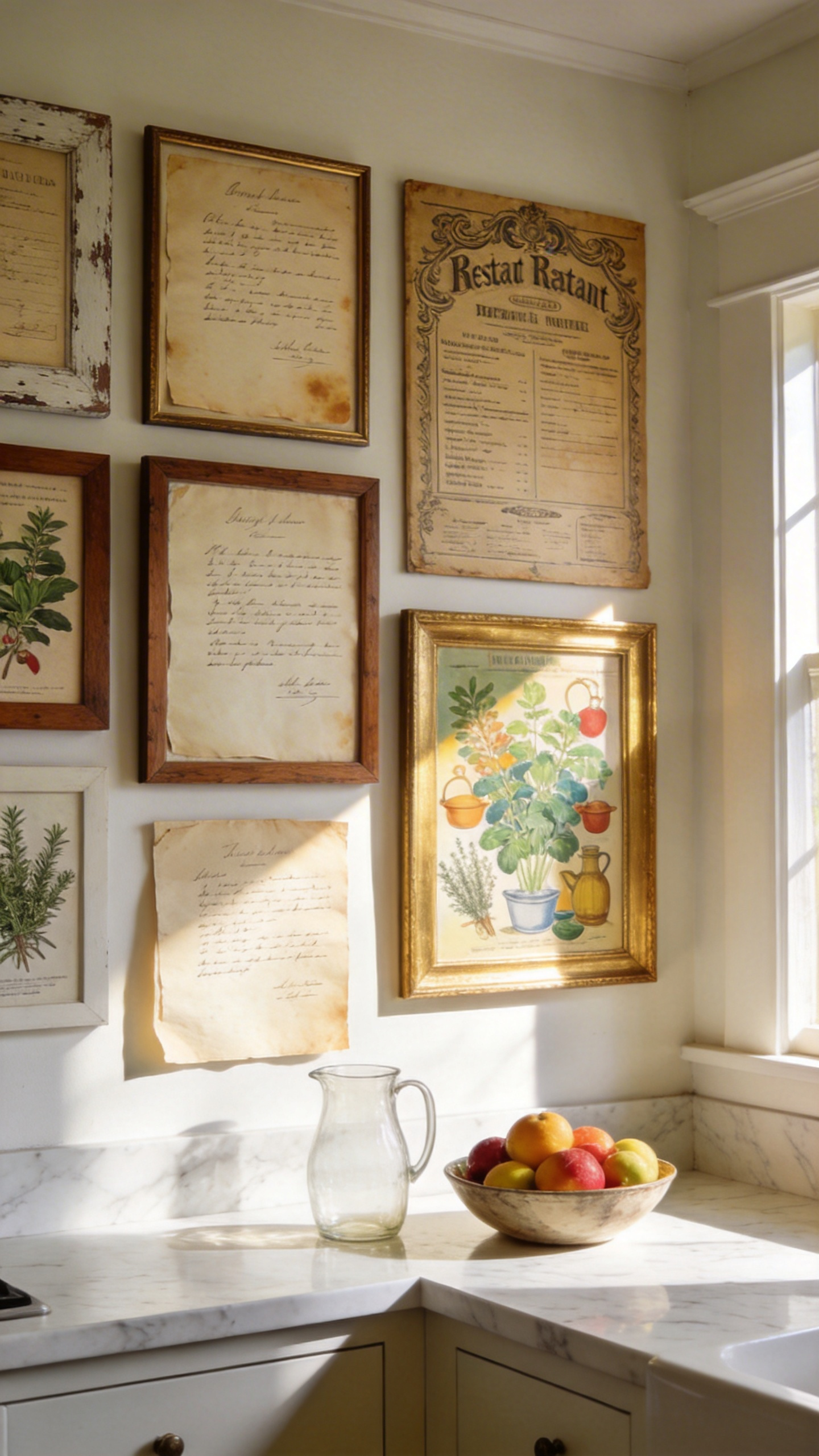
However, personal ephemera requires visual balance within a busy dining space. Therefore, vintage botanical prints often serve as a timeless scientific baseline. Specifically, their clean lines provide essential white space for the viewer’s eye. Thus, this layout prevents dense gallery walls from feeling overly cluttered. Meanwhile, it fully supports a cohesive “nature-to-table” design narrative.
Of course, the kitchen remains a notoriously hostile environment for delicate paper. Fluctuating humidity, airborne grease, and UV exposure cause irreversible fading. As a result, design experts strongly recommend framing high-quality digital reproductions instead. If you must frame original artifacts, you absolutely need UV-filtering glass and acid-free cotton matting. Archival hinging should also be used to manage drastic humidity changes.
Ultimately, surrounding your workspace with these archives triggers powerful food-evoked nostalgia. In fact, viewing a cherished family recipe can physically stimulate the olfactory system before you even start cooking. Indeed, this approach transforms static walls into highly engaging conversation pieces.
Material Exploration V: The Contemporary Plate Wall (Reinventing traditional china arrangements with modern, asymmetrical layouts)
Traditionally, dining room plate displays relied on rigid, mirror-image symmetry. Consequently, these formal layouts often felt stiff and overly staged. Instead, contemporary kitchen spaces embrace a more rhythmic asymmetry. Specifically, modern designers arrange plates in flowing, spiraling clusters across the wall. Therefore, the eye must constantly calculate the balance of negative space. This visual math creates a deeply engaging and active viewing experience. Furthermore, today’s plate wall completely rejects the all-matching fine china set. Indeed, it thrives on sophisticated artisanal textures and unexpected material contrast. For example, dead-matte stoneware provides necessary visual rest. Meanwhile, adjacent high-luster plates beautifully catch stray light from the windows. Additionally, raw reclaimed wood slices intentionally disrupt the smooth ceramic flow.
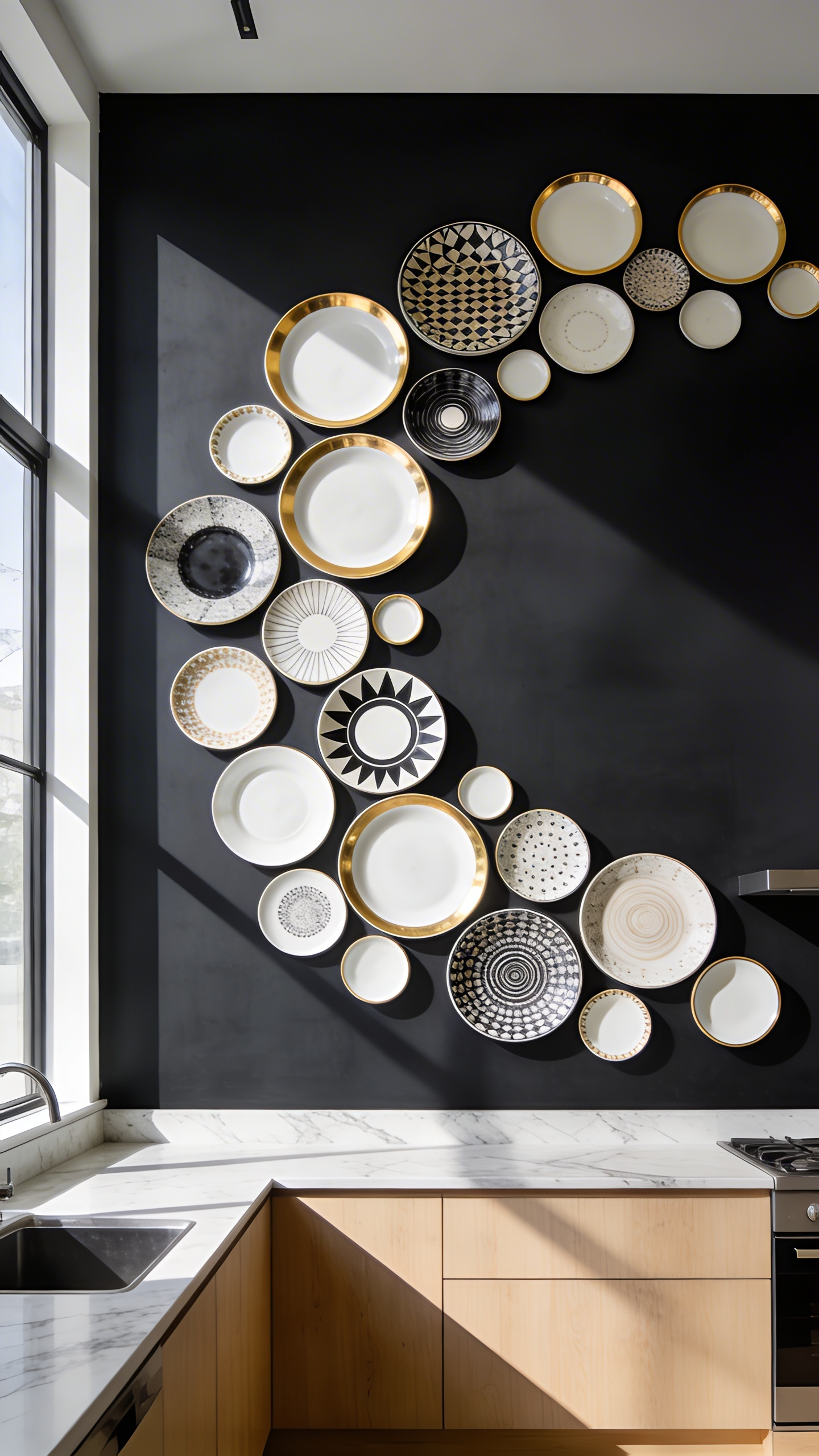
Moreover, this contemporary installation is a highly tactile experience. Specifically, designers celebrate artisan-hewn pieces with highly visible glaze drips. The rugged grit of high-fired stoneware effectively grounds the space. Conversely, factory-made porcelain offers a cool, clinical smoothness. Naturally, ambient lighting transforms this arrangement into a striking sculptural relief. Specifically, directional side-lighting casts shadows that highlight raised plate rims. Ultimately, these mixed materials tell a highly nuanced autobiographical story. Rather than displaying generic status symbols, homeowners carefully curate their personal histories. For instance, a salvaged family heirloom might sit gracefully near a recent flea-market find.
However, achieving this effortless look actually requires rigorous technical planning. First, trace each plate onto kraft paper to create physical templates. Then, tape these paper templates directly to the wall. Consequently, you can perfect the asymmetrical balance before picking up a drill. Finally, secure the pieces using invisible adhesive disc hangers. Thus, the plates float beautifully without bulky metal wires obscuring them.
Spatial Application I: The Range Hood Focal Point (Establishing visual symmetry and grounding the cooking zone)
The range hood has evolved far beyond a simple air filtration device. Specifically, designers now view it as the primary architectural anchor of the kitchen. Therefore, it establishes the visual hierarchy for the entire surrounding room. Historically, the hood acted as a modern version of the home hearth. Consequently, it provides a crucial psychological anchor in large open-concept spaces. Furthermore, the human eye naturally seeks order amidst a busy cooking zone. Thus, a prominent, well-designed hood reduces the cognitive load of a complex room.
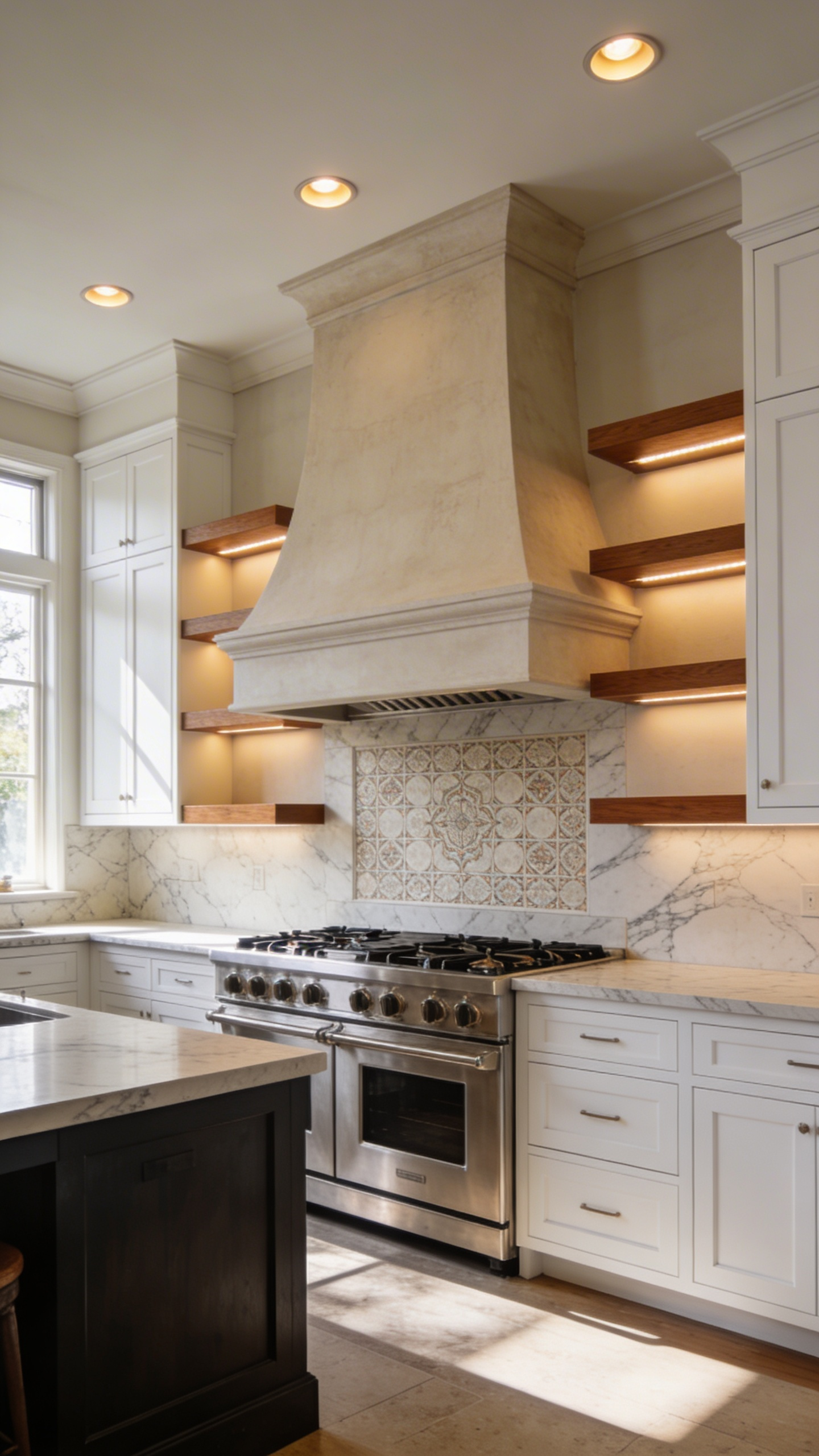
Naturally, establishing this visual symmetry requires careful geometric planning. For instance, the hood should ideally reach all the way to the ceiling. Ultimately, this vertical extension eliminates awkward, dust-collecting dead space. Moreover, it visually mimics the strength of a heavy structural pillar. Additionally, sizing the hood six inches wider than the cooktop creates a welcoming visual hug. Consequently, this technical sweet spot frames the cooking activity beautifully.
Beyond geometry, grounding the space relies heavily on your material selection. Recently, I have noticed a distinct shift toward soft architectural surrounds. For example, Venetian plaster makes the hood feel like a permanent, original structural element. Meanwhile, pairing a matte plaster hood with glossy Zellige tile adds incredible visual depth. Therefore, this layered texture creates a brilliant jewel-box effect that highlights the cooking zone.
Finally, modern kitchens often utilize negative space to enhance this focal point. Specifically, removing the flanking upper cabinets leaves the hood as the sole vertical element. Ultimately, this bold architectural technique makes even modest kitchens feel remarkably expansive and grounded.
Spatial Application II: Breakfast Nook Gallery Walls (Creating intimate, conversation-starting art groupings for morning routines)
Historically, early twentieth-century breakfast nooks featured sterile, purely functional painted walls. Today, modern gallery walls rebel against this cold, utilitarian aesthetic. Specifically, art softens hard kitchen surfaces like ceramic tile and stainless steel. Therefore, this simple transit zone transforms into a cozy, intentional destination. If you are looking for unexpected ways to decorate your kitchen walls, a breakfast nook gallery is the perfect place to start.
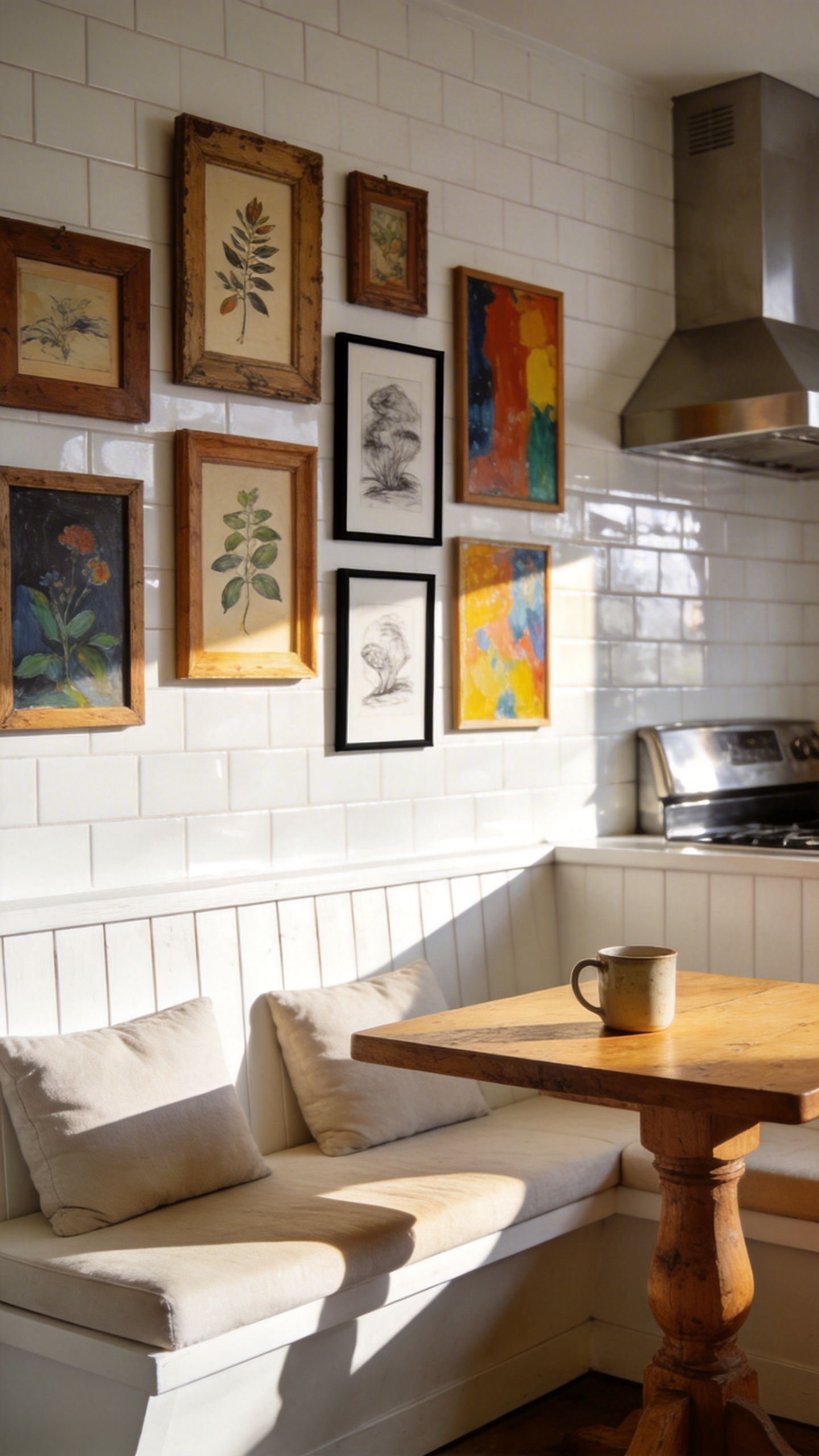
Crucially, designing for a breakfast nook requires breaking standard gallery rules. Because viewers are seated, the scale must feel incredibly intimate. Instead of typical standing heights, anchor your artwork significantly lower. Ideally, hang pieces just six to eight inches above the seating bench. Consequently, this lower placement creates a comforting, wrap-around cocoon effect for diners. Furthermore, keep the frame spacing remarkably tight at about two inches. Otherwise, wide gaps make small alcoves feel disjointed and messy.
Additionally, breakfast galleries demand careful attention to texture and light. Since nooks often capture bright morning sun, always use non-glare, UV-protective glass. Otherwise, those beautiful morning rays will create a frustrating visual washout effect. Similarly, introduce tactile warmth to balance out cold marble or glass tables. For example, mix flat prints with woven baskets or antique silver spoons. Truly, these three-dimensional elements cast soft, beautiful shadows during sunrise.
Ultimately, your morning art should act as a psychological mood-setter. Interestingly, incorporating nostalgic items like handwritten recipes fosters immediate social connection. Moreover, cheerful botanical greens and soft yellows naturally help lower waking cortisol levels. To encourage conversation, anchor the display with one highly meaningful piece. Then, surround it with smaller, disparate items to spark daily joy. Finally, consider installing a slim picture ledge within the grouping. Thus, you can easily rotate seasonal art or fresh botanicals whenever you like.
Spatial Application III: Maximizing Above-Cabinet Real Estate (Styling high, awkward gaps with intentional collections)
Historically, home builders used drywall soffits to close the gap above kitchen cabinets. However, modern open-concept layouts quickly eliminated these bulky structures. Consequently, this architectural shift created a high, awkward visual vortex near the ceiling. Today, interior designers view this gap as prime spatial real estate. Specifically, drawing the eye upward creates a powerful optical illusion. In fact, emphasizing vertical lines or implementing these small kitchen wall decor ideas can make ceilings appear up to 10% higher.
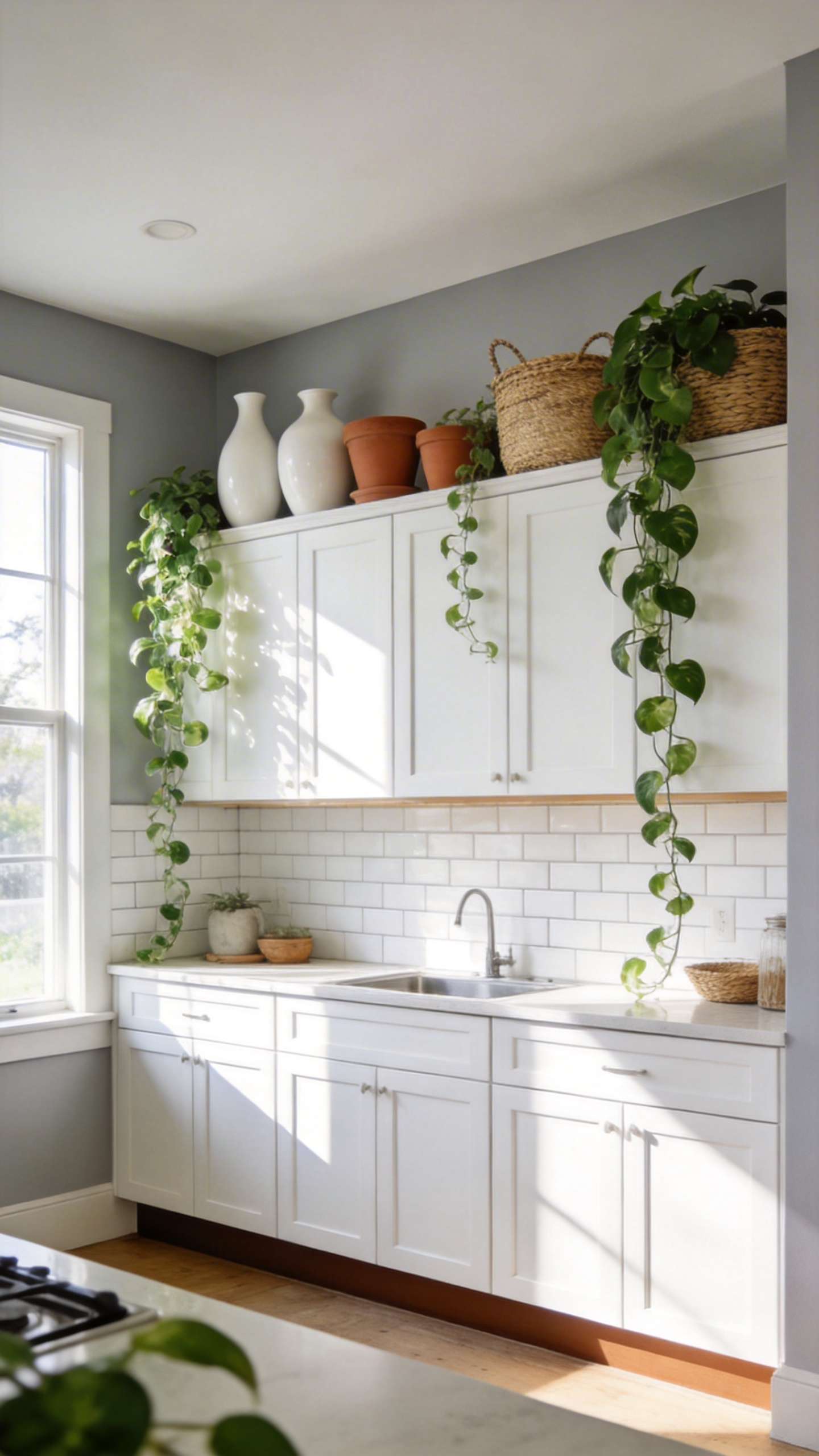
Furthermore, successfully utilizing this vertical space can increase perceived property value. Therefore, styling this zone requires careful curatorial logic. Previously, older trends popularized crowded, highly cluttered decor arrangements above cabinets. Conversely, modern entertaining spaces demand a highly intentional, gallery-like approach. Instead, follow the “odd and oversized” rule for visual stability. For example, group three large vintage dough bowls together. Additionally, leave intentional pauses of negative space between your groupings. As a result, this prevents visual noise and actually reduces inhabitant stress.
Naturally, styling this high zone introduces a few unique cleaning challenges. In particular, aerosolized cooking oils mix with rising household dust to create a sticky film. Fortunately, a simple technical hack defeats this grime completely. Indeed, professional stagers place wax paper flat along the cabinet tops. Then, they simply roll it up and replace it every six months. Meanwhile, functional artifacts like large copper pots provide active storage up high. Similarly, leaning framed vintage art adds a sense of personal culinary soul. Finally, installing hidden LED tape lighting washes the ceiling warmly. Ultimately, this invisible lighting trick makes the entire room feel beautifully elevated.
Spatial Application IV: The Coffee and Beverage Bar Backdrop (Layering small-scale artwork and floating ledges)
The modern home beverage bar is a distinct micro-destination. Unlike the primary high-activity cooking zone, this specific area encourages a slower, more deliberate pace. Therefore, this space demands design choices strictly meant for intimate viewing. Specifically, small-scale artwork beautifully rewards someone waiting for their morning espresso to finish brewing. Historically, this concept mirrors the warm, lived-in aesthetic of a classic Parisian zinc bar.
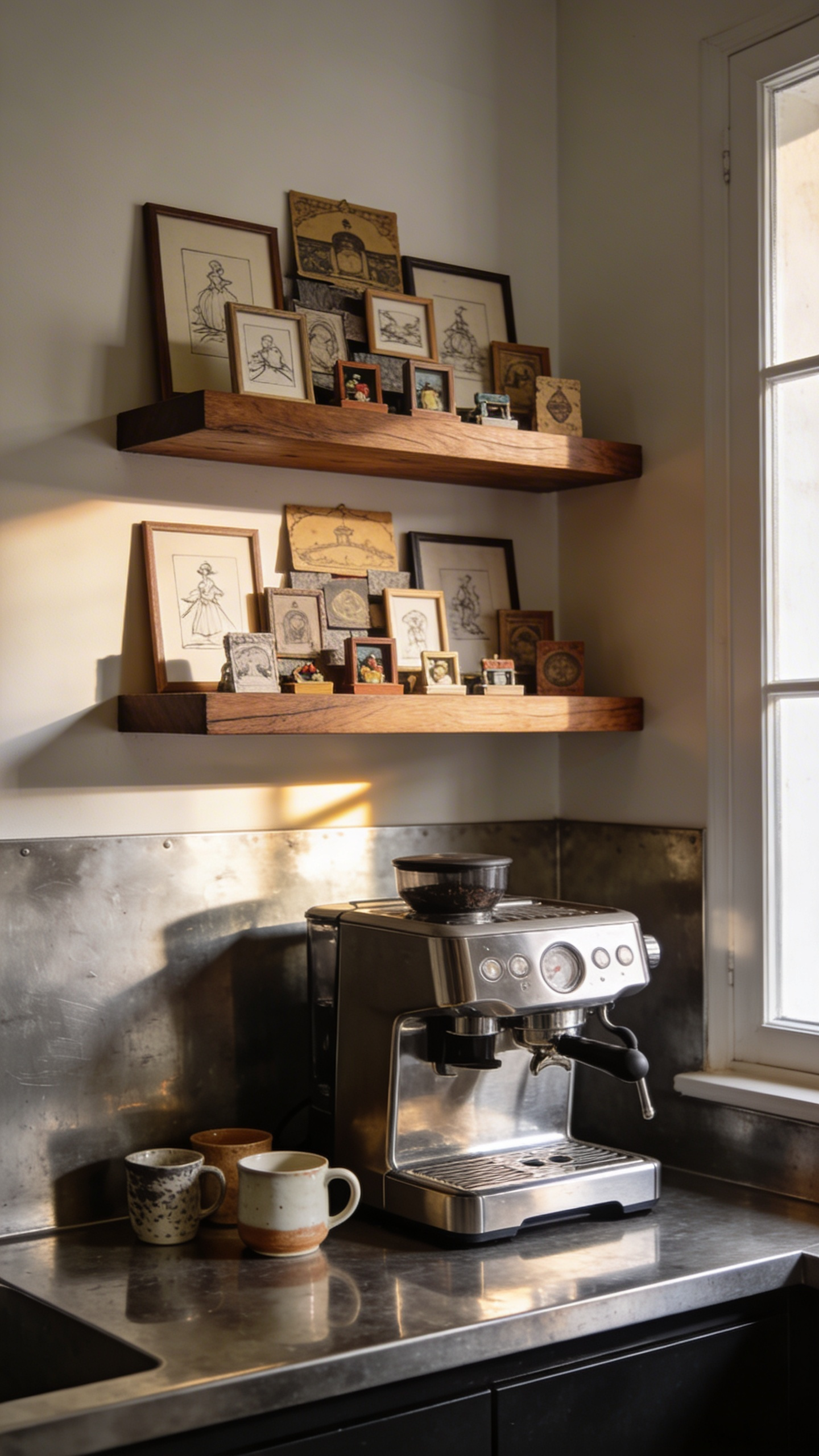
Consequently, floating wall ledges are ideal for framing this experiential daily ritual. They completely reject the heavy, static feel of traditional fixed cabinetry. Furthermore, open ledges perfectly accommodate a highly dynamic visual layering technique. You can easily build depth by overlapping vibrant small art in front of larger neutral canvases. Naturally, this layered effect breaks the flat verticality of standard kitchen walls. Additionally, ledges provide a breathable and highly functional horizontal line. They carefully guide the eye without the visual heaviness of closed upper cabinets. Moreover, this setup allows for easy artwork rotation in such a high-moisture, high-aroma environment.
Importantly, these layered ledges balance the kitchen’s otherwise hard, functional materials. Kitchens are typically dominated by cold quartz, gleaming tile, and stainless steel. Thus, a warm reclaimed oak ledge serves as a vital visual softening agent. Similarly, utilizing unglazed artwork prevents harsh glare from under-cabinet task lighting.
Ultimately, the most sophisticated setups always follow a simple compositional narrative. First, you must establish necessary height with a tall, leaning anchor piece. Next, you overlap a smaller bridge piece like a vintage botanical sketch. Finally, you place a functional object like a ceramic coffee canister directly in the foreground. Consequently, everyday coffee routines are effortlessly elevated into a beautifully curated architectural experience.
Spatial Application V: Open-Concept Transition Walls (Using decor to seamlessly connect the kitchen to adjacent dining spaces)
Historically, kitchens were strictly utilitarian spaces completely walled off from guests. However, modern residential design heavily favors a broken-plan layout. Specifically, transition walls act as intentional semi-partitions between rooms. These structures provide cozy enclosure for the dining area without blocking essential sightlines. Therefore, guests catch glimpses of culinary energy while still enjoying an intimate dining experience.
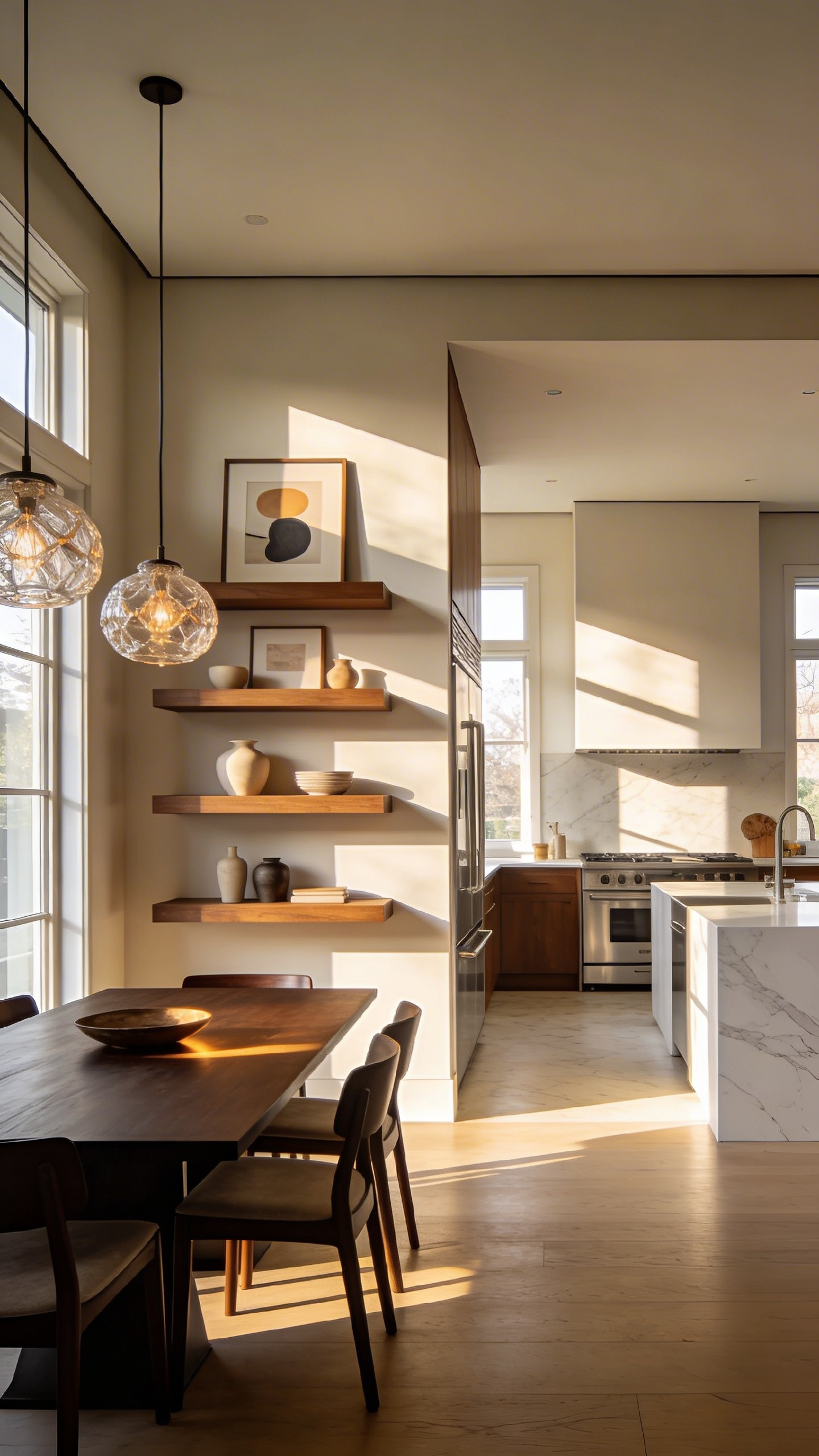
Functionally, these transition walls often serve as clever hybrid spaces. For example, lower kitchen cabinetry can extend seamlessly into the dining zone. This layout trick creates a beautiful built-in buffet or cocktail station. Furthermore, continuous wainscoting creates a strong visual bridge between the two rooms. Matching your unlacquered brass hardware and marble countertops also reinforces this connection. Essentially, a piece of the kitchen is elegantly donated to the dining room.
Visually, wall decor plays a crucial role in household wayfinding. Consequently, a long picture ledge can span the transition wall to connect the spaces. This continuous horizontal line effectively ties both separate rooms together. Additionally, applying the 60-30-10 color rule helps maintain a cohesive palette. If your kitchen island is navy blue, a navy framed print here perfectly balances the design.
Finally, managing the sensory atmosphere is vital for successful entertaining. Practically, textured grasscloth wallpaper absorbs the distracting clatter of meal prep. Moreover, dimmable wall sconces mirror the kitchen’s pendant lights beautifully. This gradient lighting smoothly signals the shift from high-energy prep to a relaxed social space. Ultimately, your transition wall becomes a highly functional, sensory-friendly bridge.
Lifestyle Integration I: Elevated Command Centers (Designing chic chalkboards and family organization stations that feel like art)
Historically, household management usually meant a highly cluttered refrigerator door. Consequently, pristine open-concept designs suffered from this daily visual noise. Today, we treat the family organization station as highly functional wall art. Specifically, modern designers swap basic painted MDF for frameless natural slate. Furthermore, mounting floating acrylic sheets with brushed brass standoffs creates a stunning effect. This transparent approach allows your beautiful kitchen wallpaper to shine through. Alternatively, black tempered glass mirrors the look of high-end kitchen appliances. Indeed, this reflective surface creates a highly cohesive, tech-forward aesthetic.
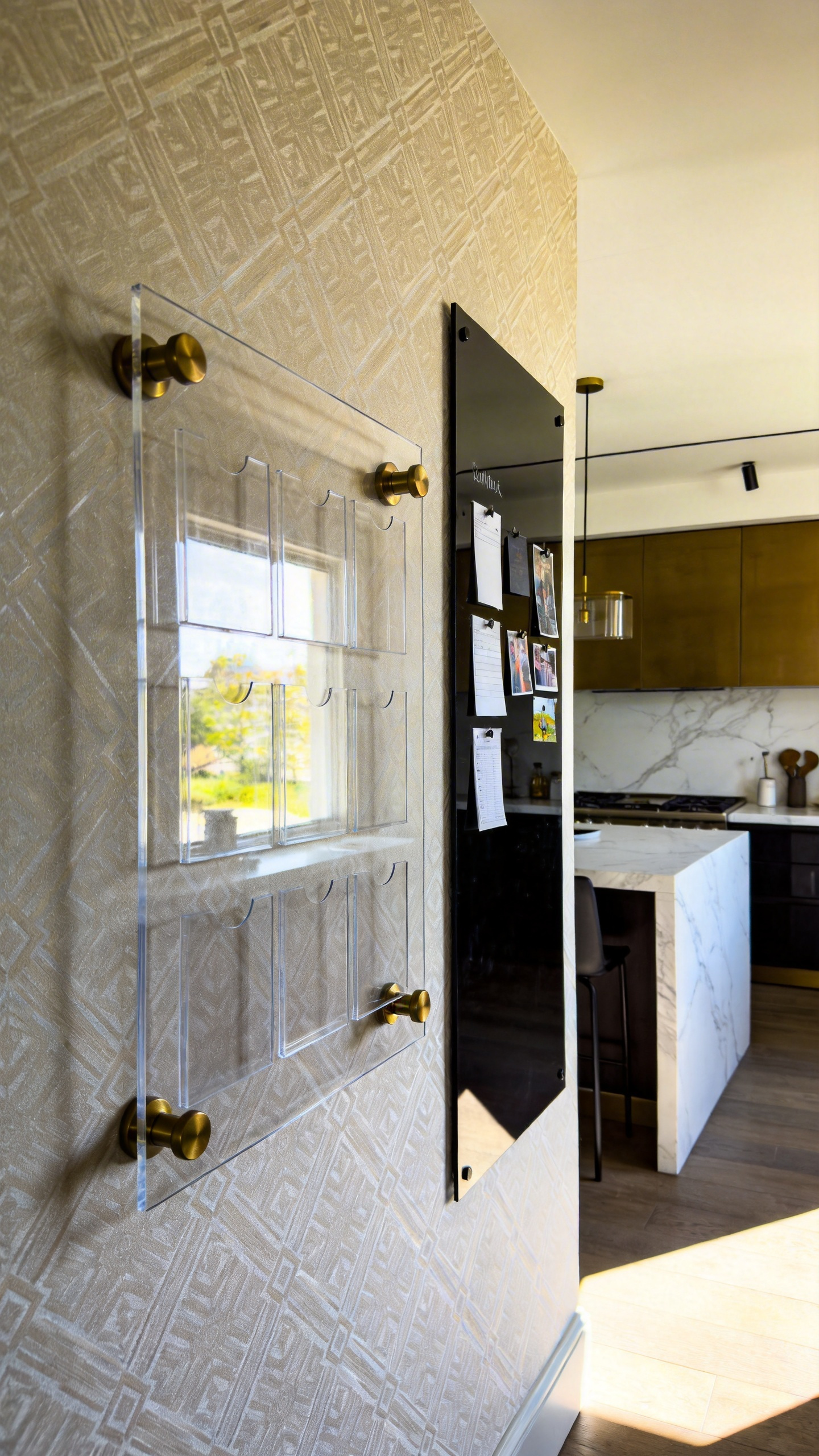
However, beautiful materials require thoughtful, ongoing curation. Therefore, professionals often utilize faux calligraphy for visual balance on these boards. By using chisel-tip liquid chalk markers, you achieve exceptionally crisp lines. Meanwhile, a wet-board wiping technique produces a highly saturated white contrast against the dark stone. Ultimately, this artistic approach significantly reduces daily cognitive load for parents. In fact, checking off a physical list triggers a powerful dopamine release in the brain.
Sometimes, absolute minimalism remains the primary design goal. Thus, luxury cabinetry hides these bustling organizational hubs behind sleek pocket doors. Similarly, hidden appliance garages keep messy charging cords completely out of sight. Finally, adding a brass picture light overhead signals that this organized space is a carefully curated masterpiece.
Lifestyle Integration II: Illuminated Vignettes (Using plug-in sconces and picture lights to highlight your wall decor)
Kitchens are no longer just clinical culinary laboratories. Instead, they function as beautifully curated primary living spaces. Specifically, plug-in wall sconces and picture lights completely transform blank walls. Furthermore, this targeted lighting effortlessly elevates everyday utilitarian items into stunning illuminated vignettes.
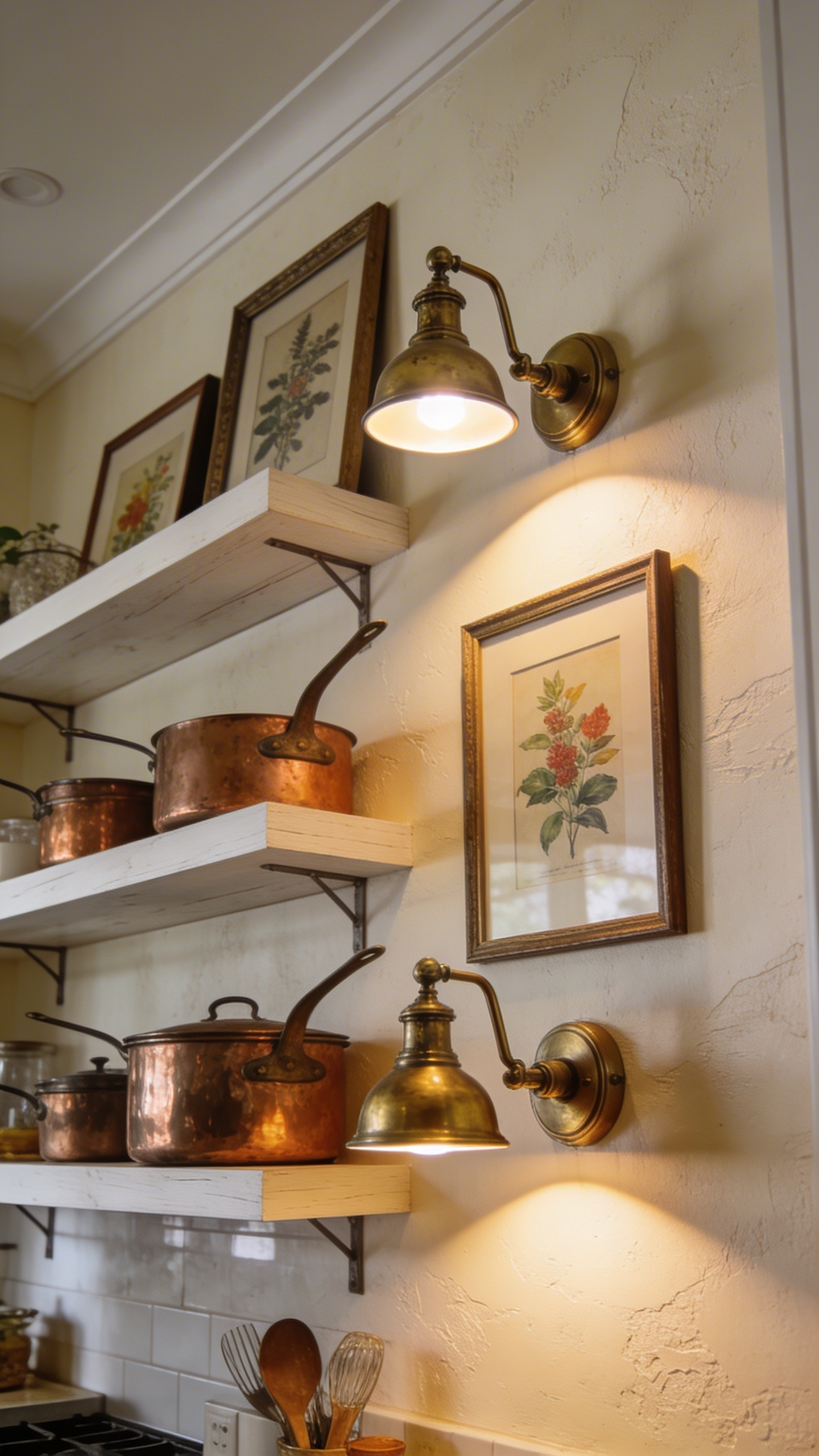
However, proper lighting design requires careful technical precision. Therefore, you must select fixtures carefully to match your specific workflow. Specifically, a Color Rendering Index (CRI) above 90 is ideal for these spaces. Consequently, vintage cookbook covers and natural copper patinas look completely authentic under the glow. Additionally, aim for a highly warm 2700K bulb temperature range. Naturally, this lower Kelvin count beautifully mimics the soft flicker of candlelight. Thus, your eye naturally shifts away from the cold stainless prep areas.
Aesthetically, an exposed plug-in cord actually tells a compelling story. In fact, a fabric-wrapped cord adds charming, handmade texture to a rigid wall. Meanwhile, interior stylists recommend using an “A-shaped” visual arrangement rule for ledges. Typically, a sleek picture light serves as the glowing top apex. Similarly, odd-numbered culinary items form a grounded, museum-quality base below.
Practically, active kitchens present unique grease and ambient heat challenges. Therefore, cool-operating LED bulbs remain an absolute necessity in this zone. Otherwise, traditional hot bulbs will literally bake cooking grease onto the glass lenses. Likewise, matte black or unlacquered brass fixture finishes easily hide daily fingerprints. Ultimately, these glowing islands create a powerful psychological zonal transition. Consequently, the room shifts gracefully from busy afternoon prep work to relaxing evening entertainment.
Lifestyle Integration III: The Seasonal Culinary Rotation (Effortlessly swapping small art pieces to reflect the changing harvests and holidays)
Your kitchen wall decor should naturally evolve with the agricultural calendar. Therefore, a seasonal culinary rotation treats your space as a living, breathing environment. Specifically, this method replaces permanent installations with the micro-curation of small, high-impact artworks. Historically, 17th-century Dutch still life paintings served as highly visual inventories of seasonal wealth. Today, placing a small etching of an artichoke in April signals a similar culinary shift. Furthermore, these intimate pieces closely mimic the scale of a standard recipe card. Consequently, the room feels like an active, engaged laboratory rather than a sterile showroom.
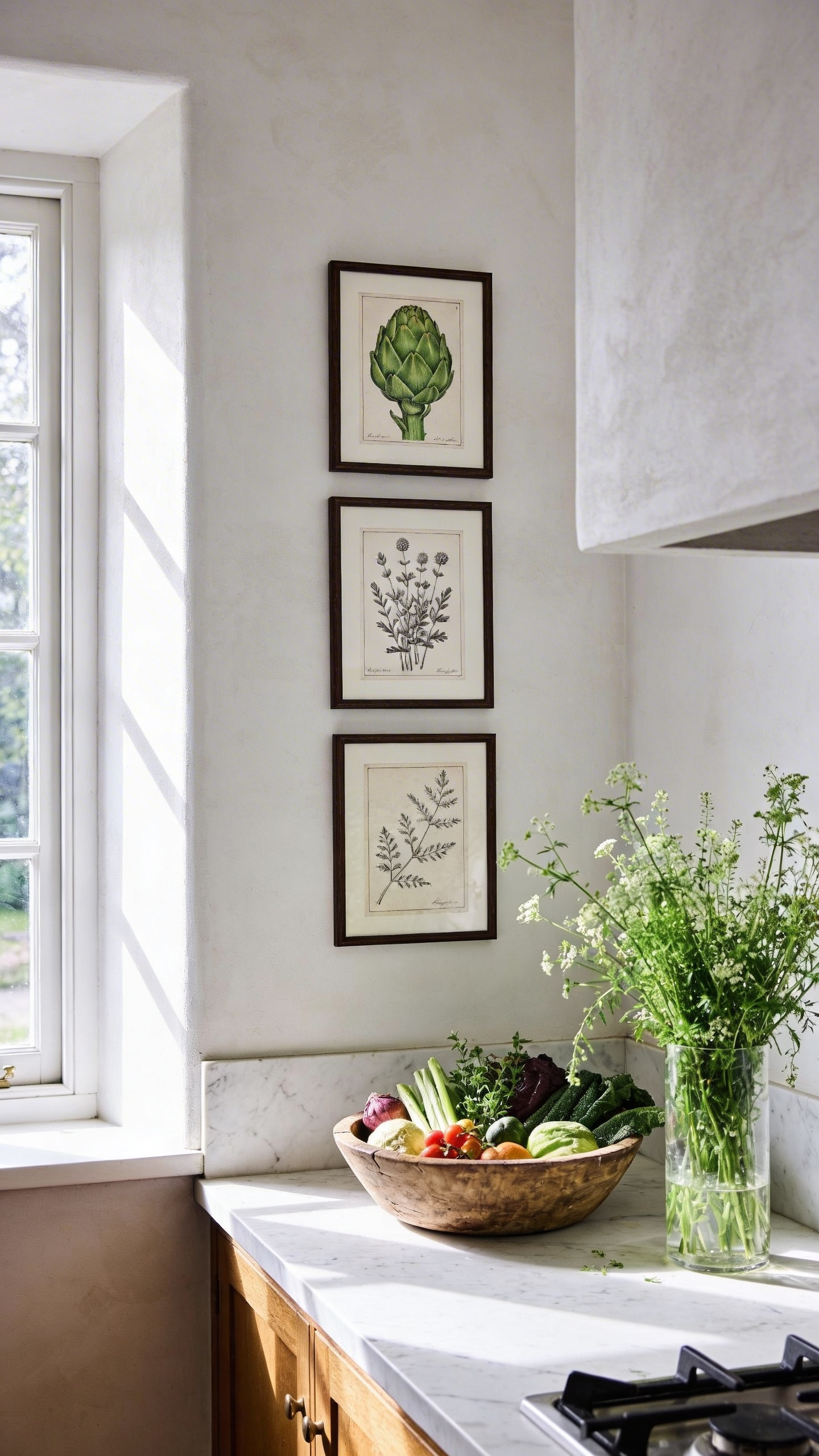
To make this completely effortless, professional designers utilize modular mounting systems. For instance, slim-profile picture ledges or vintage brass gallery rails allow for instant visual updates. Ultimately, you can lean and swap art in seconds without ever touching a hammer. Additionally, keeping standardized frames on the wall while merely changing the matted inserts greatly reduces friction.
Culturally, this practice builds a beautiful bridge between visual cues and culinary synesthesia. In winter, heavy copper engravings of wild mushrooms complement the rich flavors of seasonal stews. Conversely, summer calls for high-key watercolors of bright citrus to reflect lighter, acidic meals. Importantly, sophisticated kitchens avoid tired holiday tropes by embracing scientific illustrations and heritage ephemera. Instead of generic word-art signs, try displaying an authentic 1920s heirloom seed packet. Naturally, uncoated heavy papers and archival inks elevate the room with curated rusticity. Finally, keeping a dedicated seasonal portfolio tucked in a drawer makes these bi-monthly swaps incredibly seamless.
Lifestyle Integration IV: Acoustic Art Solutions (Incorporating canvas and textile wall hangings to soften loud kitchen echoes)
Modern kitchens are often incredibly beautiful but acoustically harsh. Specifically, hard materials like granite and plate glass reflect almost all sound energy back into the room. Consequently, these highly reflective surfaces easily create stressful echo chambers during busy dinner parties. Furthermore, this constant background noise causes exhausting auditory fatigue for your guests. Therefore, integrating acoustic art is a highly sophisticated and functional design solution.
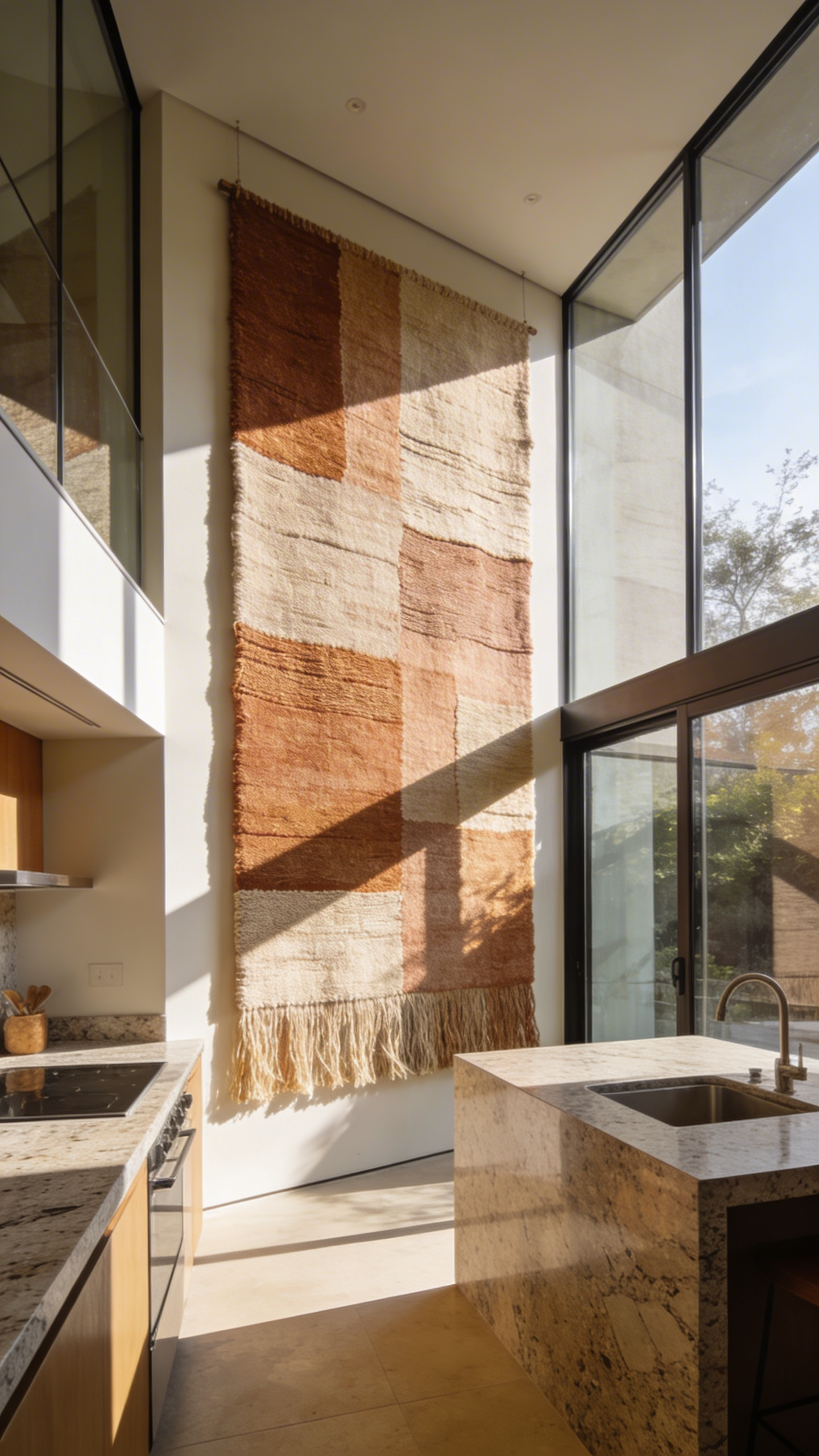
Historically, thick medieval tapestries warmed and quieted cavernous stone dining halls. Similarly, modern textile hangings effectively absorb up to ninety percent of disruptive kitchen clatter. Indeed, canvases built with a specialized acoustic core effortlessly transform a room’s overall acoustics. Naturally, many homeowners worry about fabric art absorbing cooking odors and trapped airborne grease. However, clever modern designs utilize stain-resistant polypropylene or closed-cell polyethylene foam interiors. As a result, these engineered materials easily wipe down just like a normal quartz countertop.
Strategically, careful placement is absolutely essential to maximize your overall sound reduction. Specifically, harsh sound waves bounce most intensely right at standard human ear level. Therefore, always hang your textile art between four and six feet high on the wall. Additionally, place the piece directly opposite your loudest appliance or primary noise source. Typically, this means facing the active kitchen island or the deep primary sink. Ultimately, breaking these parallel sound reflections lowers the chaotic reverb time quite significantly.
Visually, acoustic textile art introduces much-needed textural relief to sleek modern workspaces. In fact, soft woven canvases beautifully balance the sharp, cold lines of metal and flat cabinetry. Thus, this blend of acoustic function and visual style creates a truly peaceful culinary sanctuary.
Frequently Asked Questions
How do I protect kitchen wall art from grease and steam?
The best way to protect kitchen wall decor is through careful material selection. Specifically, use tempered glass glazing for framed pieces. This glass easily withstands high thermal shifts. Additionally, framing with archival mats and using hidden spacers prevents trapped moisture. Finally, avoid hanging sensitive pieces directly above the range or dishwasher.
What are some timeless kitchen wall decor ideas for open-concept homes?
For a sophisticated look, consider architectural floating shelves or a living botanical wall. Alternatively, curate a gallery of vintage culinary archives. Heritage copper cookware also makes for a stunning sculptural display. Ultimately, these elements ground the cooking zone while adding necessary warmth to modern cabinetry.
How high should I hang art in a kitchen breakfast nook?
Because people are seated in a breakfast nook, art requires a lower placement. Specifically, aim to anchor your kitchen wall decor about six to eight inches above the seating. Consequently, this creates an intimate, cocoon-like effect. Indeed, the art feels highly integrated with the actual dining experience.
Conclusion: The Heart of the Home
The modern kitchen has officially evolved from a sterile workspace into a highly personal narrative gallery. Today, your cooking area is no longer just a high-efficiency machine for meal prep. Instead, this room acts as the beautiful sensory prologue to your unique family legacy. Consequently, kitchen design focus has shifted from a strict work triangle to an inviting social triangle. Surrounding your space with intentional kitchen wall decor ensures that your home reflects curated aesthetics alongside personal history.
Ultimately, your culinary spaces must balance emotional warmth with daily functional workflow. You absolutely do not need to overwhelm your walls to make a strong visual statement. In fact, a hybrid design approach provides mental calm without sacrificing your unique personal style. You can easily achieve this by dedicating just twenty percent of open wall space to cherished items. By curating these artifacts, you ensure your future meals are always surrounded by authentic history.