For decades, the “Work Triangle” defined standard kitchen design. This concept strictly connected the refrigerator, sink, and range. Originating in the 1940s, the rule used Taylorism to optimize efficiency. It aimed to reduce steps for a solitary cook in a closed room. However, this rigid geometry fails the demands of the modern household. Optimal modern design rejects this 1940s rigidity. Today, the kitchen functions as a vibrant, communal hub. Couples, families, and guests often collaborate on meals. Yet, the traditional triangle forces everyone into the same tight footprint. Popular features like large central islands often obstruct the required path. High-traffic areas turn into bottlenecks. Cooks step on toes. Frustration mounts. The old rule simply cannot support a dynamic, multi-cook lifestyle.
Successful designers now rely on “Architectural Zones.” This method shifts the focus from appliances to specific tasks. We group tools into dedicated preparation, cooking, and cleaning areas. Therefore, multiple users can work simultaneously without disrupting one another. This guide reveals how to replace the triangle with functional zones. You will create a seamless flow perfect for modern entertaining.
Phase 1: The Foundation of Zone Planning
The rigid “Kitchen Work Triangle” is no longer the gold standard. Modern design has shifted toward the ergonomic 5-Zone Principle. Today’s open-concept spaces function as social hubs. They often host multiple cooks at once. A single geometric triangle becomes an inefficient obstruction. Instead, we prioritize a linear workflow. This mirrors the actual sequence of a meal. The path moves logically from consumables to preparation, cooking, serving, and cleaning. Distinct zones replace rigid points. This ensures tools are exactly where you need them.
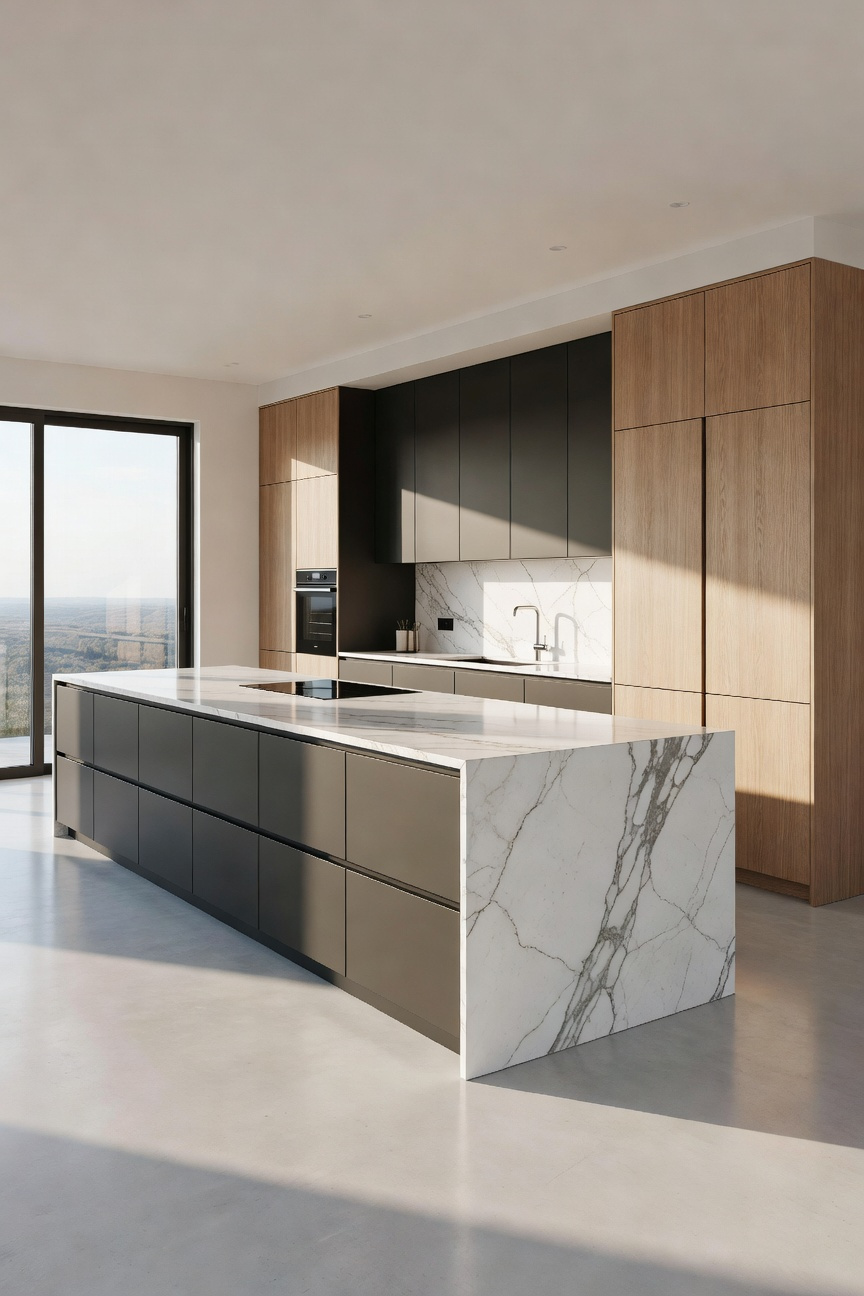
The “Preparation Zone” serves as the sensory heart of this layout. Strategically, it bridges the cleaning and cooking areas. This minimizes the distance you carry raw ingredients. Functionality here dictates comfort. Ideally, worktops should sit 10 to 15 cm below the primary cook’s elbow. Targeted task lighting prevents eye strain during precise chopping. Establishing this logical foundation must happen before selecting a single finish.
1. The Preparation Zone: Creating a Mise-en-Place Command Center
Historically, layouts relied on the triangle. Modern efficiency demands a shift toward specialized zones. The “Preparation Zone” serves as the kitchen’s operational nucleus. Research indicates that nearly 70% of culinary labor occurs here. Washing, chopping, and mixing require a dedicated “Command Center.”
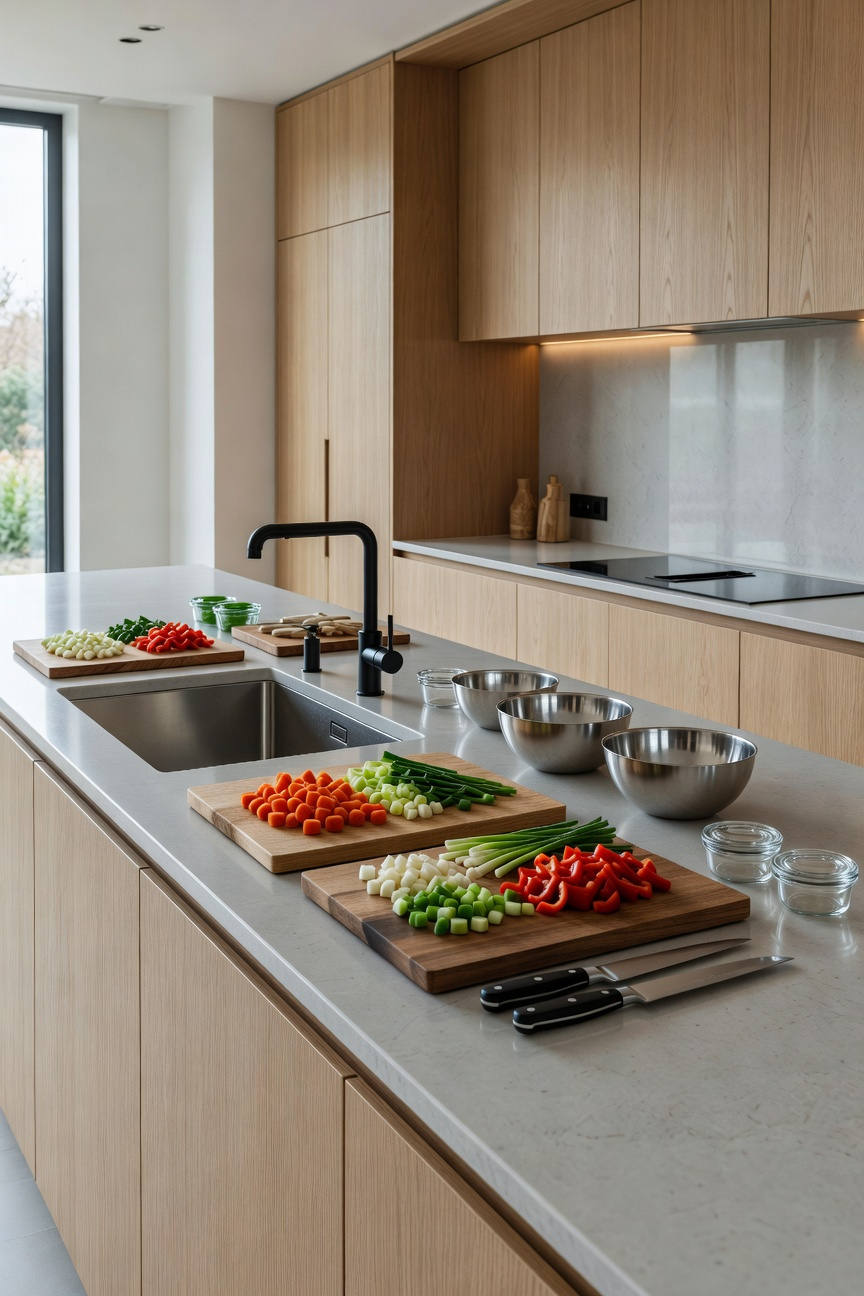
Position this workspace between your food storage and the cooking zone. This placement minimizes steps when transferring ingredients to the range. Standard guidelines suggest minimum dimensions for this surface. You need a continuous countertop at least 36 inches wide by 24 inches deep. This provides ample room for ingredients and tools.
Design-wise, this area creates a residential version of professional *mise-en-place*. This philosophy establishes flow, order, and sensory control. Prioritize accessible, specialized storage. Install drawers for knives and stackable containers immediately beneath the counter. The surface remains clear for active prep work.
A true Command Center integrates vital utilities. Consider adding a secondary prep sink. This separates food tasks from dirty dishes. Effective waste management is crucial for workflow. Place pull-out trash and compost bins directly under your chopping station. Finally, install focused task lighting. This zone transforms chaotic prep into a seamless culinary experience.
2. The Cooking Zone: Separating High-Heat Function from Social Interaction
The modern open-plan kitchen faces a distinct challenge. It must balance social connection with the reality of high-heat cooking. Historically, designers relied on the efficient “Work Triangle.” Today’s active households require the nuanced 5-Zone Principle. For more strategies on mastering this balance, read our guide on 18 Essential Modern Kitchen Design Secrets for Luxury Homes. The dedicated Cooking Zone requires strategic isolation. This ensures safety and efficient workflow.
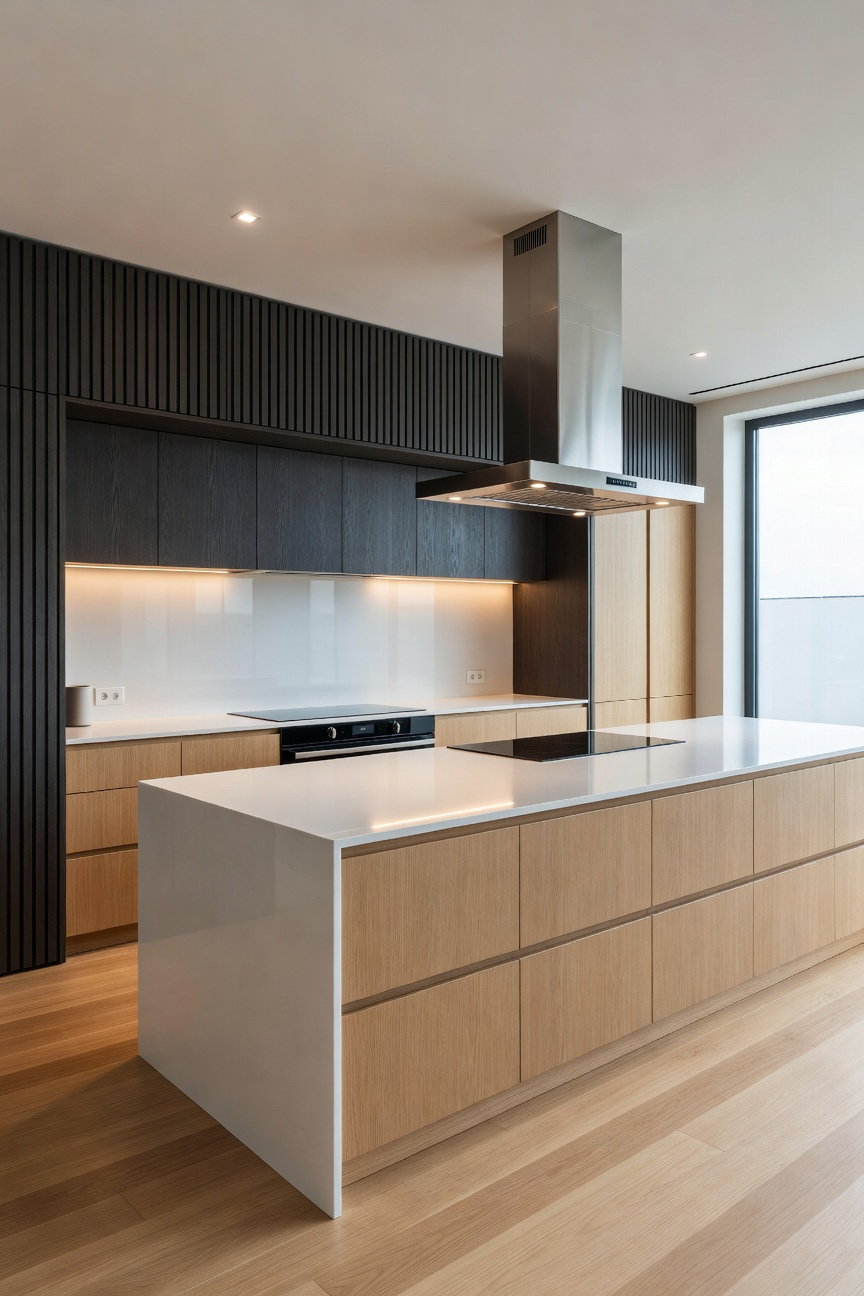
We must delineate this space without closing it off. A peninsula acts as an effective physical barrier. Unlike a free-floating island, it directs foot traffic away from hot ovens. Split-level islands offer a brilliant visual shield. The lower tier handles the inevitable mess of prep work. Conversely, the raised bar-height counter protects guests from seeing splatters. This allows conversation to flow freely. Guests never have to stare at a dirty workspace. Understanding contemporary kitchen cabinets is key to achieving this streamlined look.
Successful design controls the entire sensory experience. Advanced ventilation systems remove steam and odors silently. Some “invisible kitchens” utilize induction technology hidden beneath stone countertops. The machinery vanishes when not in use. By containing noise, heat, and visual chaos, you preserve the social ambience. The cook operates with efficiency. The guests relax in comfort.
3. The Cleaning Zone: Why the Main Sink Doesn’t Belong in the Social Island
The kitchen island serves as the room’s visual anchor. However, placing the main sink here disrupts this polished aesthetic. It transforms a showpiece into a display of cleanup. Guests seated nearby are forced to confront dirty dishes. Soap bottles and food scraps become centerpieces. We call this “visual clutter.” Keeping the cleaning zone separate preserves the inviting ambiance.
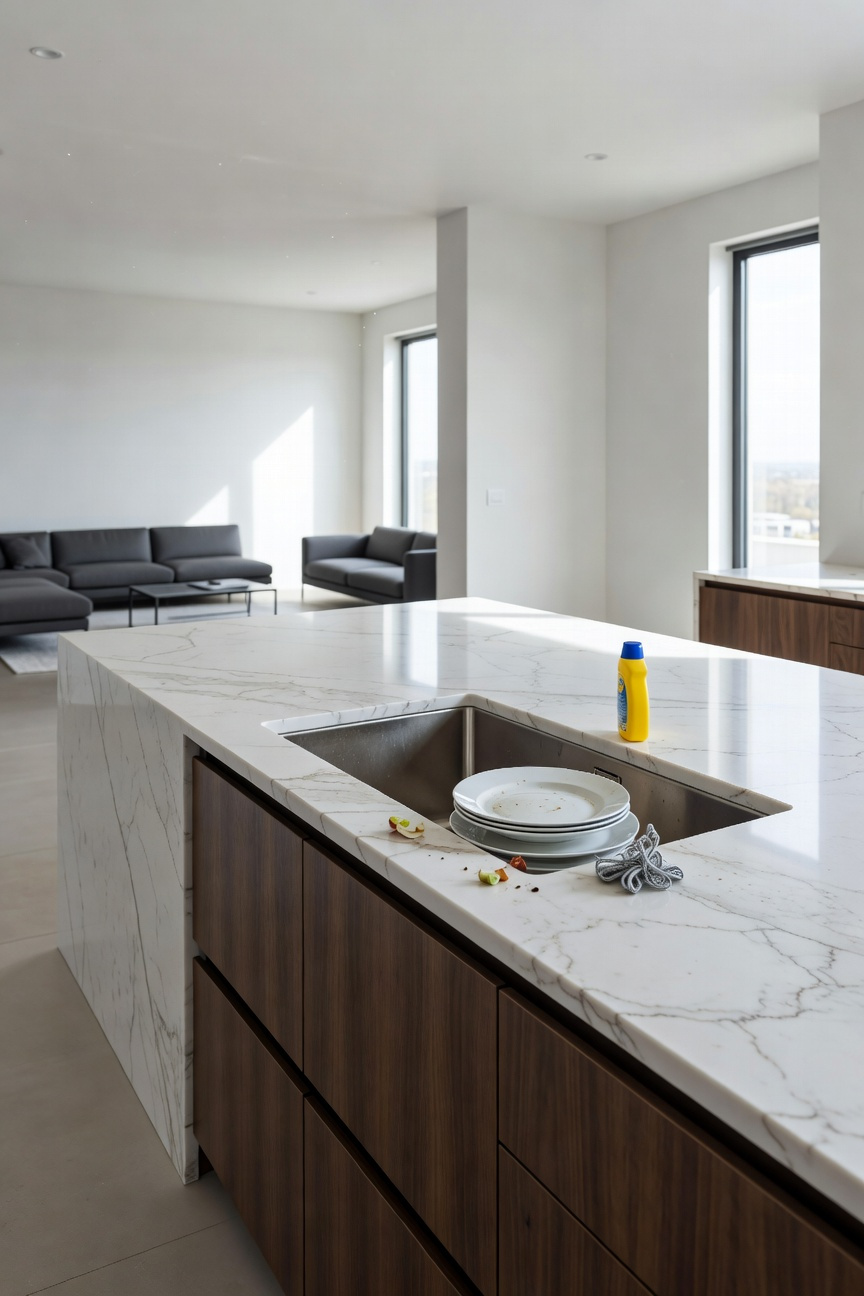
Functionality suffers when the main sink monopolizes the island. Professional workflows prioritize the “Prep Zone” above all else. The island should offer an uninterrupted surface for rolling dough. A large sink creates a physical obstacle. Furthermore, cleaning zones require significant landing space for stacking soiled items. You lose the seamless counter space necessary for efficient cooking.
Modern design mandates a specific linear workflow. The optimal sequence is clear, scrape, and load. Placing the sink on a perimeter wall facilitates this progression. Position the trash, sink, and dishwasher side-by-side. This arrangement keeps the messy work contained. Ultimately, isolating the cleaning zone protects the island for socializing.
4. The Consumables Zone: Reimagining Pantry Access for Workflow Efficiency
The classic kitchen Work Triangle is evolving. Modern layouts now prioritize a distinct “Consumables Zone.” This shift addresses a common frustration: disruptive cross-traffic. Non-cooks frequently access the refrigerator in open-plan homes. They often block the chef’s path. Grouping the refrigerator and pantry at the periphery creates a seamless workflow. The cook moves efficiently from storage to prep. Snack-seeking family members stay out of the way.
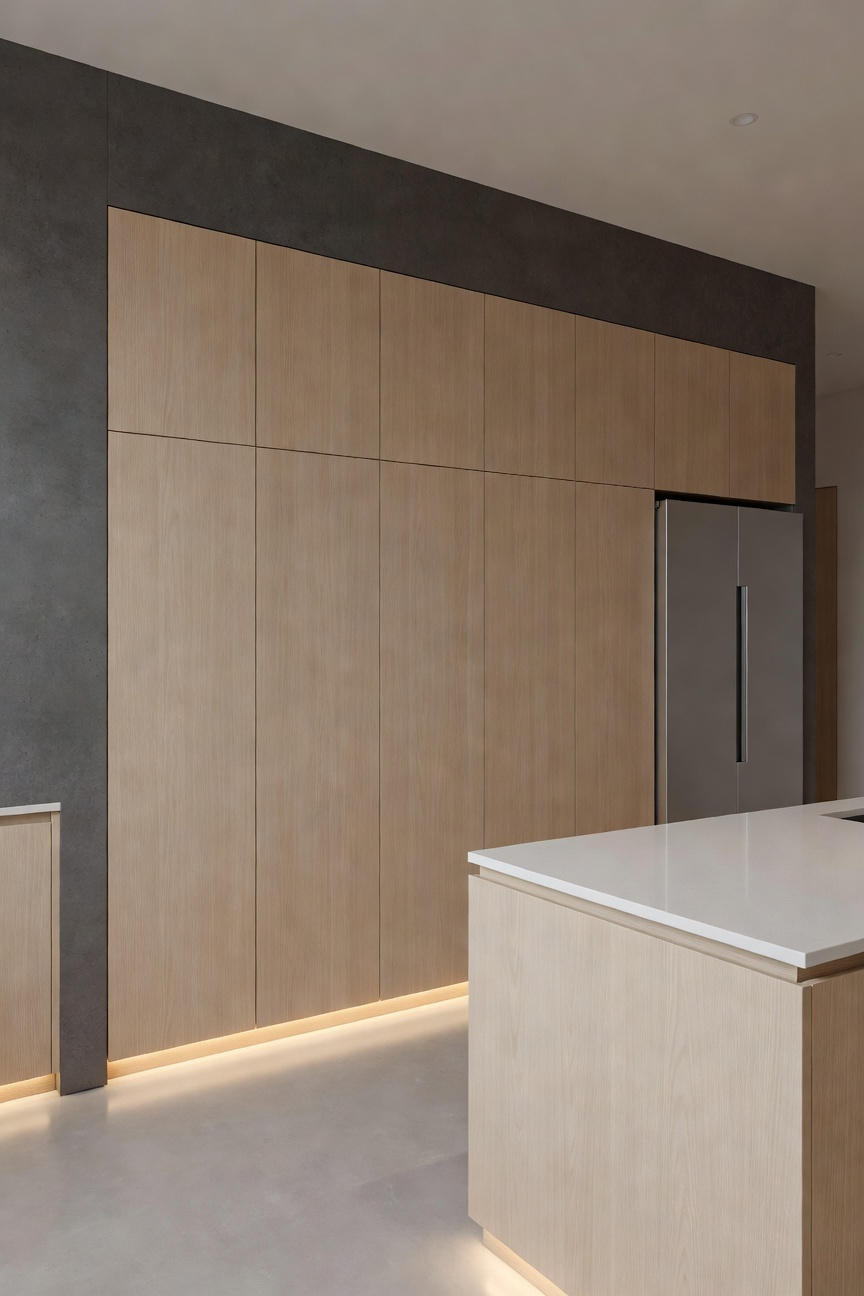
Accessibility is paramount. Traditionally, deep shelves create a “black hole.” Ingredients disappear. Modern design advocates for full-extension drawers over static shelving. These mechanisms bring contents directly to you. They eliminate crouching and reaching. Designers often debate between full pull-out units and internal drawers. Pull-outs offer immediate visibility but can be heavy. Internal drawers require a two-step motion but offer a lighter physical experience.
This zone often expands into a modern scullery. Historically, these spaces were purely utilitarian. Today, they serve as a sophisticated “mess-hider.” Housing small appliances and secondary prep areas here keeps the main kitchen pristine. The Consumables Zone balances high-efficiency workflow with social elegance.
Phase 2: Architectural Layouts for Modern Lifestyles
The classic Kitchen Work Triangle is officially outdated. It was designed for a single cook in the 1940s. It fails modern families. We now prioritize professional-style “Work Zones.” Layouts feature distinct stations for prepping, cooking, and cleaning. This approach accommodates multiple cooks without creating bottlenecks. A dedicated beverage station keeps non-cooks out of the primary workflow.
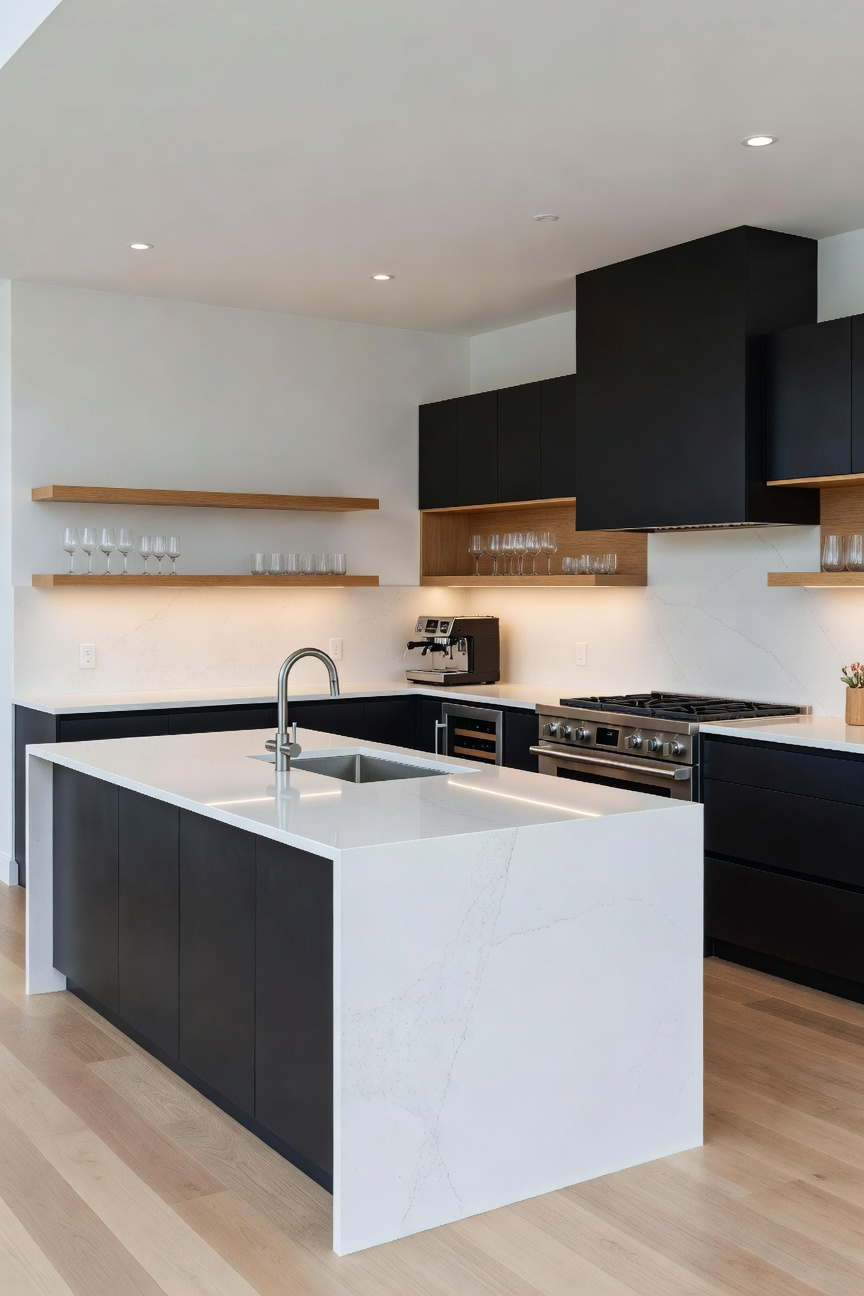
The physical boundaries are changing too. Open-plan concepts are evolving into “broken plan” layouts. We use architectural elements to define spaces. A large central island acts as a social anchor. It separates the culinary space from the living area physically but not visually. Varied flooring or distinct pendant lighting helps demarcate these zones. We integrate powerful, flush-mount ventilation systems to control odors.
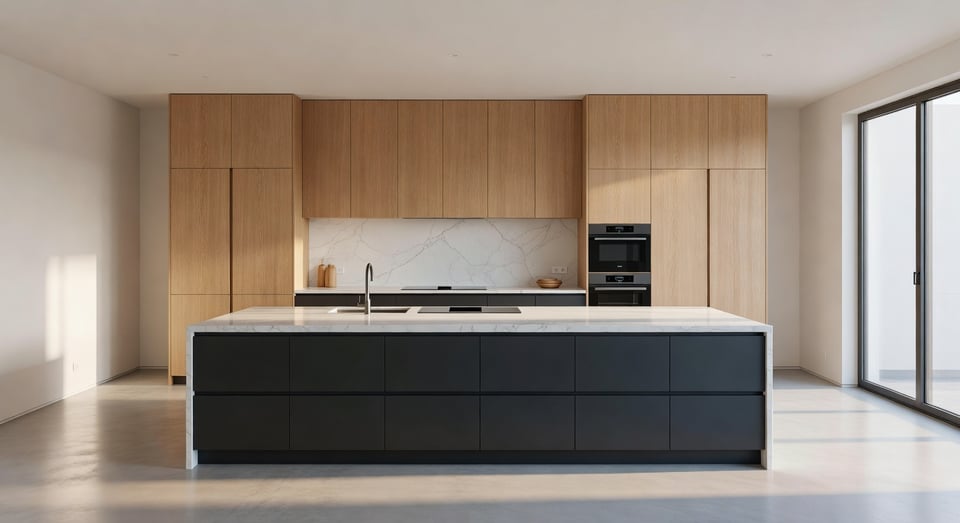
The goal is a seamless visual experience. Modern kitchens should resemble built-in furniture. We rely on panel-ready appliances that blend into cabinetry. Handleless flat-front cabinets create a streamlined surface. Monochromatic palettes rich in texture add depth. Layered smart lighting shifts the room from a bright workspace to a relaxing lounge.
5. The Elevated Galley: Widening the Professional Standard for Residential Elegance
The Elevated Galley offers a sophisticated resolution to a common open-concept dilemma. It addresses the conflict between social connection and culinary mess. The galley layout historically isolated the cook for efficiency. Modern adaptations retain this workflow while inviting engagement. The design relies on a strategic split-level counter. The interior working surface sits at a standard 36 inches. The guest-facing ledge rises to a 42-inch bar height.
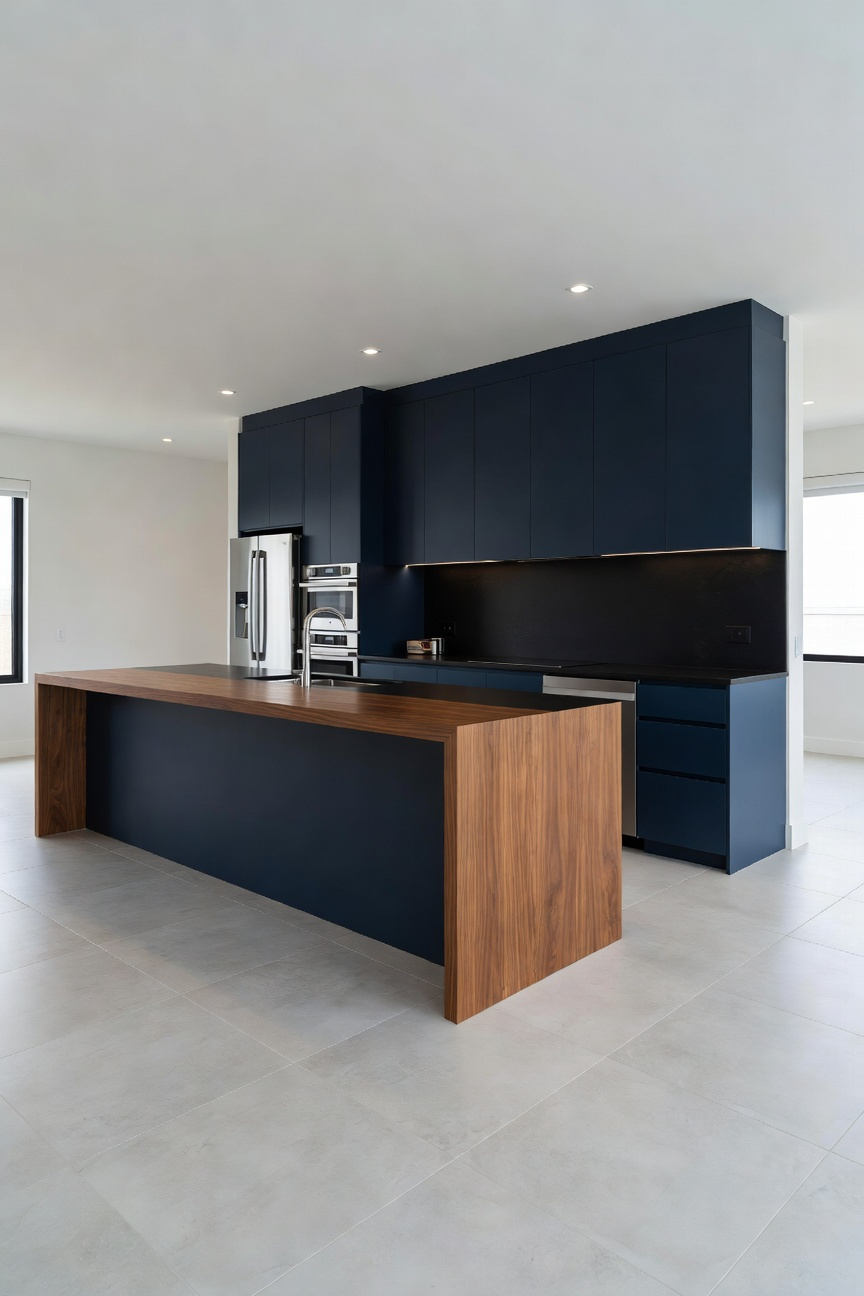
This six-inch difference acts as an essential visual screen. It hides prep scraps and dirty dishes from guests. This raised ledge functions like a professional restaurant “pass.” It creates a dedicated zone for plating food or staging appetizers. This setup keeps cross-traffic away from the “hot zone.”
Material choices reinforce this balance of commercial durability and luxury. Lower counters often utilize hygienic stainless steel. The visible upper bar features tactile walnut or monolithic marble. The Elevated Galley transforms cooking into a controlled performance. The host remains present without exposing the chaotic reality of meal preparation.
6. The Broken L-Shape: Zoning for Open Concept Connectivity without Clutter
The “Broken L-Shape” addresses a sophisticated modern dilemma. It refines the open-concept layout to solve lifestyle challenges. It embraces the growing “broken-plan” movement. This design strategy mitigates noise bleed and visual chaos. It maintains social connectivity without the drawbacks of an exposed workspace.
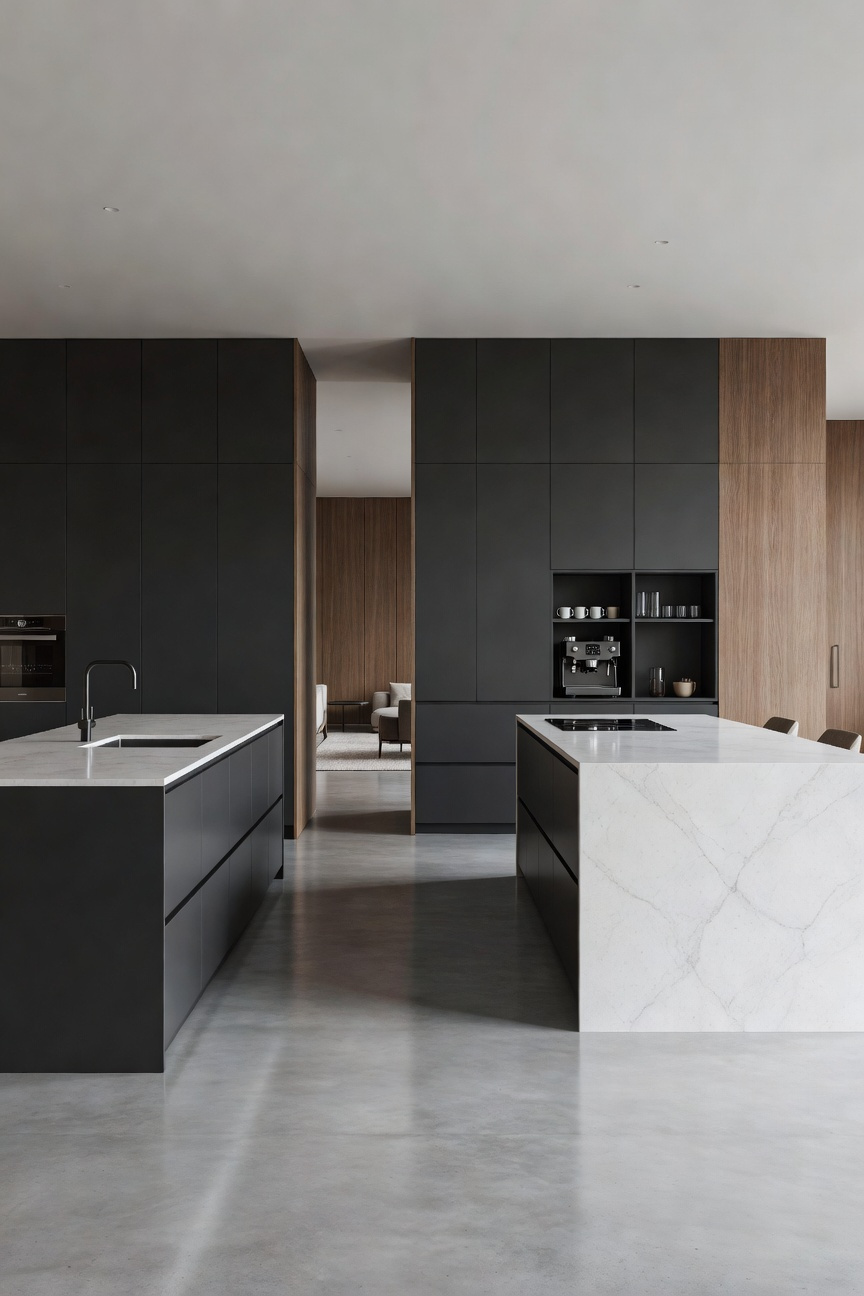
Functionally, the layout disjoins the traditional L-arms. A walkway or architectural element creates this strategic break. It diverts non-cook traffic away from the primary “work zone.” This separation establishes a safe, uninterrupted triangle for culinary tasks. Family members no longer cross paths with hazards like boiling water. Traffic flows naturally around the active cooking area.
Aesthetically, this layout champions the “invisible kitchen” strategy. The kitchen remains visible, so visual discipline is paramount. Designers use floor-to-ceiling cabinet banks along the disconnected wall. These monolithic structures conceal major appliances behind sleek panels. The kitchen feels less like a utility space. It feels like integrated architecture.
The separation allows for advanced acoustic control. Soft-close hardware and sound-dampening materials mute the clatter of prep work. The Broken L-Shape creates a serene environment. It supports both serious cooking and elegant entertaining.
7. The Double-Island Strategy: The Ultimate Division of Labor and Leisure
The Dual Island Layout represents the ultimate fusion of high performance and social ease. This strategy segregates “clean” leisure from “dirty” labor. The clutter of chopping and prep stays contained on a dedicated work island. This “labor zone” houses messier elements like prep sinks and trash pull-outs.
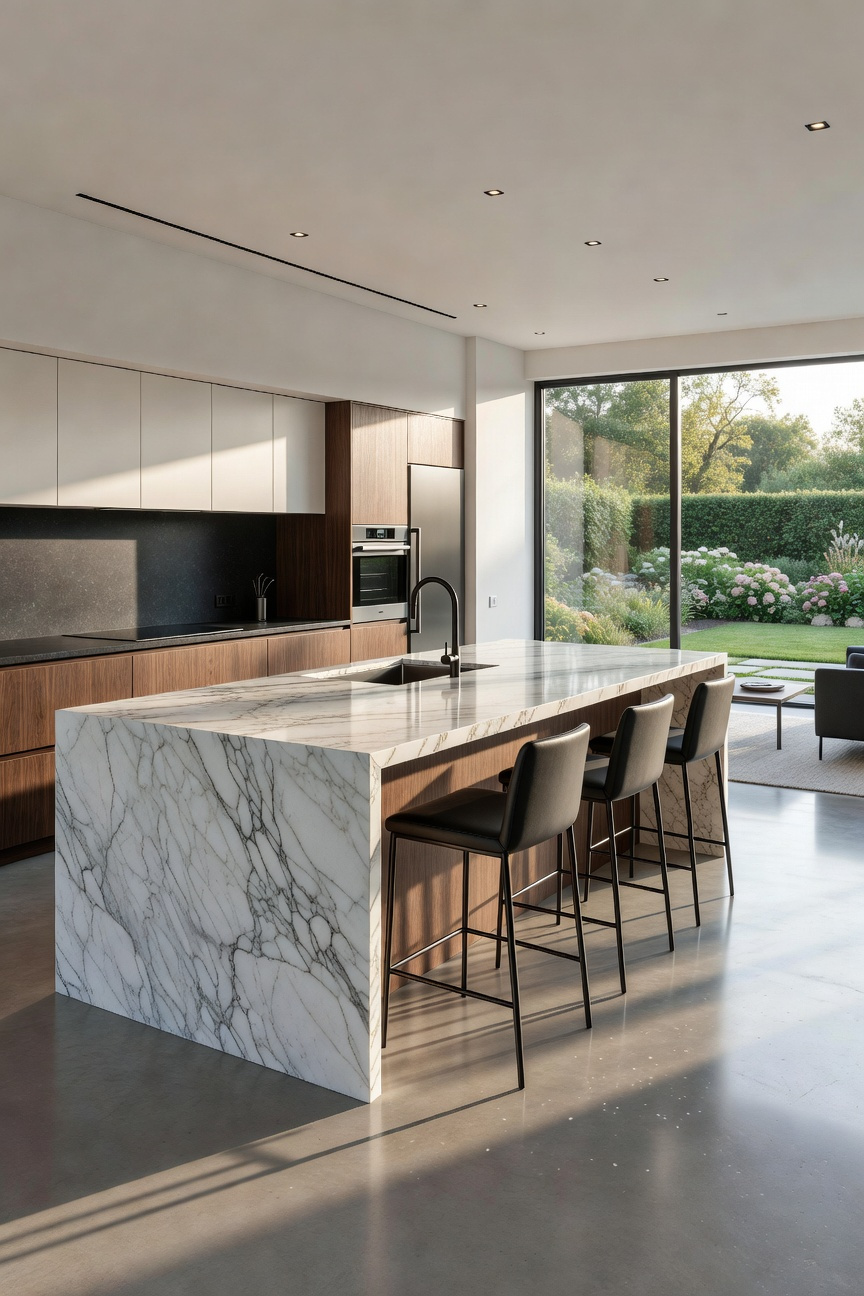
The second island functions purely as a social hub. Positioned near the living area, it offers pristine counter space. Guests can socialize comfortably without entering the active culinary workflow.
Drawing inspiration from commercial kitchens, this arrangement establishes a highly efficient “work lane.” Multiple cooks can operate simultaneously without congestion. Achieving this flow requires strict adherence to technical clearances. Designers allow for a minimum of 48 inches of aisle space. This ensures safe movement between the two zones.
This layout invites creative material choices. You might select durable butcher block for the prep surface. The leisure island can create a dramatic focal point with polished stone. This approach balances the demands of serious cooking with the art of entertaining.
8. The Soft U-Shape: Eliminating the Dead Corner with Modern Pull-Out Technology
The classic U-shaped kitchen suffered from the “dead corner.” Homeowners often resorted to a “belly crawl” to retrieve lost cookware. The Lazy Susan offered a partial fix for this void. However, its circular trays within a square cabinet wasted storage volume. Today, we embrace the “Soft U-Shape.” This design evolution is defined by advanced engineering.
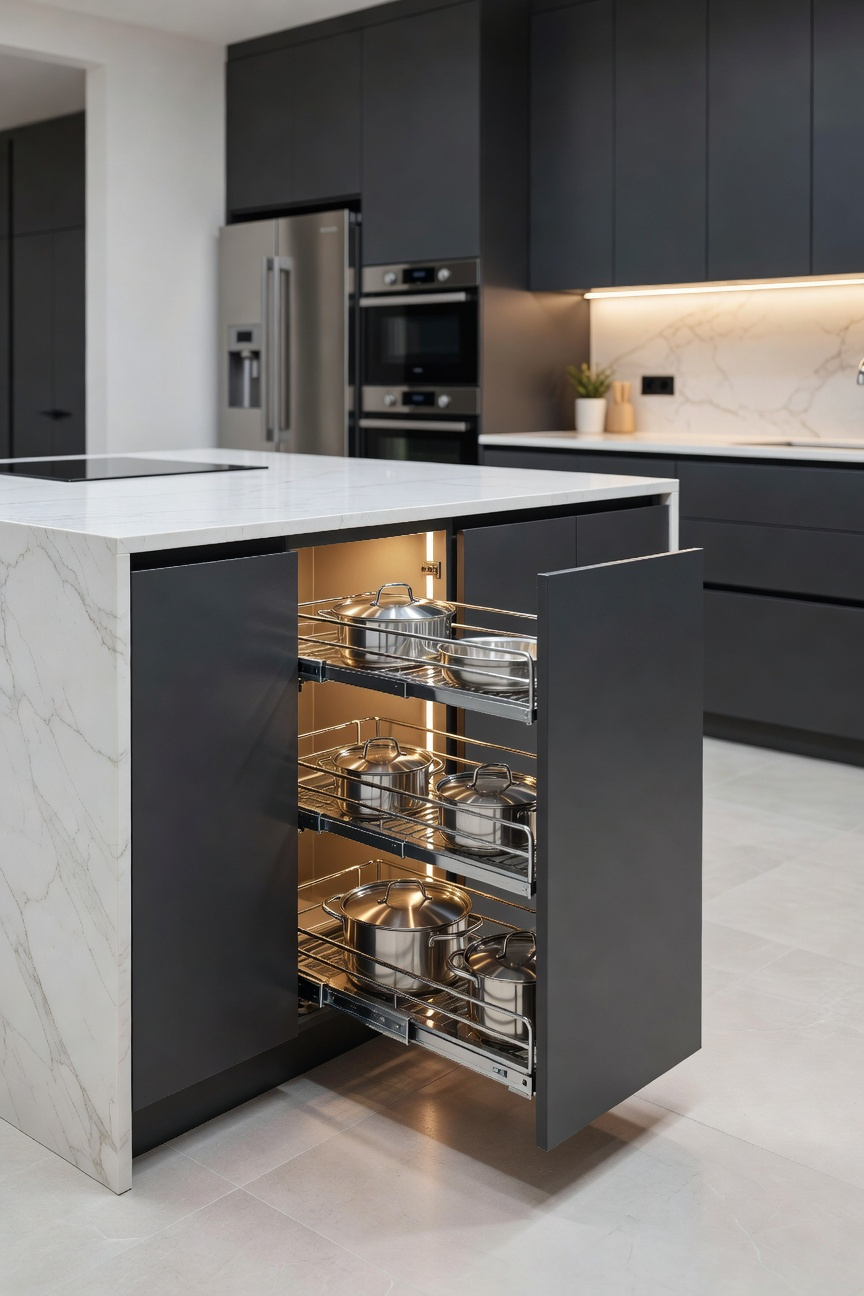
This concept utilizes precision hardware to eliminate unreachable spaces. The LeMans system features kidney-shaped trays that swing out along a pivoting arc. This mechanism brings heavy pots directly into your workspace. Alternatively, the “Magic Corner” uses articulated frames to pull baskets completely out. Visibility becomes absolute. No ingredient is ever lost to “kitchen archaeology.”
These mechanisms integrate soft-close technology. Heavy loads glide shut silently. This preserves the room’s calm atmosphere. This attention to fluid motion transforms the corner cabinet. The Soft U-Shape improves accessibility for all users. We successfully marry high-capacity storage with ergonomic design.
Phase 3: Sophisticated Workflow Integration
Efficiency experts once relied on the “Work Triangle.” Sophisticated design now dictates a personalized Micro-Zoned System. This approach divides the space into five distinct areas. These zones cover cleaning, cooking, prep, and specific storage needs. This logical sequence minimizes unnecessary movement. It prevents traffic jams during multi-cook scenarios.
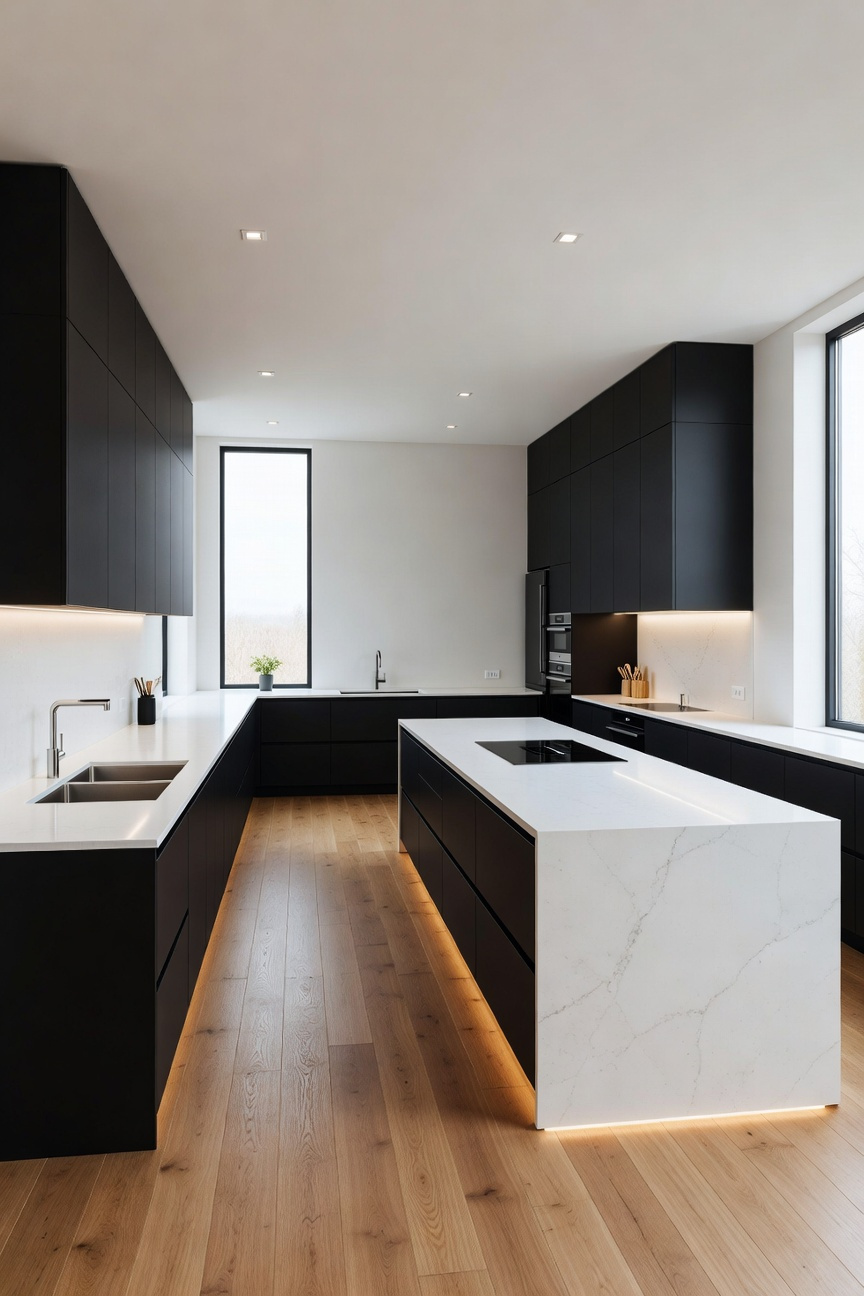
True integration creates a collaborative network through the Internet of Things (IoT). Appliances now communicate directly with one another. A connected cooktop can automatically adjust ventilation intensity. This reduces human error and maintains pristine air quality.
This workflow prioritizes human well-being and ergonomic comfort. Adjustable-height countertops accommodate users of all abilities. Voice-activated controls allow for hands-free operation. By automating mundane tasks, the design encourages a creative “flow state.” The kitchen transforms from a utility room into a culinary sanctuary.
9. Traffic Pattern Analysis: Diverting Non-Culinary Foot Traffic
Architects traditionally managed workflow with the Work Triangle. Modern open-plan living requires the “Perimeter Bypass.” The kitchen is now a social through-way. The primary work zone must be protected. Successful designs create a dedicated path around the active culinary area. Ideally, this lane measures 36 to 48 inches wide.
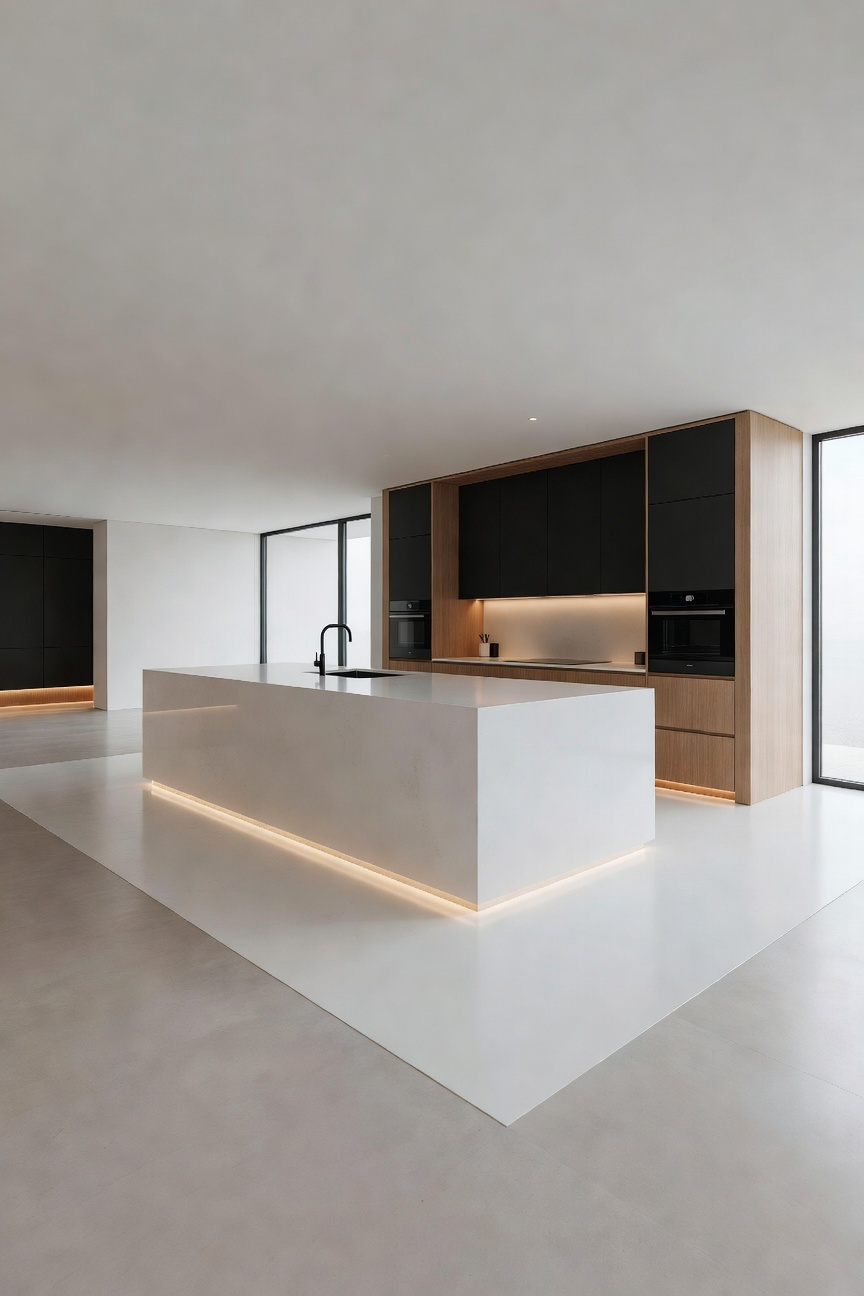
This strategy physically blocks through-traffic. It reduces the cook’s cognitive load. Constantly anticipating collisions creates stress. A protected layout fosters a “flow state.” You can focus entirely on the cuisine.
To implement this, we must look toward strategic appliance zoning. Decentralize services by placing beverage centers and microwaves on the perimeter. Children grabbing snacks never enter the “hot zone.” This keeps the dangerous space between the range and sink exclusively for cooking.
10. The Beverage Hub: Strategic Guest Management Outside the ‘Danger Zone’
The traditional work triangle was designed for one cook. Today’s open-concept homes turn this into a bottleneck. The “Danger Zone” is the active path connecting the refrigerator, sink, and range. Whenever a guest crosses this line for a drink, they disrupt the workflow. Establishing a dedicated Beverage Hub is a critical design move.
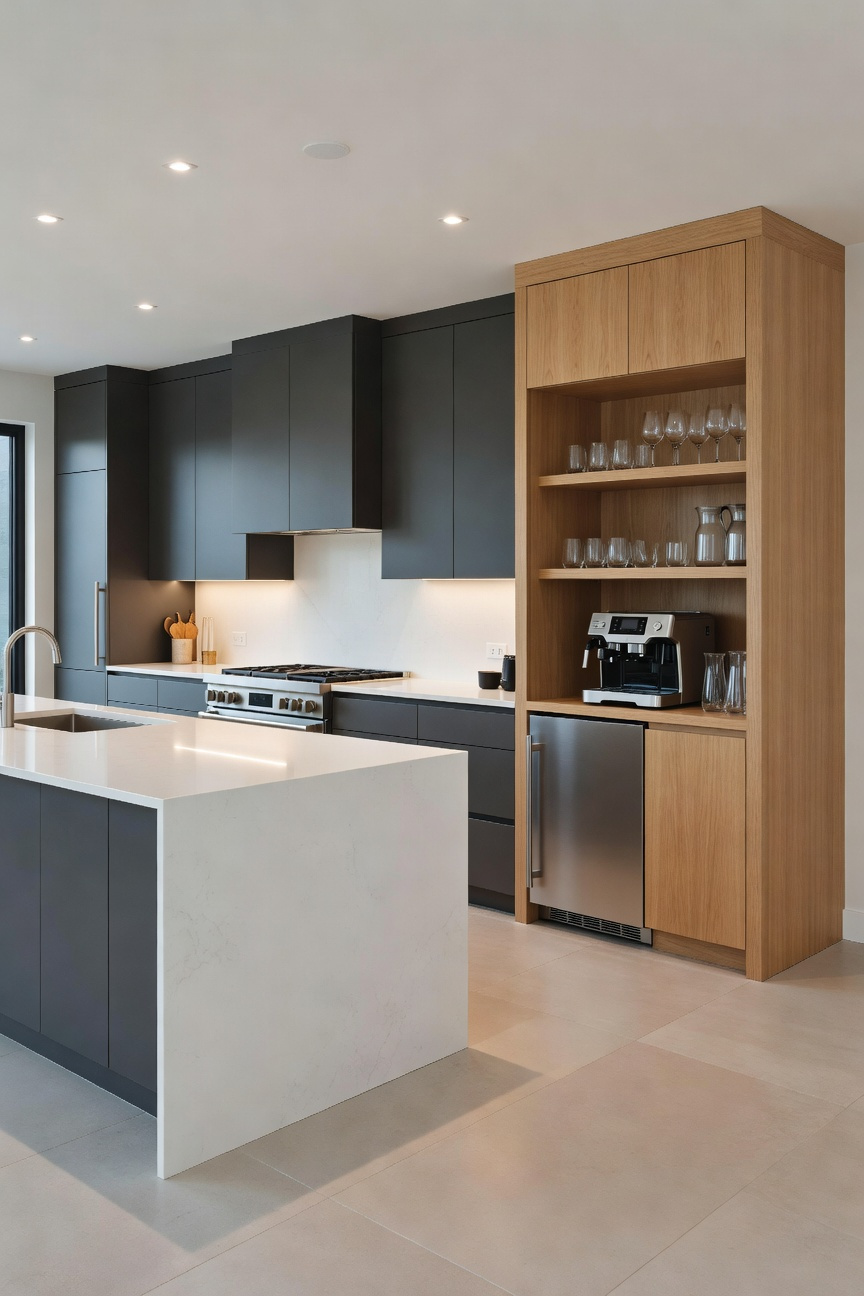
This specialized zone sits on the kitchen’s periphery. It acts as a magnet, drawing traffic away from the stove. The host can cook safely. Guests enjoy the freedom to serve themselves. The kitchen becomes a truly social environment.
A successful Beverage Hub must be self-sufficient. If a guest must return to the main triangle for ice, the design fails. Essential components include independent refrigeration and a dedicated bar sink. Concealed outlets are necessary to power coffee machines. Visually, distinct materials can distinguish this area as an inviting destination.
11. The Secondary Sink: The Single Most High-Impact Upgrade for Flow
In a traditional layout, the main sink is a congested node. It creates a bottleneck where prep work, cleanup, and hand-washing collide. Installing a secondary sink acts as a traffic bypass. By dedicating this basin strictly to preparation, you break the main sink’s monopoly. The room transitions to a space of harmonious activity.
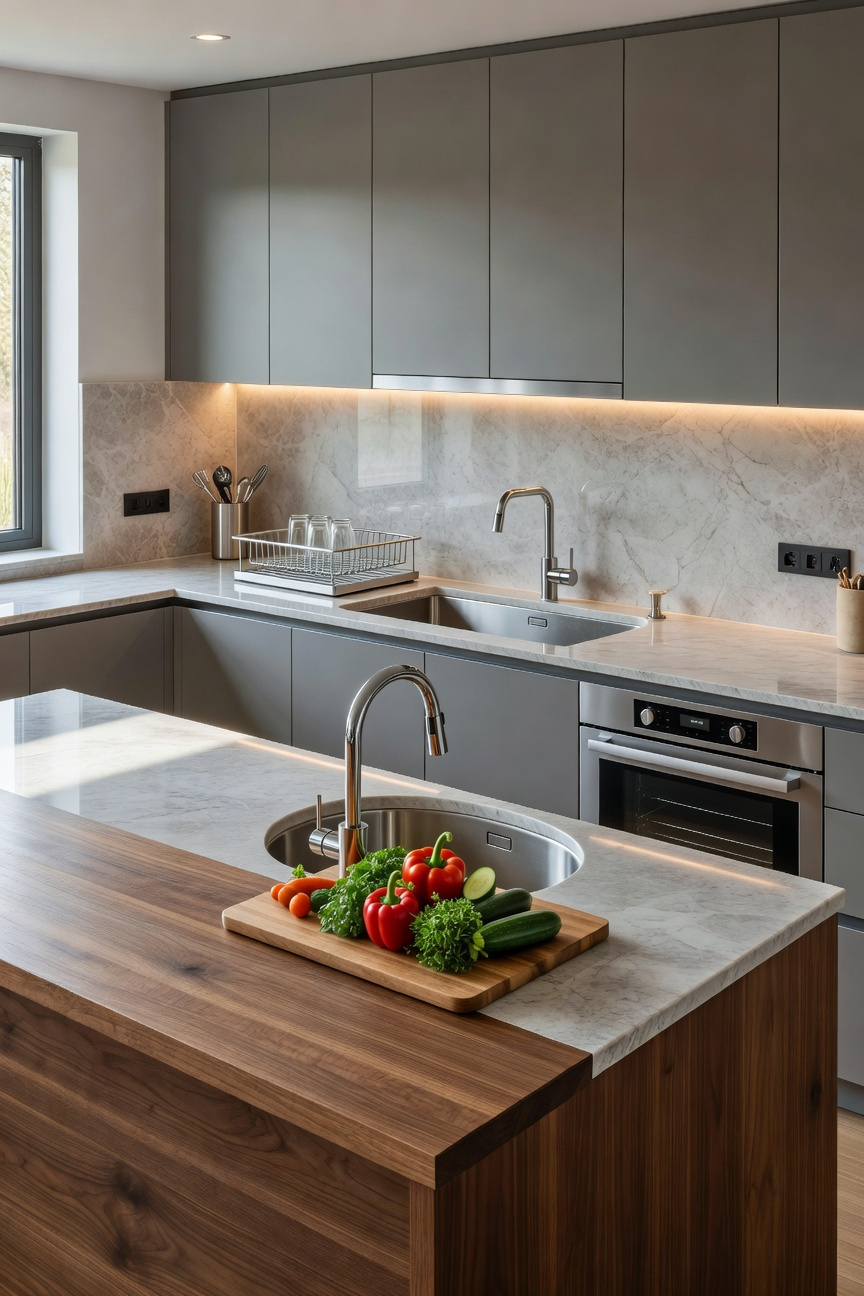
This upgrade signifies a move toward flexible “Kitchen Zones.” The secondary sink anchors the dedicated Prep Zone. Place it on the island, near the refrigerator or cooktop. The physical workflow from retrieving ingredients to washing becomes hyper-efficient.
This separation is vital for multi-cook households. One person can rinse vegetables while another washes dishes. Beyond utility, these fixtures offer aesthetic opportunities. A hammered copper sink can serve as a stunning visual counterpoint. A secondary sink is the single most effective tool for professional-grade flow.
12. The Modern Scullery: Hiding the Mess to Maintain the Aesthetic
The open-concept kitchen struggles to balance aesthetics with the reality of cooking. The modern scullery is the architectural solution. Often called a “messy kitchen,” this space acts as an engine room. The main kitchen remains a social focal point. Sculleries were once hidden service spaces. Today, they represent a luxurious separation of function and form. This strategy is essential for any luxury kitchen renovation.
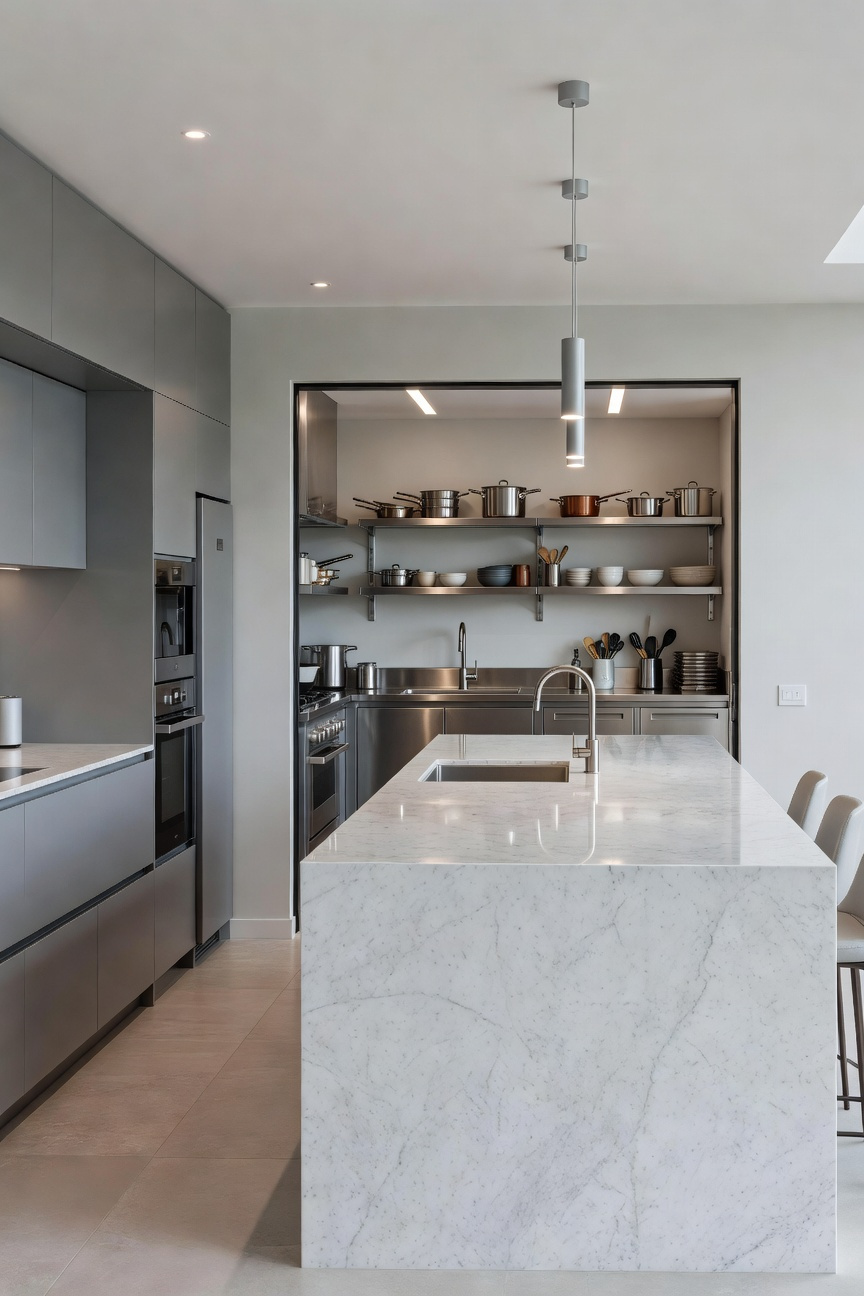
These rooms are more than storage pantries. They are fully plumbed workspaces. A scullery houses deep farmhouse sinks and secondary dishwashers. They act as “Appliance Garages 2.0,” hiding bulky coffee systems. Pocket doors conceal the entrance entirely. Noise and cooking odors remain contained. This layout preserves the magic of effortless entertaining.
Phase 4: Mastery Details & Ergonomics
True culinary mastery embraces hyper-personalization. This approach stems from the 1926 “Frankfurt Kitchen,” which optimized domestic tasks. Modern design evolves into a five-zone model based on sequential flow. Ingredients and tools reside where they are used first. This minimizes unnecessary steps.
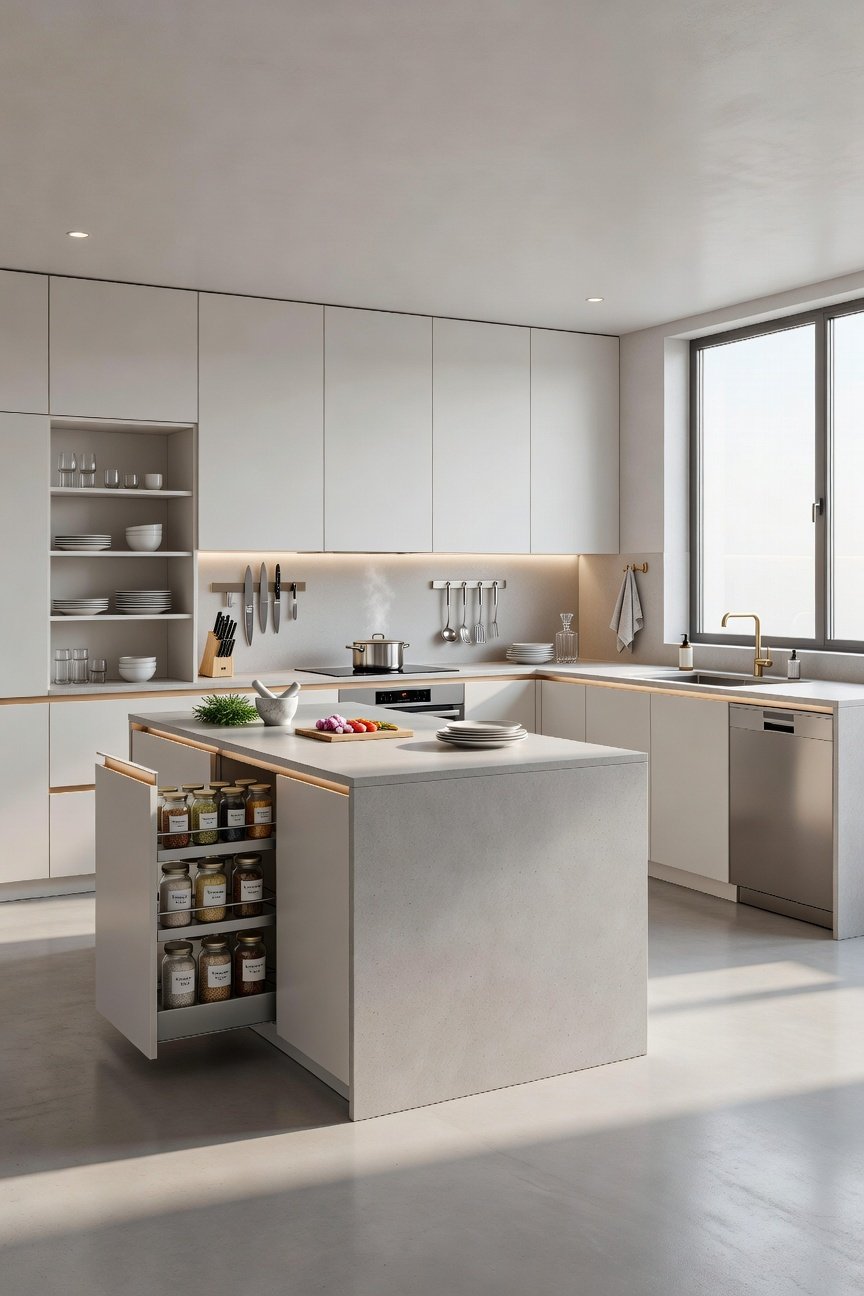
Standard counter heights often fail individual bodies. Primary prep surfaces should sit four inches below your standing elbow height. Raising the dishwasher or sink slightly eliminates deep bending. Adjusting these levels reduces physical strain.
Specific sensory details improve the experience. Deep pull-out drawers are superior to doors. Forgiving flooring materials like cork offer a subtle bounce. Strategic task lighting placed low eliminates shadows. These nuances transform a kitchen into a responsive culinary instrument.
13. Aisle Ergonomics: The Critical 42-inch vs. 48-inch Debate
The National Kitchen & Bath Association (NKBA) establishes the baseline for this decision. They recommend a 42-inch minimum clearance for a single primary cook. This tighter dimension creates an efficient “pivoting” workflow. The island feels like a seamless extension of the perimeter counter.
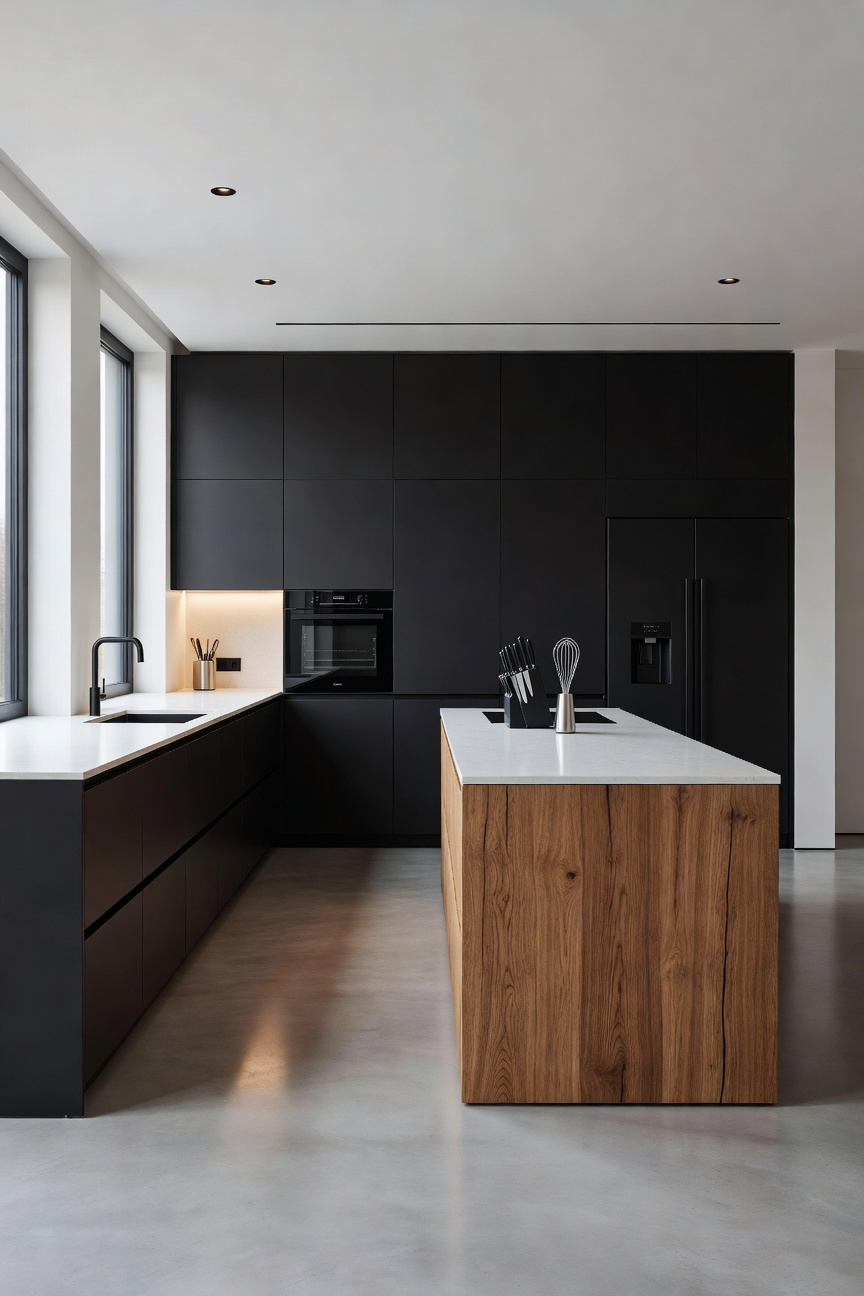
Modern lifestyles often demand more space. The 48-inch standard applies when two people work simultaneously. This wider berth prevents traffic jams. Without this buffer, an open dishwasher blocks the walkway. This extra width prevents the “hip-bump” scenario during entertaining.
Accessibility codes define boundaries. ADA standards mandate 60 inches for a wheelchair turn. A simple pass-through requires a 40-inch minimum. The 42-inch standard sits just above this safety floor. The shift to “Multi-Zone” planning favors generosity. Prioritizing the 48-inch aisle supports the communal nature of today’s kitchen.
14. Point-of-Use Storage: Why Drawers Are Replacing Base Cabinets
The shift to full-extension drawers changes kitchen ergonomics. Traditional base cabinets created dark “caves.” Cooks were forced to kneel and rummage. Deep drawers provide immediate visibility. This creates a “no kneel” environment. This design facilitates “point-of-use” storage. Items reside exactly where the workflow demands them.
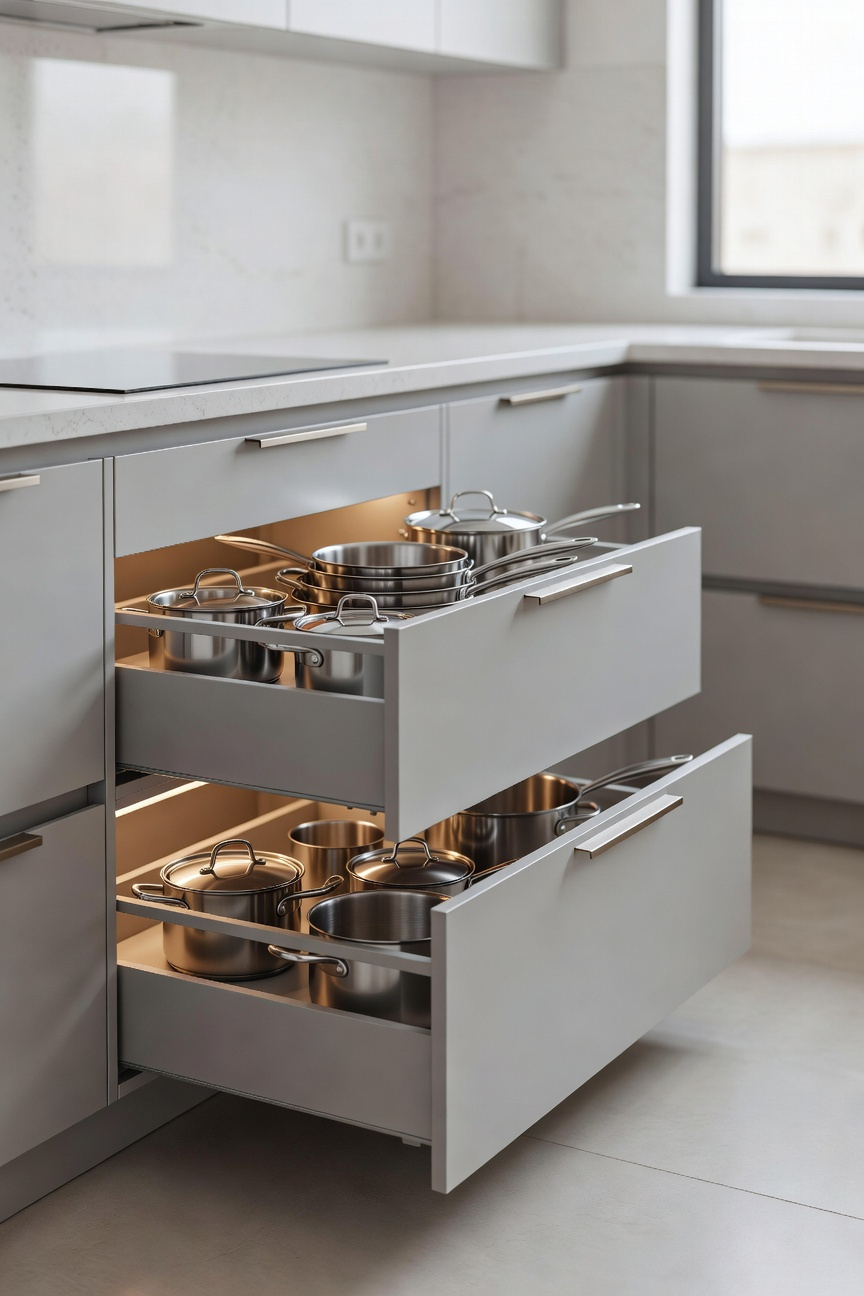
Heavy cast iron skillets sit in drawers below the cooktop. Everyday plates live adjacent to the dishwasher. Unloading becomes a fluid movement. This efficiency comes with a price tag. Drawer bases are typically more expensive than standard cabinets. This reflects the cost of heavy-duty glides. The investment yields a high-performance space suitable for aging in place.
15. Vertical Zoning: Integrating Appliance Garages and Eye-Level Ovens
Modern kitchen design has shifted to three-dimensional systems. Vertical zoning involves stacking functional elements along a single wall. This maximizes efficiency while maintaining a sleek aesthetic. Instead of scattering appliances, we create a unified architectural block.
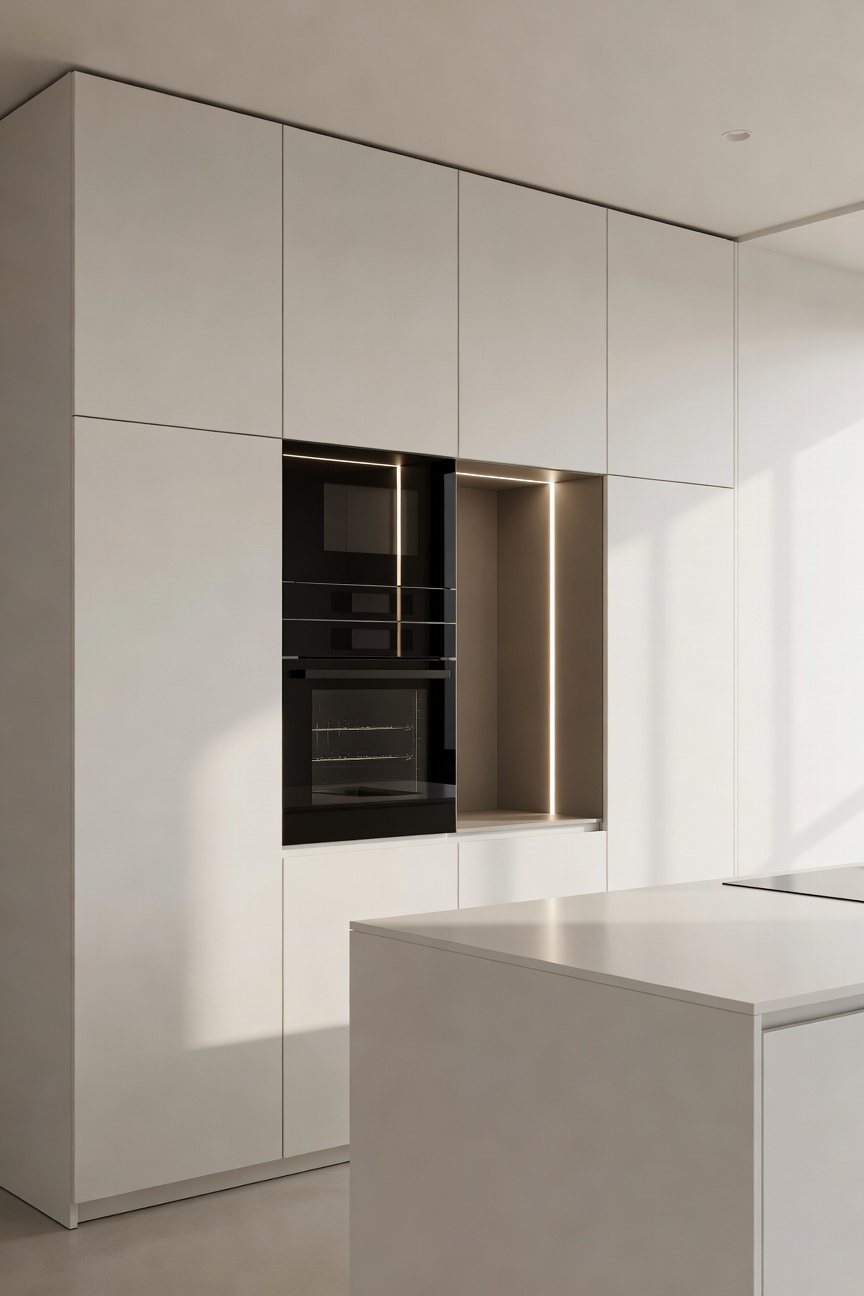
Consider the ergonomics of the eye-level oven. Traditional ranges forced cooks into deep bends. Placing an oven between waist and shoulder height changes everything. Sliding heavy roasting pans becomes safer. This placement reduces back strain and keeps hot doors away from children.
The appliance garage acts as an aesthetic buffer. Daily tools like toasters create visual noise. By enclosing them, we “cloak” the clutter. The room retains a quiet appearance.
Vertical investment pays dividends horizontally. Because the oven moves to the wall, countertops remain clear. You gain long stretches of space for preparation. This decoupling of cooking and prep zones creates seamless velocity. Vertical zoning allows for professional workflow without sacrificing style.
16. Lighting Layers: Engineering Shadow-Free Surfaces for Precision Work
A functional kitchen must eliminate shadows. Standard overhead lighting often creates the “Cave Effect.” Your body blocks the light source. Dark shadows fall where you slice. To solve this, we engineer proximal task lighting. Installing fixtures under cabinets places light in front of you. The beam hits the countertop before you can obstruct it.
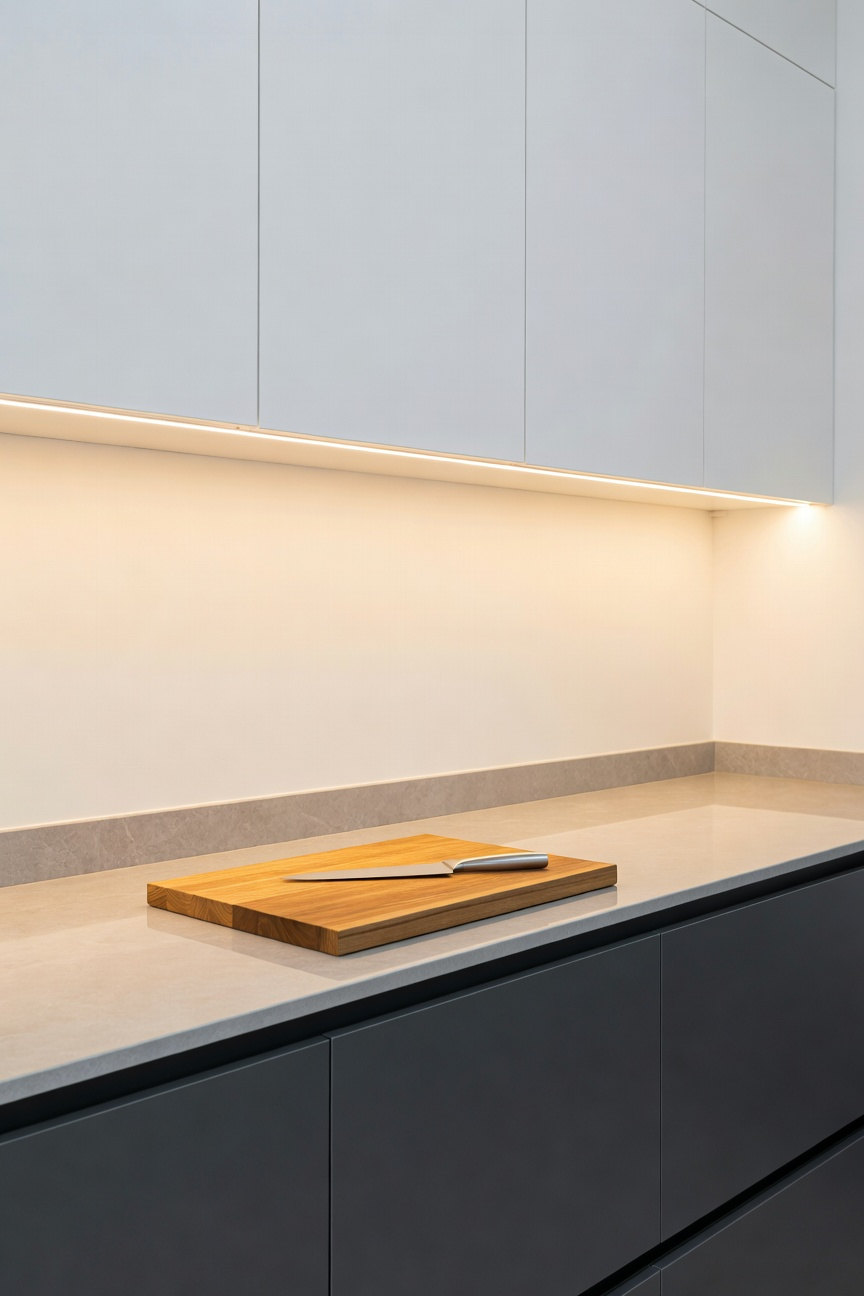
Linear LED strips have replaced outdated “puck” lights. Puck lights created uneven hotspots. Linear strips provide a continuous wash of illumination. Quality fixtures employ diffused lenses to manage glare. This is vital for softening reflections on stone surfaces.
The light’s quality impacts culinary precision. Select LEDs with a Color Rendering Index (CRI) of 90 or higher. Accurately seeing the red of meat requires this high fidelity. Aim for a neutral temperature between 3500K and 4000K. This crisp white hue aids focus. Place these lights on separate dimmers. This allows you to transition from a bright “operating room” to a soft cocktail lounge.
Conclusion: Designing for the Rhythm of Your Life, Not Just the Space
The modern kitchen is no longer a factory for food production. It serves as the emotional anchor of the home. We have moved past the rigid efficiency of the single-cook Work Triangle. Now, we prioritize the harmonious flow of multiple people sharing one space. By creating distinct zones, we accommodate simultaneous tasks. The kitchen adapts to your family’s unique daily rhythm. True functionality is defined by how well the room supports your lifestyle.
Thoughtful elements like circadian lighting turn a workspace into a sanctuary. Sound-dampening materials ensure that utility never overpowers conversation. Your kitchen becomes a flexible backdrop for future memories. It supports the quiet morning coffee as well as the lively dinner party. Mastering the modern kitchen layout requires balancing ergonomic function with sophisticated aesthetics. Begin by auditing your daily movements to identify where friction currently exists.
Frequently Asked Questions
What is replacing the traditional Work Triangle in modern kitchen design?
The traditional Work Triangle is being replaced by the 5-Zone Principle or Architectural Zoning. This modern approach organizes the kitchen not around appliances, but around the sequence of tasks: Consumables, Non-Consumables, Preparation, Cooking, and Cleaning. This zoning system allows multiple users to work simultaneously without creating bottlenecks.
What are the best modern kitchen layouts for multiple cooks?
The best modern layouts for multi-cook households are those that physically separate work zones and control traffic. Top options include the Dual-Island Strategy (which creates dedicated prep and social hubs) and the Soft U-Shape or Broken L-Shape (which use strategic breaks or wide aisles to divert non-culinary foot traffic).
How much clearance is required between a kitchen island and the counter?
For an efficient single-cook workflow, the National Kitchen & Bath Association recommends a minimum clearance of 42 inches. However, for a luxury or multi-cook household where appliance doors (like dishwashers) will be open simultaneously, a minimum of 48 inches is strongly recommended to ensure safety and unhindered movement.