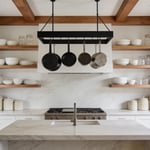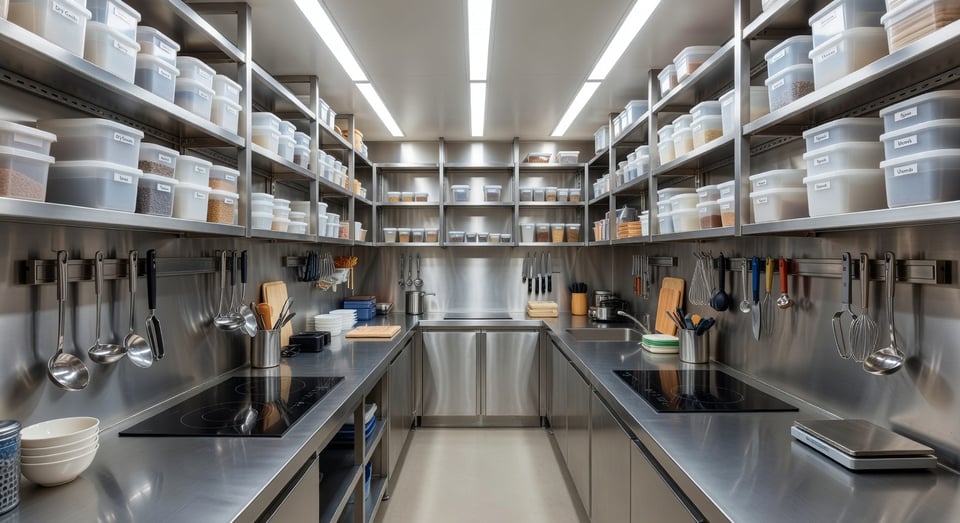
Common wisdom suggests that high-level cooking requires a vast, professional-grade environment. We often view the sprawling “showroom” kitchen as the ultimate sign of domestic success. Naturally, many homeowners aspire to endless counter space and deep, cavernous cabinets. Yet, this “Big Kitchen” ideal is often a fallacy that hinders true talent.
In practice, excessive square footage kills the flow necessary for creative cooking. Large open layouts stretch the critical distance between the sink, stove, and refrigerator. You end up wasting energy taking extra steps instead of focusing on the food. Additionally, an abundance of storage encourages the accumulation of unused tools. This results in “visual chaos” that drains your mental energy. Ultimately, a kitchen designed primarily for appearance often fails as a functional workspace.
Conversely, a compact footprint enforces the efficient *mise en place* philosophy. History proves that culinary innovation thrives on efficiency, not grandeur. The revolutionary Frankfurt Kitchen, for instance, placed every essential tool within arm’s reach. Limiting your physical space forces a ruthless edit of your inventory. This guide explores why ergonomic constraints actually liberate your culinary creativity. We will demonstrate how smart, small-scale storage solutions transform daily frustration into seamless function.
The Truth About Commercial Galleys: Efficiency Over Square Footage
Many homeowners believe a massive kitchen guarantees better cooking. However, commercial galleys prove that operational efficiency matters much more than square footage. In reality, these spaces prioritize time and motion over aesthetic grandeur. Professional design relies heavily on the “Three-Step Rule.” Any workflow requiring more movement between zones creates verifiable inefficiency. Therefore, the goal is a short, clean, streamlined workflow rather than a sprawling footprint.
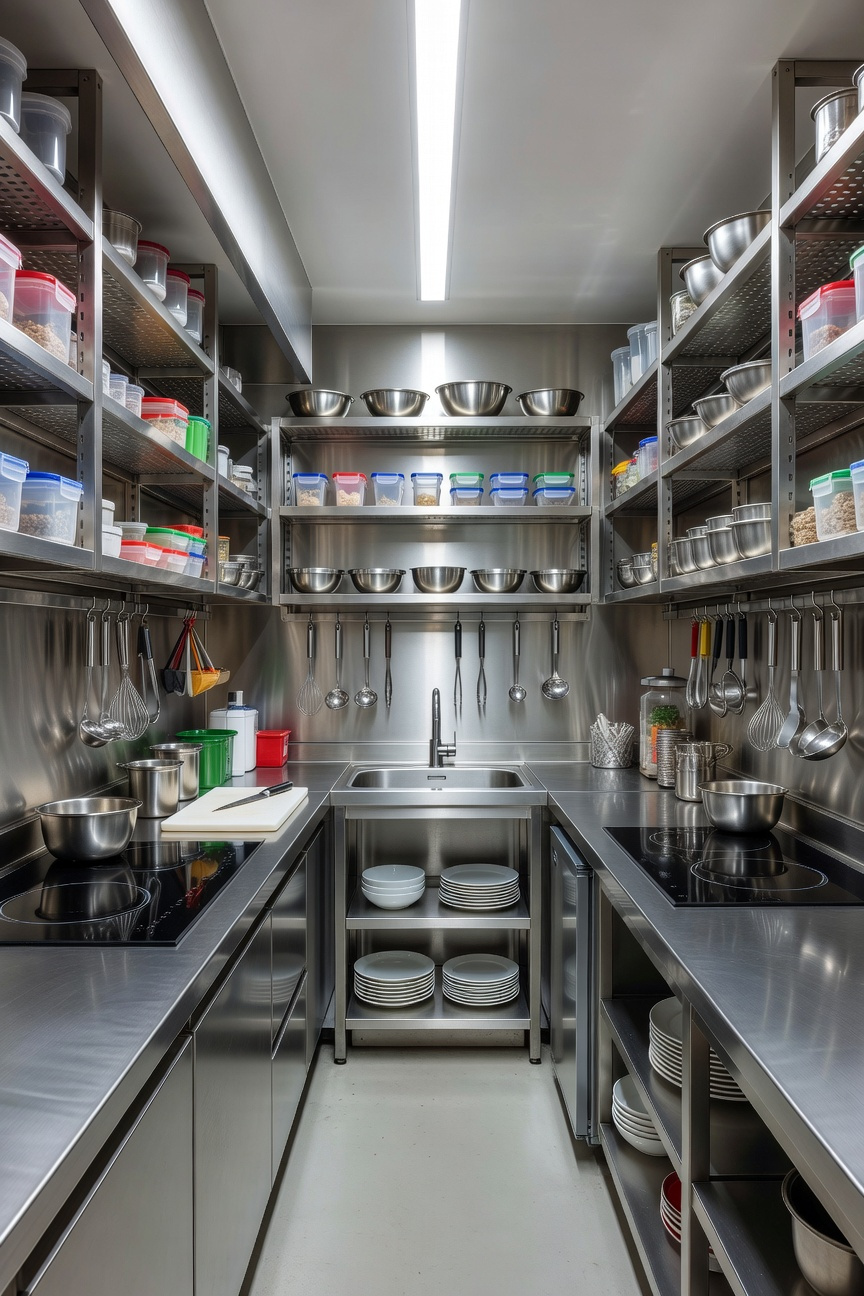
True efficiency dictates that 95% of necessary items sit within arm’s reach. This strict mandate transforms storage from a mere hiding spot into an active tool. Vertical integration becomes essential in these linear layouts. Instead of wasting “air space,” designers extend cabinetry all the way to the ceiling. Magnetic rail systems turn backsplashes into accessible storage for heavy pots or daily spices.
Ultimately, this compact layout enforces a strict discipline. Because space is tight, a single misplaced tool becomes an immediate physical obstruction. Thus, the concept of *mise en place* isn’t optional; it is a vital spatial strategy. The lack of space demands proactive organization, ironically making a small kitchen feel significantly larger.
Theme 1: The Countertop Conservation Strategy (Workflow Preservation)
The “Countertop Conservation Strategy” is not merely about aesthetic decluttering. Fundamentally, it is a principle of workflow engineering adapted for the home. This concept is rooted in early 20th-century scientific management known as Taylorism. Industrial psychologist Lillian Gilbreth pioneered “motion saving” to reduce domestic labor. Later, the 1926 Frankfurt Kitchen codified this efficiency. Architect Margarete Schütte-Lihotzky intentionally designed small spaces to minimize wasted energy. Therefore, preserving surface area is vital for reducing the physical burden of cooking.
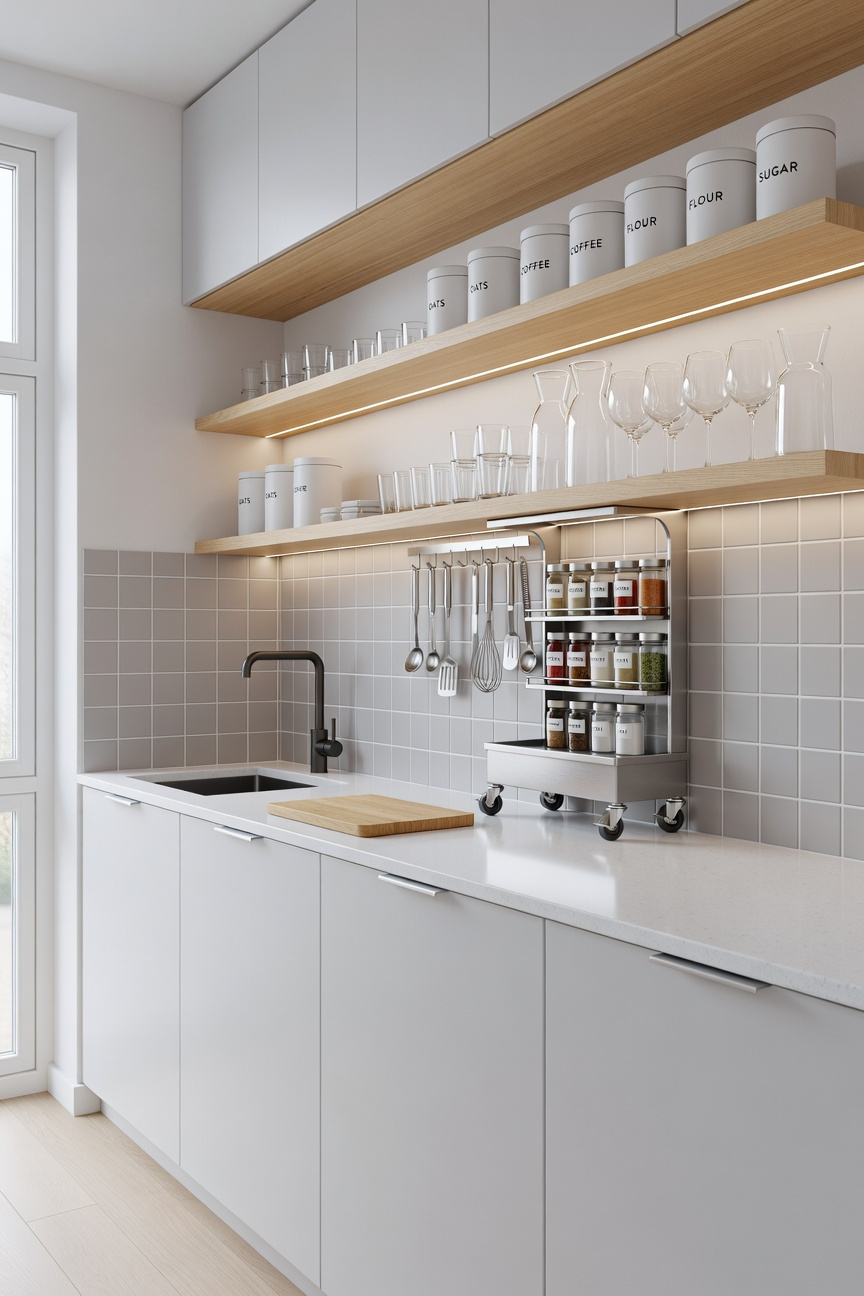
To function effectively, expert design consensus mandates a specific minimum threshold. Ideally, you need a continuous 36-inch stretch of countertop adjacent to the sink. This “Prep Zone” is essential for chopping, mixing, and plating. Consequently, any item occupying this space must justify its existence. If clutter compromises this zone, the cook is forced into a cramped posture. This friction increases the perceived stress of meal preparation.
Since small kitchens often lack horizontal space, we must look upward. The strategy employs vertical storage solutions to reclaim the culinary stage. Over-sink systems utilize dead space with fitting cutting boards. Similarly, magnetic knife strips relocate tools from the block to the wall. This practice mirrors the Frankfurt Kitchen’s built-in storage mandate. By clearing the deck, a tidy countertop offers a sense of mental clarity. Thus, even the smallest kitchen can feel expansive and welcoming.
1. The Sink Cover Solution: Creating Temporary Prep Real Estate
In compact culinary spaces, every square inch of horizontal surface is precious. The sink cover solution acts as a vital utility maximization tool. Essentially, it transforms the sink basin from a simple void into a functional, temporary work surface. This creates a “zero-footprint” workspace without displacing existing appliances.
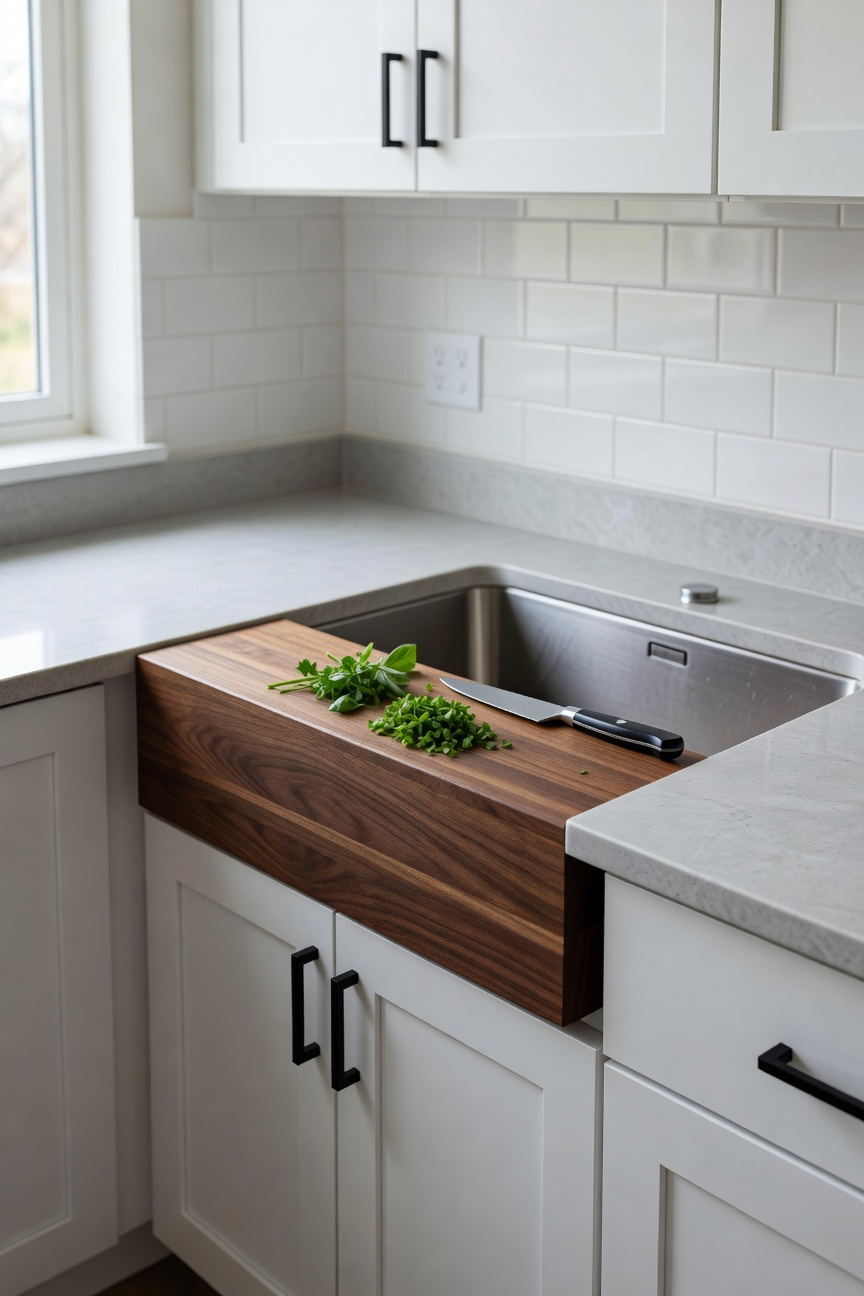
Modern engineering ensures these boards are safe and stable. Many feature non-slip rubber feet or raised edges that grip the sink’s lip. Consequently, the surface remains steady even during vigorous chopping. Furthermore, advanced models streamline the cooking workflow significantly. Integrated chutes allow you to sweep food scraps directly into the drain below. This effectively combines preparation and disposal into one seamless motion.
Beyond pure function, this tool offers a distinct psychological benefit. Often, a small sink collects clutter quickly, visually degrading the room’s aesthetic. However, covering that chaos with a solid bamboo or maple board instantly restores visual order. Placing the board becomes a ritual of kitchen activation. The solid *thud* of the wood signals a mental shift from storage mode to prep mode.
Finally, material choice dictates both maintenance and style. While wood offers beauty and protects knife edges, HDPE plastic provides a lightweight, dishwasher-safe alternative. High-end wooden models often double as elegant serving trays or trivets. Thus, they bridge the gap between efficient prep and stylish entertaining.
2. The ‘Appliance Garage’: Zoning High-Use Tools Without Clutter
Modern design has completely reimagined the appliance garage. We have moved past the bulky, diagonal corner units typical of the 1980s. Instead, contemporary solutions integrate seamlessly into the main cabinetry lines for total visual camouflage. This creates the clean, unbroken aesthetic essential for expanding the feel of small spaces.
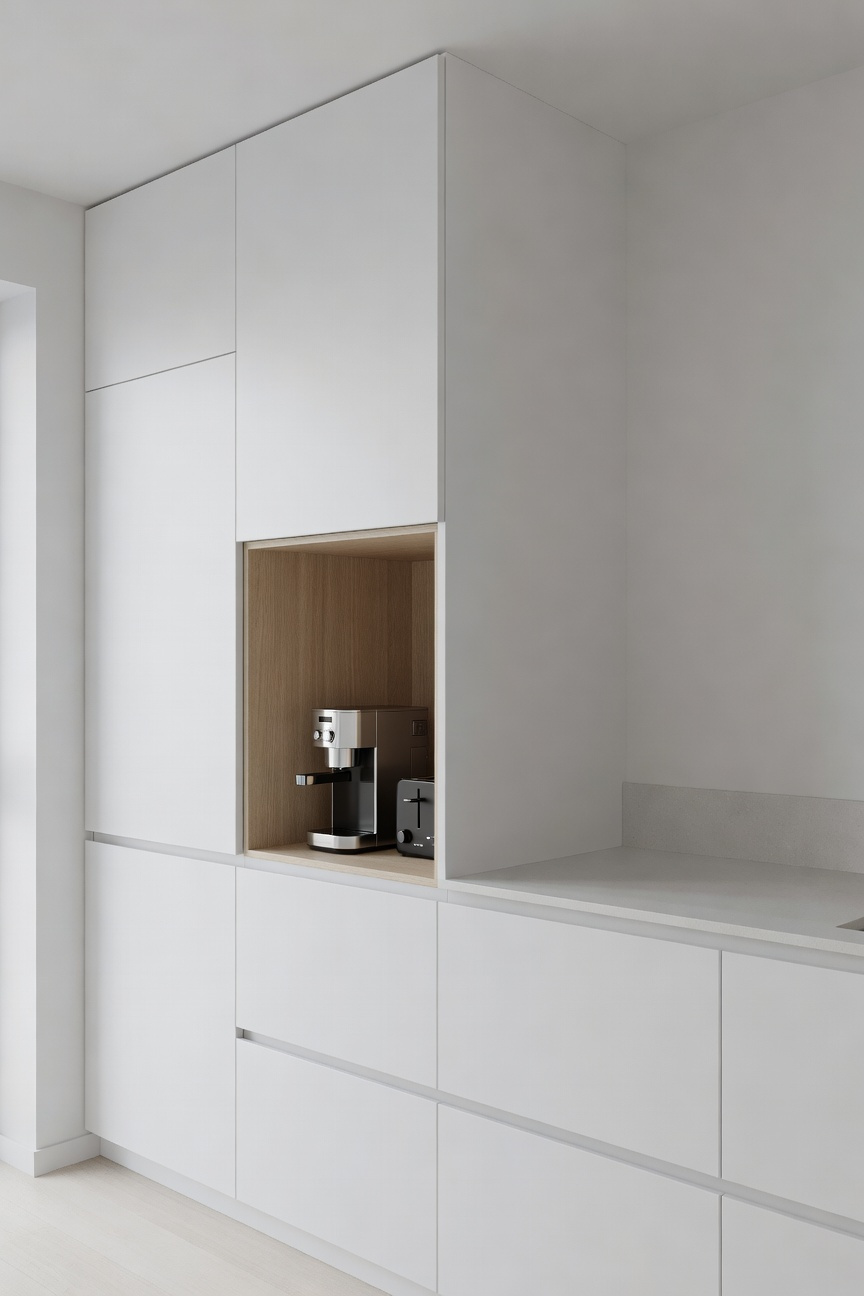
Beyond simple storage, these units function as dedicated “micro-zones” for streamlined culinary workflow. A “Breakfast Center” groups the coffee maker, toaster, and mugs together. Crucially, items remain at counter height and permanently plugged in via dedicated internal outlets. Therefore, the daily friction of retrieving heavy tools from low, hard-to-reach cabinets is eliminated. This “ready-to-use” principle bridges the gap between minimalism and functionality. This attention to detail is one of the 8 Luxury Features You Can Fit in a Small Kitchen.
Regarding mechanics, pocket or vertical-swing lift doors are currently the standard. These clever mechanisms disappear completely into the cabinet frame, preventing obstruction in high-traffic cooking areas. To address heat from appliances like air fryers, designers often install roll-out trays. This feature allows steam to escape safely without damaging the interior cabinetry finish. Ultimately, this strategy reclaims valuable counter real estate while ensuring your kitchen remains ready for impromptu entertaining.
3. Mobile Islands and Butchers Blocks: Kinetic Prep Stations
In a small kitchen, stagnant floor space represents a missed opportunity. Mobile islands transform these areas into dynamic, high-efficiency work zones. At the heart of this design is the butcher block top. Historically, professional blocks feature end-grain construction. Specifically, the wood fibers align vertically like a bundle of straws. Consequently, the surface possesses a unique “self-healing” quality. A knife blade slips between fibers rather than severing them. Thus, your cutlery stays sharper for longer. Conversely, edge-grain surfaces place wood strips side-by-side. While more affordable, they eventually develop a distressed, character-filled patina.
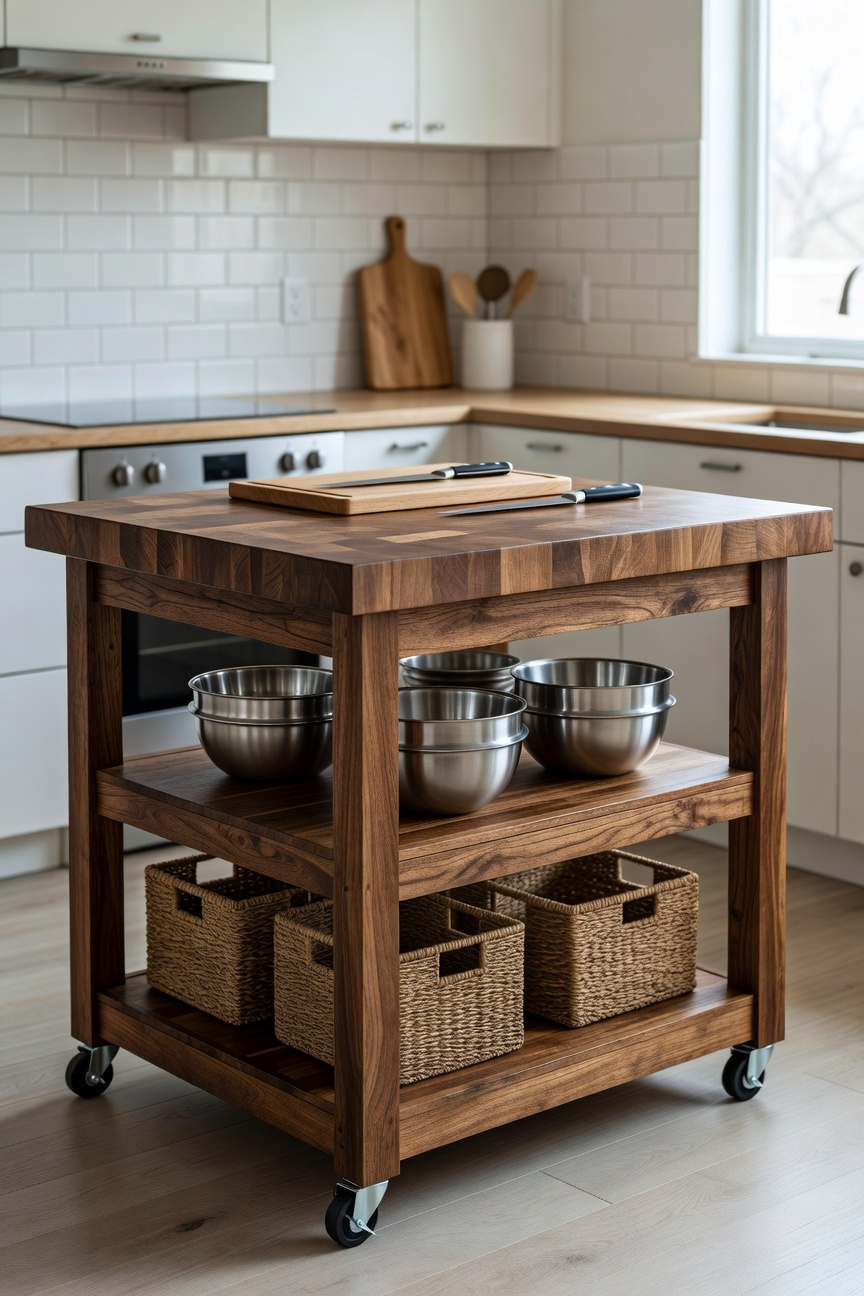
Regardless of construction style, Hard Maple remains the gold standard for materials. Its pale, creamy color visually brightens compact interiors. Furthermore, its high density allows for a remarkably smooth finish. This provides a distinct tactile pleasure when rolling out dough. Importantly, maple is neutral and does not impart flavor to food.
However, a kinetic station is only valuable if it offers true stability. The primary challenge is ensuring a heavy block remains steady during prep. High-quality casters are essential for safety. You should prioritize a dual-locking mechanism. This critical feature secures both the wheel’s rotation and the caster’s swivel. Without this, the block may pivot dangerously during vigorous chopping. Finally, rubber or polyurethane wheels ensure a quiet ride that protects your flooring.
Theme 2: The Vertical Imperative (Walls and Backsplashes)
In a compact kitchen, horizontal surface area is precious. Consequently, items left on the countertop create “visual debt.” This clutter signals unfinished work and generates subconscious stress. Therefore, shifting storage to the vertical plane is a psychological intervention. It clears the workspace and creates an illusion of airiness.
However, maximizing verticality requires technical precision. Safety depends on understanding load-bearing limits. Standard cabinets can hold heavy cast-iron cookware if anchored to studs. Yet, wall studs are not always accessible. In such cases, heavy-duty toggle bolts are essential. A single bolt can increase holding capacity to 100 pounds. Additionally, selecting plywood over MDF ensures structural longevity against moisture.
Furthermore, the humble backsplash has evolved dramatically. Historically, it was merely a protective splatter guard. Now, it functions as a dynamic utility hub. Modular aluminum track systems often replace static tile. These allow for customizable placement of spices or tablets. Moreover, advanced systems now integrate USB ports and LED lighting. Ultimately, this transforms the wall into a fully powered task zone.
4. The ‘Mise-en-Place’ Wall: Magnetic Strips Beyond Just Knives
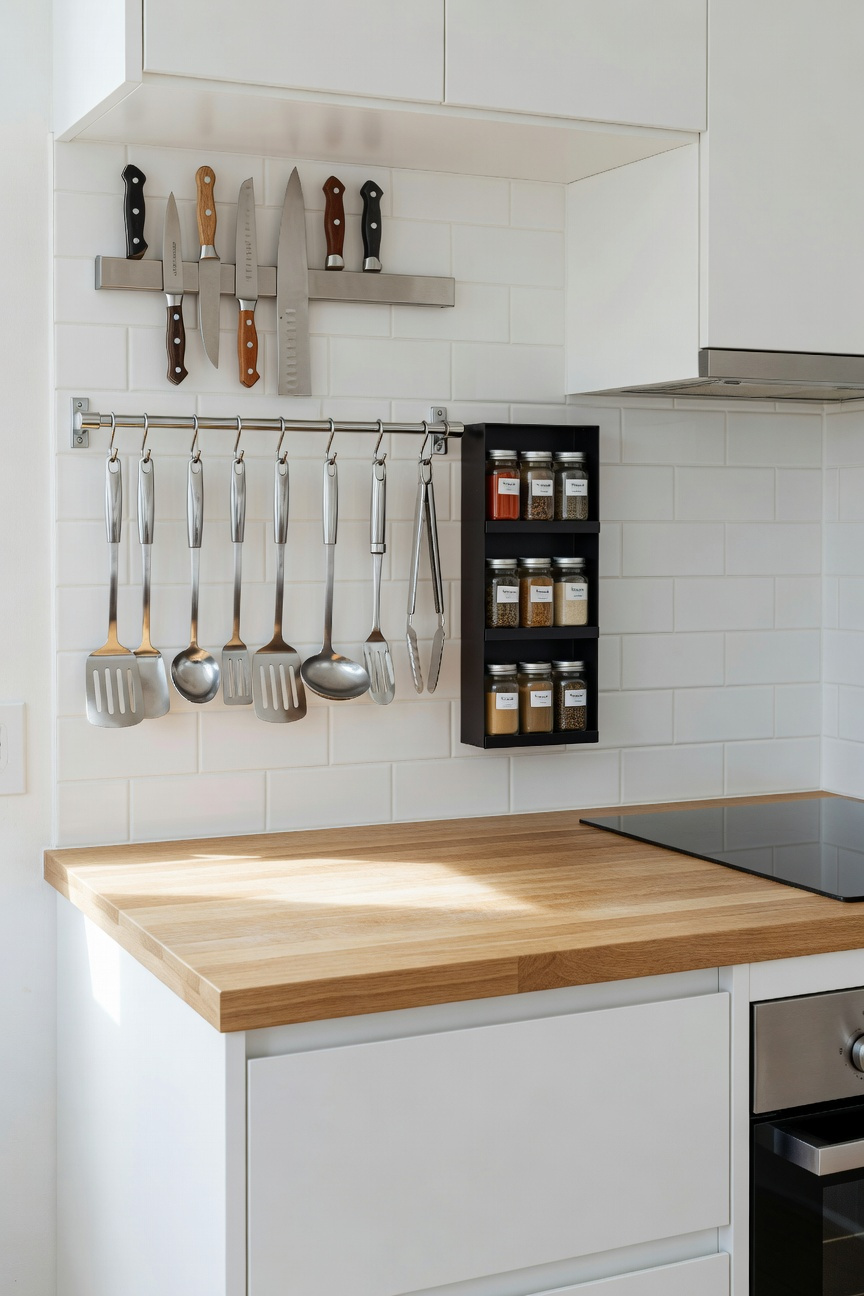
Fundamentally, the magnetic strip represents the vertical evolution of Auguste Escoffier’s *mise-en-place*. For professional chefs, this philosophy ensures every tool remains within immediate, unthinking reach. This system minimizes steps and visual clutter during the cooking process. True utility arises when you expand storage beyond ferrous metals. A simple DIY hack unlocks this potential for small kitchens. By attaching self-adhesive ferromagnetic washers to non-magnetic items, you create instant adherence. Thus, wooden spoons and plastic measuring cups suddenly become wall-mountable assets.
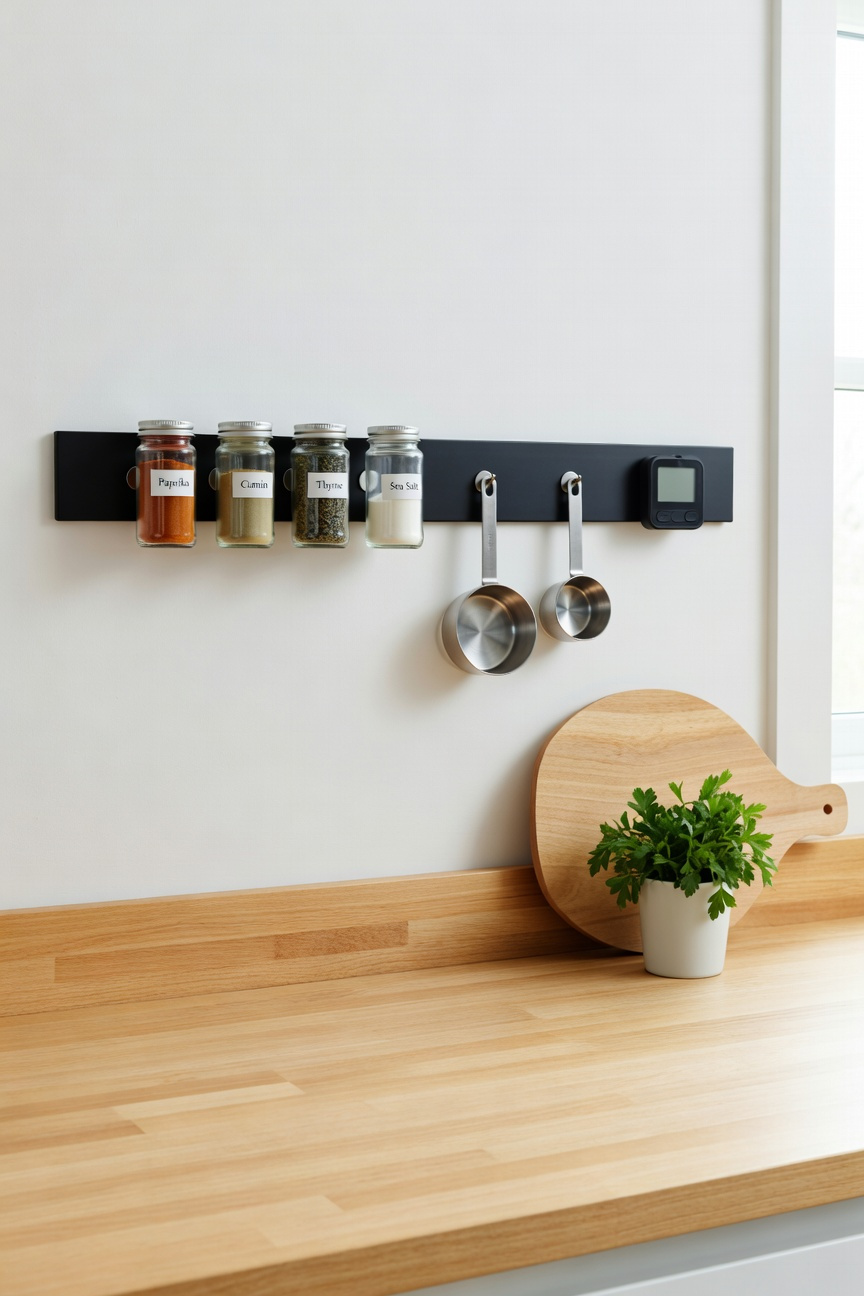
Technically, reliable performance requires neodymium magnets. These rare-earth elements provide exceptional pull force, safely holding heavy spice jars. Regarding aesthetics, material choice involves a functional trade-off. Wood strips offer visual warmth and protect delicate blade edges. Conversely, stainless steel provides a significant hygienic advantage over porous, germ-harboring knife blocks. Finally, placement dictates workflow efficiency. Ideally, mount strips at eye level, roughly 20 inches from your primary prep zone. Avoid the area directly above the stove. Grease buildup there creates unnecessary cleaning maintenance, disrupting both style and sanitation.
5. Backsplash Architecture: Rails, S-Hooks, and Suspended Storage
Consider the empty wall space between your countertop and upper cabinets. This eighteen-inch “dead zone” represents a substantial, unutilized architectural opportunity. Reclaiming this vertical plane can yield fifteen square feet of additional storage. However, expert design consensus dictates that backsplash storage must remain shallow. Ideally, fixtures should extend no deeper than six inches to preserve workflow. This keeps the active work surface clear while keeping tools accessible.
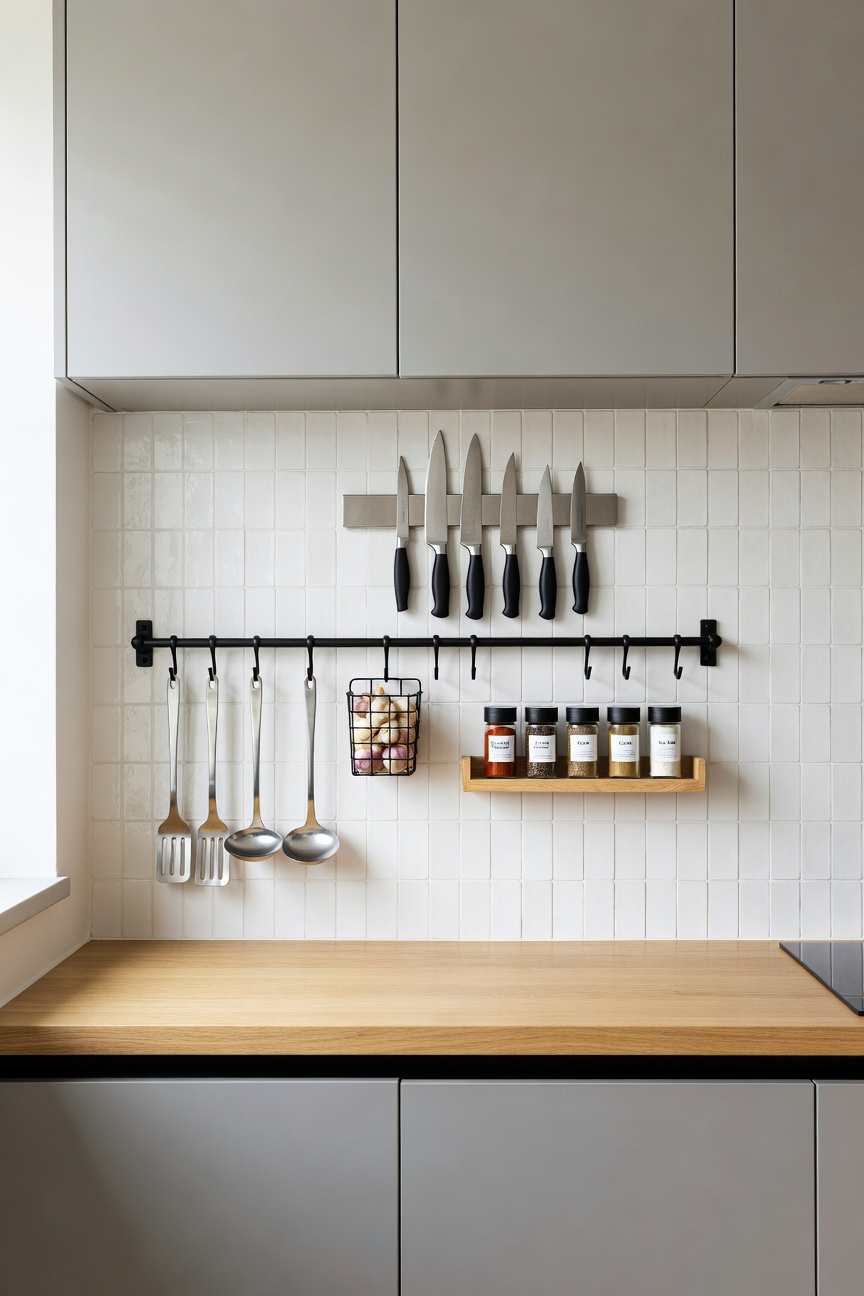
The most robust solution relies on the timeless rail and S-hook system. Historically, the S-hook has provided versatile connection points for thousands of years. Today, modern modular rails transform this ancient concept into a customizable grid. Homeowners can reconfigure baskets and hooks as their cooking needs evolve.
Ultimately, this strategy shifts kitchen tools from hidden clutter to visual inventory. Instantly, it liberates scarce countertop space by elevating bulky items like spices. Instead of mess, your high-quality cookware becomes a curated element of decor. Thus, the kitchen feels larger, organized, and professionally equipped.
6. Over-Window Shelving: Capturing the Forgotten ‘Air Space’
Designers often overlook the empty “air space” above a kitchen sink. However, capturing this zone creates a powerful visual trick in small footprints. Placing a floating shelf here draws the eye upward immediately. Consequently, even a cramped galley kitchen feels significantly taller and airier. Unlike heavy upper cabinetry, this approach avoids an oppressive or top-heavy atmosphere. Instead, it offers necessary visual decompression. To maintain this effect, prioritize transparent or slim materials. Use glass planks or thin metal brackets. These materials preserve the window’s light rather than blocking the scenic view.
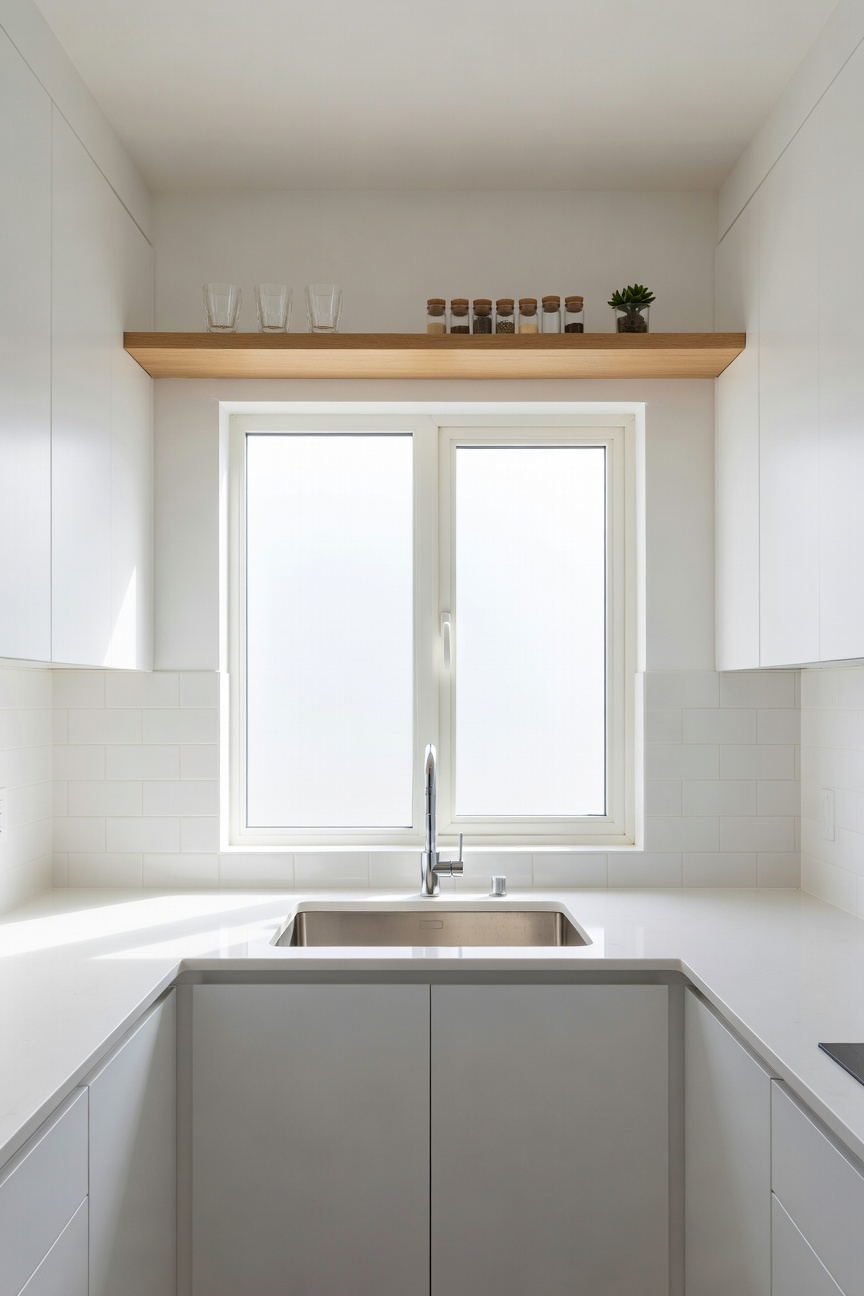
This strategy echoes the strict efficiency of a ship’s galley. In those tight quarters, every inch of vertical space must function effectively. Yet, there is a critical functional trade-off to consider in residential homes. Direct sunlight acts as a harsh preservative agent against food. Never store sensitive culinary ingredients like spices, oils, or herbs here. Unfortunately, heat and UV rays will oxidize oils and degrade flavors rapidly.
As a result, this prime location requires strictly curated storage. Ideally, display vintage glassware, ceramics, or amber jars. The natural sunlight backlights these items beautifully, effectively turning utilitarian objects into decor. Ultimately, this creates a balance between optimal workflow and aesthetic freedom.
7. The Floor-to-Ceiling Pantry: Maximizing Vertical Velocity
Leveraging the full vertical plane is the most critical strategy for maximizing storage in a small footprint. This approach, known as “vertical velocity,” effectively eliminates the non-functional dead space found above standard upper cabinets. It creates a streamlined aesthetic while potentially tripling storage capacity. However, static shelving often creates inaccessible dark zones in these tall units. Therefore, the true solution involves sophisticated, full-height pull-out columns.
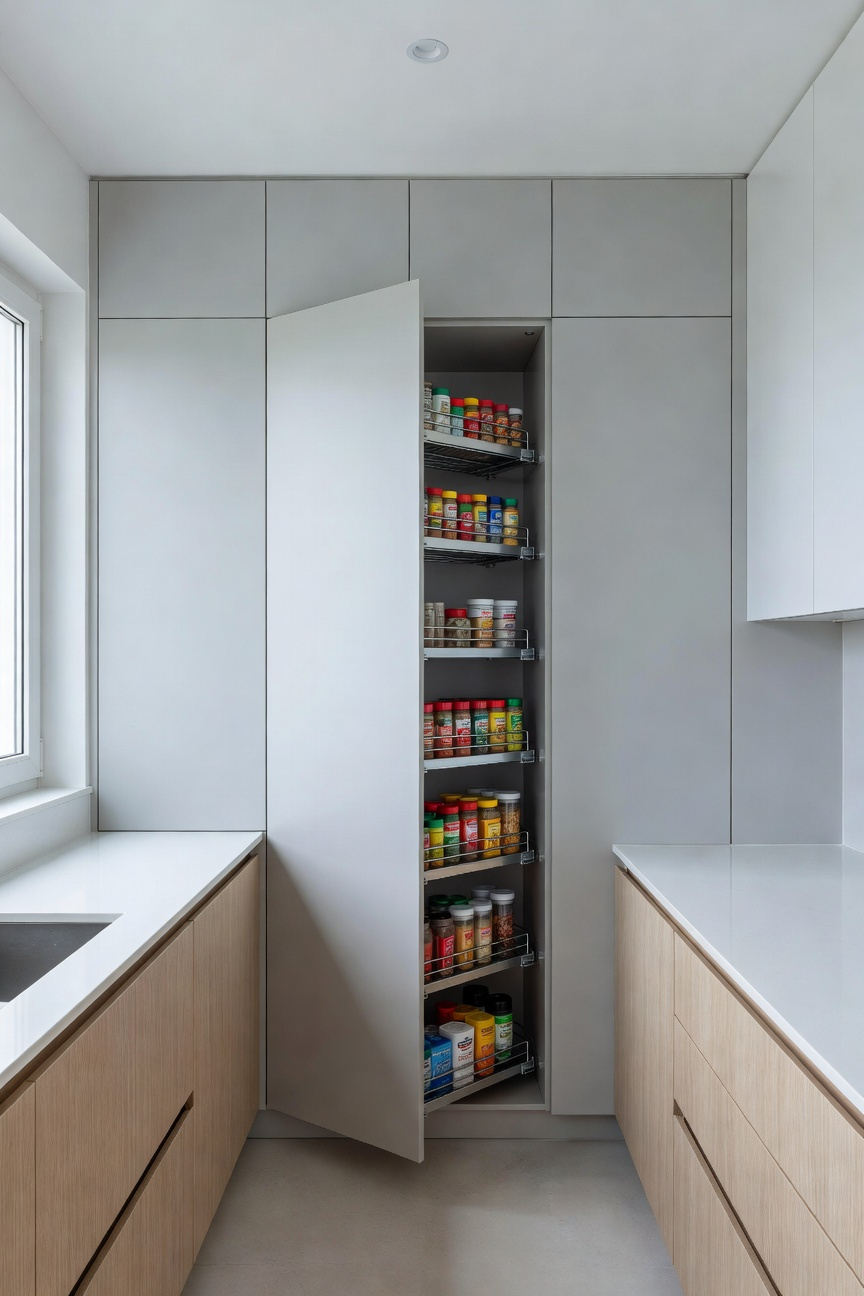
Specifically, these systems function perfectly in narrow gaps as small as 12 inches wide. Because the hardware offers dual-sided access, it exposes all contents to the user simultaneously. To handle heavy loads like bottled goods, you must specify heavy-duty, full-extension runners. Furthermore, soft-close dampers are essential for maintaining “acoustic comfort,” preventing jarring noises in a compact kitchen.
Beyond hardware, functionality relies on a strict vertical hierarchy. Place heavy, leak-prone items in the lower zone to prevent injury and strain. Conversely, reserve the highest shelves strictly for lightweight, seasonal items retrieved via a step stool. The prime zone, situated at eye level, should house daily ingredients to ensure efficient workflow.
Finally, proper illumination prevents these tall units from feeling like looming “dark towers.” Utilizing 90+ CRI LED strips ensures you can clearly distinguish between similar spices and grains. Pairing this high-quality lighting with a matte interior finish reduces glare and decision fatigue during meal prep.
Theme 3: Internal Cabinet Engineering (Optimizing the Void)
Modern small kitchen storage views the cabinet interior as a complex, mechanized system. Consequently, the focus shifts from merely holding items to actively presenting them. This philosophy aggressively replaces static shelving with dynamic, full-extension drawers. Historically, deep lower cabinets created a “Bermuda Triangle” where items vanished in the back. However, precision metal runners now allow drawers to extend fully. Thus, heavy cookware is effortlessly presented at hip level. Soft-close mechanisms eliminate jarring slams, creating a sense of quiet luxury.
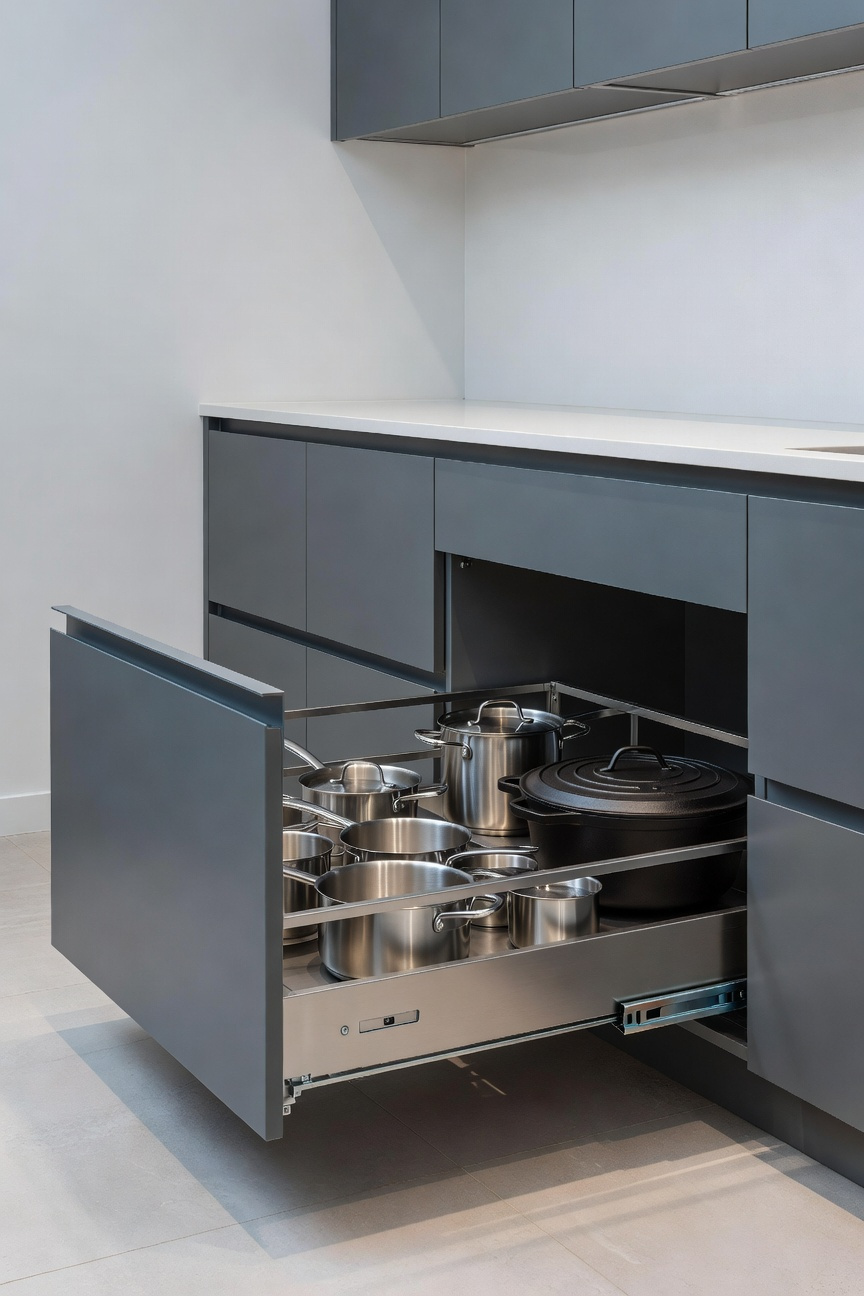
Additionally, “optimizing the void” targets structural dead zones. The notorious 90-degree corner often wastes valuable footage. Therefore, multi-articulated hardware like the LeMans system swings contents out beyond the cabinet frame. Similarly, narrow filler gaps transform into slim pull-out pantries for spices. Ultimately, this engineering relies on a “design from the inside out” methodology. Storage locations must reflect actual habits, such as placing knives near prep zones. Finally, integrating sensor-activated LED lighting ensures the space feels expansive rather than dark.
8. Drawer Geography: Diagonal Dividers for Maximum Utensil Density
Kitchen design is fundamentally a game of geometry. Utilizing the diagonal line unlocks a drawer’s longest available dimension. This practical application of the Pythagorean theorem creates immediate spatial gains. For example, a standard twenty-inch deep drawer offers a twenty-four-inch diagonal path. Consequently, you can finally store oversized tools comfortably without forcing them into awkward positions.
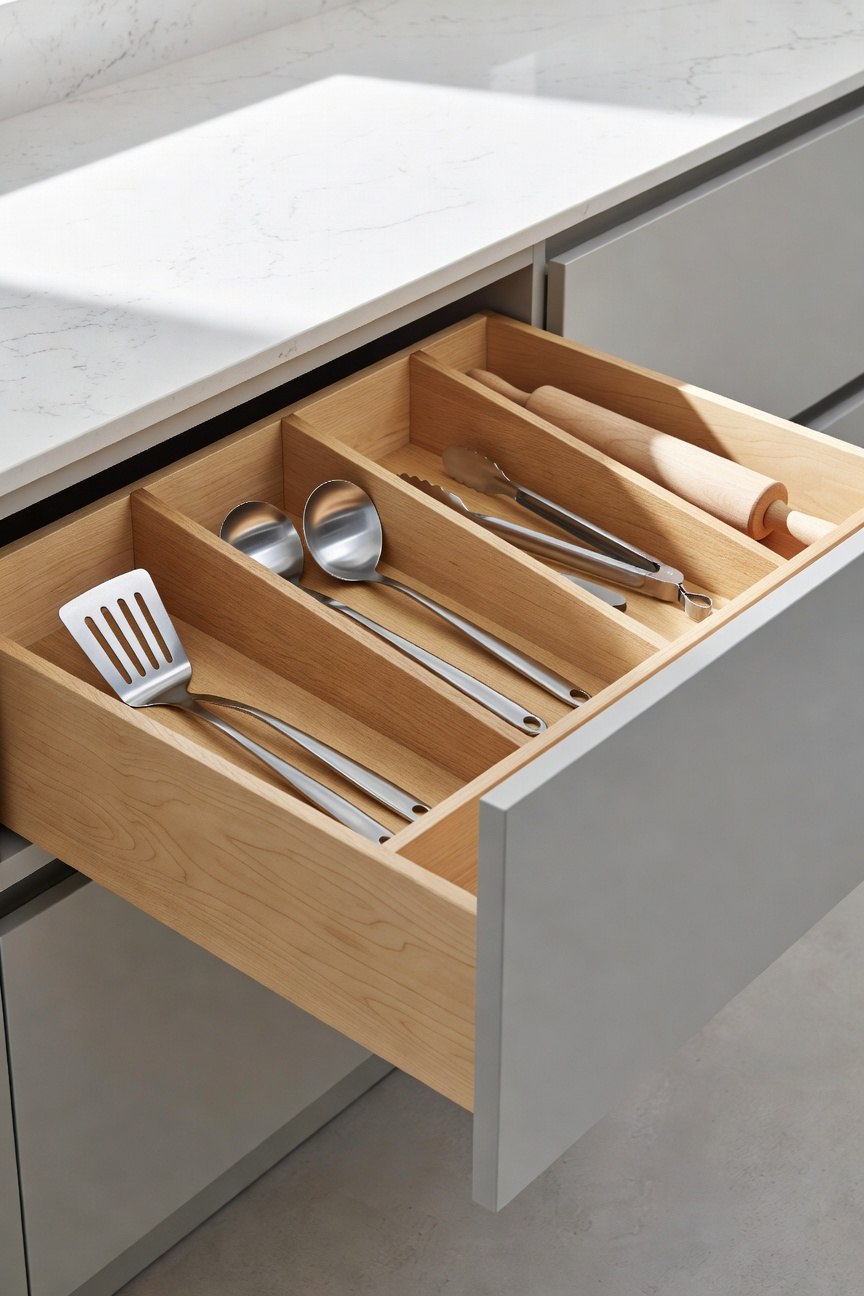
This layout effectively addresses the common “long-tool” storage crisis. Previously, large items like rolling pins, tongs, or basting brushes caused frustrating drawer jams. Alternatively, these essentials were relegated to countertop crocks, cluttering your visual field. However, diagonal dividers transform a messy “catch-all” space into a functional tool chest. Now, every utensil is visible, accessible, and laid out with intentionality.
Visually, the result is striking. In fact, the angled wood dividers offer a luxurious, architectural aesthetic when the drawer opens. Nevertheless, precision is paramount for achieving maximum density. Unfortunately, mass-market inserts often leave unusable gaps around the edges. Therefore, a custom or DIY approach is frequently necessary to eliminate wasted margins. Ultimately, building the dividers to fit the drawer cavity ensures every fraction of an inch serves a purpose.
9. The Deep Drawer System: Peg Boards for Stacking Crockery
Storing crockery in deep base drawers fundamentally shifts kitchen ergonomics. Traditionally, putting dishes away involves lifting heavy stacks up into overhead cabinets. This repetitive motion often strains shoulders and back muscles. Conversely, the “drop-in” movement utilizes gravity to your advantage. You simply lower plates downward into the base cabinet. This engages stronger leg muscles rather than relying on upper body strength. Furthermore, placing dishes at a lower level allows family members of all heights to assist with cleanup.
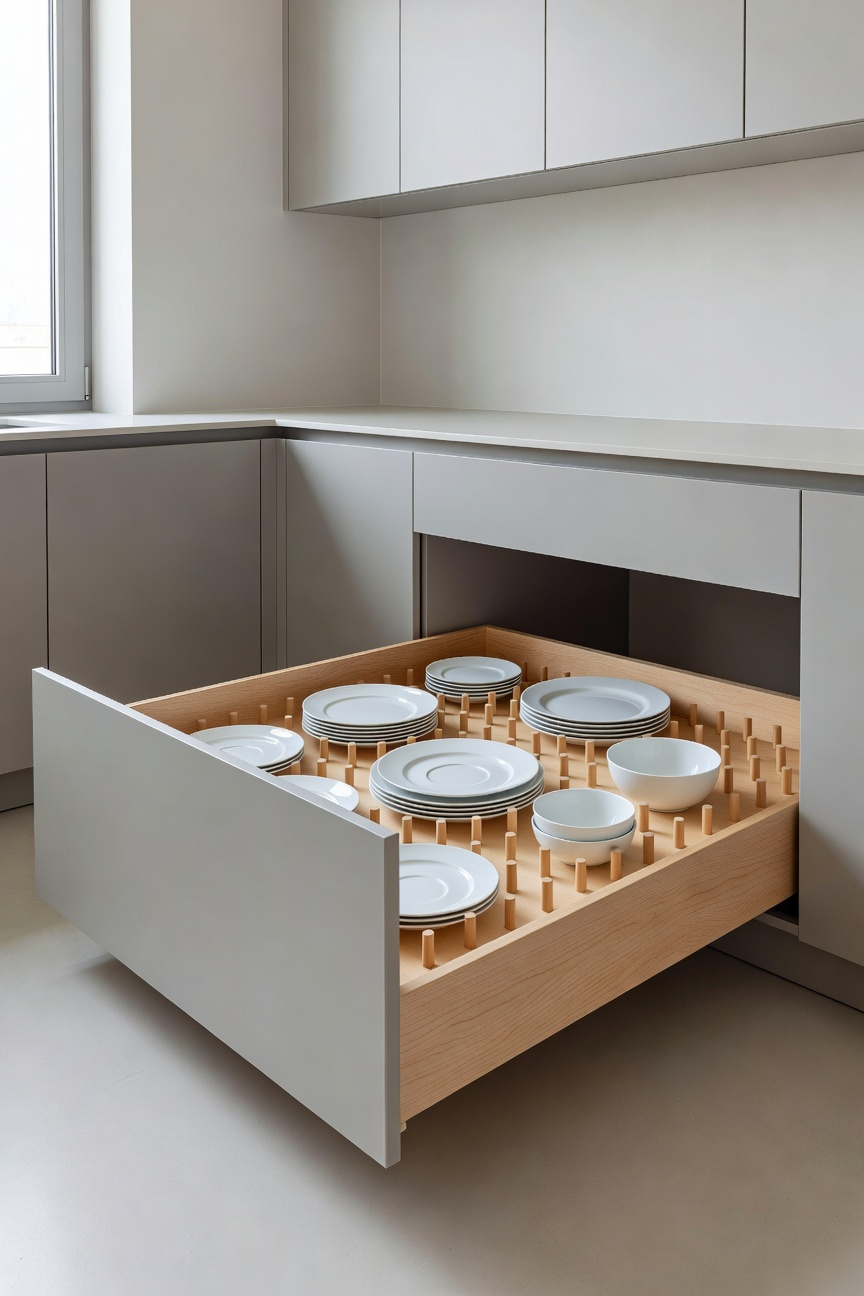
Yet, a common hesitation regarding drawer storage is the risk of shifting contents. When you forcefully close a heavy drawer, stacks of plates can slide dangerously. This is where the peg board system proves essential. These systems use adjustable dowels to create a custom “corral” for your dishes. The pegs physically secure the stacks against momentum. This prevents rattling and keeps delicate china safe during rapid workflow.
Moreover, the true beauty of this system lies in its adaptability. Fixed dividers often fail when you purchase new dinnerware shapes. In contrast, you can simply unplug and re-seat these pegs to fit any platter or bowl. Market options range from luxurious UV-cured solid maple to budget-friendly DIY hardware hacks. Ultimately, regardless of the material, the result is a quiet, organized, and highly efficient workspace.
10. Door-Back Utilization: Mounting Racks for Lids and Cutting Boards
In small kitchen design, the back of a cabinet door represents valuable “found space.” Transforming this aesthetic barrier into functional vertical real estate is a core strategy. This approach effectively reclaims dead air space without consuming horizontal shelf area. Furthermore, it resolves the chaotic “Cabinet of Doom” scenario often found in compact spaces. Instead of unstacking piles to retrieve one item, you gain quiet, one-handed access. Thus, the frustrating clatter of metal lids and glass is eliminated entirely.
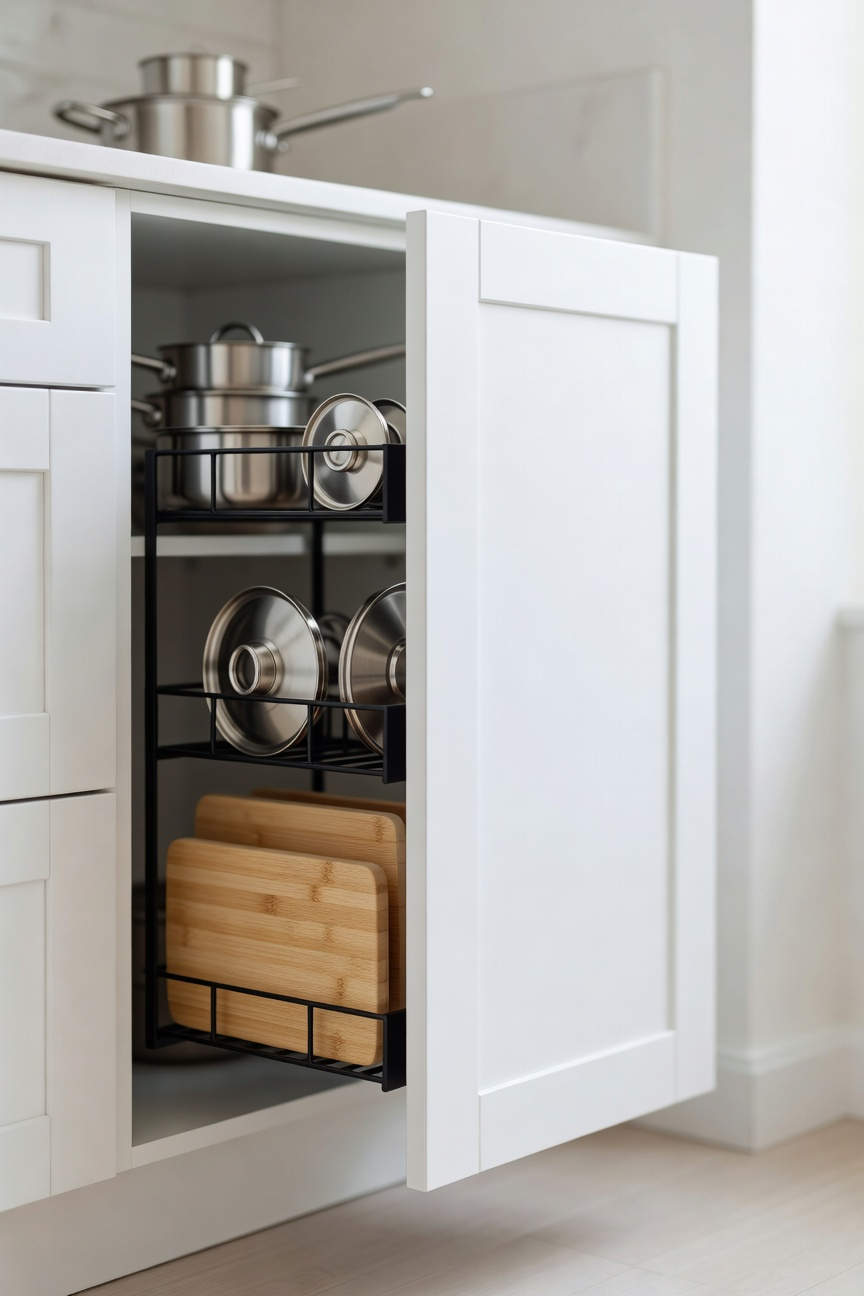
Beyond simple organization, this method improves kitchen hygiene. Wooden and bamboo cutting boards require ample airflow to maintain their structure. When stacked flat, trapped moisture causes uneven drying, eventually leading to warping or mold. Therefore, storing them vertically in open-wire racks ensures uniform drying and extends their lifespan. Additionally, this separation significantly reduces the risk of cross-contamination between different food surfaces.
Finally, the choice of material dictates the system’s utility. For instance, screw-mounted stainless steel racks provide the necessary strength for heavy cast-iron lids. In contrast, adhesive options offer a renter-friendly solution for lighter items like plastic mats. Ultimately, creating this vertical filing system streamlines your workflow while protecting your culinary investments.
11. Decanting Logic: Using Square Canisters to Eliminate ‘Air Gaps’
Kitchen cabinets are inherently cuboid structures. Therefore, placing round containers inside them creates inefficient geometry. Specifically, the curved edges leave unavoidable “air gaps” or dead space in corners. You lose valuable storage density merely due to shape. In fact, experts estimate that square canisters take up 25% less space than round ones. Thus, switching shapes can significantly reduce cabinet clutter by eliminating these voids.
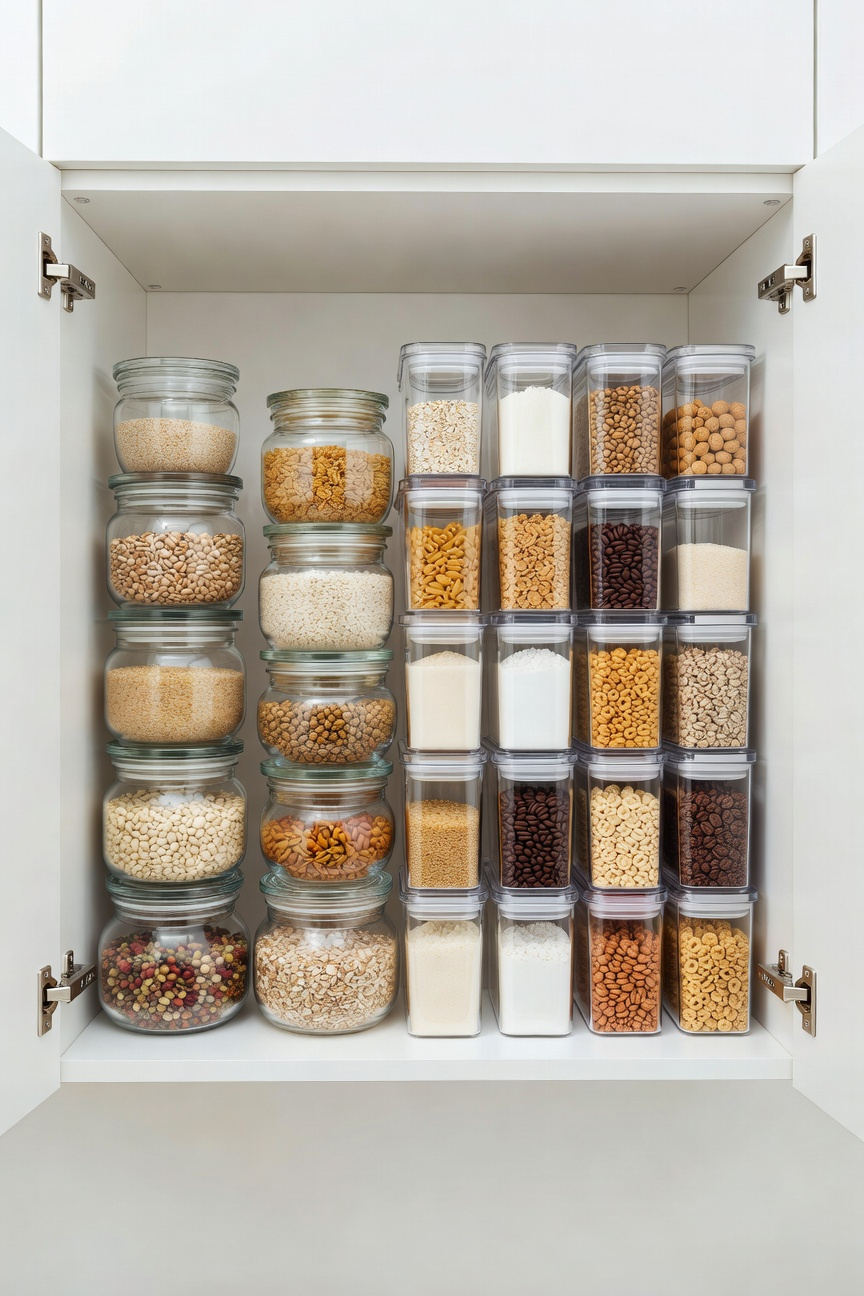
Historically, this approach borrows directly from professional food service operations. Chefs utilize modular, square containers to maximize every inch of shelf capacity. Additionally, this uniformity minimizes visual noise. As a result, you gain a sense of calm and immediate “inventory-at-a-glance” capability. You can see exactly what is running low without moving multiple boxes.
However, there are functional trade-offs to consider within this logic. Square corners can trap residue, making them less ideal for smooth scooping. Therefore, this “decanting logic” works best for dry goods like flour, sugar, and pasta. Conversely, liquids usually require the distributed strength of cylindrical shapes to prevent leaks under pressure. Furthermore, you must address the loss of original packaging data. Successful decanting requires labeling your new containers with expiration dates and cooking instructions. Ultimately, the goal is optimizing workflow, not just achieving an organized look.
Theme 4: Reclaiming ‘Dead’ Volume (Hidden Assets)
Reclaiming “dead” volume requires shifting from adding storage to optimizing existing architectural voids. Specifically, the toe-kick recess beneath base cabinets represents the largest unintentional void in standard layouts. Historically, this 3.5-inch indent served purely ergonomic functions, preventing back strain during prep work. However, innovative designers now utilize this area despite its shallow 2 ¼-inch internal depth. With “push-to-open” mechanisms, these low drawers become perfect for ultra-flat baking sheets or seasonal platters.
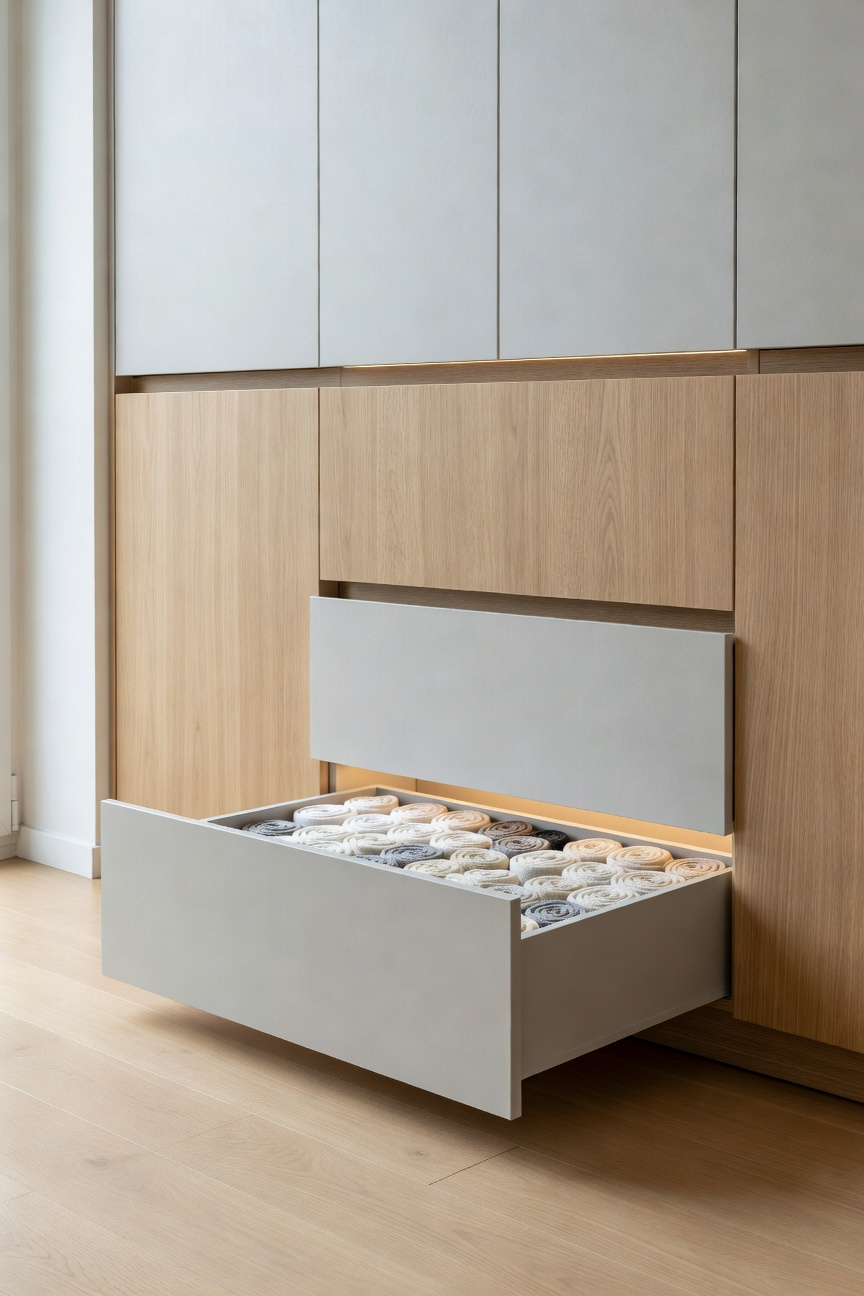
Similarly, narrow vertical gaps between appliances offer hidden assets. Often, these 4- to 12-inch spaces are ignored by builders. Installing slide-out pantries turns these narrow voids into high-efficiency storage for spices and oils. Notably, this single-file organization eliminates the “black hole” effect common in deep, standard cabinets.
Nevertheless, a nuanced design philosophy must distinguish between accidental and intentional empty space. While wasted gaps above upper cabinets signal poor planning, some negative space is vital. Ultimately, intentional voids provide visual respite, preventing a small kitchen from feeling heavy or claustrophobic. High-quality design balances maximum efficiency with necessary breathing room.
12. The Blind Corner Revolution: ‘Le Mans’ and Cloud Pull-Outs
For decades, the “dead corner” represented the most inefficient space in kitchen design. Historically, these dark recesses required an uncomfortable physical struggle to retrieve items. However, a hardware revolution has fully reclaimed this lost territory. Complex articulation systems have replaced static shelving entirely. In fact, the Le Mans system increases usable storage area by up to 70 percent.
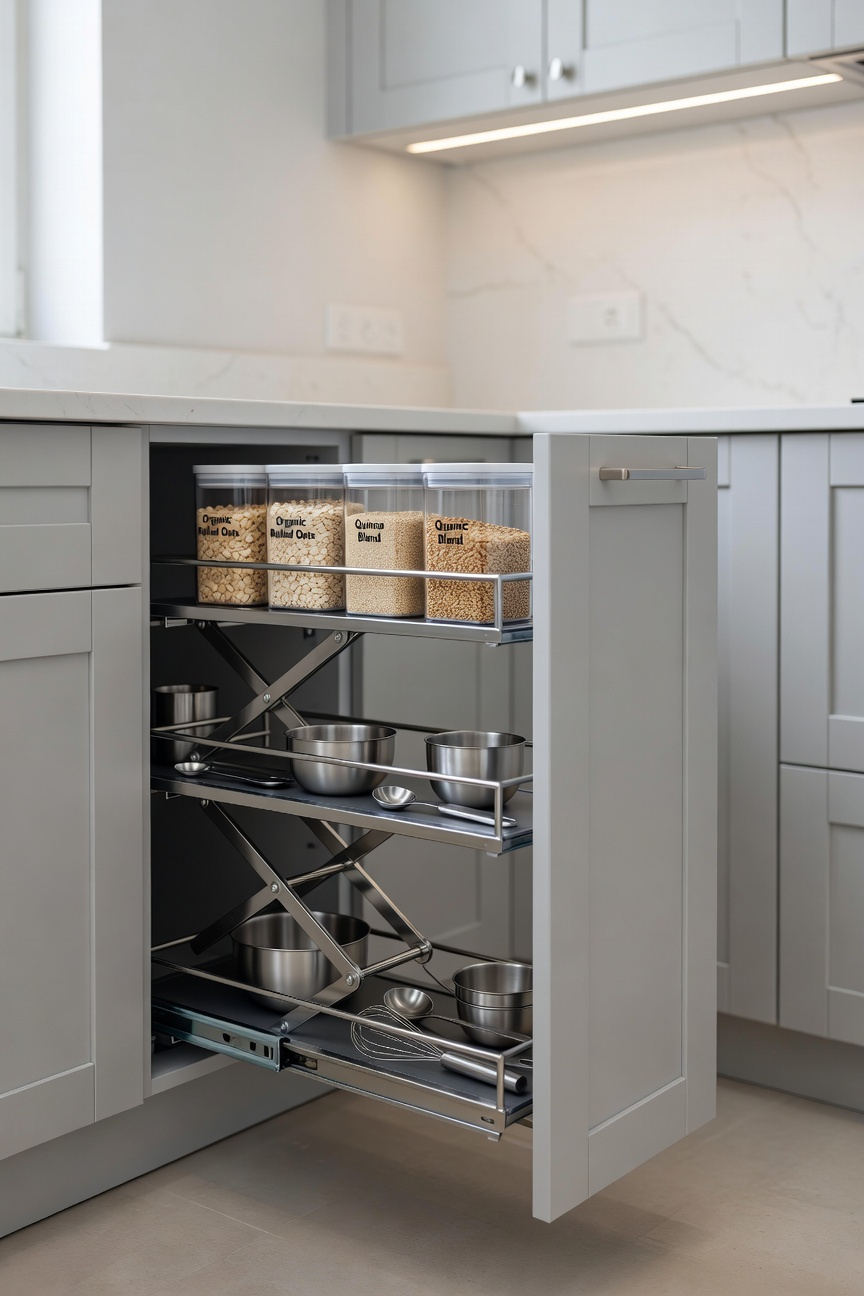
Its design is a marvel of engineering logic. Named after the famous racing circuit, its trays feature organic, sweeping curves. Consequently, these shelves glide smoothly past cabinet frames without collision. The patented four-arm system swings the entire unit completely outside the cabinet footprint. Therefore, you can access heavy cast iron pots with a single, effortless motion. Notably, these robust units support up to 55 pounds per shelf.
Conversely, the “Cloud” pull-out offers a sleek alternative for modern aesthetics. While the Le Mans handles heavy cookware, the Cloud floats lighter items on a track-based system. Regardless of the choice, the ergonomic impact is profound. We have effectively eliminated the need to kneel or bend awkwardly. Additionally, advanced models feature soft-close mechanisms for a quiet, cushioned return. Ultimately, this transforms a formerly frustrating chore into a smooth, luxurious interaction.
13. The Toe-Kick Drawer: Mining the Plinth for Baking Sheets
In the realm of small kitchen storage, the toe-kick represents the final frontier of space reclamation. Traditionally, this recess at the base of cabinets serves a purely ergonomic purpose. It allows you to stand comfortably close to the counter without losing your balance. However, leaving this void empty is a missed opportunity in tight culinary spaces. The toe-kick drawer converts this necessary structural element into a secret asset.
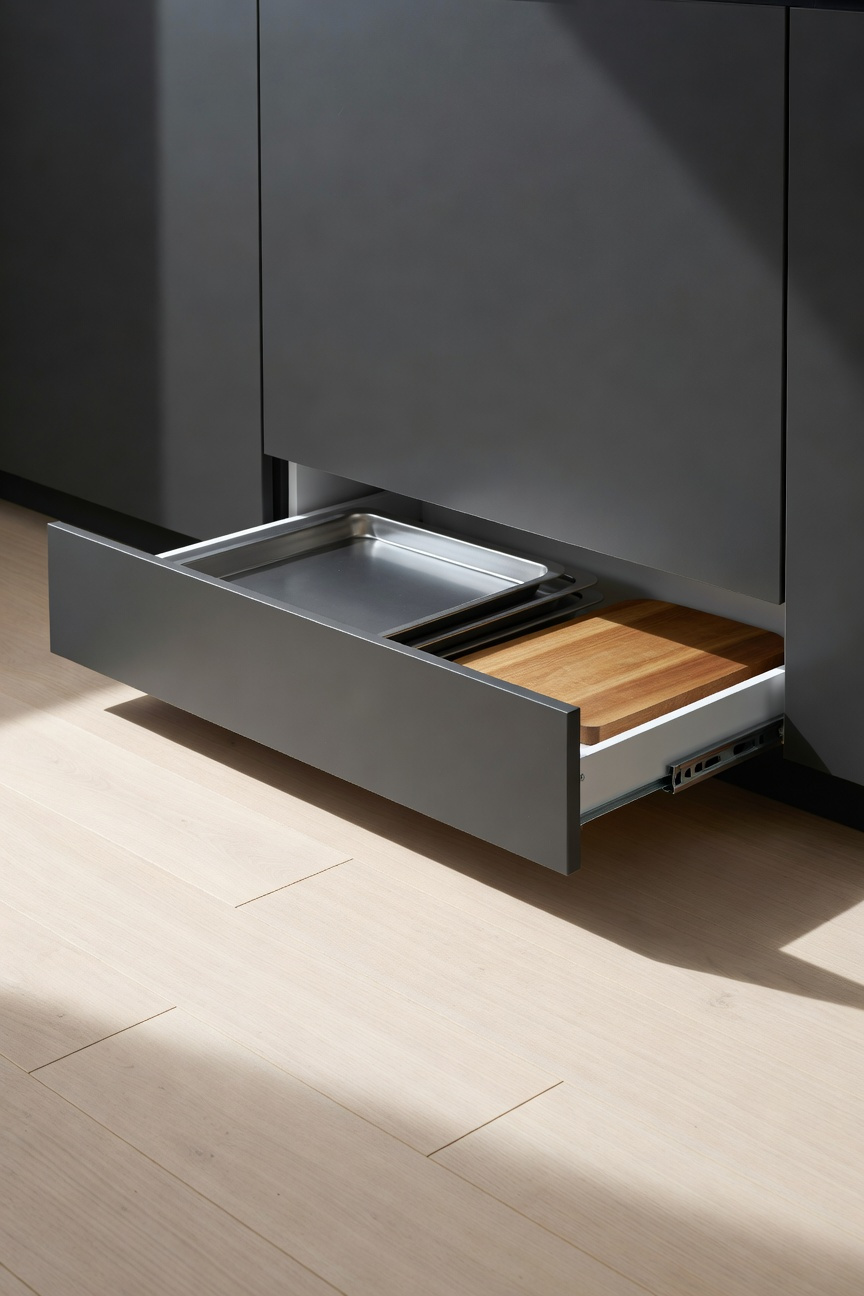
This shallow compartment offers the ideal vessel for awkward, flat items. For instance, baking sheets, cutting boards, and serving platters often clutter deep cabinets inefficiently. Storing these thin items in standard deep drawers typically wastes valuable volume. Conversely, the toe-kick drawer maximizes efficiency by utilizing a usable interior height of roughly 2.5 inches. Therefore, the physical constraints force organization by restricting contents to low-profile tools exclusively.
Aesthetically, these drawers maintain a seamless look by mimicking the standard plinth strip. In fact, they disappear entirely when closed to preserve clean, minimalist lines. Furthermore, modern hardware often incorporates push-to-open mechanisms for seamless operation. Simply nudge the panel with your foot to retrieve a baking sheet while your hands are full. Ultimately, this smart design choice transforms dead space into a functional, hidden gem.
14. Under-Sink Tension Rods: Vertical Suspension for Cleaning Supplies
The area under the kitchen sink is often a chaotic mix of plumbing and clutter. Therefore, utilizing vertical airspace is essential for maintaining an efficient workflow. Specifically, a simple tension rod installed horizontally transforms dead air into active storage. By positioning the rod high across the cabinet width, you utilize space usually wasted above drainage pipes.
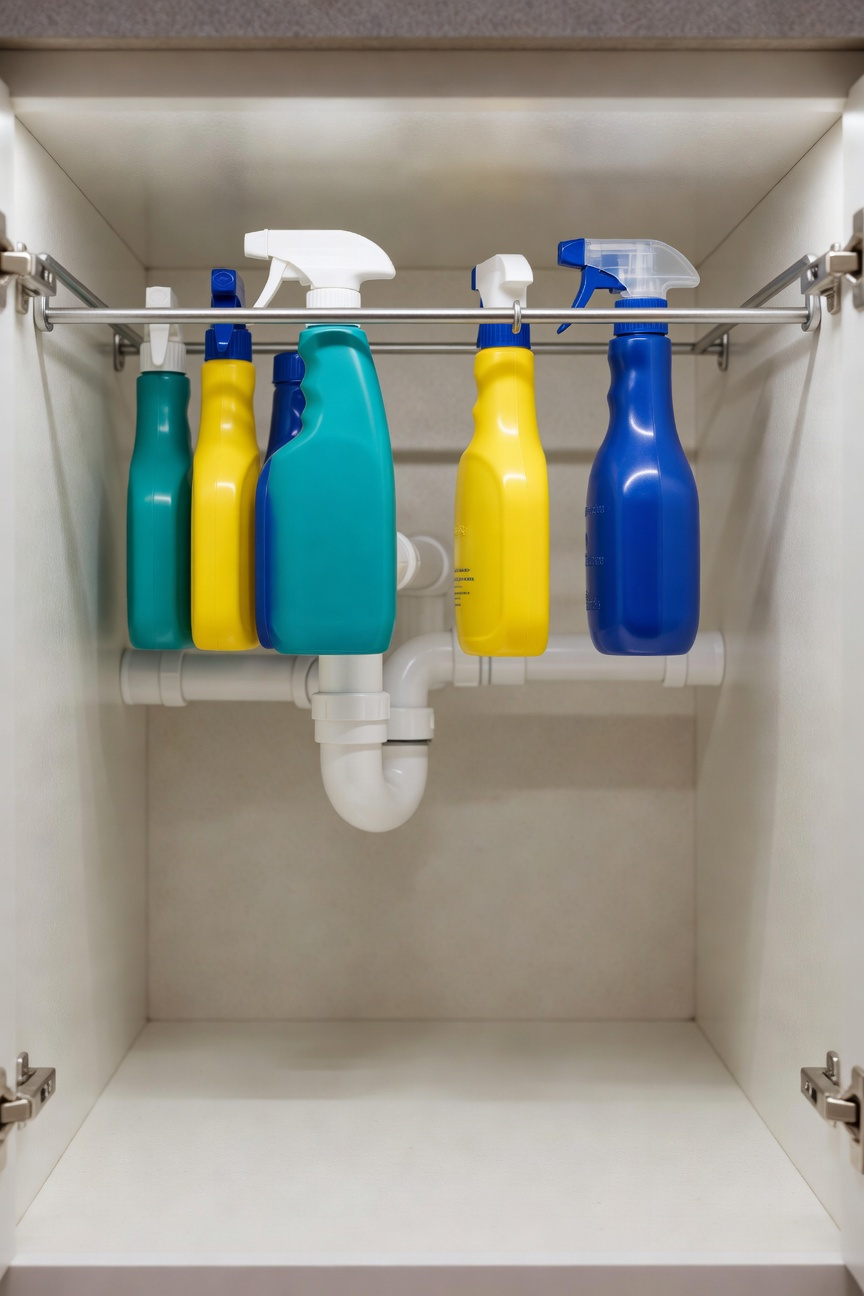
Consequently, this allows you to hang spray bottles directly by their triggers. This suspension method effectively clears the cabinet floor. As a result, you gain valuable room for stacking bins or drawers beneath the hanging supplies. Essentially, you are doubling your functional storage area without any construction.
However, the success of this solution relies heavily on hardware selection. Ideally, avoid lightweight curtain rods designed for sheer fabrics. Instead, select heavy-duty adjustable rods capable of holding up to 25 pounds. Standard rods often slip under the dynamic weight of full liquid bottles. Therefore, robust friction is necessary to prevent the frustration of a collapsing rail.
Furthermore, this system offers incredible versatility for renters since no drilling is required. Beyond spray bottles, you can incorporate S-hooks for hanging dish gloves or scrub brushes. Additionally, a second rod can serve as a hidden dispenser for paper towels to clear your counters. Ultimately, this creates a streamlined, professional look behind closed doors.
15. The Narrow Pull-Out: Turning Filler Strips into Spice Racks
Historically, cabinet installations require “filler strips” to balance spacing or fit imperfect walls. Consequently, these 3-inch to 6-inch gaps become dead space disguised by decorative wood. The narrow pull-out fundamentally shifts this paradigm, transforming a void into a high-efficiency storage asset.
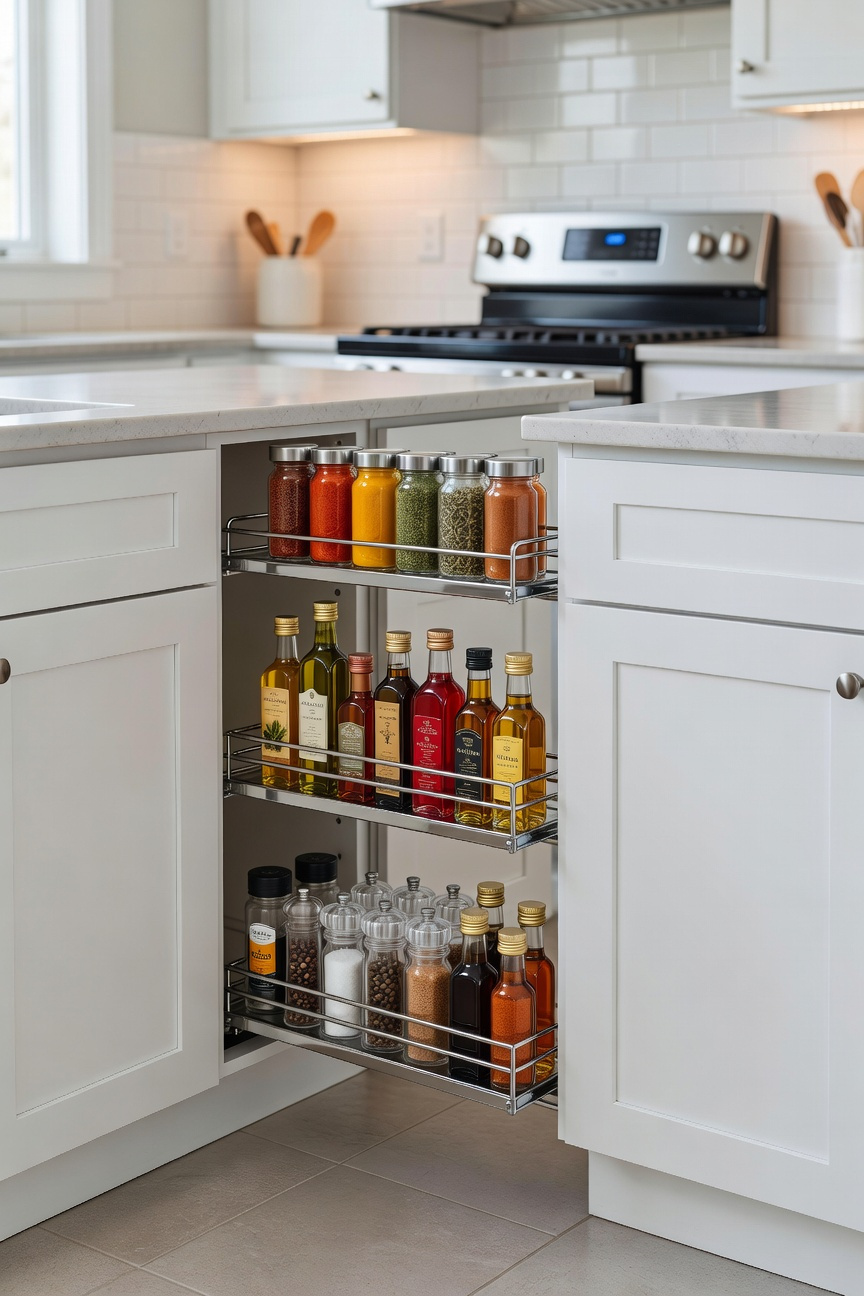
Technically, this unit functions as a vertical shelving system. Specifically, it mounts directly to the side stiles of adjacent cabinets for structural support. Furthermore, it utilizes heavy-duty, full-extension slides. Therefore, the mechanism brings the entire depth of the cabinet out of the shadows.
Visually, the result is a seamless, organized kitchen facade. However, from a culinary workflow perspective, the ergonomics require careful consideration. For instance, storing small spice jars in a base pull-out often forces the cook to crouch and squint. Thus, reading labels on lower shelves can interrupt the cooking rhythm. Alternatively, these 6-inch units often function better as mini-pantries for taller items. In fact, a uniform collection of olive oils or hot sauces fits perfectly here.
Interestingly, high-end custom manufacturing is slowly rendering the filler strip obsolete. Modern makers can simply widen adjacent cabinets to absorb gaps. Nevertheless, the narrow pull-out remains invaluable for retrofits. Ultimately, it allows homeowners to reclaim space without the expense of a full renovation.
Conclusion: Transforming Constraints into a Chef’s Focused Workflow
A compact kitchen is not a limitation but a sophisticated design opportunity. In fact, tight boundaries force a return to professional culinary roots. By embracing constraints, you transform storage from passive containment into active *mise en place*. Your space echoes the hyper-efficiency of the historic Frankfurt Kitchen. Every inch serves a specific, deliberate function within your workflow. This intentional design eliminates the stress of clutter. Instead, it creates a seamless, factory-like precision in your daily cooking.
Furthermore, this focused environment shifts your mindset from chaotic to rhythmic. The smooth choreography of a galley layout reduces unnecessary movement. Thus, you can focus entirely on the sensory joy of cooking. A well-designed compact kitchen shows that style doesn’t have to suffer, offering maximum space and style. This commitment to efficiency is the key to mastering high-end small kitchen storage. Looking ahead, a curated kitchen fosters a lifestyle of mindful consumption and elegance. To start this transformation, begin by auditing your current tool collection today. Ruthlessly remove single-use gadgets to prioritize versatility and optimal flow.
- **
Frequently Asked Questions
How can I make my small kitchen feel less cluttered and more spacious?
Clutter reduction is primarily a psychological intervention achieved through vertical storage and visual uniformity. Focus on eliminating counter clutter by installing magnetic strips or shallow wall rails. Use light, uniform colors for your cabinetry and countertops (like white or light gray) and integrate lighting beneath your upper cabinets to eliminate shadows, which helps the space feel taller and airier.
What are the best methods for maximizing vertical storage space in a tight kitchen?
The best methods involve utilizing dead zones such as the space above the sink window, the back of cabinet doors, and, most effectively, building floor-to-ceiling pantries. Employ modular rail systems on backsplashes for quick-access items, allowing you to use the wall as a dynamic utility hub rather than just a decorative feature.
Should I prioritize drawers or standard cabinets for efficient small kitchen storage?
For base cabinets, prioritize full-extension deep drawers over standard shelving. Drawers improve ergonomics by bringing contents to you, eliminating the need to reach into a dark, deep void. Use drawer inserts, peg board systems for dishes, and diagonal dividers for utensils to maximize density and maintain organization.
- **