I. The Philosophy of Inclusive Elegance (Foundational Concepts)
When exploring sophisticated bathroom design ideas, homeowners often seek a balance between luxury and functionality. Historically, accessible bathrooms featured cold, industrial materials. Indeed, these spaces often felt like clinical hospital rooms. Today, the philosophy of inclusive elegance completely rejects this aesthetic.
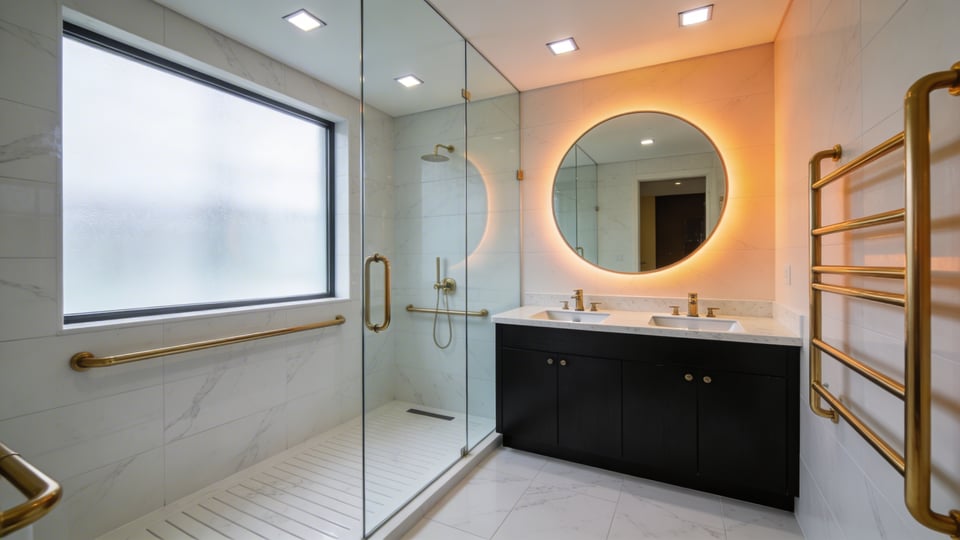
Instead, designers embrace a concept called stealth accessibility. Specifically, essential safety features now masquerade as luxury design elements. Modern grab bars look exactly like designer towel racks, for instance. Next, rich matte black or brushed gold finishes replace cheap plastics. In fact, these durable surfaces provide beautiful tactile warmth.
This movement centers entirely on dignity in design. Therefore, a room should always empower a person’s independence. Curbless showers and floating vanities remove physical movement barriers. In fact, this essential wheelchair space feels incredibly airy and grand.
However, true inclusivity also addresses sensory and cognitive well-being. Designers now create quiet, calming sound sanctuaries using bespoke finishes. Specifically, disguised acoustic panels and silent flush toilets minimize jarring noises. Layered lighting also replaces harsh, clinical ceiling fixtures. Next, soft ambient floor LEDs guide movement safely at night.
Technologically, invisible safety features are engineered directly into materials. Specialized enamel finishes ensure high slip resistance, for instance. Yet, the glossy bathtub surface remains perfectly smooth to touch. Indeed, smart bathrooms utilize voice-activated controls for limited dexterity. These smart tools provide the bespoke service of a luxury hotel. They reflect concepts found in these dream luxury modern bathroom ideas.
Originally, universal design simply focused on basic functionality. However, today’s inclusive elegance demands a world-class, aspirational experience. Age-in-place luxury has definitely transformed how we view functional design. Therefore, the most accessible spaces are now the most beautiful.
1. The Barrier-Free Wet Room: Merging Seamless Aesthetics with Absolute Accessibility
Historically, barrier-free spaces felt like cold hospital rooms. However, modern universal design changed this narrative completely. Today, the barrier-free wet room represents inclusive luxury. Specifically, it merges beautiful aesthetics with absolute accessibility.
This approach strips away bulky shower enclosures entirely. Instead, it treats the bathroom as one waterproof envelope. Technically, a complex tanking system seals the entire room. Therefore, designers can place vanities and toilets anywhere.
Next, linear channels replace traditional center-point shower drains. This vital shift creates a gentle, single-slope floor. In fact, large porcelain slabs can flow without interruption.
Psychologically, removing the shower curb eliminates visual friction. The eye instantly perceives a much larger room. This continuous spatial flow fosters deep sensory tranquility. Naturally, the hidden engineering promotes a calming cognitive ease.
However, these open-plan designs create unique microclimate challenges. Open showers can feel significantly colder, for instance. Therefore, authoritative spaces incorporate radiant floor heating everywhere. This thermal mass evaporates standing water quickly.
Meanwhile, intelligent extraction fans manage the uncontained moisture perfectly. Textured stone surfaces also dampen loud echoing water sounds. Indeed, these subtle details craft a true wellness sanctuary. Everyday hygiene becomes an elegant, barrier-free retreat.
2. Invisible Support: Architecturally Integrated Grab Bars That Read as Sculpture
Traditionally, safety hardware felt clinical and cold. However, modern design reimagines grab bars as stunning architectural details. High-end brands routinely collaborate with legendary design houses. Specifically, the KEUCO AXESS collection mirrors a modern gallery installation.
Escutcheon-less designs completely remove clunky metal wall plates. Sleek bars appear to emerge seamlessly from walls instead. Next, consider the incredible power of multi-functional camouflage. Grab-bar vanities and shower trellises hide support in plain sight. In fact, continuous stone ledges gracefully offer balance for all ages.
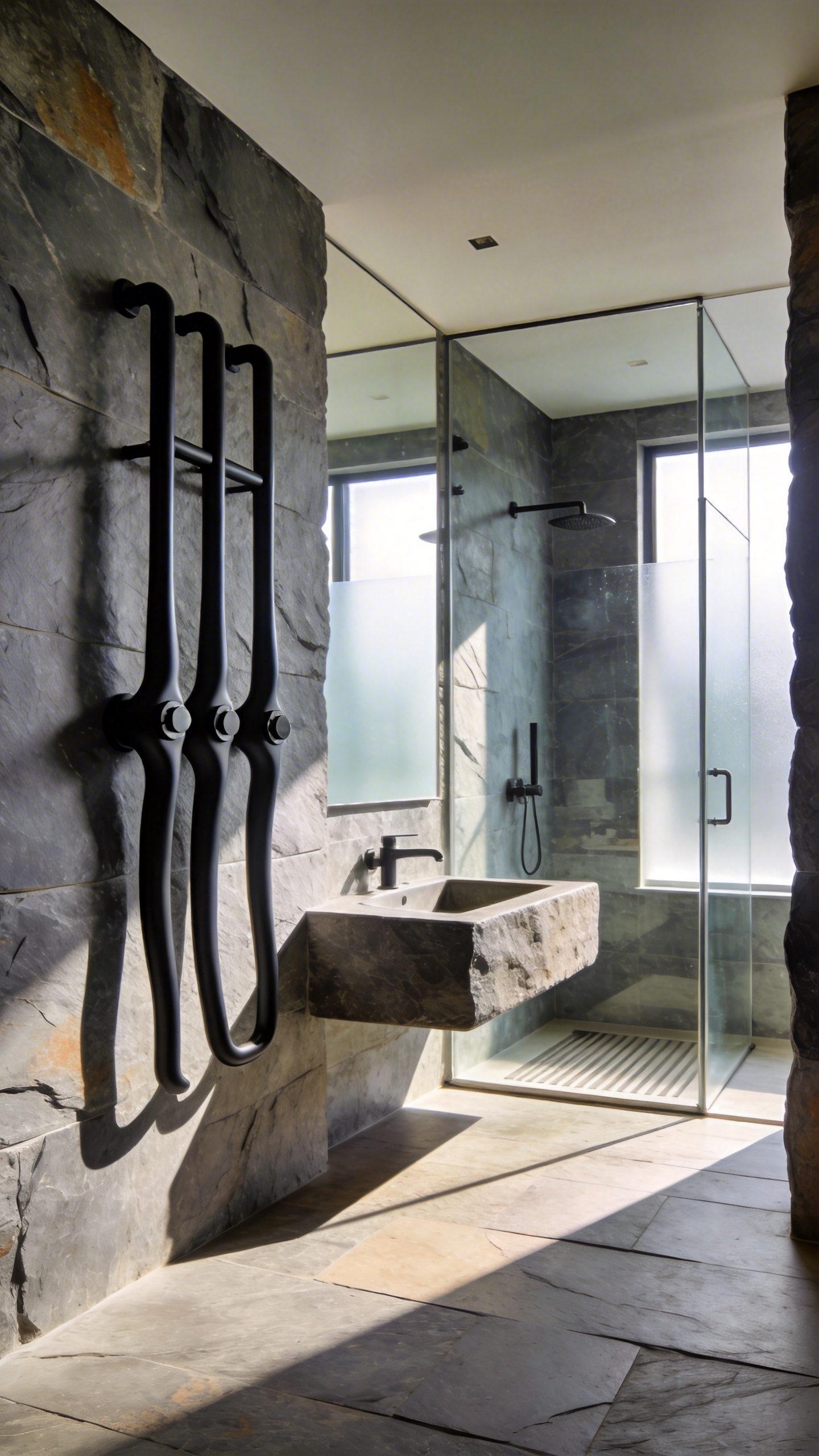
Material science heavily elevates this sensory experience. Therefore, designers use warm teak wood and scratch-resistant PVD finishes. Instead of harsh knurling, elegant fluted shafts provide excellent grip. Indeed, these specific textures echo a room’s decorative molding effortlessly.
However, a design debate exists regarding visual contrast for safety. People with visual impairments need support bars that stand out. To solve this, experts use clever material and sheen contrast. A matte black bar pops against dark slate, for instance. Visually, this subtle difference creates an intuitive guide for users.
True beauty always requires rigorous structural support underneath. Indeed, hidden pre-wall wood blocking handles intense lateral forces easily. Delicate-looking bars safely support over 250 pounds thanks to this hidden strength. Therefore, this inclusive luxury provides daily dignity and timeless style.
3. The Future-Proof Blueprint: Designing for Evolution Without Sacrificing Style
Designing a bathroom for a lifetime requires hidden, adaptable infrastructure. Specifically, we must focus on the invisible blueprint behind your walls. Installing universal rough-in valves allows endless stylistic updates. Therefore, you can easily swap a chrome handle for a digital interface later. You will never need to break a single beautiful tile.
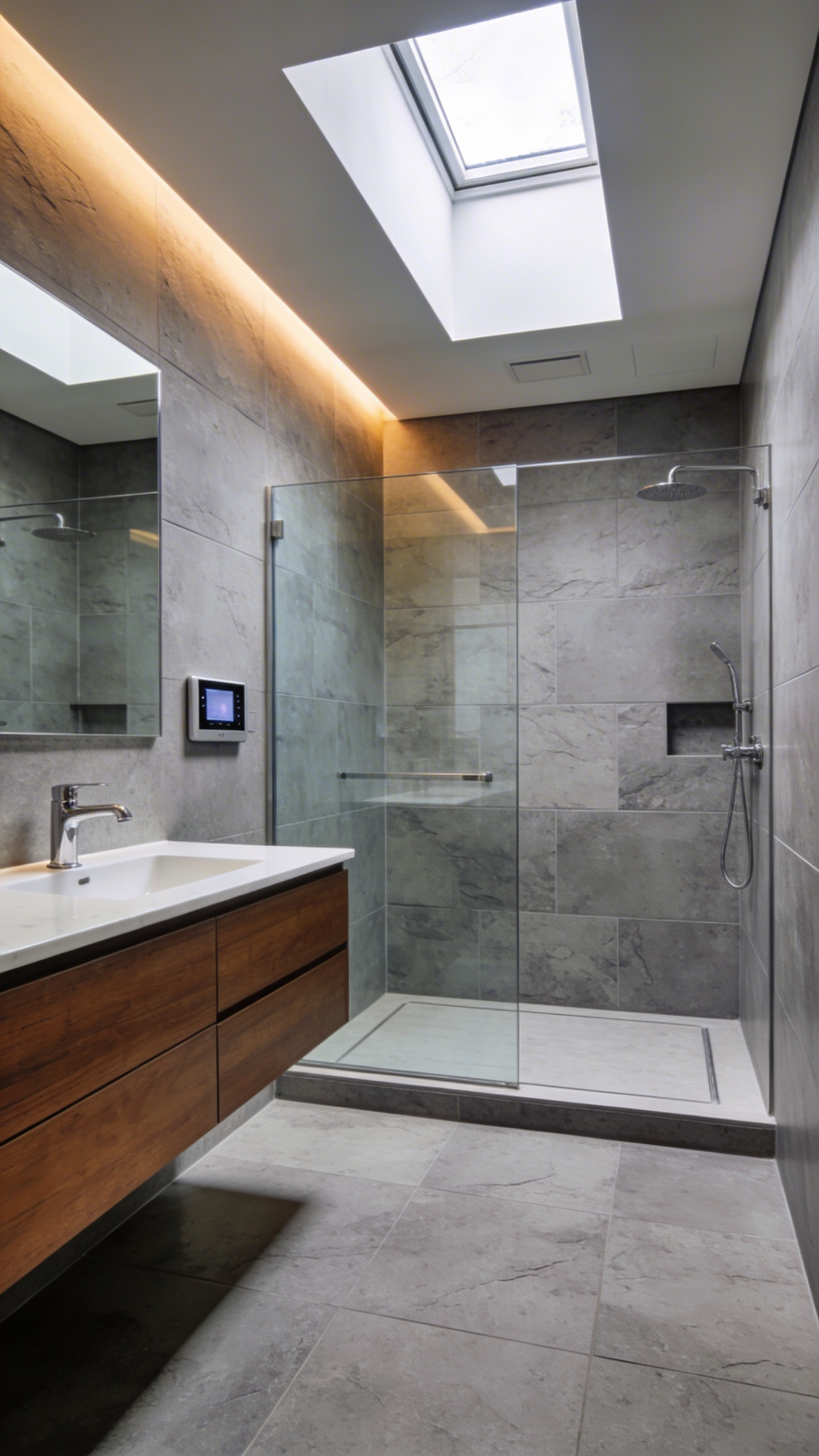
Universal design has evolved far beyond clinical plastic grab bars. Instead, inclusive luxury embraces the seamless curbless aesthetic. By utilizing linear drains, we completely eliminate physical trip hazards. This continuous floor plane makes small bathrooms feel like sprawling spas. In fact, modern waterproofing membranes turn the entire room into a safe wet zone.
Next, true future-proofing relies on quiet smart-home integration. Invisible AI leak detectors protect your elegant vanity from hidden water damage. Adding concealed electrical outlets now prepares your space for health-monitoring smart toilets.
Lighting also plays a massive role in accessible design. Specifically, circadian LED systems automatically adjust color temperatures to protect your natural sleep cycle. Hidden LED strips under floating vanities provide stylish, essential wayfinding light for night visits.
Material alchemy ensures your beautiful design truly lasts. Enameled cast iron tubs offer incredible heat retention and decades of durability. Likewise, large-format porcelain slabs dramatically reduce scrubbing by minimizing messy grout lines. Indeed, these hidden technical choices guarantee your space evolves gracefully over time.
4. Multi-Generational Flow: Zoning the Bathroom for Diverse Daily Rituals
Historically, bathing was a highly communal and social activity. Today, standard bathroom layouts often create frustrating daily bottlenecks. Therefore, modern universal design borrows heavily from Japanese tri-zone layouts. Specifically, the footprint is deliberately divided.

A dry dressing zone allows one family member to undress smoothly. Meanwhile, an open wash zone efficiently handles morning grooming rituals. A waterproof wet room contains the deep soaking tub.
Acoustic zoning is also absolutely essential. Solid-core doors with drop-seals block disruptive midnight shower noise completely. Soft cork flooring absorbs sound while preventing dangerous slips.
Next, tactile hierarchies seamlessly guide diverse cognitive stages. Textured heavy-duty towel bars function as stylish grab bars. Likewise, dark vanities visually stand out against bright white walls.
Motion-activated amber lighting illuminates the floor safely. This warm glow prevents sleep cycle disruption during the night. Split-level vanities deeply support caregivers and seated wheelchair users.
Lowered sinks with open knee-space provide essential rolling access. Electronic washlets beautifully preserve elderly independence and daily dignity. Together, these thoughtful elements create an inclusive family sanctuary. Indeed, the resulting layout feels effortlessly natural rather than purely clinical.
II. Materiality and Tactile Sophistication (Material Exploration)
In the modern bathroom, material choices deeply impact accessibility and user experience. Specifically, authentic Tadelakt plaster offers a seamless and universally friendly wall finish. Craftsmen rub the wet lime plaster with a smooth river stone and olive oil soap. This creates a warm, grout-free surface that naturally resists mold.
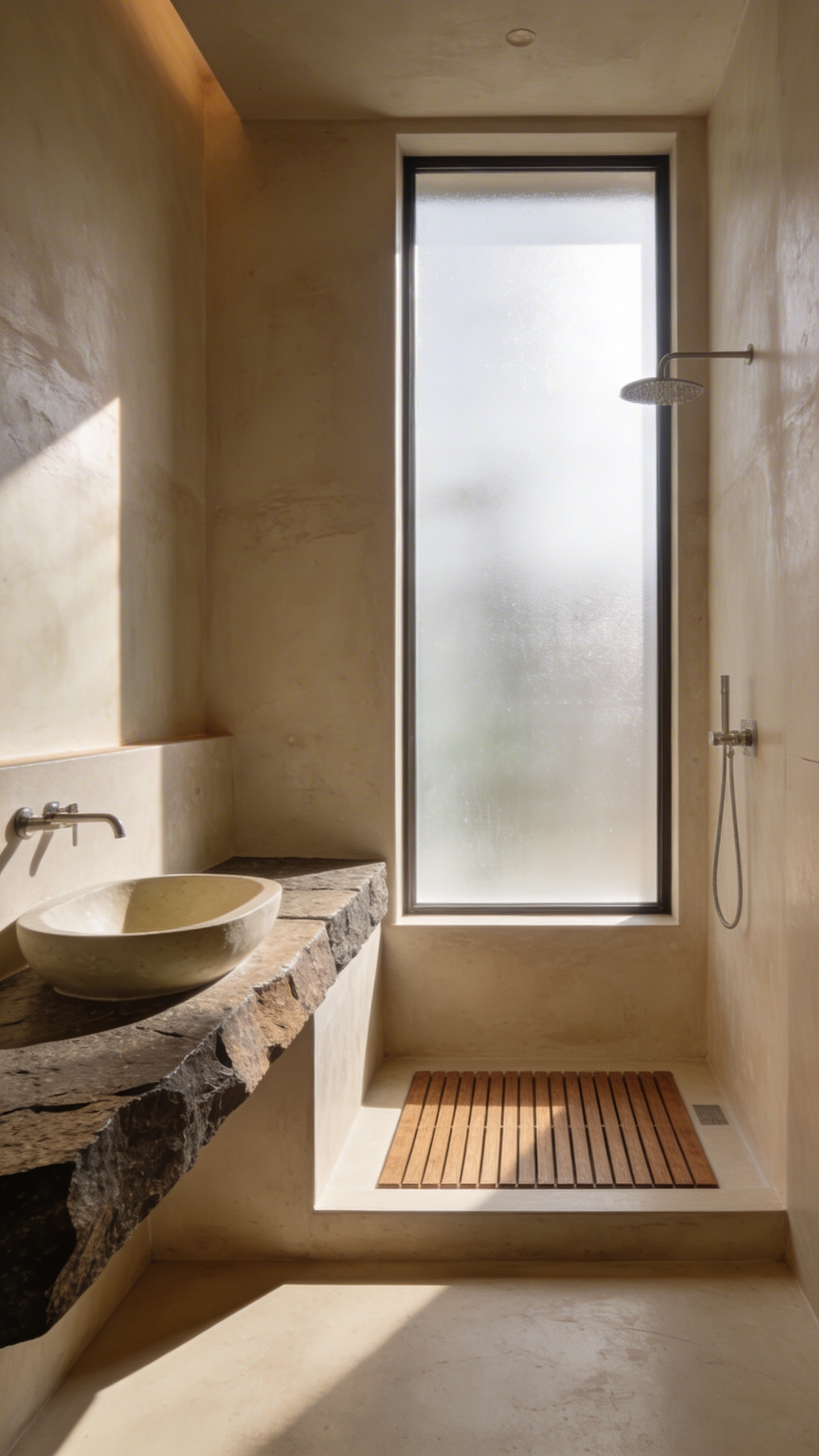
Monotonous material choices can unfortunately make spaces feel clinical or visually confusing. Therefore, layering rough and refined textures adds vital psychological depth and sensory cues. Pairing a fluted stone vanity with soft cork flooring dampens harsh acoustics. In fact, cork provides a slip-resistant, forgiving surface ideal for aging-in-place designs.
Meanwhile, hardware designers are introducing knurled metals and antimicrobial copper finishes. These textured handles provide better grip for users while remaining incredibly luxurious. Brands like Victoria + Albert use Volcanic Limestone for its thermal efficiency. This stone composite retains heat longer to soothe aching joints.
High-end natural materials do require mindful maintenance to preserve their beauty. Homeowners must use pH-neutral cleaners instead of harsh bleaches. Indeed, prioritizing tactile sophistication creates a beautifully accessible sanctuary for all ages.
5. High-Friction Luxury: Specifying Matte Large-Format Tiles for Seamless Slip Resistance
Traditionally, slip resistance in bathrooms required a harsh, gritty texture. Today, luxury design embraces modern micro-crystallization technology instead. Specifically, these advanced firing cycles create a velvety, matte surface. The tiles feel incredibly soft to a dry hand.
However, they provide immediate, high-friction grip when wet. In fact, luxury specifications demand a dynamic coefficient of friction of 0.60 or higher. This high rating safely supports curbless, accessible shower entries.
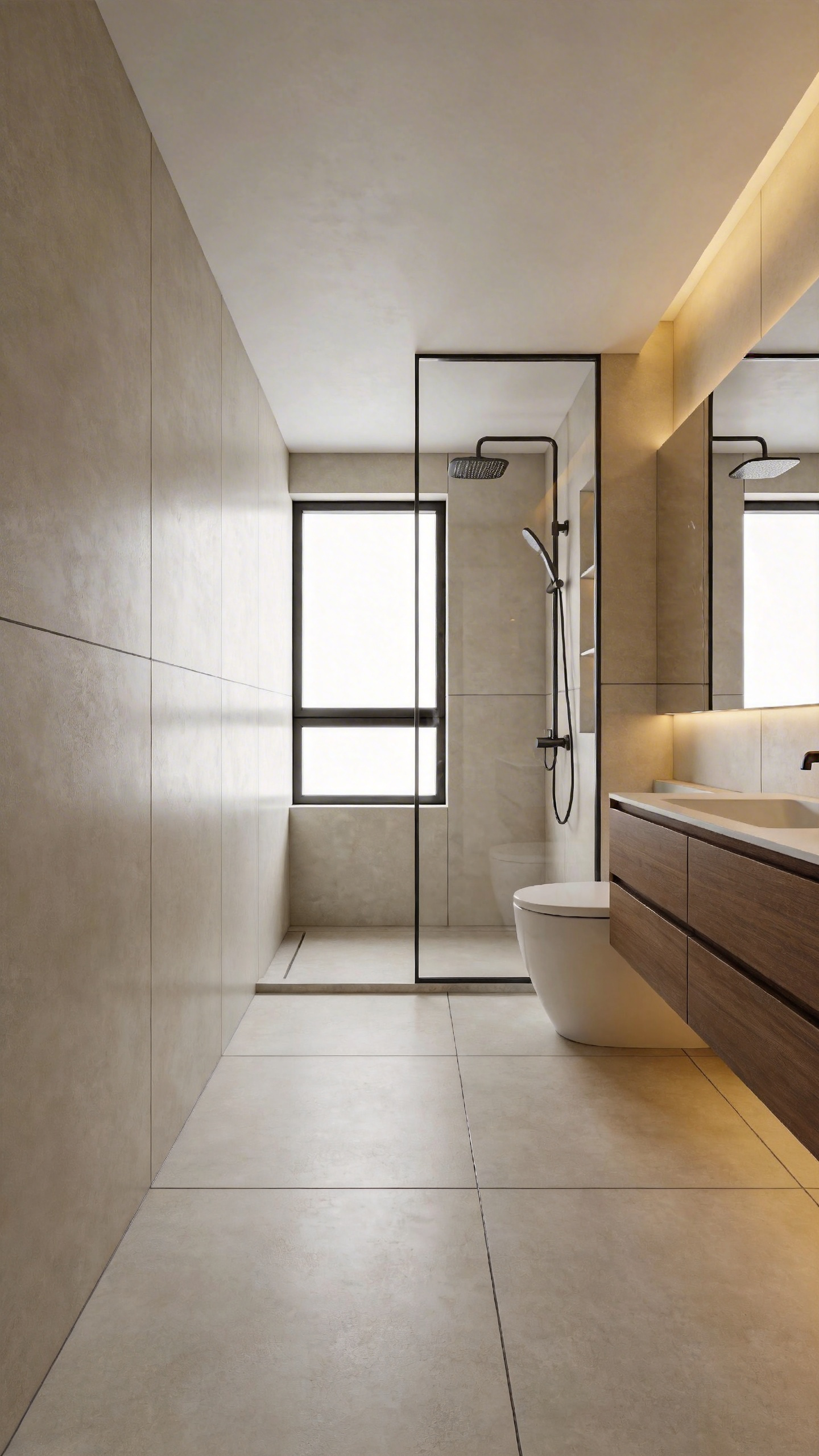
Continuous compaction engineering now allows for massive slab sizes. These large-format tiles feature perfectly straight, rectified edges. Installers can easily achieve tiny 1/16-inch grout lines. Naturally, using matching epoxy grout creates a flawless, monolithic appearance.
Previously, designers relied on small mosaic grids for shower floor grip. Now, you can pair a single-direction slope with a linear drain. This completely eliminates the need for diagonal envelope cuts. The seamless visual flow across the floor remains completely uninterrupted.
Next, large slabs reduce porous grout lines by ninety percent. The bathroom becomes incredibly hygienic and easy to maintain. This dramatic reduction in grid lines also creates visual silence. Indeed, high-friction luxury perfectly balances universal accessibility with stunning design.
6. Thermal Comfort: Radiant Heated Flooring as a Fundamental Wellness Feature
Radiant heated flooring is no longer just a luxury upgrade. Instead, it is a foundational wellness feature for modern bathrooms. Specifically, this technology physically transforms your physiological state. Stepping onto cold tile triggers a sudden stress response. Conversely, consistent floor warmth activates your parasympathetic nervous system. Therefore, this encourages a calming and deeply restorative mood.
Radiant heat directly supports healthy human sleep cycles. Warming your feet triggers a biological process called vasodilation. Your body then releases heat to lower its core temperature. As a result, your brain naturally begins to produce melatonin. Therefore, your bathroom becomes a highly effective pre-sleep sanctuary.
Traditional forced-air systems often leave feet cold while overheating rooms. However, radiant systems flip this thermal dynamic entirely. They rely on the “feet-warm, head-cool” principle of human comfort. In fact, this mirrors our evolutionary preference for comfortable thermal environments. Indeed, the system warms surfaces directly using gentle infrared energy.
The complete lack of blowing air greatly improves indoor air quality. Airborne dust and common allergens are not circulated around. This creates a significantly safer breathing environment for all ages. Finally, heated floors dry quickly to prevent harmful mold growth. Indeed, this invisible luxury makes spaces universally accessible and soothing.
7. Contrast for Clarity: Using Deep Color Theory to Subtly Define Spatial Boundaries
Traditional bathroom design often relies on bright white to visually expand small rooms. However, deep color theory reveals this as a fallacy of flatness. Specifically, utilizing hues with a low Light Reflectance Value triggers a receding wall effect.
Wrapping a shower alcove in deep, matte charcoal absorbs bouncing light. The eye simply cannot easily locate the dark corner joins. Therefore, this creates a visual depth that implies the space continues outward. This strategy defines zones without relying on physical obstructions. It creates a fully accessible, barrier-free sanctuary.
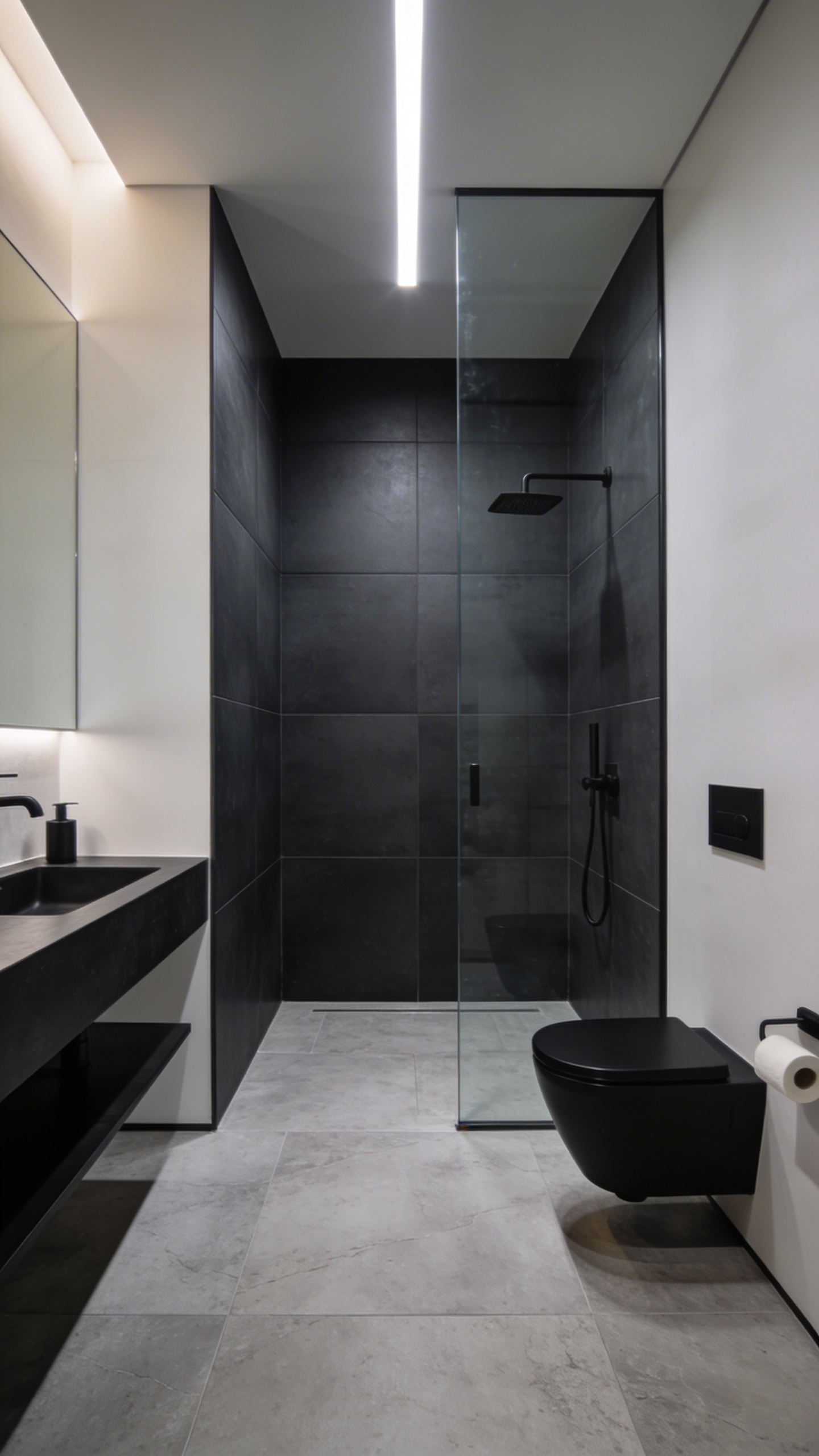
Historically, Victorian architecture used deep colors to create a visual datum line. Applying a dark wainscot grounded heavy porcelain fixtures effectively. Today, modern high-contrast clarity establishes clear wet and dry zones. In fact, pairing a dark floor with a light wall creates crucial spatial anchors.
This dark border locks the lighter grooming area securely into place. The brain instinctively understands exactly where the circulation zone ends. Installing a dark matte slate tile also introduces a haptic boundary. Essentially, texture provides a soft, tactile stop for the wandering eye.
Meanwhile, borrowing the Chiaroscuro painting technique guides essential sensory transitions. Moving from a bright vanity to a dark bathing nook cues physical relaxation. Simply put, deep color acts as an invisible architectural wall. Indeed, this transforms a functional room into an intuitively navigated experience for everyone.
8. Sensory-Friendly Finishes: Minimizing Glare with Honed Stones and Brushed Metals
Modern bathroom design is shifting toward sensory comfort over shine. Polished surfaces bounce light directly into our eyes. This creates harsh mirror effects and visual fatigue. Conversely, honed stones and brushed metals provide diffuse reflection. These microscopically rough materials scatter light beautifully in all directions.
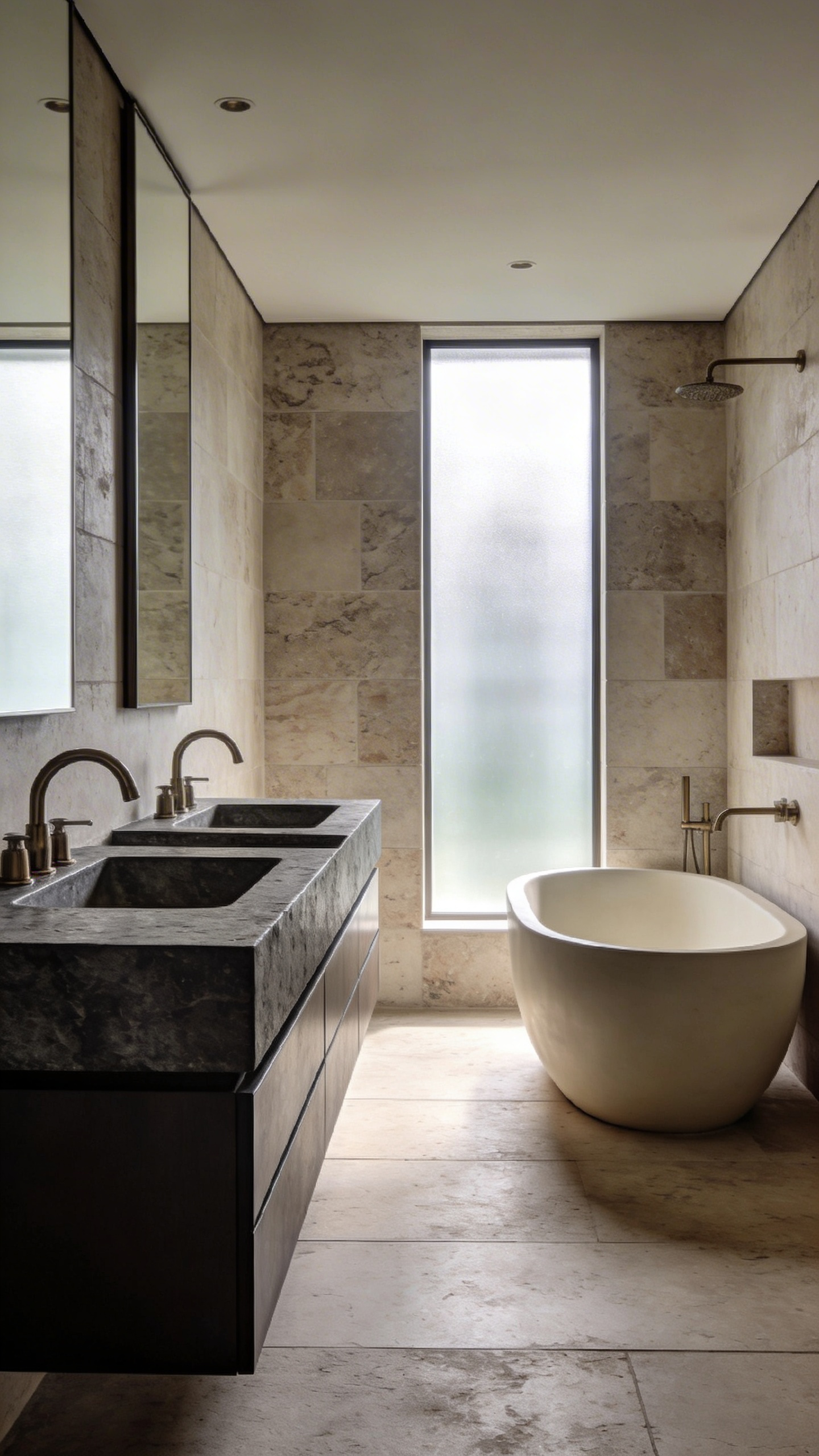
This soft glow is crucial for sensory-friendly spaces. Bright glare often acts as a severe sensory stressor. Flickering reflections can easily trigger anxiety or hyper-vigilance. Therefore, matte finishes offer predictable visual cues and physical safety. A glossy floor can frequently look like a slippery puddle. Alternatively, honed flooring clearly defines where the ground actually begins.
Beyond visuals, these finishes deeply enhance physical touch and comfort. Brushed metals feel much warmer than cold, polished chrome. Similarly, honed marble offers a comforting, velvety texture underfoot.
Designers pair these quiet materials together very carefully during planning. Typically, they match the reflectance values of stones and fixtures. This prevents high-contrast visual jumps that overstimulate the brain. Indeed, managed shine creates a truly restful, universally accessible sanctuary.
III. Spatial Application and Ergonomic Brilliance (Spatial Application)
Modern bathroom design has evolved into a high-performance engine for human well-being. Specifically, we must merge human measurements with the psychology of space. Therefore, ergonomic brilliance starts with rescaling for the modern body.
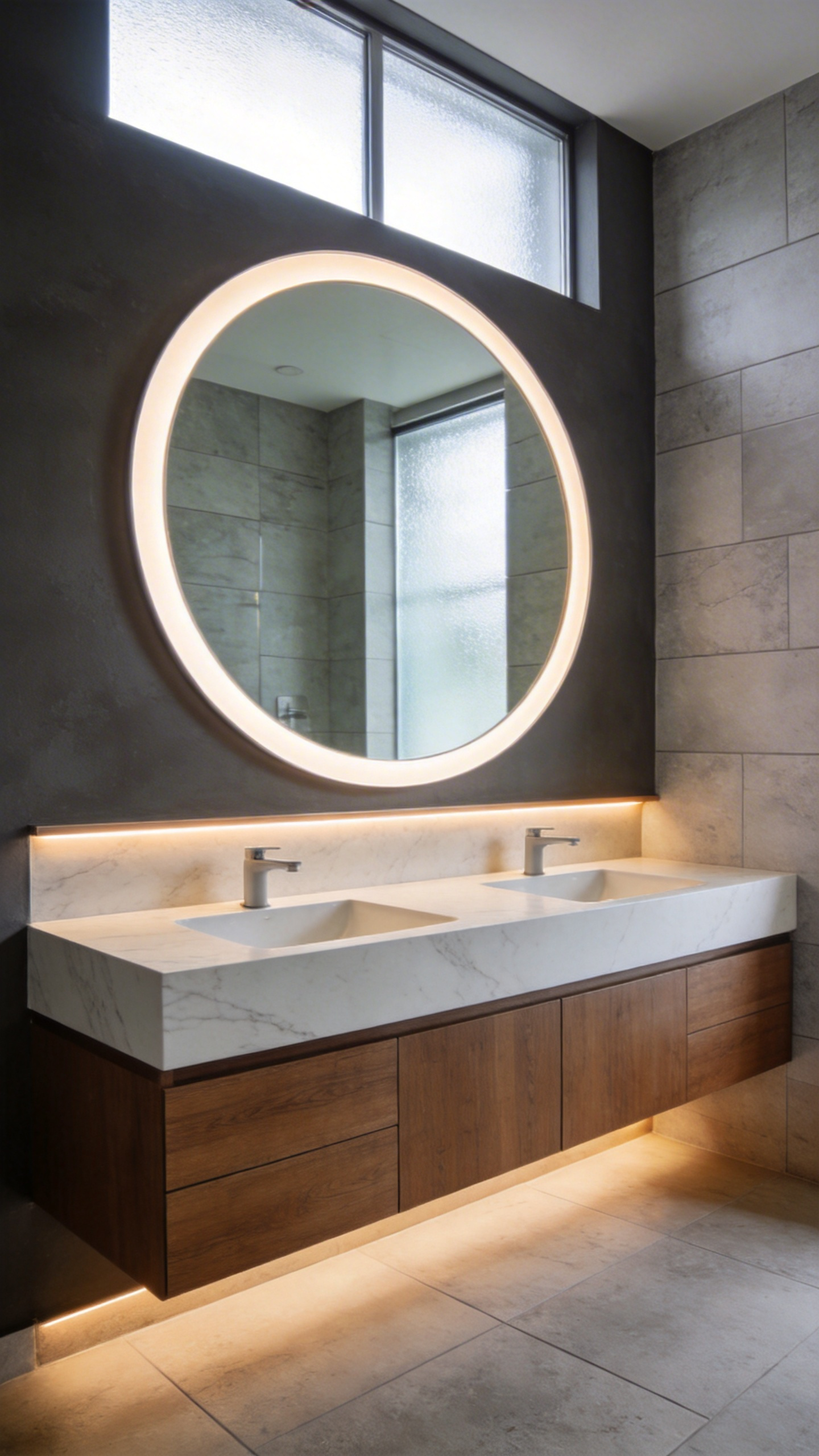
Standard vanity heights have shifted to a comfortable 36 inches. This simple change drastically reduces lower back strain. Clearing 18 to 24 inches of countertop also prevents a claustrophobic feeling. In fact, universal design relies heavily on how our brains perceive space.
Naturally, sharp angles in tight rooms can trigger subtle stress responses. Instead, we favor soft geometry like curved vanities and pill-shaped mirrors. Indeed, these organic shapes reduce cognitive load and create a safe environment.
Beyond visuals, true accessibility requires thoughtful sensory engineering. Hard surfaces often create overstimulating echo chambers. Sound-dampening insulation easily isolates the noise of rushing water. Tactile feedback is equally crucial for users of all ages.
Notably, grab bars with knurled textures offer superior grip without sacrificing style. Placing towel warmers within a 30-inch reach prevents physical temperature shock.
Meanwhile, spatial flow improves greatly through intentional sequential zoning. A well-designed bathroom should act as a journey. First, position high-energy vanity tasks near the room entrance. Next, place low-energy soaking tubs deeper into the space.
By doing this, users experience a psychological winding down. Maximizing limited volume is easily achieved by installing wall-hung floating fixtures. The exposed floor line makes the entire room feel much larger.
9. The Floating Vanity: Maximizing Foot Clearance and Visual Space Simultaneously
A floating vanity fundamentally changes how we perceive bathroom dimensions. Specifically, it relies on the continuous floor effect. By exposing the floor underneath, the eye registers a larger room. This intentional negative space creates a luxurious, calming atmosphere.
The functional benefits of this design are immense. Traditional cabinets rely on a tiny, restrictive toe-kick. Conversely, a wall-hung design offers total foot and knee clearance. Therefore, users can stand much closer without awkward leaning. This natural posture reduces lower back strain during daily grooming.
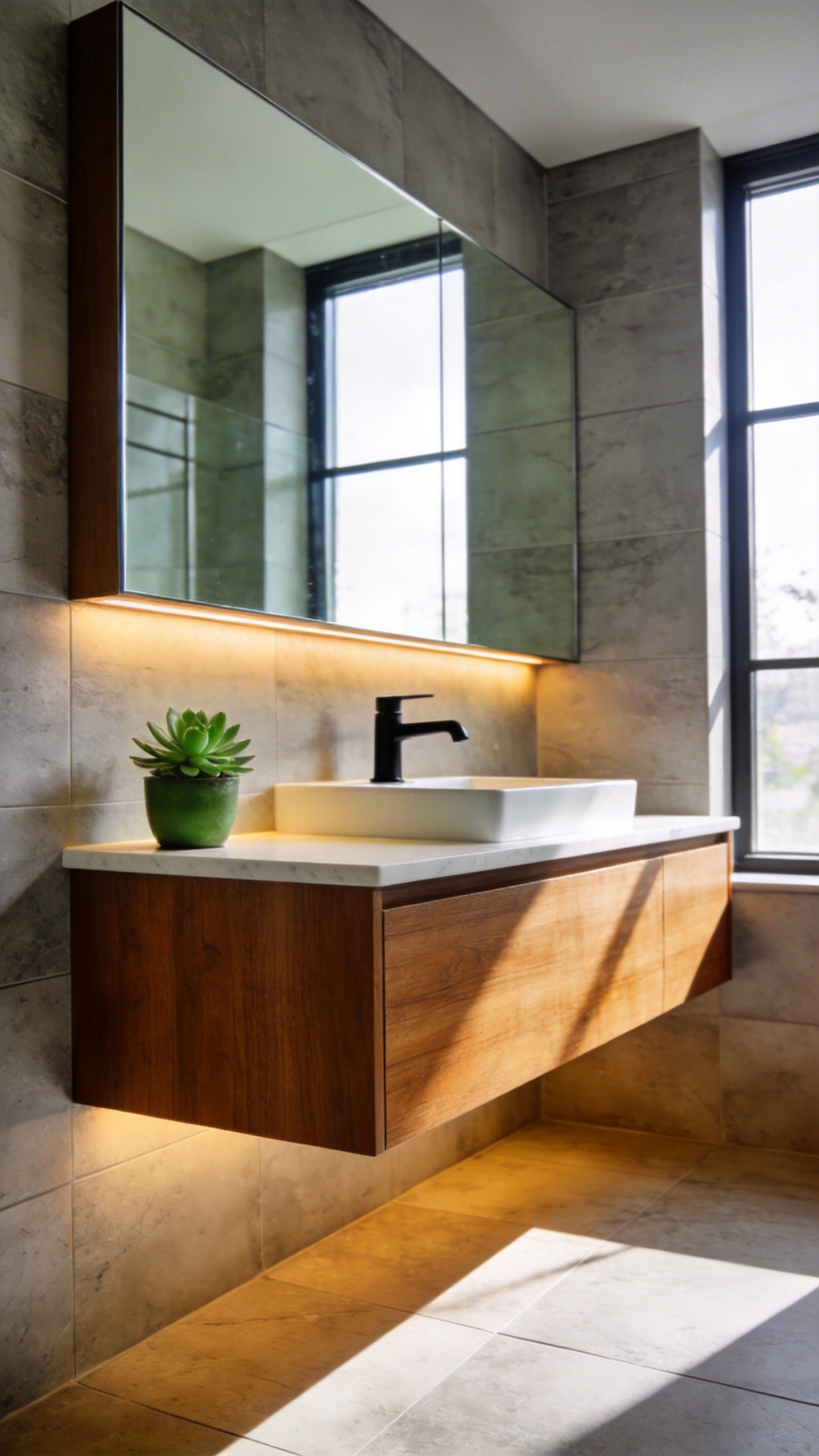
This clearance perfectly embodies universal design principles. ADA guidelines require specific knee space for wheelchair users. Naturally, a floating base satisfies these rules flawlessly. Wheelchair users gain full accessibility without feeling institutionalized.
Instead, the room retains a highly curated aesthetic. The structural mounting height is completely customizable as well. Builders can easily adjust it for tall adults or children.
Next, the open void beneath allows for creative modern enhancements. Designers often install soft, motion-activated LED strips here. This under-cabinet glow enhances the sensory experience. Finally, the elevated design keeps the floor perfectly clear. Robot vacuums can easily glide underneath to maintain pristine hygiene.
10. Zero-Threshold Transition Zones: Eliminating Curbs for Effortless Navigation
Zero-threshold transition zones fundamentally change how we experience a bathroom. Specifically, eliminating the shower curb creates a seamless, open-concept sanctuary. Historically, these curbless designs were viewed merely as institutional necessities. Today, however, they represent the pinnacle of modern luxury.
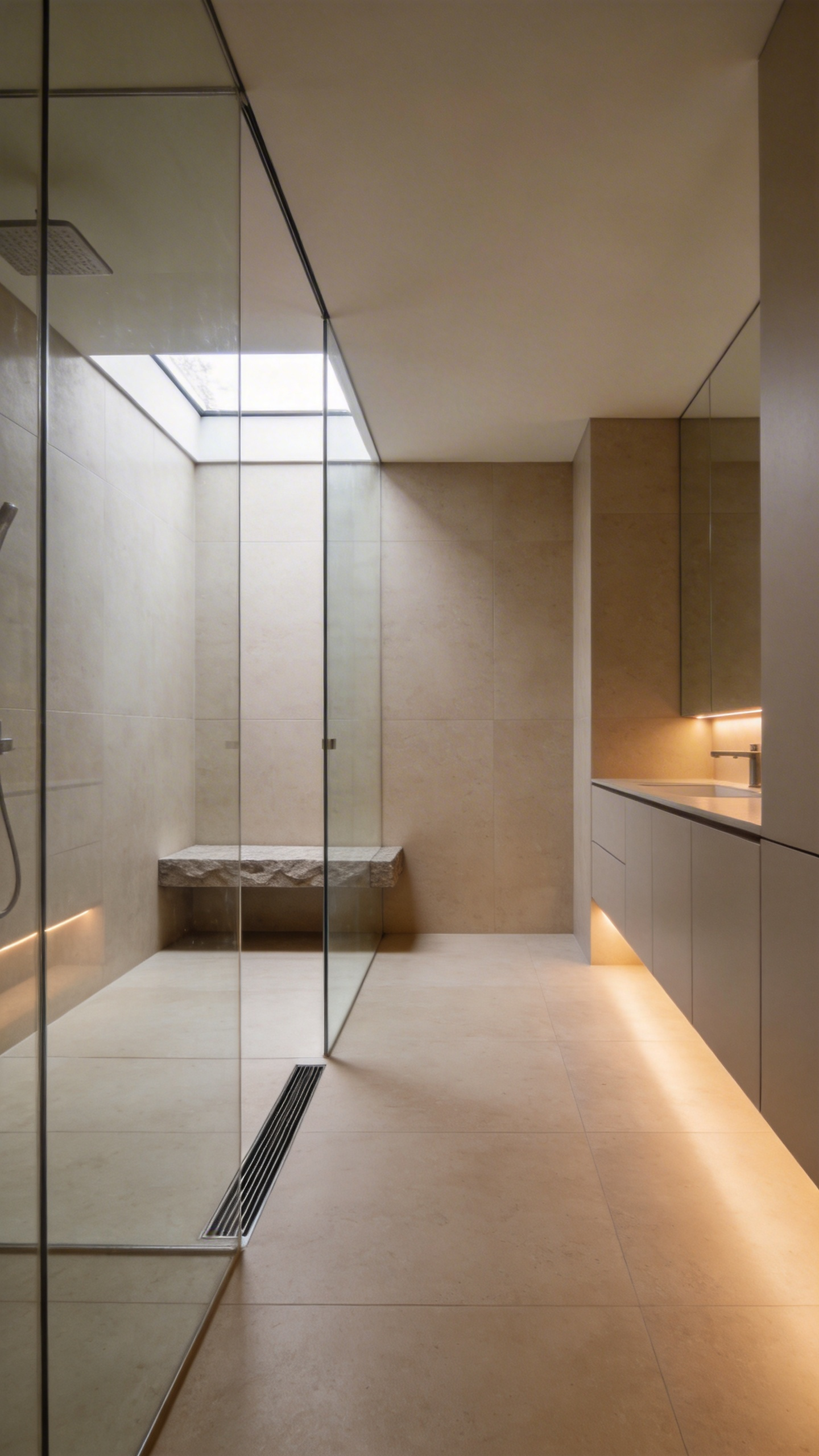
This layout removes trip hazards for users of all ages. Visually, a continuous floor dramatically elongates a small space. Running large-format stone tiles straight into the shower tricks the eye. The brain simply perceives the room as much larger than it actually is.
Instead of stepping over a harsh barrier, inhabitants simply stroll in. Indeed, this evokes a calming, spa-like wet room ethos.
Structurally, achieving this invisible transition requires careful subfloor surgery. Contractors must drop the wooden subfloor to keep the shower flush. Linear drains are strictly essential for this modern application. These trench drains allow for a simple, single-directional slope. Therefore, beautiful and uninterrupted tile patterns effortlessly flow across the room.
Tactile safety is also a vital component of universal design. Fortunately, invisible NanoGrip finishes provide incredible traction without compromising aesthetics. Proper waterproofing guarantees long-term success for these spaces. Hidden capillary breaks at the threshold prevent water from wicking outward. Therefore, designers often recommend fully tanking the entire bathroom floor.
11. Dynamic Vanity Mirrors: Accommodating Multiple Vantage Points and Seated Heights
Historically, bathroom mirrors sat at a fixed height. This one-size-fits-all approach forced users to hunch over countertops. Today, universal design principles have completely flipped the script. Specifically, dynamic vanity mirrors now act as active participants in the room.

These innovative systems beautifully prioritize the user’s posture and position. Motorized tracks allow mirrors to glide smoothly down to a seated level. Wireless-controlled motors can easily tilt the glass up to 28 degrees. Therefore, a person can transition from a standing shave to a seated routine seamlessly.
This creates a comfortable vantage point without ever losing the reflection. These innovations echo the broader trend of seeking transformative bathroom mirror ideas. Such mirrors serve as both artistic focal points and functional tools.
These smooth movements rely on clever conductive hinge technology. Essentially, low-voltage electricity travels directly through the rotating hinges themselves. Messy wires stay completely hidden behind a sleek, minimalist aesthetic.
Accommodating multiple heights also requires highly adaptable smart lighting. Traditional overhead lights create harsh shadows when a user sits down. Instead, dynamic mirrors solve this issue with built-in perimeter LED strips.
Because the light moves with the glass, it always remains precisely at eye level. A high color rendering index ensures skin tones look beautifully natural at any distance. Indeed, this dynamic approach revives the slow, seated ritual of the traditional dressing table. By bringing the mirror directly to you, the space becomes an accessible sanctuary for everyone.
12. The Ergonomic Soaking Tub: Integrating Seamless Transfer Decks
Traditional aging-in-place design often feels distinctly clinical and institutional. Instead, modern ergonomic soaking tubs champion a philosophy of inclusive luxury. Specifically, these fixtures integrate a gorgeous seamless transfer deck.
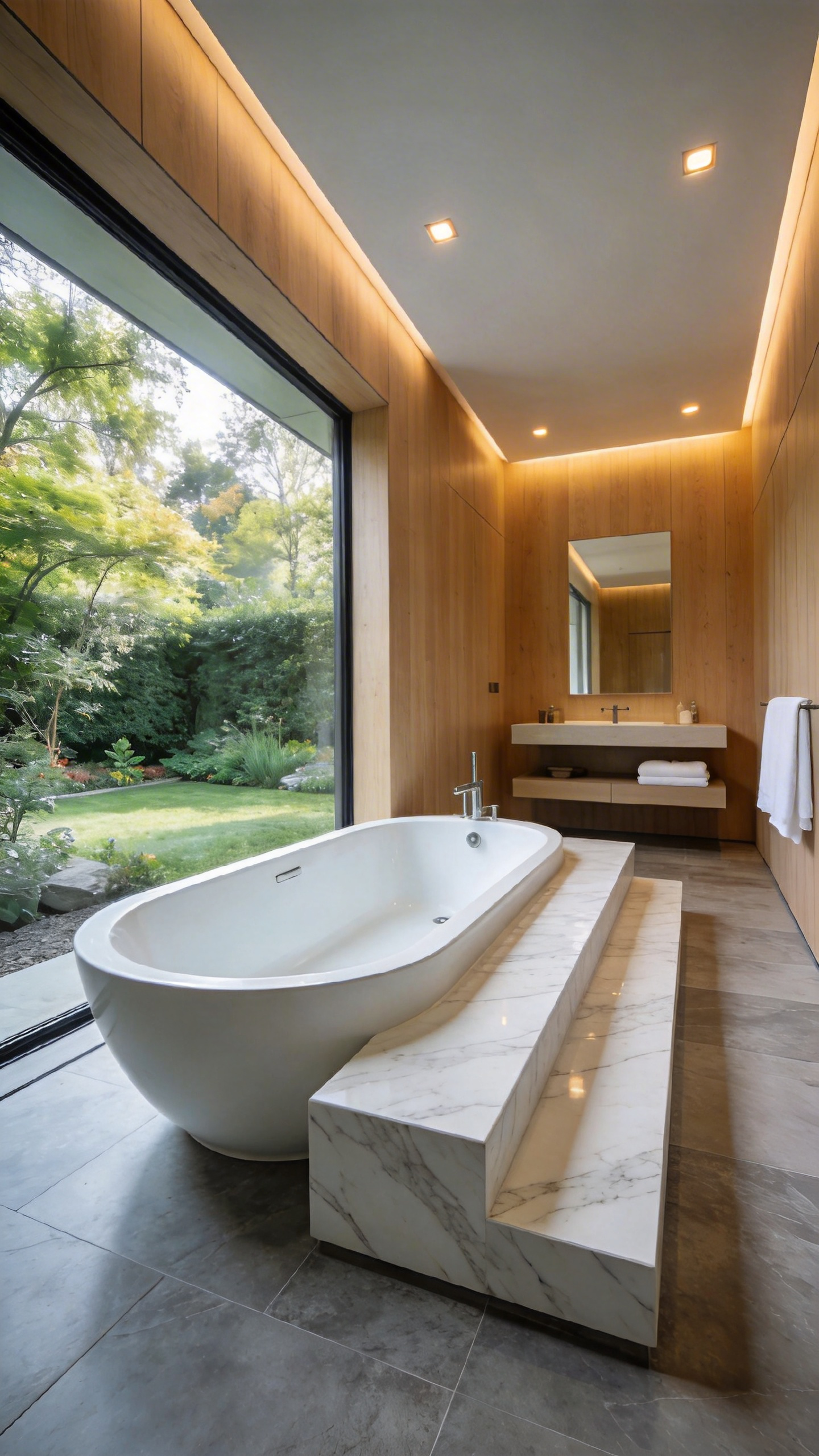
This architectural centerpiece serves a vital psychological purpose. Stepping over a 30-inch tub wall feels highly precarious. Therefore, the wide deck eliminates this dangerous one-legged balance act. Bathers simply sit down on the 18-inch extended stone rim. Next, they gracefully swing their legs over the stable edge. Finally, they lower themselves smoothly into the warm, inviting water.
Beyond safety, this transition zone offers unmatched sensory comfort. Designers utilize high-end fixtures made of solid surface resin or natural stone. Expert installers join these heavy slabs using color-matched two-part epoxy. Then, they carefully polish the invisible seam to absolute perfection.
Traditional acrylic tubs frequently feel cold and sharply plastic. Solid surface materials provide essential thermal warmth against human skin instead.
These ergonomic tubs draw inspiration from traditional Japanese ofuros. They smartly prioritize chest-deep immersion over standard horizontal lounging. Inside, a sculpted molded seat provides incredibly comfortable lumbar support. Bathers can rise effortlessly from the generous 24-inch water depth.
The transfer deck frequently flows into a continuous shower bench. This unified wet-room ribbon cleverly eliminates tight, hard-to-clean bathroom corners. Nearby linear drains whisk splashed water away immediately. Indeed, this stylish architectural integration perfectly suits a forever home. It beautifully disguises universal accessibility features as high-end custom luxury.
13. Lever-Driven Hardware: Prioritizing Effortless Operation in Premium Fixture Selection
In premium bathroom design, lever-driven hardware defines inclusive luxury. Specifically, it has transitioned from a basic accessibility requirement to a sophisticated standard. Historically, the modern lever was born from physical pain. In fact, Al Moen invented the single-handle faucet after burning his hands in 1937. Today, this human-centric design feels less like a tool and more like a precision instrument.
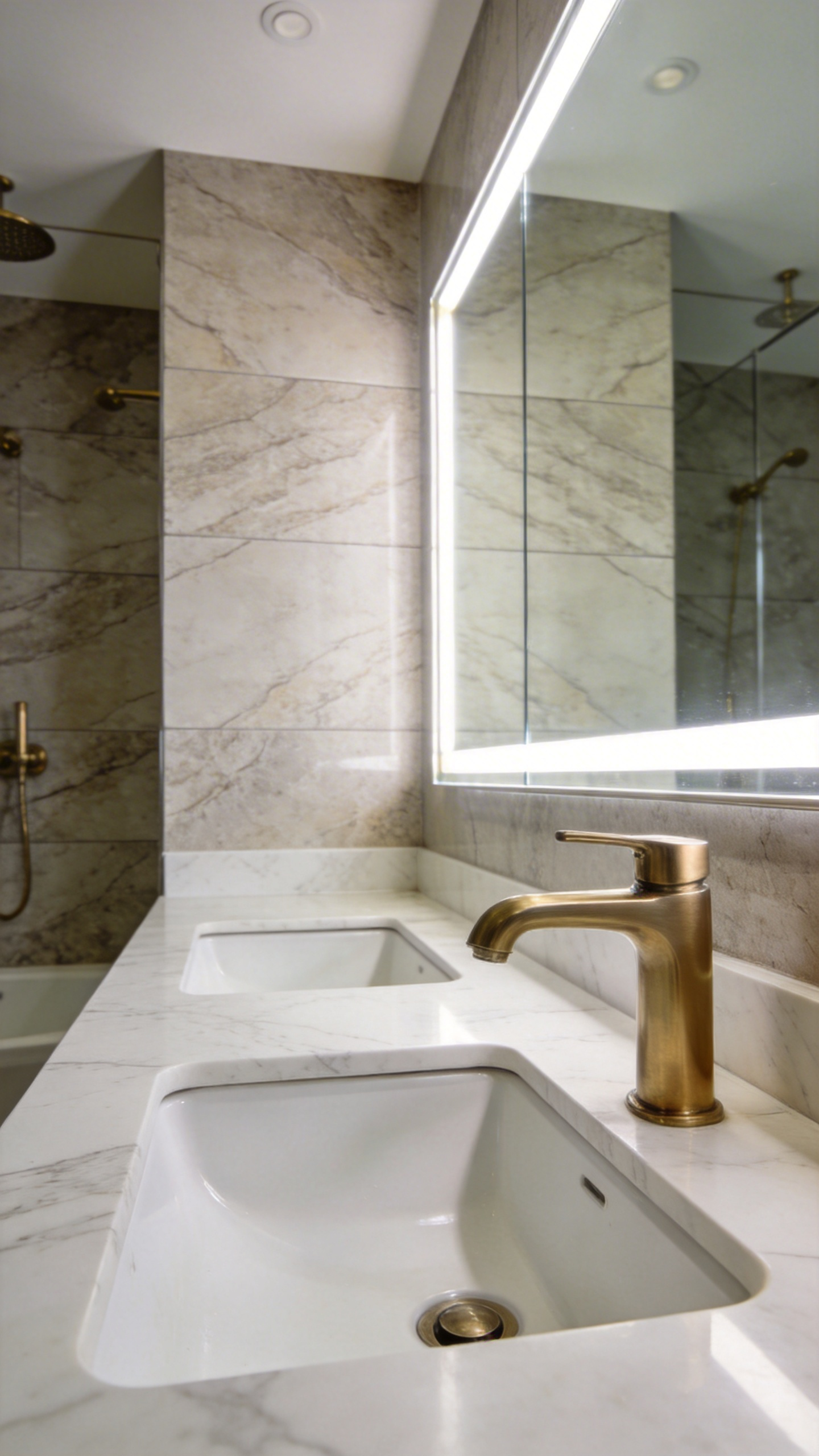
This effortless feel is powered by advanced ceramic disc technology. Ultra-hard, diamond-polished discs create a virtually frictionless experience inside the fixture. Luxury plumbing experts often compare this silky glide to power steering. A premium lever offers perfect linear resistance instead of a stiff mechanism. The sensory experience of this hardware is truly paramount.
Premium levers are typically machined from solid, lead-free brass. Therefore, they provide a distinct, weighted heft that signifies generational quality. This smooth operation remains whisper-quiet thanks to precise acoustic engineering. Indeed, universal design means that no one should ever struggle with a fixture.
Whether you are an aging adult or have soapy hands, levers remain superior. Modern levers also incorporate high-fashion elements like knurled textures and matte finishes. Therefore, the most accessible choice is also the most aesthetically coveted option today.
IV. Lifestyle Integration and Enduring Wellness (Lifestyle Integration)
Modern bathrooms are becoming sophisticated hubs for enduring wellness. Specifically, true lifestyle integration means designing a forever home. Therefore, accessibility must become entirely invisible.
Instead of clinical grab bars, we use multi-functional hardware. Heavy-duty towel bars easily support heavy weight. Curbless showers also offer architectural elegance and essential safety. Using high-friction porcelain tiles ensures the floor remains entirely safe. High-end vanities now feature removable under-sink cabinetry. This clever detail allows for easy wheelchair clearance later.
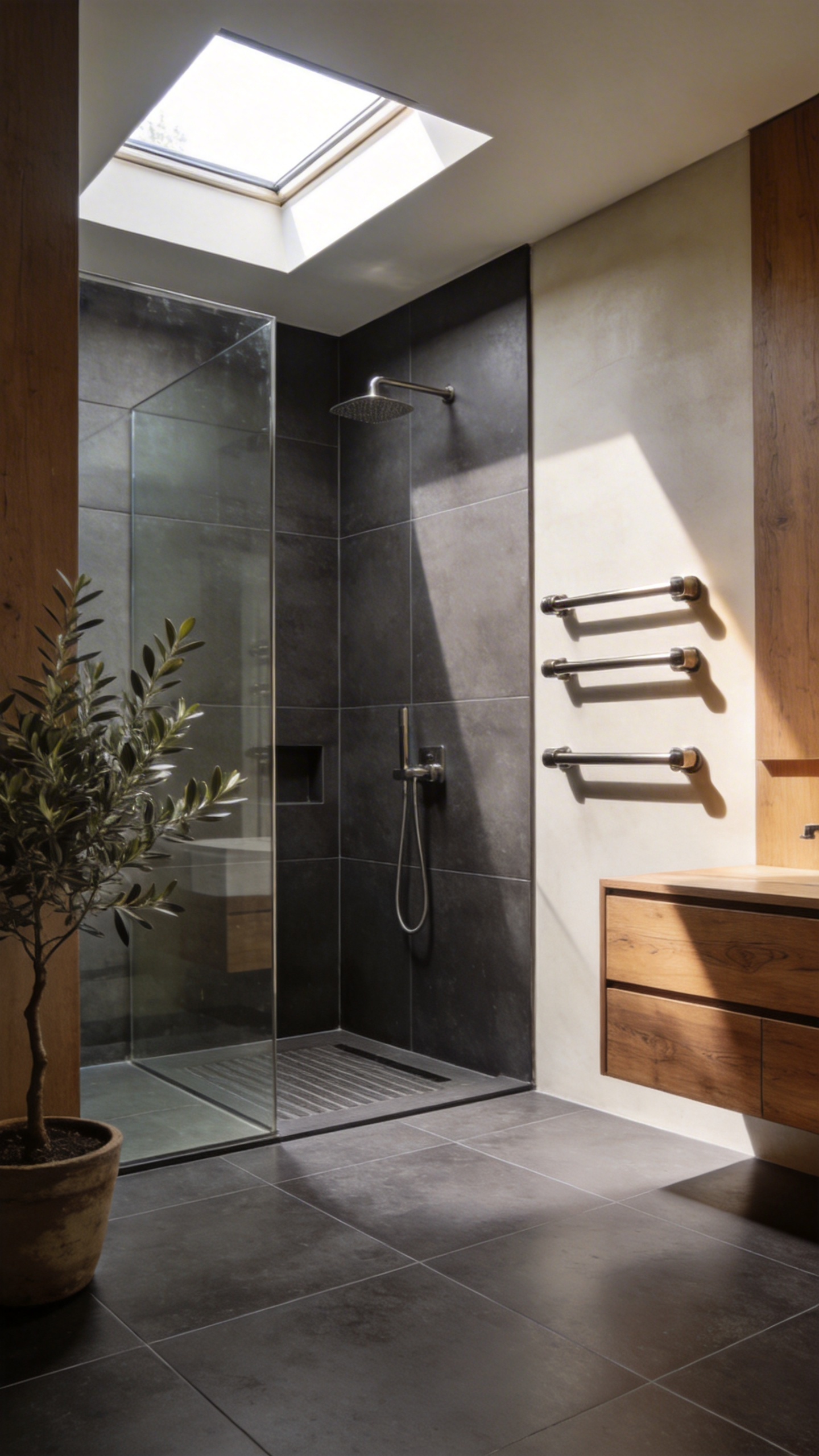
Beyond mobility, wellness integration heavily targets our internal systems. Circadian lighting interfaces directly with our biology. Smart LED systems emit blue-rich light to trigger morning alertness. Conversely, they shift to warm amber to promote evening sleep.
Low-level orientation lighting ensures safe nighttime bathroom visits. This prevents disruptive waking during middle-of-the-night routines. Many homeowners are also creating high-performance recovery suites. Flush-to-floor cold plunges pair beautifully with infrared saunas. Matching the plunge basin stone to the floor creates seamless flow.
Alternatively, deep Japanese Ofuro soaking tubs offer psychological restoration. These aromatic wood tubs prioritize pure submersion over simple washing. Enduring wellness requires a calming sensory environment. Therefore, preserved moss walls act as natural air filters.
Indeed, they actively lower heart rates by providing a nature fix. Sound-dampening materials like waterproof cork quiet the space. Ultimately, these thoughtful universal design choices create a highly restorative sanctuary.
14. Layered Illumination: Task, Ambient, and Wayfinding Lighting for Circadian Support
The bathroom often serves as the home’s circadian anchor. Therefore, lighting must evolve beyond basic visibility. Specifically, layered illumination acts as a sophisticated biological tool.
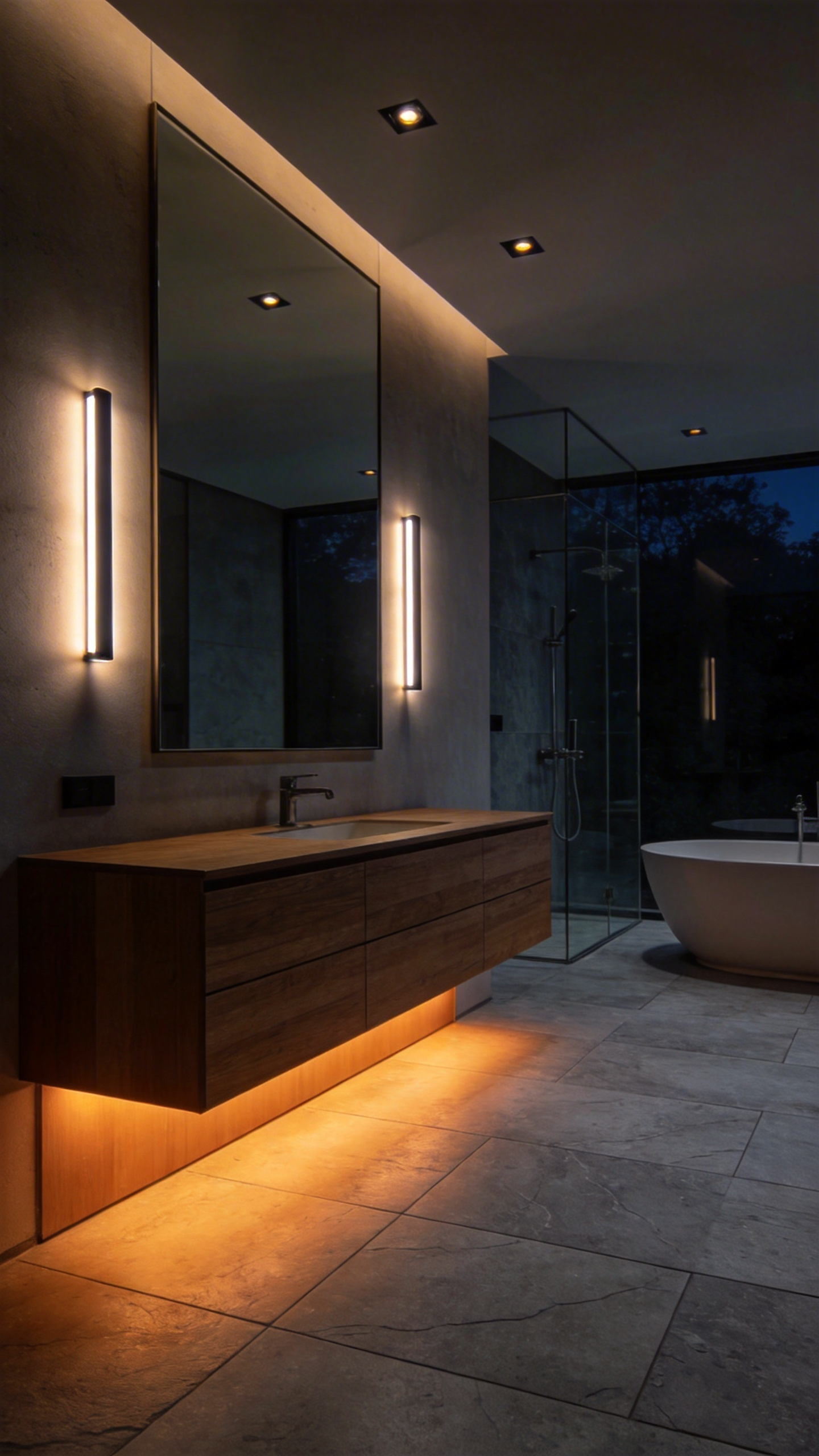
For universal design, nighttime safety is a top priority. However, sudden bright light causes major visual shock. High-intensity overheads can instantly suppress melatonin production. Instead, low-level wayfinding lights provide a safer alternative.
Amber toe-kick LED strips create a floating floor effect. These warm lights prevent harsh retinal glare. Therefore, users can navigate safely while maintaining their deep sleep state.
Conversely, morning routines require crisp, energizing illumination. Specifically, task lighting at the vanity should mimic midday sun. Designers use vertical sconces positioned at eye level. Naturally, this eliminates harsh shadows for accessible grooming. High-quality fixtures accurately render natural skin tones. This prevents the psychological shock of looking unwell.
Meanwhile, the room’s ambient lighting should remain highly dynamic. Smart systems seamlessly shift color temperatures all day. In the morning, ambient layers feel like a cool breeze. Later, evening light transitions into a warm, comforting hug.
The physical materials in the room also matter. Specifically, matte-textured tiles absorb harsh glare perfectly. Frosted glass diffusers naturally soften the light’s delivery. Therefore, this layered lighting approach creates a truly sensory sanctuary. The resulting space works beautifully for users of all abilities.
15. The Seated Shower Experience: Built-In Teak Benches That Elevate the Spa Atmosphere
The seated shower experience shifts bathroom design toward restorative, accessible rituals. Specifically, it draws inspiration from the traditional Japanese ofuro bath. Users can safely sit and enjoy hydrotherapy without standing fatigue.
Built-in teak benches serve as the ideal centerpiece here. Teak remains the gold standard for wet environments due to its internal chemistry. Naturally, it contains tectoquinones that act as built-in fungicides against rot. High silica content creates a microscopic, non-slip surface texture. Therefore, this wood offers a crucial safety advantage over slick marble.
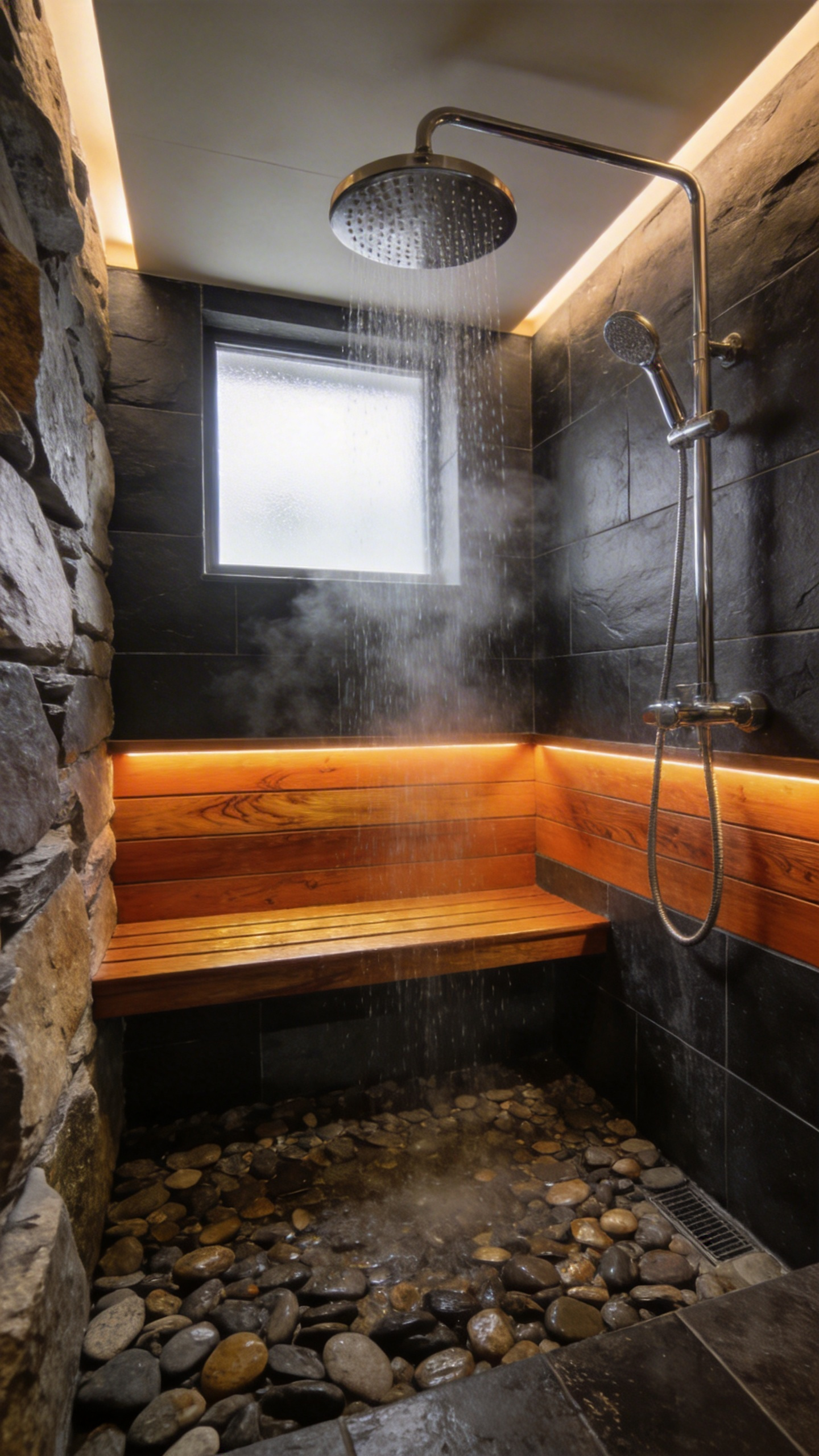
Integrating these floating ledges requires precise behind-the-wall engineering. Installers use marine-grade brackets anchored firmly into internal structural blocking. Expert waterproofing with specialized gaskets ensures the shower never leaks.
Beyond mechanics, teak provides profound sensory benefits for all ages. Tile and stone often feel shockingly cold to the touch. Conversely, teak acts as a natural insulator with immediate haptic warmth. This comforting warmth prevents jarring physical responses to cold surfaces.
You must choose how your teak bench will visually age. Unfinished wood eventually oxidizes into a sophisticated, silvery driftwood patina. Alternatively, you can apply a teak sealer to maintain a deep golden glow. Indeed, this sealed approach provides a high-end spa look without intense maintenance.
16. Smart Water Control: Thermostatic Valves and Touchless Tech for Safe Autonomy
Historically, accessible bathrooms looked overly clinical. However, modern smart water controls blend high-end minimalism with absolute safety. Specifically, the concept of safe autonomy allows everyone to use the bathroom with true dignity.
Digital thermostatic valves eliminate the terrifying ritual of testing unpredictable water. Instead, these systems provide perfect thermal consistency down to a fraction of a degree. A child or an elderly parent will never face a sudden scalding hazard.
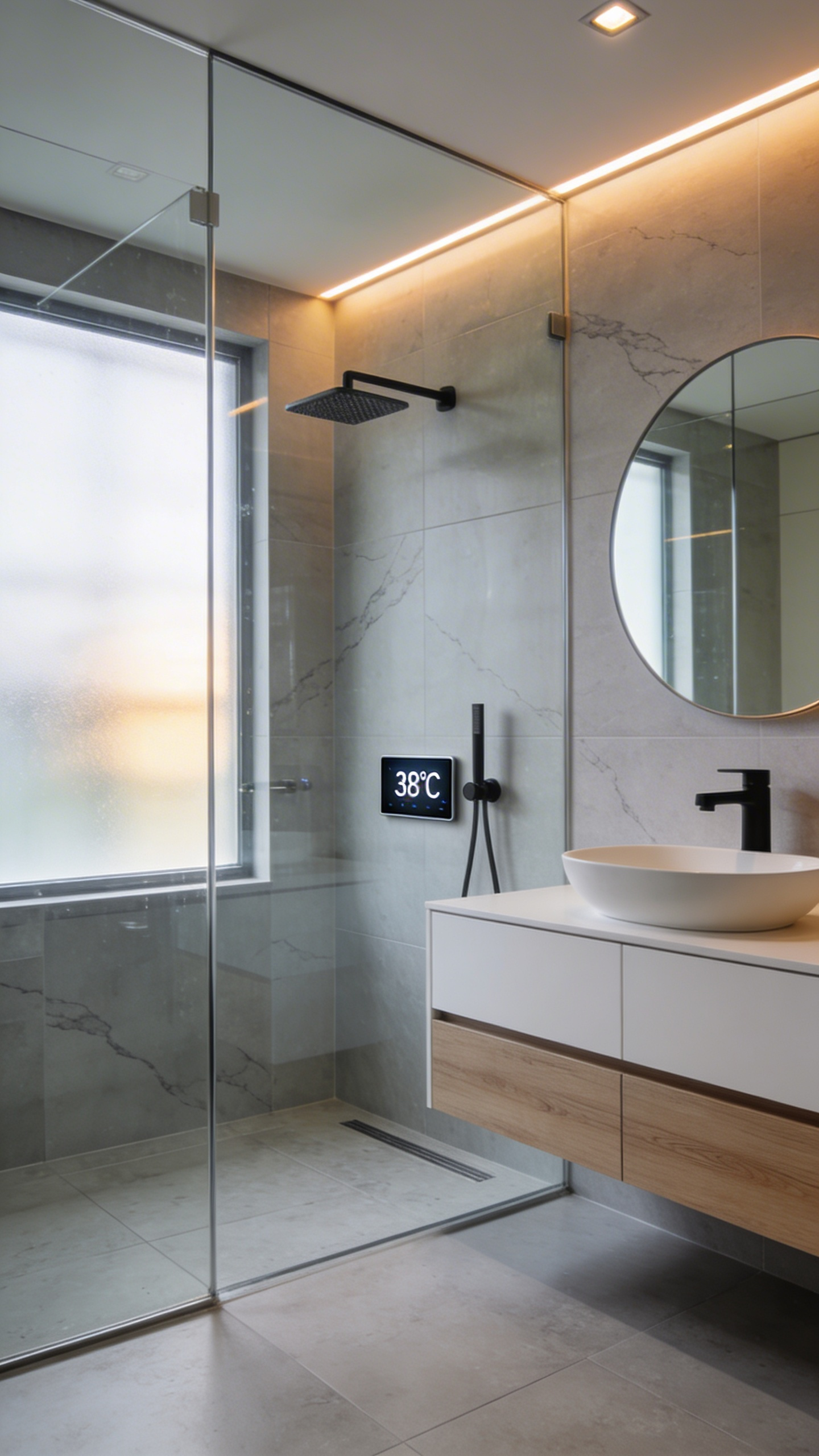
Touchless faucets have evolved far beyond basic airport restroom sensors. Now, advanced capacitive sensors create an interactive, three-dimensional zone around the elegant fixture. Therefore, a user with severe arthritis never has to struggle with stiff, heavy handles.
Some smart faucets use subtle LED rings that transition seamlessly from blue to red. Naturally, this provides a vital visual cue for anyone with diminished nerve sensitivity.
Interestingly, this smart technology unlocks incredible architectural freedom for the entire space. Because the mixing valve is digital, it can be easily hidden inside a nearby closet. Designers can place the shower controls right at the room’s entrance. You can start a perfectly warmed shower without ever getting your arm wet. In fact, this sleek infrastructure leaves only a pristine, fingerprint-free sanctuary behind.
17. Adaptive Storage Solutions: Pull-Down Shelving and Deep Drawers at Universal Reach Ranges
Traditional bathroom cabinetry often forces us into uncomfortable stretching or bending. Therefore, modern universal design embraces kinetic architecture to solve this issue. Specifically, experts define the ideal reach range between 15 and 48 inches from the floor.

This ergonomic comfort zone easily accommodates seated wheelchair users, children, and seniors. However, traditional cabinet depths naturally shrink this accessible zone. Designers now utilize pull-down shelving to bring items forward.
These systems use specialized gas springs for a smooth, controlled descent. Soft-close technology ensures acoustic stillness during quiet morning routines. This gentle movement eliminates the jarring clatter of standard wooden shelves.
Meanwhile, base cabinets are shifting toward deep, U-shaped drawer designs. These clever drawers wrap seamlessly around awkward under-sink plumbing. Deep drawers offer critical one-step access over hidden pull-outs. Indeed, removing extra steps is vital for users with limited dexterity.
Full-extension glides provide a complete overhead view of stored items. This clear visibility reduces cognitive friction and physical strain. Inside these drawers, integrated power outlets transform storage into a health hub.
Water-sealed Baltic birch prevents moisture damage in humid environments. Above all, these adaptive solutions prioritize personal dignity and autonomy. By eliminating daily micro-frustrations, the bathroom truly becomes a sanctuary of renewal.
18. The Restorative Retreat: Blending Long-Term Preparedness with High-End Hospitality Design
The modern luxury bathroom has evolved beyond simple hygiene. Specifically, it now functions as a fortified sanctuary. This design philosophy beautifully marries ultra-luxury resort aesthetics with rigorous survivalist engineering. Therefore, we call this movement the restorative retreat.
Increasingly, invisible infrastructure ensures homes remain fully functional during grid failures. Sleek lithium-ion battery walls power accessible radiant floor heating. Recirculating showers seamlessly filter water in real time. Indeed, users enjoy accessible, guilt-free rainfall showers even during severe droughts.
Storing emergency supplies no longer ruins a minimalist spa aesthetic. Instead, designers utilize clever toe-kick drawers beneath floating vanities. These low drawers provide easy access to trauma kits and bulk hygiene products. Virtually indestructible materials like Dekton replace porous, high-maintenance marbles.
When planning a long-term investment, incorporating essential bathroom remodeling ideas ensures your home remains a resilient haven. These surfaces evoke the rugged permanence of ancient Roman bathhouses. They also offer slip-resistant, accessible durability for aging in place.
Biological resilience plays a critical role in long-term wellness. Circadian-adjusted LED systems effortlessly mimic shifting natural sunlight. This lighting regulates nervous systems and maintains mental health during high-stress events. Living green walls act as natural, high-capacity air scrubbers.
This approach represents a shift toward holistic resilience. It beautifully contrasts the soft comfort of heated floors with the hard reality of survival systems. Indeed, creating a stylish, autonomous haven works perfectly for people of all abilities.
The best bathroom design ideas anticipate future needs without compromising on present-day beauty. By merging technical precision with a curated aesthetic, you transform a functional room into a lasting wellness sanctuary. Therefore, this space serves every member of the household for years to come.
Frequently Asked Questions
What are the latest trends in luxury bathroom design?
Current trends focus on “stealth accessibility.” Here, safety features like grab bars and curbless entries are integrated into the room’s architectural details. There is also a significant shift toward smart water controls and biophilic elements like moss walls. Indeed, circadian lighting systems beautifully support the body’s natural sleep-wake cycle.
How can I make a bathroom both accessible and stylish?
The key is utilizing universal design principles that favor seamless transitions and multi-functional hardware. Floating vanities provide wheelchair clearance while maintaining a modern aesthetic. Decorative textured towel bars can also double as heavy-duty support. Specifically, choosing large-format matte tiles provides necessary slip resistance without the clinical look of traditional safety flooring.
What materials are best for a high-end bathroom remodel?
For a premium and durable finish, consider honed natural stones and Tadelakt lime plaster. High-performance sintered stone like Dekton is another incredible option. These materials offer tactile sophistication and superior longevity. For wet areas, teak wood is an excellent choice for its natural warmth and moisture resistance. Therefore, it provides a spa-like feel that is both safe and luxurious.