Let’s be honest: we used to treat bathrooms strictly as utility zones. Choosing the right bathroom renovation flooring was mostly about simple moisture containment. It rarely involved cohesive interior design. Today, modern design philosophies completely challenge that outdated concept. They focus instead on 18 Brilliant bathroom remodel designs That Create Calm, Not Chaos. Indeed, we have entered an era where performance meets premium aesthetics.
The revelation of universal bathroom flooring now takes center stage. Materials flow uninterrupted from hallways into the bathroom. This strategy effectively eliminates tripping hazards and annoying visual breaks. Beyond pure aesthetics, choosing the right material involves exploring 21 Must-Know Bathroom Floor Tile Ideas that balance durability with high-end texture. Using large-format porcelain drastically reduces dense grout lines. The human brain perceives a much larger, peaceful space as a result. Advanced nano-texturing provides crucial slip-resistance for wet environments. Modern floors therefore achieve vital safety without sacrificing luxury.
New flooring choices influence our daily sensory experiences heavily. Pairing stone surfaces with radiant heating guarantees absolute warmth, for instance. Luxury vinyl tile offers comfortable cushioning and acoustic dampening instead. Creating a universally accessible home indeed requires thoughtful material selection. This guide reveals how you can build a truly accessible sanctuary. Achieving this level of detail is a cornerstone of 20 Essential Bathroom Remodeling Ideas for Creating Your Personal Sanctuary. Next, we will explore the science behind these invisible grip surfaces. For those seeking minimalism, Creating a Spa-Like Sanctuary: Scandinavian Bathroom Design offers a blueprint for clean lines and natural warmth. You will ultimately learn to blend practical hygiene with spa-like tranquility.
1. The Moisture Barrier Mandate: Waterproofing Your Foundation for Long-Term Resilience
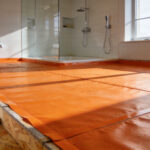
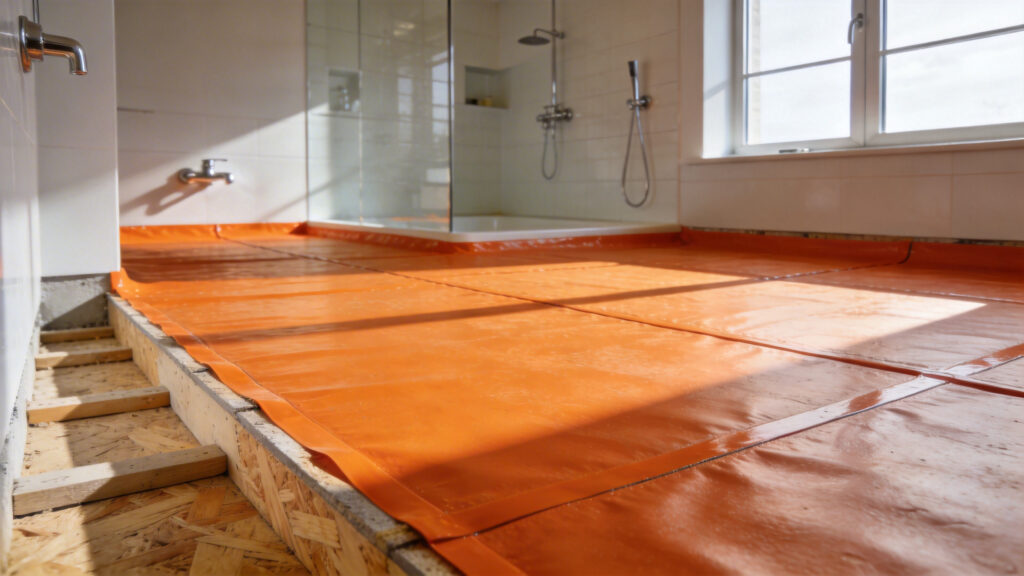
Historically, bathroom waterproofing followed a flawed “water-in, water-out” philosophy. Builders buried pan liners beneath incredibly thick mortar beds. Trapped moisture created a stagnant, chilling subterranean swamp beneath your feet. Modern building codes mandate a fundamentally different approach today. Bonded waterproofing membranes are now applied directly beneath the surface tile. Therefore, the underlying structural plywood remains completely bone-dry. This modern mandate perfectly supports stylish, accessible curbless wet rooms. Grading the entire floor toward a waste drain prevents stagnant pools of water. Choosing the correct barrier material is crucial for long-term success.
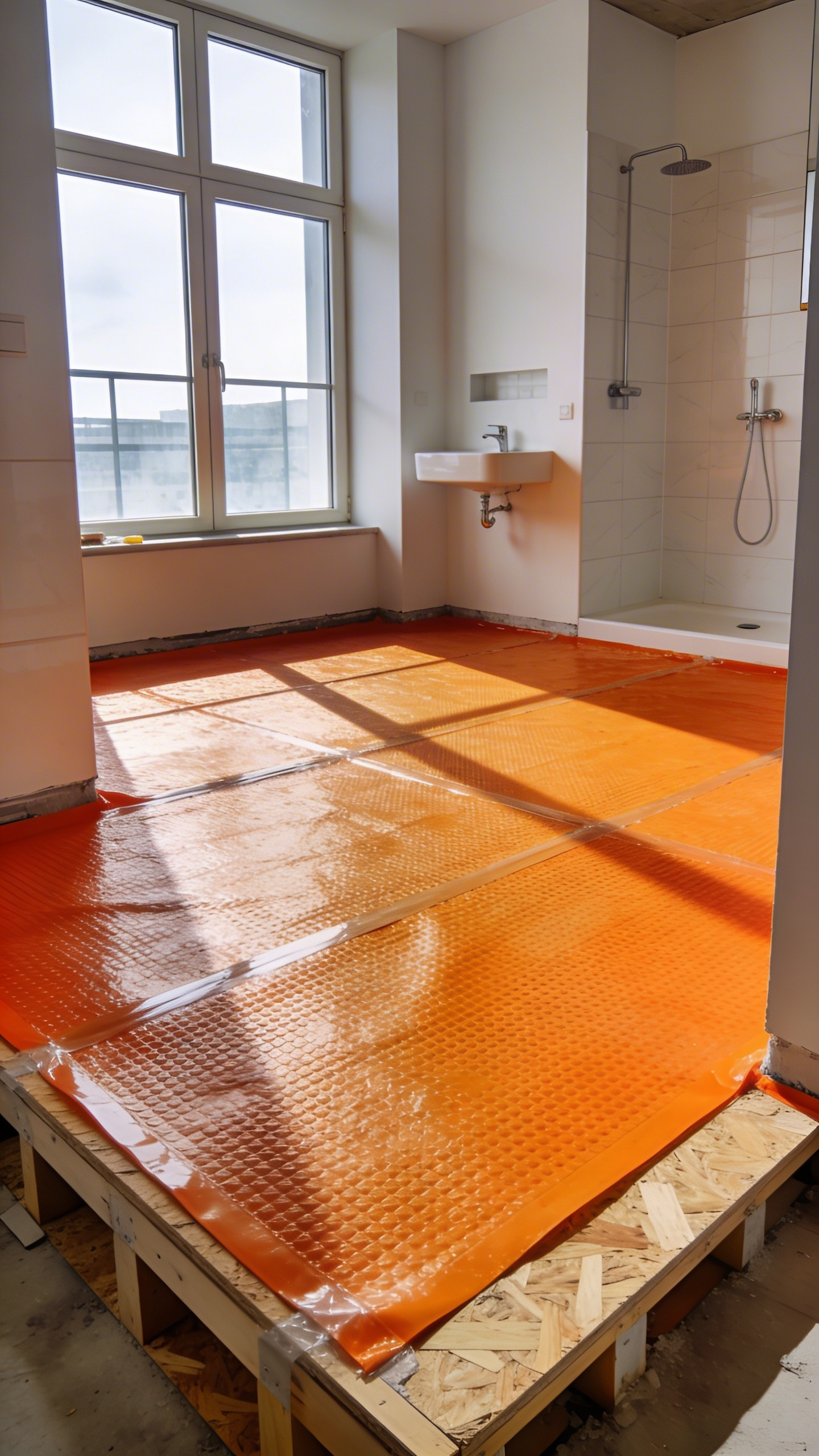
Liquid membranes coat complex shower niches like a thick armor. Pliable sheet membranes provide a factory-guaranteed uniform thickness, however. These continuous sheets also act as flexible uncoupling layers. They allow natural structural movement without cracking the delicate waterproof seal. We must block the invisible threat of vapor drive, too. Warm, heavy moisture constantly pushes toward cooler wall cavities. Resilient barriers therefore require a low perm rating under 0.5. Interstitial condensation will silently rot the wooden floor joists otherwise. A failing moisture barrier eventually announces itself through unsettling sensory cues. An earthy, musty scent warns of hidden black mold, for example. Hollow click-clack echoes specifically reveal that floor tiles are actively delaminating. Stopping moisture ensures lasting architectural resilience.
2. Subfloor Integrity and Deflection: Preparing the Groundwork for Premium Materials
The most expensive marble is only as durable as its underlying structure. Subfloor integrity acts as the invisible backbone of luxury design. Standard construction typically accepts an L/360 deflection rating. This means the floor slightly bends under weight. Premium natural stones demand a stricter L/720 threshold, however. Rigid stone simply cannot flex like wood. Therefore, it will crack under bridge stress without proper support. Achieving this rigidity often requires sistering joists or adding thicker plywood.
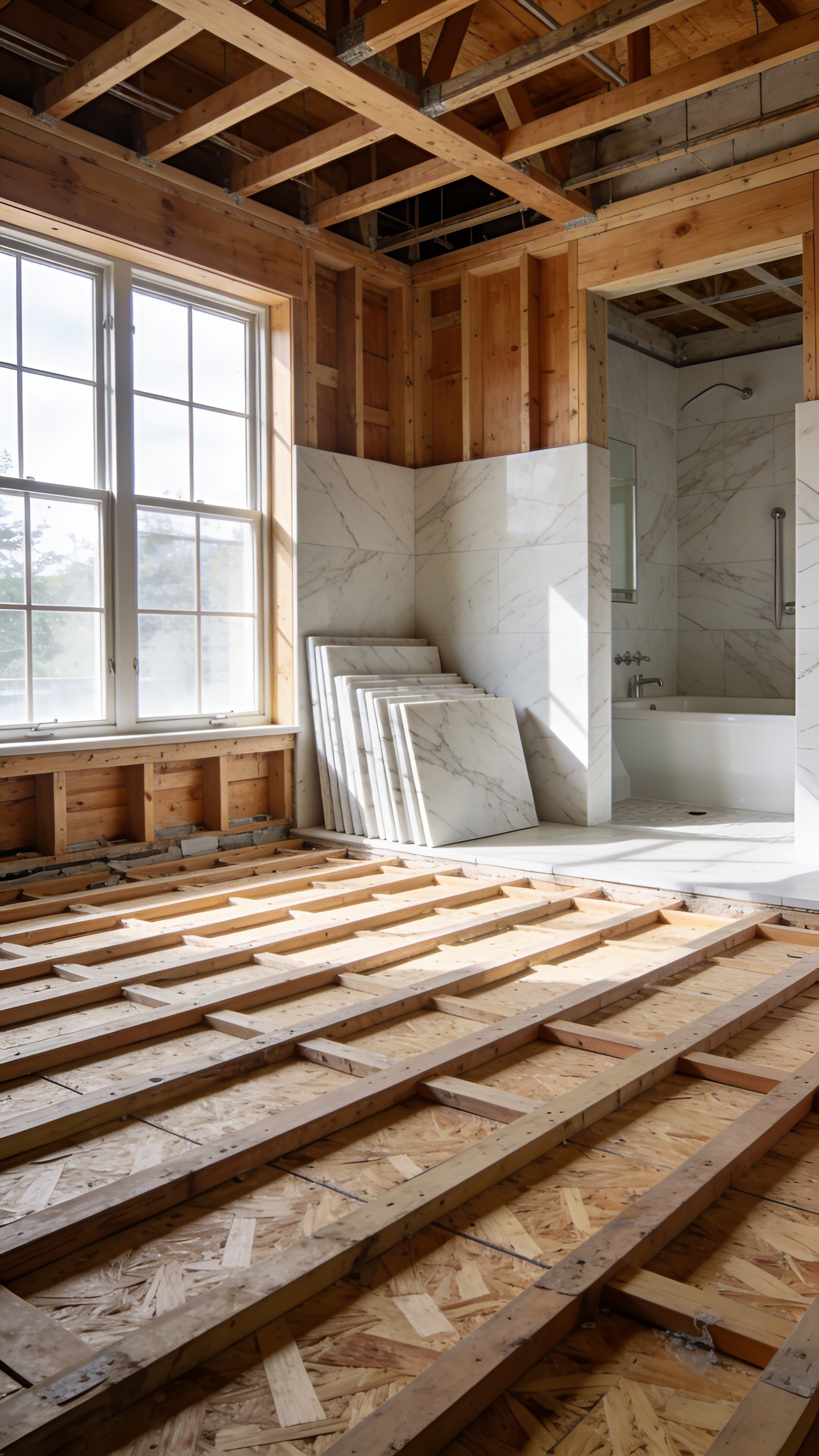
High-end renovations also require careful underlayment choices. Installers traditionally screwed rigid cement backer boards directly to the subfloor. This rigid bond unfortunately transfers seasonal house movement straight into grout lines. Modern experts utilize uncoupling membranes instead. These dimpled plastic mats act as a flexible buffer zone. Large-format tiles won’t pop off or tent under shear forces as a result. A solid subfloor also prevents sensory failures. A weak floor creates a springy phantom bounce, for instance. Flexing creates microscopic air pockets beneath the tile over time. These voids magnify footsteps into a cheap, hollow echo. A properly reinforced subfloor indeed provides the acoustic reassurance of immovable concrete.
Older homes frequently used solid dimensional lumber or diagonal planks. These materials constantly bow, split, and shift independently. Authoritative preparation strips these back to install high-performance engineered substrates. Bathrooms face intense moisture-induced hygroscopic movement as well. Underfloor heating systems aggressively dry out wooden subfloors. Contractors must therefore prime the wood to prevent mortar moisture theft. This rigid groundwork ultimately ensures your accessible space remains permanently flawless.
3. Acoustic Underlayments: Essential Sound-Dampening for Multigenerational Living
Acoustic underlayment acts as invisible social glue in any multigenerational household. It prevents daily routines from causing unnecessary friction. Most contractors discuss STC or IIC ratings for sound. The most critical metric is Delta IIC, however. This metric specifically measures exactly what the underlayment isolates. It dampens the sharp clack of a dropped bottle, for example. It also softens the heavy thud of a walker. A grandparent’s midnight bathroom visit will not wake up a sleeping baby.
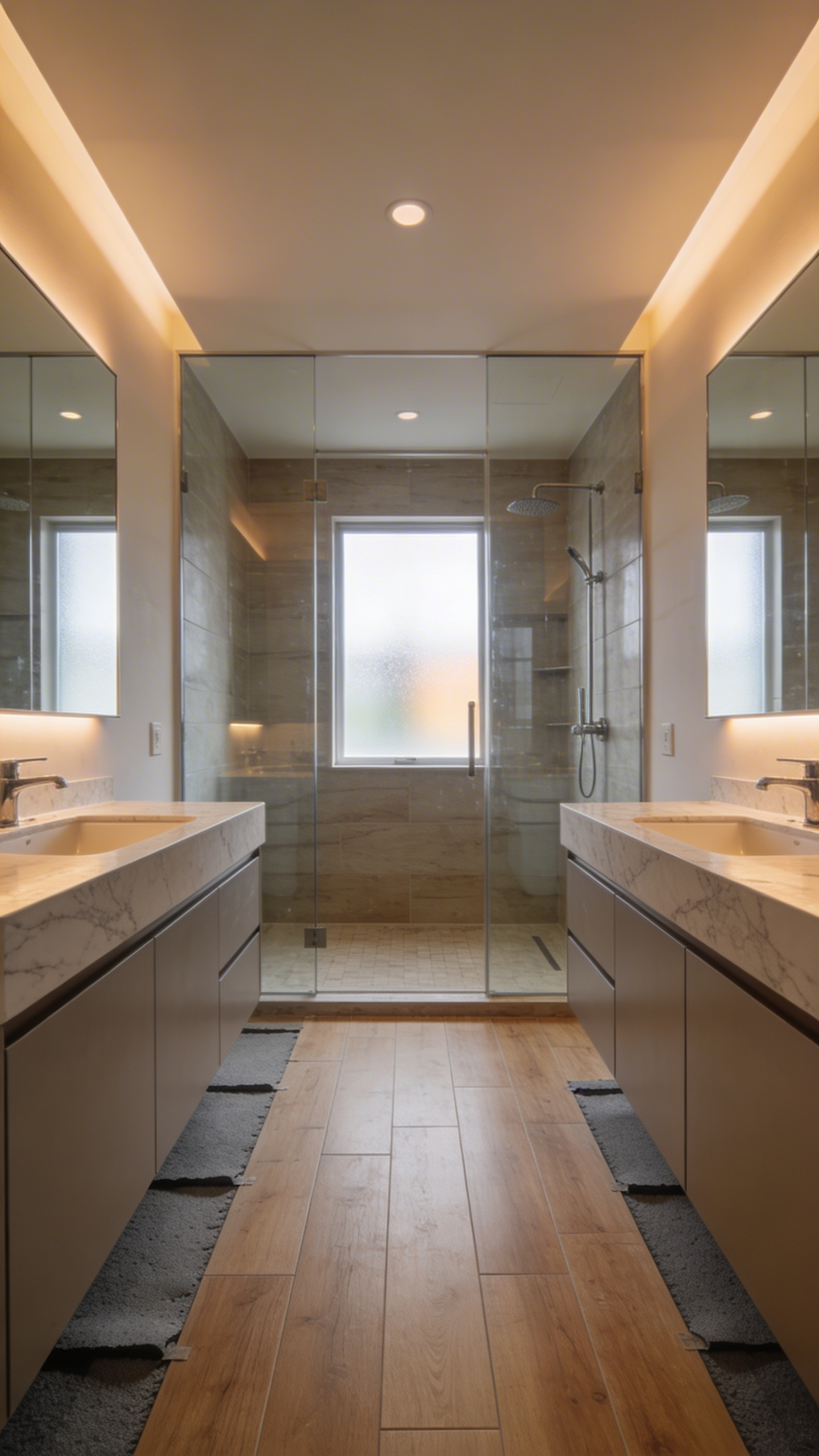
Bathrooms naturally act as acoustic mirrors due to hard tile. This reverberation easily causes sensory overload. Neurodiverse family members can be especially sensitive to these sharp noises. Reducing room echo is therefore a universal design priority. Thick mortar beds or cheap foams historically provided some basic cushioning. Modern uncoupling membranes physically decouple tile from the subfloor today. This engineered break stops vibrations dead in their tracks. Waterproof luxury vinyl plank sounds hollow without dense rubber. High-density closed-cell foams create a solid, warm feel instead.
Moisture management remains completely non-negotiable in high-traffic spaces. Cork dampens sound beautifully but acts as a hidden mold sponge. Closed-cell rubber mats with antimicrobial treatments actually repel dangerous moisture. These high-performance materials often feature fused vapor barriers. The bathroom ultimately transforms into a private acoustic bubble. Dropped toiletries make a dull thump instead of a sharp clatter. A well-designed floor indeed brings lasting peace to the whole home.
4. Decoding the DCOF Rating: The Science of Slip-Resistance in Wet Environments
The flooring industry historically relied on static friction ratings. Humans rarely slip while standing perfectly still, however. Dangerous falls typically occur when a heel strikes a wet surface. The foot hydroplanes rapidly across the tile. Modern standards now use the Dynamic Coefficient of Friction (DCOF). DCOF testing specifically uses automated sensors to measure kinetic resistance. Therefore, it simulates a wet bathroom floor much more realistically.
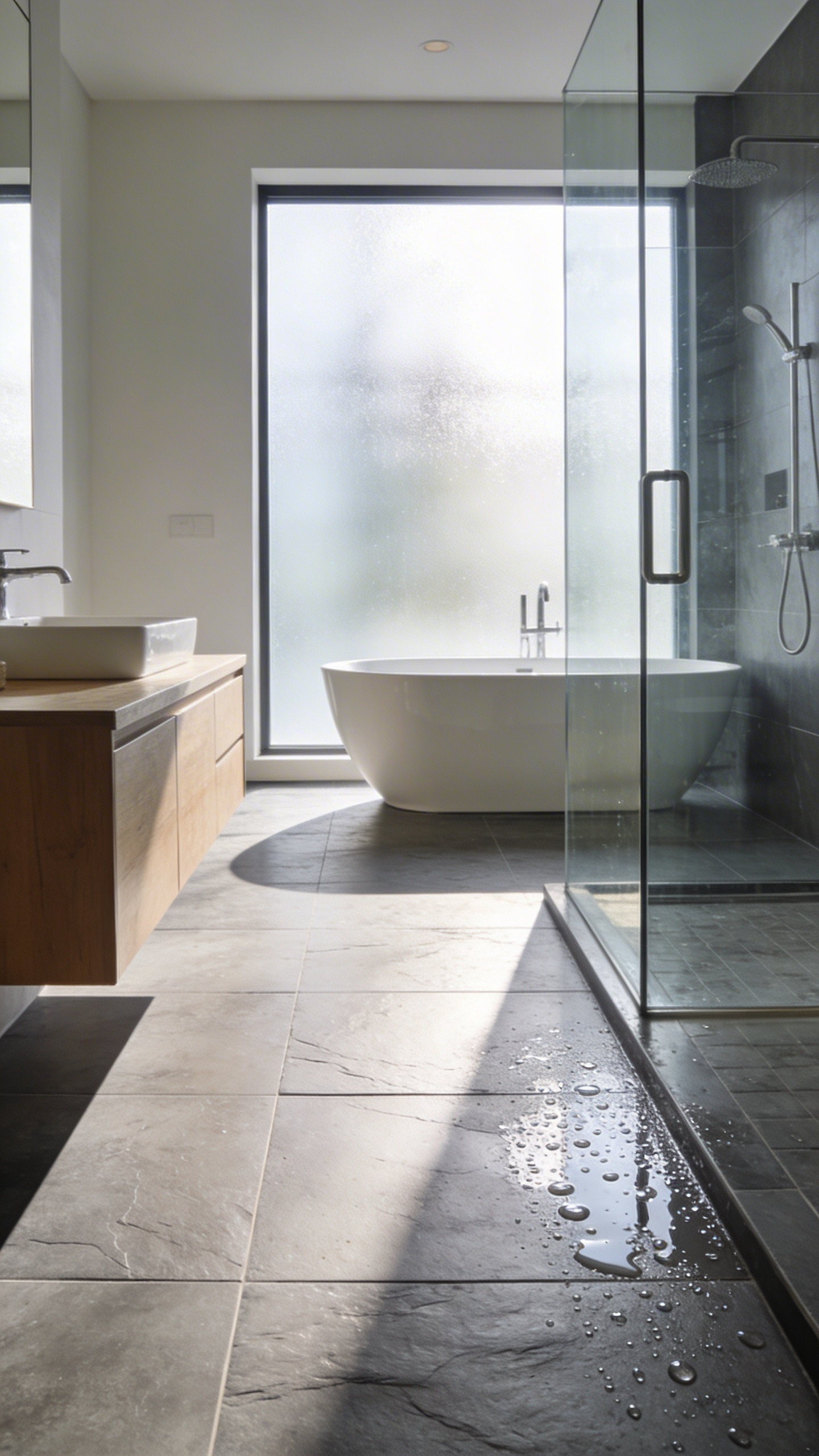
A 0.42 rating is just the baseline minimum. It functions perfectly for main floors that only occasionally get wet. Accessible curbless showers demand a much higher 0.60 DCOF rating, however. These highly textured tiles can feel quite scratchy. Advanced glazing chemistry balances this necessary grip with barefoot softness. Grout lines dramatically boost your overall slip resistance, too. Experts universally recommend small mosaic tiles for shower spaces. The recessed grout acts as an essential water drainage channel. These deep lines indeed create a vital physical edge for bare toes.
Microscopic peaks on matte tiles also pierce the water film. These textured valleys unfortunately trap soap scum and body oils. This greasy buildup triggers a hidden maintenance nightmare. Floors require non-film-forming alkaline cleaners to stay safe. Lingering soapy residue will completely erase the tile’s protective grip otherwise.
5. The Porcelain Advantage: Combining High Durability with Zero-Maintenance Impermeability
We must look at how porcelain transforms in the kiln. Raw clays and silica are fired at a scorching 2,200 degrees. These materials melt into a dense, glass-like matrix through vitrification. Porcelain features a water absorption rate of less than 0.5 percent. This creates a truly waterproof foundation for accessible wet environments.
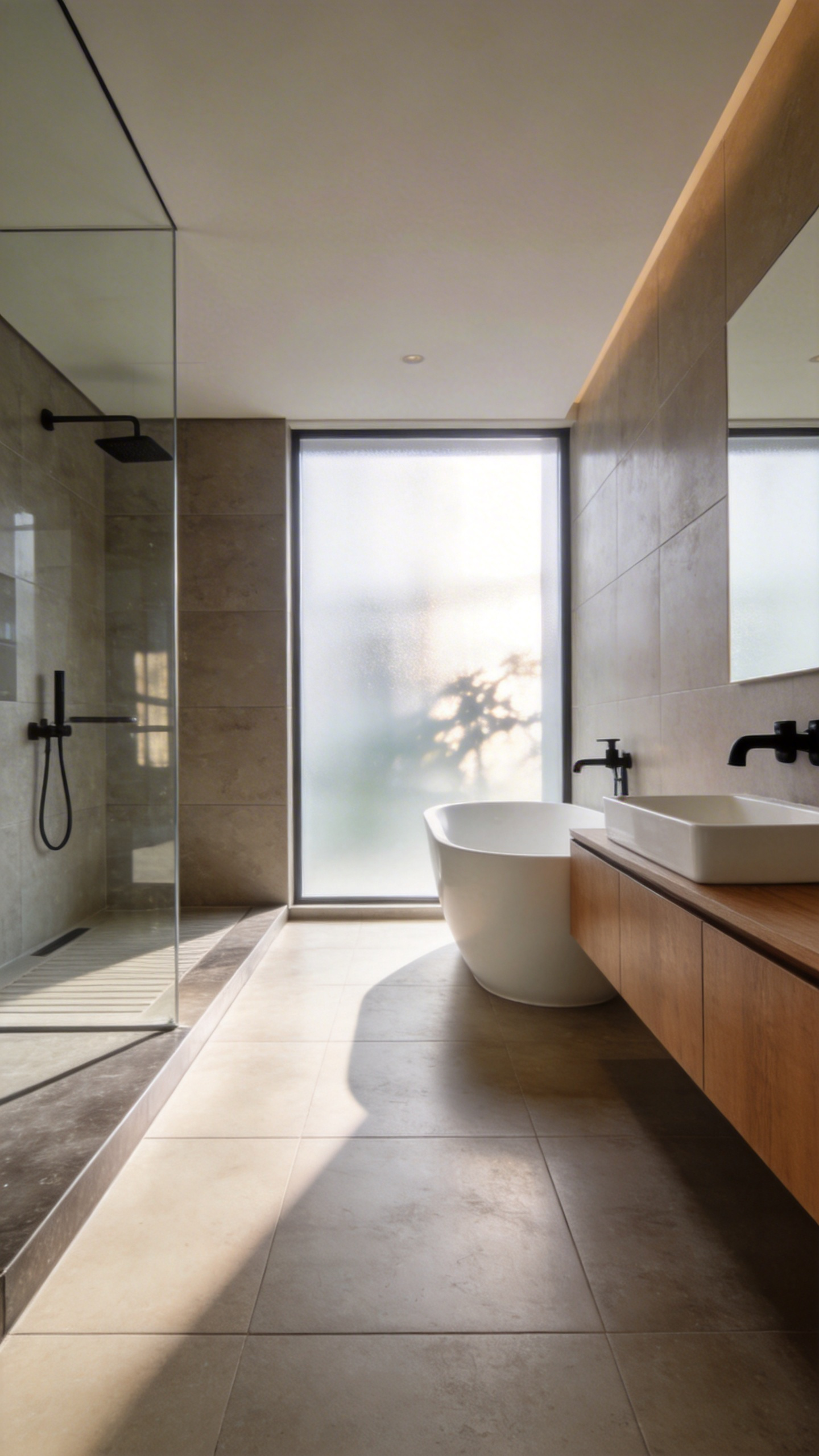
A waterproof tile is only part of the overall solution. Porous cement grout traditionally becomes the weak link in bathroom hygiene. Modern designs instead pair rectified porcelain with high-performance epoxy grout. Laser-cut rectified tiles allow for exceptionally tight grout joints. Epoxy grout creates a non-porous, maintenance-free system resistant to mold. This pairing naturally requires only a simple wipe to stay clean.
Porcelain offers incredible sensory benefits for users of all ages. Its dense structure conducts radiant underfloor heating beautifully, for instance. Cold floors are replaced with a warm, spa-like experience. Large-format slabs minimize visual interruptions and physical floor bumps. This smooth surface therefore provides ideal mobility support and quiet luxury. Digital technology allows these tiles to perfectly mimic natural stone. They do so without the heavy upkeep real stone demands. Owners must avoid harsh industrial cleaners containing hydrofluoric acid, however. This incredibly durable surface will serve beautifully for decades otherwise.
6. Luxury Vinyl Plank (LVP): The Warm, High-Traction, and Budget-Friendly Alternative
Luxury vinyl plank provides an incredibly accessible foundation for modern renovations. This material moves far beyond simple waterproof claims today. It relies on advanced engineering to support diverse users. Buyers choose between two distinct rigid core technologies, specifically. Stone Plastic Composite offers unparalleled dent resistance for active families. Wood Plastic Composite features an aerated core for superior barefoot comfort.
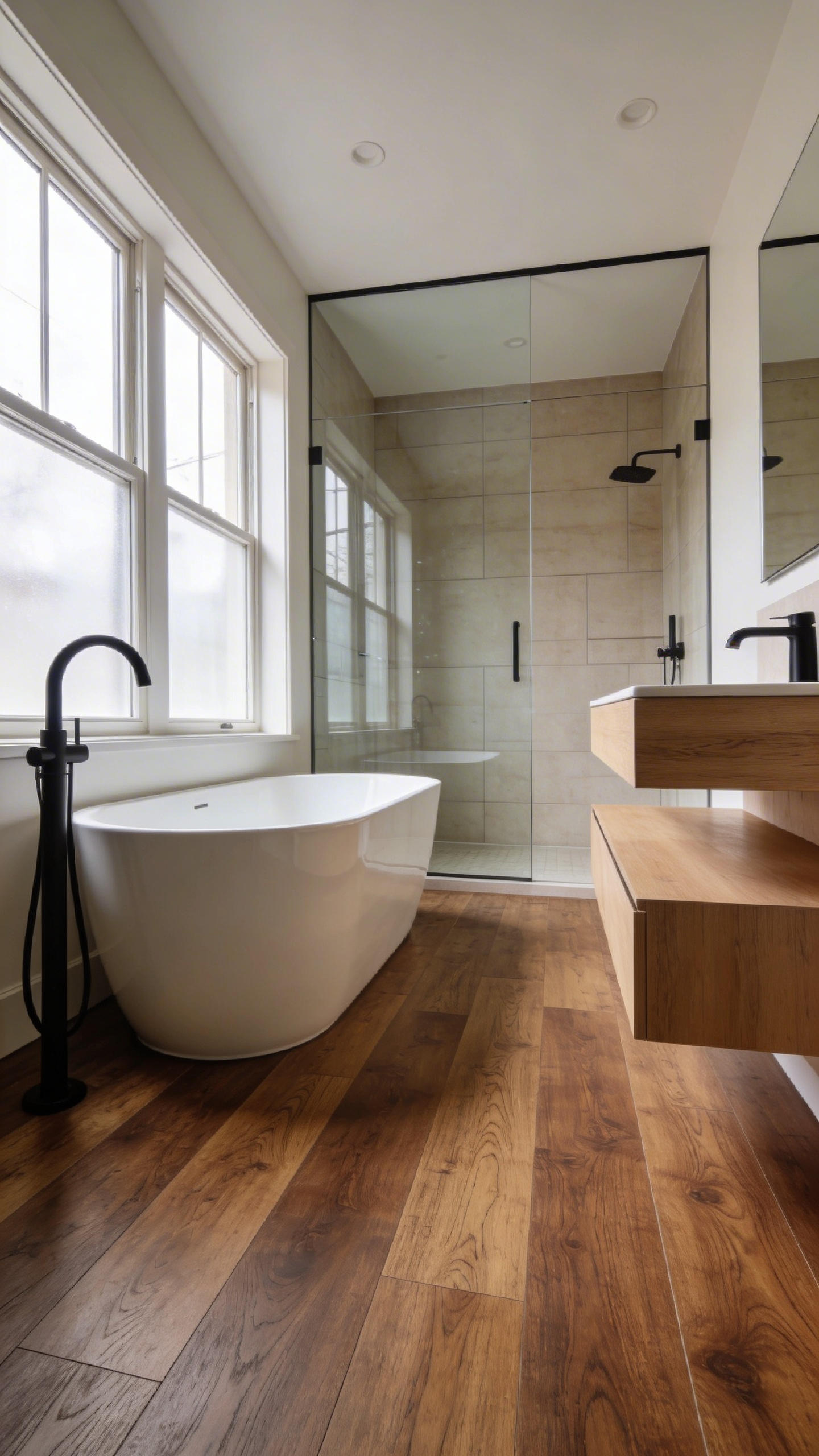
Modern vinyl completely eliminates the old, synthetic plastic feel. It utilizes Embossed-in-Register technology to align physical textures with high-definition imagery. Your brain perceives a truly natural surface as a result. This tactile ridge design also acts as a vital safety feature. The deep micro-textures naturally increase the floor’s slip resistance. Wet bare feet maintain excellent grip.
The material offers exceptional thermal comfort for aging joints. Vinyl actively insulates against chilly morning air, unlike cold porcelain. The integrated underlayment absorbs harsh bathroom echoes to create a calmer environment. This resilient option drastically reduces expensive labor costs, too. Its simple floating installation system covers imperfect subfloors with ease. Installers must strictly seal all bathroom perimeters to prevent hidden subfloor rot, however.
7. Natural Stone Truths: Balancing Organic Beauty with Porosity and Upkeep
Natural stone introduces a beautiful, living element into accessible bathroom design. Its geological classification dictates both its moisture risk and natural breathability. Sedimentary stones like limestone absorb far more moisture than dense marbles, for example. Selecting the right finish is therefore vital for both safety and longevity. A honed, matte finish provides superior slip resistance for all mobility levels. This textured surface gracefully masks the inevitable etching caused by acidic bathroom products. Designers embrace this evolving, tactile patina rather than viewing it as a flaw.
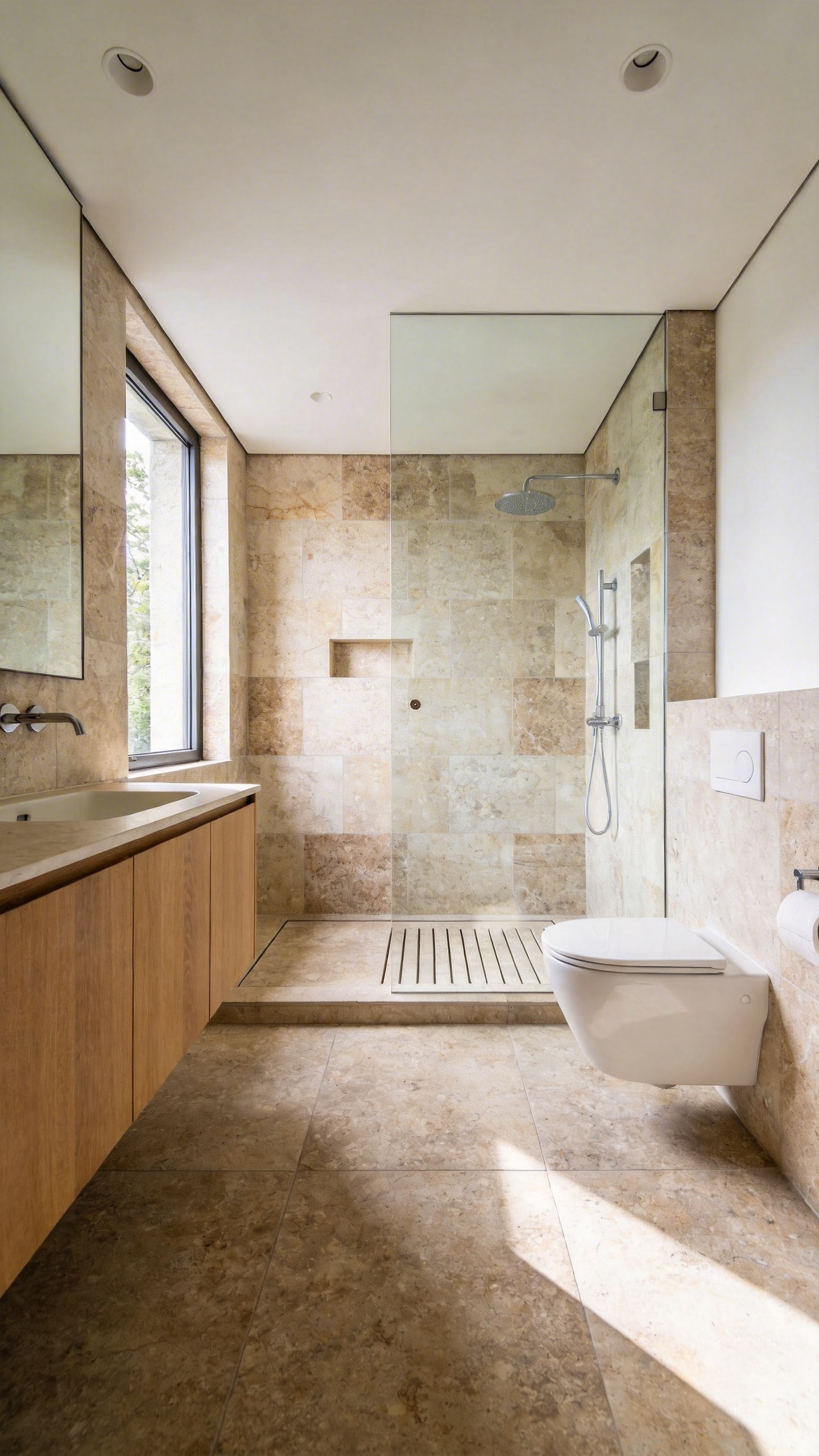
Natural stone also transforms the sensory experience of a bathroom. Dense materials like marble can naturally feel quite cold to bare feet. Pairing these floors with hydronic underfloor heating creates a comfortable, radiant warmth. This density provides excellent acoustic dampening for a calming, spa-like environment.
The high maintenance of stone historically deterred many homeowners. Modern penetrating sealers have revolutionized how we protect these porous surfaces, however. These advanced formulas repel water and oil without altering the slip-resistant texture. Maintenance now requires only simple pH-neutral cleaners and a yearly reapplication.
Quartzite offers an ideal compromise for those seeking maximum durability. It delivers the stunning organic veining of marble but boasts incredible hardness. This ultimately creates a luxurious, accessible space that endures beautifully.
8. Grout Lines as Invisible Grip: Strategic Mosaic Placement in High-Risk Zones
Friction is essential when designing safe bathrooms. Small mosaic tiles offer an incredibly effective solution here. Their frequent grout lines act as a friction multiplier, in fact. These lines create structural micro-edges across the entire floor. Each tiny gap prevents dangerous hydroplaning under wet feet. This grid density dramatically increases slip resistance. Even glossy mosaics become safer than matte large-format tiles.
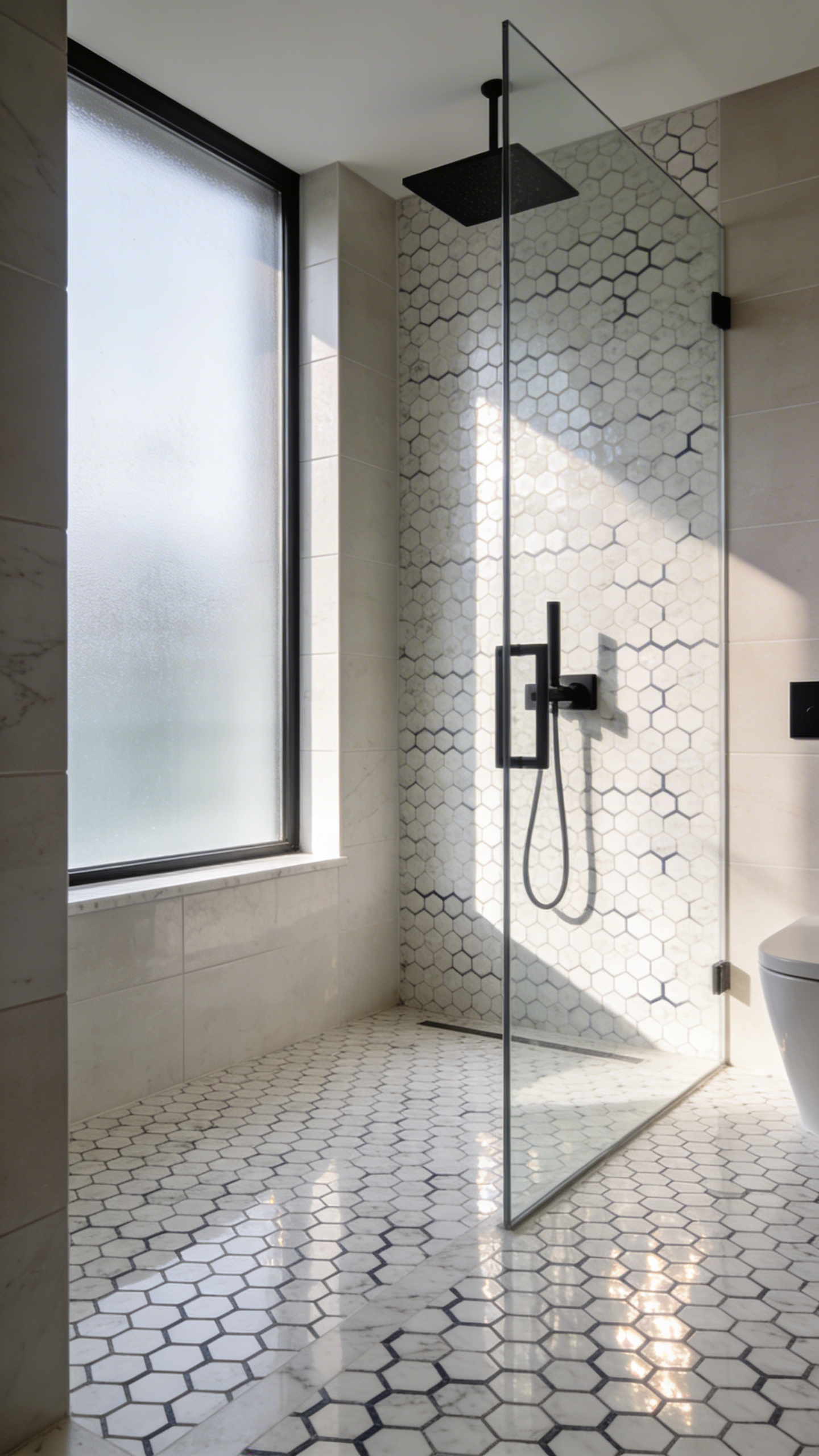
This safety feature does not compromise your aesthetic design. Designers use color-matched epoxy grout to hide the grid completely. This matching blends safety features into a unified look. You can safely use luxurious materials in splash zones, therefore. Tactilely, these small tiles provide constant proprioceptive reassurance. Pebble mosaics stimulate pressure points like a natural riverbed, for example. This biophilic spa element turns accessibility into pure luxury.
Mosaics also act as a flexible fabric mechanically. They easily follow complex slopes toward drains because of this. This geometric flexibility prevents water puddling without awkward cuts. Modern installations rely heavily on epoxy grout. Epoxy remains completely non-porous, unlike traditional cement blends. It actively resists slippery soap scum and mold. Your invisible grip stays sharp and functional for decades as a result.
9. Matte vs. Gloss Finishes: Why Texture is Your Best Defense Against Bathroom Falls
Choosing between matte and gloss finishes goes far beyond aesthetics. It is a crucial engineering strategy for preventing dangerous falls. Glossy tiles create a perfectly smooth, planar surface. Adding water creates a slippery film between your foot and the floor. This effect is exactly like a car hydroplaning on a wet road. Matte tiles feature microscopic peaks and valleys, however. Water naturally displaces into these tiny crevices. Your bare feet maintain secure contact with the textured peaks as a result.
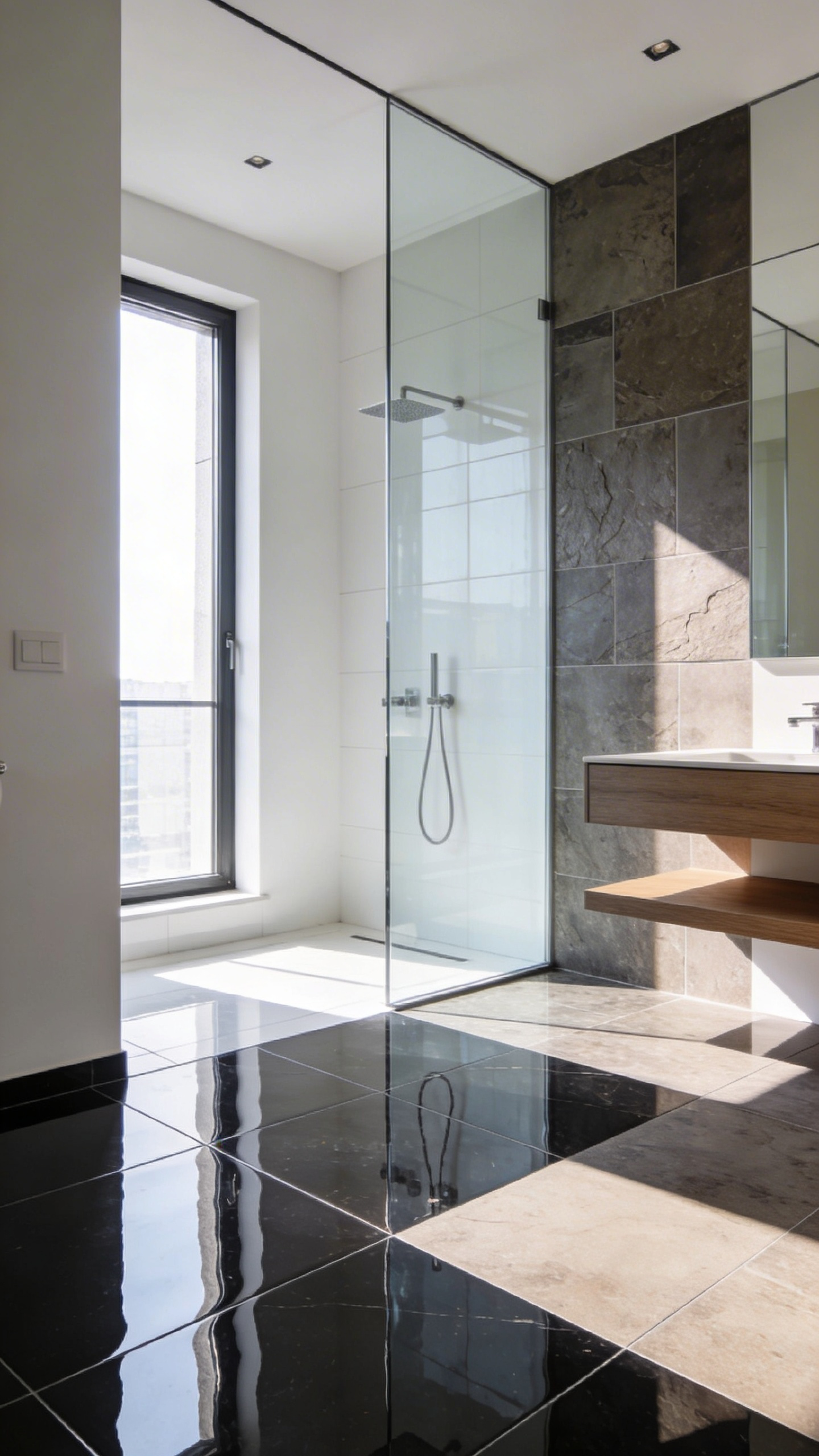
Designers historically favored high-gloss white tiles to signify clinical cleanliness. Modern universal design prioritizes tactile safety over this outdated visual hygiene. Glossy floors often cause glare-induced disorientation, in fact. This harsh light obscures the true depth of puddles or steps. Matte finishes absorb light to provide a stable, grounding visual field instead. You should always check a tile’s Dynamic Coefficient of Friction (DCOF). Look for a DCOF rating of 0.42 or higher. European standards use an R-Rating to measure texture similarly. Ratings of R10 or R11 offer the perfect sweet spot for renovations. These tiles feel comfortable while providing essential grit under heavy water flow.
Choosing smaller matte tiles increases the number of grout lines. These extra lines act as drainage channels and offer crucial physical grip. Your feet receive constant tactile feedback to prevent slips. Many people mistakenly believe matte tiles are harder to clean. Glossy surfaces highlight every single water spot and soap streak, however. A textured surface expertly camouflages minor residue between deep cleanings. A matte finish ultimately provides a reliable safety margin for your home.
10. Radiant Floor Heating: Integrating Therapeutic Warmth for Aging Joints and Winter Comfort
Radiant floor heating shifts climate control from convective drafts to direct warmth. These systems use electric mesh mats to emit far-infrared radiation. This energy penetrates deep into human tissues, unlike traditional vents. This deep warmth acts as a therapeutic tool for aging joints. The heat safely induces vasodilation. Increased blood flow therefore delivers vital oxygen to stiff muscles. It creates a soothing sensation similar to walking on warm sand.
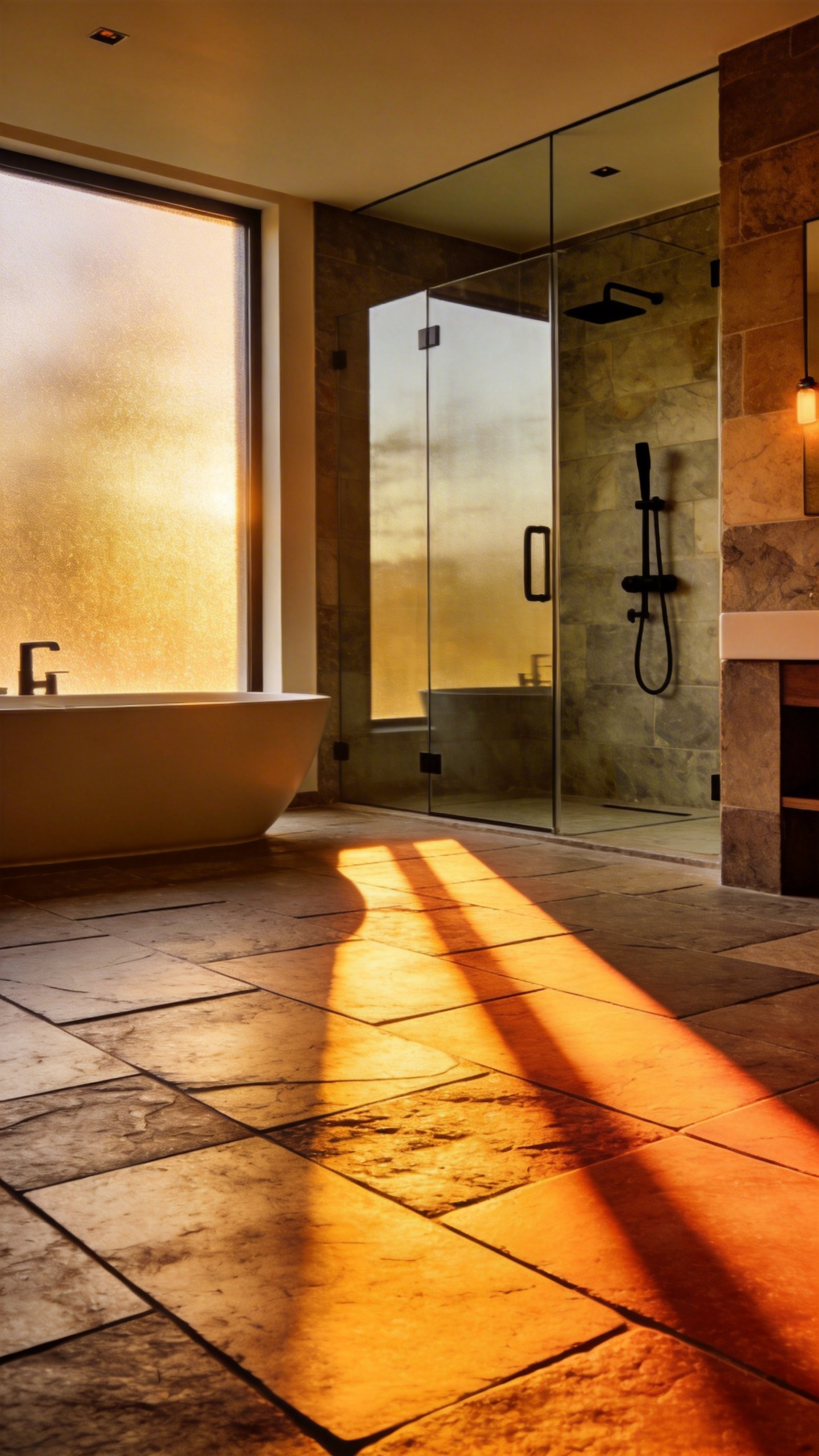
Heated floors solve a major bathroom safety hazard in universal design. People traditionally rely on thick bath mats to avoid freezing tiles. These mats frequently cause dangerous slips and falls, however. A heated floor completely eliminates the need for any floor coverings. This ensures a perfectly flat, unobstructed walking surface for everyone.
Radiant heating drastically improves indoor air quality beyond physical safety. Forced-air systems constantly circulate dust and allergens throughout the room. Radiant heat provides a uniform, silent, and dry warmth instead. This natural evaporation quickly dries standing water on porcelain tiles. It naturally inhibits harmful mold and mildew growth as a result.
Retrofitting this ancient luxury into modern ensuites is highly practical. Ultra-thin electric cables add virtually no height to the floor. They perfectly maintain accessible, zero-threshold entryways. Smart thermostats can even pre-warm the space before your morning routine. Stepping onto a warm floor indeed ensures a relaxed, safe start to your day.
11. Tonal Contrast and Depth Perception: Visual Navigation for Sensory-Friendly Spaces
Bathroom flooring requires careful attention to tonal contrast. Navigating a space involves complex neurological processing. Visual cues must therefore prioritize safety alongside style. Experts often recommend a 30-point light reflectance value difference. This contrast between floors and walls prevents visual blurring. Extreme contrast at doorways can cause significant hesitation, however. A dark bathroom floor might resemble a deep hole to some users. A subtle transition strip softens this neurological shock effectively.
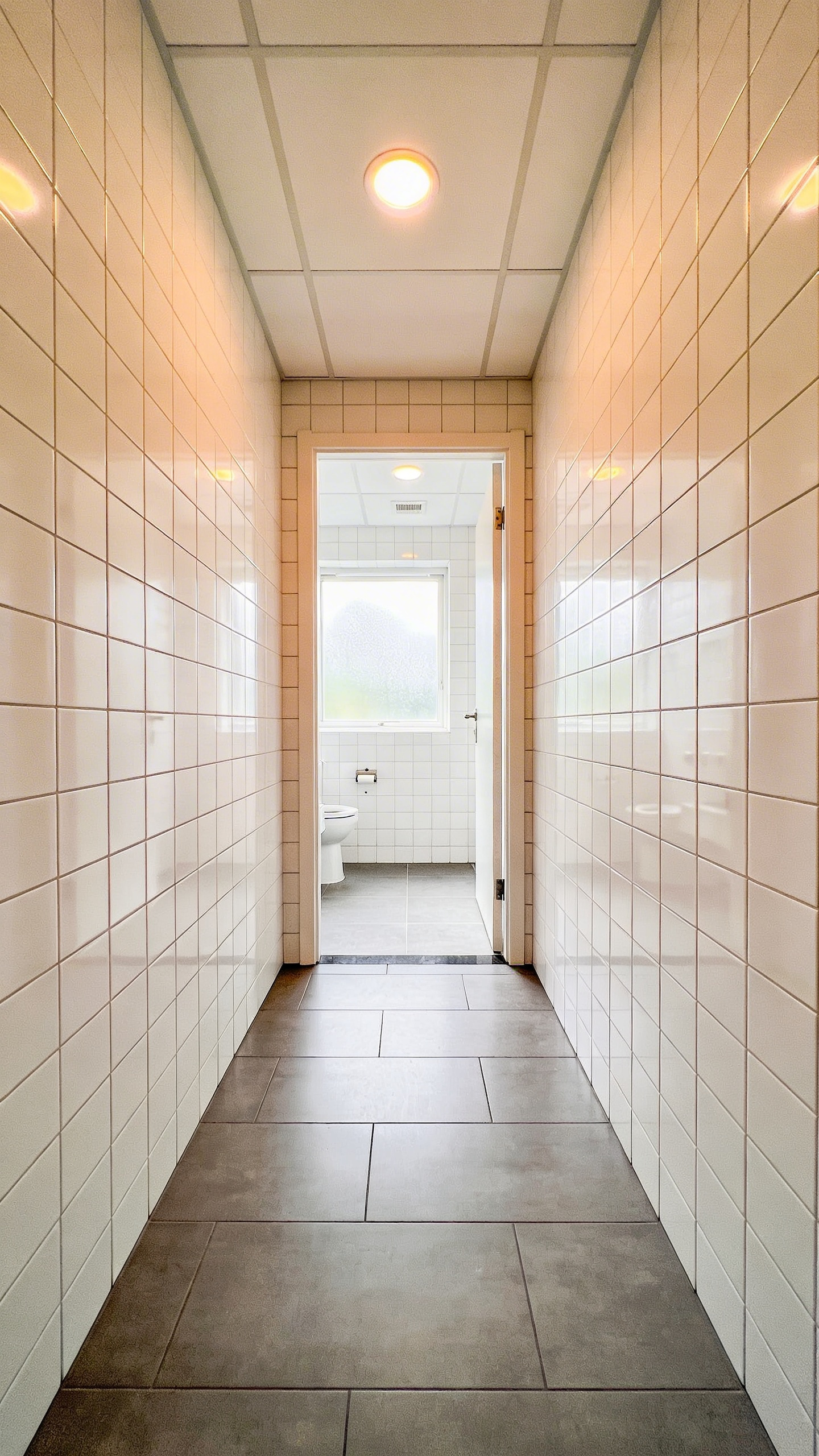
Surface finishes play a crucial role in depth perception. High-gloss floors can easily mimic wet or icy surfaces. Matte or honed finishes provide a grounded visual anchor instead. Designers now use color zoning for intuitive wayfinding. Placing darker textured tiles in showers creates a clear visual map. Medium-format tiles with soft patterns help establish physical depth similarly. Diagonal layouts also pull the eye toward room corners. This orientation indeed helps the brain quickly calculate spatial boundaries.
Auditory feedback strongly impacts a person’s spatial awareness. Traditional hard ceramics often create sharp, echoing footstep sounds. Luxury vinyl or cork flooring absorbs this ambient noise effectively. These softer materials offer reassuring tactile feedback in turn. This multi-sensory approach ultimately ensures stylish and accessible bathrooms.
12. Flush Transitions: Eliminating Doorway Thresholds to Prevent Tripping Hazards
Tall doorway thresholds historically acted as chunky, functional draft-stoppers. Eliminating these bulky barriers today creates a continuous, luxurious flow. A flush transition visually expands cramped and noisy bathrooms. This smooth plane provides essential tactile continuity underfoot. Removing this physical tripping hazard brings profound psychological comfort to residents. ADA guidelines state that vertical floor changes exceeding ¼ inch require beveling. Achieving a completely flat surface therefore ensures maximum accessibility and safety.
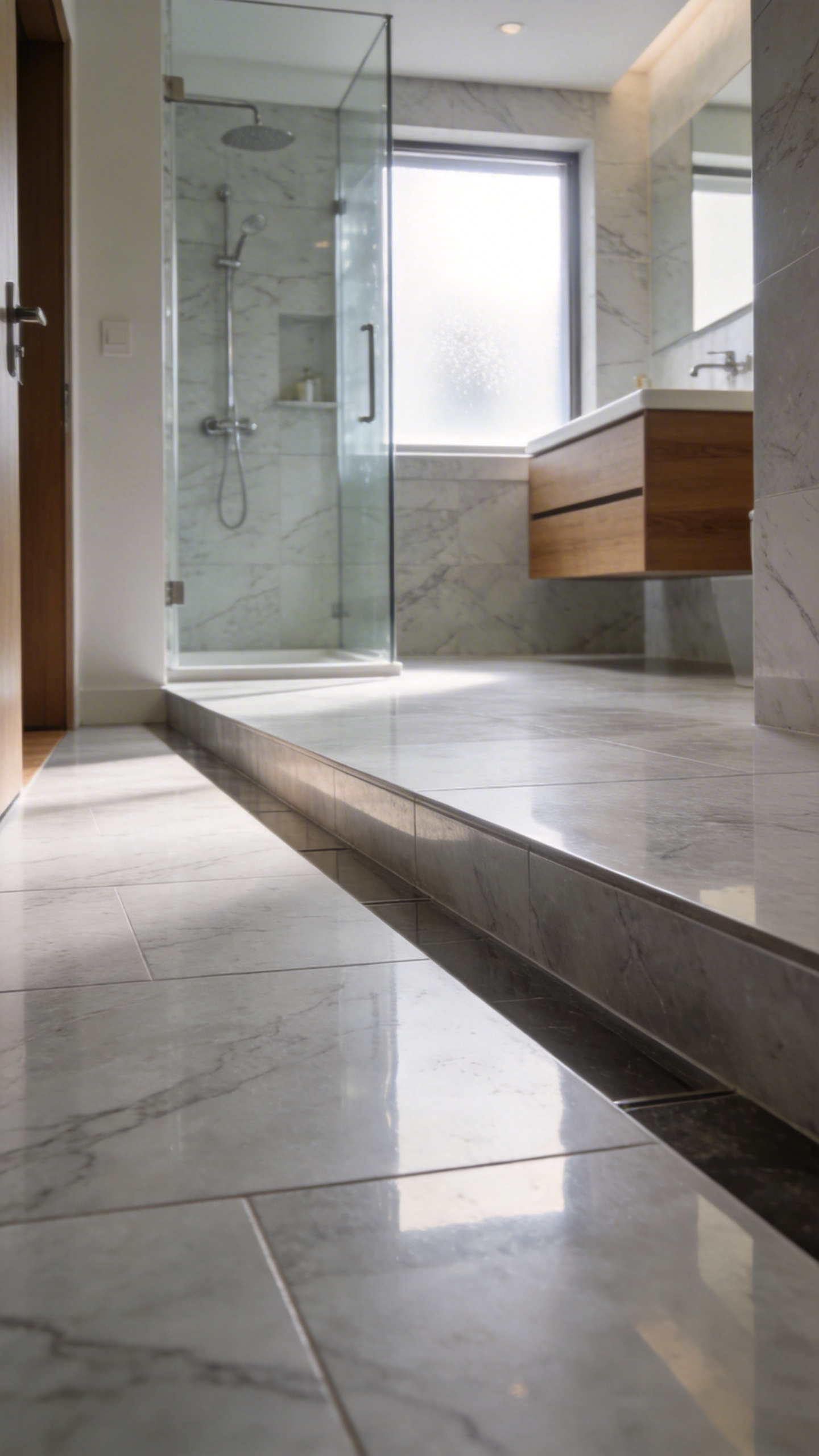
Engineering this invisible boundary requires complex structural maneuvers. Contractors must carefully recess the subfloor to match adjacent hallway heights. Large-format stones demand incredibly rigid floor joists to prevent cracking. Experts rely on a flexible bridge instead of butting rigid materials directly. A tiny gap filled with soft silicone absorbs natural room expansion. Designers center this seam exactly under the closed door to hide it completely. Your warm bathroom tile feels beautifully contained and private as a result.
Removing the raised doorsill eliminates your final emergency flood barrier. Professionals simply pitch the entire floor toward a linear drain to safely manage water. Extending radiant heating across this flush entry prevents any jarring cold shocks. Combining these precise techniques transforms a standard utility space into a seamless sanctuary.
13. The Zero-Entry Shower: Engineering a Barrier-Free, Wheelchair-Accessible Flow
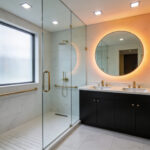
The magic of a zero-entry shower happens entirely beneath the tile. Creating this barrier-free transition requires a complex structural negotiation. Contractors must lower the bathroom subfloor by at least three-quarters of an inch. This means carefully modifying wood joists to maintain crucial load-bearing integrity. Installers subsequently introduce a prefabricated pan to guarantee a perfect waterproof slope. A wheelchair user will easily feel if this slope is too aggressive. A slope that is too shallow leaves you standing in a puddle, however.
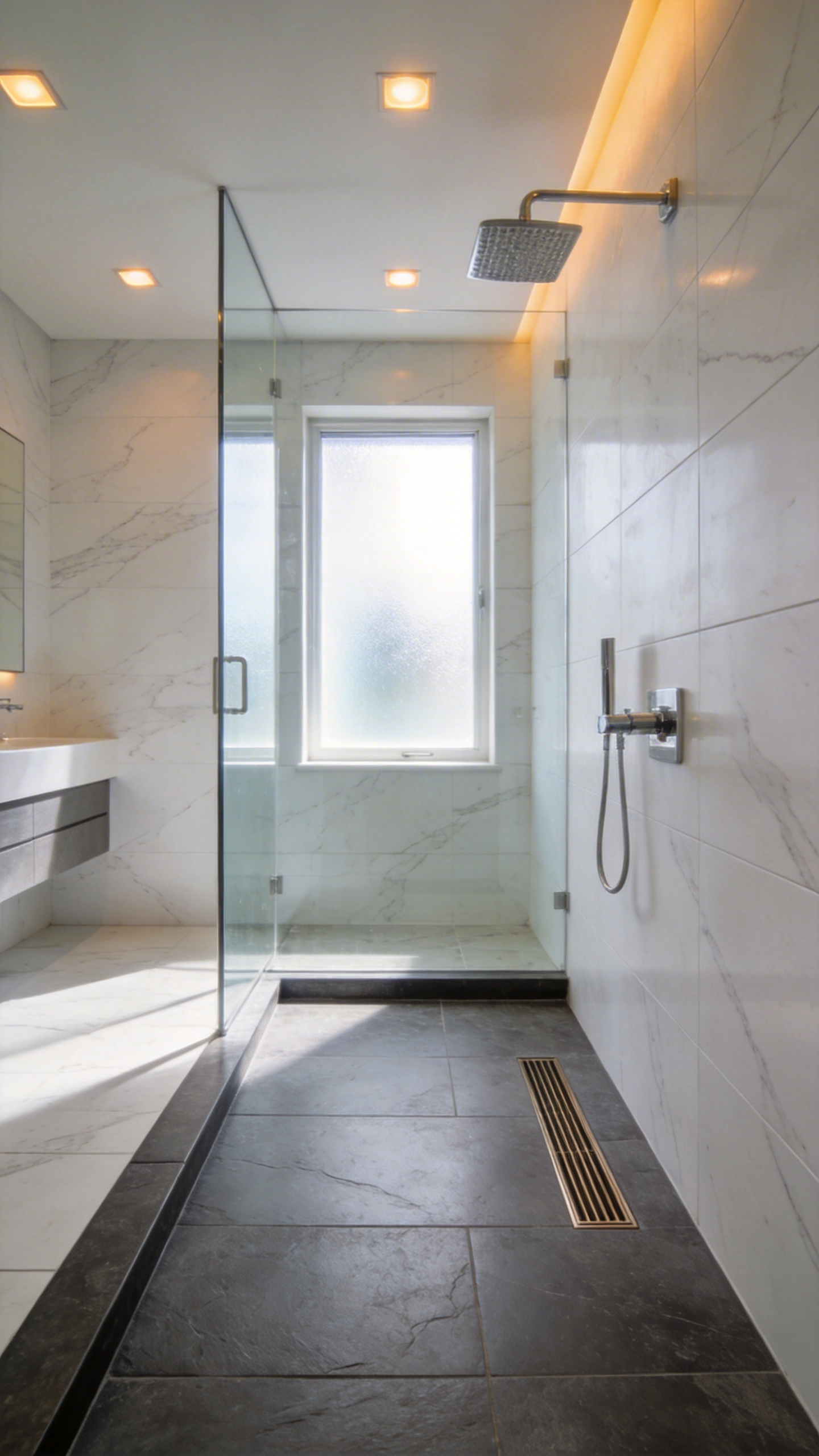
Water can secretly migrate into dry areas through microscopic grout pores. Expert installers create a capillary break using a thin silicone strip. This invisible dam essentially stops moisture from wicking horizontally across the threshold. The primary aesthetic goal of this accessible design is smooth visual flow. Homeowners often select matching large-format tiles from the vanity to the drain. These surfaces must meet strict dynamic coefficient of friction standards for safety, however.
Zero-entry spaces naturally struggle to trap steam without a bulky glass enclosure. Shower heat escapes rapidly into the broader bathroom space as a result. We frequently integrate in-floor radiant heating directly into the wet shower area. This remarkably eliminates the shocking sensation of cold tile on bare feet. The added warmth helps the wet floor dry much faster to prevent slips. This inclusive approach ultimately removes the outdated stigma of institutional medical design. It transforms a functional necessity into a beautifully luxurious experience.
14. Linear Drain Integration: Mastering the Single-Slope Technique for Uninterrupted Tile
Traditional shower floors historically relied on point drains. These setups required a four-way sloped envelope cut. This geometry ultimately forced builders to use bumpy mosaic tiles. The single-slope technique completely transforms this restrictive approach, however. Installers simply create a continuous plane pitching in one direction. This layout specifically requires a precise gradient of 1/4 inch per foot. You can confidently install large-format porcelain tile slabs as a result. The main floor tile visually runs directly into the shower space. This creates a beautiful, barrier-free entrance. This unbroken entry perfectly supports essential universal design principles.
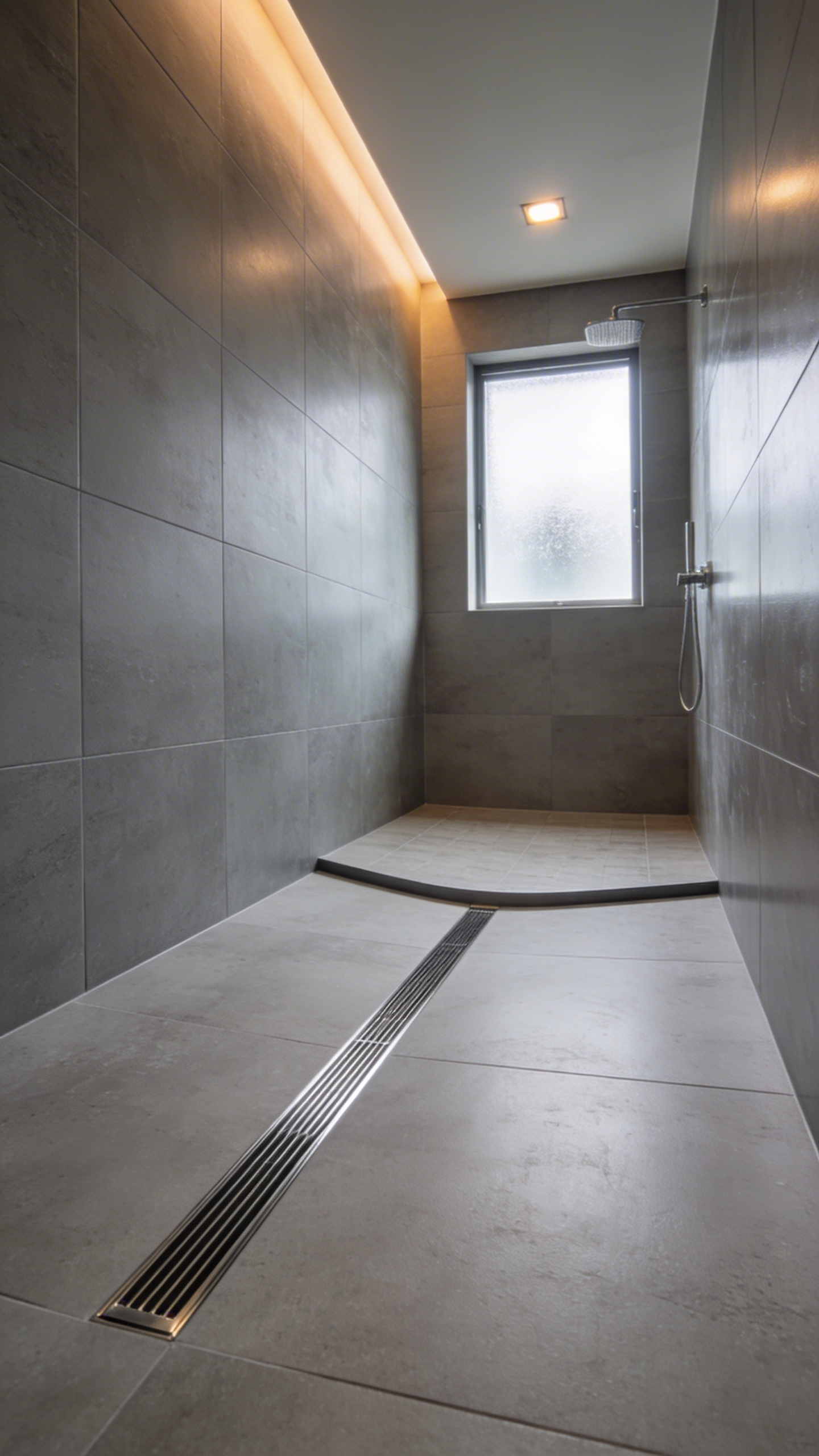
A tile-in grate makes the drain mechanism virtually invisible. Water simply vanishes into a tiny 1/8-inch perimeter reveal. These large tiles offer a smooth stone sensation underfoot. Traditional mosaics feel rough due to numerous grout lines, conversely. This unbroken flooring successfully generates a calming visual silence. The eye follows the beautiful tile grain rather than the plumbing.
This minimalist geometry is quite unforgiving during the installation process, however. Any slight bump in the shower substrate causes stagnant water pooling. Flat linear channels can sometimes collect debris like a rain gutter. Experts choose drains with a built-in internal pitch to prevent this. This hidden slope actively directs water toward the waste pipe. Mastering this integration perfectly blends high-end luxury with vital accessibility.
15. Material Continuity: Using Unbroken Flooring to Visually Expand Small Bathrooms
Physical curbs and transition strips traditionally create visual speed bumps in small bathrooms. These physical barriers chop a tiny floor plan into separate, cramped zones. Carrying an unbroken floor throughout the space changes this perception entirely. The human eye glides effortlessly to the furthest wall as a result.
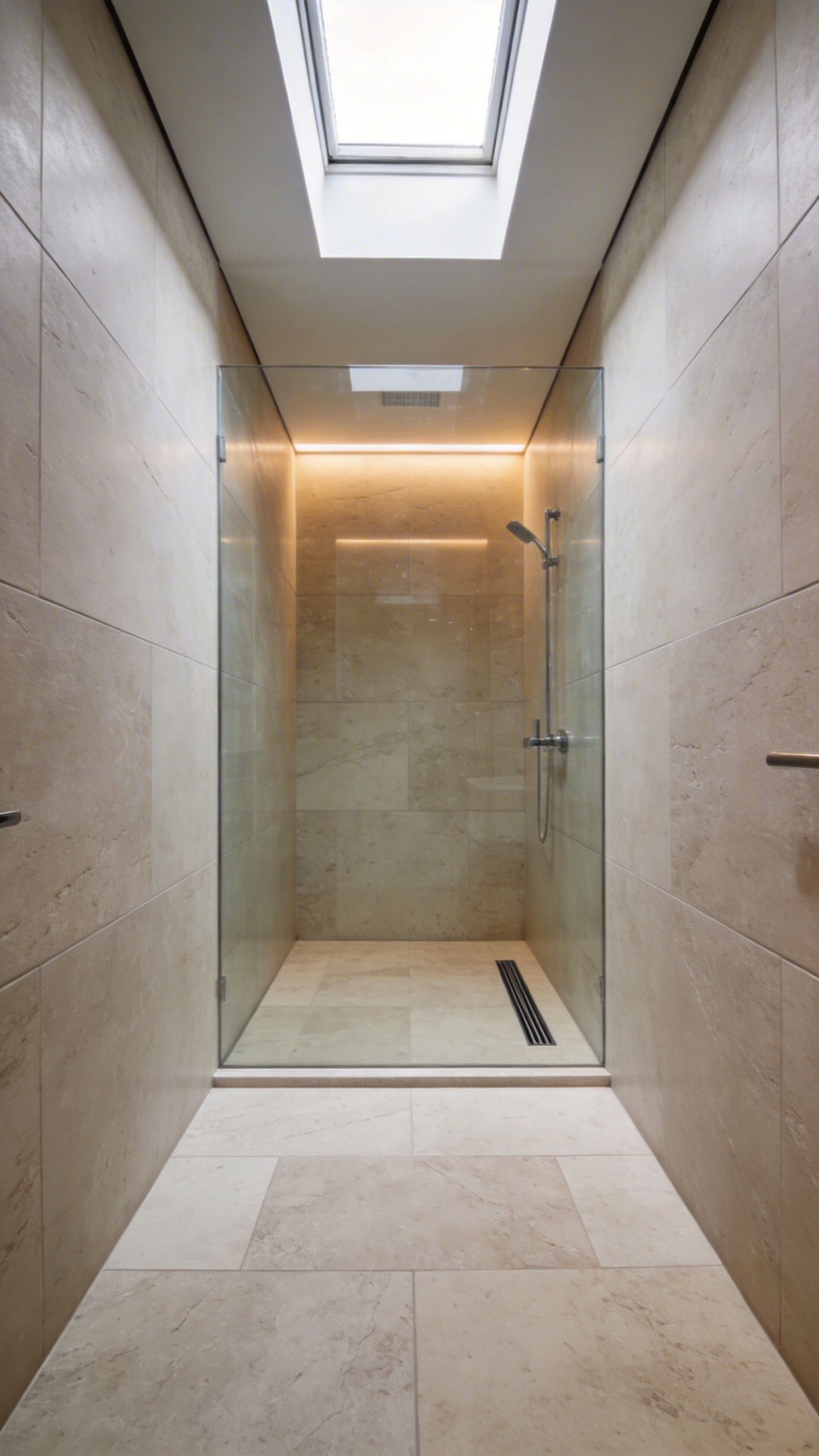
This continuous look is easily achievable thanks to modern linear drains. Linear drains only require a simple one-way pitch, unlike awkward four-way slopes. You can therefore carry expansive, large-format tiles directly into the shower area. Monolithic surfaces like poured microcement eliminate distracting grout grids completely. This strategy naturally creates a beautifully accessible, curbless shower suited for all mobility levels.
Wet floor safety remains a top priority in any universal design. Small mosaic tiles and extra grout were previously required for proper slip resistance. Choosing a honed stone or porcelain finish easily solves this technical friction today. A honed surface indeed provides incredible grip even when completely wet. Extending this same zero-transition flooring out into the hallway democratizes the entire space. Erasing the traditional utility border makes the bathroom feel infinitely larger.
16. Adaptive Maintenance Solutions: Selecting Epoxies and Sealants for Effortless Cleaning
Universal design prioritizes making daily chores easier for everyone. Selecting the right tile grout is therefore absolutely crucial. Traditional cement grout essentially acts like a microscopic sponge. It traps dirt and demands physically exhausting scrubbing. Modern epoxy grout forms a non-porous molecular armor instead. Stubborn soap scum wipes away effortlessly as a result. This zero-scrub surface ultimately prevents joint strain for homeowners.
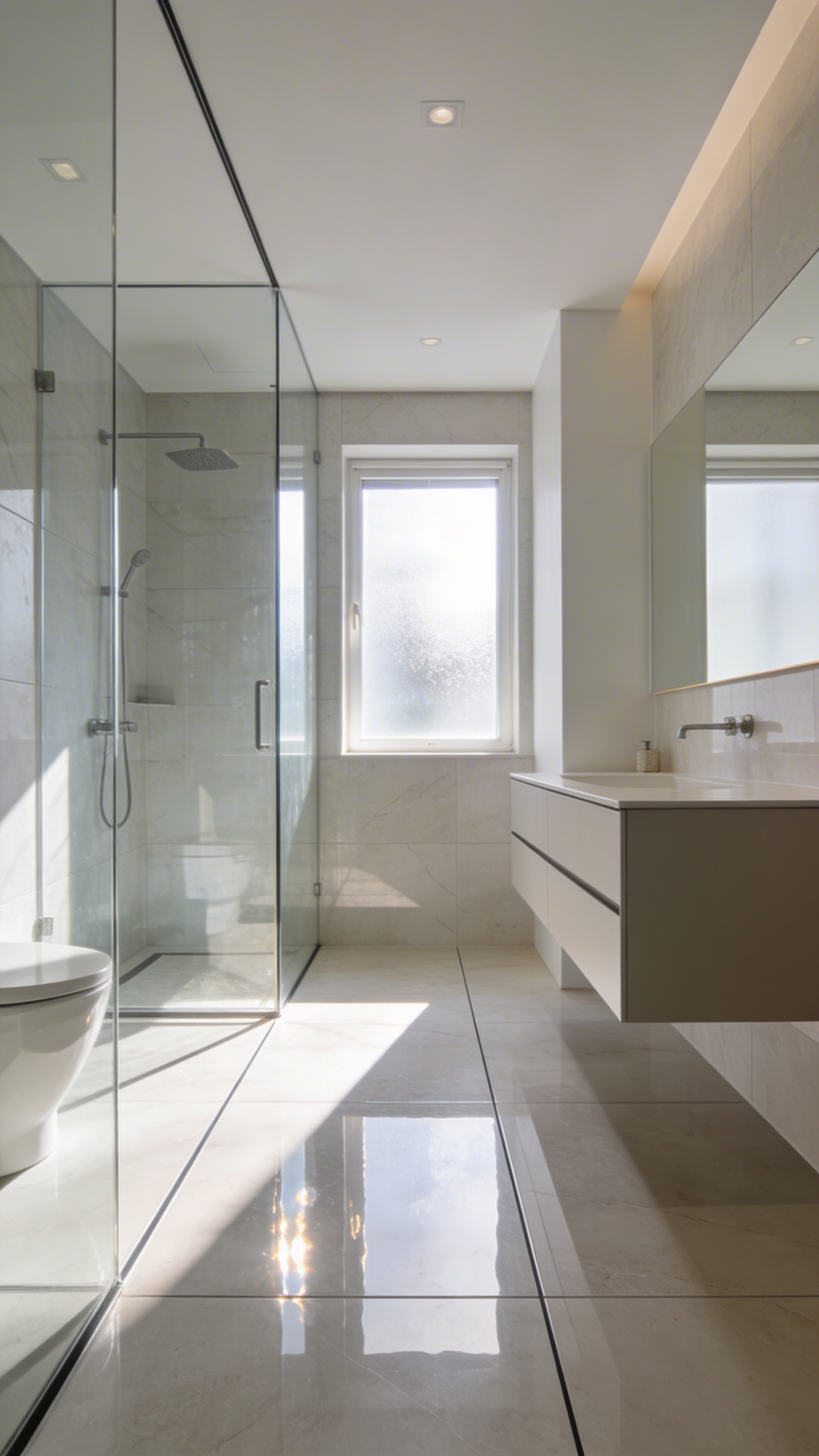
These reaction-based polymers also offer incredible molecular mold resistance. They completely lack the organic nutrients that mold needs, in fact. Top brands even embed antimicrobial silver ions directly inside. Tactile comfort matters deeply in universally accessible bathrooms, too. Older cement grout historically felt unpleasantly gritty to bare feet. Modern epoxies utilize ultra-fine quartz and glass beads instead. They create a beautifully smooth, comfortable sensory experience.
These rigid epoxies require flexible partners to survive, however. Structural floor shifts can easily crack rigid joints. Designers therefore install neutral-cure silicone sealants along the corners. These low-modulus sealants stretch quietly like shock absorbers. The floor avoids hairline fractures and deep dirt crevices as a result. Industry experts recommend ISO 13007 RG rated epoxy solutions. These adaptive materials ultimately guarantee an effortless, beautiful sanctuary.
17. Future-Proofing the Footprint: How Smart Flooring Choices Anticipate Changing Mobility
Accessible bathroom flooring historically felt sterile and clinical. Modern universal design fully embraces the limitless footprint today. Eliminating the shower curb completely removes lingering psychological barriers. Extending the same flooring smoothly into the shower creates a highly desirable spa-like zone. This unbroken spatial continuity visually reduces anxiety and the fear of tripping.
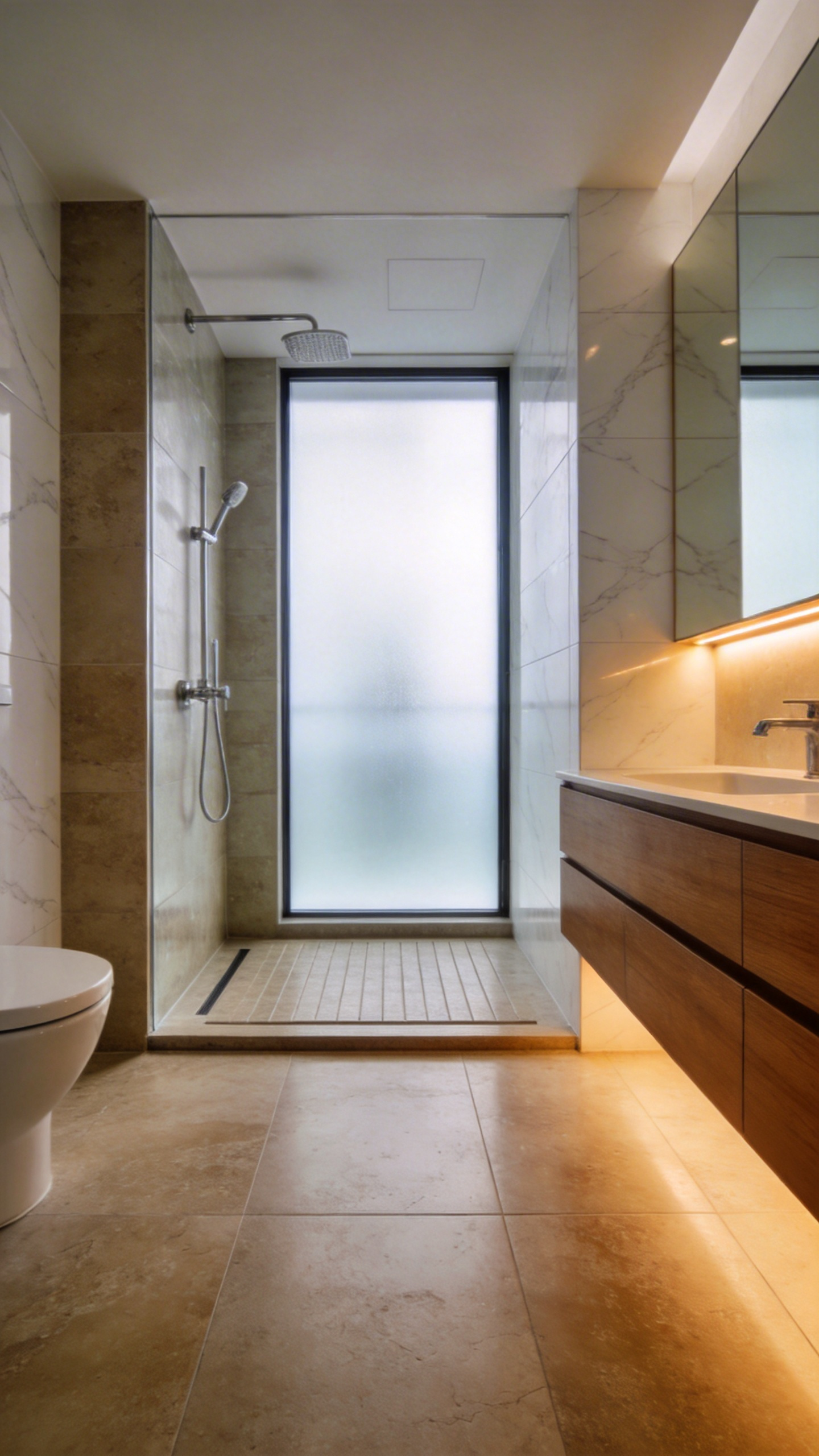
Technical safety now requires rigorous friction standards. Designers demand a Dynamic Coefficient of Friction rating above 0.42, therefore. Pendulum Test Values of 36 offer even better insurance. Manufacturers now glaze large-format tiles with invisible anti-slip textures. You get superior grip without endless, mold-prone grout lines.
Smart flooring also relies heavily on sensory cues. Placing dark gray tiles against a brilliant white shower floor adds instant contrast, for example. This powerful visual anchor assists users struggling with declining depth perception. Shifting from smooth porcelain to textured river stone alerts bare feet visually. Sound matters immensely, too. Luxury vinyl choices absorb disorienting echoes for those wearing hearing aids.
True resilience requires a hidden infrastructure structurally. Radiant underfloor heating dries standing water rapidly to minimize slip hazards. These comfortably warm floors prevent cold shock and sudden muscle cramping. Reinforced subfloors easily support heavy medical equipment without cracking expensive tiles. Materials like premium rubber offer high impact attenuation. These softer surfaces ultimately provide a cushioned landing that turns potential fractures into minor bruises.
18. The Ultimate Synthesis: Where Universal Safety Imperatives Meet Spa-Like Luxury
The modern bathroom is quickly evolving into a true biophilic haven. Accessible design historically relied on clinical, plastic fixtures. Luxury design today embraces a concept called invisible accessibility. Safety features are seamlessly integrated into high-end decor. Curbless showers create a continuous, unbroken floor plane, for instance. Linear wall drains allow large-format tiles to flow everywhere effortlessly. This continuous wet-room aesthetic serves everyone beautifully.
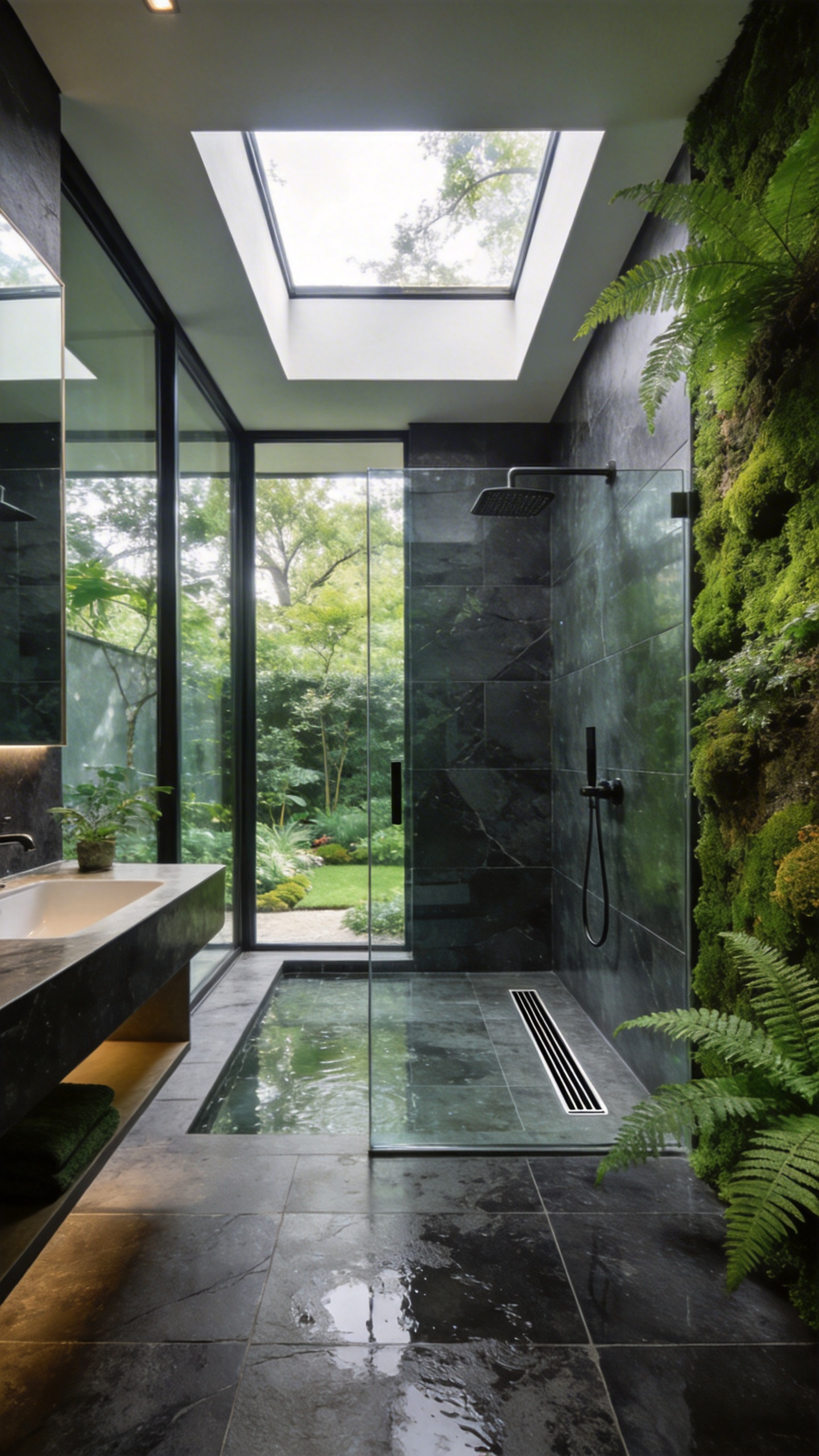
Safety naturally remains the core component of this wellness promise. Designers use neuro-haptics to select the perfect flooring. High-gloss marble traditionally symbolizes luxury but poses a serious slip hazard. Materials like honed travertine offer vital textural predictability instead. These organic textures specifically tell our brains the floor is safe. Radiant heating systems eliminate cold spots across the entire floor. Selecting the right bathroom renovation flooring is about more than just surface beauty. It is an investment in the long-term safety, accessibility, and sensory comfort of your home.
Frequently Asked Questions
What is the best flooring for a bathroom renovation?
The best flooring for a bathroom renovation is high-quality porcelain tile. Porcelain is vitrified at high temperatures, making it nearly impermeable to water. Choose large-format porcelain with a Dynamic Coefficient of Friction (DCOF) rating of 0.42 or higher for a premium home. This ensures a perfect balance of luxury and safety.
Is luxury vinyl plank (LVP) a good choice for high-end bathrooms?
Yes, LVP is an excellent choice for high-end bathrooms. Stone Plastic Composite (SPC) or Wood Plastic Composite (WPC) versions are particularly effective. It offers a warmer feel underfoot than stone and installs with a continuous, waterproof seam. Its embossed-in-register textures provide a high-end wood look with superior slip resistance.
How do I ensure my new bathroom floor is slip-resistant?
Look for tiles with a matte or honed finish rather than high-gloss to ensure slip-resistance. Check the manufacturer’s DCOF rating. A minimum of 0.42 is standard for level floors, but 0.60 is recommended for wet shower areas. Using smaller mosaic tiles in splash zones also increases the number of grout lines. These act as natural friction multipliers.