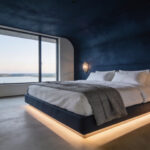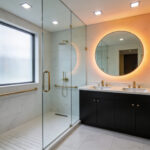
Many homeowners view the bedroom as strictly functional. It fulfills a biological need for rest, housing a bed and basic storage. Consequently, the standard approach often involves purchasing a matching “bedroom suite” for instant coordination. However, this retail shortcut creates a uniform, flat environment lacking true character. Indeed, these spaces frequently feel like impersonal showrooms rather than private retreats. You have a place to sleep, yet you likely lack a sanctuary.
The secret is curating a collection that speaks to your emotional well-being. Therefore, we must approach furniture selection with the discernment of a gallery curator. This guide offers essential bedroom furniture inspiration for transforming utilitarian spaces into personal sanctuaries. Individual pieces should act as cousins rather than identical siblings. For instance, pairing a sculptural iron bed with wooden tables creates necessary visual depth. Simultaneously, layering diverse finishes introduces a sophisticated, lived-in charm that a catalog set simply cannot match.
This guide reveals how to cultivate an environment of mental calm. We will explore the art of mixing materials for texture and contrast. Furthermore, we will discuss integrating meaningful artwork to infuse personal sentiment into the space. Next, we examine how reducing visual clutter directly enhances your quality of rest. Ultimately, you will learn to protect your peace through intentional, curated design choices.
The Philosophy of the Room: Treating Furniture as Sculptural Elements
Viewing bedroom furniture as sculpture transforms a utilitarian space into an intimate gallery. Fundamentally, this philosophy prioritizes emotional impact over mere function. In fact, the room becomes a curated landscape designed to modulate your sensory experience. Historically, this echoes Edgar Allan Poe’s assertion that a room should be judged like a painting. Therefore, everyday objects must speak, express, and elevate the environment.
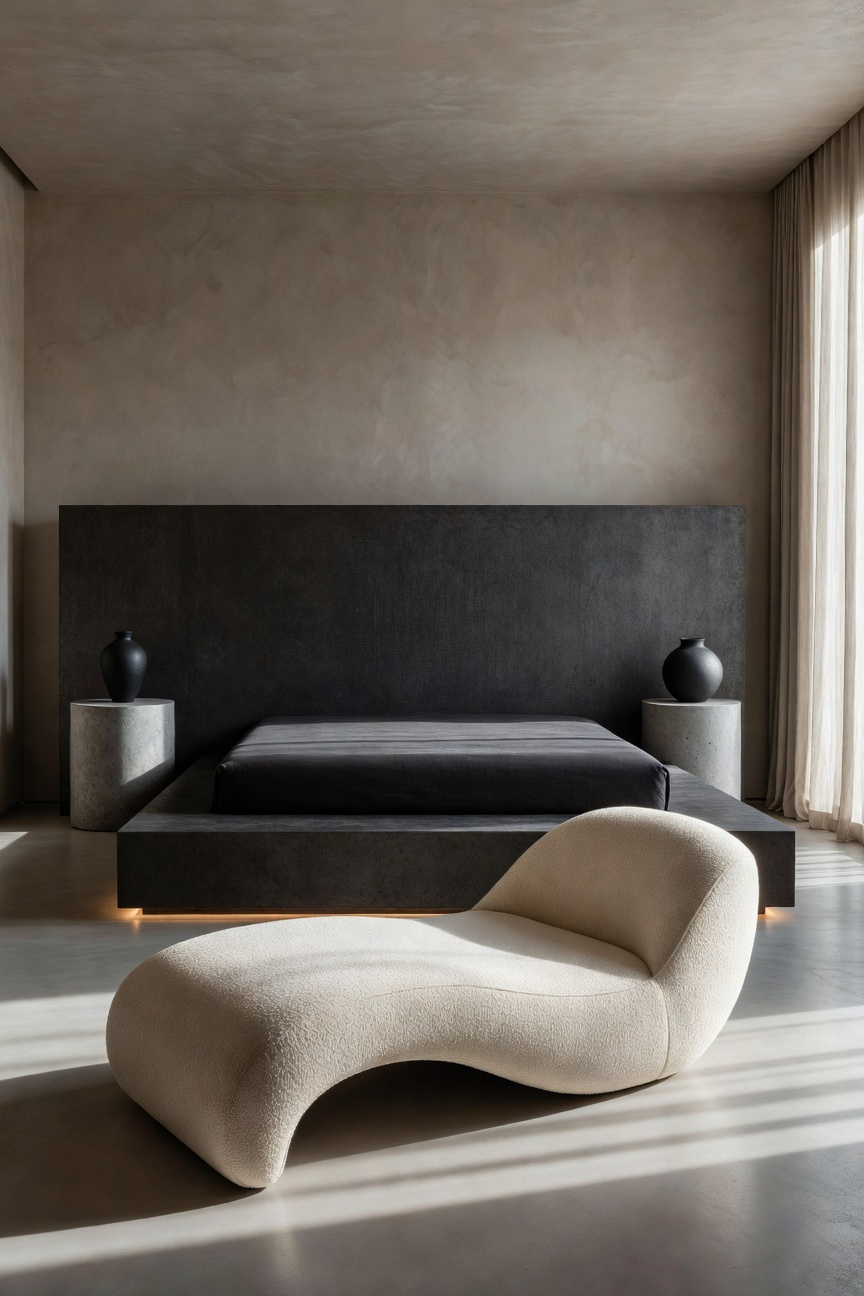
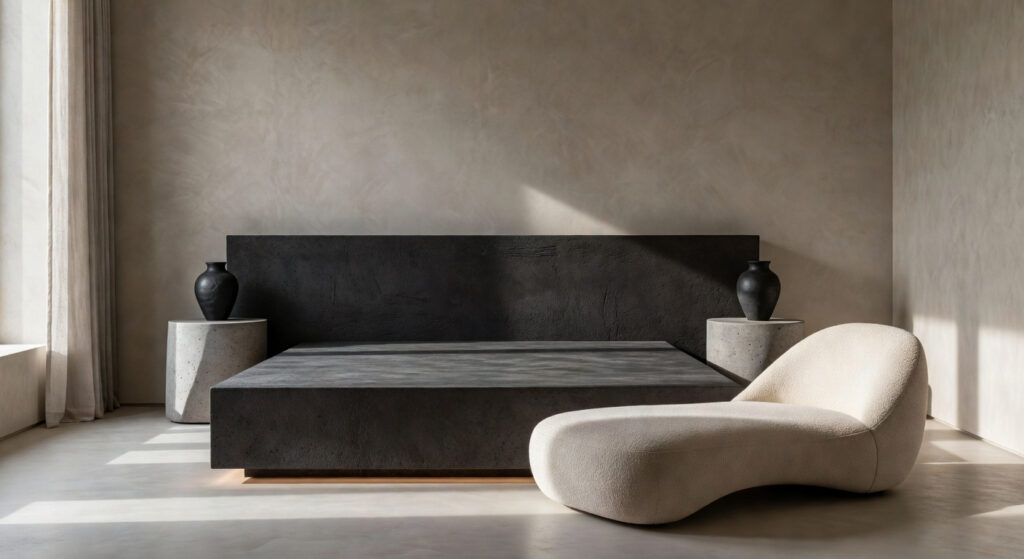
Specifically, the bed serves as the room’s monumental, architectural centerpiece. For instance, consider a “statuette” bed frame replacing a conventional setup. This might manifest as a fluid wooden headboard sweeping dramatically into the wall. Alternatively, a raw redwood burl slab introduces a breathtaking, natural texture. Consequently, these large forms establish a visual hierarchy and direct the room’s flow.
Beyond the bed, this approach draws heavily from mid-century modernist principles. Notably, artist Isamu Noguchi championed this blend of hard and soft elements. His low-slung designs emphasized the contrast between machined planes and organic curves. Furthermore, lighting functions as a crucial sculptural element in this context. For example, an Akari light sculpture provides essential, atmospheric radiance. Ultimately, these pieces invite physical interaction, making the space not just inhabited, but deeply felt.
The Centerpiece: Selecting a Headboard that Frames the Narrative
Historically, the headboard served a purely practical purpose. Specifically, it acted as a draft-blocker in poorly insulated medieval homes. However, this element quickly evolved into a pronounced social signifier. From Egyptian Pharaohs to Renaissance elites, the bed became a public stage. Consequently, ornate carvings were used to display wealth and authority.
Today, the headboard still anchors the room psychologically. In Feng Shui, a solid headboard represents a “mountain.” Therefore, it provides stability and protection for the sleeper. Conversely, open slats may introduce a subconscious sense of disconnection. Thus, a sturdy, upholstered design is often preferred over open bars.
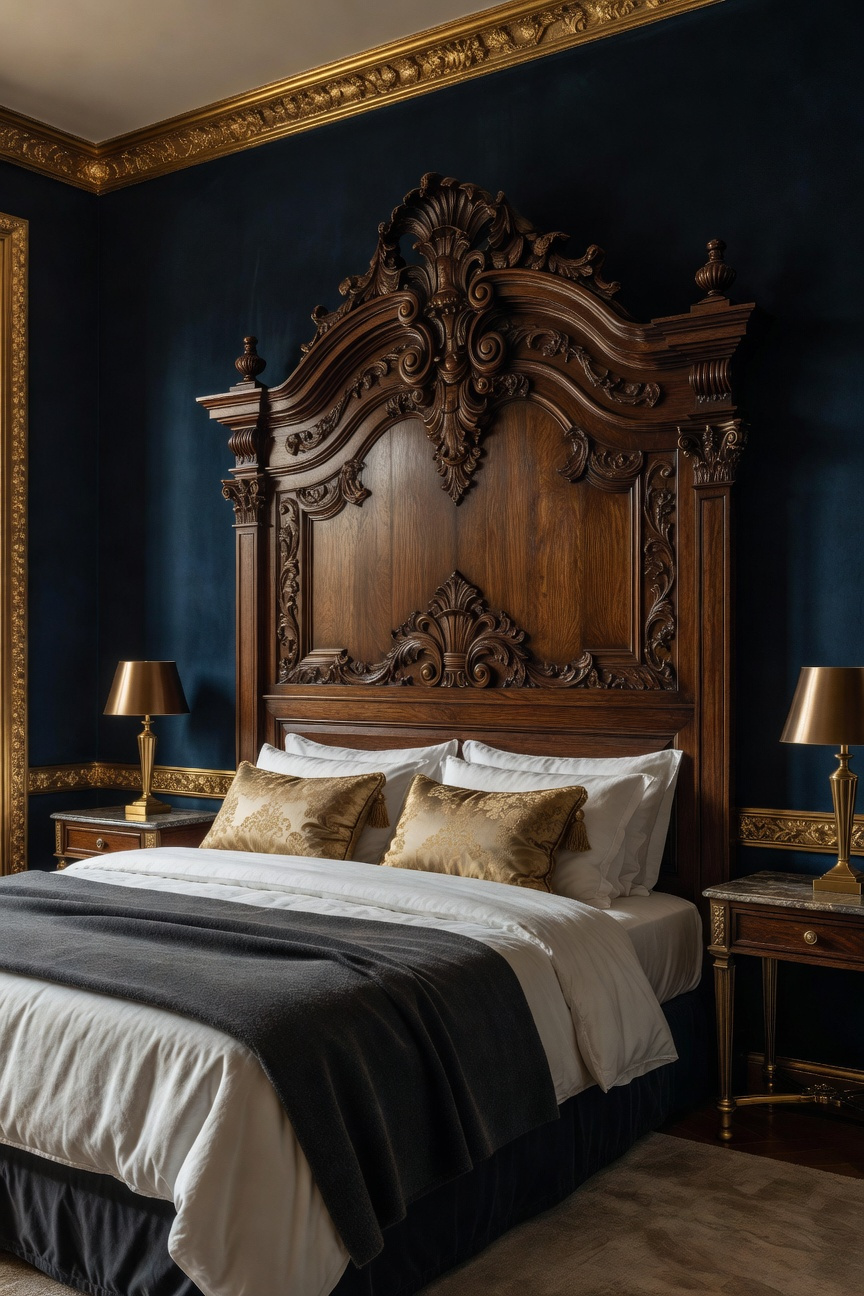
Furthermore, the material choice dictates the room’s sensory narrative. For instance, velvet offers a “voluptuous cushioned effect.” Its “nap” shifts color depending on lighting conditions, adding dynamic luxury. Alternatively, linen creates a refreshing, breathable atmosphere. It appeals to a more natural, wellness-focused lifestyle. In contrast, metal frames provide a sleek, industrial profile. However, they can feel cold and lack inherent warmth.
Finally, consider the structural impact of scale. Ideally, the height should not exceed three-quarters of the wall. This balance prevents the bed from appearing top-heavy. Additionally, the width frames the view. Specifically, a standard fit adds two to four inches beyond the mattress. Moreover, extra-wide panels can transform furniture into architecture. By extending past bedside tables, they visually anchor the entire wall. Ultimately, this creates a cohesive, custom-designed narrative.
Breaking the Set: Why Mismatched Nightstands Create Visual Tension
Bedrooms naturally gravitate toward heavy symmetry. Because the bed anchors the room on a central axis, the layout creates a “forced symmetry.” Consequently, adding identical furniture often results in a monotonous, “staged” aesthetic. Instead, designers introduce asymmetry to generate visual tension.
Specifically, mismatched nightstands disrupt this predictability. They force the eye to pause and examine the relationship between pieces. This controlled contrast makes the overall design feel intentionally curated rather than simply purchased.
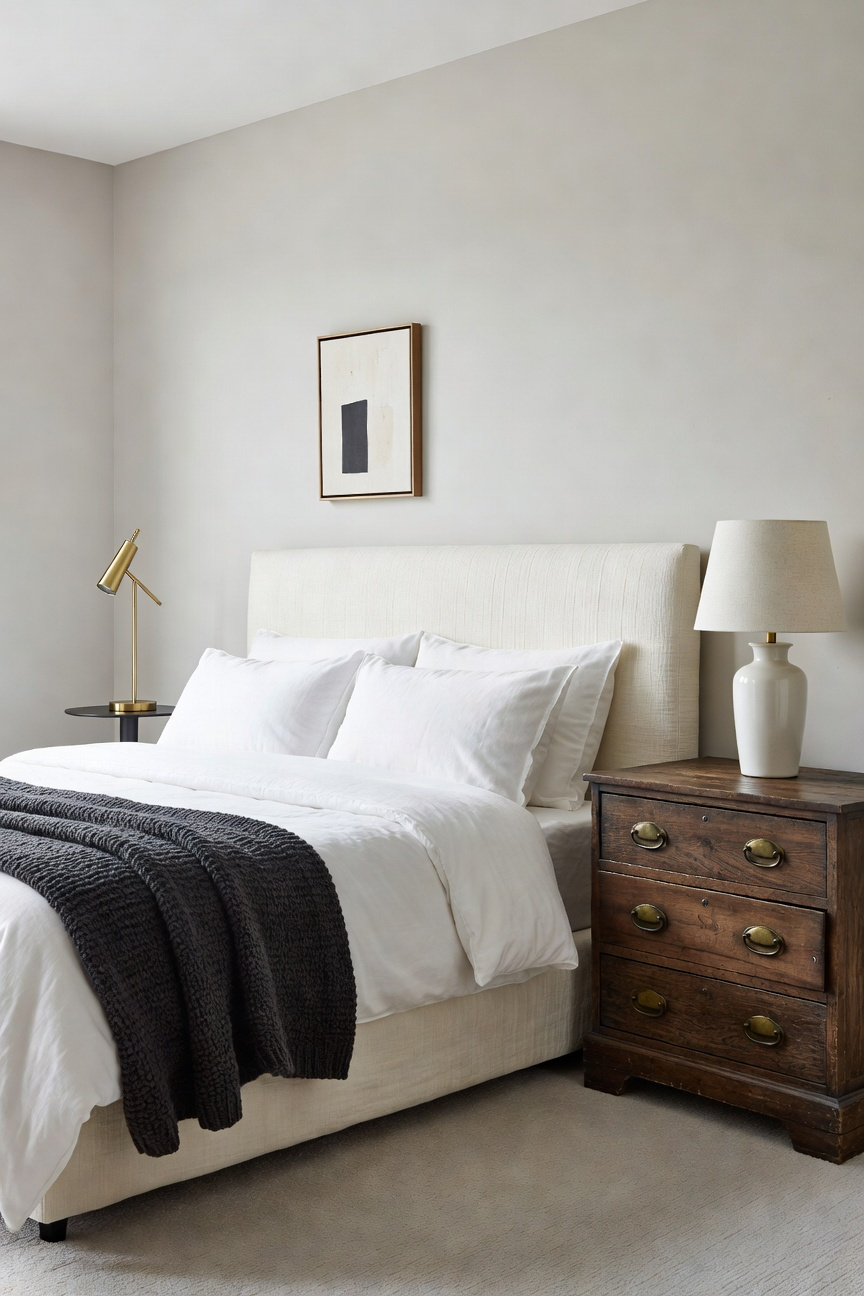
Furthermore, this approach transforms a room’s narrative. For instance, pairing a sleek modern table with a vintage find adds history. It suggests a collection built over time, not a single shopping trip. Therefore, the room communicates a strong sense of independence and personality.
However, avoiding chaos requires strategic anchoring. Ideally, utilize matching light fixtures on both sides to re-establish harmony. These identical vertical elements ground the disparate tables. Additionally, consider the visual weight of each piece. You might balance a bulky chest with a visually lighter pedestal to maintain composition and flow. Ultimately, this juxtaposition of sensory elements adds deep, eclectic charm to the space.
The Low-Profile Platform: Grounding the Space for Modern Serenity
The low-profile platform bed offers more than just a sleek silhouette. Historically, this design evolves directly from Japanese sleeping traditions using futons on tatami mats. Consequently, resting close to the floor fosters a profound psychological sense of stability. In design terms, this low center of gravity acts as a visual anchor. Ultimately, it creates a “grounded calm” that transforms the bedroom into a secure, unpretentious haven.
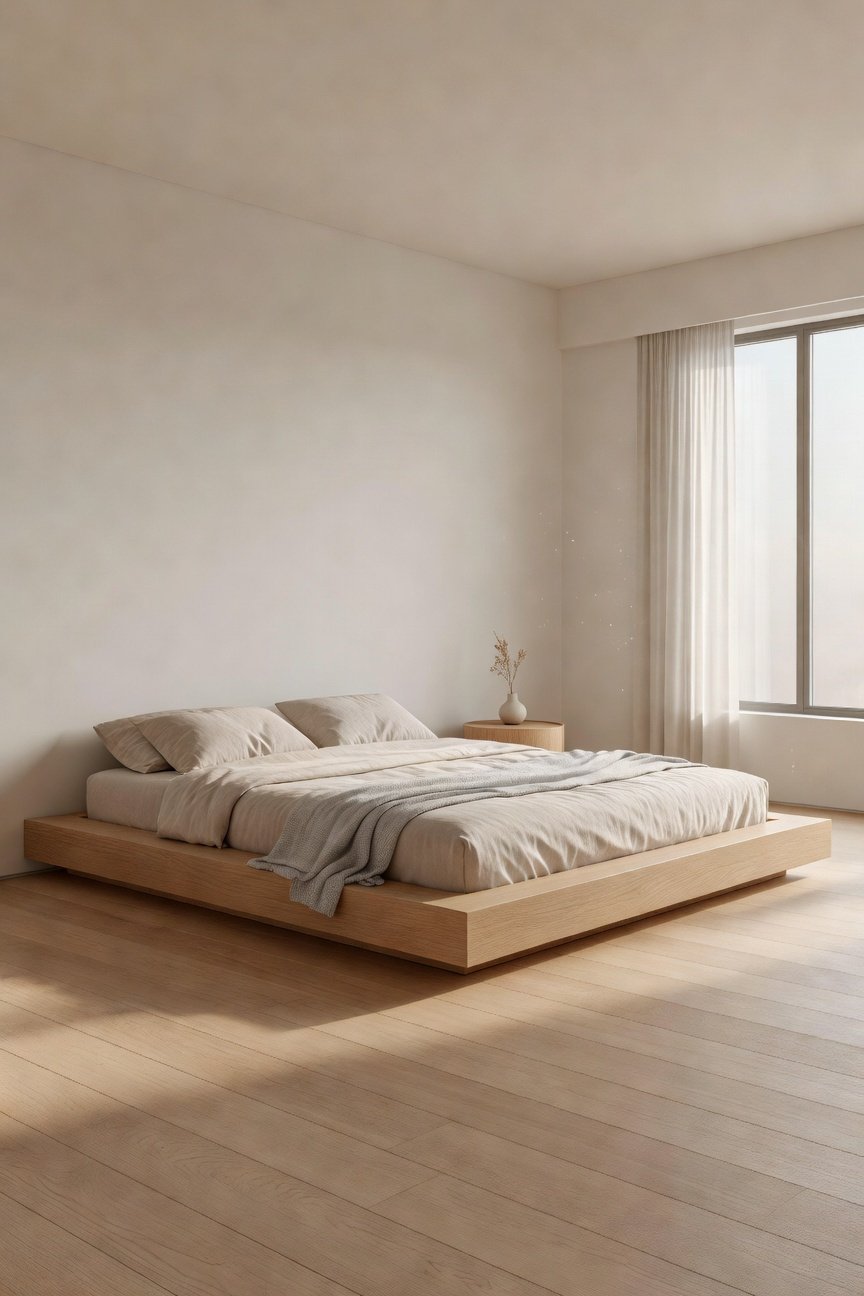
Beyond psychology, this style masterfully manipulates spatial perception. Specifically, lowering the room’s visual center makes ceilings appear significantly higher. Therefore, the bed feels less dominant, allowing the surrounding space to breathe. This openness is essential for modern, minimalist aesthetics like Japandi. Furthermore, the clean lines invite the eye to travel freely across the room. To maintain this harmony, however, ensure accompanying side tables are scaled proportionally.
Functionally, the platform structure eliminates the need for bulky box springs. As a result, the frame creates a streamlined look without sacrificing support. Interestingly, this low height perfectly counteracts the thickness of indulgent, modern mattresses. Finally, natural materials like solid oak or bamboo often define these frames. Thus, the design reinforces a tactile connection to nature, completing the serene atmosphere.
Materiality in Motion: Introducing Bouclé and Velvet for Soft Architecture
Soft architecture transforms rigid structural lines into inviting, human-centric forms. Historically, this concept is rooted in a pivotal moment in mid-century design. For instance, Florence Knoll challenged architect Eero Saarinen to create a chair akin to a “basket full of pillows.” Consequently, the resulting Womb Chair established bouclé as a primary tool for architectural softening. Today, this looped fabric functions similarly within the bedroom to create a cocooning effect.
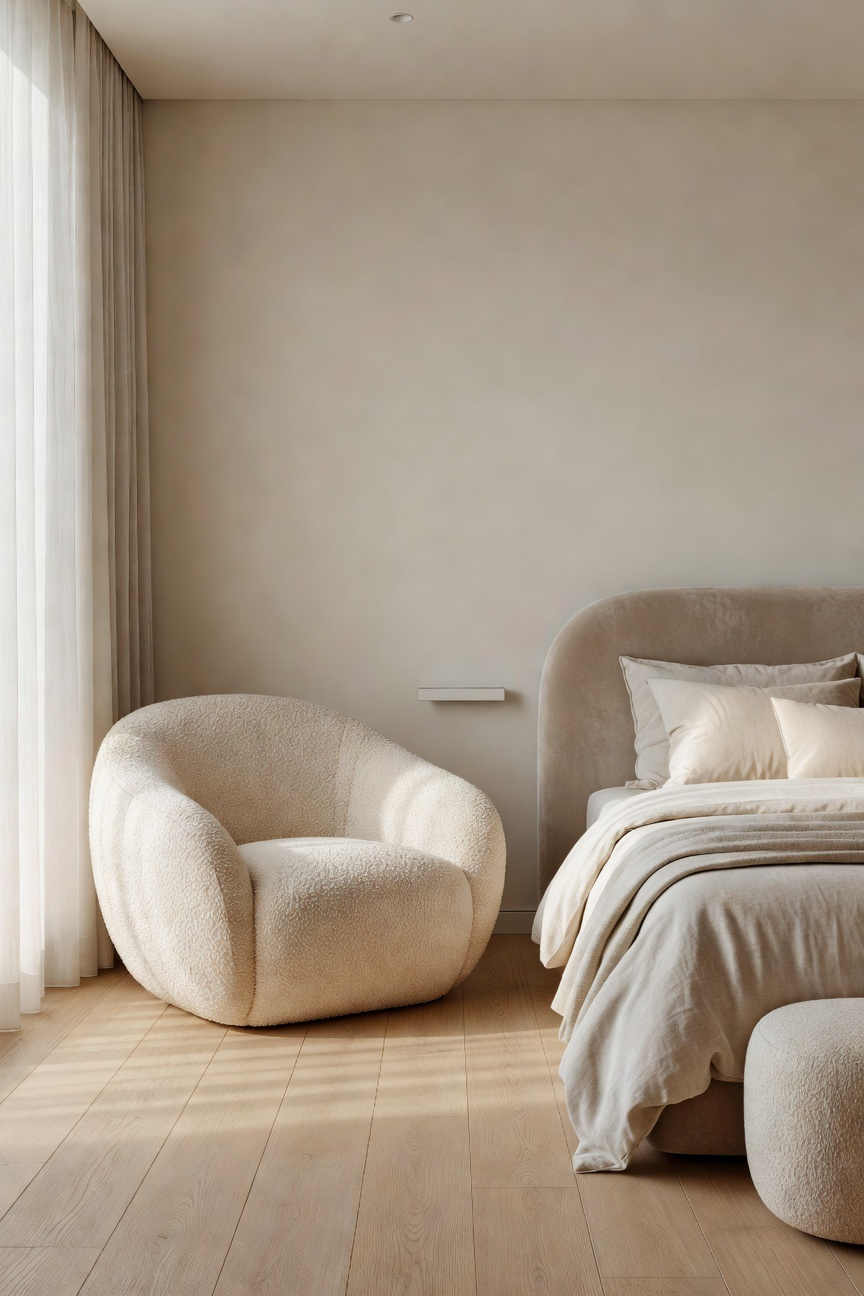
Specifically, bouclé’s nubby, matte texture gently diffuses light rather than reflecting it. This visual quality adds sculptural depth to neutral palettes like ivory or latte. Moreover, the fabric’s dense construction absorbs sound, significantly dampening reverberation for a quieter space. Therefore, bouclé headboards or benches effectively disguise the hardness of a room’s architecture.
Conversely, velvet offers a sensory experience defined by luminous motion. Unlike the stillness of bouclé, velvet’s dense, upright pile physically shifts when touched. As a result, the surface displays rich tonal variations and subtle shading. This dynamic “crushing” effect adds profound visual depth, particularly in saturated jewel tones.
Furthermore, velvet interacts with room lighting to create a feeling of luxe drama. While traditionally associated with delicate nobility, modern blends now offer durability for everyday use. Ultimately, selecting between these textures allows you to curate a bedroom that feels like a piece of living art.
Organic Curves: Softening Rectilinear Rooms with Rounded Silhouettes
Modern bedrooms often suffer from rigid, rectilinear architecture. Consequently, sharp corners create subconscious visual tension within a resting space. Specifically, the eye must constantly micro-adjust at every hard angle. In contrast, organic curves encourage a continuous, uninterrupted visual flow. This stabilization reduces fatigue and fosters a sense of calm.
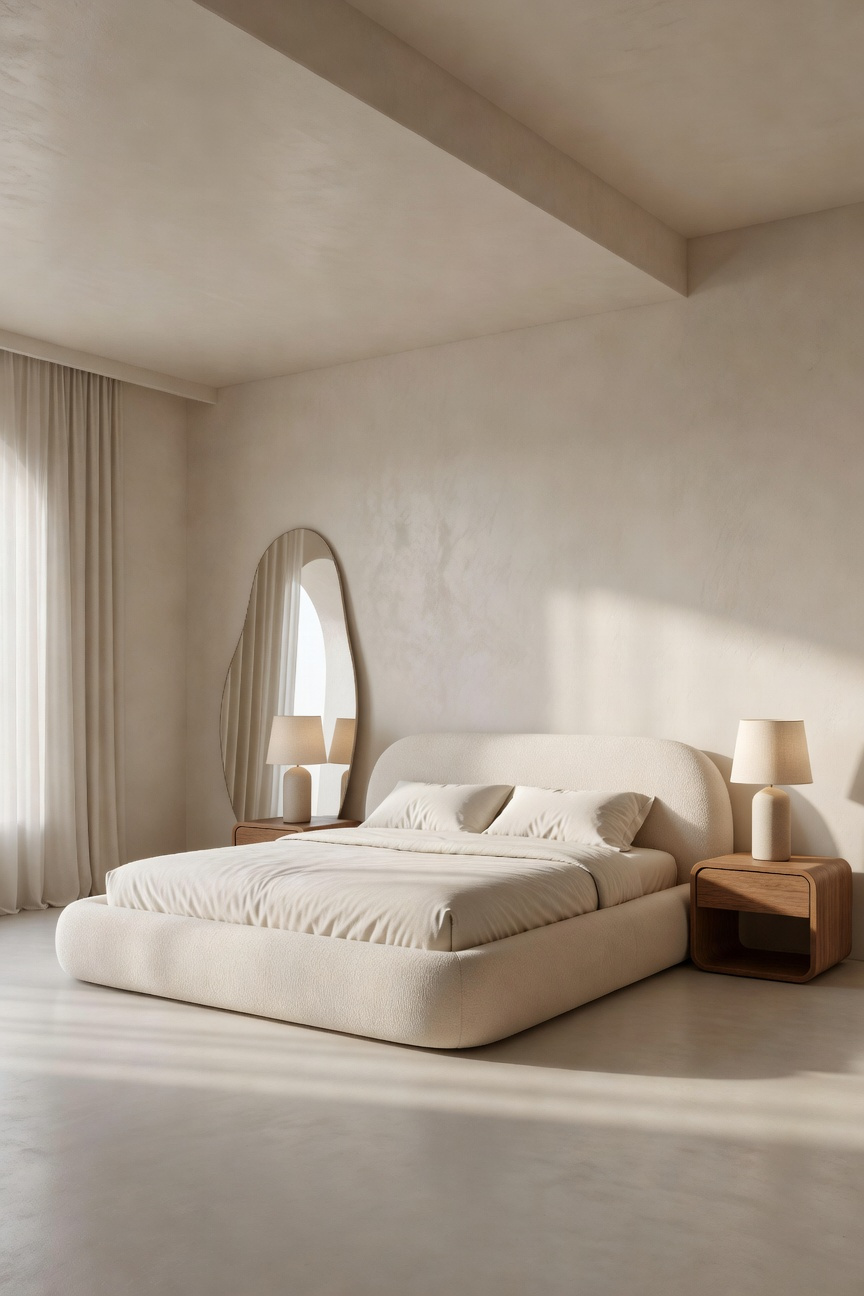
This design philosophy echoes the historic Art Nouveau movement. Historically, artists favored the “whiplash line” to mimic nature’s fluid rebellion against industry. Today, this resurgence aligns with contemporary biophilic design principles. Ultimately, rounded forms feel safer and less confrontational to the brain than sharp edges.
To apply this, view the bed as a central sculpture. For instance, a curved, upholstered headboard immediately softens a boxy space. Furthermore, select casegoods with pill-shaped silhouettes or softened wood corners. These pieces disrupt the room’s expected grid layout without sacrificing functionality. Therefore, introducing circular mirrors or rounded nightstands guides the eye gently across the room. The result is a restorative environment that prioritizes sensory harmony over rigid structure.
The End-of-Bed Bench: A Moment for Gallery-Style Seating
Ideally, view the end-of-bed bench as a sculptural installation rather than mere storage. Historically, these pieces functioned primarily as utilitarian cedar chests for hiding out-of-season linens. However, modern design has elevated them into declarative aesthetic punctuation marks. Consequently, the foot of the bed becomes a curated vignette suitable for displaying art books or textiles.
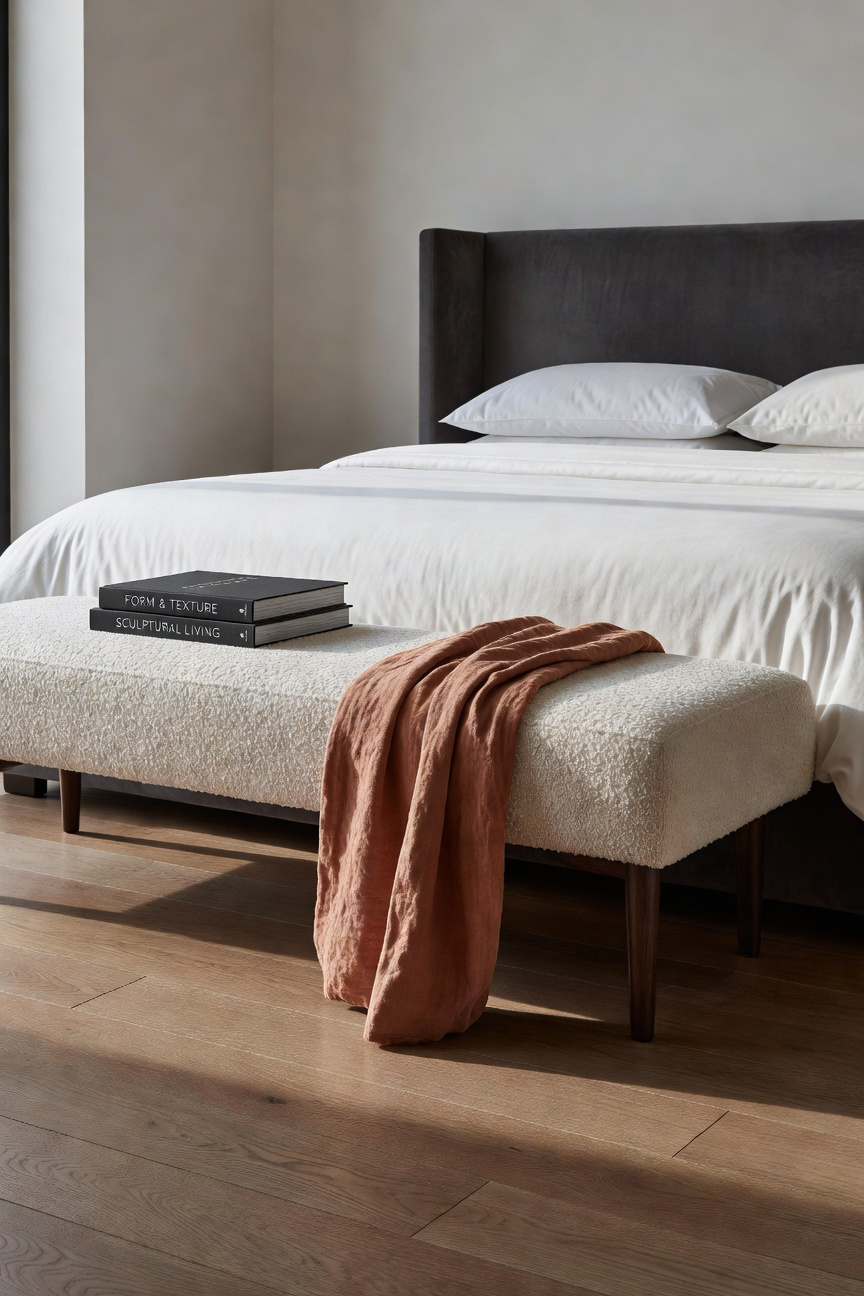
Beyond decoration, this placement serves a critical architectural role in your master suite. Specifically, the bench visually anchors the bed, preventing it from appearing to float aimlessly. Furthermore, a low, solid profile balances vertical proportions, particularly when paired with a tall or heavy headboard. In effect, this addition creates a cohesive zone rather than a collection of disjointed furniture, furthering your master bedroom inspiration.
Visually, this is also your prime opportunity to introduce complex, gallery-worthy textures. For instance, a bench upholstered in nubby bouclé offers a striking contrast against crisp, flat cotton sheets. Conversely, a sleek iron frame introduces a cool, architectural element to an otherwise soft room. Ultimately, treating this seating as art transforms a functional necessity into a sophisticated focal point.
Storage as Exhibit: The Renaissance of the Glass-Front Armoire
Historically, the Renaissance armoire served as an opaque status symbol. Its value lay primarily in the exterior craftsmanship, often hiding the contents within. However, modern design has inverted this concept completely. Now, the glass-front armoire functions as a curated display case, much like a gallery vitrine. Consequently, your personal wardrobe becomes the art itself.
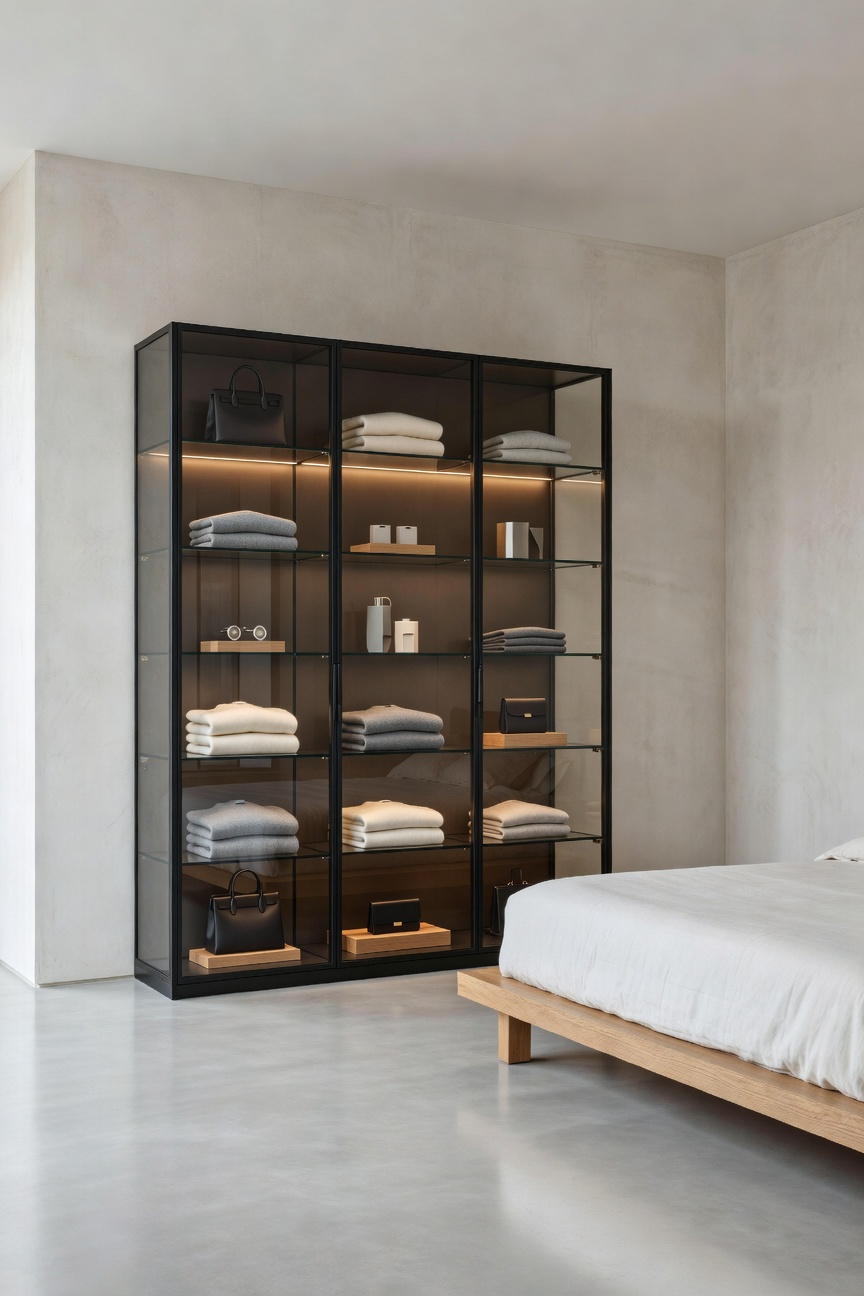
Specifically, this transparency encourages a psychological shift often called the “display effect.” Unlike traditional closets, you cannot simply shove clutter out of sight. Therefore, the glass front forces you to curate your belongings intentionally. In fact, this turns the daily act of dressing into a refined, boutique-like ritual. The furniture acts as a gentle accountability partner for organization.
Furthermore, the choice of materials dramatically alters the room’s atmosphere. Clear glass highlights designer pieces, while ribbed glass offers a vintage, soft-focus mystique. Additionally, proper illumination is essential for this aesthetic. Integrated LED lighting transforms the unit from a dark void into a source of ambient glow. Thus, the armoire reduces the furniture’s visual weight, making the bedroom feel larger and brighter. Ultimately, this piece acts as an architectural frame, turning your lifestyle into a visual exhibit.
The Dresser Surface: Curating Your Horizontal Gallery Wall
Your dresser has evolved beyond simple storage. Historically, the medieval *dressoir* publicly displayed wealth and social ranking. Today, however, this piece serves a strictly private purpose. It acts as a horizontal canvas for your personal narrative. Therefore, curating this surface involves creating a cohesive “horizontal gallery wall.”
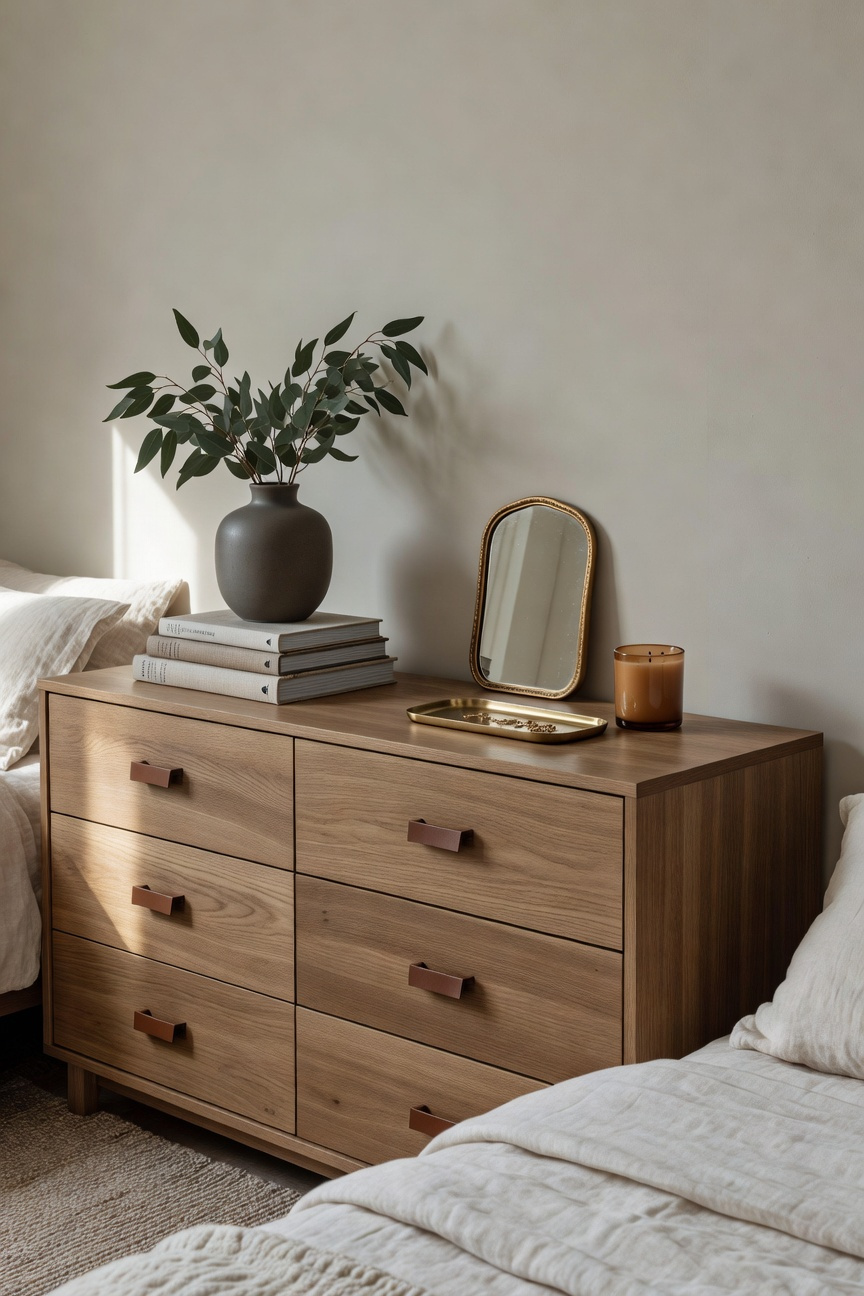
To start, avoid rigid symmetry. Pure symmetry often feels too formal for a restful bedroom. Instead, embrace asymmetrical balance using “visual weight.” For instance, a single dark, saturated vase can balance a grouping of lighter frames. Furthermore, distinct textures create necessary depth. Specifically, try layering books to add height or anchoring small items on a tray. This establishes a solid visual foundation.
Next, consider the art hanging above. Ideally, position frames just 4–6 inches above the dresser top. This proximity visually connects the wall art to the surface objects below. Consequently, the eye perceives the entire arrangement as one unified composition rather than separate parts.
Finally, apply the “rule of odd numbers” to your surface vignettes. Grouping items in threes creates a natural, dynamic flow. Additionally, incorporate sensory elements like soft lighting or organic greenery. Ultimately, select objects that hold deep personal value. This approach transforms a piece of furniture into an intimate exhibition of the self.
The Occasional Chair: Creating a Solitary Sculpture for Reading
In the quiet landscape of a bedroom, the occasional chair functions as a solitary sculpture. However, this piece must transcend mere aesthetics to become a functional retreat. Specifically, the ideal reading chair fuses the striking silhouette of an accent piece with the deep ergonomics of a lounge. Consequently, you should seek structured designs like modernized wingbacks. These forms provide the essential back and arm support required for hours of immersion.
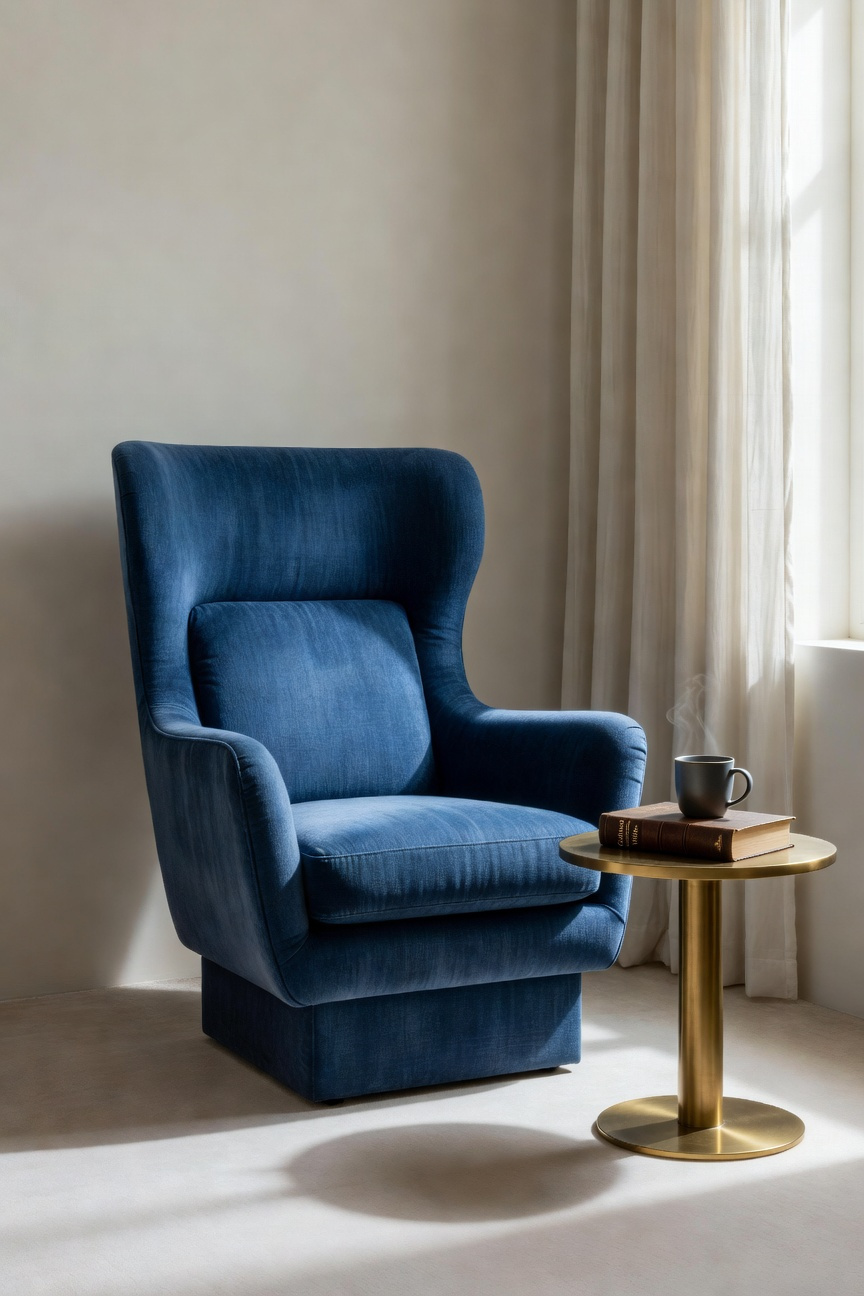
Beyond structure, the chair’s shape plays a pivotal role in your psychology. For instance, high-back or curvilinear designs create a “cocooning” effect. This enveloping form naturally blocks visual distractions, signaling a moment of focused solitude. Furthermore, texture enhances this sense of security. Therefore, prioritize tactile materials such as heavy linen, velvet, or bouclé. When paired with the grounding warmth of exposed wood grain, these textiles transform the chair into a comforting, haptic experience.
Finally, a curated reading nook relies entirely on precision lighting. In fact, relying on general overhead light often leads to unnecessary eye strain. Instead, treat the light as a directorial tool. Specifically, position a floor lamp slightly to the side of the chair. This angular placement effectively eliminates glare on glossy pages or digital screens. Ultimately, properly directing warm light carves out a distinct volume of space, turning a simple corner into a dedicated sanctuary.
Floating Elements: Wall-Mounted Furniture for Spatial Flow
Floating elements transform bedroom furniture from mere utilities into integrated architectural features. Historically, this design approach stems from Modernist principles that rejected heavy, floor-bound objects to celebrate open space. Specifically, by exposing the perimeter of the floor, wall-mounted units create an optical illusion of expansive footage. Consequently, even compact bedrooms perceive a sense of visual lightness and airiness.
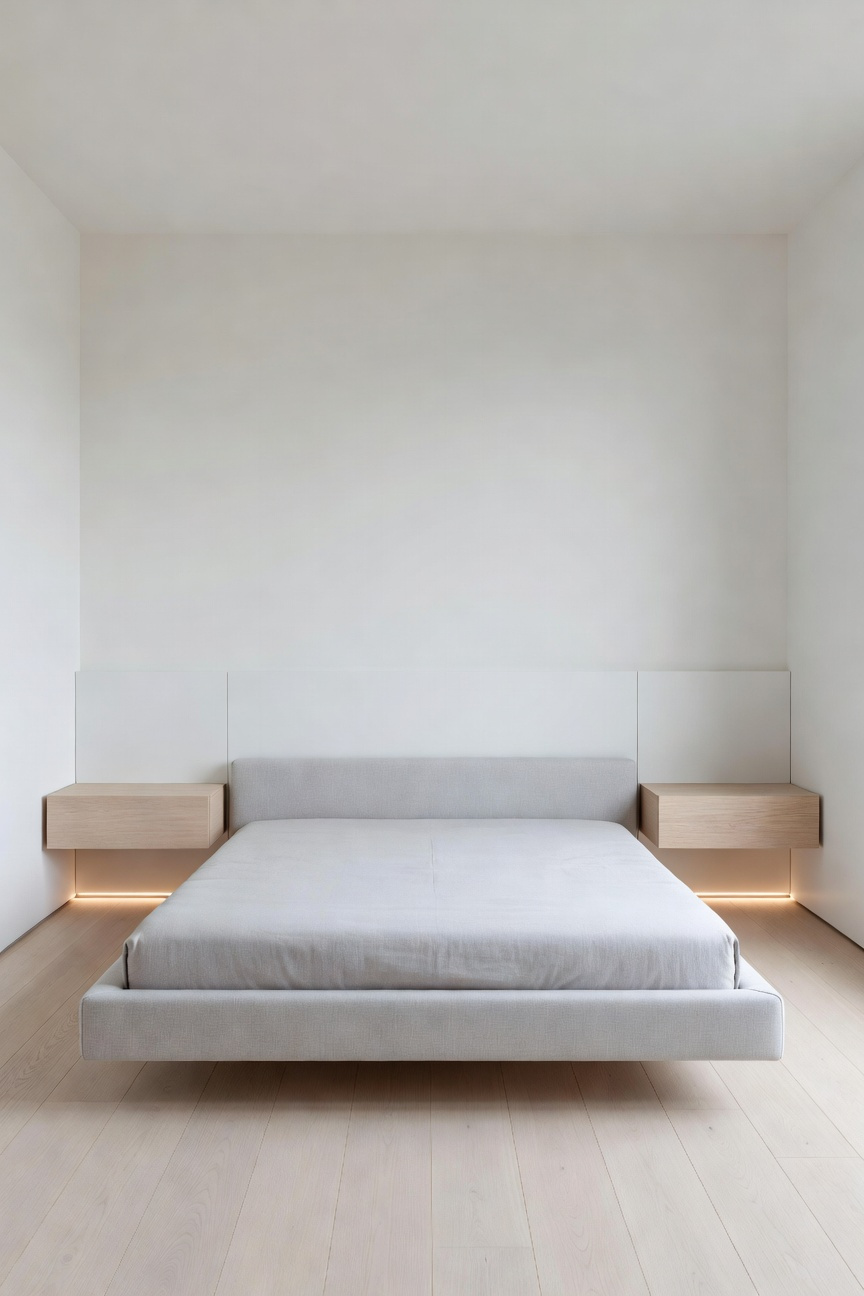
The secret to this weightless aesthetic lies in a technical detail known as the “shadow gap.” Essentially, this deliberate recess between the furniture and the wall traps a defining line of shadow. Furthermore, this gap acts like a frame, emphasizing that the object is distinct from the structure behind it. From a curatorial perspective, this is the perfect opportunity for lighting enhancements. In fact, installing hidden LED strips within the gap amplifies the floating effect. Therefore, the soft glow creates an ethereal pedestal, severing the visual connection to the ground entirely.
Beyond aesthetics, this spatial flow supports psychological tranquility. By removing obstacles from the ground level, you ensure uninhibited movement throughout the sanctuary. Ultimately, maintaining a visible, cleanable floor plane fosters a sense of order and a calm, focused mind.
Lighting as Jewelry: Replacing Lamps with Architectural Sconces
Think of architectural sconces not merely as utilities, but as the room’s jewelry. Specifically, these fixtures transform lighting into a permanent art installation. Instead of temporary table lamps, they utilize rich, high-touch materials. For instance, hand-cast solid brass often serves as a metallic setting. Additionally, genuine alabaster or reeded glass replaces standard fabric shades. Consequently, these textures add sculptural depth even when unlit.
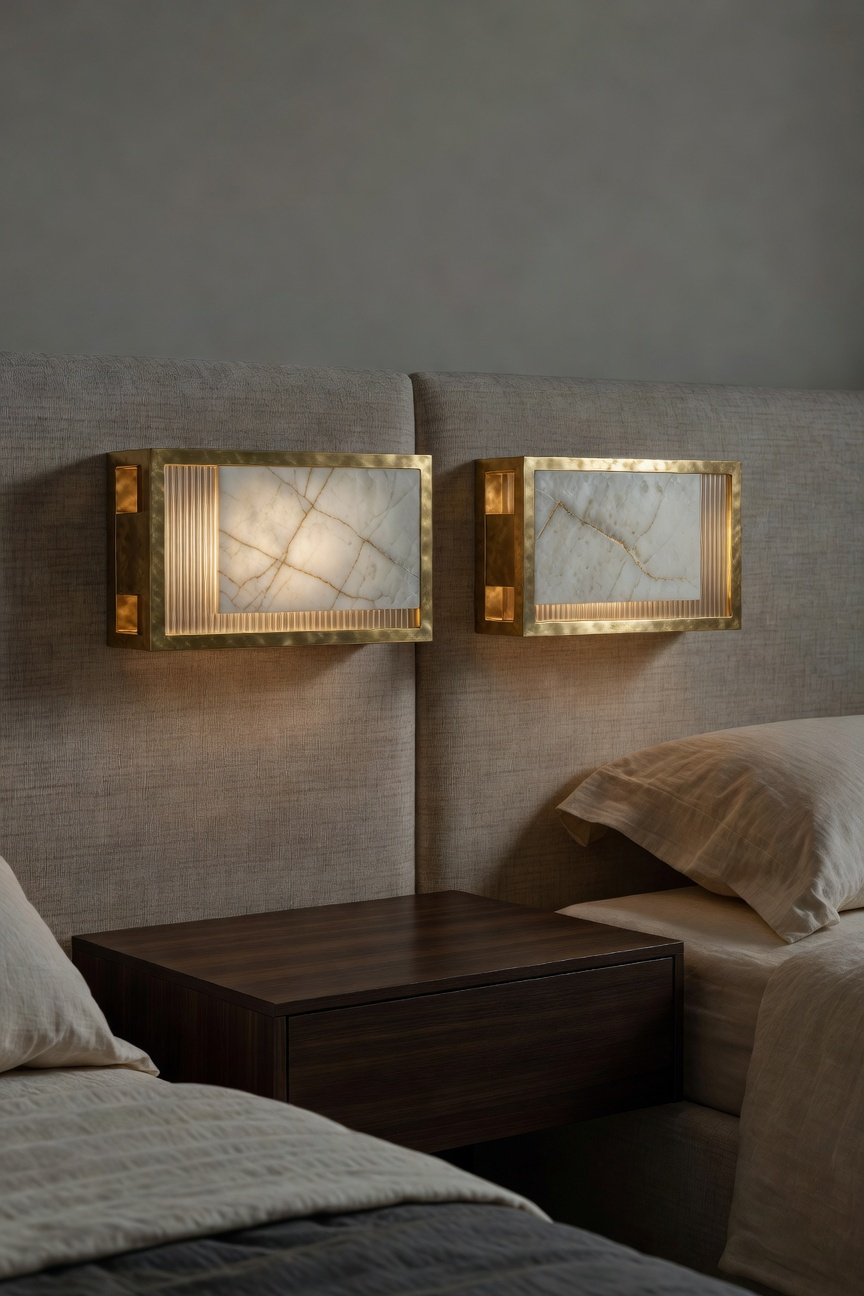
Beyond aesthetics, this shift reclaims valuable nightstand surface area. In fact, removing visual cord clutter instantly elevates the design. However, this commitment demands precise architectural placement. Generally, curators recommend installing sconces 30 to 36 inches above the mattress. Ideally, position them 6 to 12 inches from the headboard’s edge. This fixed symmetry creates a deliberate, built-in look.
Furthermore, the quality of light defines the atmosphere. Therefore, opt for a warm 2700 Kelvin temperature. Unlike the static puddle of a table lamp, sconces offer layered illumination. Ultimately, this approach provides flattering, glare-free light that treats your bedroom like a gallery.
The Vanity: Reimagining the Personal Altar in Modern Terms
Historically, the term “vanity” often implied excessive pride or futility. However, modern design philosophies have successfully reclaimed this concept. Today, the vanity serves as a dedicated space for intentional self-care. Consequently, daily grooming becomes a sacred practice rather than a frivolous act. In this context, the mirror acts as an altar for self-affirmation.
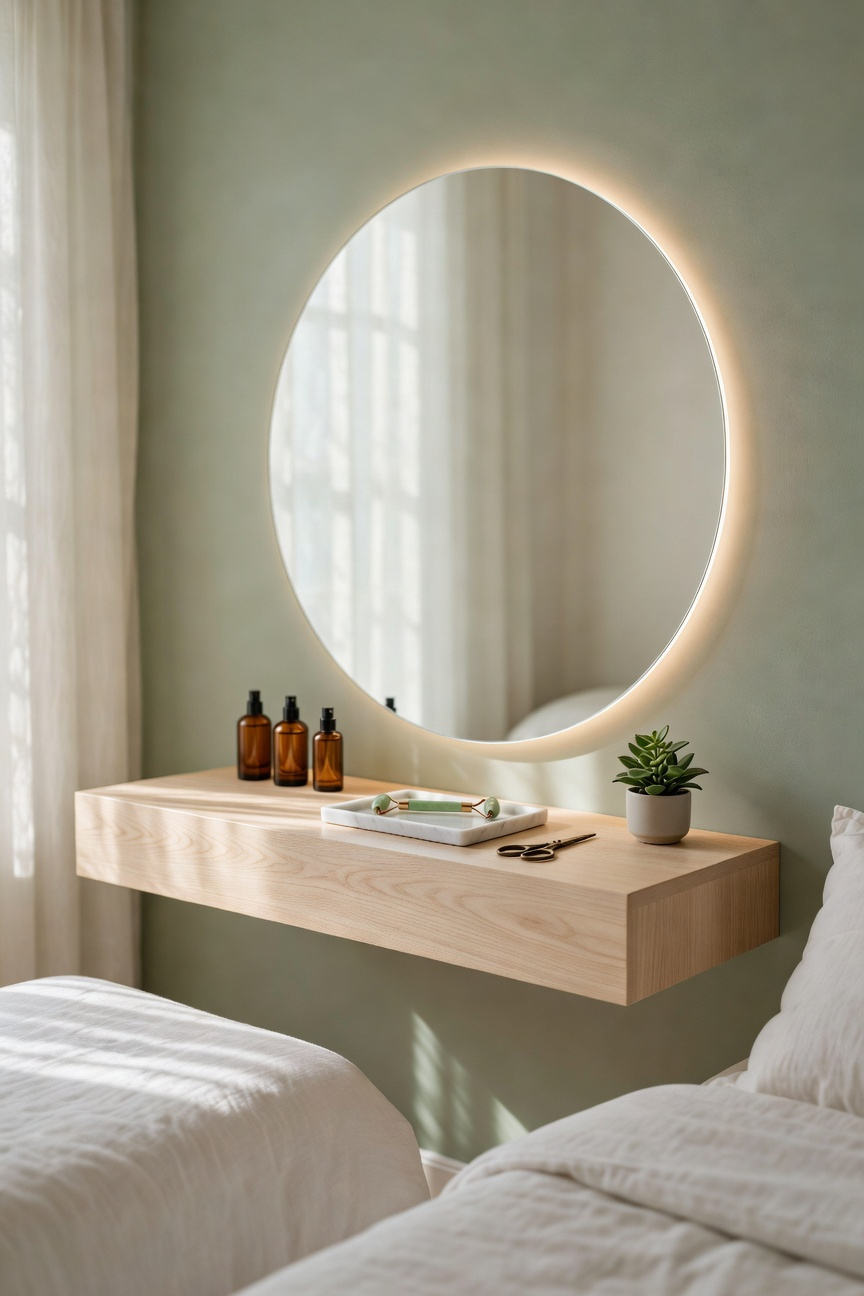
Previously, dressing tables were heavy, ornate status symbols made of expensive mahogany. In contrast, contemporary aesthetics prioritize clean lines and lighter materials. Specifically, many modern pieces function as smart desk-vanity hybrids. Features like flip-top mirrors allow these units to transform instantly. Therefore, the “altar” can easily shift from a ritual space to a productive workstation.
Furthermore, effective curation of this space requires precise lighting. Just as fine art requires specific illumination, a vanity needs shadow-free visibility. Integrated LED perimeter lights create an “altar of light,” ensuring flawless makeup application. Additionally, maintaining a clutter-free surface is essential for a serene atmosphere. Discreet storage drawers keep “ceremonial tools” hidden yet accessible. Finally, displaying sculptural perfume bottles adds an artistic, sensory layer to this personal sanctuary.
Scale and Proportion: Balancing Heavy Furniture with Negative Space
In a gallery, negative space is never just empty air. Instead, it acts as a vital visual palate cleanser. Similarly, your bedroom needs this “breathing room” to function as a true sanctuary. Heavy items, like solid armoires or king-sized beds, carry significant visual weight. Without adequate surrounding space, these pieces can quickly feel oppressive or confining. Therefore, you must strategically counterbalance this mass to maintain tranquility.
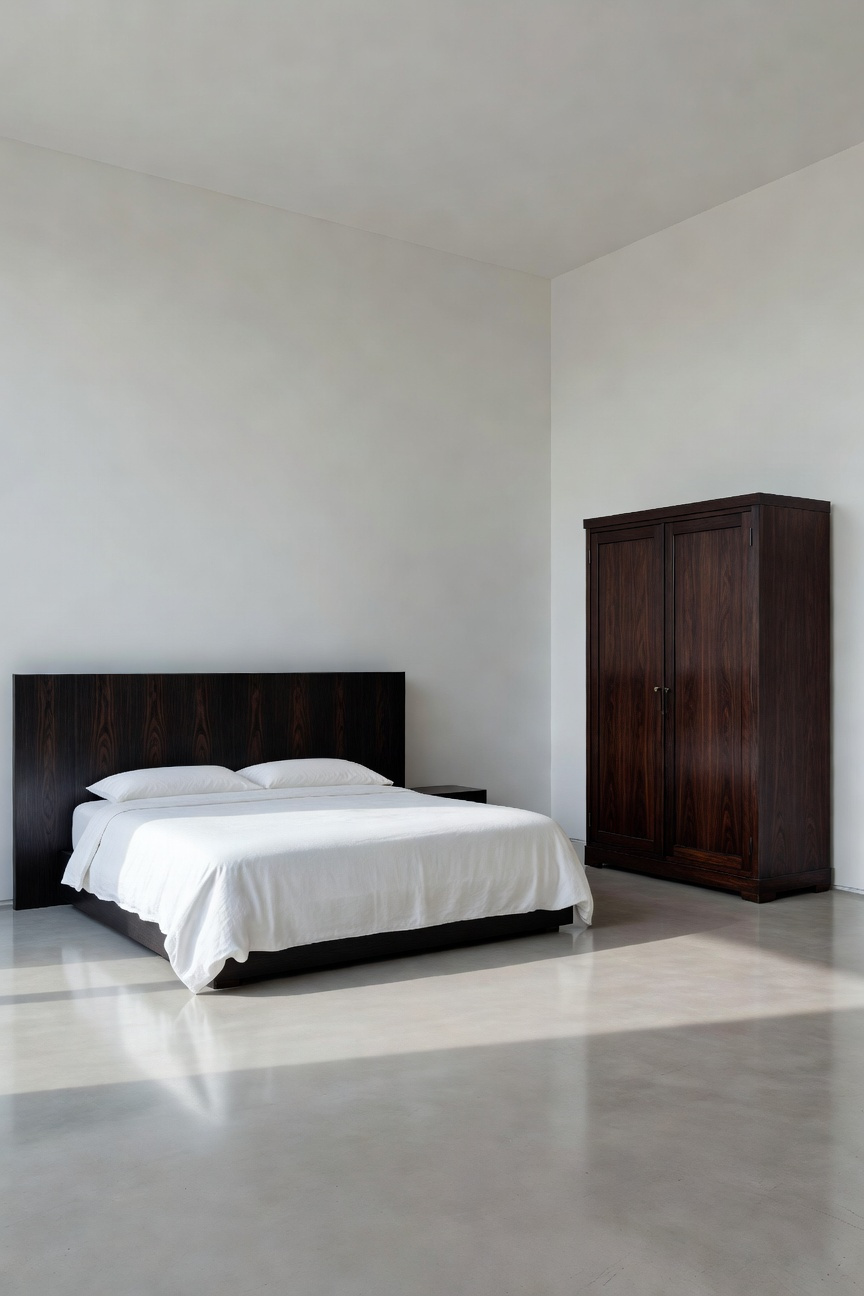
Specifically, consider selecting furniture with exposed legs rather than solid bases. This introduces hollow space, allowing light to circulate beneath heavy forms. Conversely, flush-to-floor pieces appear denser and ground the eye immediately. You can also manipulate gravity through color choices. For instance, balance a dark walnut dresser with airy, pale textiles to lift the atmosphere.
Beyond weight, correct scaling is essential for visual harmony. Following the “two-thirds rule” creates an intuitive sense of balance comparable to the Golden Ratio. Thus, artwork hung above a headboard should span roughly two-thirds of the bed’s width. This prevents the art from being dwarfed by the furniture below it. Finally, maintain at least 30 inches of clearance for walkways to promote easy movement. Ultimately, this practice ensures the room exudes quiet confidence rather than clutter.
Art Placement: Navigating the Space Above the Bed
The space directly above the bed presents a unique design challenge. Fundamentally, it functions as the room’s primary focal point. However, it also serves as a psychological element that influences rest. Therefore, achieving the right scale is the most critical step.
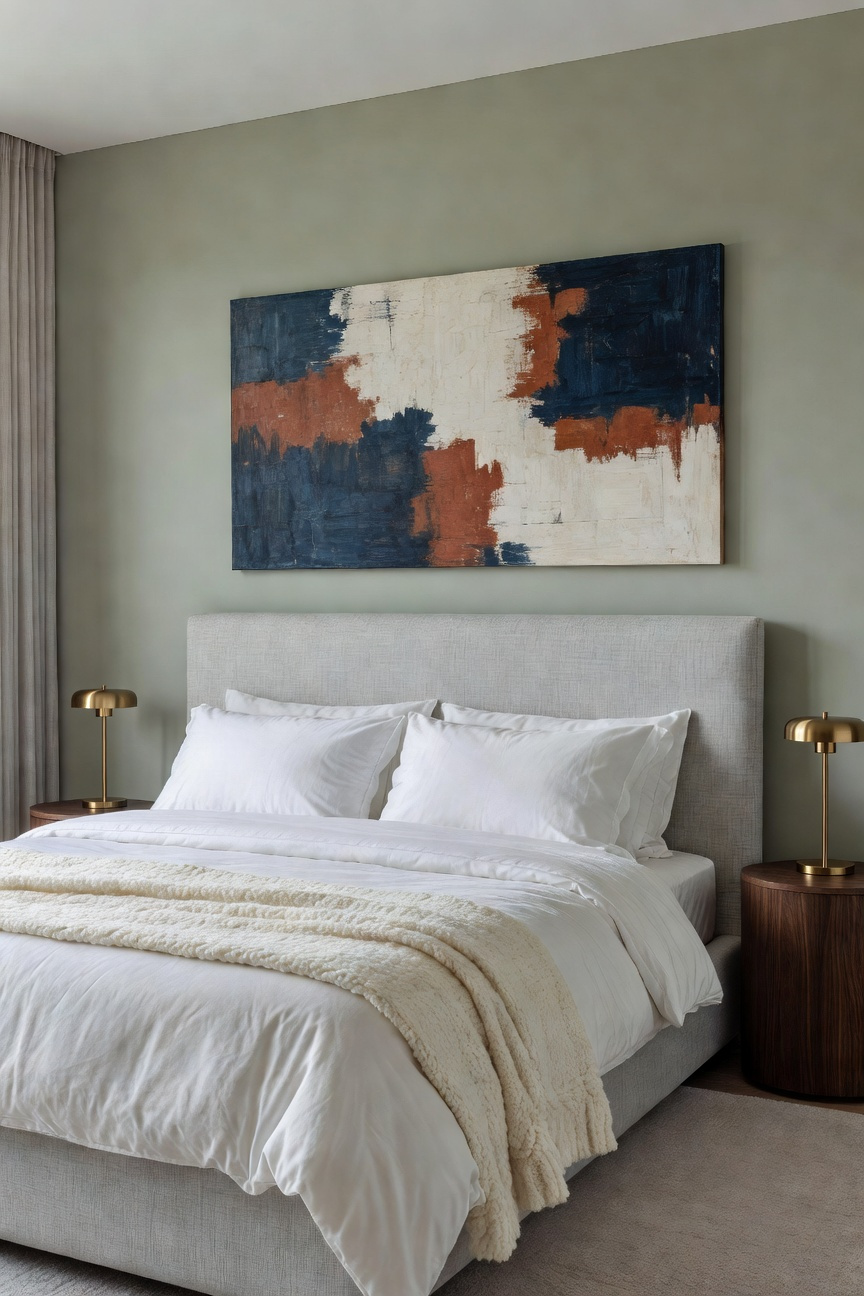
Specifically, aim for artwork that spans 50% to 75% of the headboard’s total width. If the piece is too narrow, it often appears “lost” or insignificant. Consequently, the art fails to anchor the dominant piece of furniture. Furthermore, vertical placement is non-negotiable for visual harmony. Ideally, position the bottom edge 6 to 10 inches above the top of the headboard.
Conversely, centering art on the wall causes it to “float” aimlessly. Instead, the goal is bridging the gap between furniture and frame. Beyond aesthetics, safety remains a crucial practical consideration. Experts warn against hanging heavy glass objects over this vulnerable zone. As a result, lightweight canvas or textiles are often safer, smarter choices.
Psychologically, this placement balances visual drama with a dream state. Since the sleeper looks outward, bold art works well here. Nevertheless, soft textures or cool colors can still promote a reduction in stress. Historically, textiles provided insulation and warmth in this spot. Today, using tapestries or “headboard-as-art” panels evokes that same sense of cocooning comfort.
The Foundation: Rugs that Frame Rather than Smother
In the gallery world, a frame defines artwork without overwhelming the image. Similarly, a bedroom rug should act as an intentional anchor rather than a blanket that smothers the floor. Conceptually, this approach breaks up the expanse of flooring to create a distinct “island” for your bed. However, covering the entire floor often makes a room feel smaller and less dynamic. Instead, visualize the exposed floor around the rug’s perimeter as necessary negative space.
Specifically, successful execution relies on precise proportions. Therefore, ensure the rug extends 18 to 24 inches beyond the sides and foot of the bed. Consequently, this extension creates a cohesive visual frame. Ideally, position the rug under the bottom two-thirds of the bed frame. In this arrangement, your nightstands rest on the hard flooring, which simplifies cleaning and structural stability.
Beyond aesthetics, this placement strategy offers a significant sensory benefit. Naturally, you want a soft landing for your feet immediately upon waking. Thus, the 18-inch border ensures plush texture surrounds your morning routine. Furthermore, a dense rug absorbs sound, effectively reducing echo to create a tranquil atmosphere. Ultimately, a rug that frames the bed transforms the floor into a curated, functional foundation.
Conclusion: From Sleeping Quarters to Personal Gallery—The Art of Waking Up
Ultimately, transforming your bedroom creates more than just a place to sleep. Instead, it establishes a sanctuary for personal expression and daily renewal. By treating furniture as architectural support, your bed becomes a frame for your art. Consequently, the interplay between texture and geometry effectively manages your morning transition.
Historically, private spaces have always served as a canvas for self-definition. Today, this fusion of design and identity turns waking up into an inspiring act. Looking ahead, this philosophy invites a deeper connection with your living environment. In fact, a truly personal gallery evolves alongside your own life changes. Thus, the bedroom remains a dynamic space for both comfort and creativity.
If you are seeking sophisticated bedroom furniture inspiration, audit your current collection for pieces that truly spark joy. Then, select one anchor artwork and arrange your furniture to highlight its rhythm. Finally, allow your room to quietly shape a more inspired morning routine.
Frequently Asked Questions
H3: How can I make my bedroom furniture look more curated and high-end?
To achieve a high-end, curated look, avoid buying matching furniture sets. Instead, mix materials (like pairing a wooden bed frame with metal or stone nightstands) and use textures (such as velvet, bouclé, or linen). Treat key pieces like the headboard and accent chair as sculptural elements, and style surfaces with intentional, asymmetrical vignettes rather than symmetrical clutter.
H3: What is the most crucial piece of furniture for setting the tone of a luxury master bedroom?
The headboard and bed frame are the most crucial pieces, as they function as the room’s monumental, architectural centerpiece. They anchor the space psychologically and visually. Choosing an oversized, custom, or deeply upholstered headboard dictates the scale and mood of the entire sanctuary.
H3: Should all the furniture in a discerning homeowner’s bedroom match?
No, intentional design encourages breaking the traditional “matching set.” While the furniture should share a cohesive color palette or material tie (e.g., all warm wood tones or all matte finishes), introducing asymmetry—such as utilizing mismatched nightstands or contrasting materials—creates visual tension and signals a space that has been thoughtfully curated over time, rather than purchased all at once.