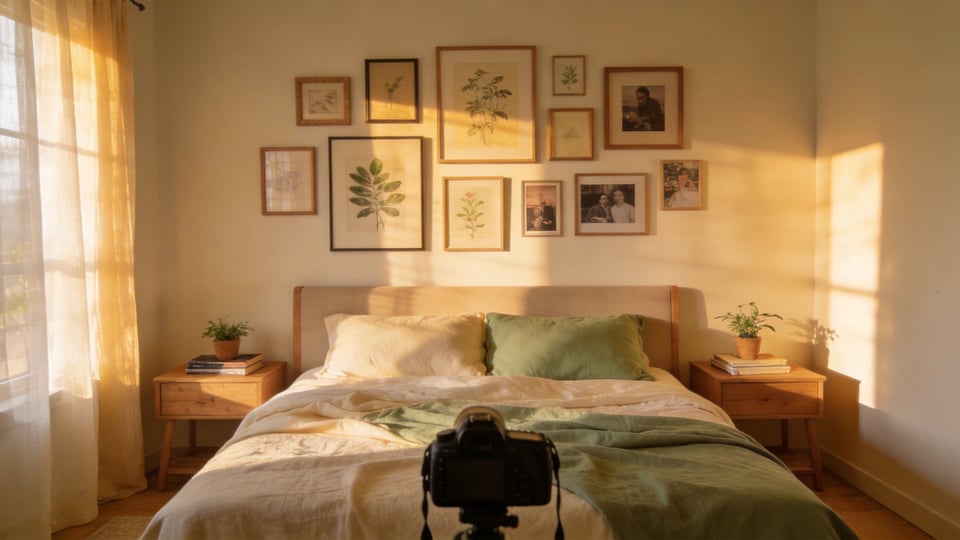
Your bedroom walls are the most personal real estate you own—yet so many of us let them languish with a single mirror and whatever print happened to be on sale. After a decade spent in galleries thinking about how objects on walls create meaning and emotional response, I’ve learned something simple: your bedroom walls tell a story. The question is whether you’re writing it intentionally or leaving the best chapters unwritten.
This isn’t about following design trends or filling space. It’s about curating walls that reflect who you actually are—walls that communicate something true when you wake up every morning. The bedroom wall ideas you choose matter more than you might think. Every morning and every night, you see these walls first. They set the emotional tone for your day. Whether you’re drawn to gallery arrangements, sculptural textiles, architectural treatments, or clever lighting integrations, there’s a bedroom wall idea here for every size room, every aesthetic, and every budget. Some bedroom wall ideas cost nothing; others are bigger investments. Some ideas cost nothing; others are bigger investments. What matters is that your choices feel intentional. Let’s build a space that deserves your attention.
1. Gallery Wall Arrangements: Bedroom Wall Ideas That Tell Your Story
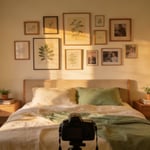
A gallery wall isn’t a collage—it’s a collection. This distinction matters. Think of it the way a curator approaches hanging a show: every piece has a reason for being there, and the arrangement creates a visual thesis. It’s the difference between decoration and intentional art display—and that difference is everything.
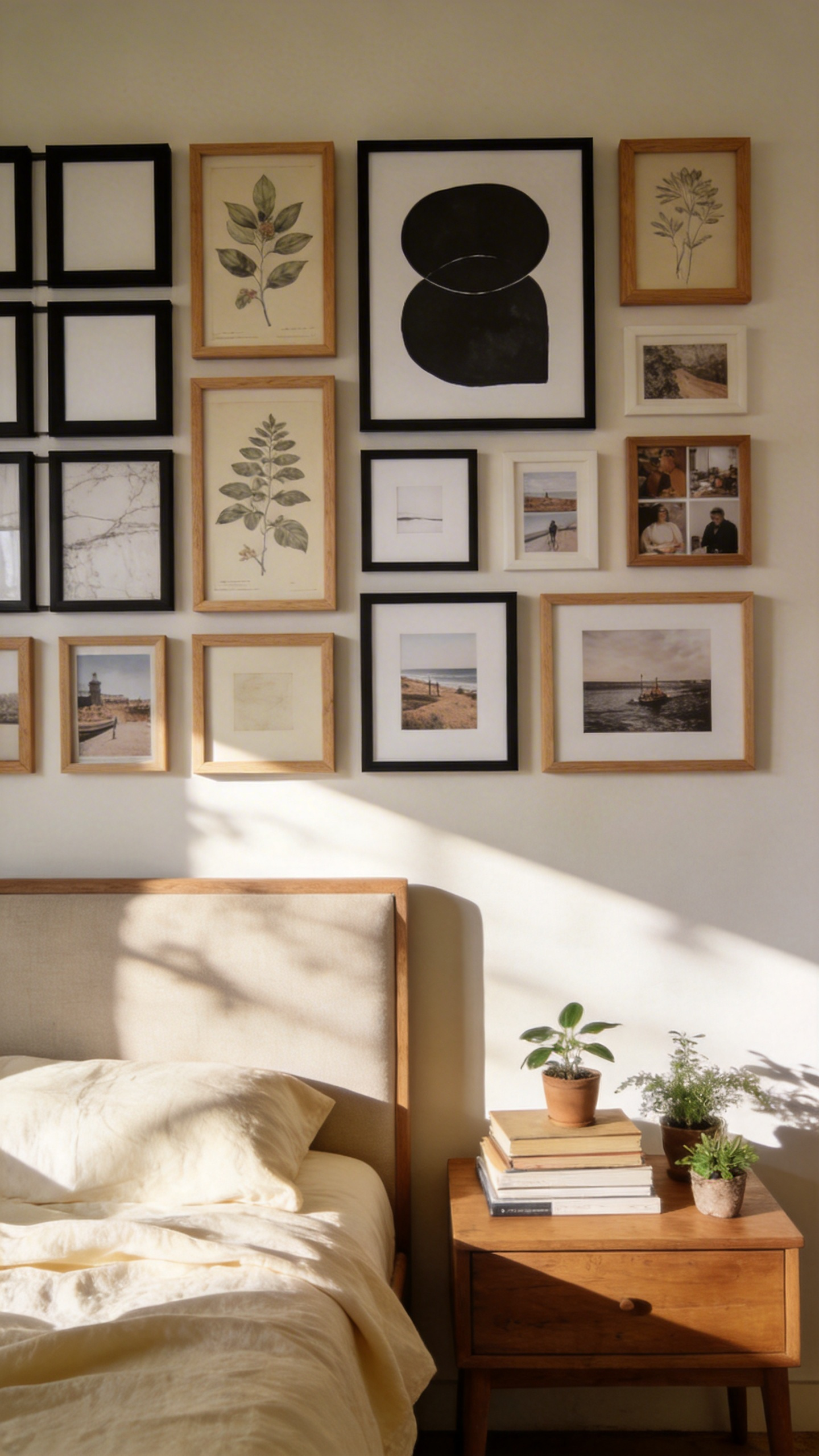
The budget strategy is straightforward. IKEA RIBBA frames run $15–$40 each and remain the gold standard for mixing sizes without overspending. Also, layer in thrift store finds—you can get vintage or ornate frames at estate sales for $2–$8 each. The magic happens when you mix finishes intentionally: natural wood, black, white, and gold frames work across most styles. That said, avoid random mismatches unless that’s your deliberate aesthetic move. Mixing a gold frame with silver or chrome reads as careless rather than eclectic. This is where intention separates a curated gallery from visual chaos.
What makes a gallery work emotionally is curation. Choose pieces that share a visual story—a cohesive color palette, an artistic movement you love, or a theme like travel or nature. Also, include personal photography or art from small makers alongside prints. This isn’t about filling space; it’s about creating a narrative that says something true about who lives in this room. Hang the center piece first, work outward, and trust your eye when something feels balanced. Here’s the truth: your instinct matters more than any rule. Step back frequently and assess from bed level—because that’s where you’ll actually look at your wall most mornings and evenings.
2. Statement Wallpaper Accent Wall Behind the Bed as a Focal Point
2025 marks the year we stopped apologizing for color. Out is neutral minimalism; in is color confidence and maximum personality—and the bedroom accent wall behind your bed is the perfect place to make that statement. This bedroom wall idea is bold. Think about it: this is the wall you see when you wake up. It deserves to say something worth waking up to.
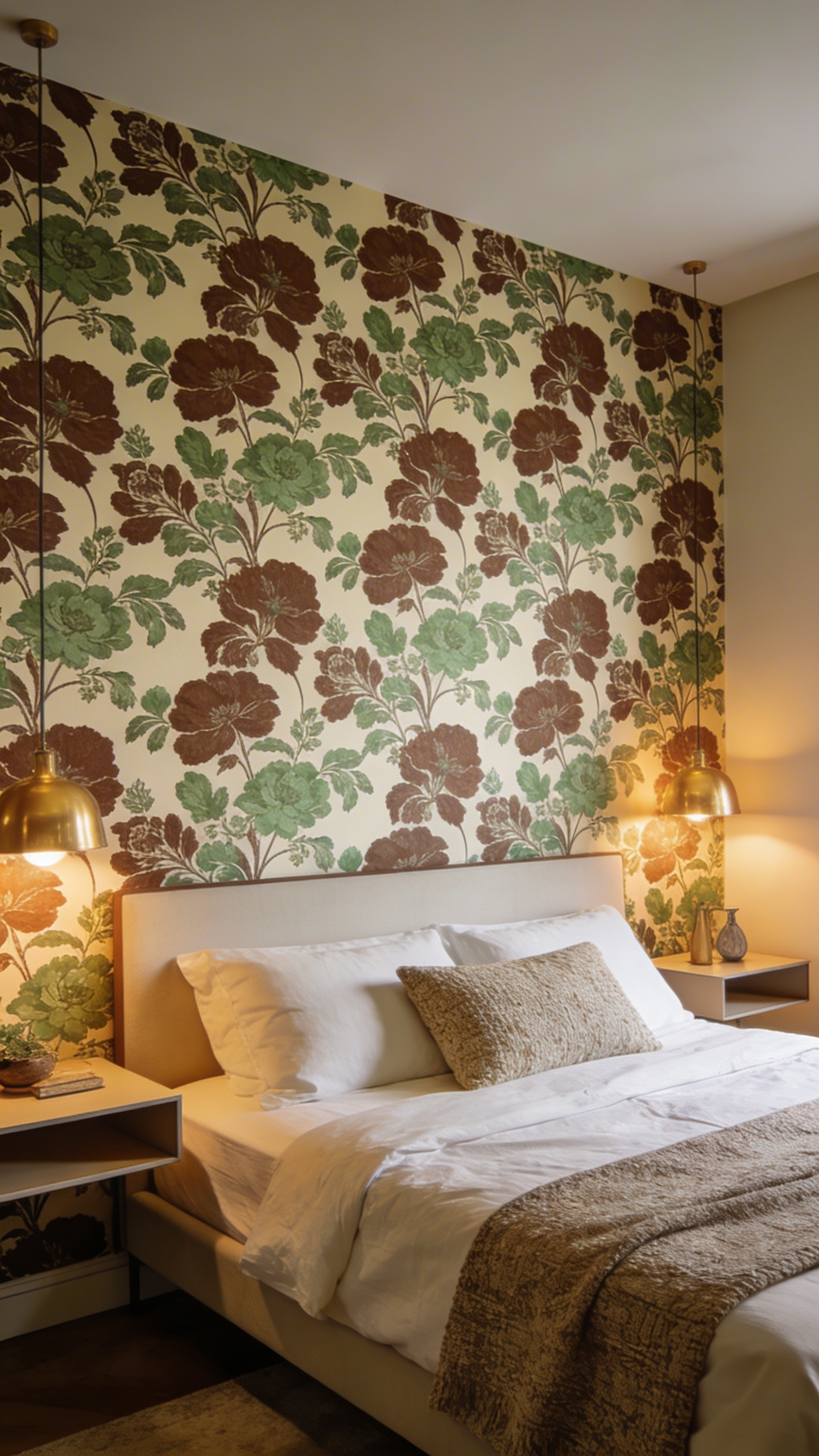
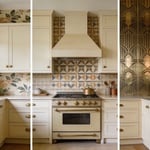
The 2025 palette is earth-forward and intentional. Mocha Mousse—Pantone’s Color of the Year—anchors warm, inviting hues that move beyond gray and beige into genuine personality. Botanical florals, retro patterns, vintage damask, and weathered textures add soul and storytelling quality. Geometric abstracts work well for contemporary bedrooms, creating visual interest without chaos. Storybook-inspired vintage illustrations create nostalgic, immersive experiences that feel collected rather than decorative. Here’s the critical rule: choose one accent wall only. Wallpaper on all four walls overwhelms smaller bedrooms and creates visual fatigue. This restraint is what separates intentional design from overwhelming chaos.
Pair bold wallpaper with solid-colored bedding to balance visual weight. This restraint prevents your bedroom from feeling like visual overload. Before you commit, test a large swatch on your wall for 24 hours under different lighting. Colors shift dramatically with natural light—what looks perfect at noon might feel different at bedtime. Botanical patterns coordinate beautifully with natural wood furniture and white linens, creating garden-like tranquility. Geometric designs align with mid-century modern pieces, emphasizing clean lines and intentional pattern work. This single decision—one intentional accent wall—transforms a generic bedroom into a room that communicates your aesthetic values and personal taste.
3. Floating Shelves That Double as Display Space and Thoughtful Storage
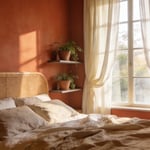
Floating shelves are among the most practical bedroom wall ideas. They transform bedroom walls into mini galleries where books, objects, and small artworks live together in conversation. They’re not just practical; they’re a chance to curate a vertical display that reflects how you actually live—mixing the functional with the beautiful.
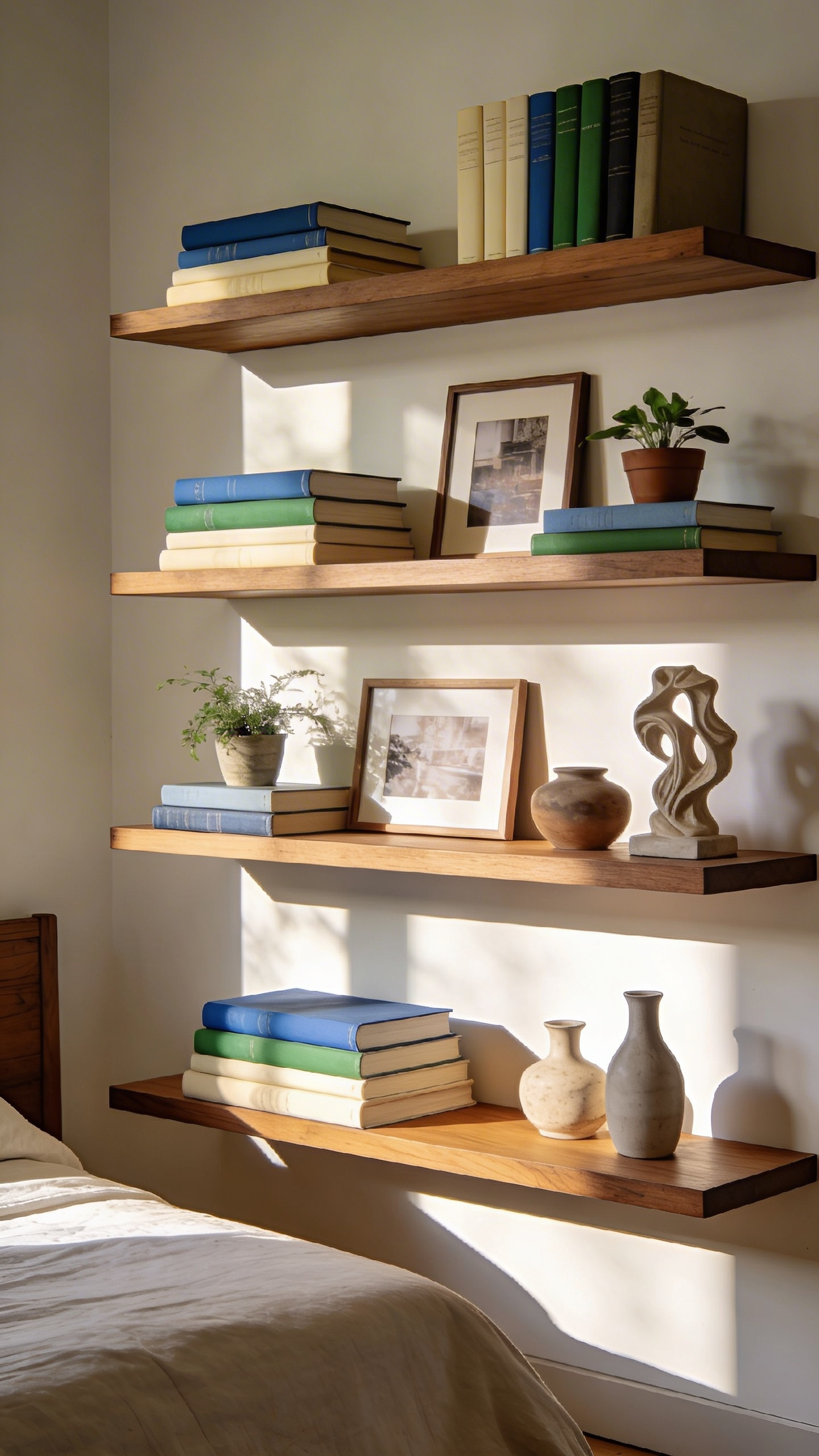
Installation matters profoundly. Poor installation undermines the entire visual effect. First, locate studs when possible for maximum support; use toggle bolts or heavy-duty anchors on drywall between studs. Mount at 12–16 inches apart for a staggered effect that creates visual rhythm, or 24–30 inches for symmetrical pairs above the headboard. Here’s what matters most: precision is everything—the illusion of “floating” depends on installation being perfectly level and invisible. Uneven shelves read immediately as amateur, destroying the curated feel you’re after.
Styling is where personality emerges. Layer books spine-out and spine-in for visual texture—all spines-out looks like a library, while mixing orientations creates visual interest. Stack books horizontally with a decorative object on top for sculptural effect. Here’s the fundamental rule: 40% empty space keeps shelves from looking cluttered or like mere storage. Group objects by height, color, or material—odd numbers (3–5 items per shelf) feel more intentional than paired arrangements. Finally, combine functional items (books, small plants) with decorative pieces (framed art, small sculptures) for balanced, curated displays. Your shelves should reflect the thoughtfulness you’d bring to a gallery opening—the kind of careful arrangement that makes visitors pause and look closely.
4. Wall Panelling and Wainscoting: Classic Bedroom Wall Treatments
Board-and-batten wainscoting fundamentally changes how a bedroom breathes. It adds architectural texture, visual interest, and a subtle sense of quality that reads immediately—the difference between a bedroom that looks considered and one that simply contains a bed.
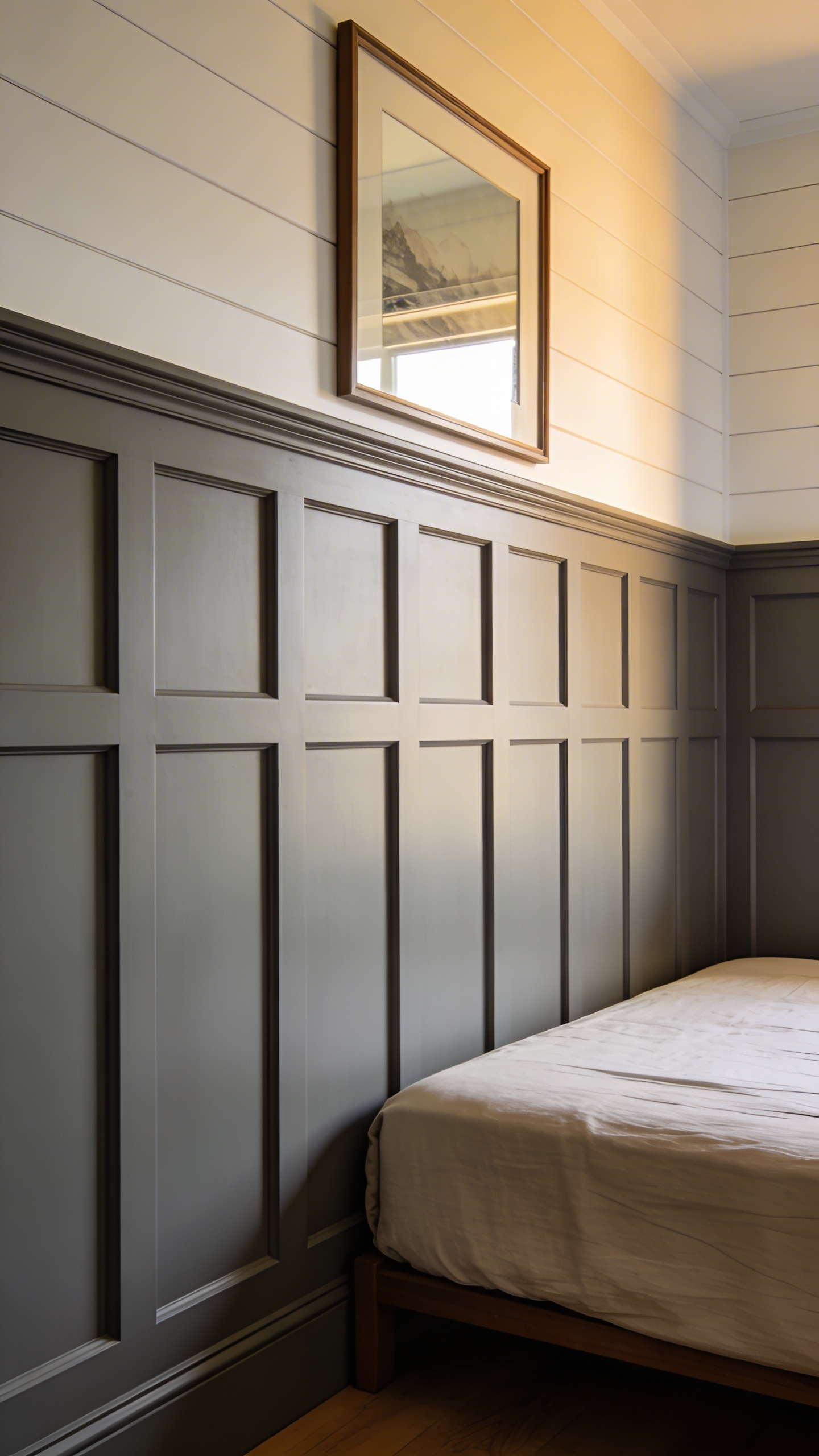
Paint color transforms paneling from architectural detail into a design statement. Farrow & Ball offers sophisticated options like “All White” (soft and inviting), “Peignoir” (pale pink for romantic spaces), or “Down Pipe” (charcoal for drama). Benjamin Moore’s “White Dove” (warm white with subtle warmth) or “Hale Navy” (architectural depth for contemporary rooms) work beautifully in paneled bedrooms. Consider, too, a two-tone approach: darker panels with a lighter upper wall creates visual interest, grounding and defining the space. Matte finishes hide installation imperfections better than gloss, which emphasizes every gap and inconsistency. Additionally, priming MDF before painting is absolutely non-negotiable.
DIY installation requires patience and precision. Assemble kits horizontally, apply construction adhesive and screws, caulk gaps meticulously, prime thoroughly, and paint in quality finish. Budget 15–25 hours for a 10×12 bedroom wall if you’re comfortable with intermediate DIY skills. Professional installation runs $600–$1,200 per wall but produces gallery-quality results and handles complex wall conditions. Whichever route you choose, paneling announces that you’re thinking about how walls should actually look—not as backdrop but as architectural element.
5. Large-Scale Single Artwork That Commands the Entire Wall
Sometimes the most powerful bedroom wall ideas are the opposite of a busy gallery wall. One oversized artwork creates visual authority and calm in a way that no collection of smaller pieces can match. Consider this: a single powerful feature wall image focuses the eye and creates the sense that you know exactly what you want to say.
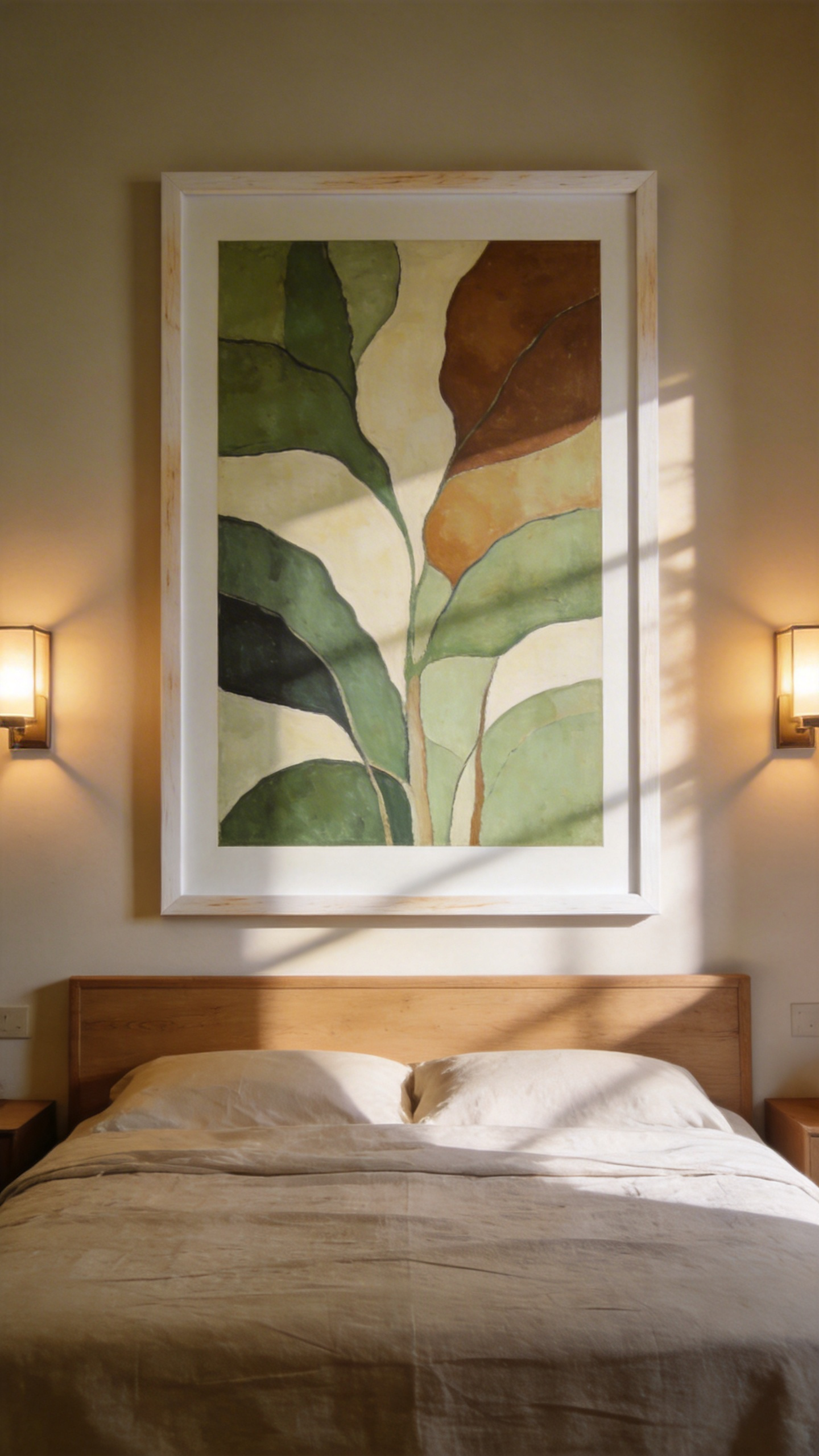
Society6 and Minted offer artist-designed prints with preview tools and frequent promotions (15–30% off). Minted’s curation emphasizes design quality; you’re paying for editorial sensibility. Desenio specializes in affordable Scandinavian reproductions up to 40 inches, perfect for testing larger sizes before committing to premium prints. For truly custom pieces, local canvas printing labs will print your artwork and stretch it on canvas in 5–7 days for $80–$200.
Match the art style to your furniture personality. Modern abstract works with contemporary pieces, botanical art with traditional décor, vintage posters with eclectic spaces. Color palette matters profoundly: select art that coordinates with bedding and wall paint, or choose neutral art that works with patterned bedding. Remember: don’t compete visually. Frame finish—natural wood for warmth, black for contrast, white for minimalism—sets the tone and shouldn’t distract from the artwork. Frameless canvas stretches work with any style and add contemporary sophistication.
Lighting reveals the detail you’ve chosen. Avoid direct glare on canvas; instead, position accent lighting to create gentle drama and draw the eye. Your single artwork becomes the room’s hero—it deserves the attention and should be the first thing you notice when entering the room.
6. Woven Wall Hangings and Macramé for Texture and Warmth
Woven textiles bring dimensions that flat art simply cannot reach. Because of their material quality, macramé and hand-woven pieces add warmth, sound absorption, and genuine tactility—qualities that transform a bedroom from a sleeping space into a sanctuary.
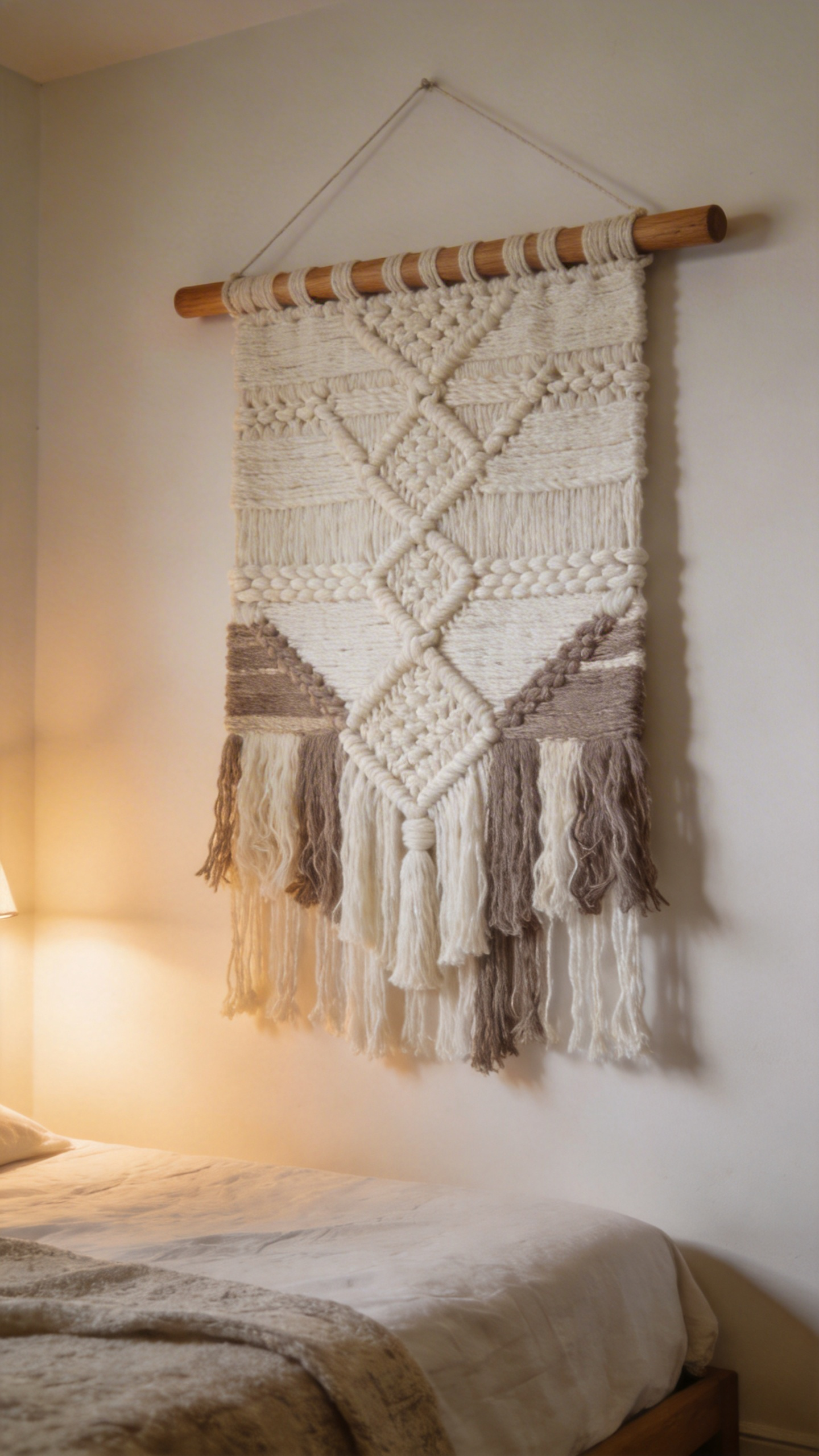
Installation requires sturdy hardware because woven pieces are deceptively heavy. A hand-woven 51×40-inch piece typically weighs 3–5 lbs; macramé can reach 8–10 lbs. Use heavy-duty picture hangers or appropriate wall anchors. The rod method—sliding a wooden dowel through the top sleeve and hanging the dowel on brackets—allows easy removal without wall damage. For heavier pieces, use two eye hooks with picture wire to distribute weight and prevent tilting.
Woven art works alone as a statement piece, or—for maximum effect—it can be layered with other textiles (tapestries, throw blankets) for bohemian effect. Pair neutral macramé with colorful bedding and plants for eclectic impact; let the textile be your focal point rather than competing with other decor. In fact, woven pieces also absorb sound, creating quieter, more intimate bedroom atmospheres. Maintenance is minimal: light dusting with a soft brush and occasional gentle vacuuming with a brush attachment. Avoid direct sunlight, which fades natural fibers over time.
7. Photography Display Ideas for Bedroom Walls With Personal Meaning
Personal photographs carry emotional weight that no purchased art can replicate. The key strategy is printing and framing them with enough intention that they feel curated rather than sentimental.
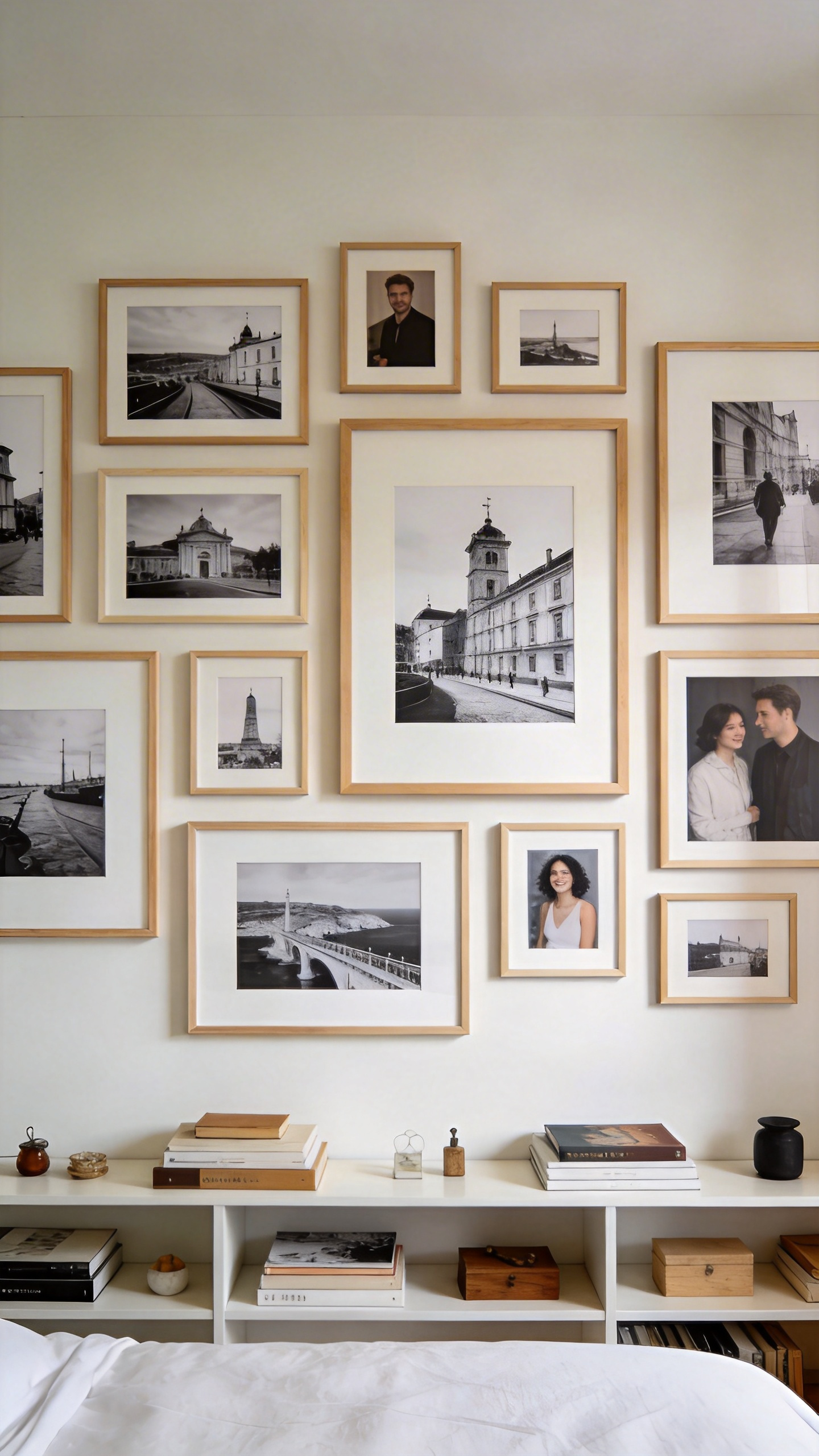
Black and white conversion is transformative. Color photography from different locations, taken under different light conditions, can look chaotic together. Converting everything to monochrome unifies disparate images into a cohesive editorial gallery. Both Framebridge and Artifact Uprising offer B&W conversion tools during ordering. Frame colors for monochrome work best when consistent: black frames offer contrast and emphasis, white frames blend subtly, and natural wood adds warmth. This consistency matters.
Mix personal photography with fine art prints for editorial magazine aesthetic. Alternate personal travel photos with landscape art, or pair family photographs with portrait drawings. This layering creates depth that elevates personal displays from snapshot collections into intentional art. Curate meaningful moments—not every casual photo deserves the wall. Print high-quality versions that make you proud to see them daily. Your photography walls should tell a story worth looking at. This is your chance to be selective and intentional.
8. Framed Mirror Clusters to Open Up Small Bedroom Walls
Mirrors do double duty: they reflect light and create the illusion of expanded space. Framed mirror clusters transform the dual function into pure design theater.
Weight matters considerably for safety. Large mirrors range 15–40 lbs; always verify product specs. Use heavy-duty picture hangers or toggle bolts for drywall, and find studs when possible for maximum support. Distribute weight across two hanging points (brackets or wire hangers) to prevent tilting and ensure stability. This precaution is non-negotiable.
Position mirrors opposite or near windows to reflect natural light and brighten darker bedrooms. Cluster at eye level (54–60 inches from floor) for functional and aesthetic balance. Odd-numbered clusters (3, 5, or 7 mirrors) feel more organic than evenly paired arrangements. Leave 6–12 inches of breathing room between mirrors to prevent visual clutter. Mirror styling techniques apply across rooms. The same curatorial principles you’d use for bathroom mirror ideas work beautifully in bedrooms, creating visual rhythm through thoughtful arrangement and spacing.
9. Botanical Prints and Nature-Inspired Collections for Calm Bedroom Walls
There’s neuroscience behind why botanical imagery promotes rest in bedroom environments. Plant forms calm the nervous system, and when paired with soft color palettes, they create spaces where sleep comes easily. This science-backed approach to bedroom wall art ideas works beautifully.
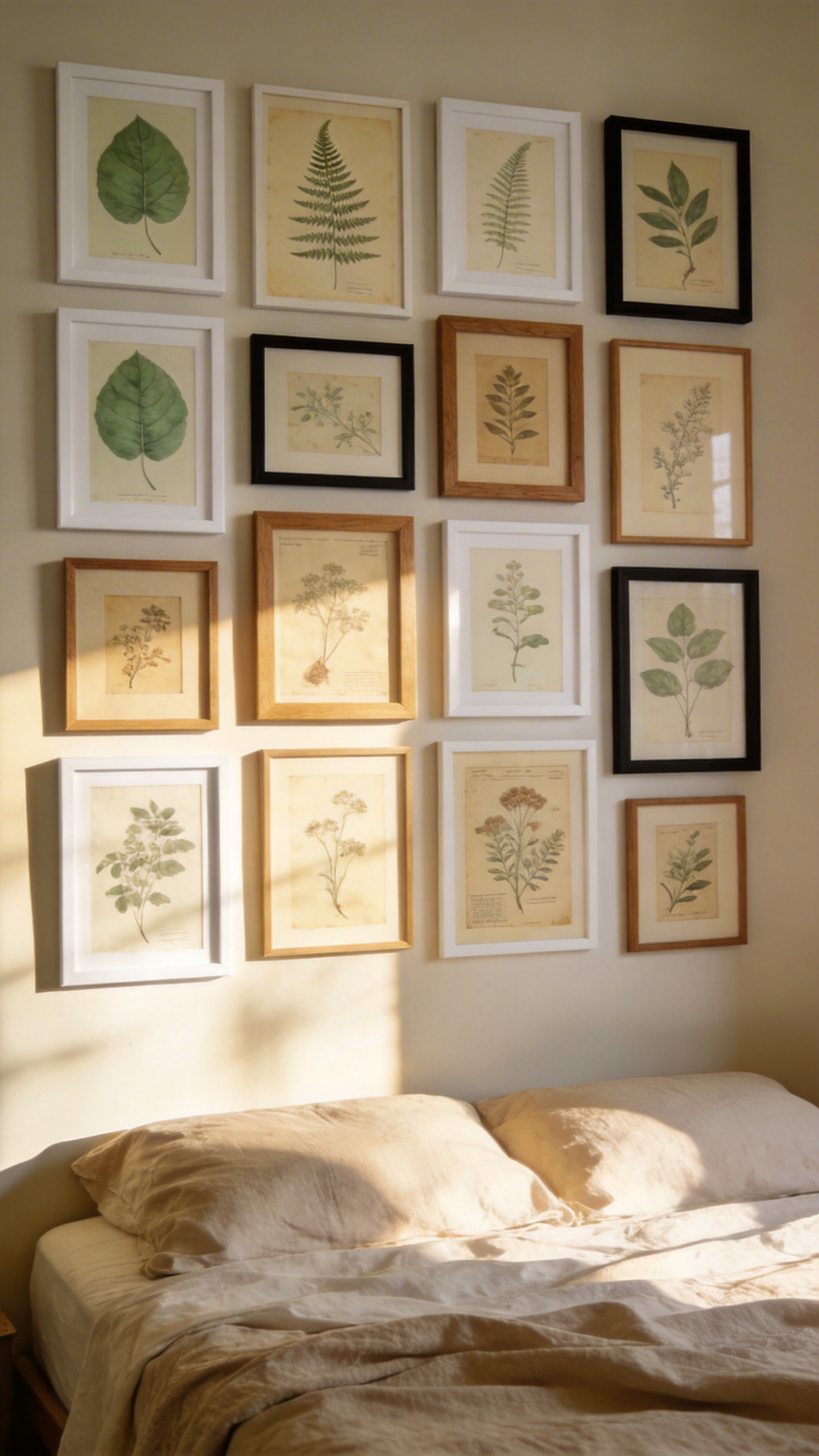
Framing choices determine whether your collection feels botanical or chaotic. Cohesive frames—all black, all natural wood, or all white—create editorial gallery feel. Mix frame styles only if you’re intentionally building an eclectic aesthetic. Matting in soft whites or creams provides breathing room around the botanical image; avoid dark mats that feel heavy in sleep spaces.
Placement matters as much as selection. Position botanical prints where you’ll see them during your morning routine and before sleep. Bringing patio garden ideas indoors through botanical wall selections creates the visual equivalent of opening a window to a garden, even when you’re living in an urban apartment. This connection to nature becomes part of your daily ritual and helps set a calming tone for your bedroom environment.
10. Sconce and Wall-Mounted Lighting as Bedroom Wall Decor
Wall sconces are the single most underused bedroom wall improvement. They combine function and artistry in a way that no other element can match—beautiful task lighting that doubles as design statement. This dual function makes them incredibly valuable.
Placement height is standard: 60–65 inches from the floor, ideally flanking the bed at 36 inches out from the headboard centerline. This positioning replaces bedside table lamps entirely, freeing surface space for personal objects. Pair sconces with dimmers for flexibility—bright light for reading, ambient light for winding down. Choose styles that match your bedroom personality: mid-century modern sconces coordinate with contemporary furniture, rattan or ceramic sconces work with bohemian spaces, and minimalist metal sconces align with industrial aesthetic.
Quality matters significantly. Cheap sconces flicker and fail; investment-grade pieces from lighting designers provide reliable, beautiful light for decades. The principles behind excellent living room lighting apply directly to bedrooms—your lighting doesn’t just illuminate, it shapes how you feel in your space each morning and night.
11. Plate and Ceramic Wall Displays for a Collected, Eclectic Look
Plates on bedroom walls sound unconventional until you see them done with intention. Decorative plates create unexpected artistry when arranged with care and layered thoughtfully. This approach works because it looks editorial, not like overflow storage.
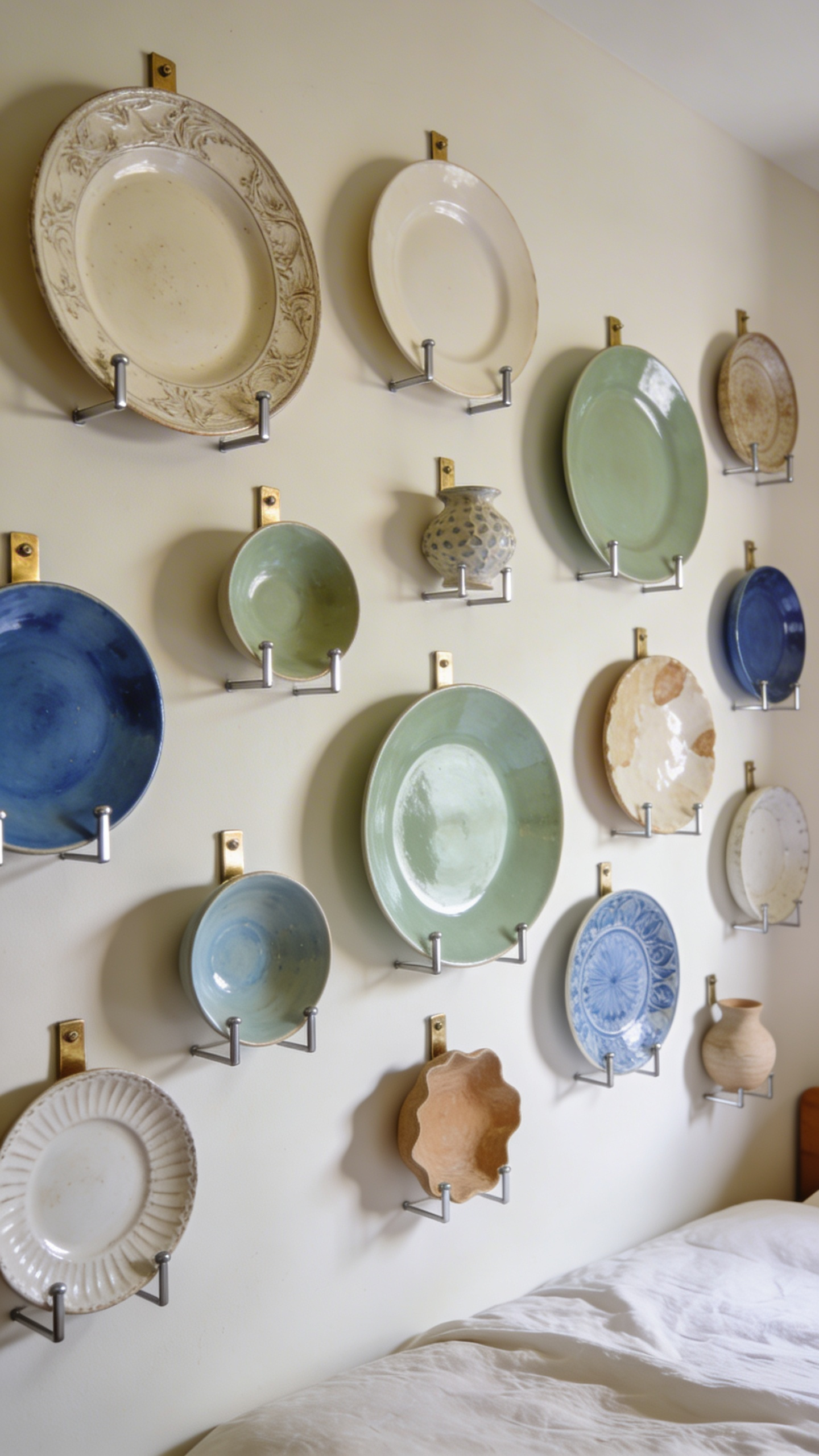
The bedroom plate display works because it stays intentional. Unlike dining room plate walls (which can read like collections), bedroom plate displays benefit from careful curation and breathing room. Space plates 6–12 inches apart for sophistication; cluster them densely only if you’re creating a deliberate bohemian maximal effect. Odd numbers feel more organic: groups of 3, 5, or 7 plates create rhythm better than even numbers. This rhythm is everything.
Source from estate sales, Etsy sellers, and local potters. Support artisans making beautiful handmade ceramics in your region. When you know the maker’s story—where the clay came from, what inspired the glaze—the plates become more than decoration. They become objects that connect you to the creative community.
12. Monochrome Photo Walls for a Moody, Film-Inspired Bedroom
A strictly black-and-white photo wall creates cinematic, editorial mood that color photography can’t achieve. Because of this, the approach works beautifully for collectors of personal photography or those who love the aesthetic of film photography. There’s something about monochrome that makes ordinary moments feel like they belong in a gallery—travel snapshots read as sophisticated, family moments feel timeless, architectural details gain gravitas.
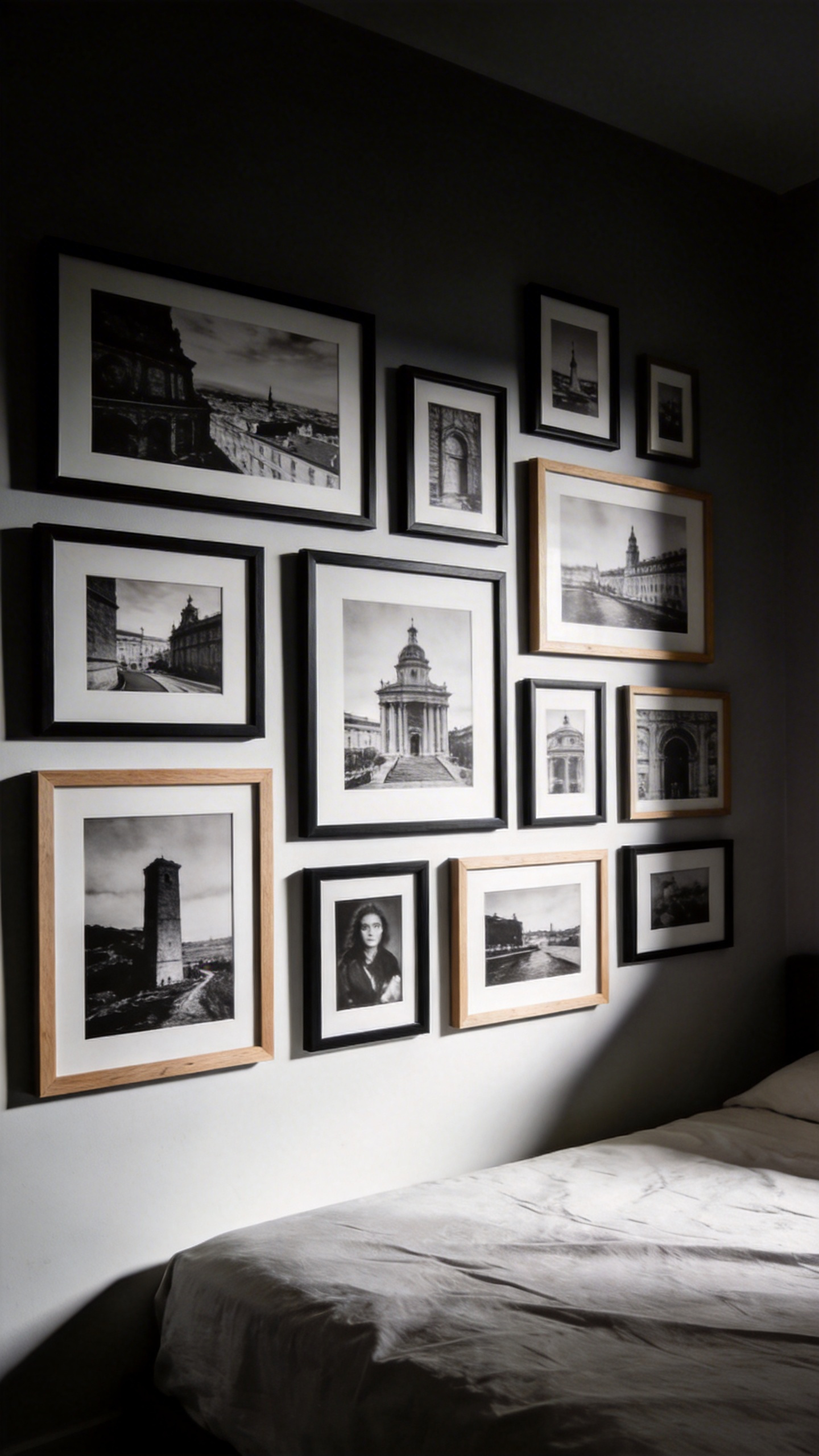
Frame choices keep the monochrome wall feeling cohesive. Black frames create contrast and visual emphasis. Conversely, white frames blend subtly. Natural wood frames add warmth and softness. The key strategy: commit to one frame color throughout rather than mixing, unless you’re deliberately building eclectic aesthetic. This restraint keeps focus on the photographs themselves rather than the frames. That focus is everything.
Printing matters profoundly. Home printing produces faded, cheap-looking results within months. In contrast, professional labs like Printique and local labs provide archival-quality prints that last decades. The cost difference ($30–$80 per print, framed) is worth every dollar for photographs you’ll live with long-term. Your monochrome wall announces that you’re serious about personal photography as wall art.
13. Tapestry and Textile Prints for Bohemian Bedroom Wall Decor
Large tapestries create immersive, layered bedroom environments. They work alone as statement pieces, or—for maximum impact—can be combined with other textiles for bohemian effect. Because of their weight and presence, a single high-quality tapestry does more visual work than you might expect.
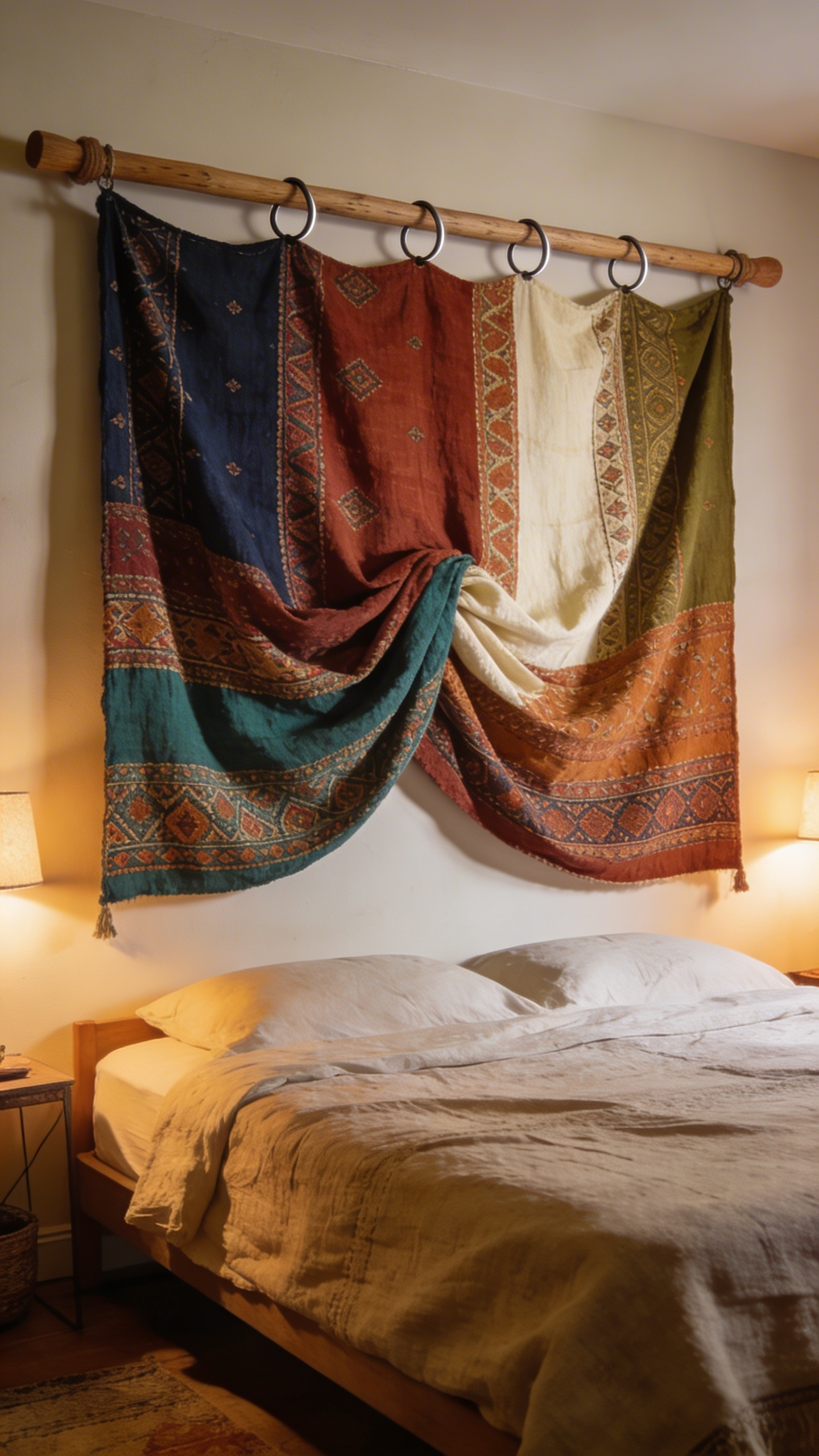
Combine tapestry with other bedroom wall elements without visual competition. Here’s the strategy: let the tapestry be the focal point with simpler wall pieces nearby. Color palette guidance matters: warm earth tones work with natural wood furniture and woven accents, while jewel tones create drama with minimal adjacent decor. Size strategically—this is crucial. Use a full-wall tapestry as your complete bedroom statement, or choose a smaller 36–48-inch piece as an accent that layers with other wall decor. Tapestries scale beautifully with bedroom furniture ideas, creating cohesive space design when you select pieces that coordinate with your bed, nightstands, and other furnishings.
14. Vintage Poster Framing for a Graphic, High-Impact Bedroom Wall
Vintage travel, cinema, and exhibition posters bring graphic power that contemporary prints sometimes lack. Their bold designs, historical type, and color palettes create immediate visual impact. These pieces announce you care about design history.
Conservation framing protects vintage paper. UV-protecting glass prevents fading, acid-free mats and backing preserve paper integrity, and archival materials ensure longevity. Budget $100–$250 per frame for conservation framing of mid-size vintage posters (16×24 inches). It’s an investment, but protects pieces that deserve preservation.
Build a coherent vintage poster wall by selecting a unifying theme: vintage travel posters create nostalgic wanderlust, cinema posters evoke golden-age Hollywood, and exhibition posters announce your cultural values. Size and frame color guidance: consistent frame colors (black, natural wood, or white) create editorial cohesion even with varied poster aesthetics. Your poster wall communicates sophisticated visual taste and collector sensibility.
15. Painted Mural or DIY Wall Art as Unique Bedroom Wall Ideas
When a painted feature wall crosses into genuine art, it becomes the bedroom’s unique declaration. Murals, stencils, and geometric tape work allow you to create walls that couldn’t exist anywhere else. This is where your bedroom wall ideas stop being about decoration and start being about self-expression.
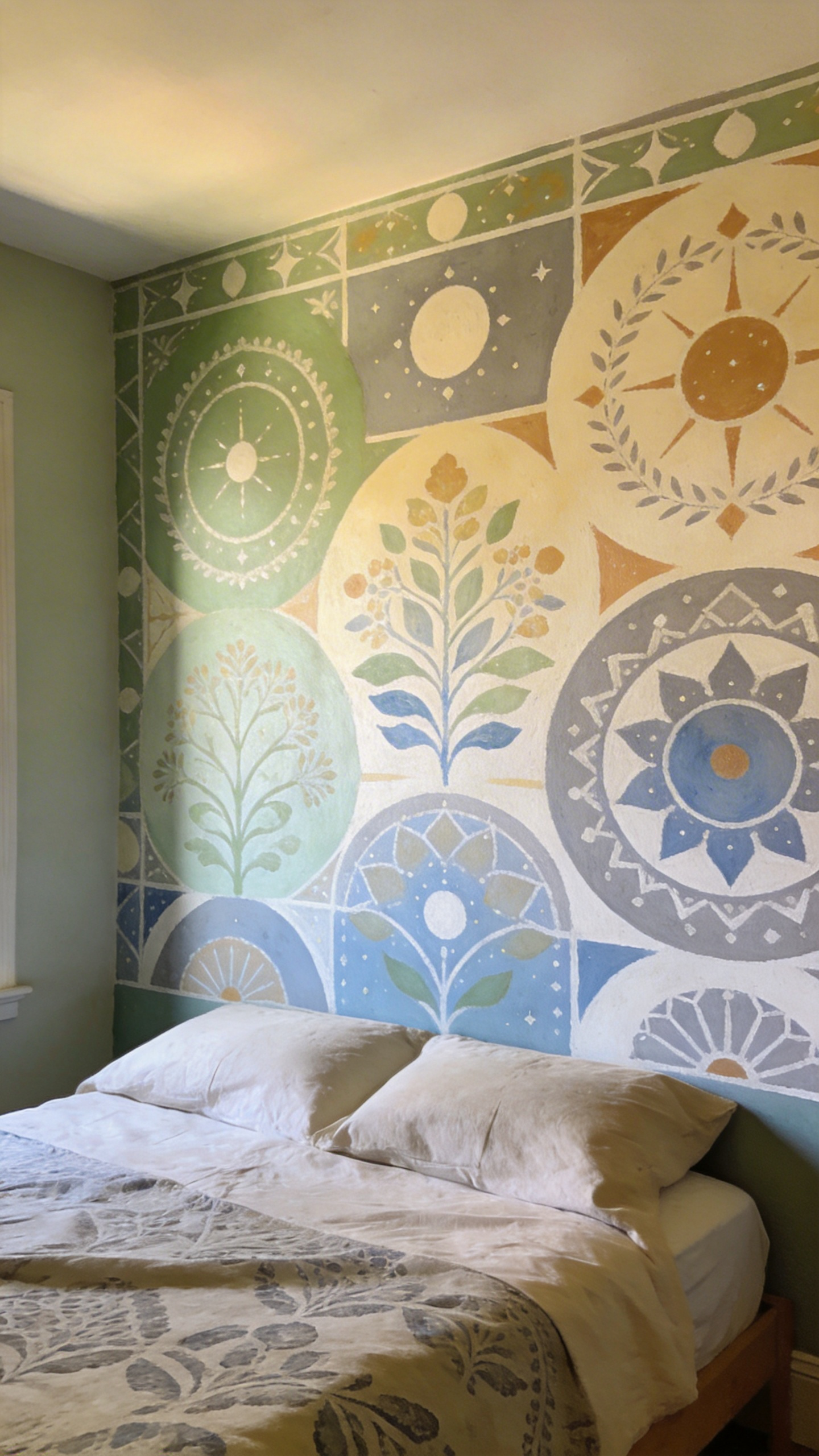
Peel-and-stick murals from Murals Wallpaper and Photowall offer renter-safe alternatives. Popular bedroom mural styles include abstract designs, botanical scenes, celestial imagery, and city silhouettes. Budget comparison: DIY painting costs $20–$100 in supplies. Professional artists charge $400–$2,000 depending on complexity. Peel-and-stick murals run $50–$200 for standard bedroom sizes. Your painted wall announces that your bedroom walls matter.
Finding the Bedroom Wall Idea That Matches Who You Actually Are
You now have fifteen bedroom wall ideas to choose from. What matters is approaching your selection with intention. Start by asking: what does this wall need to say? Does it need to open the space with mirrors or darkness with moody photography? Should it create calm through botanical prints or energy through bold wallpaper? Your wall’s purpose shapes every decision that follows. This clarity is essential.
Budget thoughtfully. Invest in quality where it matters—professional photo printing, sturdy floating shelf anchors, conservation framing for pieces you love. Save on elements you’ll change seasonally. Gallery walls can evolve as your taste develops; one oversized artwork lasts for years. Ask yourself: are you installing permanently (paneling, painted murals) or testing possibilities (floating shelves, peel-and-stick wallpaper, framed prints)? This distinction matters enormously.
Your bedroom walls don’t need permission to be beautiful. They don’t need to match a designer’s vision or follow a trend cycle. They need to reflect who you are right now, and give you permission to keep discovering who you’re becoming. Start with one element. Trust your eye. Let your bedroom walls tell the story only you can tell.