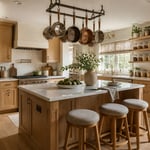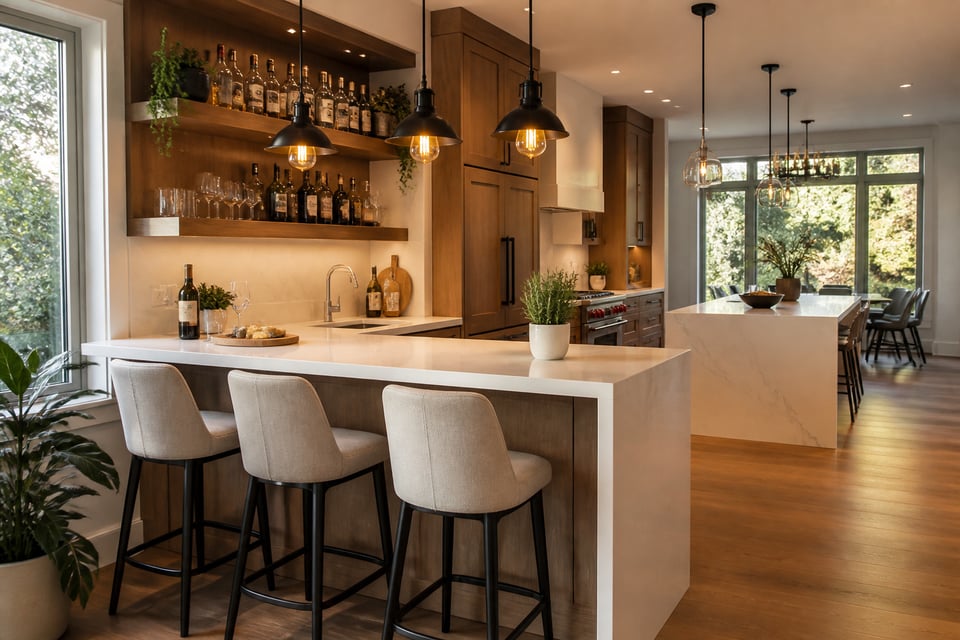
The kitchen bar has quietly become the most-used seat in the house. It’s where coffee turns into conversation before the school run, where wine is poured while someone else finishes dinner, and where the party inevitably clusters no matter how much furniture you’ve arranged in the living room. There’s a reason for that pull — kitchen bar seating puts people at the centre of the action without getting in the way of the cook.
In twelve years of kitchen design, I’ve covered just about every kitchen bar idea that works — and a few that don’t. I’ve seen what happens when a family finally gets this right. The dining room table collects mail. The breakfast nook becomes a homework station. And the bar? The bar is where everyone actually wants to be. These kitchen bar ideas cover everything from a full peninsula build to a fold-down ledge you can install on a Saturday afternoon, so whether you’re designing from scratch or working with what you have, there’s an option here that fits your space and your life.
1. Peninsula Bar Counter With Overhang Seating for Open Kitchens
A peninsula bar counter is the best of both worlds in an open-plan kitchen: it adds proper seating without the cost and floor-space commitment of a freestanding island, and it naturally separates the cooking zone from the gathering zone without walling anyone off.
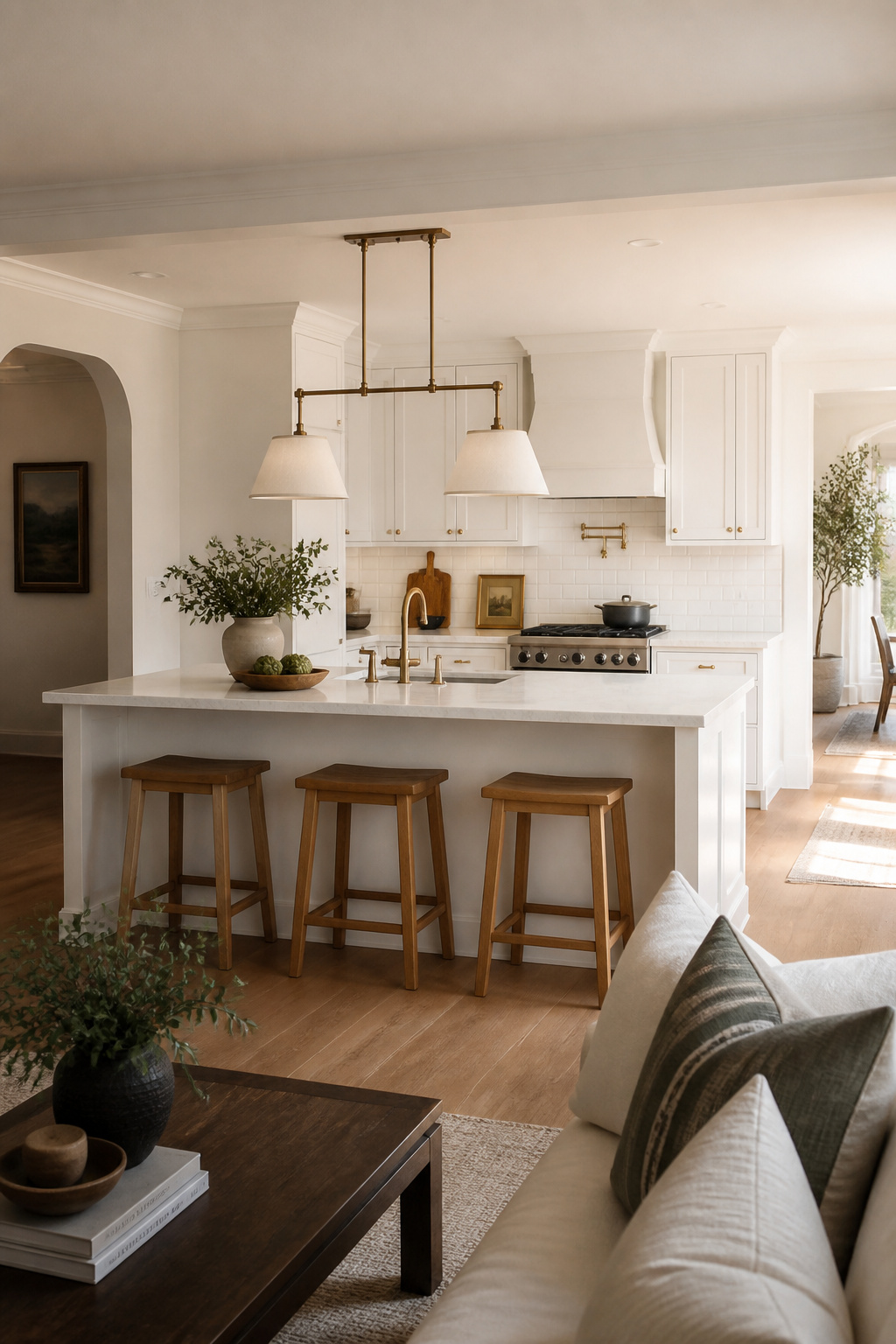
The numbers matter here. The National Kitchen and Bath Association recommends a 12-inch minimum overhang at bar height (42 inches from the floor) to give knees proper clearance. In practice, 15 inches is more comfortable for anyone planning to sit through a full meal. At that height, pair stools with a seat height of 28 to 30 inches — the 10-to-12-inch gap between seat and underside of the counter is what determines whether the seating feels right or awkward.
On the structural side, a peninsula attaches to existing cabinetry on at least one side, which keeps costs well below a custom island — typically $1,000–$3,500 in materials versus $4,000–$10,000 or more for a freestanding island with equivalent storage. It also doesn’t require rerouting plumbing or electrical unless you want a sink or additional outlets on the bar side.
Stool spacing is the detail people consistently get wrong. Allow 26 to 30 inches between stool centres so seated guests aren’t touching shoulders. For a 72-inch peninsula, that’s two to three stools comfortably — commit to the number before you buy. Swivel stools are worth the slight premium if children use the bar; they can pivot to dismount safely rather than sliding off backward.
2. Built-In Wine Rack and Bar Cabinet With a Serving Counter
A dedicated bar cabinet built into the kitchen’s existing cabinet run does something a portable bar cart can’t: it makes the bar feel permanent. It says *this is where drinks happen*, which subtly redirects guests away from the prep zone and toward a spot designed for them.
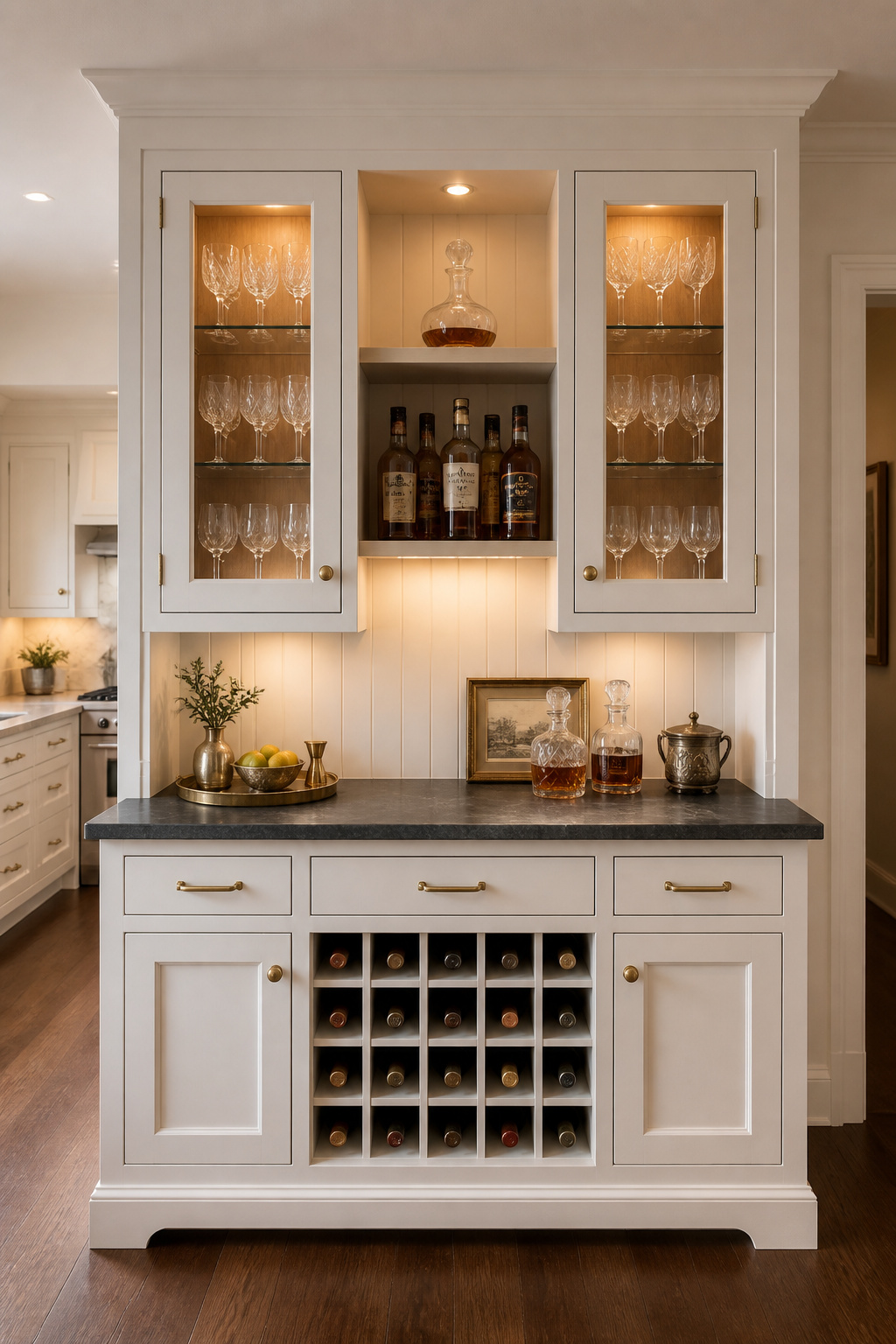
The typical layout stacks open upper shelving for glassware above a closed lower cabinet for spirits, with a counter surface in between for mixing. Glass-front uppers add a bar-quality feel without custom joinery pricing. Many clients add a power strip routed behind the counter — a blender, wine opener, and charging station all get a permanent home without extension cords cluttering the surface.
For the wine rack, a standard 750ml Bordeaux bottle needs a cell roughly 4 inches wide and 13 inches deep. A 24-inch-wide wine rack section under the counter holds 24 to 32 bottles; a 36-inch section holds 48 or more. If temperature control matters, a 24-inch built-in dual-zone wine cooler replaces the static rack and keeps reds and whites at separate temperatures simultaneously.
Countertop material for a bar surface deserves more thought than for the main kitchen counter because the abuse is different. Quartz is the practical leader — non-porous, etching-resistant, no sealing required, and available at $30–$120 per square foot installed. Stainless steel is the professional pick: fully waterproof, heat-safe, and sanitised in seconds, though fingerprint-prone. Marble is spectacular and genuinely poor at a bar — it etches on contact with wine, citrus, and cola regardless of how often you seal it. These kitchen storage solutions that free up counter space also influence how much working room the bar counter actually gets.
3. Kitchen Bar Seating Along a Raised Waterfall Island
A raised bar section on one side of a kitchen island is one of the most functional things you can build into a kitchen — and when it has a waterfall edge, one of the most beautiful. The prep surface sits at standard 36-inch counter height on the cook’s side; the seating side raises 6 inches to 42-inch bar height with an overhang that creates clear separation.
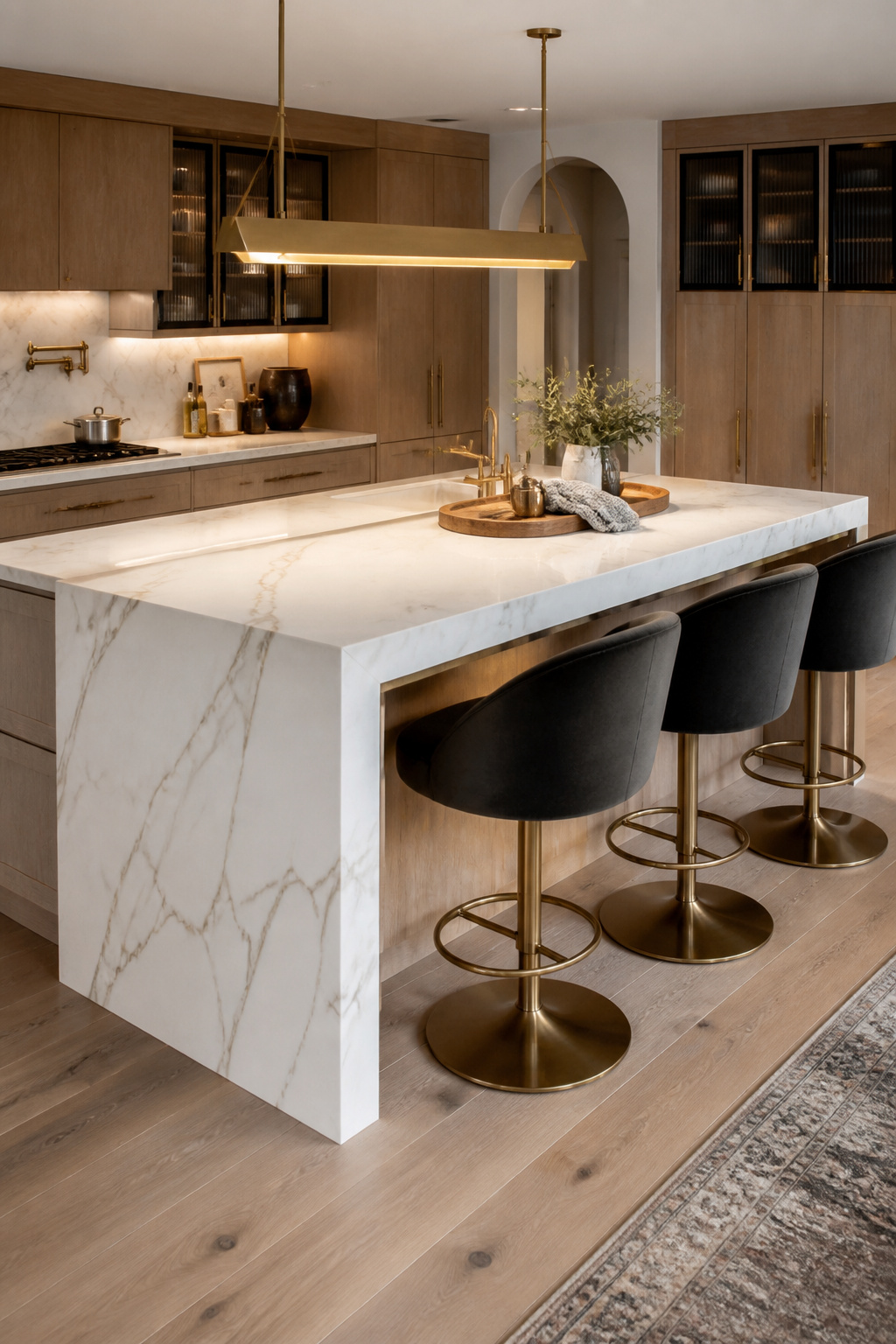
That 6-inch step is doing a lot of quiet work. It screens the prep mess (the bones, the vegetable scraps, the half-assembled salad) from the sight line of guests seated at the bar. Of all the kitchen bar ideas that modify an existing island, this is the one that pays back most in daily use. For families with young children, it also keeps curious hands away from hot pans on the lower work surface. Kitchen bar seating at a raised island changes the dynamic of cooking for guests in a way that a single-height island never quite manages.
The waterfall edge is where the cost climbs and the drama lives. A fabricator uses CNC cutting to precisely miter the slab edge so the veining flows from horizontal to vertical in one uninterrupted movement. For quartz, that process adds $1,000–$2,000 to the project, with material running $30–$120 per square foot. Marble costs $75–$120 per square foot in material alone, with additional fabrication fees — and carries the bar-surface vulnerability discussed above. Butcher block waterfall islands (white oak or walnut) are the warmer alternative at lower cost, sealed with food-safe oil every six months.
Before committing to the detail, spend time with kitchen island countertop options worth knowing before you commit — material choice at this stage determines a decade of maintenance decisions.
4. Floating Bar Shelf With Statement Pendant Lighting Above
Not every kitchen bar idea requires a carpenter, a contractor, or a significant budget. A wall-mounted floating shelf at 42 to 45 inches from the floor, with two or three pendant lights hung 30 to 36 inches above it, creates a dedicated bar zone with nothing but wall anchors and a junction box.
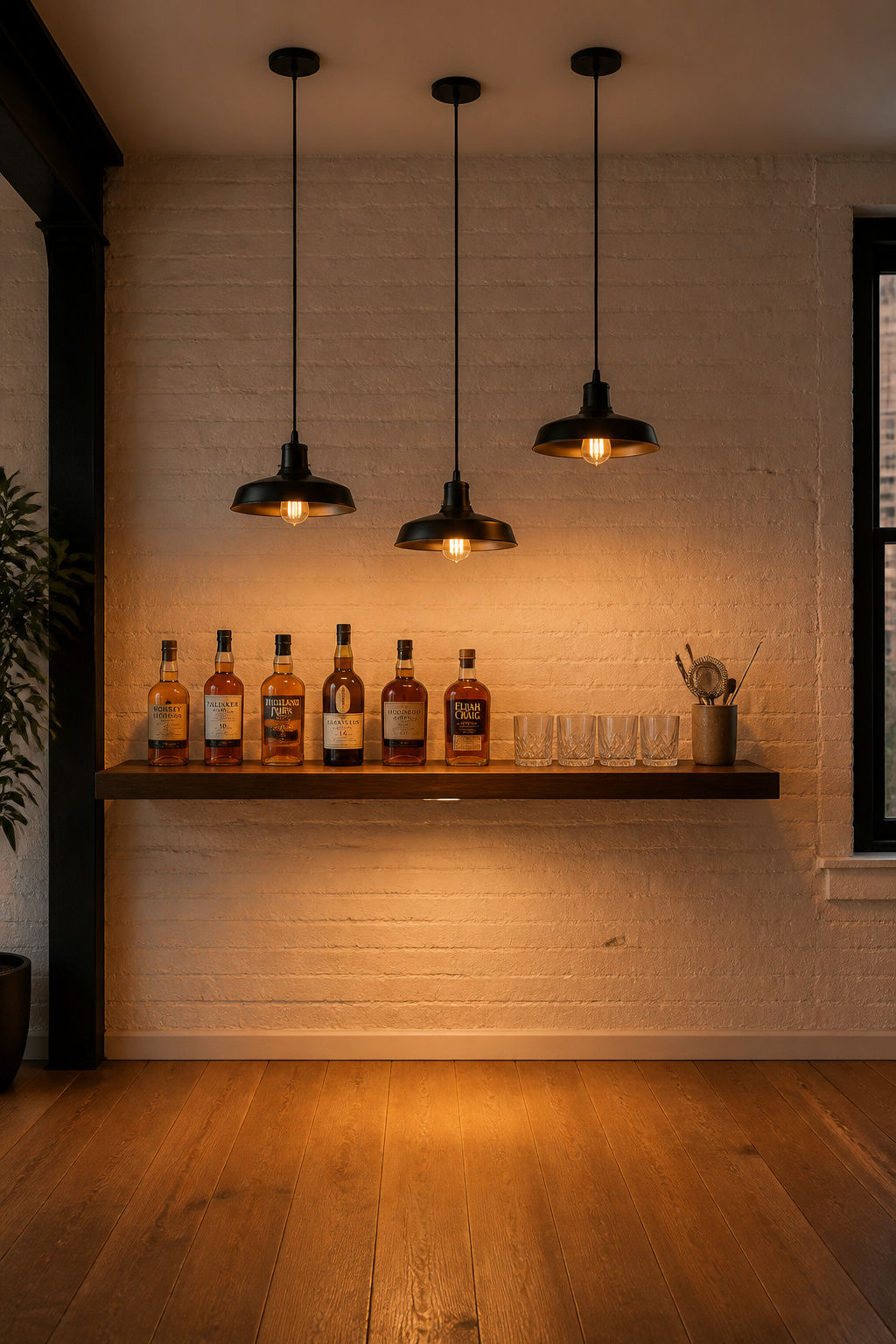
For renters, this is the kitchen bar approach that leaves no permanent trace. A shelf anchored into studs with quality concealed brackets can be removed and patched cleanly when the lease ends — no permit, no contractor, no conversation with the landlord. Total materials cost typically lands under $200 for a 48-inch shelf with heavy-duty hidden brackets.
Choose a shelf depth of 10 to 12 inches — wide enough to hold a standard 750ml bottle upright and most highball glasses, narrow enough to sit close to the wall without projecting into the room. Concealed floating brackets handle 100 to 150 pounds per pair when anchored to studs, which is sufficient for a dozen bottles and a run of glassware.
For the lighting, hang pendant bottoms 30 to 36 inches above the shelf surface — for a 42-inch-high shelf, that places the pendant bottom at 72 to 78 inches from the floor, above head height for most adults. Space multiple pendants 30 to 32 inches apart, centre to centre; three pendants over a 60-inch shelf is the right rhythm. Warm white 2700K Edison-style LED bulbs are the standard choice for bar ambience — they render skin tones and the amber of spirits warmly, unlike 4000K daylight bulbs that feel clinical over a drinks counter.
5. Banquette Corner With a High Bar Table for Casual Dining
Corner banquette seating with a bar-height table is one of those kitchen bar ideas that converts the most wasted space in a kitchen (the dead corner where nothing useful ever lives) into the coziest spot in the room. The enclosed, three-sided feel of an L-shaped banquette creates an intimate gathering pocket that a standard chair arrangement never quite achieves.
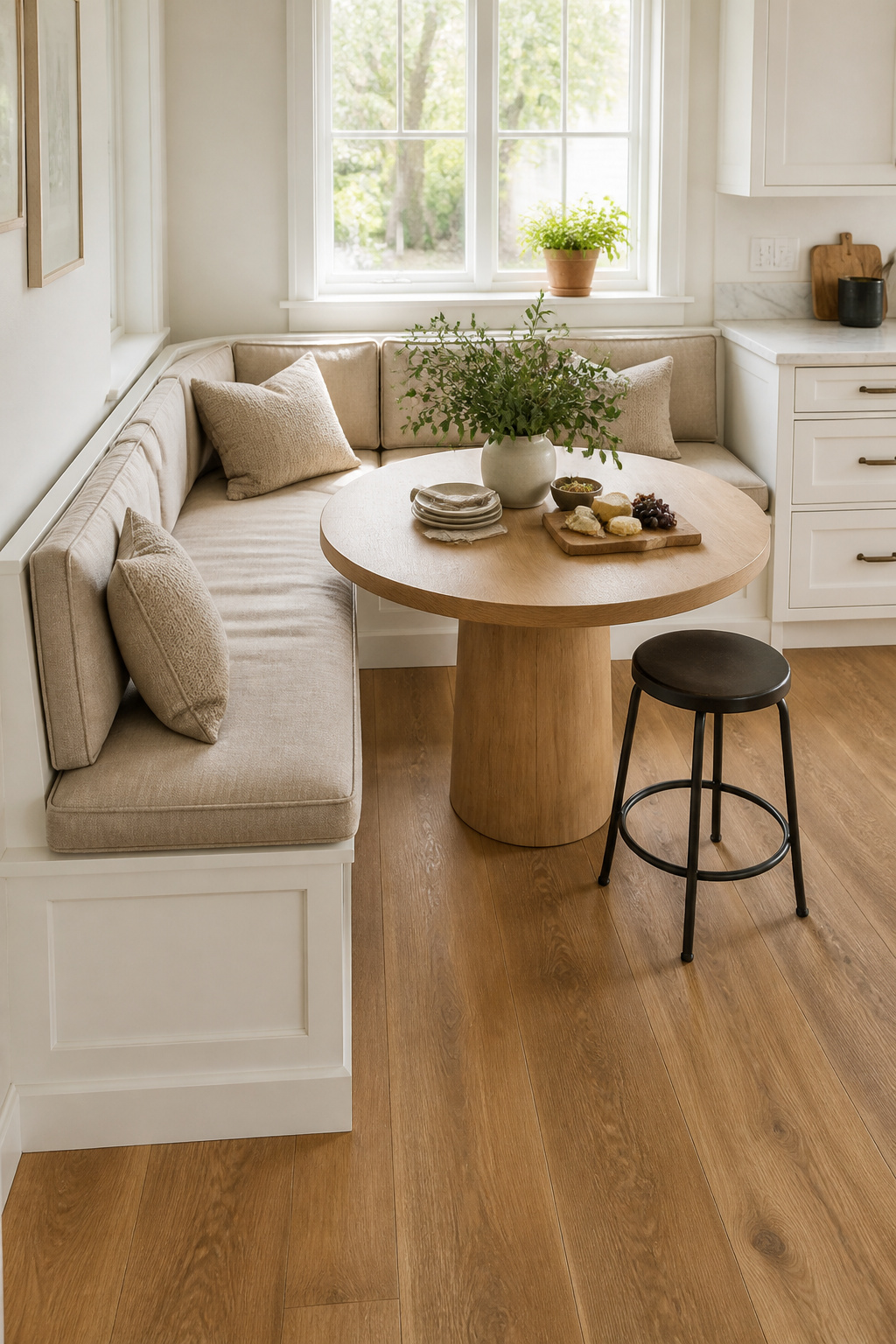
A typical L-shaped banquette seats four to six people in the floor space that two freestanding chairs with pull-out room would occupy. Add lidded bench storage below the seats, and you’ve built seating, a dining surface, and storage into one corner.
A custom banquette built by a local carpenter costs $1,500–$4,000 depending on size, cushion quality, and timber species. The DIY route using IKEA KALLAX units as the base structure typically lands at $300–$600 in materials and can be finished in a weekend. Wherever you source the build, don’t scrimp on the seat cushion foam: 2.0 pounds per cubic foot density is the minimum for a cushion that holds its shape over years of daily use. Crypton fabric or a commercial-grade textile handles kitchen spill realities far better than standard upholstery.
Bar-height tables at 40 to 42 inches pair with 28 to 30-inch stools on the open sides; the built-in bench needs a seat height of 26 to 28 inches for comfortable elbow height at the table. Plan all three measurements (bench height, table height, stool height) before building anything, because adjusting even one after the fact means starting over.
6. Kitchen Bar Ideas Using Industrial Pipe Shelving and Edison Bulbs
Industrial pipe shelving stands apart from other kitchen bar ideas because the structure is the design. The pipe isn’t hiding behind a cabinet face or a bracket — it’s fully exposed, which reads as intentional and architectural rather than improvised.
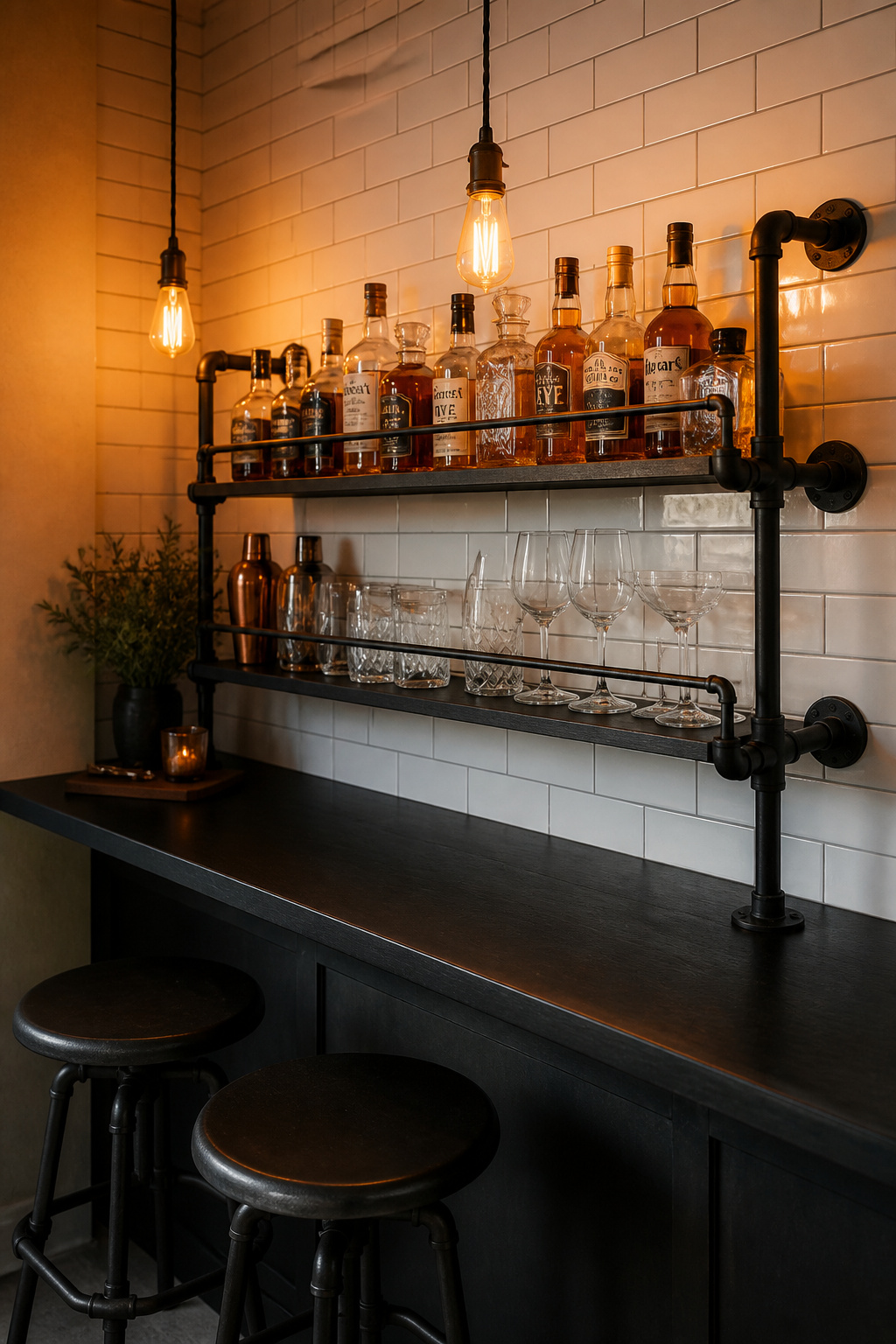
Black matte iron pipe against white subway tile or grey concrete-look porcelain creates strong graphic contrast without a dramatic paint choice or custom cabinetry. The same visual language — raw material, dark metal finish, warm Edison light — makes the bar feel like a deliberate design decision rather than furniture that wandered in.
Pre-built pipe shelf kits are available from Simplified Building, Home Depot, and Etsy fabricators in 36-inch, 48-inch, and 60-inch widths. Opt for 3/4-inch pipe over 1/2-inch; it’s more architectural in scale and, if you want to route wiring through the pipe for lit designs, the wider bore makes that possible. Anchoring to studs with lag bolts supports 200-plus pounds per shelf; toggle anchors in drywall handle 50 to 100 pounds. Always locate the studs before committing to shelf position.
Edison bulb dimming is the one technical detail that catches people out. True incandescent Edison bulbs dim smoothly on any standard dimmer switch. LED Edison-style bulbs (which use far less energy) require a dimmable-rated LED dimmer ($15–$40), not the old incandescent dimmer already in the wall. On a shared circuit, LED Edison bulbs at 6 to 8 watts each are the sensible choice: standard household switches handle up to 360 watts, so running 60W incandescents in a four-socket fixture quickly approaches the limit.
7. Two-Tone Cabinetry With a Dedicated Cocktail Station Counter
A cocktail station retrofit doesn’t require demolishing cabinetry or calling a contractor. The whole move can happen within a 24-to-36-inch section of existing base cabinets: remove two or three cabinet doors, paint the interior a contrasting accent colour, add open shelves cut to fit, and the bar zone is established.
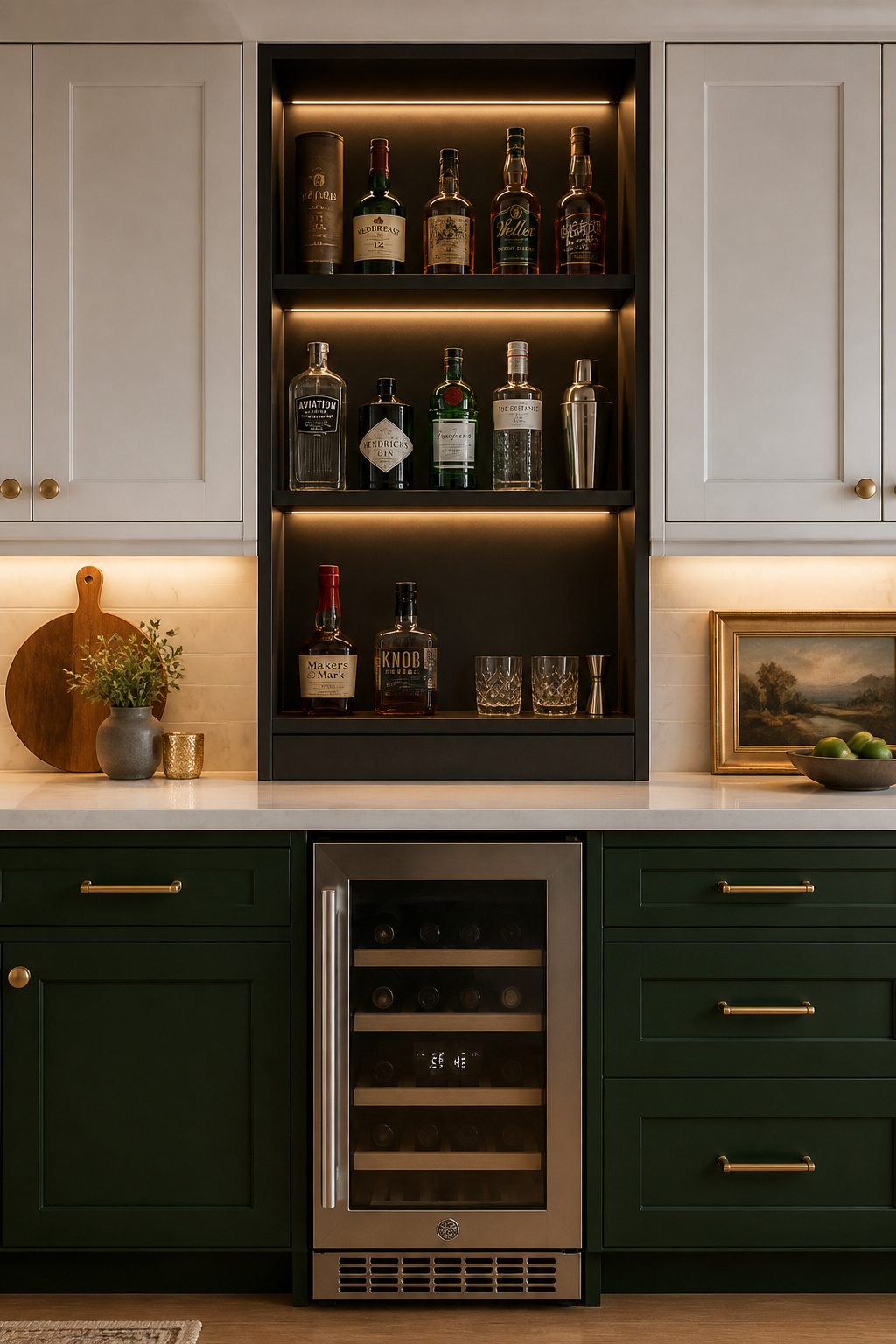
The two-tone approach does the visual heavy lifting. Navy lowers against white or natural wood uppers is the most prevalent combination in 2025–2026 kitchens, and it works for a bar zone because navy reads formally and slightly moodily — the same associations we bring to actual bars and hotel lounges. Forest green lowers with brass hardware and white uppers is the dominant pairing for cocktail stations specifically; the colour says “drinks here” before a single bottle is displayed. A more restrained version: same-colour cabinets in contrasting sheens. Matte lowers beneath semi-gloss uppers delineates zones without any colour drama.
Under-counter appliances make the station genuinely functional. Front-venting built-in beverage coolers are the only appropriate choice for enclosed cabinet installation — rear-vent freestanding models will overheat and fail in a built-in bay. A 24-inch dual-zone unit holds 18 Bordeaux-format bottles and up to 88 cans; an 18-inch unit fits a standard cabinet bay. For serious home bartenders, a 15-inch-wide under-counter ice maker (producing 25 to 35 pounds of clear ice daily) is the upgrade that guests consistently notice. The contemporary kitchen decorating approaches worth borrowing include useful framing for how two-tone colour decisions land in different kitchen styles.
8. Breakfast Bar With a Live-Edge Wood Slab Countertop
A live-edge slab breakfast bar is the kitchen design decision that generates the most questions from guests, every single time. It’s not the colour, not the tile, not the pendant lights — it’s the piece of wood with the irregular natural edge that people reach out to touch.
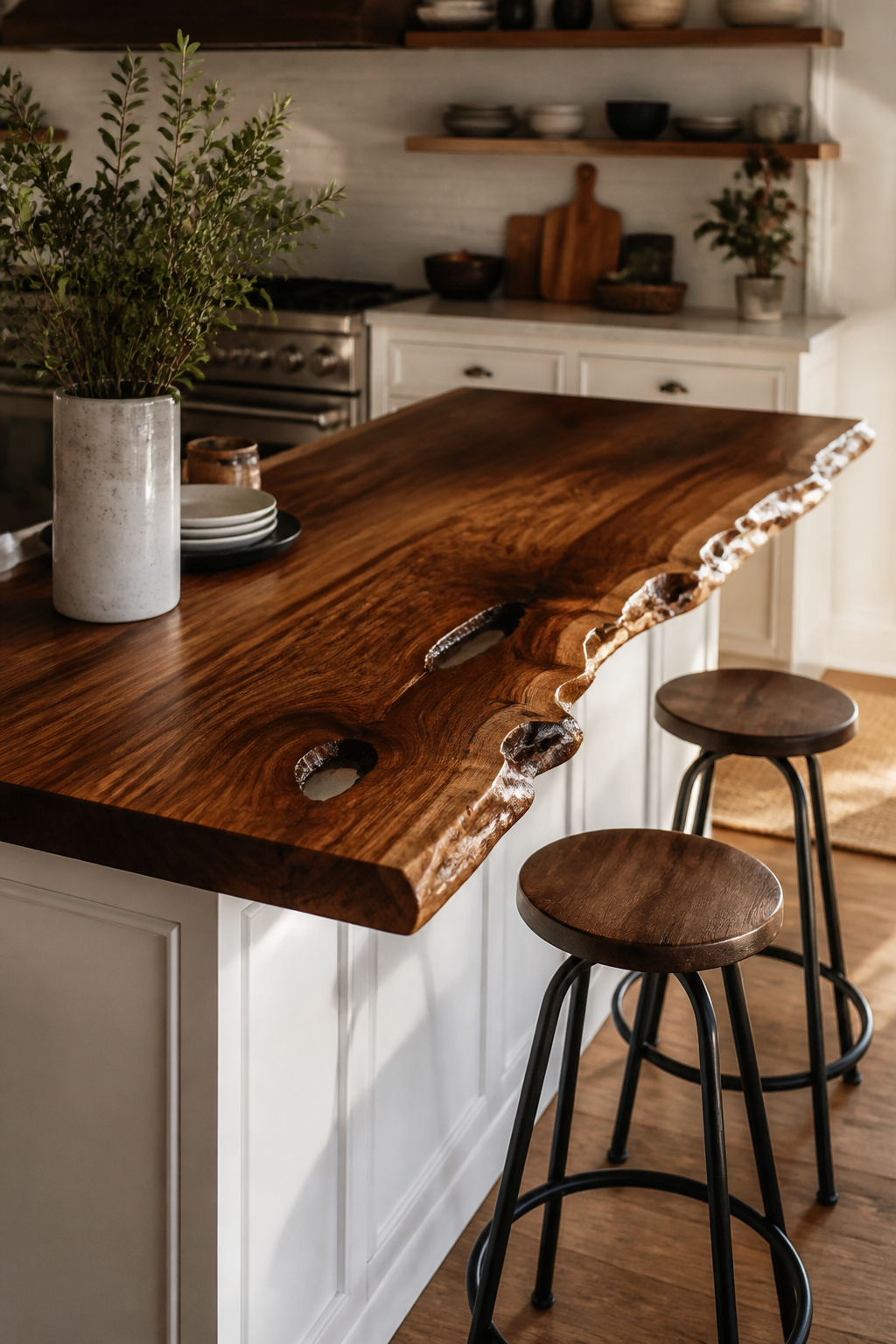
The honest appeal is irreproducibility. No two slabs share the same grain pattern, void configuration, or edge profile. A manufactured countertop in any material can be replicated across a thousand kitchens; a live-edge walnut slab cannot.
Choosing the Right Wood Species for a Bar Surface
For a bar surface, species selection matters. Walnut, with a Janka hardness of 1,010 lbf, is the most popular choice — its dark chocolate heartwood deepens in colour with age, and it’s hard enough for daily bar contact. Hard maple (1,450 to 1,560 lbf Janka) is the more hard-wearing option if the bar sees heavy use; the lighter, tighter grain gives it a cleaner, less character-forward aesthetic. Teak is the premium coastal choice: its natural silica content and internal oils resist moisture without chemical treatment, which makes a real difference in a zone where condensation rings and spilled drinks are routine.
For finishing, food-safe penetrating oils like Rubio Monocoat are the preferred choice for bar tops that see any food preparation — they bring out the grain without building a film surface that can crack or peel. For a pure drinks bar, three to five coats of water-based polyurethane provides better liquid resistance. The maintenance schedule: oil monthly for the first year while the wood saturates fully, then every three to six months after. When water stops beading on the surface, it’s time.
9. Kitchen Bar Area With Open Display Shelving for Glassware
The kitchen bar area that works best — and this applies across all kitchen bar ideas — isn’t always the most built-up or the most expensive. Sometimes it’s the one that puts the collection on display — where the glassware is visible, the bottles are arranged, and the whole zone says “we entertain here” to anyone who walks in.
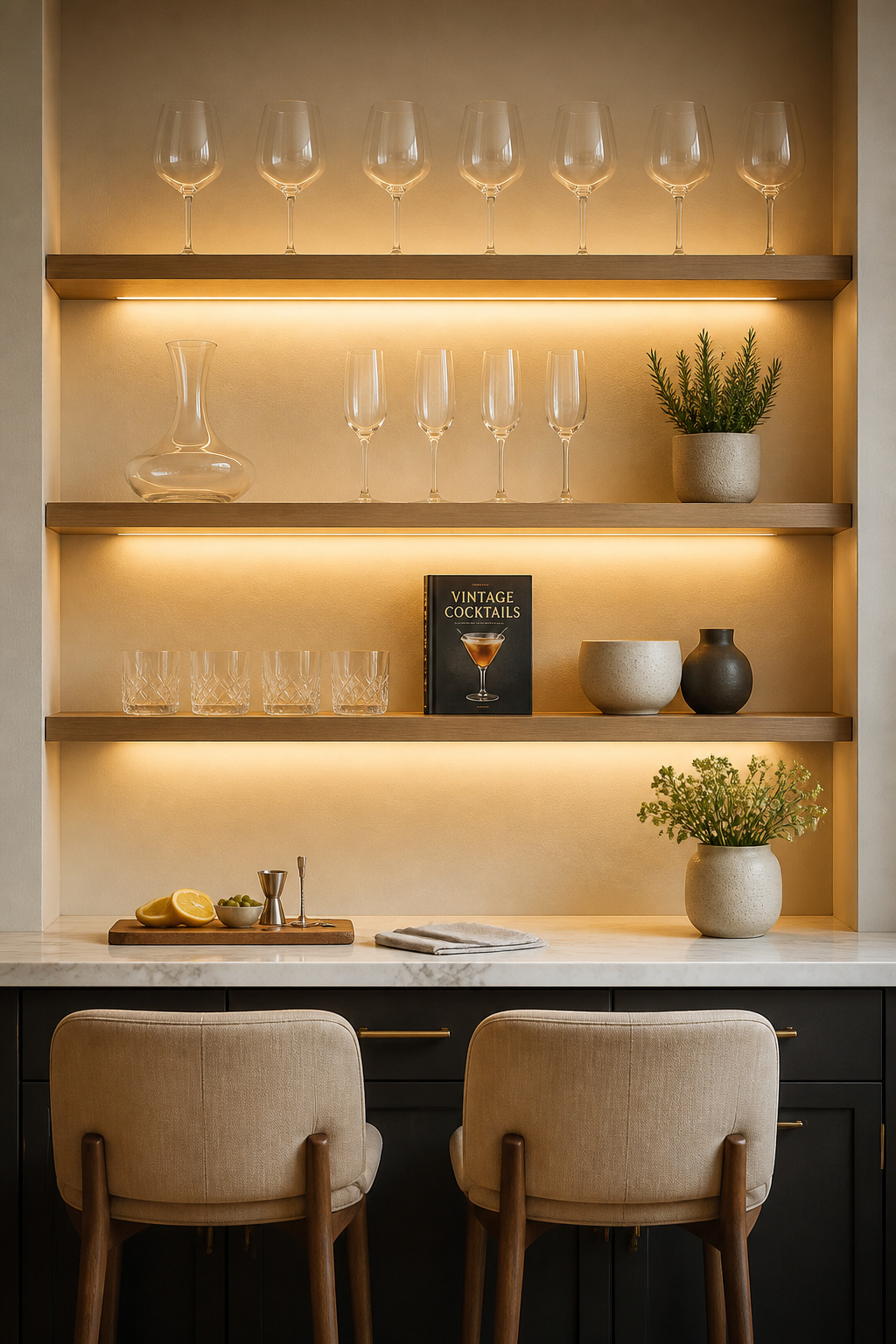
Open display shelving does double duty — the shelves organise the bar while creating an ambient focal wall. The shelf spacing is the critical technical detail: standard wine glasses (Bordeaux and Burgundy styles) need 8 to 10 inches of vertical clearance; champagne flutes need 10 to 12 inches; a standing 750ml bottle needs at least 14 inches including handling room; decanters need 14 to 16 inches. Get the spacing right and the shelves organise the collection naturally. For kitchen storage ideas that actually work long-term, the principle is the same: designated spaces for specific items mean things get put away rather than accumulating on the counter.
Styling Open Bar Shelves
Styling open bar shelves is more restraint than decoration. Group glassware by type and height: all red wine stems together, all tumblers together. Visual repetition creates order where a mismatched arrangement reads as clutter even when everything is clean. Leave about 20 percent of each shelf empty: breathing room lets the displayed pieces read individually rather than competing for attention.
A small planted herb in a ceramic pot (rosemary or thyme) ties the bar to the kitchen visually and serves an actual culinary purpose. It’s the one styling detail I put in every kitchen bar area I design, because it’s both honest and effective. Backlit shelving takes this zone from functional to atmospheric: LED tape behind a translucent back panel at 2700K creates a warm glow that makes the glassware look like an installation, for $30 to $80 in LED tape and an hour of installation.
10. Fold-Down Bar Ledge for Small Kitchens That Need Flexibility
The fold-down bar ledge is the most underestimated kitchen bar idea in this list. It’s the option that people skip past when planning, then encounter in someone else’s kitchen and immediately wish they’d included in their own.
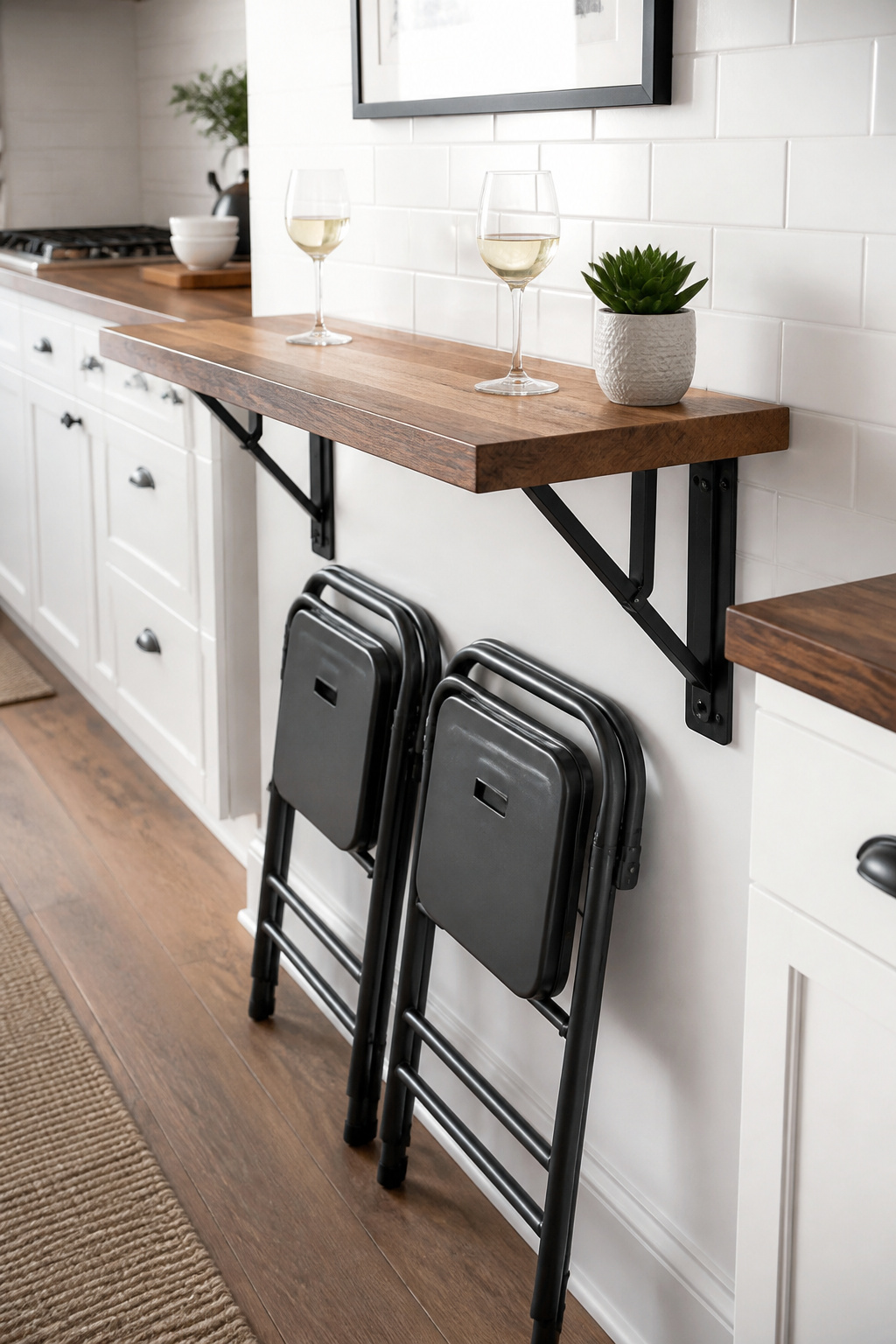
A 12-to-16-inch-deep ledge at 42 inches from the floor becomes a proper bar counter when deployed: deep enough for drinks, a cutting board, and the basic cocktail-making footprint. When folded flat against the wall, it takes up zero floor space — galley kitchens with 36-inch clearances can finally get bar seating without blocking the work zone.
Kitchen Bar Ideas for Tight Spaces
In a compact kitchen, the fold-down ledge often makes more sense than any built-in option. For small kitchen ideas that actually expand the space, this combination of a fold-down bar plus stools that tuck away is consistently one of the highest-impact, lowest-cost interventions available.
The hardware carries more weight than people expect, literally and structurally. Heavy-duty stainless steel folding brackets rated for 300 to 550 pounds per pair lock at 92 degrees (slightly past perpendicular), which prevents accidental folding under load. The anchor method matters more than the bracket rating: lag bolts into studs handle 200-plus pounds of distributed load; toggle anchors in drywall handle 50 to 100 pounds. Always locate the studs first, and position the ledge around the structural constraint rather than forcing an anchor into a drywall bay.
Surface material for a fold-down ledge should be light as well as durable. Solid hardwood or butcher block panels are the best balance, lighter per square foot than stone, impact-resistant at the edges during daily fold-and-unfold use. Laminate surfaces (including IKEA tabletops) are the budget alternative: scratch-resistant, easy to wipe clean, and convincing at bar-surface distances.
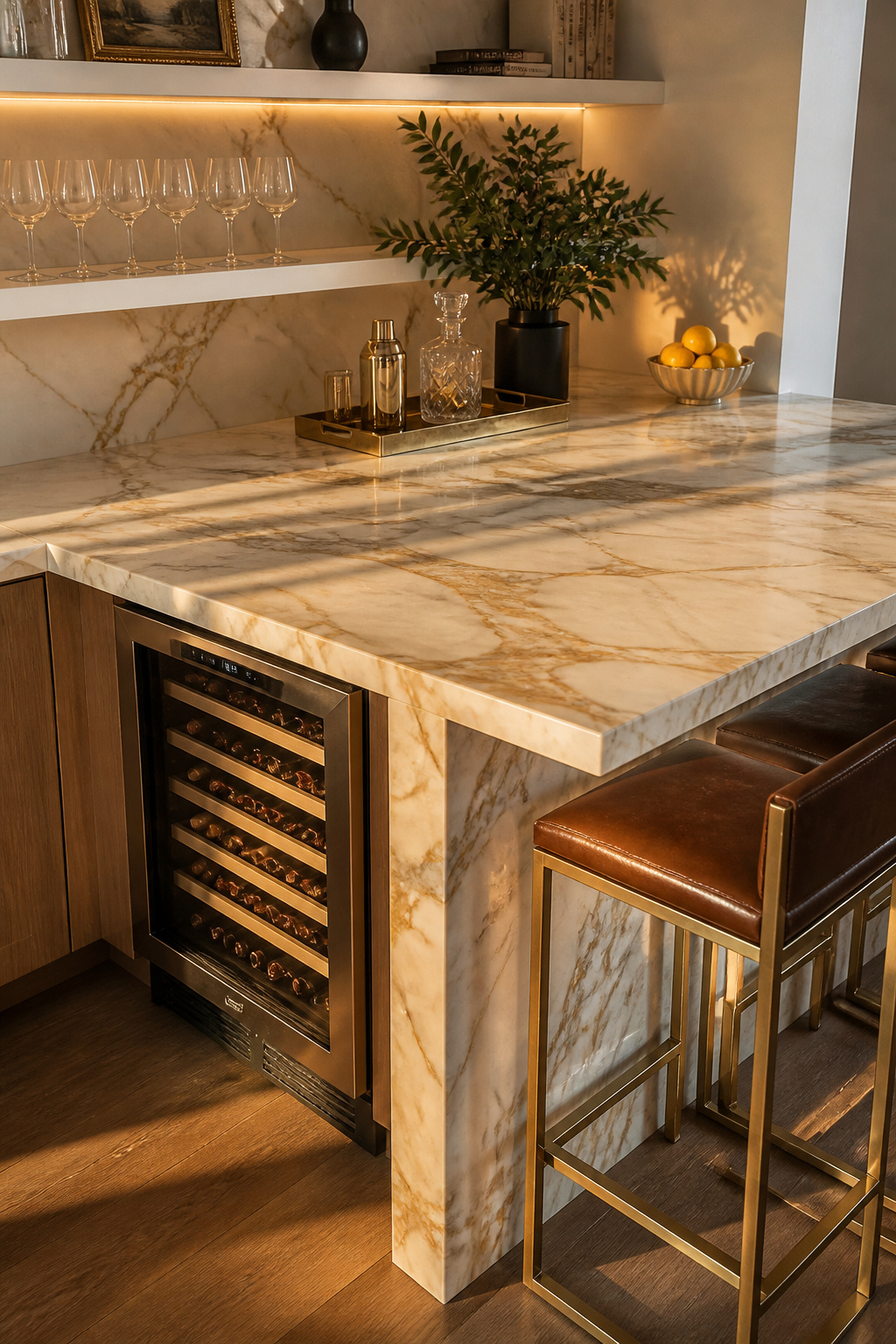
11. Marble Bar Counter With an Integrated Under-Counter Wine Cooler
This kitchen bar idea photographs best and requires the most honest conversation before committing. A marble bar counter with a recessed wine cooler is a beautiful thing — there’s nothing in the material world that looks quite like a polished Calacatta slab with a full bottle display behind it. But the surface is asking to be used as a bar, and marble’s relationship with acidic liquids is not a small footnote.
Understanding Marble at a Bar Surface
Marble etches. Contact with wine, citrus, cola, and most cocktail ingredients creates dull, matte spots on the polished surface — not stains that wipe off, but a chemical reaction with the calcium carbonate in the stone. Sealing every six to twelve months slows liquid penetration and reduces deeper staining, but it doesn’t prevent etching from acids. The homeowners who love their marble bar counter fall into two categories: those who don’t mind (and even enjoy) the patina that develops over years of parties, and those who chose a honed finish from the start, on which etch marks are invisible against the already-matte surface. A durable quartzite like White Macaubas offers the same visual register as marble with significantly better acid resistance — worth knowing before the slab is cut.
For the wine cooler, front-venting built-in models are the only appropriate choice for enclosed installation. A 24-inch dual-zone unit holds 18 standard Bordeaux bottles and maintains separate temperature zones for reds (around 55°F) and whites (around 45°F) simultaneously. The electrical requirement: a dedicated 15-amp circuit is the professional recommendation, since wine cooler compressors draw harder in warm months and sharing a circuit risks nuisance tripping at the worst possible moment.
12. Kitchen Bar Design With a Shiplap Accent Wall Behind the Stools
A shiplap accent wall behind bar stools does something that cabinetry, pendant lighting, and even a statement countertop can’t: it gives the seating area a back. Before the shiplap, bar stools sitting in front of a plain wall feel like they’ve been arranged in front of nothing. After it, the kitchen bar design has a frame — a proper destination rather than a counter edge with chairs.
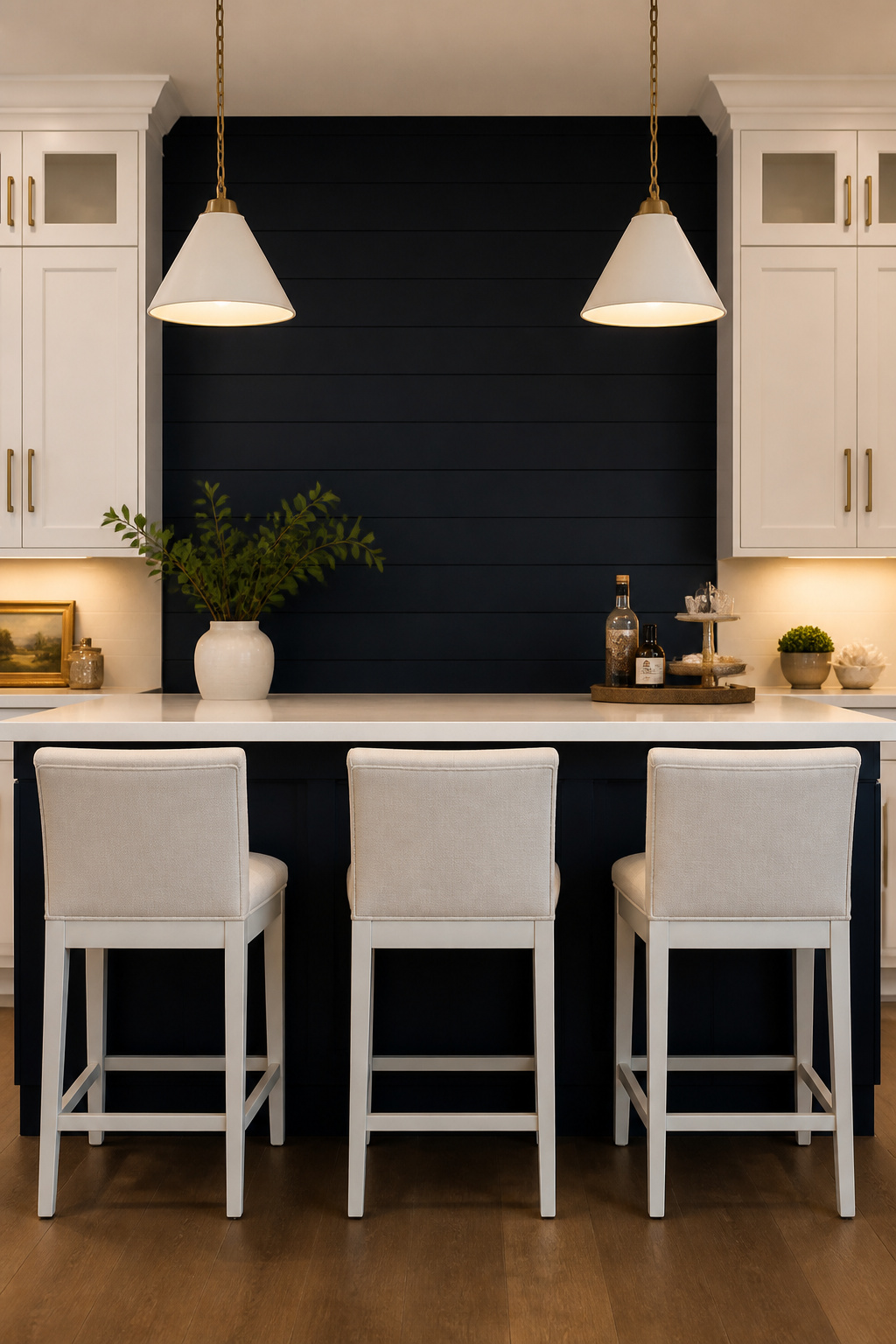
The horizontal lines of shiplap also do optical work in kitchens. They elongate a narrow wall and draw the eye across the room rather than up toward the ceiling, which benefits low-ceiling kitchens especially. And the textural contrast of wood grain against smooth cabinetry and appliances adds dimension without any colour commitment.
Shiplap Material Options for Kitchen Walls
Material selection matters for a kitchen installation. Real pine or poplar shiplap ($1.50–$4.00 per linear foot) provides authentic grain variation and the slight irregularity that makes the wall feel handmade. MDF shiplap ($1.00–$2.50 per linear foot) creates a smooth, uniform painted surface, fine for dry kitchen walls away from the sink zone but not where moisture is a reality. PVC shiplap ($2.00–$5.00 per linear foot) is the right call directly behind a bar counter where condensation from cold glasses and the occasional splash will reach the wall; it won’t swell, rot, or delaminate.
For paint colour, Benjamin Moore Pale Oak on shiplap behind warm wood cabinetry is the most cohesive farmhouse result. Sherwin-Williams Naval in deep navy behind white stools creates genuine drama — the colour contrast that reads as an actual bar rather than a wall that happens to have seating in front of it. A whitewash or grey-wash stain on natural wood shiplap suits coastal and transitional kitchen bar designs, where the grain shows through and the palette stays organic.
13. Swivel Upholstered Bar Stools and a Step-Down Counter Combo
Among kitchen bar ideas that don’t require structural changes, swivel stools paired with a step-down counter are a smaller upgrade than they appear in a catalogue and a larger quality-of-life improvement than people expect before they try them. The ability to pivot away from the counter without standing — to turn and face the room, join a conversation, or reach past the person next to you — changes how bar seating feels in a kitchen.
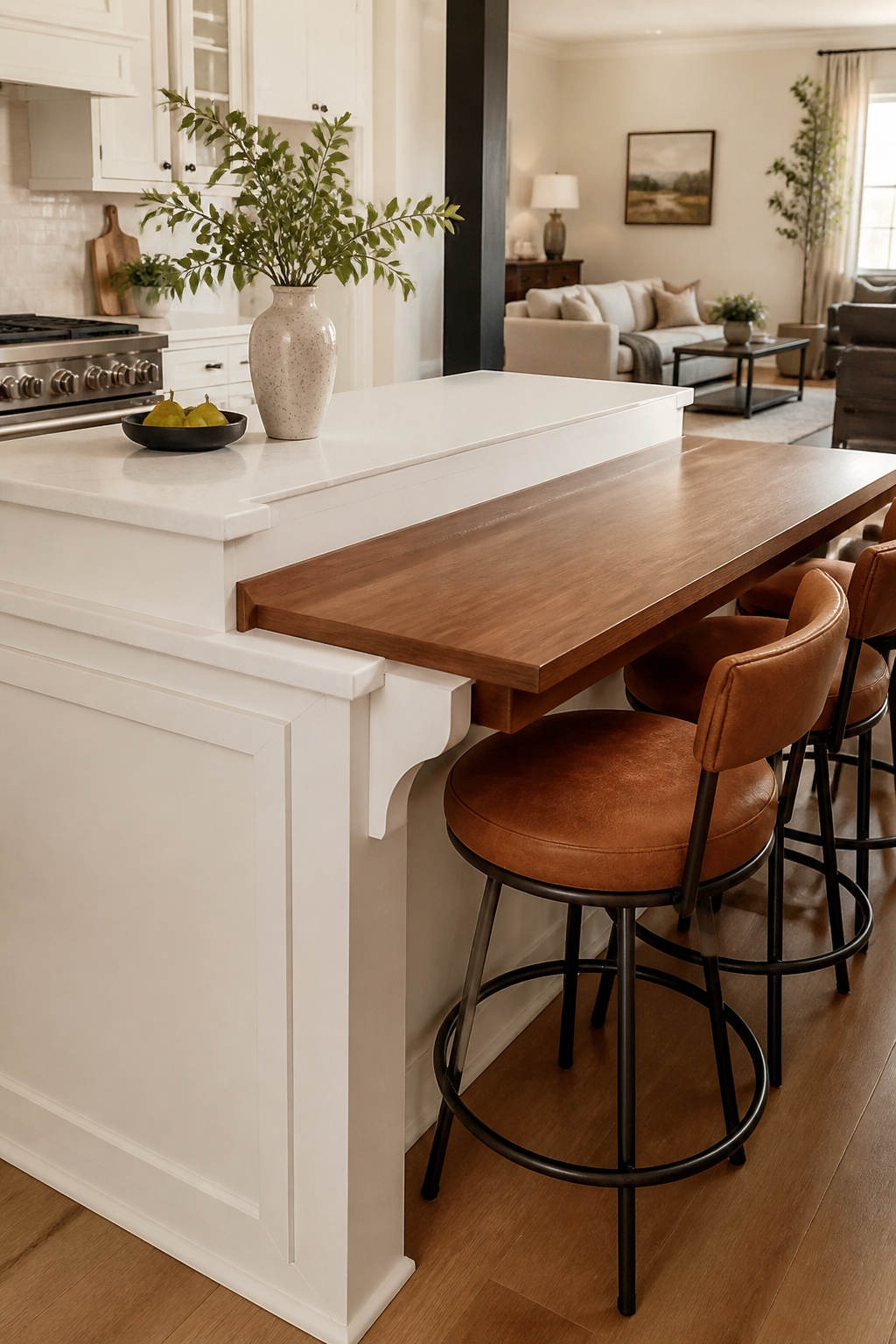
Fixed-base stools require the seated person to either stand and reposition or crane sideways in a way that quickly becomes uncomfortable during a two-hour dinner. Children particularly benefit from swivel stools — they can rotate to a safe angle before climbing down rather than sliding backward off the stool. In a narrow kitchen corridor, swivel stools that tuck fully under the counter keep the path clear, which matters in kitchens under 12 feet wide where the work triangle can’t absorb extra foot traffic.
Upholstery and Counter Height Details
Upholstery in a kitchen environment needs to survive without looking like it’s trying to survive. Crypton fabric is the professional choice, engineered to resist stains, moisture, and bacterial growth while looking and feeling like a standard upholstered textile. It cleans with soap and water; some versions are machine-washable. Faux leather and vinyl are the budget alternative, cleaning immediately but tending to feel tacky in warm kitchens and crack in direct sunlight over time. Standard cotton looks beautiful and stains on first contact. Reserve it for kitchen bars that don’t see regular meal service.
The step-down counter detail (a 36-inch prep surface stepping down to a 30-inch dining-height bar) is a structural cabinet decision, not a retrofit. The transition between heights is typically handled with a decorative corbel or waterfall end panel at $300 to $800 in custom millwork. The payoff: at 30 inches, the bar works with standard dining chairs as well as 24-inch counter stools, which broadens seating flexibility considerably.
14. Farmhouse Kitchen Bar With Reclaimed Wood Shelving and Shaker Stools
The farmhouse kitchen bar works because it looks collected rather than designed. The reclaimed wood shelving, the Shaker-profile stools, the blackened iron hardware — none of these elements look like they arrived at the same time from the same place. That’s the point: accumulated over time, chosen for character rather than coordination.
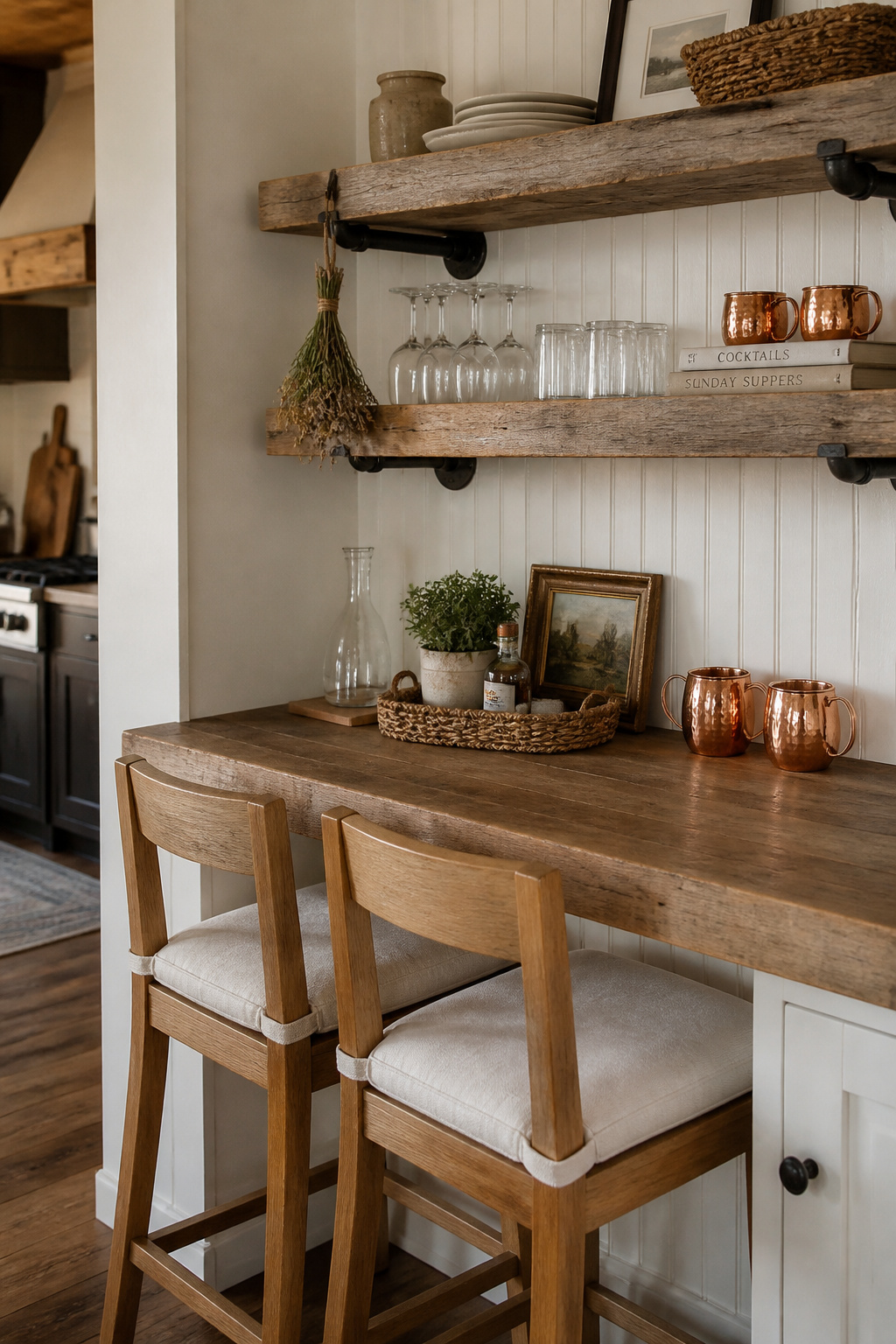
In an open-plan kitchen with a lot of smooth, reflective surfaces (quartz counters, lacquered cabinets, stainless appliances), a farmhouse bar zone introduces warmth and texture that the rest of the room can’t provide. It’s the antidote to the kitchen that’s beautiful but feels slightly cold. The farmhouse kitchen ideas that balance character with function that hold up over years all share the same quality: the materials are properly prepared, not just visually convincing.
Sourcing and Preparing Reclaimed Wood
Local timber salvage yards sell by the board foot — $3 to $8 per board foot for standard barn wood, $8 to $20 per board foot for premium species like white oak or heart pine — and in-person selection lets you choose for grain, tonal range, and patina. Online suppliers (Elmwood Reclaimed Timber, Reclaimed Wood Source) ship finished shelves and panels when local yards don’t have the right species. The critical specification from any source: kiln-dried to 6 to 8 percent moisture content. Reclaimed wood with higher moisture content will warp and gap after installation in a conditioned kitchen, often within the first heating season.
Shaker stools belong here because their design logic matches the farmhouse ethic: simple, functional, without ornament. The structural detail that distinguishes a Shaker stool worth owning from one that will fail within two years is mortise-and-tenon joinery at the leg-to-rail connections. Dowel-and-glue construction fails under the lateral stress of daily bar use; a tight mortise-and-tenon joint absorbs that movement. Solid oak, ash, and maple hold this joint well and wear without splitting at the stretchers over years of use.
15. Sleek Modern Kitchen Bar With Integrated LED Strip Lighting
LED strip lighting is what separates a modern kitchen bar idea that looks good in daylight from one that comes alive in the evening. Under-counter LED strips along the bar overhang edge create a glowing base that lifts the counter visually — in a dark cabinetry kitchen, the light pools on the floor beneath the bar and creates a contained, theatrical spotlight effect.
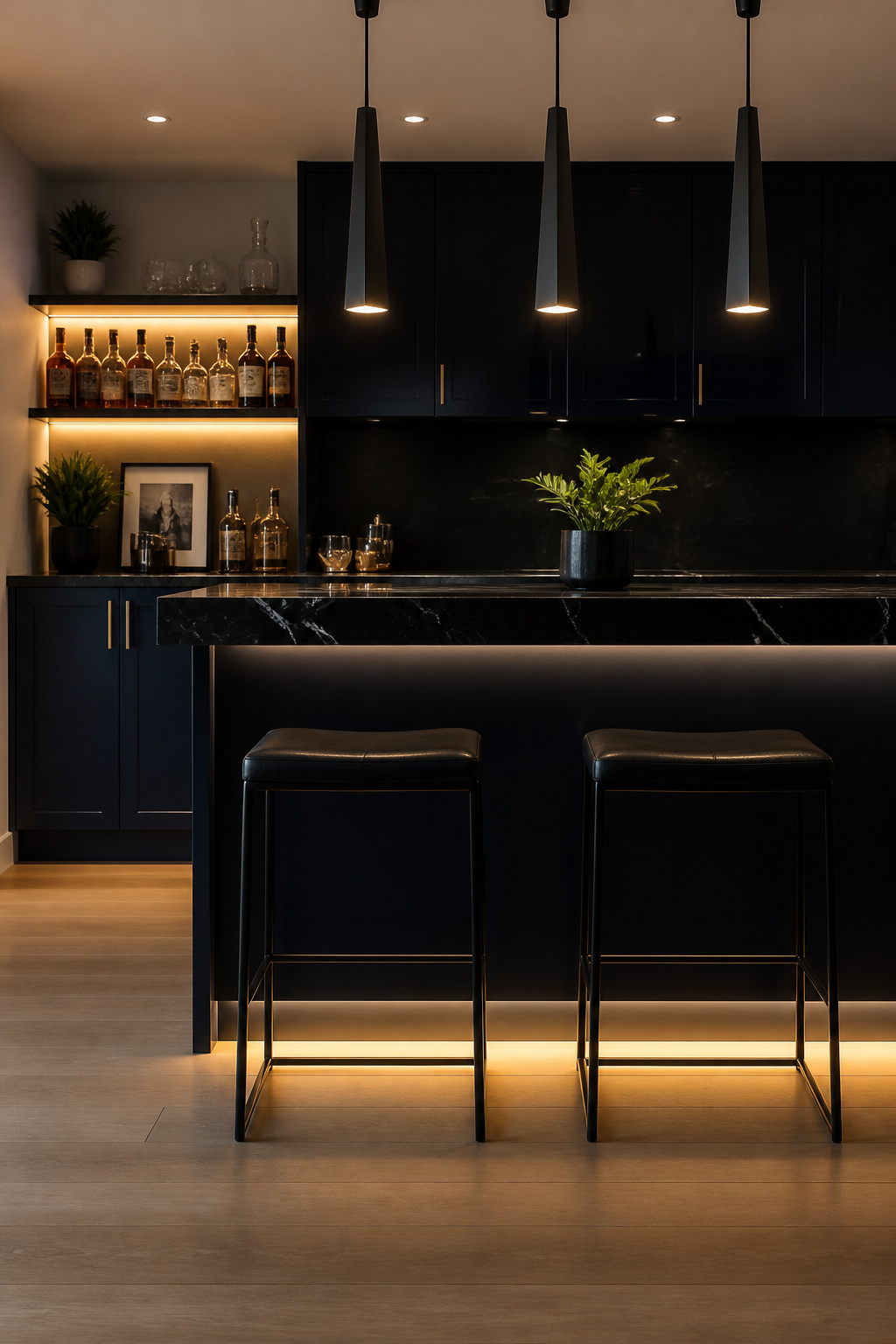
Combine that with pendant lighting above and the bar zone has both a ceiling and a floor of light, which makes it feel spatially complete rather than just functional. Smart LED systems (Philips Hue, Lutron Caséta) allow scene-switching from a phone: 4000K cooking light becoming 2700K dinner-party warmth from the same fixtures, in under a second.
LED Specifications That Actually Matter
For a kitchen application, the LED specification matters more than people realise. CRI 90-plus is the minimum worth installing — below CRI 80, the reds in wine look brown and the amber of spirits look muddy; above 90, colours render with near-daylight accuracy. For colour temperature, 2700K suits traditional and farmhouse kitchens where warm tones are part of the design language; 3000K is the better fit in contemporary and white kitchens that benefit from slightly crisper light.
The modern kitchen design ideas worth considering for LED integration all point to the same best practice: aluminum channel profiles are non-negotiable. Installed without channels, LED strips adhere directly to cabinetry and build up heat that shortens their lifespan significantly — often halving the rated hours. Aluminum channels conduct heat away from the strip and protect it from kitchen moisture. Frosted or opal PC diffusers over the channel eliminate visible LED dot patterns, creating the seamless built-in light line that the photos show. COB (Chip-on-Board) LED strips deliver a particularly clean, dot-free line and are the professional standard for visible kitchen bar installations.
Choosing the Right Kitchen Bar Style for Your Space and Lifestyle
Fifteen kitchen bar ideas is a range, not a shortlist — most kitchens suit one or two of these approaches, not all fifteen. The right starting point is your layout and your actual daily habits, not the option that looks best in a photograph.
For open-plan kitchens, a peninsula bar counter or raised kitchen island bar seating delivers the most architectural impact and the best return on investment — both are structural decisions that add measurable resale value. For kitchens under 10 feet wide or apartment kitchens where the footprint is fixed, the fold-down bar ledge or a floating shelf bar with pendants gives real bar function without borrowing floor space from the work triangle.
Budget shapes the decision. A fold-down ledge runs $100 to $400 in materials; a floating shelf bar $150 to $600; a shiplap accent wall $150 to $400; a two-tone cocktail station retrofit $500 to $2,000; a built-in peninsula $2,000 to $8,000 or more depending on scope and materials.
The one measurement to take before anything else: confirm your counter or island height, then work back to the stool height you need (that 10-to-12-inch gap), then to the overhang depth required. That chain of measurements determines whether a peninsula or raised island even fits your specific kitchen geometry. Get it right at the planning stage and the rest follows — stool selection, material choice, lighting. Skip it and you end up with beautiful stools that don’t fit the counter you bought them for. Whatever the scale of the change, the kitchen bar is the investment that earns itself back fastest, because it’s where the kitchen becomes what it should be: the centre of the home.