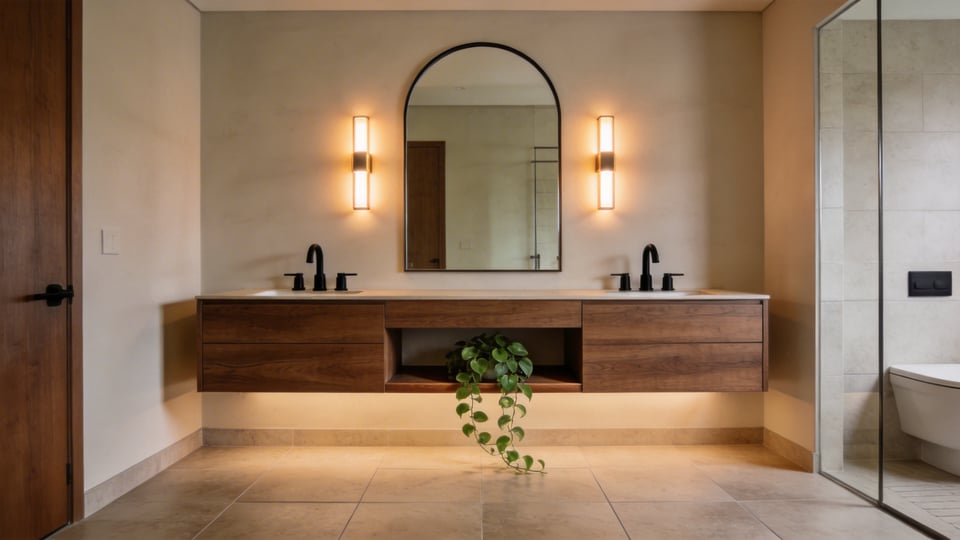
Most bathrooms don’t feel wrong because of the tile or the fixtures. They feel wrong because every decision was made in isolation. A mirror chosen for the price, a paint color selected from a chip card, a vanity picked because it was in stock. Modern bathroom decoration isn’t really about style. It’s about the cumulative effect of every surface, light source, and material working together to produce a specific feeling. In psychology, this is called environmental press — the way a space subtly pushes you toward a particular emotional state. Your bathroom sets the tone for your morning before you’ve spoken a word. So the real question isn’t “what looks modern?” It’s: what arrangement of materials, color, and light creates the environment you actually want to be in? These fifteen ideas answer that with specifics — not mood boards, but measurements, brands, and honest trade-offs.
1. Floating Vanities That Make Any Bathroom Feel Bigger
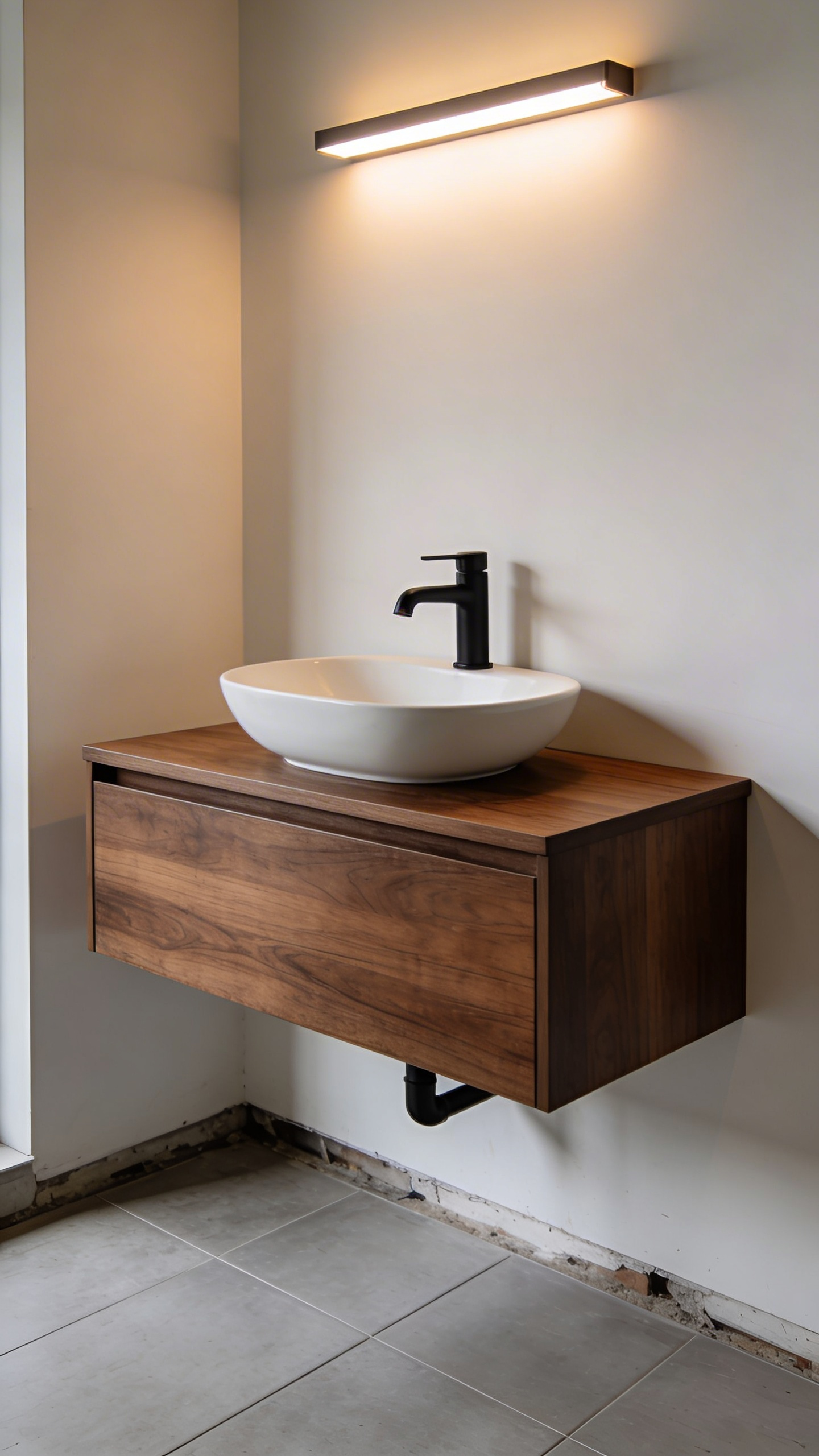
A floating vanity does something visually clever: it removes visual weight from the floor. The brain reads open floor as more space, even where actual square footage hasn’t changed. Houzz data from 2023 shows floating vanities appeared in 47% of bathroom renovations, up from 28% in 2018. That jump tracks exactly with the broader shift toward minimal modern bathroom decoration.
What to Know Before You Buy
The practical requirement is blocking — a 2×6 or 2×8 piece of lumber installed between studs before drywall closes. Without it, a floating vanity will eventually pull out of the wall. Standard height for modern vanities is 34–36 inches to the countertop. Most people opt for 35 inches — it feels contemporary without the back strain of the old 32-inch standard.
IKEA’s GODMORGON series ($299–$549) offers excellent value with soft-close drawers. The James Martin Brittany 36-inch wall-mount ($1,200–$1,800) is solid wood and holds up better long-term. For families needing extra storage, the Fresca Lucera 48-inch ($800–$1,100) includes built-in side towers.
The Height Trick
Mount 2–3 inches higher than your instinct says. Once a vessel sink or countertop basin sits on top, the effective working height is higher than the vanity top. Most people who install at 32 inches end up slightly hunched. Over a year, that posture cost adds up.
2. Statement Mirrors That Go Beyond the Standard Rectangle
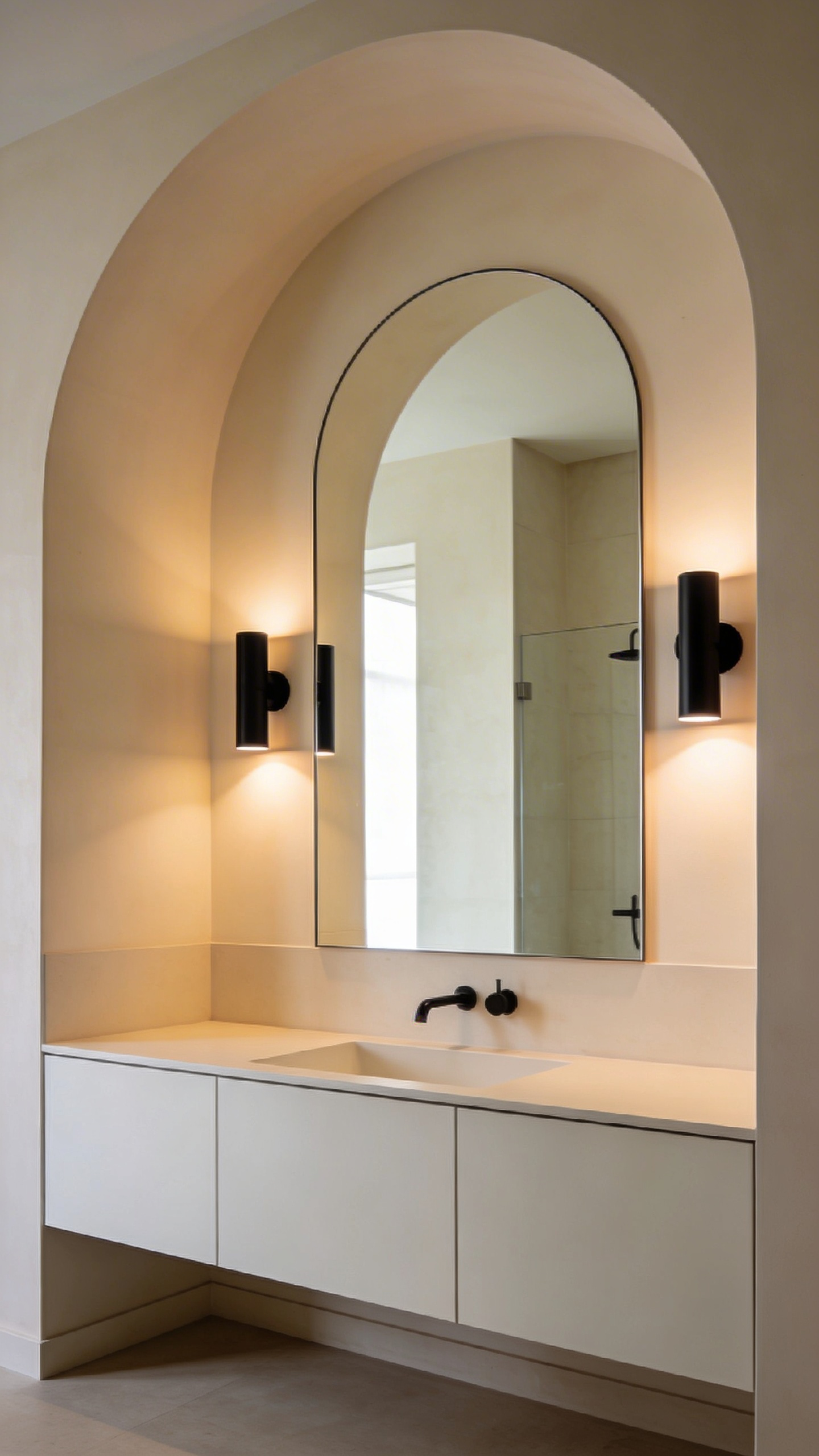
The mirror is often the first thing a visitor notices in a bathroom, and it’s usually the most under-invested surface. A rectangular mirror sized too small for the vanity makes the whole room feel provisional. By contrast, a mirror that fills 75–80% of the vanity width — arched, round, frameless, or backlit — signals that the rest of the room was considered. Google Trends shows searches for “arched bathroom mirror” increased 340% between 2019 and 2023. But the functional case is just as strong as the aesthetic one.
Size and Placement
Hang the mirror so the top sits at 72–80 inches from the floor — most people get this right. The more common error is choosing a mirror that’s too narrow: it should span 70–90% of the vanity width. For a double vanity, one wide continuous mirror reads significantly cleaner than two separate ones.
Arched mirrors add perceived ceiling height. That makes them especially valuable in bathrooms under 8 feet. In a small bathroom, an arched mirror is genuinely one of the cheapest and highest-impact modern bathroom decoration changes available.
Backlit and Functional Options
Kohler’s Verdera Power Lighted Mirror ($380–$520) includes integrated LED lighting, a defogger, and an optional medicine cabinet — three upgrades in one product. Pottery Barn’s Luella Arch Mirror ($299–$449) delivers the arched shape without electronics. For minimal budgets, round frameless options from Amazon Basics at $45–$120 read well in modern settings.
3. Matte Black Fixtures as a Cohesive Design Language
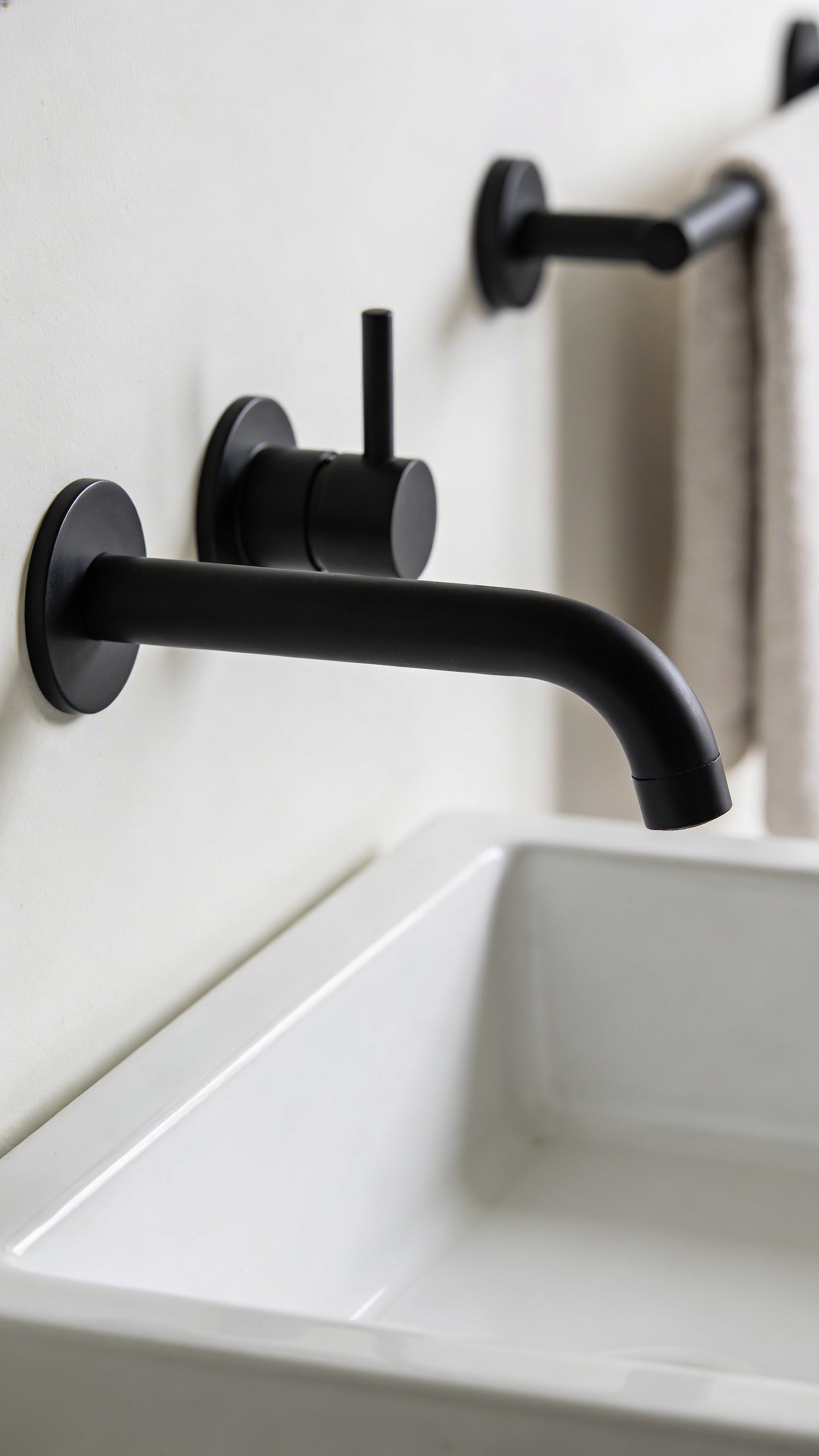
Matte black became the most searched fixture finish in 2020 and hasn’t relinquished that position. But its popularity is backed by real practical advantages, not just visual preference. Unlike polished chrome, matte black doesn’t telegraph every water spot and fingerprint — a meaningful quality-of-life difference in a busy bathroom. The darker surface absorbs rather than reflects the minor imperfections of daily use. In modern bathroom decoration, matte black works as a design language. When your faucet, towel bar, shower head, and robe hook share the same finish, the room reads as intentional — even when the underlying materials are modest.
How to Use It Without Going Heavy
The risk with matte black is that too many dark surfaces in a small bathroom start to feel oppressive. The fix is contrast: pair matte black exclusively with warm neutrals, white, or pale gray backgrounds. Dark walls and dark fixtures together create a room that reads as moody, not modern.
For information on choosing complementary tile finishes, these bathroom tile ideas pair well with matte black fixtures across a range of styles.
Budget vs. Splurge
Delta’s Trinsic collection in matte black ($180–$450 per fixture) is the practical choice: widely available, good warranty, and consistent quality. Moen Gibson at $150–$380 offers a strong lifetime warranty. For a forever bathroom, Brizo’s Frank Lloyd Wright collection ($600–$1,400 per piece) has genuine architectural detailing that holds up over decades. If budget is tight, start with just the faucet and towel bar. Those two alone signal the design intent clearly.
4. Fluted Panels and Limewash Walls for Textured Surfaces
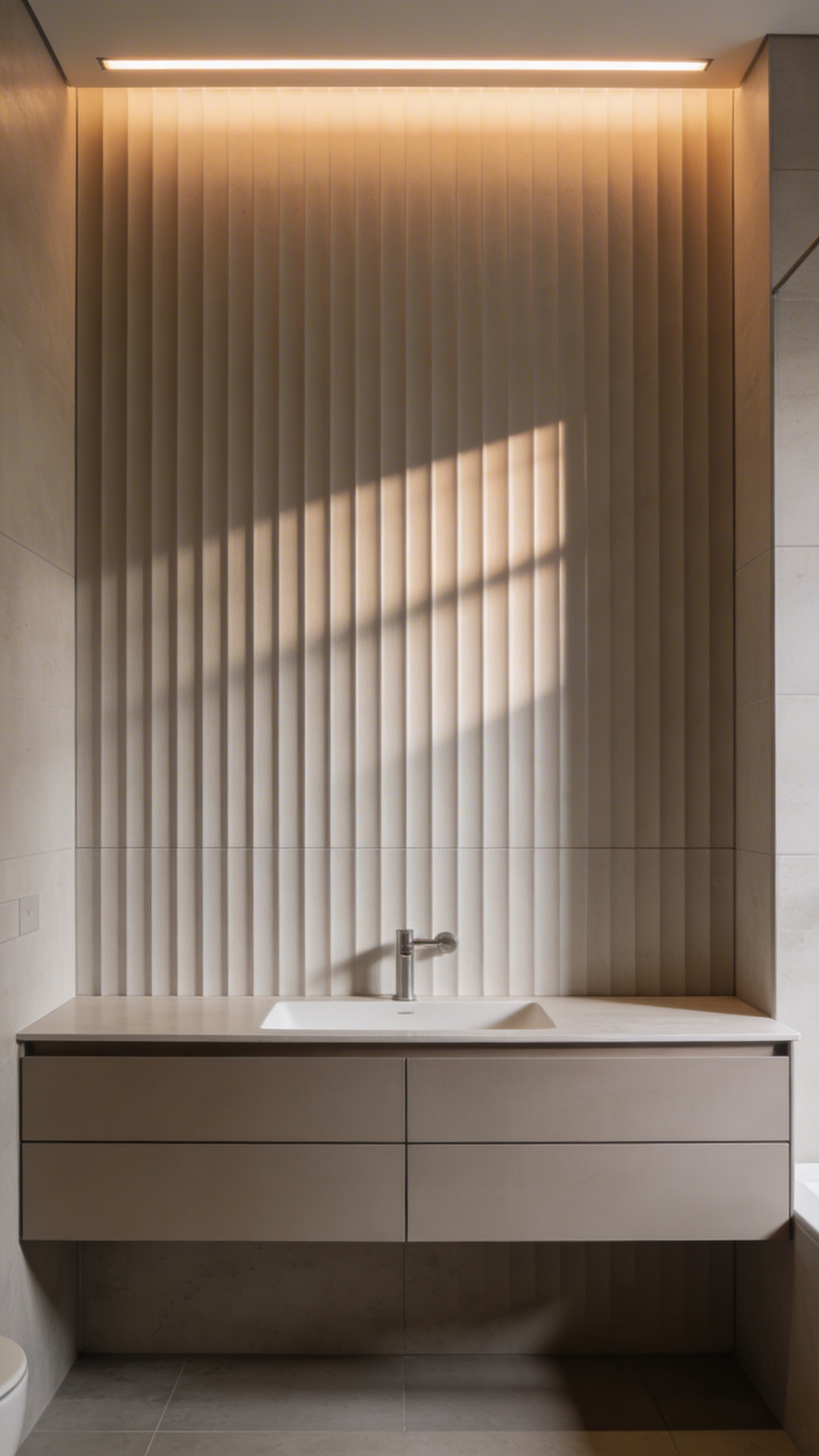
Flat painted walls have been the default in modern bathroom decoration for years, and they’ve grown boring. The shift toward textural surfaces — fluted panels, limewash paint, aged plaster effects — is a response to bathrooms that look correct in photos but feel lifeless in person. Texture adds shadow, and shadow is what makes a surface interesting. Pinterest reported a 280% increase in “limewash bathroom” saves between 2021 and 2023. The trend shows no sign of reversing.
Fluted Panels: The Renter-Friendly Option
PVC fluted wall panels cost $2–$6 per square foot. Real millwork runs $15–$40 — a fraction of the price for a nearly identical result. Brands like Dumapan ($3.50–$5.50 per square foot) are moisture-resistant and install with construction adhesive. No specialist is required. A single feature wall behind the vanity, painted in the same color as the room, creates dramatic shadow play without visual busyness.
Limewash Paint: Full-Room Application
Limewash paint creates a soft, mottled depth that resembles aged Italian plaster. Portola Paints Lime Wash ($85–$95 per gallon) and Romabio are the two most trusted brands. Apply in two coats with a chip brush, wiping back while wet to build depth. In high-moisture bathroom zones, a clear matte polyurethane sealer over the finished limewash extends its life significantly.
The Pro Tip on Texture
One fluted panel wall behind the vanity — painted exactly the same color as the other walls — adds enormous depth. Everything else stays plain. The texture reads as intentional modern bathroom decoration rather than an add-on.
5. Warm Neutrals Instead of Stark White for Modern Color
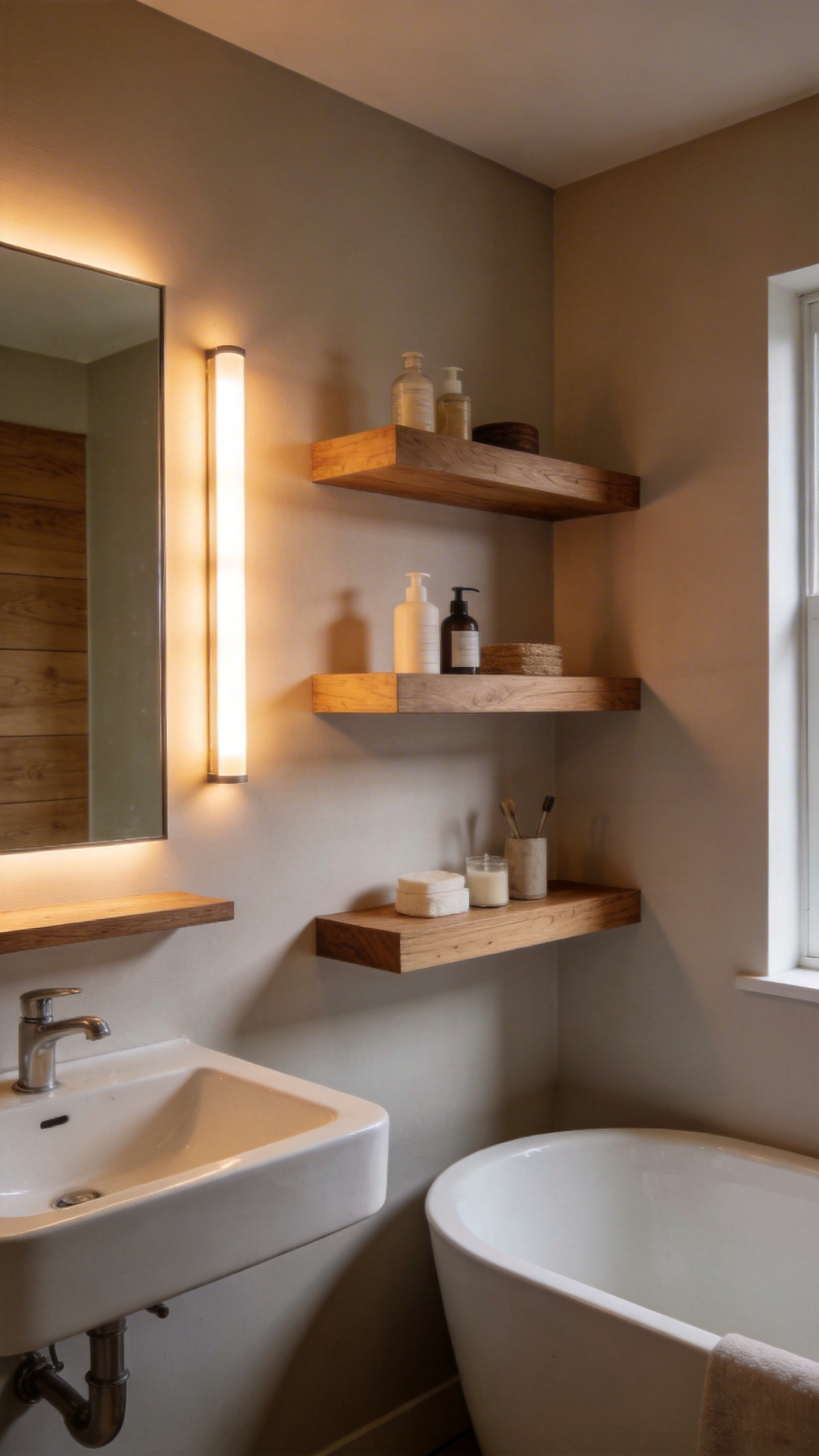
White bathrooms aren’t going anywhere. But stark cool white — the shade that reads as clinical under artificial light — has been quietly losing ground. Houzz’s 2023 report shows white walls declined from 56% to 41% of bathroom renovations in two years. Warm neutrals claimed 28% of that share. The psychology explanation is simple: warm tones activate a calming response that cool whites don’t. In a room you visit before you’ve fully woken up, that distinction matters.
The Paints That Actually Work
Benjamin Moore Pale Oak OC-20 ($60–$75 per gallon) is the most consistent performer: a warm greige that reads well in both natural and artificial light. Sherwin-Williams Accessible Beige SW 7036 ($55–$70) works with almost every wood tone and fixture — unusually forgiving. Farrow & Ball Elephant’s Breath No. 229 ($120–$135) has a slight lavender undertone. It photographs beautifully and suits low-light bathrooms especially well.
The Trim Mistake
The most common error with warm neutrals is pairing them with bright white trim. It makes the walls look dingy. Use an off-white trim instead — Benjamin Moore White Dove OC-17 or Sherwin-Williams Extra White. That way, the warm neutral reads as deliberate. Always test paint color on a 12×12-inch section of the real wall. Bathroom lighting shifts colors in ways a hardware store can’t simulate.
Satin or Eggshell, Always
Flat paint in a bathroom absorbs moisture and grows mildew. Use eggshell or satin finish. It wipes clean, holds up to humidity, and still reads as sophisticated rather than shiny.
6. Integrated LED Lighting for Mood and Function
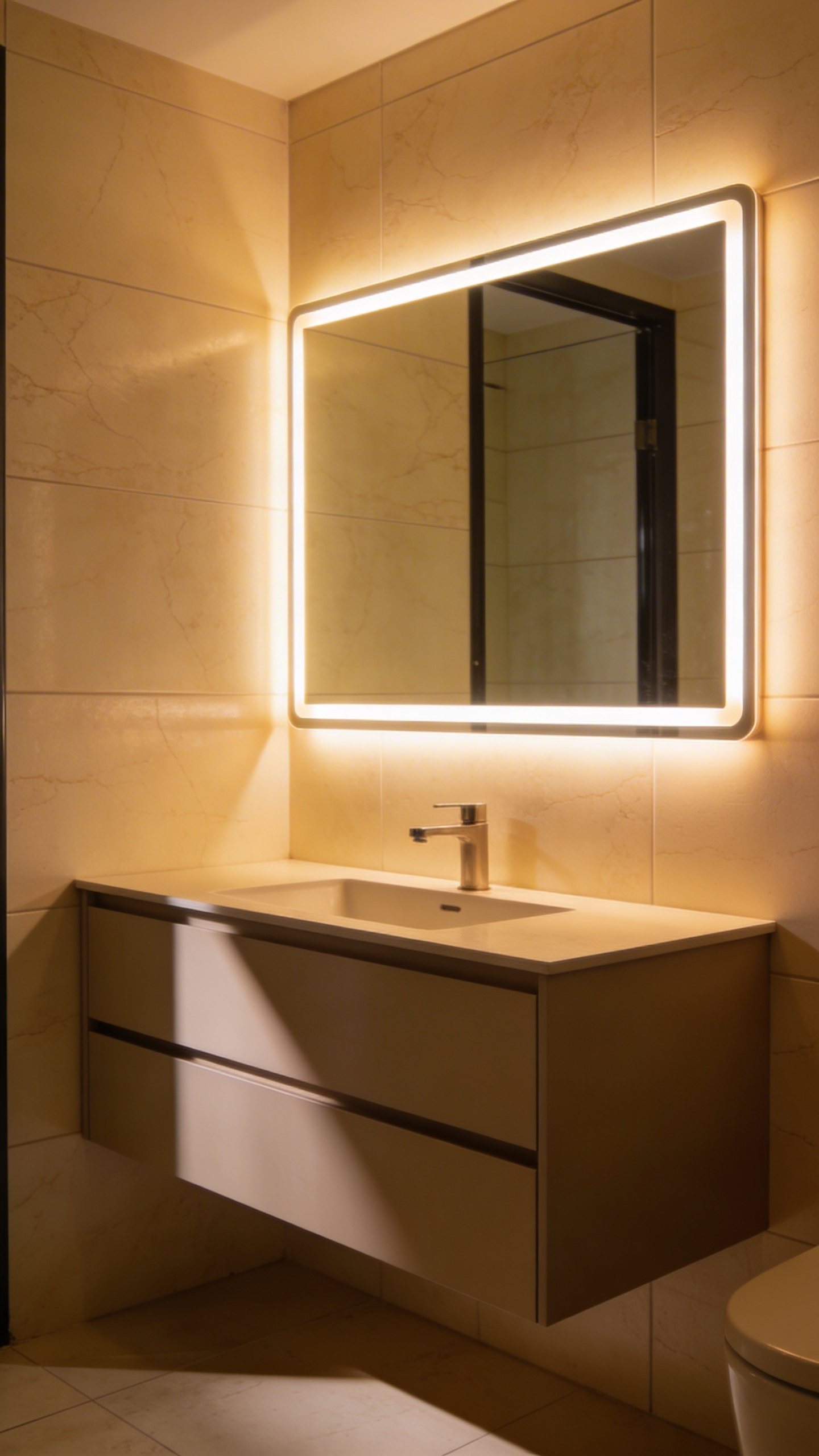
Bathroom lighting is the most technically neglected aspect of modern bathroom decoration. Most bathrooms are lit with a single overhead fixture that creates unflattering shadows under the eyes and nose — like holding a flashlight under your face. The fix is layered lighting: task light at face level, ambient overhead light, and accent lighting you can use independently. That last option is what makes a bathroom feel like a spa rather than a surgery suite.
Color Temperature Is the Hidden Variable
2700K–3000K (warm white) creates the spa-like atmosphere most people want in a modern bathroom. 4000K–5000K (cool white) is technically better for makeup application but makes the room feel clinical. A dimmable overhead fixture at 4000K with a warm 2700K mirror light is the best of both worlds. Dimmer switches cost $15–$50 each and represent one of the highest return-on-investment upgrades in any bathroom renovation.
The Products Worth Knowing
The Kichler Biokante 30-inch LED mirror ($420–$580) includes a CRI 90+ light source, dimmer, and defogger in one product. For toe-kick lighting under a floating vanity, Govee waterproof LED strips ($25–$60) are app-controlled and cost almost nothing. WAC Lighting LEDME shower trim ($180–$280) is the right call for shower recessed lights — wet-rated and high CRI.
The Separate Circuit Worth Installing
If you’re doing any electrical work, add a separate switch circuit for accent lighting only. The ability to turn on just the toe-kick glow and backlit mirror — without the overhead light — changes how the room feels at night. It sounds minor. It isn’t.
7. Wet Room Layouts for a Spa-Like Open Shower
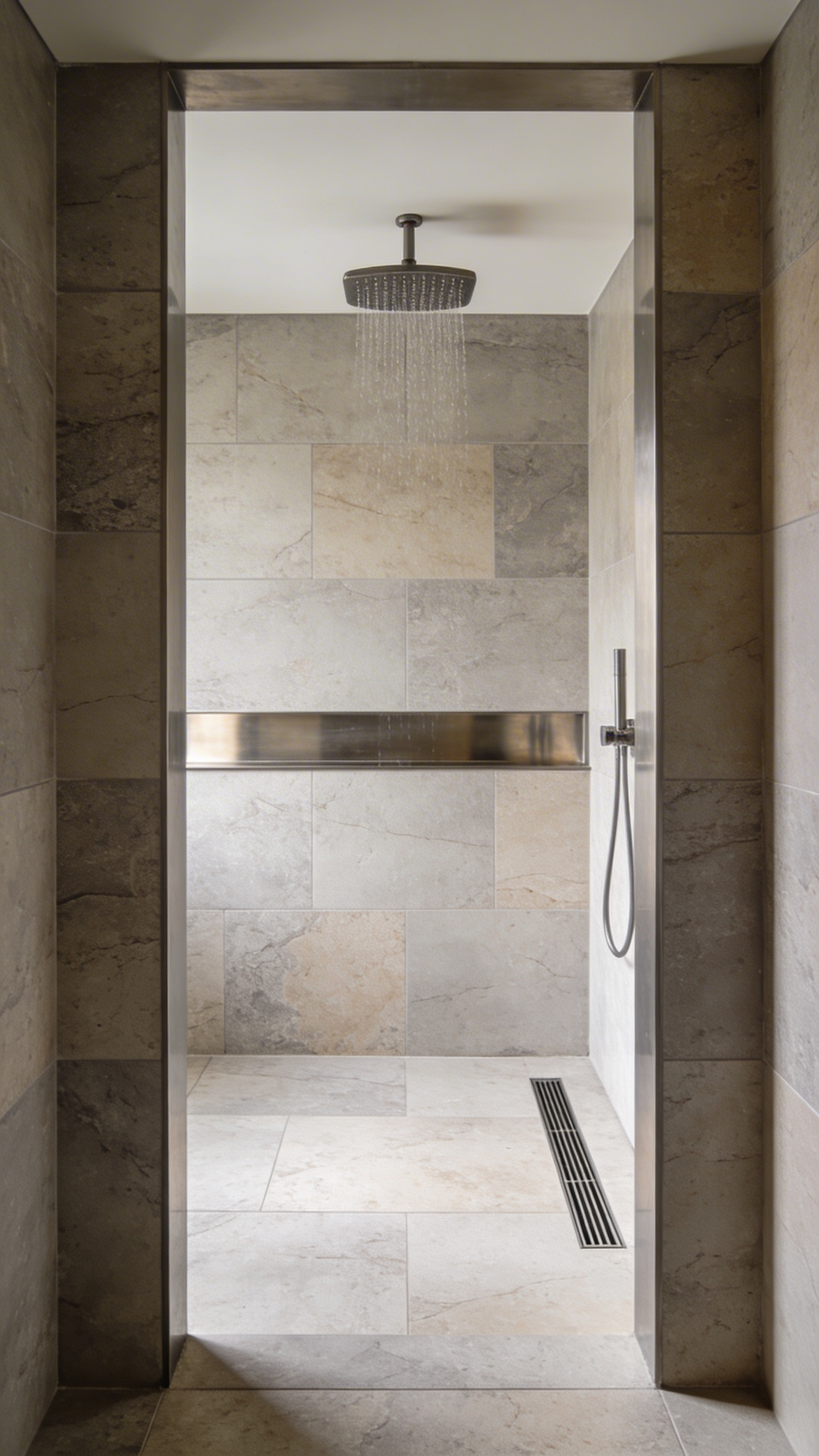
A wet room is a fully waterproofed bathroom where the shower has no door or curb — just an open floor sloping to a drain. It looks simple. But it requires genuine technical precision to execute correctly. The NKBA reports wet rooms appeared in 31% of high-end bathroom renovations in 2023, up from 14% in 2019. That growth tracks with a broader appetite for modern bathroom decoration borrowed from hotel design.
When a Wet Room Makes Sense
The practical requirement is space: at least a 36×48-inch shower zone and a total room over 70 square feet. Smaller rooms get cold spray on the non-shower side. Linear drains — the channel-style type that runs along one wall — allow large-format tiles to run uninterrupted across the floor. Schluter’s KERDI waterproofing membrane ($1.50–$2.50 per square foot) is the industry standard. This is where most DIY wet rooms fail — it’s not a corner to cut.
Realistic Costs
Full wet room conversion: $4,000–$12,000 depending on tile choice and local labor rates. The QuARTz by Infinity Drain linear drain ($180–$450) is the tile-in version — completely invisible once finished. Ventilation is critical: upgrade to at least 110 CFM exhaust fan. Minimum ceiling height of 8 feet prevents steam buildup.
The Honest Trade-Off
A wet room feels much more spacious than the square footage suggests. Without a shower enclosure, there’s nothing interrupting sightlines. However, the entire bathroom becomes humid when someone showers. That’s a consideration if you share the space with someone on a different schedule. Plan ventilation accordingly.
8. Natural Stone and Wood Accents for Warmth
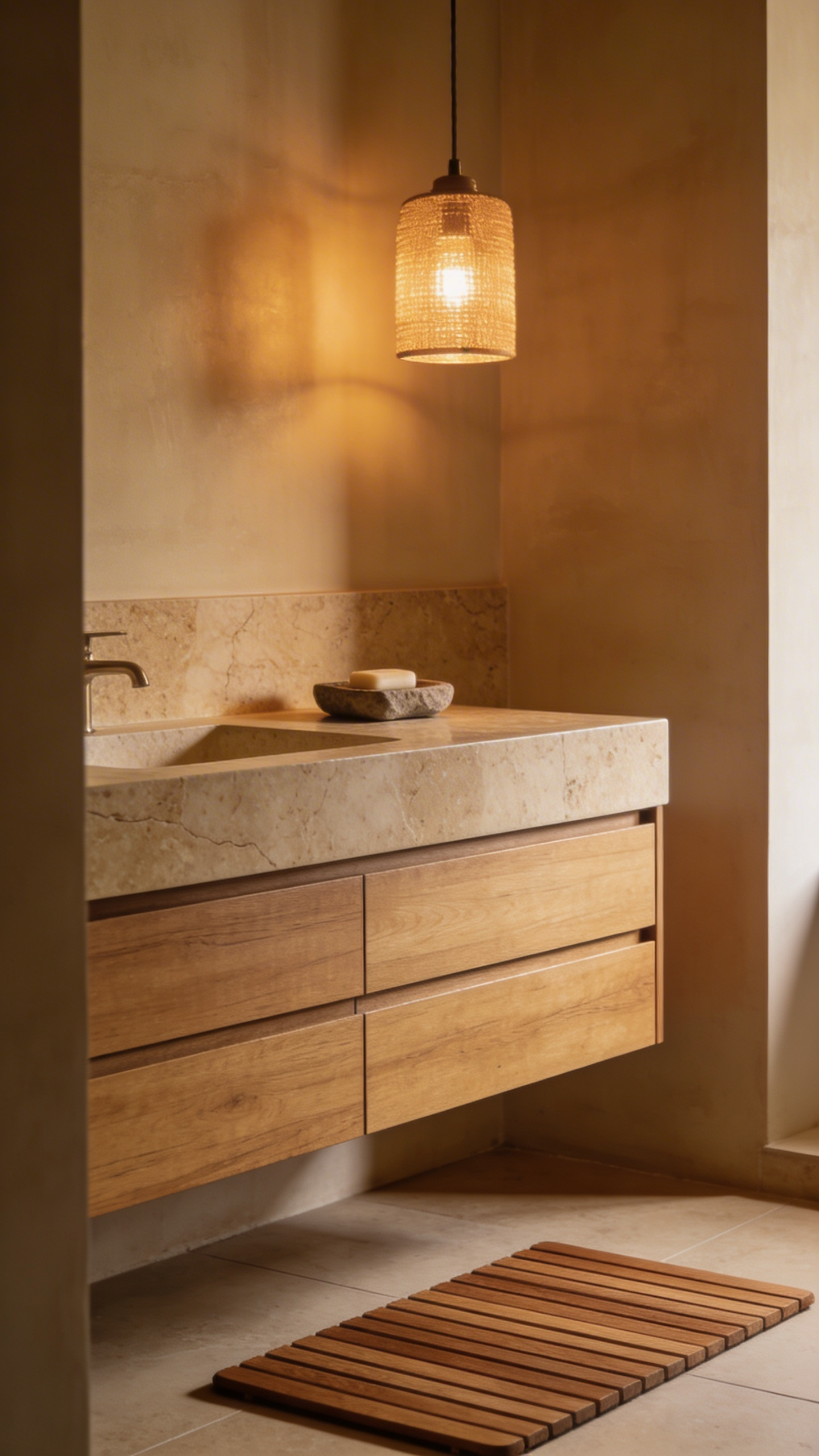
The most consistent problem with modern bathroom decoration is that it skews cold. Clean lines and minimal surfaces are visually coherent. But they can produce a bathroom that looks more like a product render than a room someone actually inhabits. Organic materials — teak, travertine, marble — are the corrective. According to Architectural Digest’s trend tracking, “organic modern” has been the most-searched interior style for three consecutive years. Bathrooms are where that tension between hard modern edges and natural warmth plays out most visibly.
What Actually Works at Each Budget
Teak is the gold standard for bathroom wood because its natural oils resist moisture without special treatment. Teak bath mats ($65–$130 from Teak Lab) last 10+ years with annual oiling. MSI Classico Travertine tile ($3.50–$6 per square foot) offers honed travertine with consistent coloring for a feature wall or shower floor. If real stone is beyond budget, Emser Tile’s Alder wood-look porcelain ($4–$7) in 12×48 planks is among the most realistic options currently available.
The 5% Cost, 80% Impact Principle
You don’t need to tile entire walls in stone to get the warmth effect. A stone soap dish, a marble tray, and teak accessories together cost under $150. Yet they achieve the same visual signal as a much larger material investment. Natural objects read as deliberate in a way that synthetic ones don’t. Your eye will find them even when the rest of the room is competing for attention.
Maintenance Reality
Natural travertine requires sealing before grouting and annually thereafter (Miracle Sealants 511 is the industry standard sealer). Teak needs annual oiling if used wet daily. These are not burdensome maintenance requirements, but they’re worth knowing before you commit.
9. Terrazzo’s Comeback as a Modern Flooring Choice
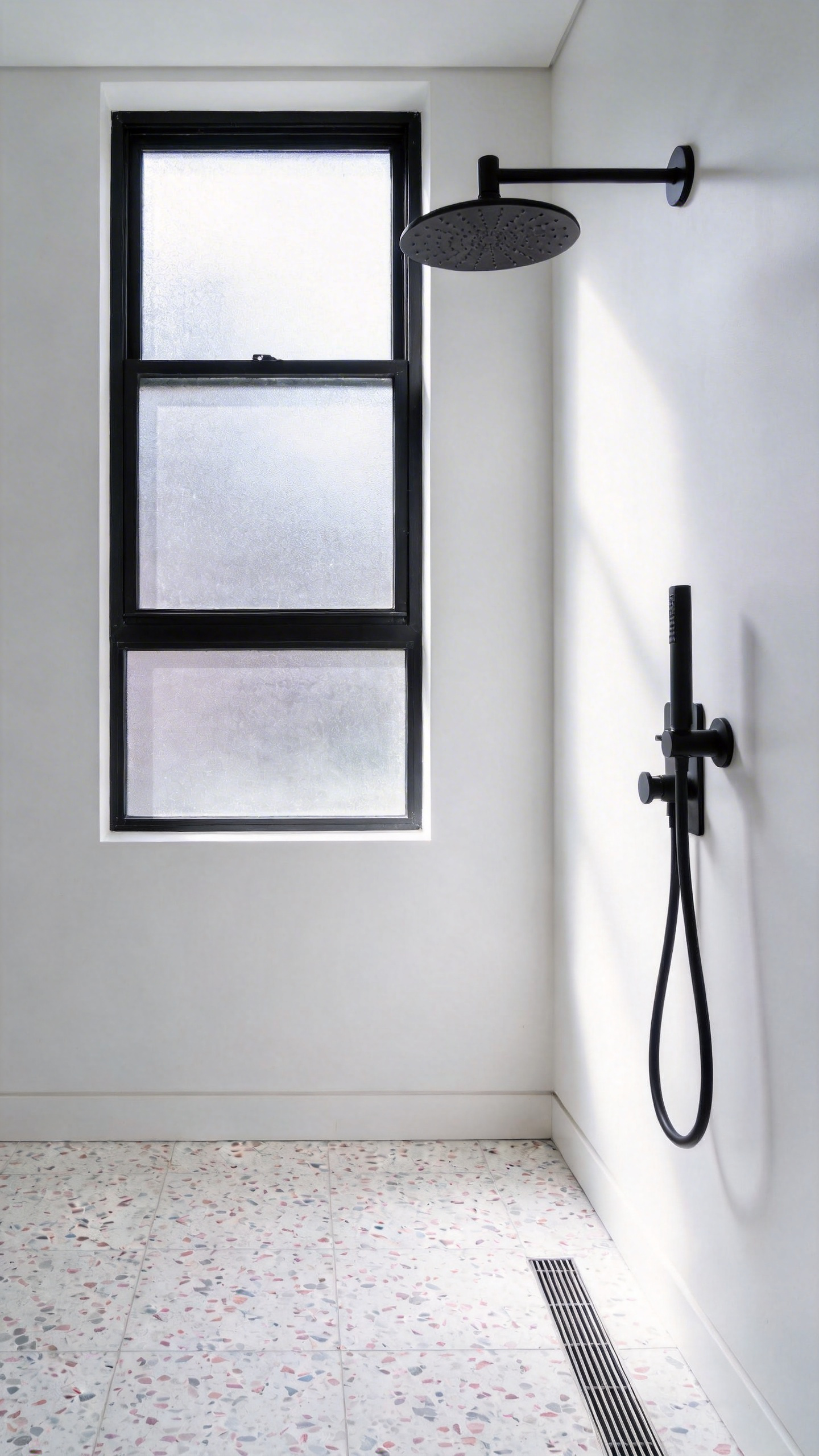
Terrazzo — composite chips of marble, glass, or stone set in cement or epoxy — originated in 15th-century Venice and spent decades as institutional flooring in hospitals and airports. It has since re-emerged as one of the most sought-after modern bathroom decoration choices. The contemporary version is different from what your grandparents walked on. Micro-terrazzo uses finer chip sizes that read refined rather than retro. The new pastel-chip colorways work in ways the heavy mid-century versions never did. Floor & Decor reported a 180% year-over-year increase in terrazzo tile sales from 2021 to 2023.
Genuine vs. Terrazzo-Look Porcelain
Genuine poured terrazzo runs $15–$30 per square foot installed — durable and essentially maintenance-free once sealed, but expensive. Fireclay Tile’s Olio collection ($19–$28 per square foot) offers genuine terrazzo in custom colorways made in the US. For most bathrooms, terrazzo-look porcelain delivers 95% of the aesthetic at a fraction of the cost. Floor & Decor Palazzo Bianco ($3.99–$5.99 per square foot) is the best budget option.
How to Use It Without Overdoing It
The most effective way to use terrazzo as modern bathroom decoration is restraint everywhere else. Plain white or warm neutral walls, simple matte fixtures, no competing patterns — let the floor be the design statement. The moment you introduce a patterned backsplash or busy wallpaper alongside terrazzo, the room reads busy rather than curated. Terrazzo works best as the single decorative move in an otherwise simple room.
Maintenance Note
Both genuine and porcelain terrazzo should be sealed in bathroom environments. Genuine terrazzo: use a pH-neutral cleaner only — vinegar and citrus cleaners etch the surface. Porcelain terrazzo requires no sealing but benefits from the same gentle cleaning approach to preserve the finish.
10. Freestanding Bathtubs as a Sculptural Focal Point
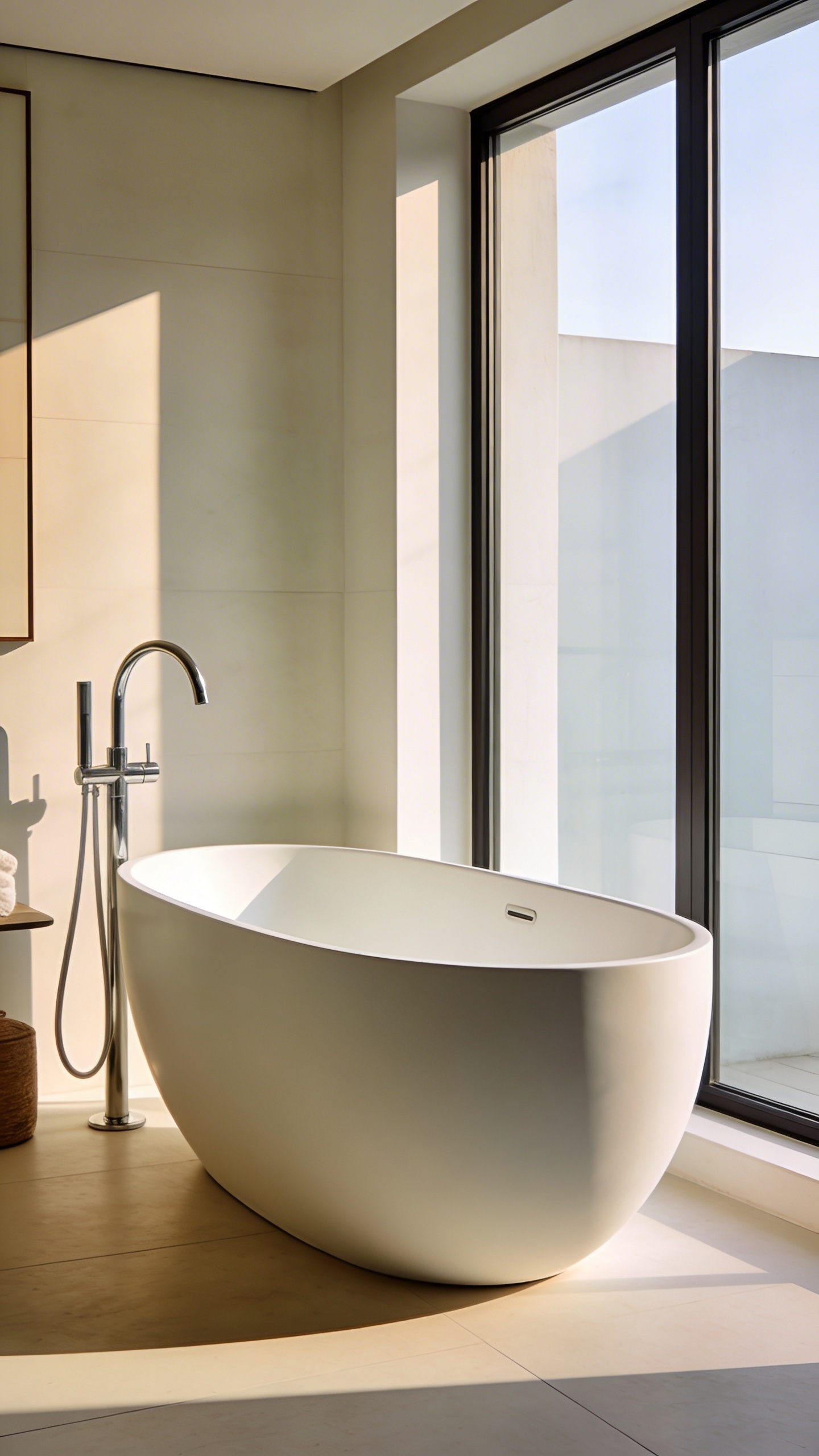
A freestanding bathtub is the piece of modern bathroom decoration that sells rooms in real estate listings. Redfin analysis found that homes with freestanding tubs sold for 1.6% more on average than comparable homes with built-in tubs. That’s a meaningful premium for what is essentially a product choice. The sculptural effect is real: a well-chosen freestanding tub makes the bathroom feel designed rather than assembled.
Material Trade-Offs
Acrylic is the lightest and most affordable option ($400–$2,000); the Woodbridge 67-inch freestanding at $480–$750 is the category’s best seller and a solid choice. Cast iron holds heat better and lasts indefinitely. But it adds serious structural load — 1,200+ pounds fully filled. Older homes may need a structural engineer’s sign-off. Barclay’s Windsor oval cast iron ($1,800–$2,400) is the classic choice in this category. Stone resin, typified by Victoria+Albert’s Mozzano ($3,200–$5,000), offers the most tactile luxury and the best heat retention of any material.
The Space Requirement Most People Get Wrong
Freestanding tubs require 6 inches of clearance on all sides for cleaning access — not just visual breathing room. Factor this into your floor plan honestly. Also, a floor-mounted faucet requires supply and drain rough-in in the floor, which needs to be planned before tile installation. Retrofitting a floor-mount faucet after tiling is expensive and messy.
An Honest Recommendation
If you have to choose between a freestanding tub and a double vanity, choose the vanity. Most people use their bathroom twice a day and take a bath twice a month. Design for how you actually live.
11. Open Shelving for a Curated, Intentional Display
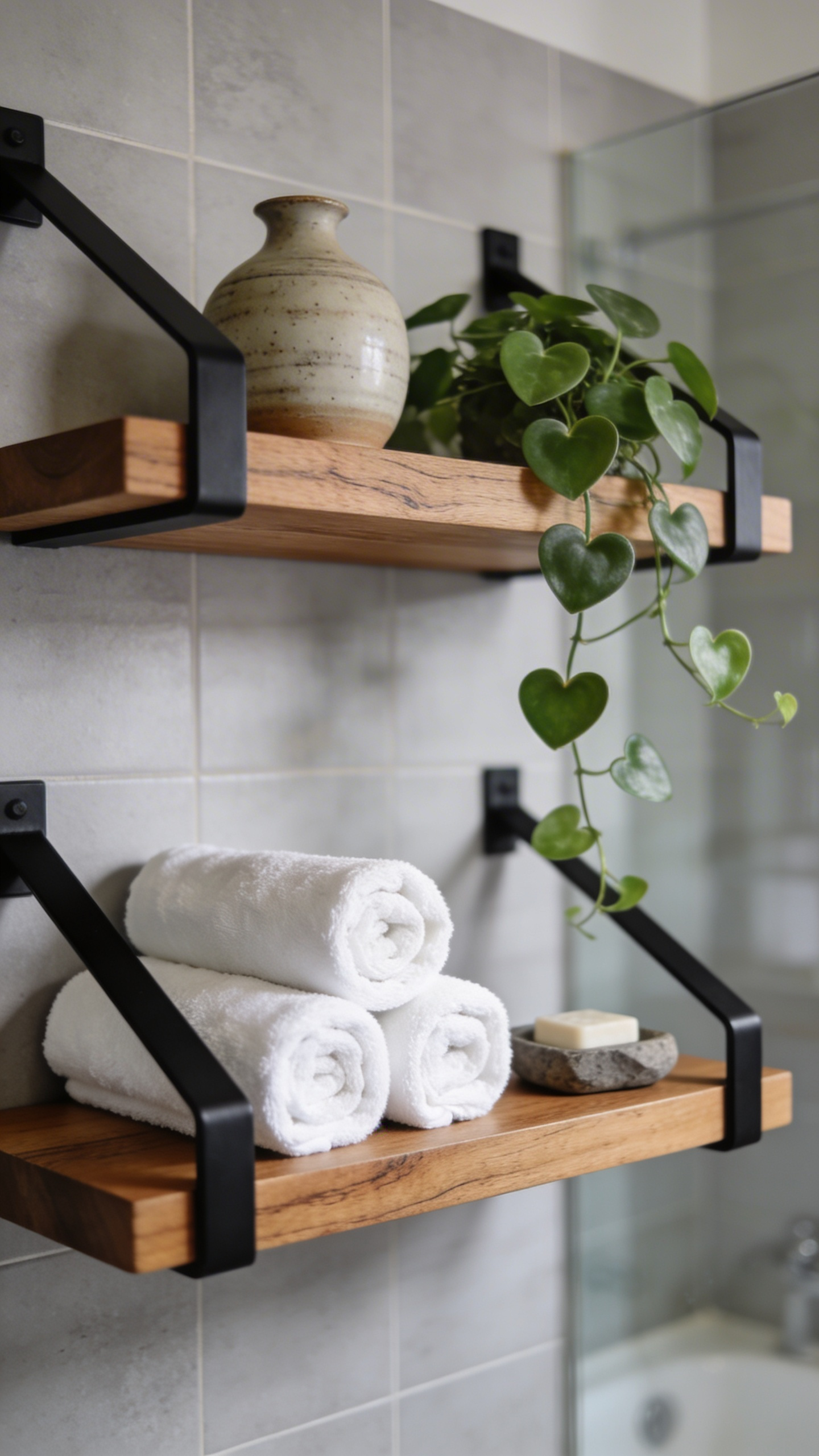
Open bathroom shelving has a deserved reputation for going wrong. The internet is full of overstuffed shelves that look more like a storage unit than a designed space. But when edited with intention, open shelves are one of the strongest signals of modern bathroom decoration done right. Pinterest data shows “bathroom open shelving” saves increased 210% from 2020 to 2023. The spaces that generate those saves share one characteristic: restraint.
The 30/40 Rule
Display 30–40% decorative items and keep 60–70% functional. In practice: two ceramic vessels, one trailing plant, a few rolled towels on one shelf, and organized essentials in matching containers on the others. The moment you start adding a different object from every TJMaxx trip, the shelf reads as clutter rather than curation.
What to Display
Ceramic vessels, glass containers, woven baskets, resin trays, and stone objects all hold up in bathroom humidity. Avoid paper-packaged products, cardboard boxes, and any object that absorbs moisture. CB2’s Arched wood and iron shelf ($79–$149) and the IKEA BERGSHULT + GRANHULT combination ($30–$50) are the two most reliable options at their respective price points.
The Plant That Changes Everything
Add a small trailing pothos in a macramé hanger near the shelf and let it grow. It costs under $15 and thrives in bathroom humidity. Within a year, it produces a trailing plant that looks considerably more expensive than it was. No other single addition adds more life to a modern bathroom shelf display.
Exploring bathroom mirror ideas alongside open shelving can help you build a vanity wall that feels coherent rather than assembled piece by piece.
12. Recessed Niches and Built-In Storage That Disappear Into the Wall
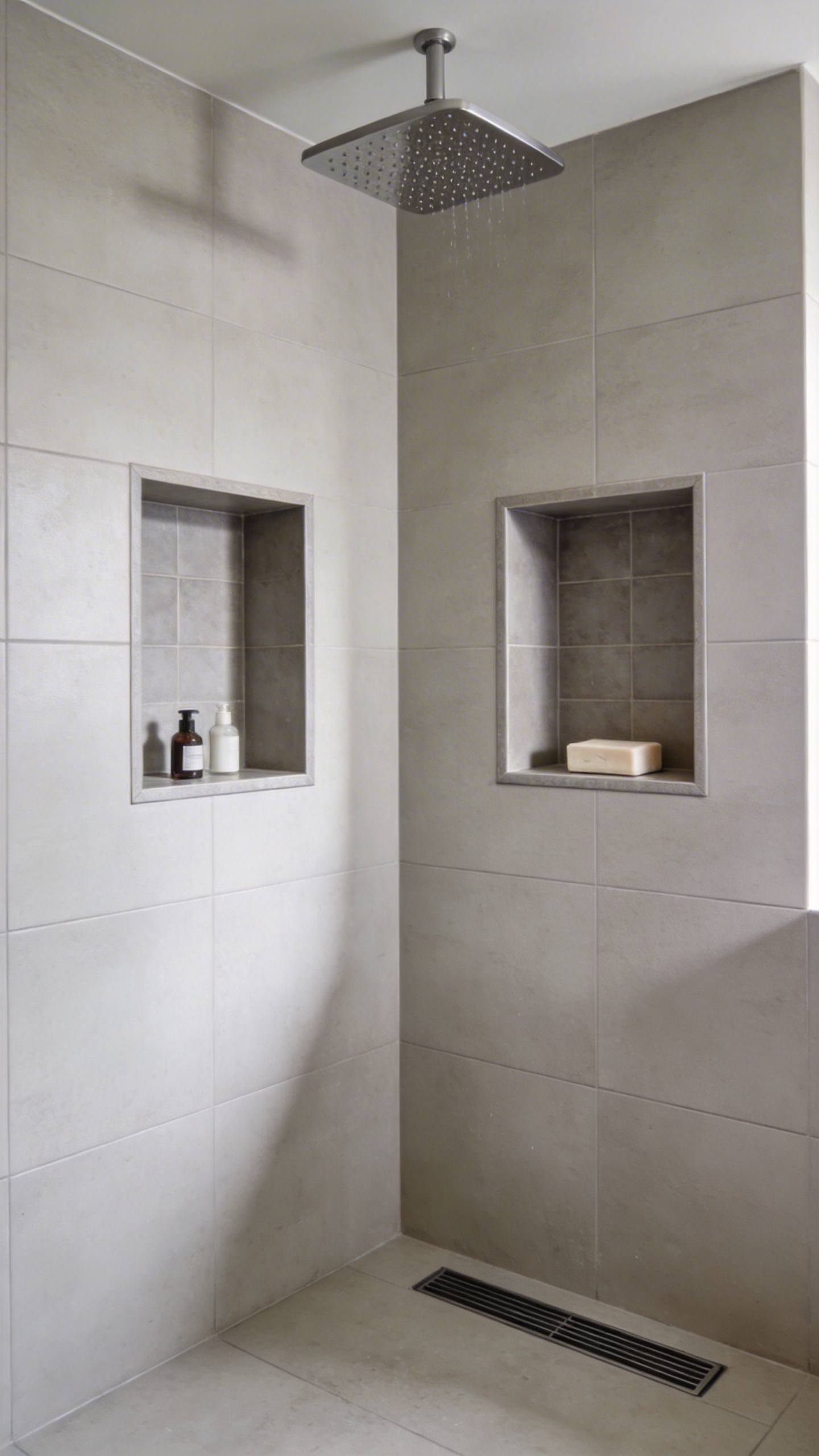
The recessed shower niche is the element most often missing from bathrooms that otherwise look good. A corner caddy in a beautifully tiled shower is a small jarring note — a practical afterthought that signals the design wasn’t quite finished. A built-in niche, by contrast, becomes invisible once tiled. The NKBA reported that 68% of shower renovations in 2023 included at least one built-in niche, up from 42% in 2018.
The Product That Makes It Accessible
Pre-formed foam niche inserts allow installation in non-structural drywall walls without custom framing. Schluter SHELF-N ($80–$140), Wedi Subliner Dry ($60–$90), and Redi Niche ($35–$65) are the main options. They install between standard 16-inch studs, tile directly onto the surface, and waterproof with the same membrane systems used for the rest of the shower.
The Tile Decision
The niche tile should either match the surrounding wall tile exactly (creating an invisible recess) or use a clearly contrasting tile (becoming an accent). Half-measures — a tile that’s similar but not the same — look like a mistake rather than a choice. Two or three stacked niches look more intentional than a single one; they read as a design feature rather than an afterthought.
Plan It in Rough-In, Not After
The most important advice about niches: plan before tile installation. Adding a niche after tiling means removing finished tile, cutting the wall, installing blocking, waterproofing, and retiling. It costs far more than planning it from the start. If you’re retiling a shower, add at least two niches at rough-in — even if you’re not sure you’ll use both.
For a broader look at bathroom remodeling ideas that work alongside built-in niches, the combination of recessed storage and intentional lighting is worth planning together.
13. Monochromatic Color Schemes That Feel Sophisticated, Not Boring
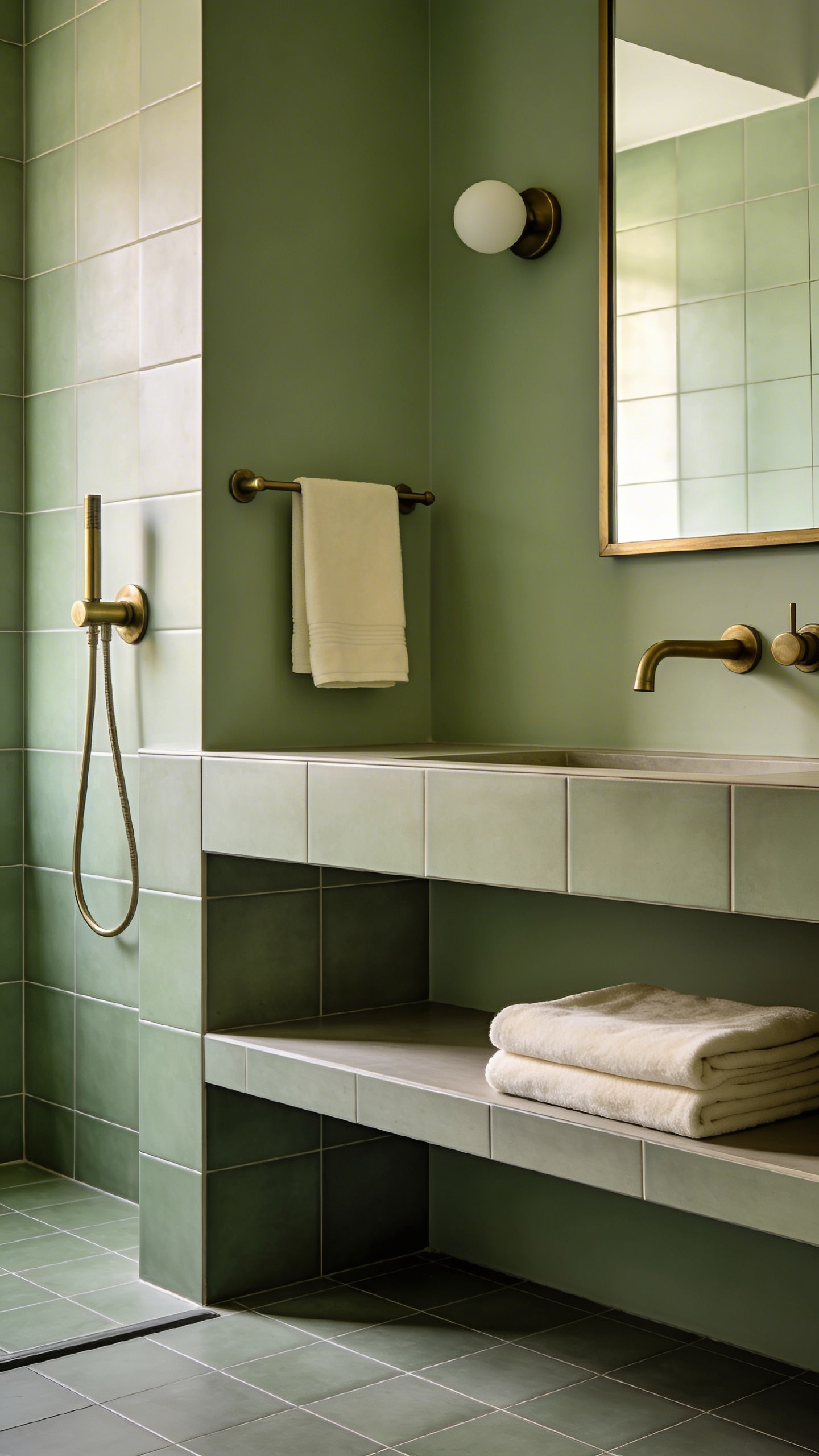
A monochromatic bathroom uses one color family across walls, tiles, fixtures, and accessories — varied only by tone and texture. It’s the color psychology approach that reliably produces the highest satisfaction ratings. Houzz polling found monochromatic bathroom schemes have a 23% higher satisfaction rating than multi-color schemes. The reason is simple: a single-color environment reduces visual decisions. The brain makes fewer choices every time you walk in, and that produces a calm that multi-color rooms can’t replicate.
The Key: Texture Variation Within One Color
The difference between a boring monochromatic bathroom and a sophisticated one is texture. Matte tiles plus glossy grout plus honed stone plus smooth paint produces visual richness within one color family. The materials are doing the work that multiple colors would do in a less disciplined scheme. This is where modern bathroom decoration diverges from simply painting everything the same color.
Palette Recommendations
For a warm scheme, Benjamin Moore Hale Navy HC-154 with Ice Cap OC-123 as the tonal break ($60–$75 per gallon) produces a classic, timeless bathroom. The Sherwin-Williams Jasper SW 6216 and Aloe SW 9048 sage green pairing is the most-requested monochromatic palette for 2024–2025. For high drama in a room with good natural light, Farrow & Ball Down Pipe No. 26 with Plummett No. 272 ($120–$135 per gallon) creates a charcoal scheme that photographs exceptionally well.
Grout as a Design Decision
In a monochromatic scheme, grout color becomes more significant than usual. Use a grout 1–2 shades darker than your tile to define the tile pattern, or match exactly for a seamless look. Either choice is valid; the error is choosing a grout by default rather than by intention.
14. Biophilic Touches: Plants and Natural Light in the Bathroom
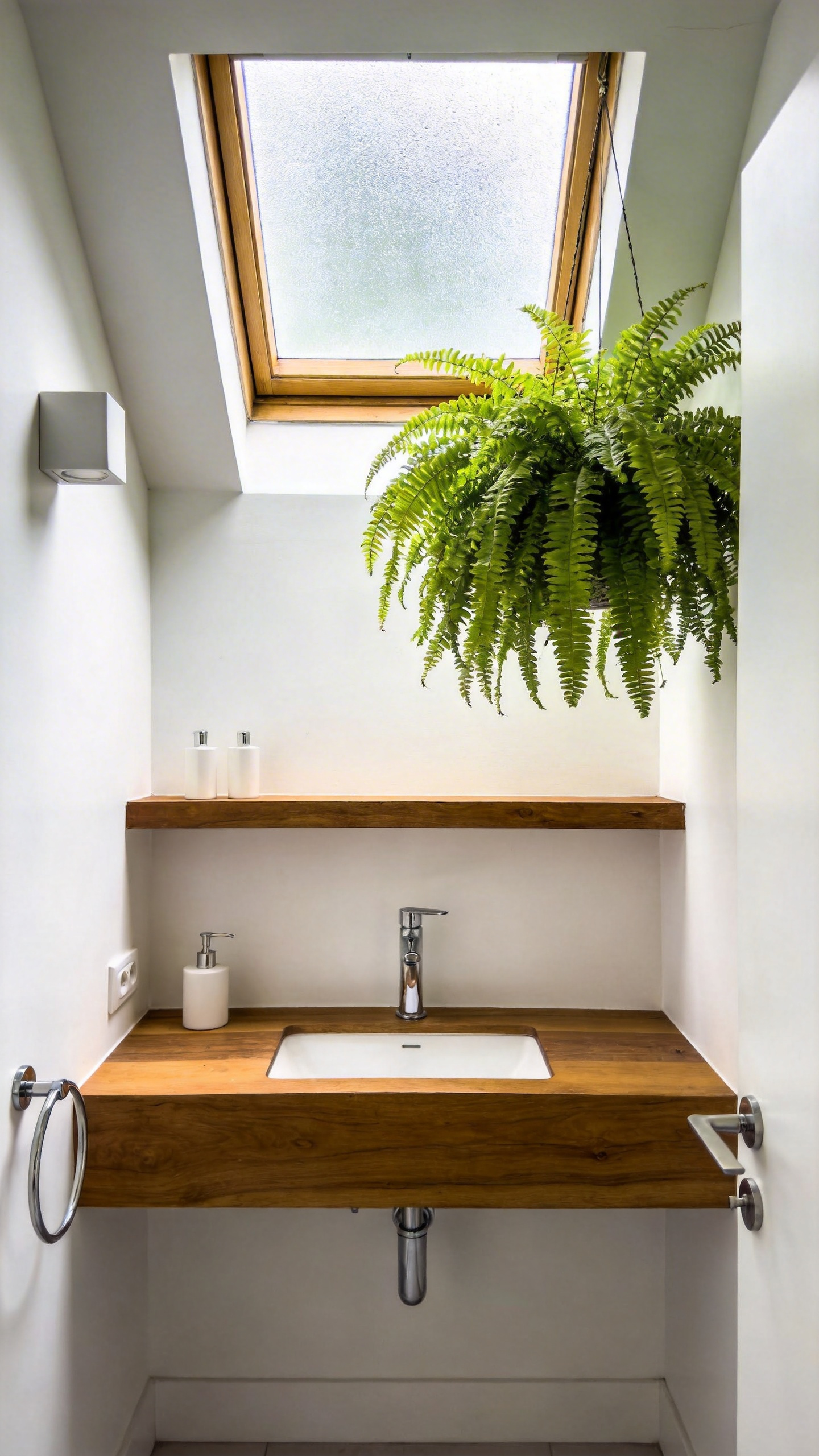
Biophilic design — incorporating natural elements into built environments — isn’t trend-driven. A University of Exeter study found that plants reduce stress markers by up to 37% in enclosed interior spaces. Bathrooms are among the highest-stress environments in a home because they’re associated with time pressure. Yet bathrooms are often the last place people think to add plants. That’s a shame, because the humidity and warmth create ideal growing conditions for the right species.
Plants That Actually Thrive
Pothos tolerates low light and high humidity — genuinely one of the most forgiving plants in any conditions. Snake plants (Sansevieria, $15–$40 at Costa Farms) are nearly indestructible and actively filter air. ZZ plants tolerate low light and irregular watering. Boston ferns love humidity but need indirect light. Bird of paradise works well in bathrooms with a window but struggles in dark conditions. Use ceramic or glazed pots with drainage, not terracotta — terracotta absorbs moisture and develops mold in bathroom environments.
Natural Light in Windowless Bathrooms
A Solatube 160DS sun tube ($800–$1,200 installed) brings natural daylight through the roof into an interior bathroom. It’s one of the highest-impact structural interventions for a windowless room. For a modest approach, full-spectrum LED bulbs with CRI 95+ combined with snake plants or ZZ plants approximate biophilic quality without structural work. If you’re doing a full renovation, a skylight above the shower is the most transformative light source upgrade available. No artificial system matches it.
The Free Version
A pothos in a hanging macramé planter near the shower costs under $20. It grows dramatically in steam and warmth. Within a year, you’ll have a genuine trailing plant that looks expensive and intentional. It’s the most cost-effective single addition in this entire list.
15. Statement Floor Tiles as the Room’s Visual Anchor
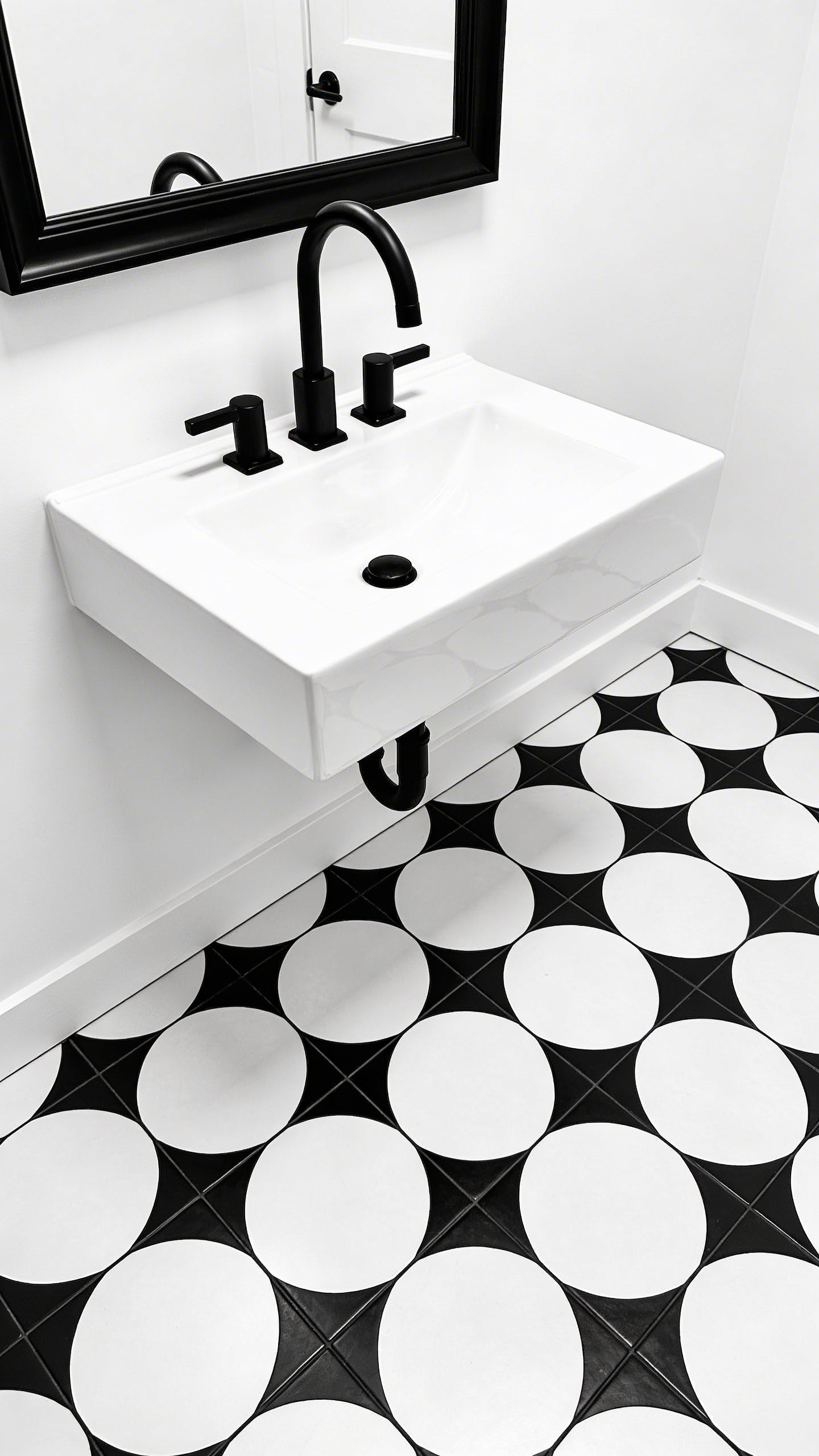
The bathroom floor is the largest continuous visual surface in most bathrooms. It’s also frequently where the design budget was cut. Remodeling Magazine’s Cost vs. Value 2023 report ranks flooring upgrades third in ROI among all bathroom investments, returning 68 cents on the dollar at resale. Yet patterned or statement tiles remain underused in most bathroom renovations. In modern bathroom decoration, the floor is the piece that pulls everything together — or doesn’t.
Large Format for Small Rooms
Large-format tiles — 24×24 inches or larger — reduce grout lines and make small bathrooms appear larger. The rule of thumb: use tiles no smaller than one-third the width of the shortest wall. MSI Montage 24×24 at $2.50–$4.50 per square foot is a practical option across 14 colorways. Running tiles diagonally adds visual interest without a second pattern. It also makes the room appear wider — useful for narrow bathrooms.
Patterned Tiles as the Design Statement
Cement tile or encaustic-look porcelain floors work best under a simple, neutral-walled bathroom. Cement Tile Shop’s handmade encaustic tiles ($12–$18 per square foot) offer an enormous pattern library and ship from California. Tilebar’s Gemme cement-look porcelain ($5–$9 per square foot) achieves the same visual effect without sealing requirements.
The Restraint Principle
If you’re going with a statement floor in a small bathroom, keep the walls completely plain. White or warm neutral, no competing patterns. The floor only reads as intentional modern bathroom decoration when it’s clearly the primary design move. Competing wall patterns or busy accessories cancel out the floor’s impact entirely.
Installation Note
Genuine cement tiles require penetrating sealer before grouting and again before use. Large format porcelain (18 inches or larger) needs a large-format tile trowel, back-buttering, and lippage checking with a level. Diagonal installation adds 15–20% tile waste versus standard 10% — budget accordingly.
How to Approach Modern Bathroom Decoration as a System
Modern bathroom decoration fails when it’s treated as a collection of independent decisions. The bathrooms that consistently work share a simple underlying principle: every element is doing the same emotional job. Materials, colors, lighting, and fixtures all point toward the same feeling — even when varied in texture and finish.
Start with the feeling you want. Calm and spa-like, crisp and energizing, warm and organic — these are different design programs. Confusing them is how bathrooms end up with a clean modern vanity under industrial pendants next to terracotta walls and chrome hardware. Pick one direction. Let every decision serve it.
Practically, the highest-impact changes in order of budget efficiency are: lighting layer, fixture finish unification, and wall color. These three changes alone transform a bathroom that feels provisional into one that feels designed. Add floating vanity, statement mirror, and textured surfaces when budget allows. The structural elements — wet room, built-in niches, freestanding tub — come last. They require the most planning and the most investment.
If you’re choosing one place to start, start with the lighting. A well-lit bathroom with modest finishes feels better than an expensive bathroom lit by a single harsh overhead fixture. For more modern bathroom inspiration on how these elements work across different room sizes and budgets, exploring the full range is worth doing before committing to a direction.