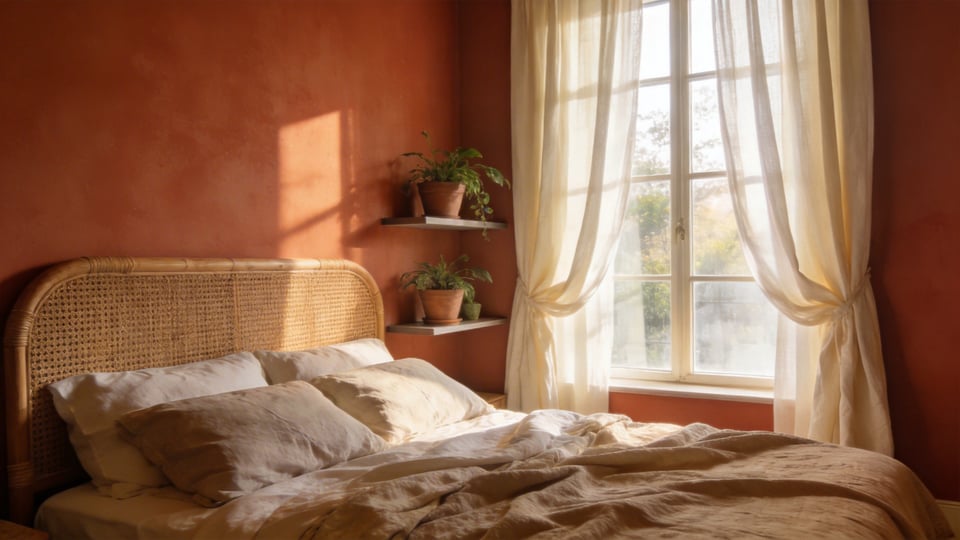
There’s a moment I come back to often. A few years ago, I visited a friend’s apartment. It was small, rented, and not particularly well-lit. Yet her bedroom stopped me cold. It wasn’t styled in any complicated way. But it felt genuinely restful: warm, enclosed, soft, like the room itself was asking you to slow down. My own bedroom had nicer furniture and cost more. But it felt like a hotel room that had been cleaned and never lived in.
That contrast sent me deep into the psychology of cozy spaces. What I found changed how I think about bedroom design. Coziness isn’t really about a style or a budget. It’s about sensory layering — how your eyes, skin, nose, and nervous system all get the same message at once. These cozy bedroom decor ideas work because they address that multi-sensory experience deliberately, rather than by accident. Most of them cost less than you’d expect. All of them are specific enough to actually do.
1. Layered Bedding That Invites You In
The fastest way to make a bed feel like a destination is to build it in layers. The order matters. Start with a fitted sheet in cotton percale (200–400 thread count is the sweet spot for durability and breathability). Add a flat sheet if you like them, then a lightweight cotton blanket, then your duvet or comforter. Finally, fold a chunky knit or woven throw across the foot of the bed at a slight diagonal.

That diagonal fold is a styling detail for good reason. It implies someone just got up — the bed looks lived-in rather than untouched. A 2021 Sleep Foundation survey found that 73% of people said the feel of their bedding affected how quickly they fell asleep. So this isn’t just aesthetic. For the duvet insert, look for goose-down at 600+ fill power — it’s genuinely warm without the weight of a cheaper insert.
What to Look For
Brooklinen’s Classic Core sheet set (around $109 for a queen) uses long-staple cotton in 270-thread-count percale. It gets noticeably softer after washing. Parachute’s down duvet insert ($149–$249) is machine washable and comes in warm and extra-warm fills. Target’s Threshold chunky knit ($25–$45) is a budget buy that holds its own next to pricier options. European linen pillowcases add a tactile difference that’s hard to describe but immediately noticeable. Cultiver makes a good one for $65–$85 per set.
If you’re building from scratch, prioritise the duvet insert over the cover. A beautiful cover on a thin, flat insert looks worse than a plain cover on a well-filled one. The plumpness is what makes a bed look like something you want to fall into.
2. Warm Lighting With Dimmer Switches
Of all the cozy bedroom decor ideas on this list, this one has the most immediate effect for the least money. That’s not a small claim. The colour temperature of your lighting — measured in Kelvin — directly affects how your brain interprets the space. Anything above 3,500K signals daytime, suppresses melatonin, and makes a room feel like an office. Drop to 2,700K or below and the room shifts. Your nervous system reads it as safe and restful.
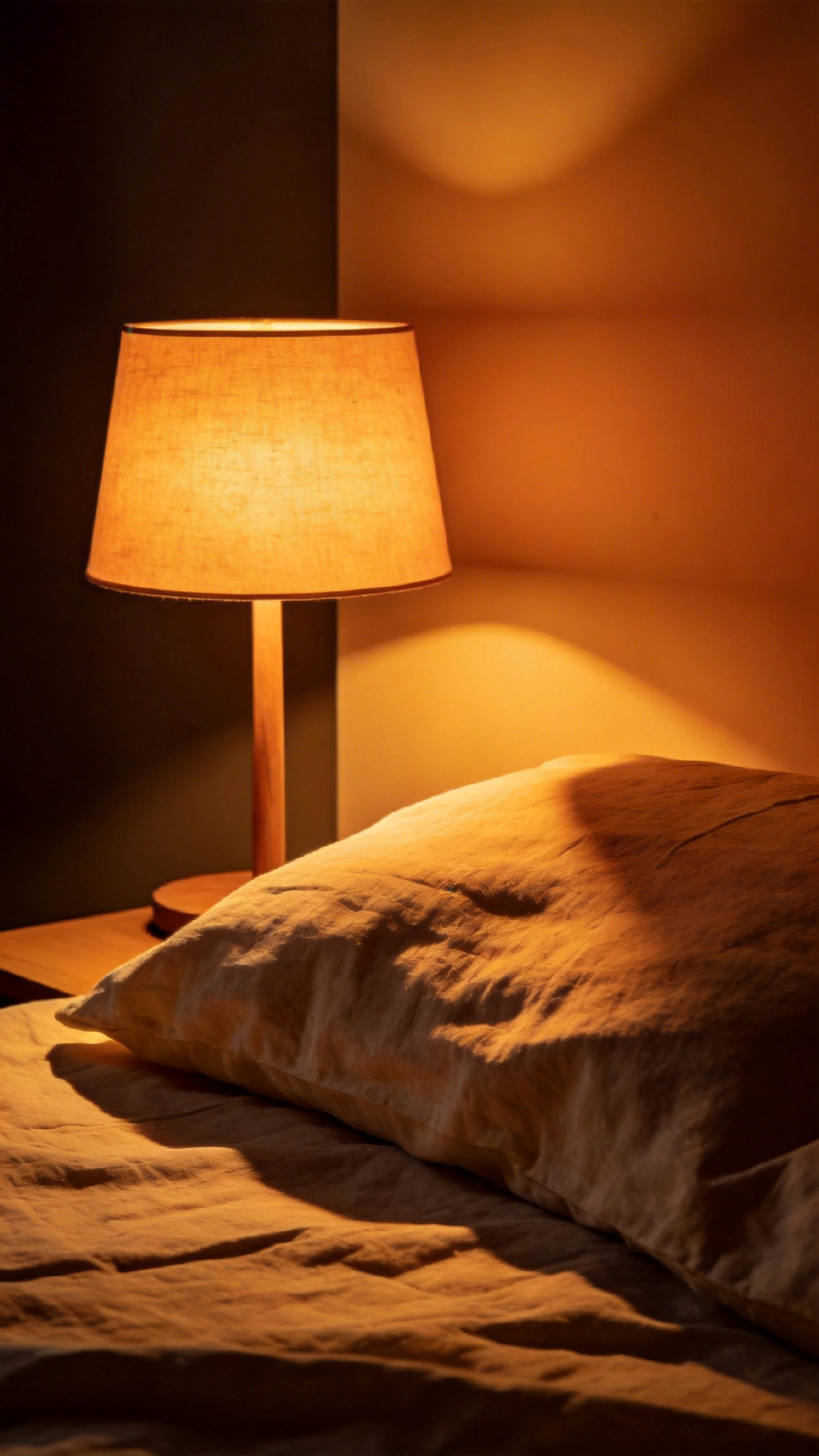
Harvard Medical School research shows that blue-spectrum light above 3,500K suppresses melatonin by up to 85%. That effect happens in the two hours before sleep. Yet most people still have cool-white overhead lighting in their bedrooms because that’s what came with the house. A Lutron Caséta dimmer switch ($59–$79) installs in 20 minutes with no electrician and immediately gives you variable warmth. Philips Hue smart bulbs ($15–$22 each) let you adjust down to 2,200K from your phone. Neither requires rewiring.
The Overhead Fixture Problem
The ceiling fixture is the biggest coziness killer in most bedrooms. Stop using it at night. Replace the bulb with a warm 2,700K LED. Set it on a dimmer and never go above 30% after 7 pm. Add one table lamp on each bedside table at 2,200–2,700K. That combination — dim overhead plus warm point sources at eye level — is how hotel designers create the feeling of retreat. FEIT Electric sells a six-pack of filament-style Edison bulbs in 2,200K for around $18–$25. Use them everywhere.
3. A Statement Headboard That Anchors the Room
The bed is the room’s visual centre. That makes the headboard the highest-leverage decorating investment you can make in a bedroom. The bed draws 40–60% of the eye’s attention. So even a modest headboard upgrade creates a disproportionate impact.
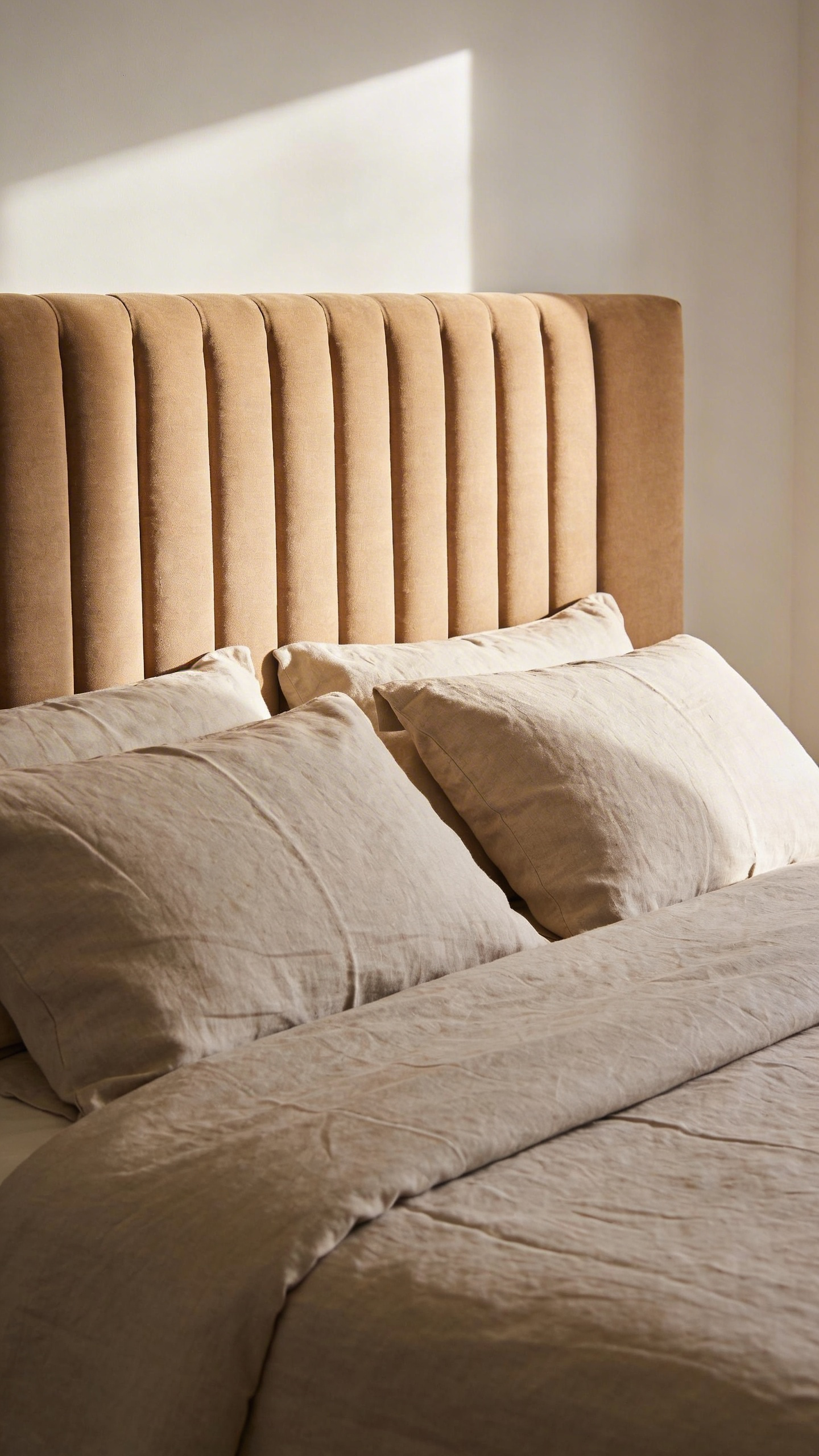
Height matters more than style. For an 8-foot ceiling, a 48–54 inch headboard is the right proportion — taller boards make the room feel bottom-heavy. If your ceiling is 9 feet, you can push to 60 inches without the room feeling crushed. Wall-mounted headboards have no legs touching the floor. They create a floating effect and work well in smaller rooms where visual lightness helps.
Materials and Specific Options
An upholstered headboard in velvet or linen is the warmest choice aesthetically. Both materials absorb light rather than reflecting it, which contributes to an enclosed, restful feel. Target’s Threshold upholstered headboard ($129–$249) has clean channel tufting in several neutral colourways and includes wall-mount hardware. For more drama, Wayfair’s Oula velvet wingback headboard ($189–$349) is a genuine anchor. It comes in eight colour options. For something lighter visually, West Elm’s rattan headboard ($399–$499) adds organic texture without the visual weight of fabric. IKEA’s TARVA solid pine headboard ($79–$99) is the honest budget option. It can be stained or painted and adjusts to multiple bed widths. For pairing the headboard with the right furniture, the guide to bedroom furniture ideas covers scale and proportion in detail.
4. Textured Throw Pillows in a Cohesive Palette
Throw pillows are where most people go wrong in two opposite directions. Either they buy a matched set that looks like it arrived from a catalogue. Or they add pillows in too many colours until the bed looks restless. The formula that consistently works is simple — three tones, three or more textures, and one colour family.
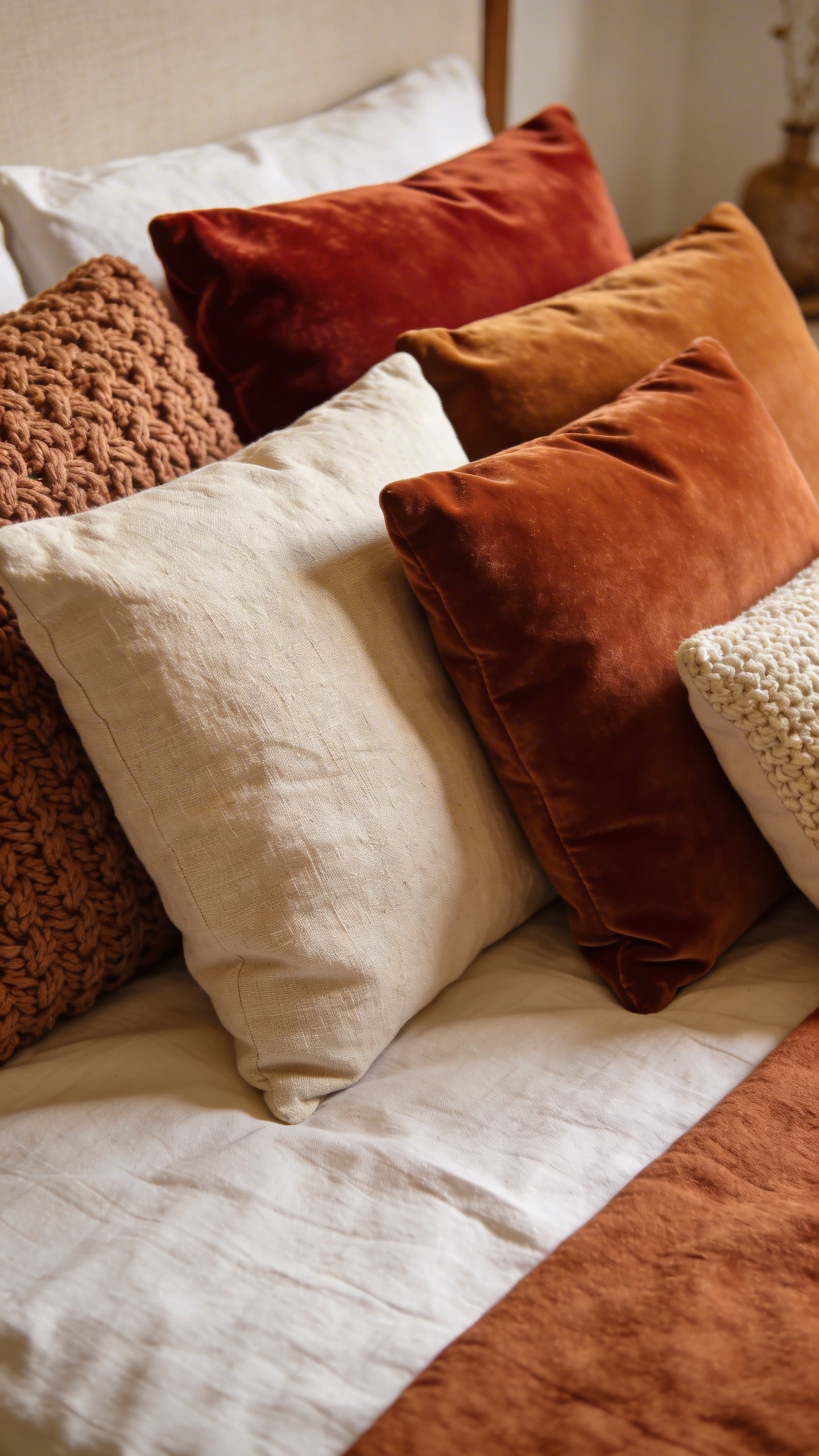
The standard arrangement runs from back to front. Two euro shams (26×26 inches), two standard sleeping pillows, two 20×20 decorative throws, and a 12×20 lumbar at the front. Environmental psychology research shows that tactile variety in bedroom textiles correlates with reported feelings of comfort and safety. Even participants who couldn’t explain why reported it. So the texture mixing isn’t just visual. It’s doing psychological work.
The Palette Rule and Insert Sizing
For colour, stay within one family. Warm terracottas, dusty pinks, caramel, and muted sage trigger the parasympathetic nervous system more reliably than saturated hues. Within that family, use one light neutral, one mid-tone, and one slightly deeper accent. Then vary only the textures: velvet for depth, linen for softness, a knit or boucle for visual weight. H&M Home velvet cushion covers ($12–$18) hit the sweet spot of quality and price range. Pottery Barn Belgian linen pillows ($39–$59) feel genuinely well-made. For the lumbar, West Elm’s mudcloth-print options ($44–$64) add a geometric detail that reads sophisticated without being busy.
Always buy inserts 2 inches larger than the cover. A 20×20 cover needs a 22×22 insert. Poly inserts are fine; down-alternative is noticeably plumper.
5. Heavyweight Curtains That Block Light and Cold
Most bedrooms have curtains that look fine during the day and fail at night. They’re sheer, or thin, or hung just above the window frame. They let in the light from street lamps, adjacent windows, and early morning sun. That’s an issue for sleep quality. But it also undermines the feeling of enclosure that makes a room feel cozy rather than exposed.
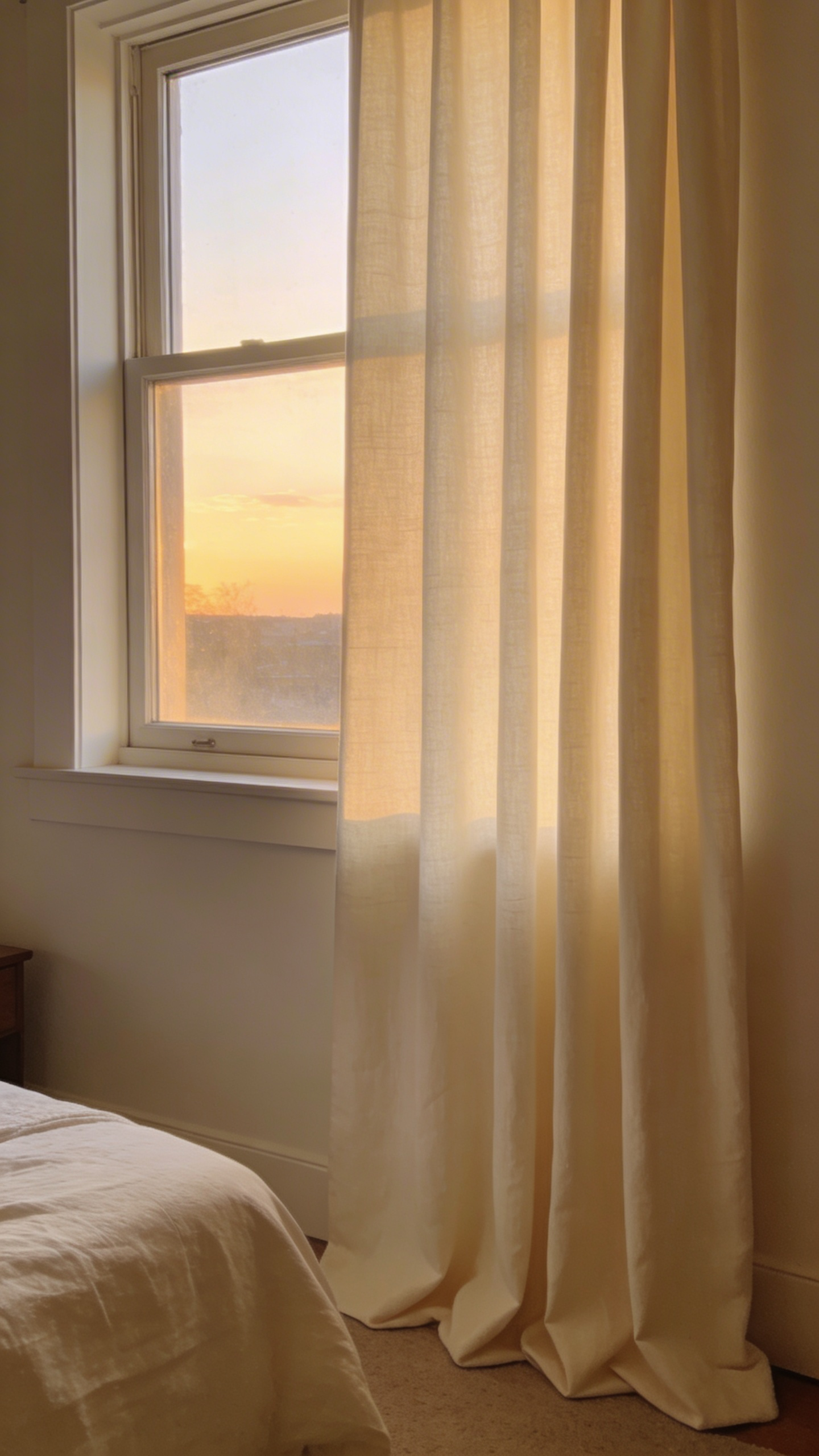
Hang your curtains at ceiling height, not just above the window trim. Extend it 6–8 inches beyond the window on each side. This is the single installation trick that makes curtains look intentional rather than functional. It genuinely makes ceiling height appear 15–20% greater. Your curtain width should be 2–2.5 times the window width for a full, gathered look. Most people buy panels far too narrow and end up with something that looks like blinds pretending to be curtains.
What Blocking Light Actually Does
The National Sleep Foundation cites near-total darkness as important for melatonin production. Even small amounts of light through thin curtains reduce sleep quality measurably. Blackout curtains block 95–100% of outside light. Thermal blackout curtains additionally reduce heat loss through glass by up to 25%, which is relevant if your bedroom runs cold in winter. For a standard 36×60-inch window, buy two 52×84-inch panels. That gives you the width-to-window ratio that looks right. Deconovo blackout curtains on Amazon ($25–$45 a pair) are the honest best-value option. They have a linen-look texture that avoids the corporate hotel feel of standard blackout. Anthropologie velvet panels ($98–$148 each) are worth saving for if the bedroom is your main focus. The drape and sound absorption are genuinely superior. Steam them before hanging, whatever you buy. Five minutes with a steamer removes all the fold marks from packaging. Any curtain looks three times more expensive afterwards. Five minutes with a steamer removes all the fold marks from packaging and makes any curtain look three times more expensive.
6. A Soft Area Rug That Grounds the Space
The biggest mistake people make with bedroom rugs is buying one too small. A rug that only peeks out from under the frame on two sides looks like a doormat in the wrong room. For a queen bed, the minimum comfortable rug size is 8×10 feet. It should extend 18–24 inches on each side and at the foot. That way your bare feet hit rug rather than cold floor every time you get up.
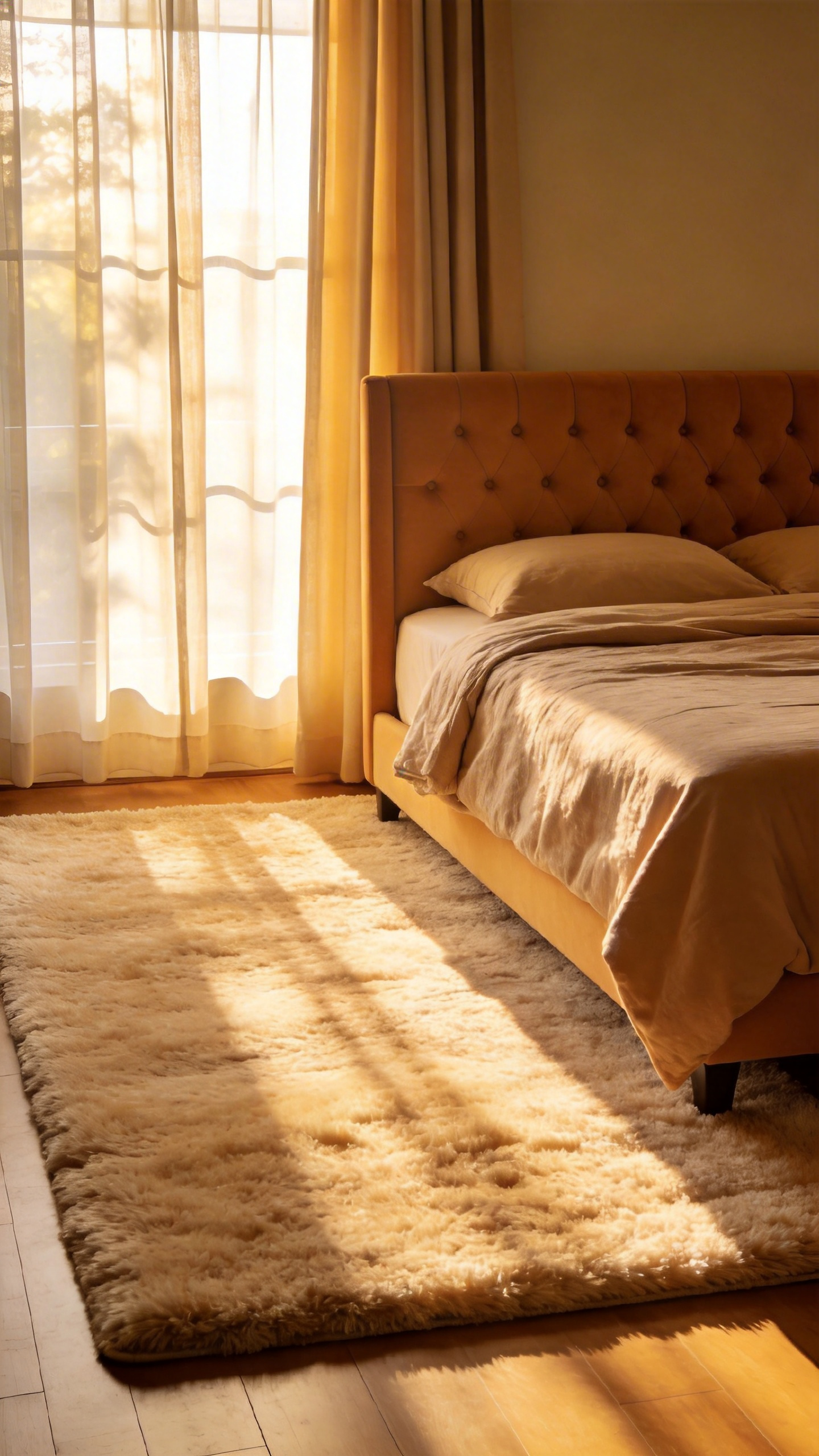
For a king bed, go to 9×12 feet. Environmental psychology research shows that thermal comfort is influenced by visual cues. Seeing a thick, soft rug makes people report feeling warmer even when temperature is unchanged. So the rug is doing double duty: actual warmth underfoot and perceived warmth for the whole room.
Pile Height and Material
Medium-pile rugs (0.5–1 inch) are the practical sweet spot. Soft enough underfoot, dense enough to vacuum without frustration. High-pile shag is more indulgent but harder to maintain. Wool rugs have natural resilience and last 20–30 years with basic care. A secondhand wool rug from eBay or Facebook Marketplace will outlast three synthetic replacements. A rug pad is not optional. It adds softness, prevents movement, and extends the rug’s life. Ruggable’s plush 2-piece system ($299–$349 for an 8×10) is the most practical option if you have pets. The cover is machine washable. IKEA’s STOENSE medium-pile rug ($149–$299) is the honest budget choice with a clean, dense pile. Place the rug so its leading edge sits 18 inches from the bed foot, with the rug extending under the bottom third of the bed frame. If you want to think through the furniture arrangement first, the guide on bedroom furniture layout covers rug placement in context.
7. Warm Paint Colours Chosen With Psychology in Mind
Colour is the longest-lasting cozy bedroom decor idea on this list. Once you’ve painted, the investment works for years. But it’s also where people get hurt by the gap between a swatch card and four walls under artificial light.
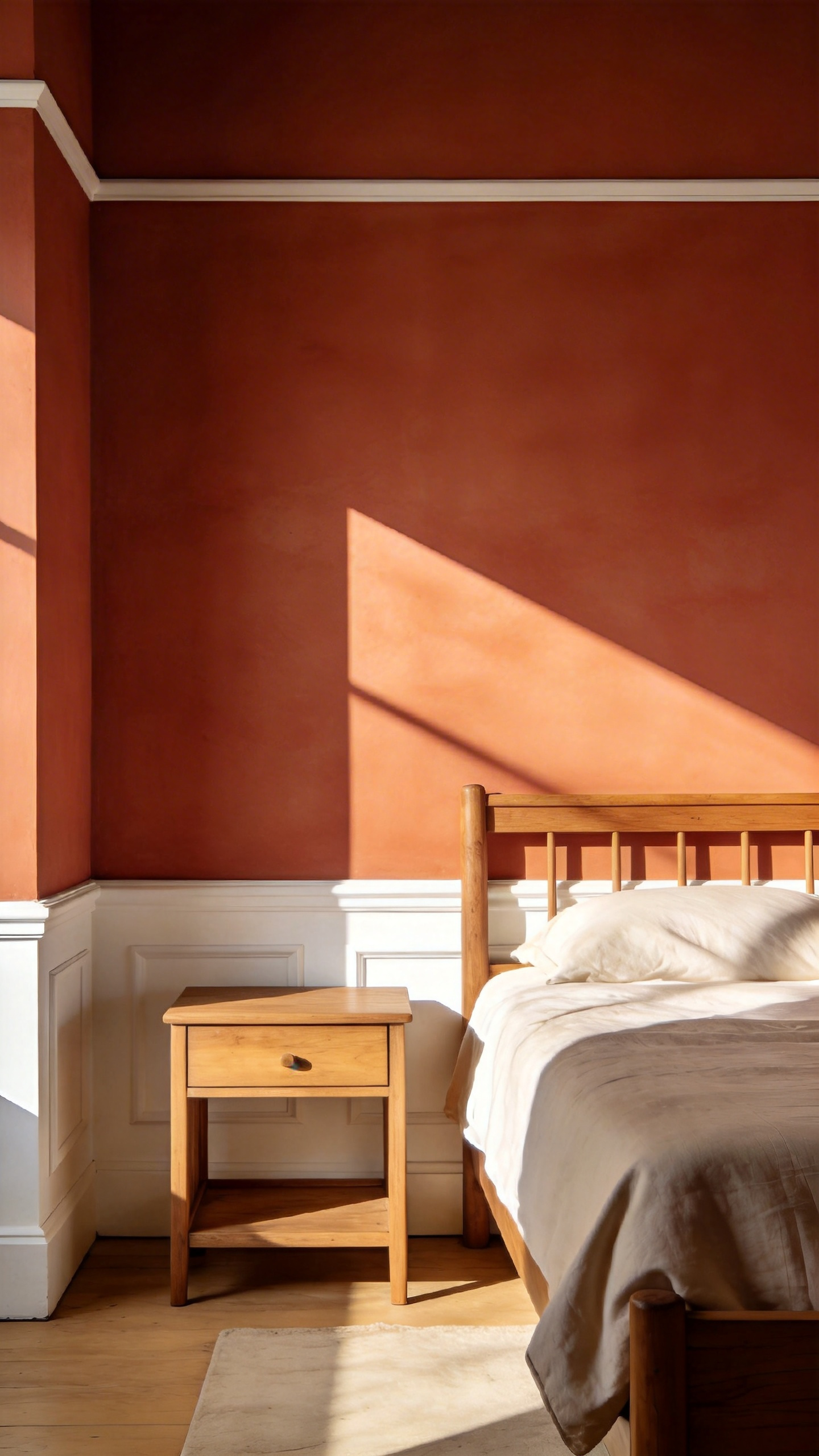
The principle is straightforward. Warm neutrals — those with red, yellow, or orange undertones — create psychological enclosure and safety. Research by Valdez and Mehrabian (replicated several times since) shows that muted, earthy warm tones produce the highest relaxation scores of any colour category. Cool greys work against coziness in bedrooms. However popular they were in the previous decade, they read as professional, not restful.
Specific Colours Worth Testing
Farrow & Ball’s Dead Salmon (No. 28, around $120/gallon) is a dusty terracotta-pink that works in both bright and dim rooms. Its mid-LRV means it neither floods with light nor absorbs too much. Benjamin Moore’s Pale Oak (OC-20, $65–$85/gallon) is the warm greige that holds up under any artificial lighting. It reads almost white in bright rooms and distinctly warm in evening light. Sherwin-Williams’ Cavern Clay (SW 7701, $68–$78/gallon) is a terracotta-orange mid-tone that pairs beautifully with natural wood and linen. For white bedroom decor that still reads cozy, choose whites with warm undertones like Benjamin Moore’s White Dove. Cool blue-white keeps a room from ever feeling truly warm. Whatever you choose, paint a 12×12-inch card. Observe it at three times of day — morning, noon, and evening with artificial lights on — before committing. And paint the ceiling one to two shades lighter than the walls, not white. That ceiling detail is what separates professional-looking cozy rooms from ones that feel accidentally warm.
8. Wicker and Rattan Accent Pieces for Organic Texture
Natural materials add a warmth to cozy bedroom decor ideas that painted furniture simply cannot replicate. Rattan — a solid palm vine — has a honey-amber colour that reads as inherently warm and brings a softness to corners and surfaces that wood and metal don’t. Biophilic design research shows that natural materials like woven plant fibres reduce cortisol levels. They engage what researchers call “soft fascination” — a gentle, restorative form of attention.
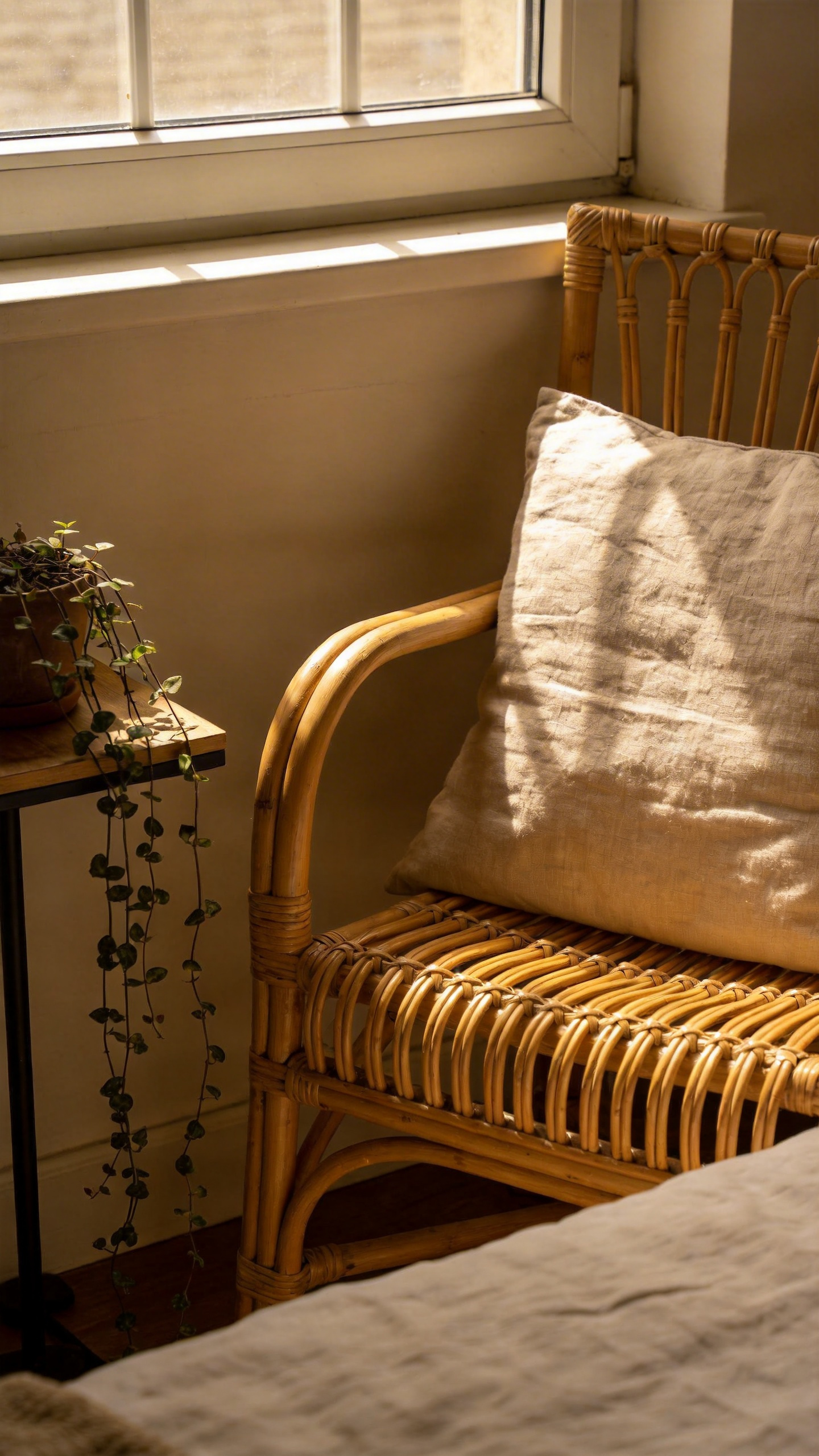
The most impactful rattan piece for a bedroom is a chair. Serena & Lily’s Riviera rattan chair ($598–$748) is a genuine design classic. It earns its price by lasting decades. IKEA’s BUSKBO ($199) is a genuinely decent rattan armchair that pairs with any cushion fabric. If a chair doesn’t fit the budget or floor plan, a woven lamp base adds rattan texture without the furniture footprint. Target’s Threshold lamp base ($35–$55) pairs well with a linen drum shade. A woven laundry hamper does decor duty and practical duty simultaneously. World Market’s water hyacinth hamper ($49–$79) is one of those buys that earns its place. For blue bedroom decor, natural rattan acts as a warm counterpoint to cooler wall tones. It prevents the room from reading as cold.
The Rule of One
One rattan piece is a statement. Two or three start to feel like a beach house rather than a cozy bedroom. The approach I recommend: one large piece — the chair or headboard — and then smaller woven accents (lamp base, hamper, a small tray) to carry the texture without tipping into a theme. Natural rattan should be kept away from direct moisture. A light linseed oil treatment once or twice a year prevents cracking in centrally heated rooms. It’s genuinely low maintenance compared to upholstered furniture.
9. A Reading Nook Corner Built for Actually Staying
A reading nook is one of the cozy bedroom decor ideas that sounds ambitious but genuinely isn’t. It doesn’t need its own room or even a large corner — it needs only a 4×4 foot footprint and the right three pieces: a chair with enough seat depth to sit in for an hour, a task lamp positioned to fall over your reading shoulder, and a small side table at arm height. That combination transforms a corner from dead space into a destination, and it does something valuable for the whole room: it creates a secondary activity zone that makes the bedroom feel more layered and personal.
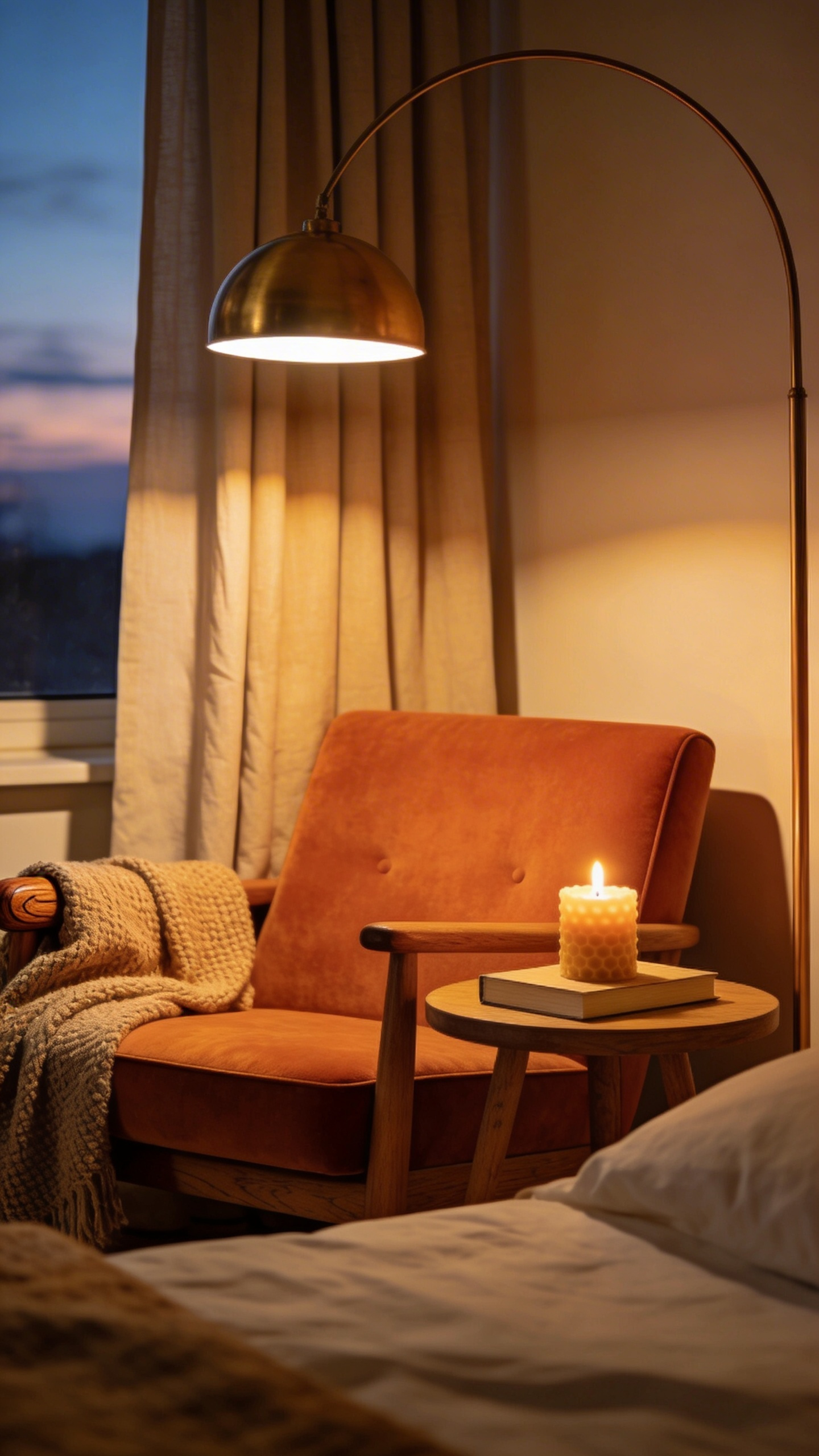
Studies on dedicated leisure zones in homes show that rooms with a specific activity corner — reading, journaling, a quiet hobby — produce higher reported satisfaction and feelings of personal ownership of the space. The key word is “dedicated.” A chair that also holds laundry doesn’t count. A chair with a lamp and a table, placed with clear intent, signals to your brain that this is where you rest.
Making It Work in Small Rooms
IKEA’s POÄNG chair and footstool set ($119–$159) is the honest recommendation here — it’s ergonomically excellent, the footstool turns it from a functional chair into a long-stay seat, and the covers are replaceable. The Brightech Sparq arc floor lamp ($89–$119) positions light from above and to one side without a standing lamp taking up side-table space. IKEA’s GLADOM tray table ($24–$34) is exactly the right size: a book, a cup, and a candle fit without crowding. A curtain or canopy on one side — even just a single linen panel hung from a tension rod — visually defines the nook as its own zone without requiring walls. The nook only works, though, if it has its own light source. The moment you add a task lamp, the corner transforms. Without it, it’s just a chair.
10. Candles, Wax Warmers and Ambient Scent
Scent is the most underused element in cozy bedroom decor ideas, and also one of the most powerful. The olfactory bulb has direct neural connections to the amygdala and hippocampus — scent bypasses the cortex and triggers emotional responses faster than any other sense. That’s why certain smells feel immediately calming without any conscious reasoning involved. A 2015 clinical trial published in the Journal of Alternative and Complementary Medicine found that lavender aromatherapy reduced anxiety scores by 14% and improved sleep quality ratings by 19% in a cohort of college students.
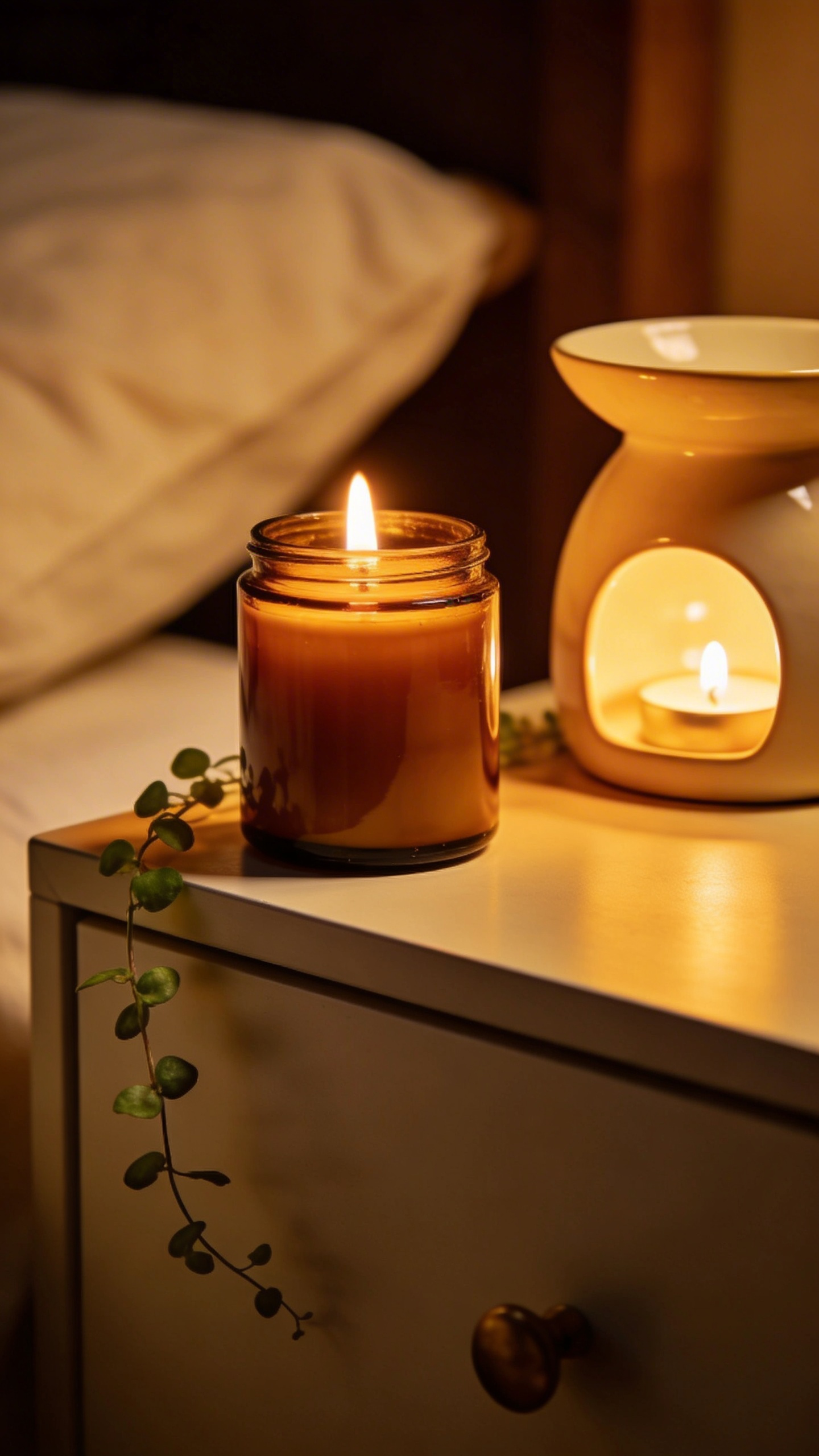
The scent families associated with calm and sleep are well-documented: vanilla promotes serotonin, lavender reduces anxiety, cedarwood promotes adenosine (a sleep-associated neurochemical), and sandalwood has a grounding, quiet quality that several studies link to reduced arousal states. For candles, Homesick’s Cozy Fireside ($34–$38 for 13.75oz) blends cedar, sandalwood, and woodsmoke with an 80-hour burn time. P.F. Candle Co.’s Amber & Moss ($20–$24) uses clean soy wax and a muted amber-musk scent that’s warm without tipping into sweet. Both are better options than most mass-market candles because they’re soy-based — soy burns cleaner and longer than paraffin, with less soot.
Flame-Free and Layered Approaches
For a bedroom, a wax warmer is genuinely safer than an open flame if there’s any chance of falling asleep with it on. Chesapeake Bay’s plug-in wax warmer set ($18–$25) handles the job without risk. For consistent low-level scent throughout the day, a reed diffuser in a corner keeps the base tone alive without requiring attention. The approach that works best in practice is layered: diffuser running during the day, candle lit 30 minutes before your wind-down routine begins. By the time you get into bed, the room already smells like sleep. It becomes a conditioned response, and it signals the brain to begin winding down earlier than it might otherwise. This is also one of the cozy bedroom decor ideas that costs very little to maintain once you’ve found the scent combinations you respond to. If you want to layer in the broader Scandinavian hygge approach to warmth, decorswag’s guide to cozy bedroom decorations is worth a look.
11. Draping Fabric or a Canopy for Overhead Enclosure
The prospect-and-refuge theory, articulated by geographer Jay Appleton in 1975 and applied extensively to interior design since, explains something most people sense but can’t name: humans feel more comfortable when there’s partial overhead enclosure above them. It’s the same instinct that makes window seats, alcoves, and low-ceilinged cottage bedrooms feel disproportionately restful. A bed canopy exploits this instinct directly, and it requires no permanent installation.

A single ceiling hook rated for 15 lbs is all the infrastructure required. Thread a circular ring or hoop through the hook, then drape sheer fabric from it to the four bedposts or attach with café curtain clips to the wall. IKEA’s GULÖRT mosquito net-style canopy ($29–$39) is the simplest version — a single-point mount, fine mesh, and it creates the enclosed feeling immediately. Anthropologie’s draped linen canopy kit ($148–$198) is the most beautiful ready-made option, with pre-cut linen panels and all hardware. If you’d rather source your own fabric, four sheer linen panels from H&M Home ($19–$35 each) threaded through a ceiling ring cost less than purpose-made kits. The canopy hook should sit 7–8 feet above the mattress for the fabric to drape at the right angle.
Partial Enclosure Is Enough
The fabric doesn’t need to fully enclose the bed to work — in fact, partial draping on three sides with the headboard side left open reads as intentional design rather than a DIY project. Use a few café curtain clips to gather excess fabric at the bedposts or against the wall. For renters who can’t install ceiling hooks, a tension rod mounted above the headboard wall can hold fabric panels that cascade down on either side of the bed. The effect is similar and requires no damage to surfaces. This is one of those cozy bedroom decor ideas that seems fussier than it is — the installation takes under an hour and the visual impact is significant.
12. Plants and Greenery as Living Warmth
Of all the cozy bedroom decor ideas involving living elements, plants are the most underrated. Hard decor — frames, ceramics, candles — creates a room that looks curated. Living plants create a room that feels inhabited. There’s a specific softness that trailing greenery adds to shelves and corners that no artificial element can replicate, and biophilic design research backs up what most people intuit: a 2015 study in the Journal of Physiological Anthropology found that interacting with indoor plants reduced sympathetic nervous system activity and lowered both heart rate and blood pressure compared to a control computer task.

The bedroom plants that consistently perform in low-light, low-maintenance conditions: golden pothos (trails beautifully from a high shelf, tolerates irregular watering), snake plant (upright structure, night oxygen release), ZZ plant (essentially unkillable, glossy leaves that reflect warm light well), and peace lily (white flowers if it gets reasonable light). Snake plants are one of the few plants that use CAM photosynthesis — they release oxygen at night rather than during the day, which is a genuine benefit in a sleeping space.
Placement and Low-Light Strategy
The single most impactful placement for cozy bedroom decor is a trailing pothos on the highest shelf in the room, left to grow downward. Within a few months, a bare shelf becomes something that looks like it’s been cultivated for years. Start with a grocery store pot for $8–$15 and don’t overthink it. Terracotta pots ($28–$48 for a set of three from Terrain) reinforce a warm colour palette and are porous, which makes overwatering much harder. Most north-facing bedrooms average 50–100 foot-candles of natural light — sufficient for pothos, snake plant, and ZZ plant without supplemental lighting. If you’re concerned about maintenance, IKEA’s FEJKA artificial pothos ($8–$12) is genuinely convincing from normal viewing distance and works for high shelves where close inspection is unlikely.
13. A Gallery Wall Using Personal Photos and Prints
A gallery wall built from personal photographs does something no styled artwork can: it gives the room what designers call narrative density — visible evidence that the space is genuinely lived in rather than decorated for someone else. Research on residential environments shows that personal photographs in private rooms correlate with stronger feelings of identity affirmation and psychological ownership, which is a formal way of saying the room starts to feel yours rather than just a room.
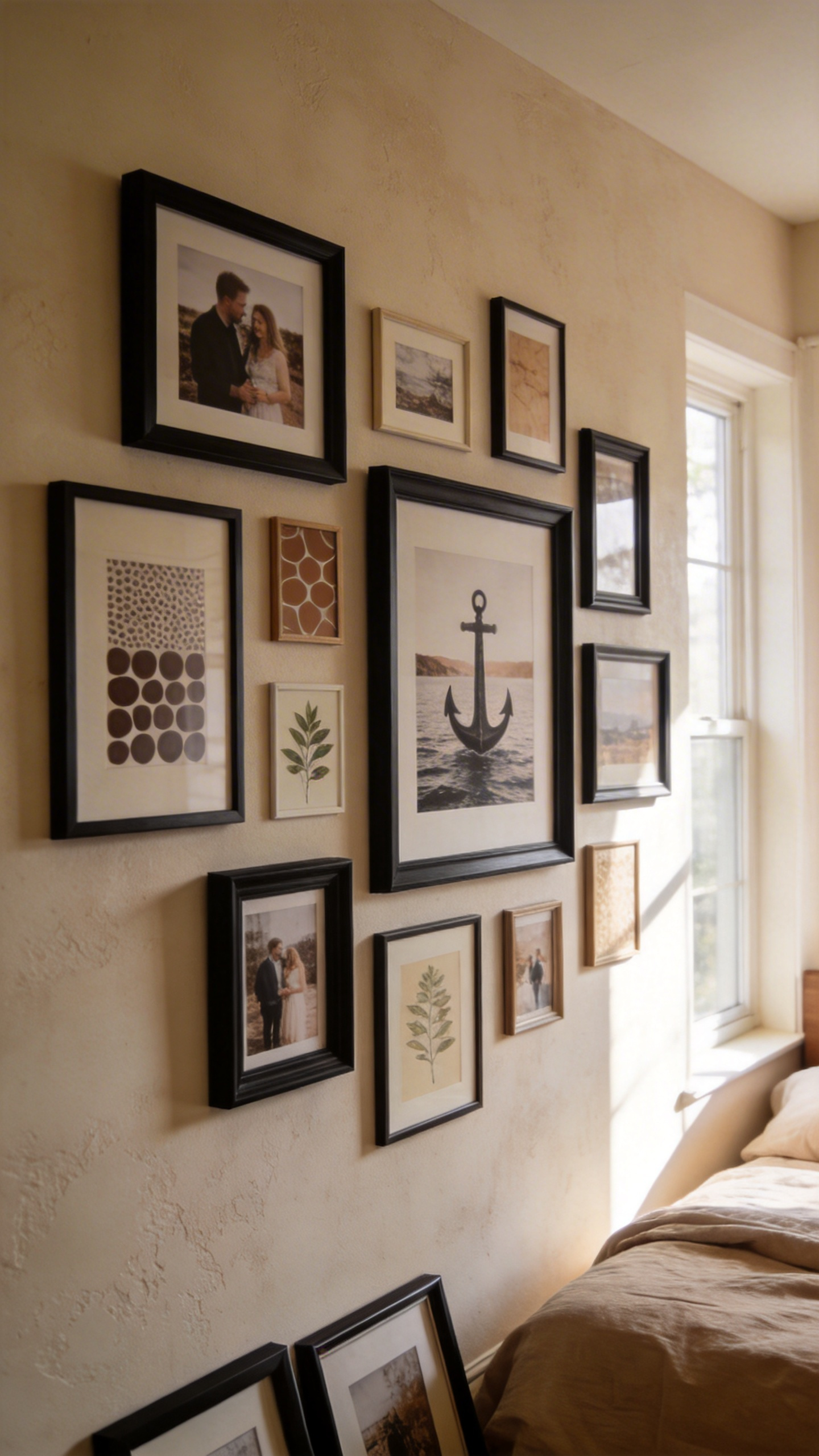
The anchor-and-orbit method: identify your largest piece (aim for at least 16×20 inches to give the eye a genuine centre), hang it first at the standard gallery height (57–60 inches from floor to centre of the arrangement), then place smaller pieces 2–3 inches around it. Mixing frame finishes reads as more personal than a matched set — limit yourself to two or three finishes maximum. Black, brass, and natural wood work together reliably. Paper templates taped to the wall let you adjust the layout before hammering anything. It saves enormous frustration.
Where to Print and What to Frame
Artifact Uprising’s wood photo prints ($18–$22 for a 5×7) have warm-toned archival inks that suit bedroom walls better than the cooler tones of standard photo printing. Society6 art prints ($20–$45 for an 11×14) give access to independent artists — it’s easy to filter by colour and find prints that match your palette. IKEA RIBBA frames ($4–$15 each) are the honest workhorse of gallery walls and look better with matting than without. For the anchor print, go larger than feels natural — a 16×20 or even 20×24 print creates the contrast that makes the smaller pieces read as a deliberate composition rather than a collage. You can build out smart bedroom organizing ideas around a gallery wall too — once the wall has a clear focal point, the rest of the room’s organisation tends to clarify naturally.
14. Woven Storage Baskets That Tidy Without Hiding Everything
One of the quieter cozy bedroom decor ideas — but one that affects how the room feels more than most people expect — is the use of open-weave storage baskets on visible shelves and surfaces. Studies on bedroom environments and sleep onset found that visual clutter increases pre-sleep cortisol levels and delays sleep onset by an average of 11 minutes. Baskets don’t eliminate visual information; they organise it. The brain’s response to categorised, contained objects is measurably calmer than its response to loose, scattered ones.
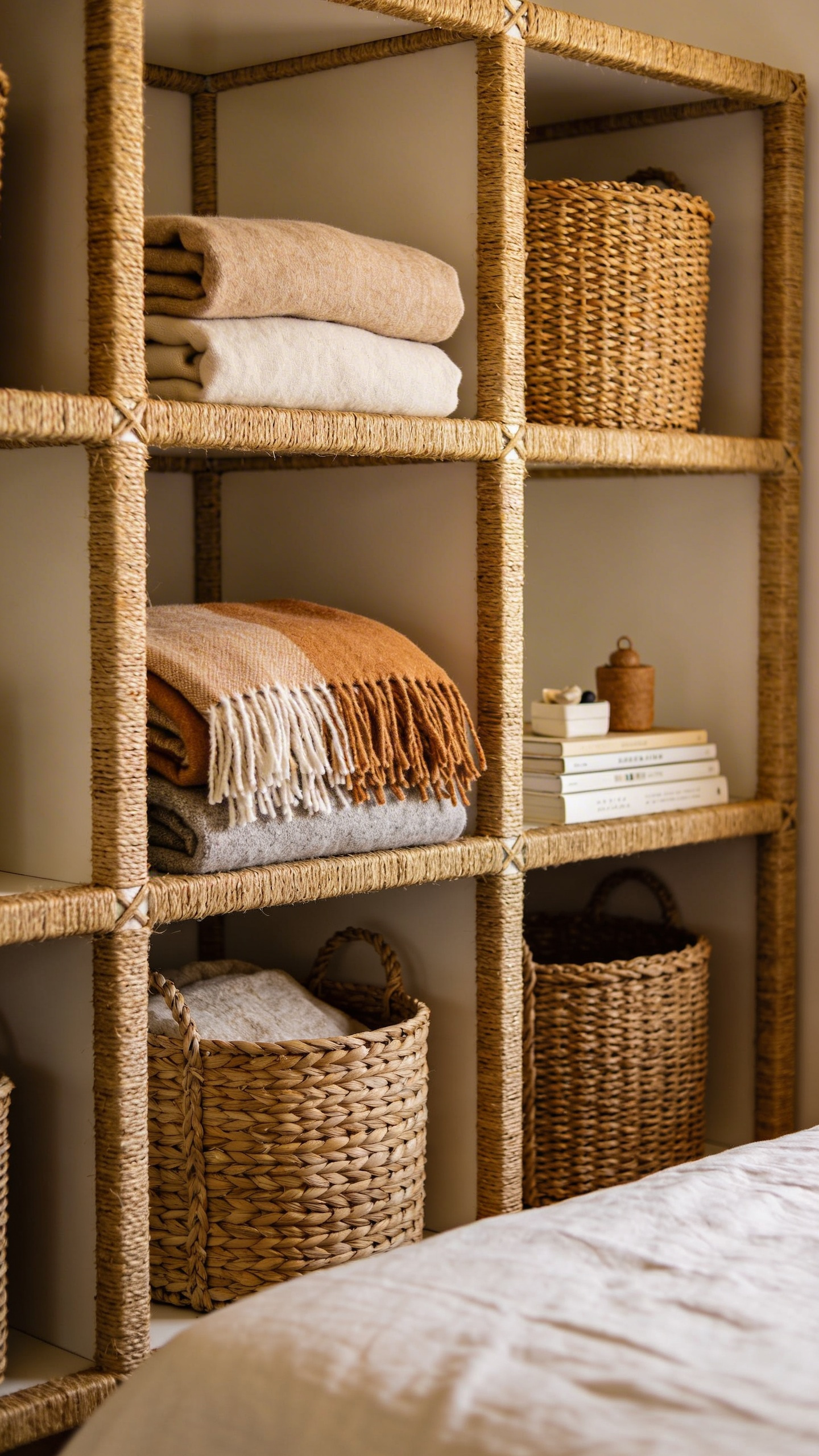
The sizes with the most bedroom utility: large (18x14x12 inches for extra blankets and pillows), medium (14x10x8 for books, chargers, and small items), small (10x8x6 for bedside things). A lidded basket at the foot of the bed is the single most useful bedroom storage purchase — it handles extra blankets and creates a clean horizontal surface without adding another piece of furniture. Target’s Threshold seagrass belly baskets ($18–$35) are the best-value option in the category. IKEA’s KNIPSA sets ($12–$18 for four baskets) work for shelf organisation. Pottery Barn’s Beachcomber rectangular basket ($49–$89) holds its shape under heavy contents and looks good doing it.
What Goes In and Why It Matters
Baskets earn their cozy credential only when they’re used for something real. A basket filled with decorative filler balls or left conspicuously empty is just a prop. The warmth they add is partly visual, but it’s amplified significantly when the room is genuinely organised — functional decor always reads better than pure decoration. Open weave beats lidded boxes in most bedroom contexts because the slight visibility of contents proves the basket is in use, and the weave itself contributes texture. A small handwritten label on each basket — even just a card tucked inside the front — makes the system sustainable and speeds up finding things without turning a tidy space into a labelled office.
15. A Bedside Setup Curated for Wind-Down Rituals
The nightstand is the most used surface in the bedroom, and also the most likely to become a dumping ground. A single intentional edit — deciding what earns its place there and what doesn’t — is one of the easiest cozy bedroom decor ideas to implement and one with the most immediate daily benefit. The American Academy of Sleep Medicine found that pre-sleep phone use delays sleep onset by an average of 47 minutes, reduces total sleep time, and lowers next-day mood ratings independent of the content viewed.

The items that earn bedside space: a lamp at the right height (shade bottom at roughly shoulder height when sitting up in bed, around 24–28 inches above the mattress), a book or journal, a water carafe, hand lotion, and one small plant. A ceramic tray contains them visually even when they’re not perfectly aligned. Caraway Home’s ceramic water carafe ($35–$45) is far better than a plastic bottle — it holds enough for the night and looks genuinely beautiful. A Hay paper porcelain tray ($18–$28) keeps loose items from migrating across the table surface. The Muji gel ink pen and an A5 notebook ($5 and $9 respectively) are the most-used bedside items for anyone trying to wind down with journaling rather than scrolling.
Nightstand Height and the Phone Rule
Nightstand height should be within 2–3 inches of mattress height. Reaching up or reaching down to a lamp or glass becomes a cumulative ergonomic irritant that, over time, undermines the sense of ease you want at the bedside. IKEA’s KRAGSTA nesting side tables ($69–$89 for two) offer one standard-height table plus a lower pull-out — useful for small rooms where a footstool or second surface is occasionally needed. Put your phone on the other side of the room. A Braun BC02 alarm clock ($22) handles the morning job without the scroll temptation. This is the one cozy bedroom decor idea that costs almost nothing and delivers every night.
Start Small, Sleep Better
The most effective bedroom transformations aren’t the expensive ones — they’re the layered ones. Changing the light bulb colour temperature costs under $10 and affects how the room feels every single evening. A properly sized rug grounds the space in a way that no amount of art or accessories can compensate for. The bedding, the curtains, and the scent all work together to send the same signal: this is a place to rest.
If you’re choosing where to begin, start with the lighting and the bedding. Those two changes address the two senses — sight and touch — that your brain uses most heavily to calibrate whether a space is safe and restful. Add a rug if your floors are bare. Then layer in the smaller details — the plants, the candles, the baskets — as time and budget allow. The goal isn’t a magazine room. It’s a bedroom that makes you genuinely want to be in it, and reliably helps you wind down when you need to. Build toward that, one cozy bedroom decor idea at a time, and you’ll get there.