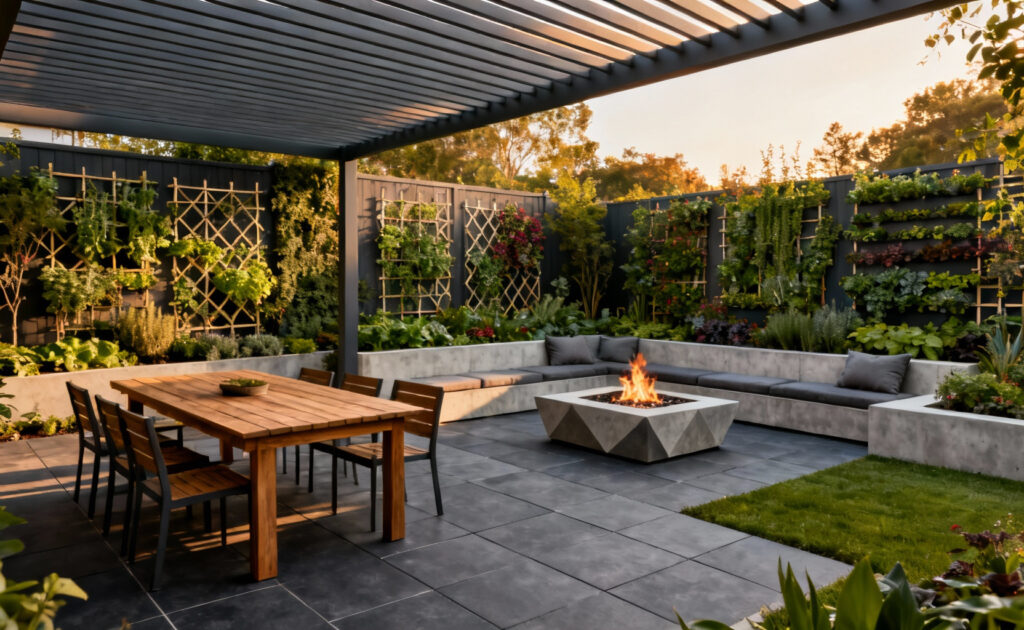
You have curated a residence of undeniable distinction, meticulously balancing technology and aesthetics, yet a silent disconnect often plagues evening gatherings: despite the expansive acreage available, the lawn garden remains clustered stubbornly on the patio threshold. The mechanism for dissolving this invisible barrier is not found in the acquisition of additional square footage or the maintenance of a pristine, endless carpet of manicured turf; it lies in the counter-intuitive mastery of enclosure and the psychology of distinct spatial zones.
This phenomenon, known as the “Silent Lawn Paradox,” represents a crisis of intention rather than space. A vast, open yard, while visually arresting from behind glass, functions psychologically as an uninviting void—a blank canvas that fails to offer the security and sensory engagement of a well-designed interior. To migrate the gathering outward, one must replace the passive observation of nature with immersive “outdoor rooms.” By anchoring the landscape with structural elements—such as a dining pavilion or a fire pit lounge equipped with subtle, integrated audio—we create destinations that offer the same intimacy and sophistication as an interior parlor.
This exploration illuminates the pathway to converting high-maintenance, underutilized grass into a high-performance asset. We will examine how to employ sensory anchors and strategic hardscaping to craft a resort-like sanctuary, ensuring your outdoor footprint is not merely a view to be admired, but a fully integrated, functional extension of your home’s entertainment ecosystem.
The Shift: Transforming ‘Green Space’ into ‘Social Venue’
We are witnessing a definitive departure from the traditional, resource-intensive turfgrass lawn—an aesthetic asset that offered limited functional value—toward zoned, multi-functional environments designed specifically for human interaction. This architectural pivot prioritizes “outdoor rooms” over monoculture landscapes. By replacing unused green expanses with purposeful hardscaping and vertical gardening, designers can carve out distinct areas such as dining patios or lounge sectors. These physical boundaries do more than break up the visual line; they provide the structural cues necessary to guide guests into social clusters, naturally facilitating conversation and group activities in a way an open field cannot.
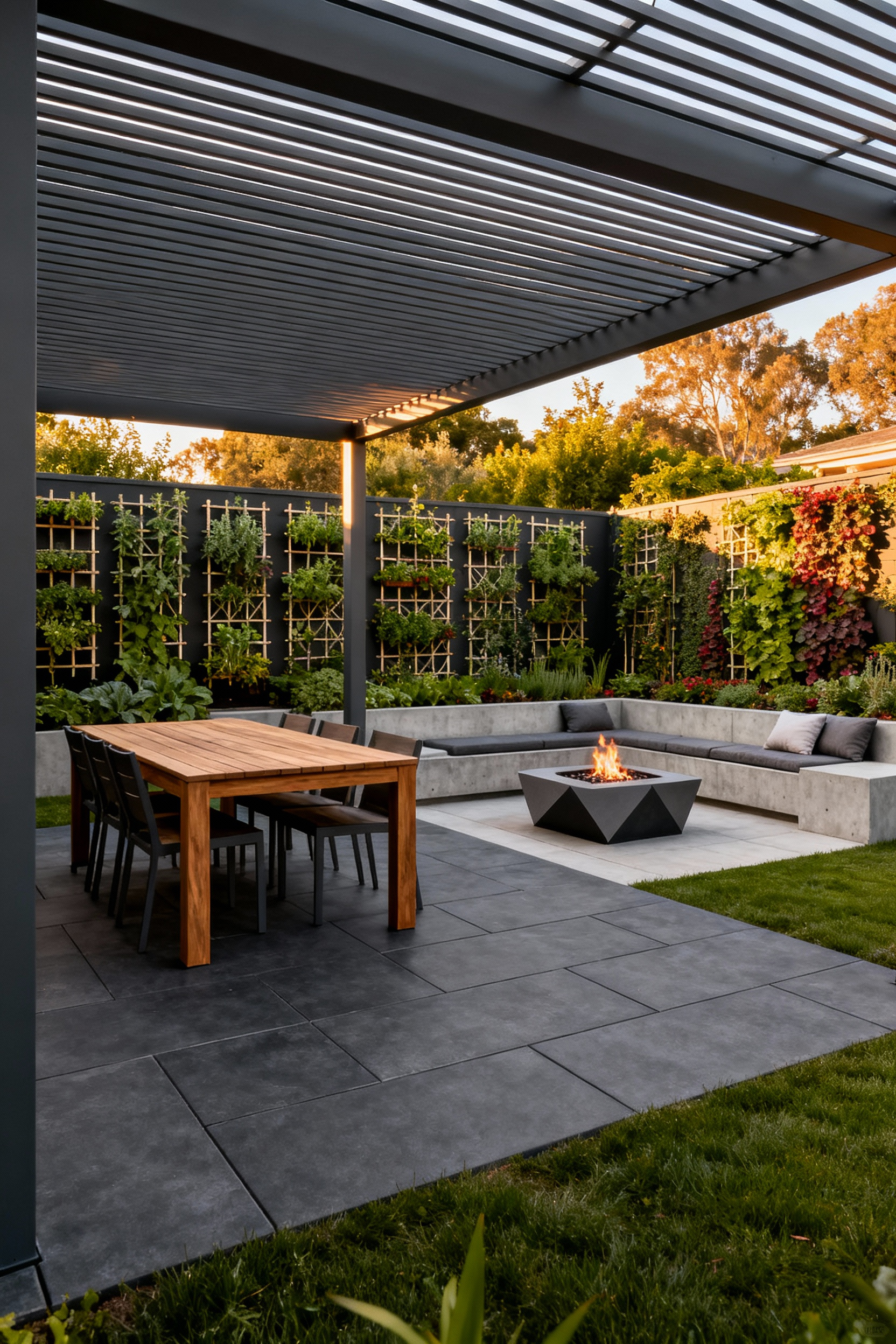
This transformation is fundamentally an investment in psychological well-being and social cohesion, as functional green venues have been shown to significantly reduce stress and anxiety while bolstering community trust. To activate these emotional outcomes, the design must move beyond visuals to curate a rich, multi-sensory journey. A truly immersive social venue requires specific elements to anchor the experience:
- Fire Features: These serve as a central focal point, offering warmth and a primal gathering spot that extends the usability of the space into the evening.
- Acoustic Layering: Water features introduce calming white noise that masks urban distraction, while diverse plant textures and fragrances engage the remaining senses.
- Strategic Pathways: Deliberate circulation routes encourage movement and discovery, preventing the space from feeling static.
Furthermore, the boundaries of the social venue are expanding outward. The rising “Social Front Yard” trend challenges the exclusive privacy of the backyard, utilizing the street-facing landscape to foster neighborhood interaction and turn the home’s edge into a communal gathering point. However, the success of these semi-public spaces hinges on agency. Real-world applications demonstrate that when residents or community members act as stakeholders in the design process, the result is a tangible, collective project. This shared ownership ensures the space is not merely observed, but actively inhabited and maintained.
Principle 1: Acoustic Architecture—Why Open Lawns Dilute Conversation
Visually expansive lawns often fail as social spaces because they function as acoustic voids. In these open environments, voice energy dissipates immediately rather than interacting with reflecting or absorbing surfaces, forcing guests to strain their vocal projection merely to be audible. This lack of containment creates a sense of exposure that subconsciously stifles intimacy; without the “walls” and “ceilings” typical of indoor design, conversation becomes a tiring physical exertion rather than a relaxing exchange.
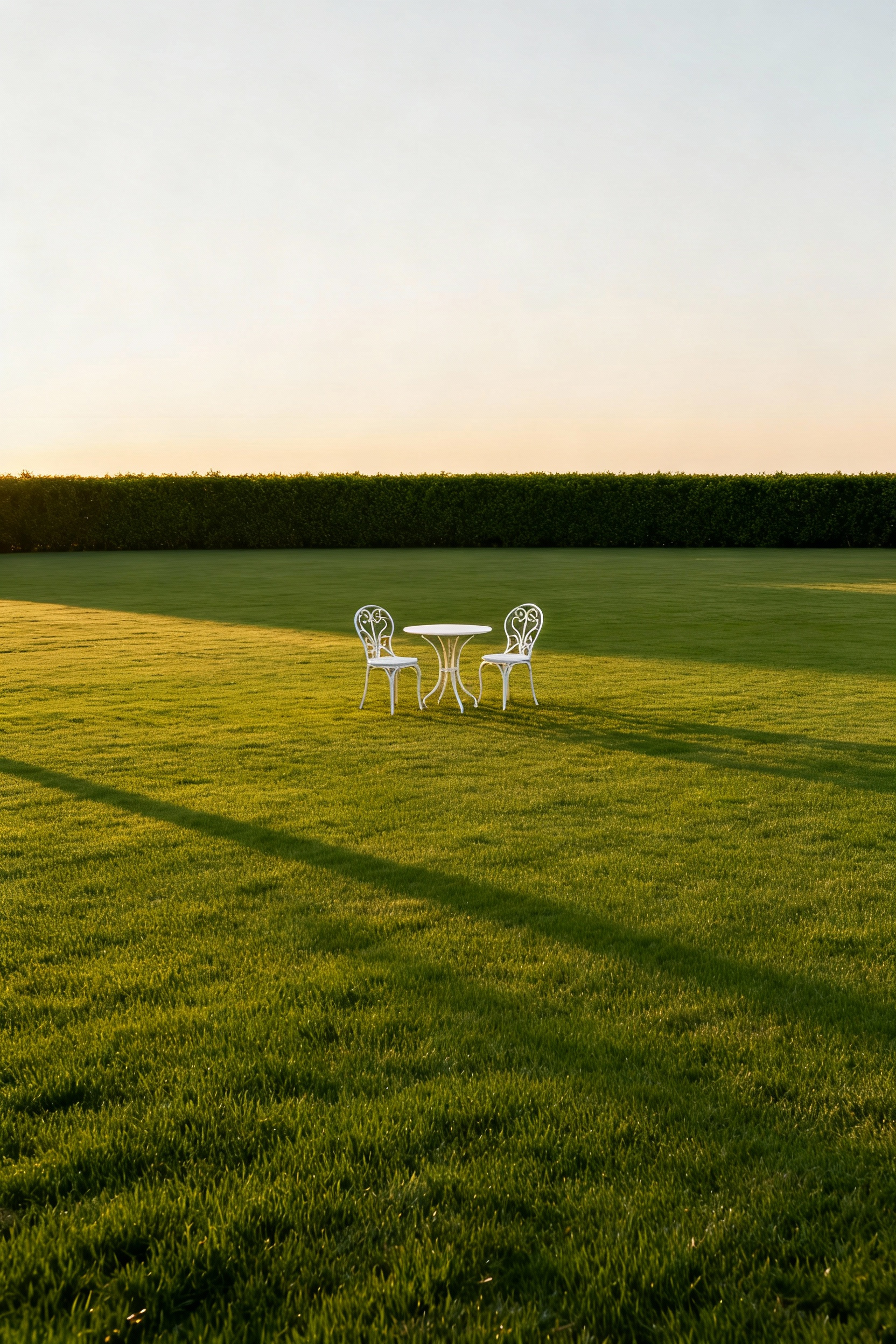
Transforming a lawn into a functional entertainment zone requires constructing an acoustic pocket using both hard and soft architectural elements. Dense, layered vegetation acts as a sound-absorbing barrier, reducing echo and increasing privacy, while structural components like pergolas or low stone walls prevent audio from scattering into the ether. These boundaries should be textured to diffuse sound rather than reflecting it sharply, ensuring clarity without distinct, distracting echoes.
To complete the auditory experience, distinct sensory layers must be integrated to manage the noise floor and psychological transition:
- Biophonic Masking: Position a water feature near the seating area. The continuous, random frequencies of flowing water effectively mask intrusive background noise, such as traffic, reducing listener fatigue and creating a secure sonic backdrop.
- Anthropophonic Transitions: Utilize gravel or textured stone for the approach path. The audible crunch of footsteps acts as a sensory cue, signaling the transition from the open lawn to the intimate zone and priming guests for a shift in social dynamics.
Principle 2: The ‘Green Wall’ Effect—Using Hedges as Sonic Absorbers
To treat a garden boundary merely as a visual screen is to ignore its potential as a sophisticated acoustic diffuser. Much like acoustic paneling in a home theater, a hedge functions by breaking up sound waves rather than simply blocking them. Research indicates that to achieve a measurable auditory shift—averaging a 2.7 dB(A) reduction with potential peaks up to 7.0 dB(A)—the foliage must be dense enough to reduce porosity to below 4.6%. This reduction specifically targets high-frequency irritants, such as tire hiss or wind shear, which are often the most intrusive to conversation. To execute this, prioritize evergreens like Yew (*Taxus baccata*) or Laurel planted in staggered, double rows. This configuration ensures density from the ground up, preventing sound waves from tunneling beneath the foliage while maintaining a consistent acoustic shield year-round.

For environments suffering from low-frequency noise pollution, such as the rumble of heavy engines, foliage alone lacks the necessary mass to impede the sound. In these scenarios, the most effective architectural solution is the construction of an earth berm—approximately 1.5 meters high—planted with a hedge along its ridge. This combination utilizes the earth’s density to absorb deep, resonant frequencies while the vegetation scatters higher tones. Crucially, this barrier must be positioned as close to the noise source as possible. By shortening the distance between the emitter and the absorber, you maximize the acoustic shadow cast over the lawn, significantly dampening the intrusion before it reaches the seating area.
Ultimately, the “Green Wall” effect is as much about psycho-acoustics as it is about decibels. By replacing a jarring view of the street with a lush, living barrier, you alter the brain’s perception of the space, making residual noise easier to ignore. Enhancing this barrier with fragrant species, such as Thuja, introduces an olfactory element that actively competes with the scent of exhaust, completing the sensory transition. This approach transforms the perimeter from a mere property line into a deliberate component of the entertainment space, ensuring the environment feels private, enclosed, and conducive to social connection.
Principle 3: Frequency-Matched Water Features for Urban Noise Masking
To effectively neutralize the persistent drone of urban traffic, one must look beyond aesthetics and address the physics of sound masking. Traffic noise operates heavily within the low-frequency range of 250Hz to 2kHz; a gentle, high-pitched trickle lacks the acoustic weight to compete with this spectrum. Instead, design priorities must shift toward water features that generate high energy in lower frequency ranges. This requires specific physical dynamics: cascading waterfalls crashing over rough stones or streams with significant volumetric flow create a robust auditory profile that mirrors the disruptive hum of vehicles, resulting in a seamless acoustic transformation rather than a chaotic clash of sounds.
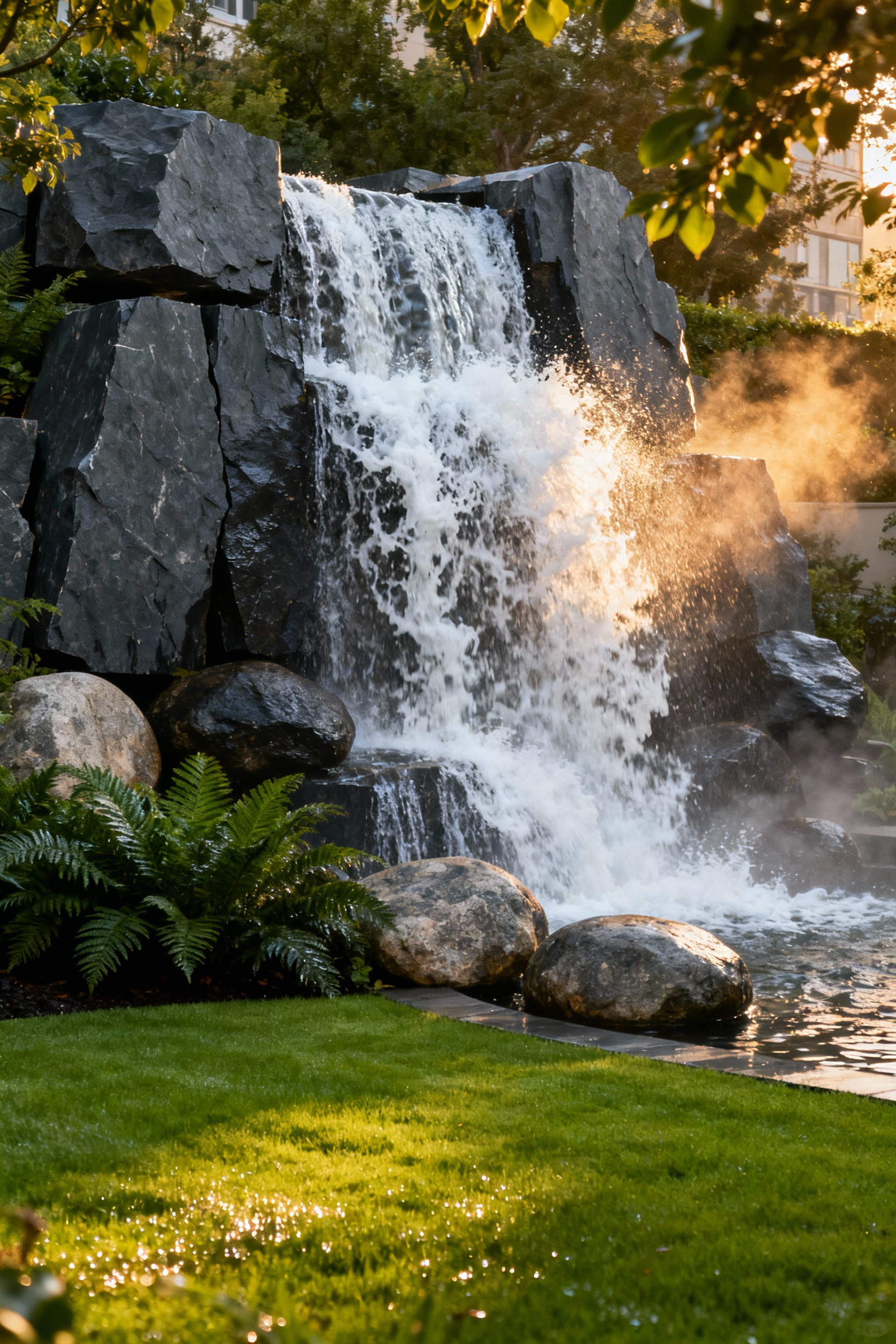
Strategic positioning is just as critical as the feature’s acoustic signature. For the most effective zone of influence, install the water feature at the perimeter, directly adjacent to the source of the intrusion—typically the property line facing the street—rather than near the seating area. This intercepts the noise before it permeates the social space. Ideally, the water feature should be calibrated so its sound level sits approximately 3 decibels below or exactly equal to the ambient traffic noise. This specific balance allows the ear to blend the mechanical and natural sounds, turning a noisy distraction into a backdrop of tranquility.
To achieve the necessary broadband sound profile—essentially a natural form of white noise—opt for large-scale, dynamic architectural elements. The most effective designs for masking intermittent spikes, such as sirens, alongside constant background hums typically produce a consistent output between 40 and 60 decibels. Consider implementing:
- Multi-tiered fountains that create layers of distinct frequencies as water hits different levels.
- Scupper-style features that drive water down with force to increase low-end resonance.
- High waterfalls designed with ample vertical drop to maximize impact noise.
Principle 4: Subterranean Audio—Burying the Bass for Immersive Sound
True luxury in outdoor entertainment creates a captivating soundscape without imposing on the landscape. We achieve this architectural concealment through subterranean subwoofers, often referred to as burial subs, which are designed to eliminate visual clutter and preserve the garden’s aesthetic integrity. By burying the bulk of the enclosure underground, the system leaves only a discreet, ported dome—resembling a small garden fixture—visible above the soil line. This allows the technology to effectively disappear into the foliage, ensuring the garden remains a visual sanctuary even as it transforms into an active, high-fidelity listening environment.
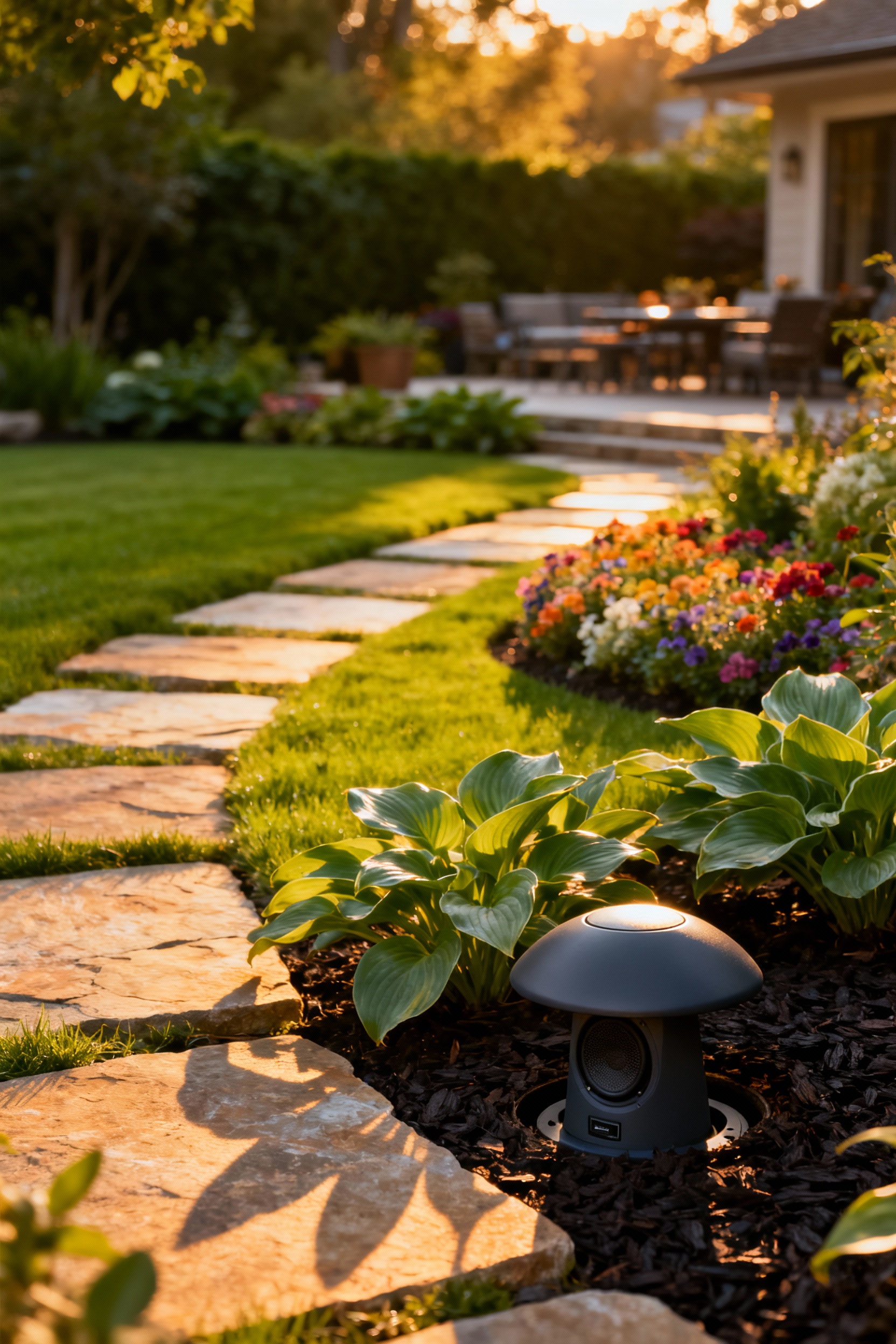
The acoustic argument for “burying the bass” is as compelling as the visual one. Subterranean placement facilitates a deep, resonant bass response that one can feel as much as hear, grounding the audio experience in an earth-rattling low end. By handling these demanding lower frequencies, the subwoofer allows the paired landscape satellite speakers to operate more efficiently, focusing solely on mid and high ranges. The result is a richer, more balanced sound profile that eliminates tinny audio and fills the open air with immersive warmth.
Implementing this principle requires a departure from standard all-in-one outdoor speaker solutions. To survive the elements and deliver professional-grade performance, the hardware demands specific technical infrastructure:
- Dedicated Amplification: Unlike active portable units, buried subwoofers are generally passive and require a separate, dedicated amplifier to drive the necessary power for low-frequency output.
- Ruggedized Construction: To ensure longevity, enclosures must be crafted from burial-rated materials like heavy-duty ABS or HDPE, utilizing weatherized components such as polypropylene cones to withstand moisture and temperature fluctuations year-round.
Principle 5: Visual Zoning—Creating ‘Rooms’ Without Walls in Your Lawn Garden
Effective outdoor design requires treating your lawn with the same architectural rigor as an open-concept living room. Instead of viewing the yard as a singular expanse, you must define zones by purpose to anchor the space’s transformation. Begin by listing desired functions—such as an alfresco dining area, a secluded reading nook, or a dynamic social hub—and assign one primary function to each sector. This functional assignment immediately converts an undefined plot into a purposeful extension of the home’s interior, establishing a clear narrative arc for how the space is inhabited rather than simply observed.
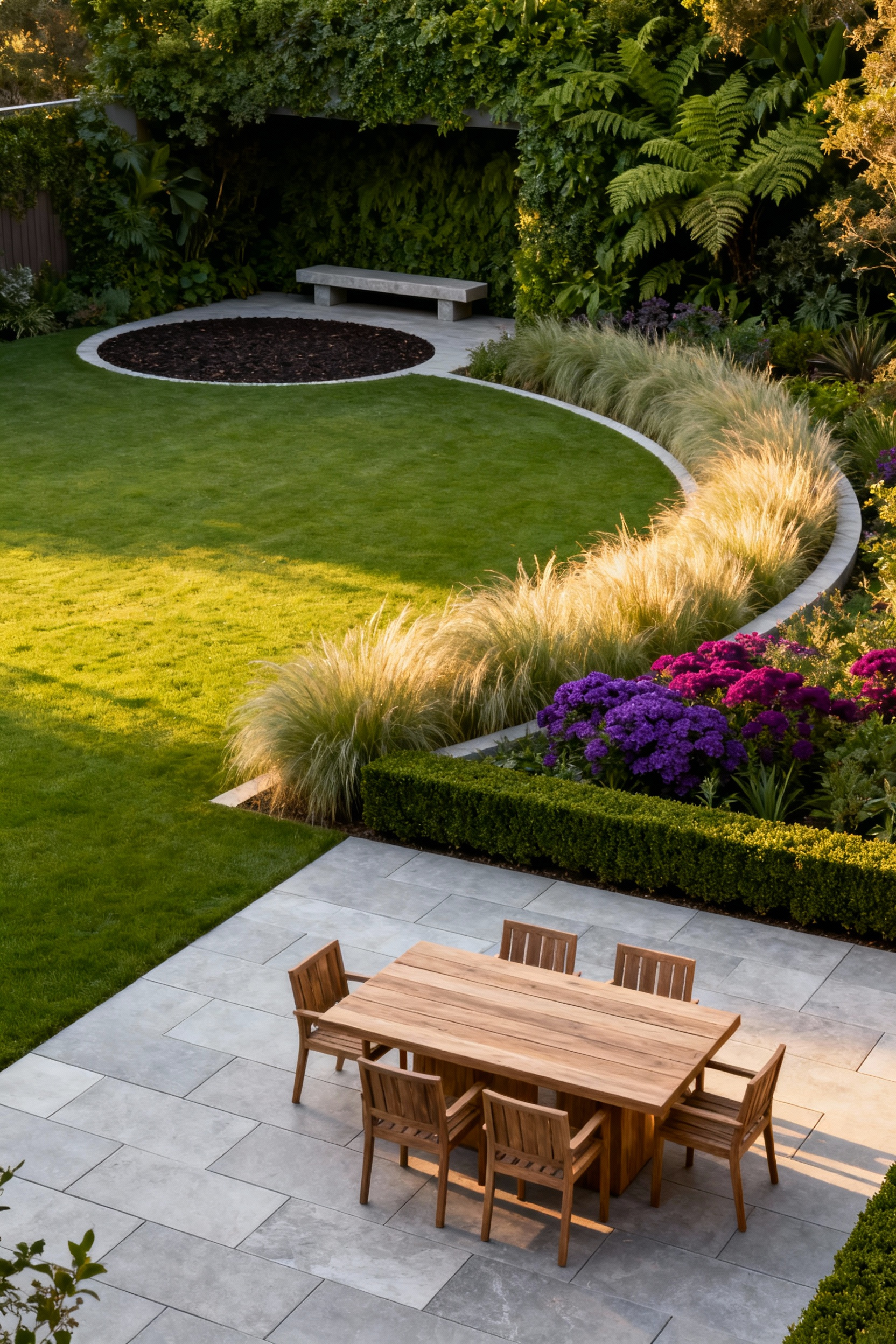
To physically manifest these “rooms” without erecting rigid barriers, apply the interior design triad of flooring, walls, and ceilings to create implied enclosure.
- Flooring: Define the ground plane by transitioning materials; a shift from soft turf to geometric pavers, gravel, or an outdoor rug signals a distinct change in utility.
- Walls: Construct soft boundaries with low hedging, tall grasses, lattice screens, or strategic furniture groupings to offer privacy without sacrificing open sightlines.
- Ceilings: Incorporate a pergola, arbor, or existing tree canopy to instill a sense of intimacy and containment.
While distinct in function, these zones must remain visually cohesive. Limit hardscape materials to two or three selections and connect areas with gently curved pathways, guiding guests on a fluid journey of discovery rather than disjointed navigation.
Finally, integrate strategic lighting to extend the usability of these zones well past sunset and document the emotional experience. Lighting acts as a subtle yet powerful sectioning device; string lights draped over a dining pergola or focused uplighting on a specimen tree not only define the spatial boundaries but also curate the mood. This ensures the garden functions as a high-end entertainment space day and night, creating a welcoming ambiance that draws people out of the house and creates a seamless flow between indoor technology and outdoor comfort.
Principle 6: The ‘Compression’ Entryway—Psychological Transition Points
Creating a functional sanctuary requires more than just open space; it demands a deliberate psychological transition. By implementing the “compression-release” dynamic, you orchestrate a mental recalibration that separates the stress of the public world from the privacy of the garden. A narrow, enclosed threshold—such as a dense hedge archway, a low pergola, or a winding path between vertical plantings—physically constricts the view to induce a moment of necessary introspection. When this tight passage suddenly yields to an expansive lawn or an open patio, the brain registers a profound sense of release and freedom. Without this initial restriction, the spaciousness of the main gathering area lacks emotional impact.

To ensure this transition is effective, the design must engage the senses and alter physical pacing. This is achieved through two specific tactical shifts:
- The Sensory Switch: Line the compressed path with highly fragrant, resilient herbs like Rosemary or Lavender. Brushing against these plantings releases a strong olfactory cue, acting as a therapeutic trigger that overrides external distractions and grounds the visitor in the present.
- Rhythmic Disruption: Replace wide, efficient walkways with irregular stepping stones or textured gravel. This change forces a slower walking pace and draws attention to one’s footing, creating a moment of mindfulness that prepares guests for the stillness of the sanctuary.
Borrowing from the Japanese principle of *genkan*, this threshold serves as a distinct transformation arc rather than a mere walkway. By integrating grounding materials like rough-hewn stone, wood, or bamboo screening, you establish a clear boundary between the “busy outer world” and the “inner retreat.” This architectural signaling is crucial for social spaces; it ensures that by the time guests reach the main entertainment zone, the environment has already done the heavy lifting of relaxation, allowing the technology and comfort of the space to perform at their peak.
Principle 7: Sightline Engineering—Integrating the Culinary Host
Effective entertainment design demands that we treat the outdoor kitchen not as a secluded utility station, but as the primary social hub of the garden. Sightline Engineering corrects the common error of sequestering the host against a perimeter wall, instead orienting the chef toward the gathering to transform cooking into a performance. To achieve this, prioritize Island, L-shaped, or U-shaped layouts. These configurations act as architectural tools that create a built-in audience, facing the main cooking station—be it a grill or pizza oven—directly toward the seating area. This structural shift eliminates the physical barrier between production and consumption, ensuring the host remains an active participant in the conversation rather than a detached service provider.
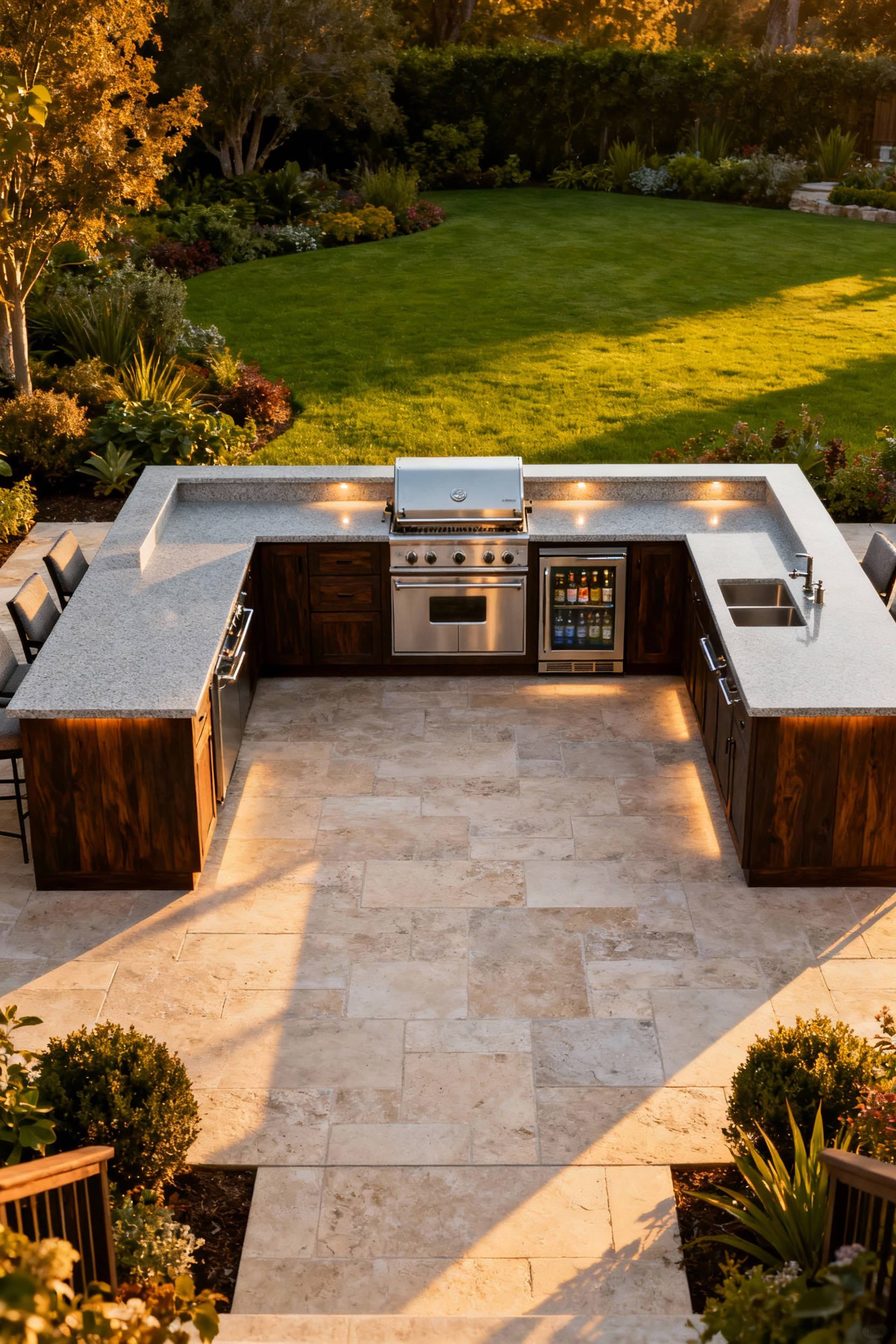
The grill itself should function as the sensory anchor of the space, much like the screen in a media room, leveraging the visuals of the fire and the sounds of the sizzle to draw guests in. To capitalize on this “Fire Therapy,” integrate bar-height counter seating adjacent to the workspace, separated safely from the heat source. This arrangement fosters “shoulder-to-shoulder” interaction, a psychological orientation proven to facilitate low-pressure, deep social bonding. It allows guests to converse with the cook while simultaneously facing outward toward the larger party, effectively blurring the distinction between the culinary workspace and the social lounge.
Finally, sustain this connection by tightening the proximity of surrounding activity zones. Sightline Engineering fails if the chef must constantly abandon the post to retrieve ingredients or beverages. Cluster dining areas and support stations—such as mini-fridges or bar taps—within the immediate periphery of the cooking island. By keeping these amenities accessible to both the host and the guests, you prevent the cook from being isolated by logistics and encourage the crowd to linger. This cohesive zoning transforms the patio into a unified ecosystem where the chef acts as the visible conductor of the experience.
Principle 8: The Anti-Glare Garden—Orientation Logic for Outdoor Screens
The success of an outdoor entertainment zone relies entirely on mastering the sun’s path. Simply put, direct solar exposure is the enemy of visual fidelity. To combat this, the core orientation logic dictates placing the screen on a wall or structure that faces North, utilizing natural lighting patterns to ensure the display remains in shadow during peak usage hours. If a North-facing alignment isn’t architecturally feasible, the screen must reside within a dedicated shelter, such as a deep pergola or gazebo, creating a pocket of perpetual shade. This positioning preserves the hardware’s longevity and mitigates the washout effect caused by high-lumen daylight. Crucially, designers must avoid West-facing positions for evening-centric spaces; the low angle of the setting sun creates an intense, direct glare that no amount of screen brightness can overcome.
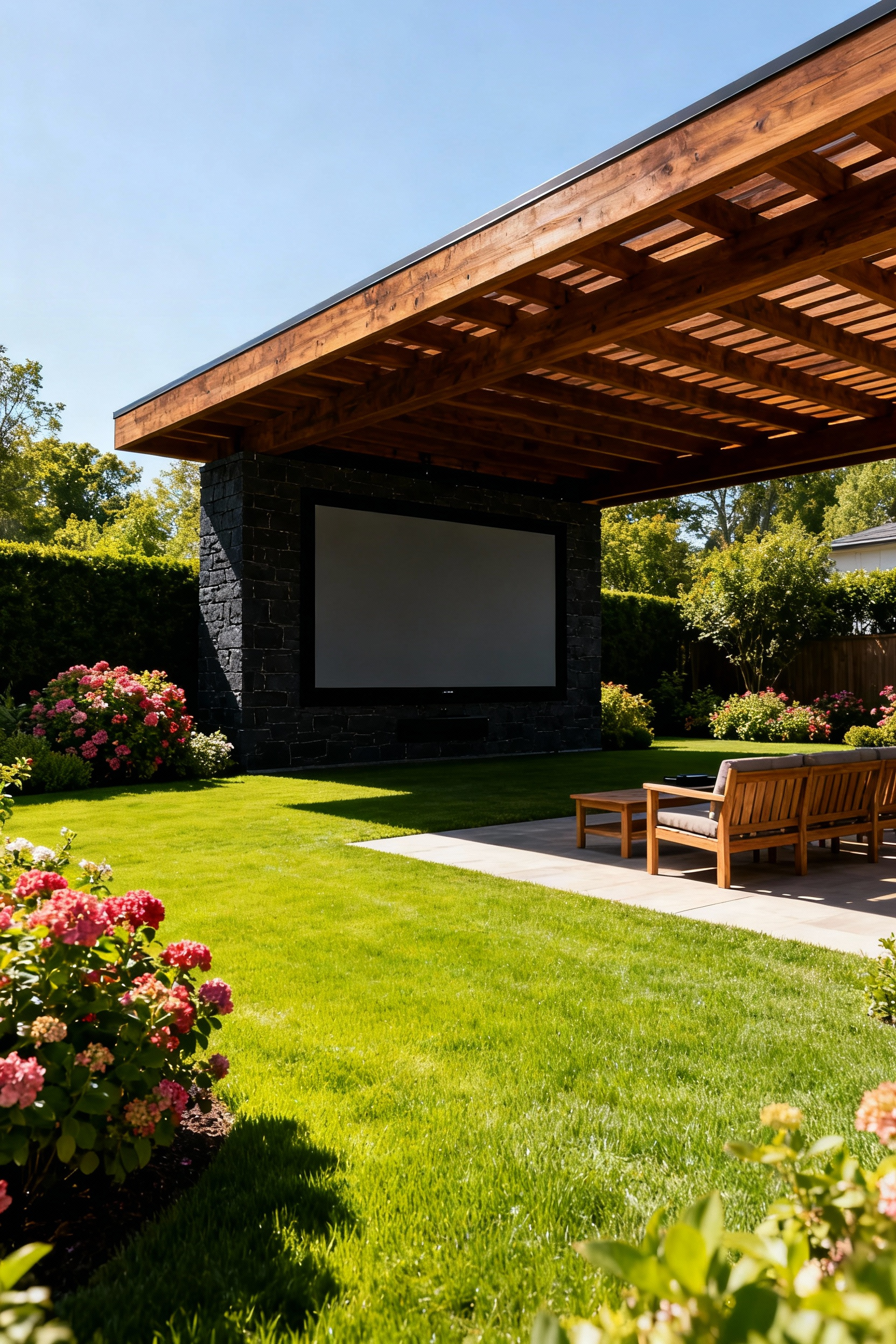
Beyond cardinal direction, the immediate environment must be engineered to manage light reflection. We create an “anti-glare garden” by prioritizing materials that absorb rather than scatter light. Surrounding hardscapes should feature matte finishes—think rough-hewn stone or natural timber—instead of sleek concrete or polished metals that bounce indirect glare onto the display surface. Integrating nature-based structures further enhances this optical control; a dense hedge or green wall serves as a non-reflective backdrop, while a slatted pergola roof with climbing plants diffuses harsh rays into soft, manageable shadows. Furthermore, screen elevation requires a departure from indoor mounting standards. Keep the display lower, ideally at eye level when seated (approximately 42 to 48 inches from the ground), to prevent the bright, open sky from reflecting off the glass and dominating the viewer’s field of vision.
Because outdoor lighting conditions are transient, the infrastructure must offer dynamic control rather than static rigidity. As the seasons shift the sun’s trajectory, a fixed screen often becomes unusable during specific windows of time. Implementing adjustable mechanisms ensures the space transforms from an open-air lawn to a functional theater environment on demand:
- Articulating Mounts: utilize heavy-duty outdoor swivel mounts to allow for micro-adjustments, enabling the user to physically angle the screen away from creeping shafts of sunlight.
- Retractable Shading: Pair the viewing structure with retractable canopies or shade sails to provide instant light control, effectively creating a darkened “outdoor room” regardless of the weather or time of day.
Principle 9: Lighting Layers—Transitioning from Cocktail Hour to Cinema Mode
The transition from a social gathering to an immersive viewing experience relies on a deliberate arc of deactivation, shifting the environment from a High-Function layer to a Low-Function, High-Drama setting. During the initial “Cocktail Hour,” the space utilizes a full spectrum of illumination: functional brightness for safety, warm social lighting for ambiance, and accent lights to highlight landscape architecture. However, as the evening pivots to “Cinema Mode,” the goal is to systematically eliminate high-intensity and direct-glare sources. By deactivating the functional and social layers, you reduce visual noise, leaving only the softest, indirect light—such as a subtle ambient wash on a water feature or a single moonlit tree—to maintain drama without distraction.
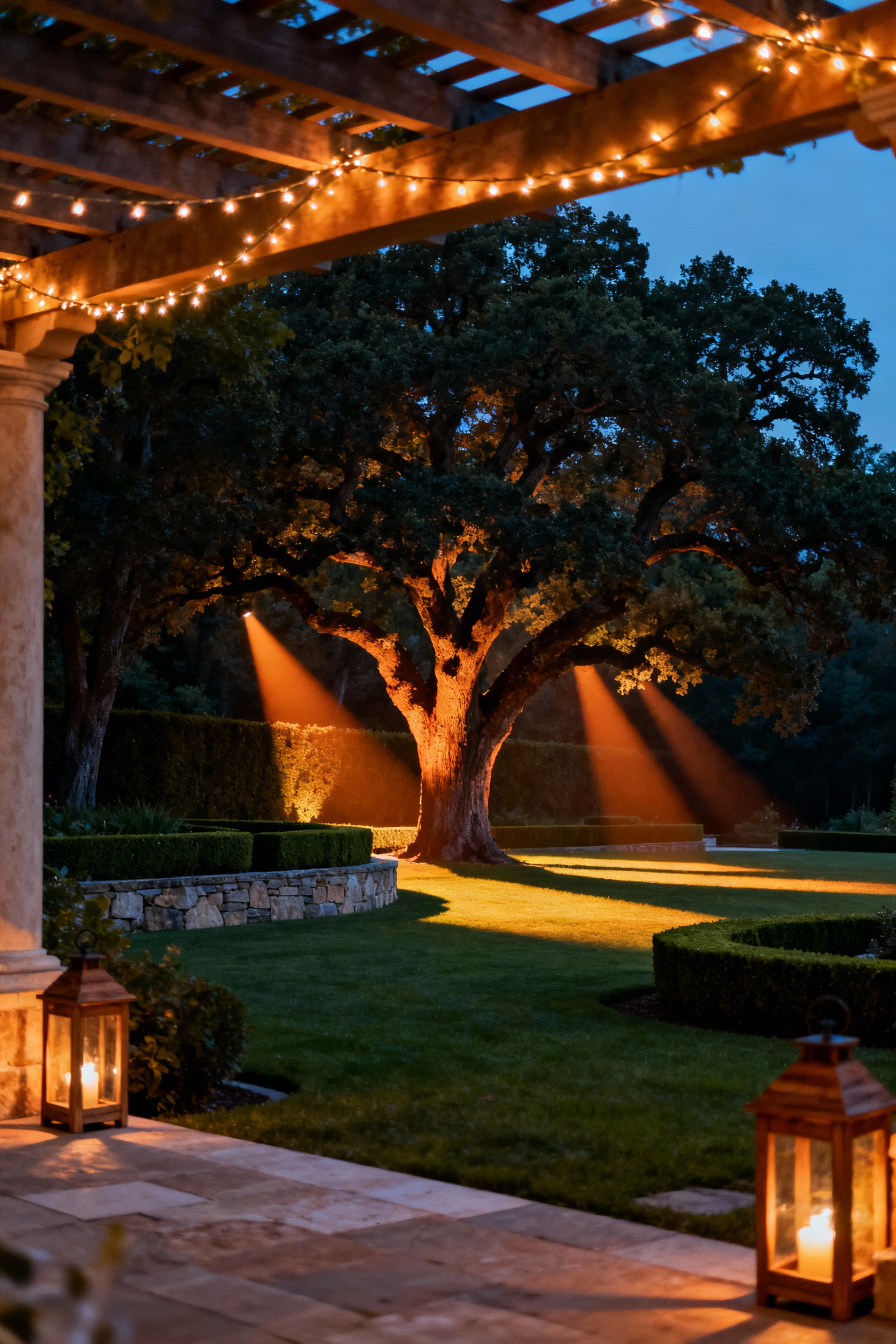
This emotional shift is best executed through the precision of smart RGBW LED systems, which allow for instantaneous changes in both intensity and color temperature. While the pre-show atmosphere thrives on inviting, very warm light (around 2200K), the viewing mode benefits from a transition to a cooler, diffused white (3000K–4000K) that mimics natural moonlighting. To achieve this seamless sensory shift, program two specific one-touch scenes into your control interface:
- Cocktail Hour Scene: Sets string lights and path markers to 100% intensity with a warm color palette, maximizing social energy and visibility.
- Cinema Mode Scene: Executes extreme dimming to 10% or less and completely cuts power to path and step lights, leaving only grazed or shadowed elements to foster a mood of mystique and focus.
Principle 10: The ‘Soft’ Lawn—Integrating Rugs and Textiles on Turf
Transforming a functional lawn into a sophisticated “outdoor living room” requires a deliberate focus on sensory integration. By introducing outdoor textiles, you instantly elevate the experience, replacing the potentially scratchy texture of turf with a warm, soft surface that invites barefoot interaction. This textile layer serves as a psychological anchor, defining an intimate zone within the vastness of the garden specifically for relaxation and social connection. To maximize this effect, leverage biophilic design trends; rugs featuring wavy motifs or leaf-inspired prints create a seamless visual link to the surrounding nature while establishing a distinct, high-comfort destination.

However, this architectural softening must be executed as an ephemeral installation rather than a permanent fixture. The “Soft Lawn” is a temporary transformation, contrasting the luxury of the textile with the biological needs of the living surface beneath it. Because grass requires consistent access to sunlight, air, and water, prolonged coverage is detrimental to the lawn’s health. Therefore, the placement of rugs should be treated as a specific, short-term chapter in the garden’s use—ideal for a weekend gathering or a focused meditation session—rather than a static design feature.
To maintain the integrity of both the entertainment space and the living turf, adopt a transformation arc based on reciprocity and rigorous maintenance. This ritual ensures the space remains healthy and verdant for future use:
- Limit Duration: Restrict textile placement to the duration of the event to prevent grass discoloration and root damage.
- Rotate and Remove: Immediately following use, remove the rug to restore the lawn’s exposure to the elements.
- Dry for Longevity: Ensure the textile is thoroughly dried before storage to prevent the growth of mold and mildew, preserving the rug’s quality for the next transformation.
Principle 11: Thermal Architecture—Invisible Heat and Mist Zones
Effective entertainment spaces rely on more than just audiovisual fidelity; they require precise thermal management to ensure guest comfort. Outdoor gathering areas often suffer from the Urban Heat Island (UHI) effect, where heat-absorbing hardscapes like concrete and asphalt store solar energy and radiate it back, creating uncomfortable “invisible heat.” To counter this, design must prioritize evapotranspiration zones—replacing expansive hard surfaces with dense, layered plantings and vigorous groundcovers. This biological cooling mechanism allows plants to release water vapor that absorbs ambient energy, potentially dropping local temperatures by up to 9°F (5°C) and transforming a stifling patio into a functional thermal refuge.

Control over radiant heat is equally critical for evening socializing. Dark or non-reflective materials act as thermal batteries; if placed facing the afternoon sun, they will emit stored heat well past sunset, disrupting the usability of the space. You must strategically shield these surfaces using vertical gardens, earth berms, or vine-covered pergolas to block solar gain. In regions with lower humidity, shade alone can reduce the effective temperature felt by guests by 7-15°C. By minimizing thermal storage, you ensure the environment remains temperate and inviting long after the sun goes down.
To fully curate the atmospheric experience, integrate active “Mist Zones” that leverage hydro-thermodynamics and sensory design:
- Evaporative Cooling: Install high-pressure misters or open water bodies near seating areas to rapidly cool the surrounding air through evaporation.
- Auditory Masking: Use the sound of moving water to enhance serenity, masking external noise while psychologically reinforcing the sensation of coolness.
- Airflow Optimization: Design layout openings to channel breezes through these wet zones, speeding up evaporation and preventing stagnant heat pockets in your outdoor rooms.
Principle 12: Decentralized Beverage Stations to Optimize Traffic Flow
Relying on a centralized refreshment hub often creates a “bottleneck effect,” stagnating visitor movement and diminishing the immersive quality of the environment. To mitigate this, decentralized beverage stations should serve as strategic dispersal anchors. By positioning specialized stations at critical junctures—such as the far end of a garden loop or adjacent to high-traffic exhibits—you effectively draw crowds away from entry points and through the full breadth of the venue. This arrangement ensures maximum exhibit exposure and maintains a fluid, comfortable pace for social interaction, preventing the fatigue associated with crowded, single-location food courts.
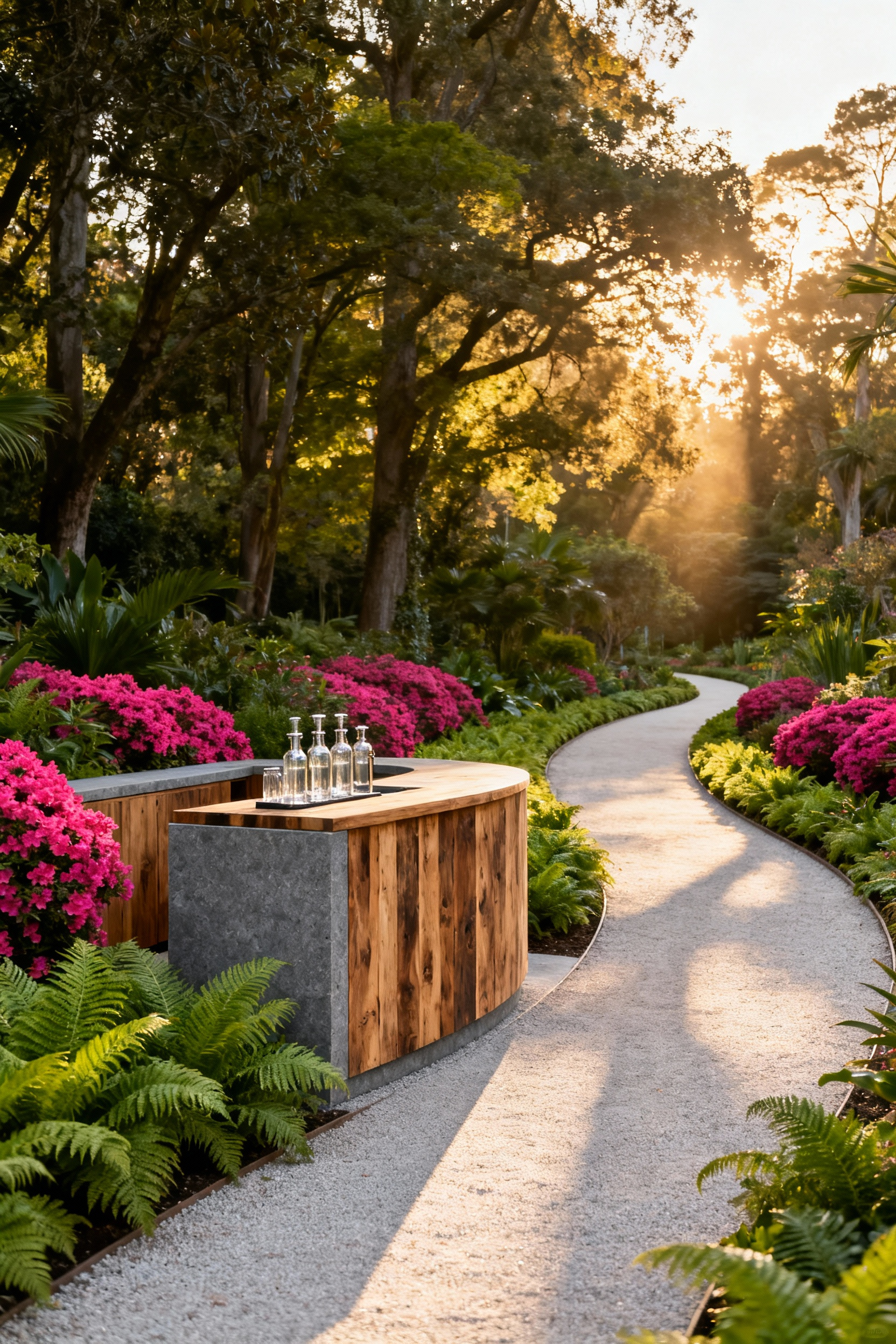
Operational efficiency and narrative integration are critical for these satellite locations to function correctly. Implementing mobile order and self-service technologies eliminates the friction of standing in line, optimizing traffic flow and enhancing guest hydration and comfort. Furthermore, these stations must seamlessly extend the garden’s character rather than disrupt it. Naming and theming a station based on its immediate surroundings—such as a “Native Pollinator Lemonade” stand near a wildflower meadow—transforms a utilitarian stop into a coherent chapter of the visitor’s narrative journey.
The physical design of these stations should prioritize sensory engagement and sustainability to deepen emotional resonance. Utilizing reclaimed glassware and sourcing local, seasonal ingredients elevates the presentation from utilitarian to artisanal, signaling a commitment to eco-conscious luxury. When a station creates a multi-sensory moment—combining the aromatic steam of an herbal tea station with the visual texture of rustic design elements—it reinforces cultural authenticity and ensures the refreshment break enhances, rather than interrupts, the overall design aesthetic.
Principle 13: Modular Furniture Systems for Flexible Lawn Usage
Static seating arrangements often stifle the potential of an outdoor entertainment area; to maximize utility, the layout must follow a function-first transformation arc. Modular systems allow the lawn to shift instantly from a cohesive, cinema-style sectional for cinematic viewings to separated conversation groupings for cocktail hours. This versatility is largely achieved through lightweight aluminum frames and hidden connectors, enabling solo reconfiguration within minutes. By breaking the monotony of a single fixed layout, these systems provide the spatial agility required for dynamic social gatherings without demanding heavy lifting.
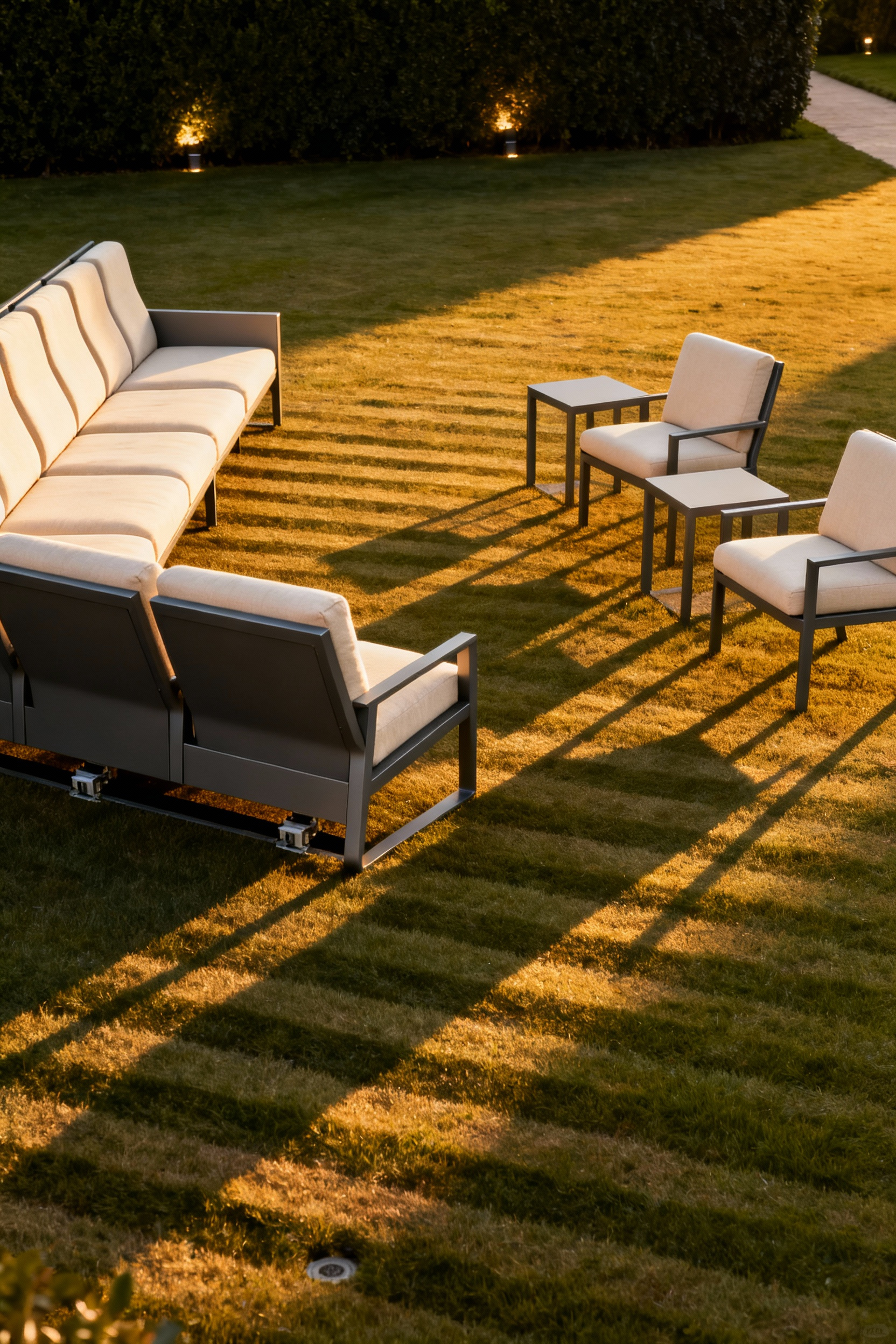
Beyond flexibility, the sensory experience hinges on material selection and strategic zoning. High-traffic entertainment zones require materials that balance durability with tactile comfort, such as Grade A teak which naturally resists rot, or all-weather synthetic wicker derived from recycled plastics. For the upholstery, prioritize solution-dyed fabrics like Sunbrella or Olefin; these offer the deep-seating comfort necessary for long events while allowing for easy cleaning. These components act as the building blocks for effective zoning, allowing you to carve out distinct areas—such as a reading nook or a primary lounge—within a large or irregularly shaped lawn, preventing the space from feeling sparse or underutilized.
Ultimately, selecting a modular system is an investment in emotional longevity and scalability. Rather than viewing outdoor furniture as a static purchase, treat it as an evolving infrastructure that grows or shrinks with your household’s needs. A robust modular line offering individual components—such as armless chairs, corners, and storage ottomans—ensures that the space remains functional as entertaining habits change over time. This scalability eliminates the stress of replacing entire sets, securing a long-term, adaptable foundation for your outdoor lifestyle.
Principle 14: Smart Ecosystems—Voice Control for the Great Outdoors
The integration of voice control into outdoor spaces fundamentally alters the “Effortless Maintenance” transformation arc, shifting the narrative of outdoor care from a time-consuming chore to a hands-free command. This technology significantly reduces the mental load associated with property management, allowing the homeowner to prioritize the social atmosphere over logistical maintenance. Rather than navigating complex hardware interfaces or manual timers, users can translate complex processes into seamless interactions with simple directives like, “Activate the evening garden scene” or “Water the backyard for 15 minutes.” This approach focuses on the time and mental effort saved, ensuring that technology serves the design intent by preserving the host’s energy for their guests.

Furthermore, voice-activated ecosystems serve as a democratizing force for the “Aspiring Curator.” Through principles of emotional design, these smart systems act as an invisible mentor, empowering users who lack prior horticultural experience to become effective caretakers instantly. The ecosystem functions as a reliable supporting character, utilizing real-time monitoring and automated rules based on sensor data to ensure the user never fails in their maintenance duties. By handling the nuance of plant health and environmental monitoring, the technology creates a safety net that allows the homeowner to enjoy the aesthetic benefits of a lush, curated environment without the anxiety of mismanagement.
To deliver a truly high-performance sensory experience, these systems must operate on a robust, data-driven back-end capable of contextual understanding. It is not enough for a system to simply execute binary on/off tasks; it must utilize Natural Language Processing (NLP) to interpret the intent behind a command relative to current conditions. For example, a command to “start the lawn’s drought cycle” triggers a specific protocol informed by real-time local weather data and soil moisture metrics. This connectivity ensures that voice commands lead to accurate physical results—watering only when necessary or adjusting lighting to match the specific ambient needs of the evening—thereby maintaining the perfect balance between technological efficiency and environmental comfort.
Principle 15: The Universal Lawn—Accessibility in Entertainment Design
True hospitality demands equitable use, meaning the outdoor entertainment zone must be accessible through a singular, inclusive route rather than segregated pathways. We must replace traditional, uneven turf or loose aggregate with firm, level surfaces like compacted decomposed granite, resin-bound gravel, or textured concrete. These materials provide a non-slip foundation capable of supporting mobility devices, transforming the “lawn” from a potential obstacle course into a seamless extension of the indoor living space. By eliminating the need for separate ramps or distinct access points, the design removes social stigma and ensures every guest can navigate the environment with dignity and independence.
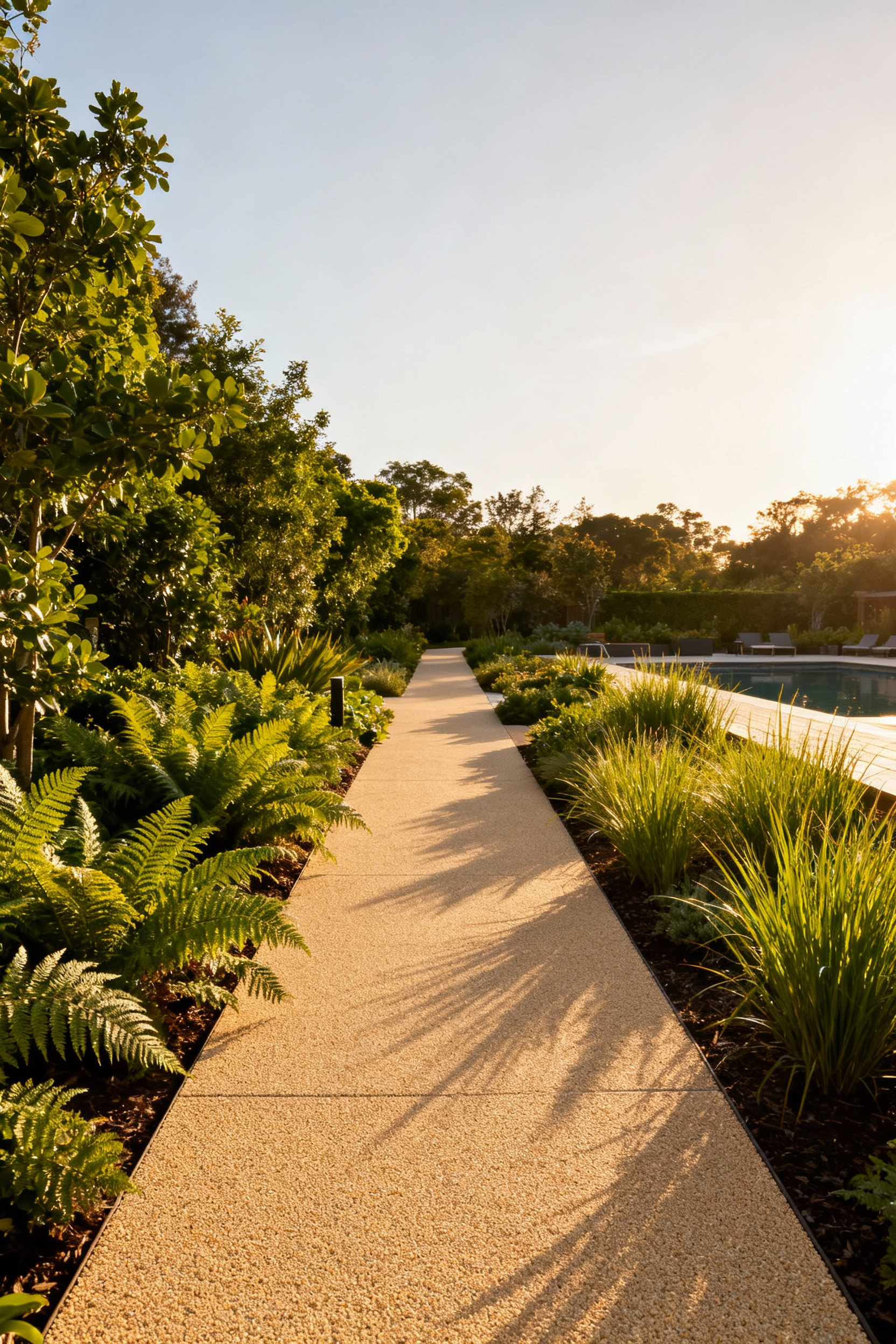
Immersion in an entertainment space extends beyond audio-visual technology; it requires a multi-sensory approach to physical navigation. To create a safe and intuitive environment for users with visual impairments or sensory processing needs, the landscape must offer redundant cues. Design the journey through the garden to engage more than just sight by embedding specific architectural and organic features:
- Tactile and Visual Delineation: Use high-contrast colors and distinct tactile paving elements to clearly mark route edges and transition zones.
- Ambient Guidance: Install pathway lighting to make navigation predictable regardless of ambient conditions.
- Sensory Wayfinding: Incorporate fragrant plants and varied textures, such as smooth grasses or rushing water features, to provide auditory and olfactory guideposts along the path.
To fully integrate comfort into the social experience, the design must facilitate low physical effort. Integrating elevated elements, such as raised garden beds or planting tables positioned 24 to 36 inches high, invites participation from a seated or standing position without requiring bending or strain. These structures should be designed with adequate knee space to accommodate wheelchairs, allowing guests of all abilities to interact with the space—whether they are harvesting garnish for cocktails or simply enjoying the flora during a gathering. This focus on ergonomic accessibility ensures that the outdoor narrative remains a shared experience for all present.
Conclusion: The Garden as the Ultimate Social Theater
Viewing the domestic garden merely as an obligation of maintenance ignores its true power as a performance space. Your lawn functions as a modern proscenium arch, framing a narrative that extends far beyond simple curb appeal or social conformity. By treating sensory design as emotional set dressing and acknowledging the resilience required to cultivate growth, you transform a static display of status into a dynamic broadcast of character. This design shift allows you to curate an environment that does not just signal affluence, but actively directs the social and psychological tone of your gatherings through tactile and acoustic choices.
Ultimately, the most compelling entertainment spaces seamlessly blend technology, comfort, and authentic expression. As you refine your home’s integration of indoor luxury and outdoor living, remember that the garden is the stage where your personal values are premiered to the public. Begin by auditing your current landscape for narrative gaps; identify one area of monoculture to disrupt with a deliberate sensory element—such as a water feature for acoustic texture or a rewilded patch—to instantly elevate the production value of your social theater. This holistic strategy ensures your refined lawn garden transforms into a functional, highly sophisticated extension of your luxury home.