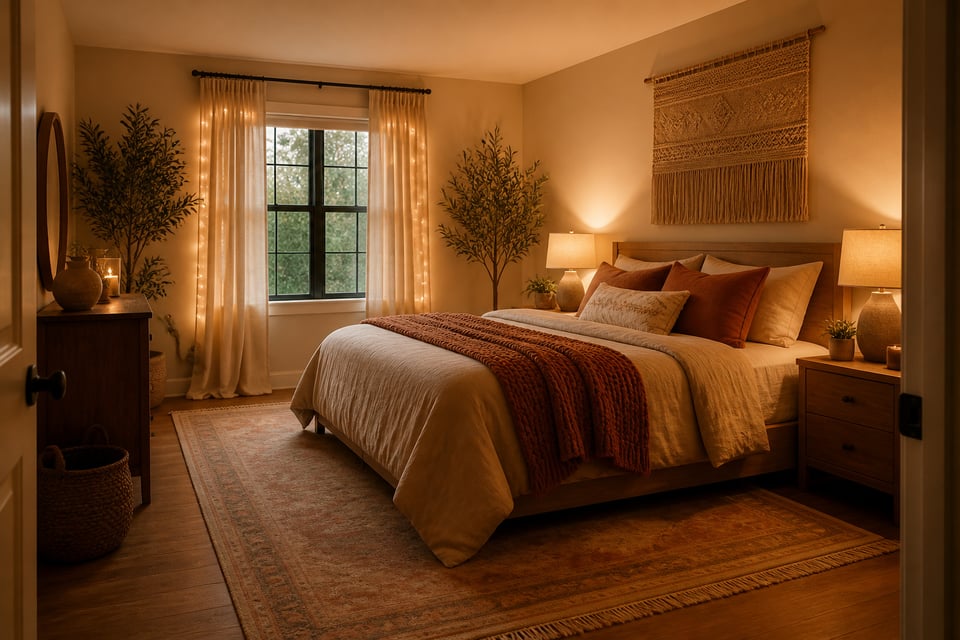
There’s a moment most of us have had — standing in the bedroom doorway, looking at a space that works perfectly well and yet doesn’t feel like a place you want to be. The bed is made. The furniture fits. But the room doesn’t pull you in.
That gap between *functional* and *restorative* is exactly what cozy bedroom decorations are designed to close. As someone who studies the psychology of color and environment, I can tell you: the difference between a room that feels cold and one that feels like a refuge is almost never about furniture. It’s about light, texture, scent, and layered signals your brain reads as safety and warmth.
Every one of those signals is adjustable — often for less money than you’d expect. These seventeen cozy bedroom decoration ideas work because they’re grounded in how human perception actually functions, not just in what looks pretty on a mood board. Whether you’re starting from scratch or refreshing a room that’s almost there, this guide gives you the tools to transform how your bedroom feels.
1. Layered Warm Lighting to Shift Your Bedroom’s Entire Mood
Lighting is the fastest, highest-leverage change you can make to a bedroom. It’s also the most frequently done wrong. Most bedrooms rely on a single overhead fixture. That approach works fine in a kitchen. In a bedroom, it actively works against the coziness you’re trying to create.
Why Lighting Color Temperature Is the Single Fastest Mood Lever
The science is clear. Lighting color temperature — measured in Kelvin — directly affects melatonin production and perceived warmth. The 2700K–3000K warm white range mimics the amber tones of sunset and firelight. It triggers a physiological shift toward relaxation. Harvard research found people exposed to warm evening light fell asleep an average of 19 minutes faster than those under cool-toned lighting. That’s not a small difference.
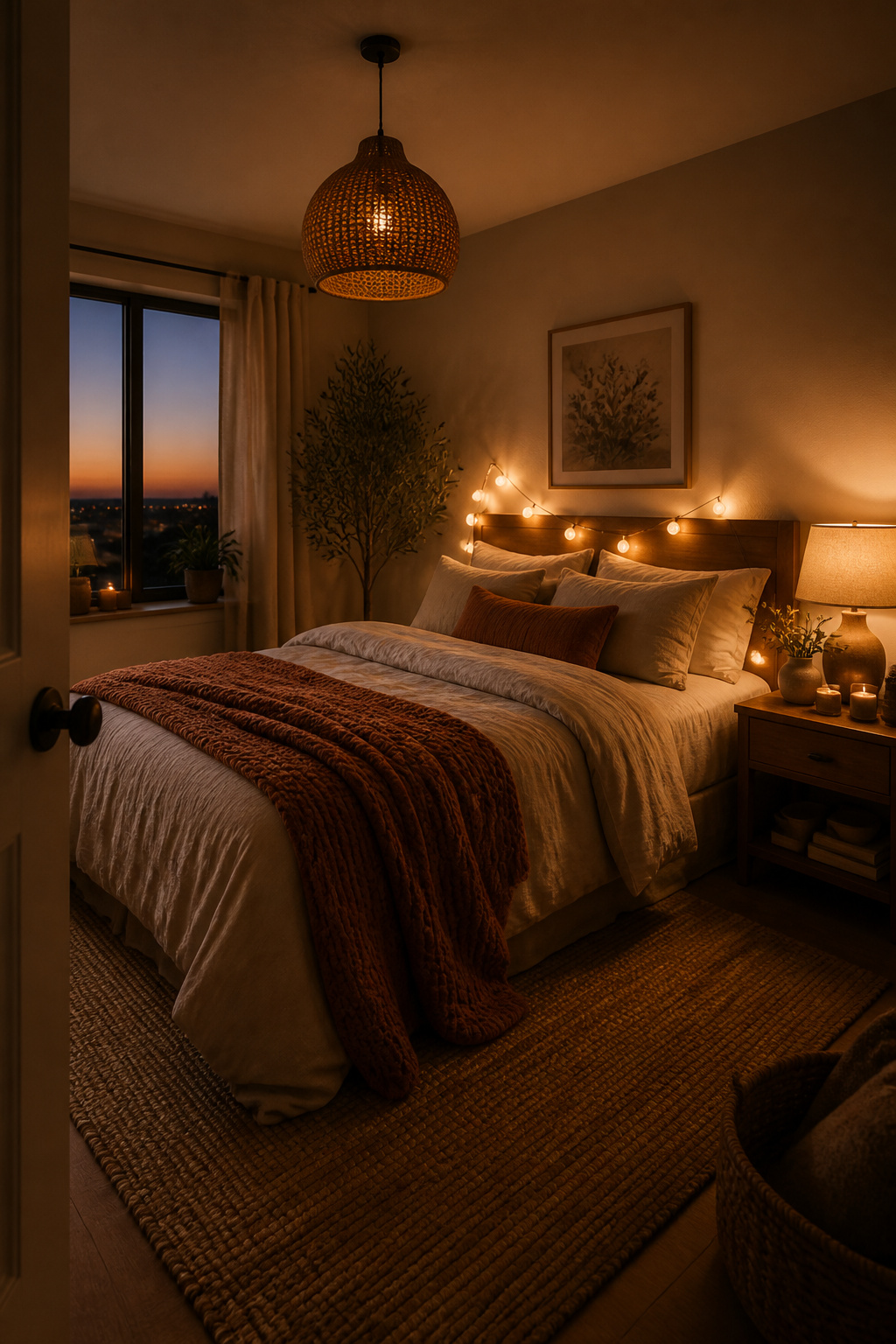
Layering means three levels. First: ambient, a soft overhead source on a dimmer or replaced by a warm pendant. Second: task, a bedside lamp or wall sconce positioned to light reading without flooding the whole room. Third: accent, a secondary lamp, string lights, or a candle that adds a third visual layer at a lower height. The layering itself is psychologically important — it creates depth and visual warmth that a single source never achieves.
For bulbs, look for “warm white” or “soft white” with a Kelvin rating between 2700K and 3000K. Edison-style filament bulbs, globe bulbs with visible filaments, and candle-flame shapes all work well here. If you’ve already nailed the warmth in your common areas, similar cozy living room design ideas apply directly in the bedroom too.
The biggest mistake to avoid: relying solely on one overhead light, regardless of its color temperature. A single source creates flat light and harsh shadows — clinical rather than cozy.
2. Plush Throw Blankets in Earthy, Psychologically Warm Tones
A throw blanket is one of those cozy bedroom decorations that works on at least three levels simultaneously. It’s also one of the easiest and most affordable cozy bedroom decorations to add — typically $30–$80 for something that reads as genuinely high-end. Most people only think about one.
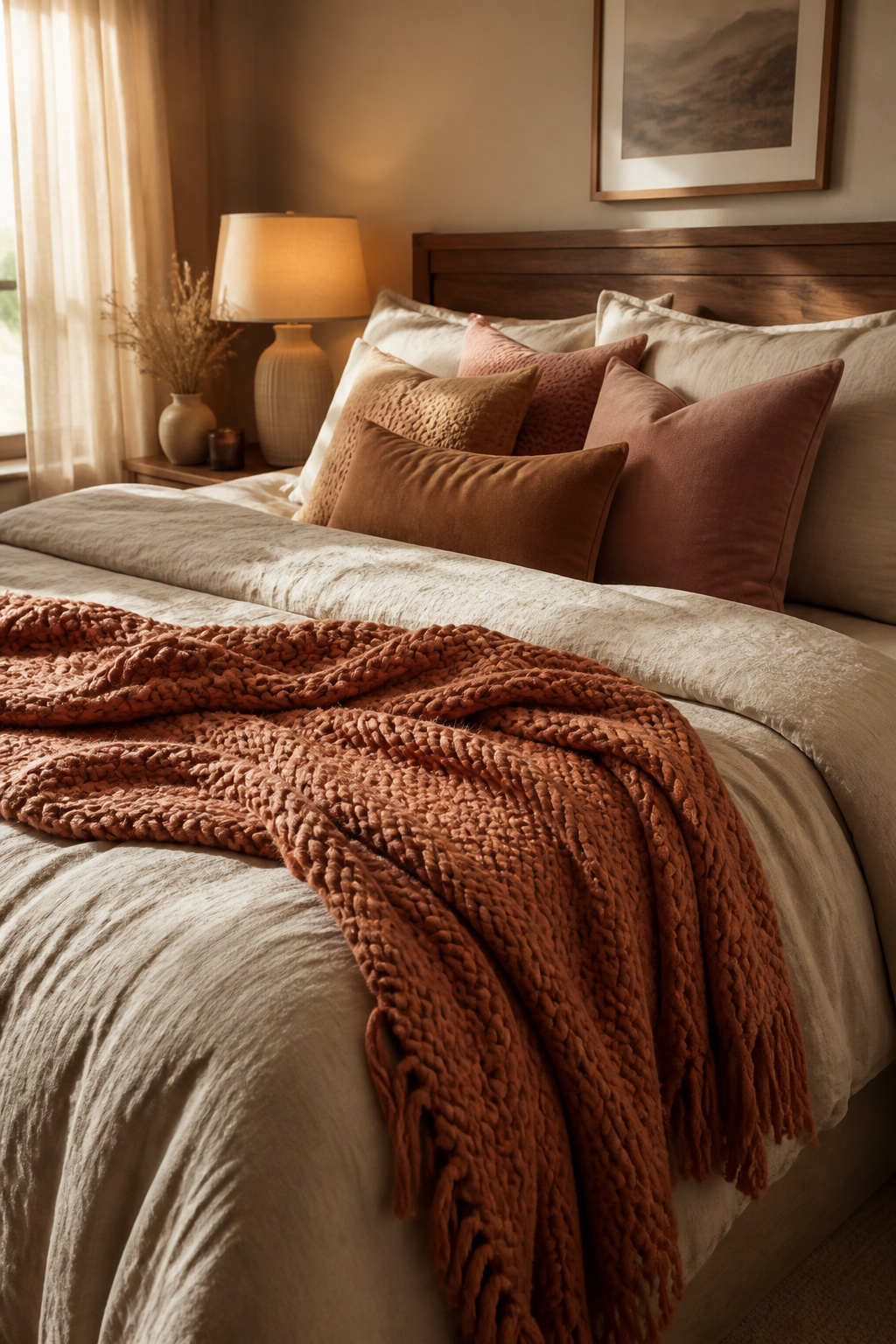
The obvious function is physical warmth. But throws also add tactile richness that your eyes read as comfort before you’ve touched the blanket. A smooth duvet against a chunky knit throw creates textural contrast — the visual shorthand for a space where comfort is the priority.
The third level is color psychology. Terracotta, ochre, camel, and dusty rose are reliably warm-feeling colors. They’re drawn from the same visual vocabulary as fire, earth, and late-afternoon light. These are the hues humans have associated with warmth and shelter for millennia. Cool grays, crisp whites, and navy blues lack those subconscious associations entirely.
For maximum layering, choose a throw with a noticeably different texture from your duvet. If your bedding is smooth cotton or sateen, go for a chunky knit or waffle-weave throw. If you have linen bedding, a velvet or faux-fur throw adds the contrast. Drape it casually across the foot of the bed, folded to one side, or gathered at the corner. The deliberately imperfect placement reads as lived-in rather than staged.
Avoid buying throws in the same fabric weight and color family as your duvet. That creates visual monotony rather than the layered richness that signals genuine coziness.
3. A Gallery Wall of Personal Photos and Meaningful Art
Environmental psychology research is remarkably consistent on this point: personalized spaces feel more comfortable and restorative than aesthetically beautiful but impersonal ones. A gallery wall featuring your own photographs and art that genuinely means something to you will make your bedroom feel cozier than any expensive abstract print from a design-forward gallery.
Your brain constantly scans your environment for cues about whether a space belongs to you. Personal imagery is one of the most direct signals that it does. That’s why hotel rooms, however luxurious, rarely feel cozy in the same way a personally decorated bedroom does.
Building a gallery wall doesn’t require design training. Start by collecting ten to fifteen pieces across two or three size categories. Lay them out on the floor first to find a configuration you like before committing to any nails. The most cohesive gallery walls aren’t perfectly symmetrical. They’re unified by a shared color palette, mat color, or frame finish rather than rigid geometry.
For detailed guidance on arrangement, bedroom gallery wall design steps walks through the full workflow from planning to final placement.
The most common mistake: hanging gallery wall pieces too high. Most people go three to four inches above the natural eye-level mark because it *feels* correct up close. From across the room, it looks disconnected from the furniture below. Center your arrangement at approximately 57 to 60 inches from floor to the visual center of the grouping.
4. Warm-Toned Paint as the Foundation of Cozy Bedroom Decor
If there’s one item on this list that delivers the highest transformation per dollar, it’s paint. A full gallon costs $50–$70. The psychological impact of getting the color right — or wrong — affects how you feel in that room every single day.
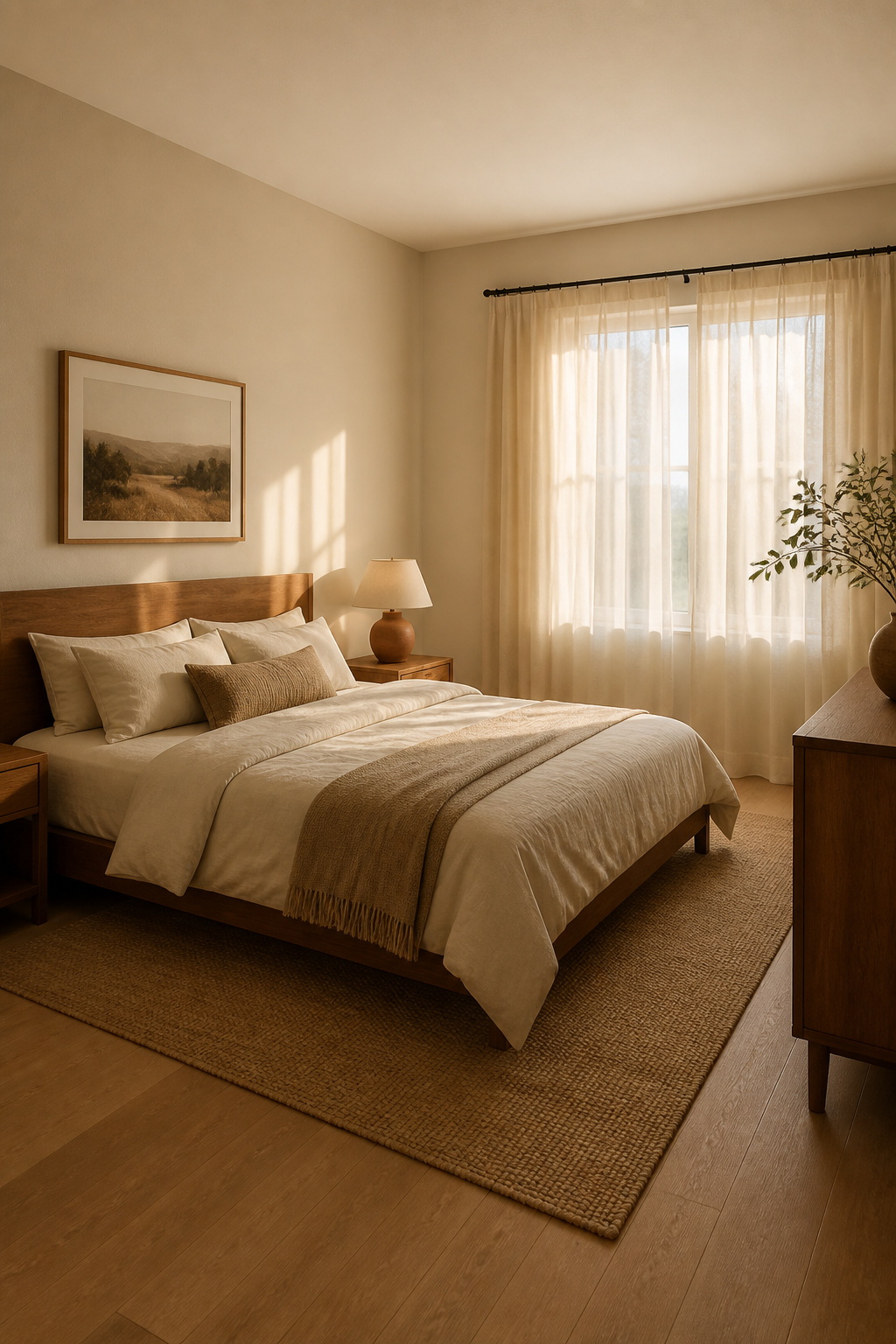
Color psychology research is well-established on why warm-toned neutrals feel cozier than cool grays. Warm whites and neutrals with yellow, red, or orange undertones activate neurological associations with sunlight, warmth, and safety. Cool grays and blue-whites, however sophisticated, lack those associations entirely. In a bedroom meant specifically for rest and recovery, that difference matters enormously.
The warmest-reading neutrals include Benjamin Moore’s White Dove (OC-17), Sherwin-Williams’ Accessible Beige (SW 7036), and Farrow & Ball’s Cornforth White. All carry enough warm undertone to shift a room’s feel without reading as yellow in most lights. For a more grounded look, warm taupes and soft caramels read as anchoring rather than heavy.
Before committing to a color, how to choose a bedroom paint color is an essential read. It covers how to evaluate undertones and test colors in your specific light conditions.
The mistake that costs people the most: choosing a color from a 2×2-inch chip under fluorescent hardware-store lighting. Paint looks completely different under your bedroom’s warm evening light. Always test a 12×12-inch painted swatch on your actual wall and observe it across different times of day before buying a full gallon.
5. Chunky Knit Pillows and Textured Cushions for Layered Comfort
Pillow arrangement is the detail that separates a bed that looks *done* from one that looks genuinely inviting. The psychology is direct: layered textiles signal comfort. Tactile variety — velvet alongside chunky knit alongside washed linen — engages visual interest before you’ve even sat down.
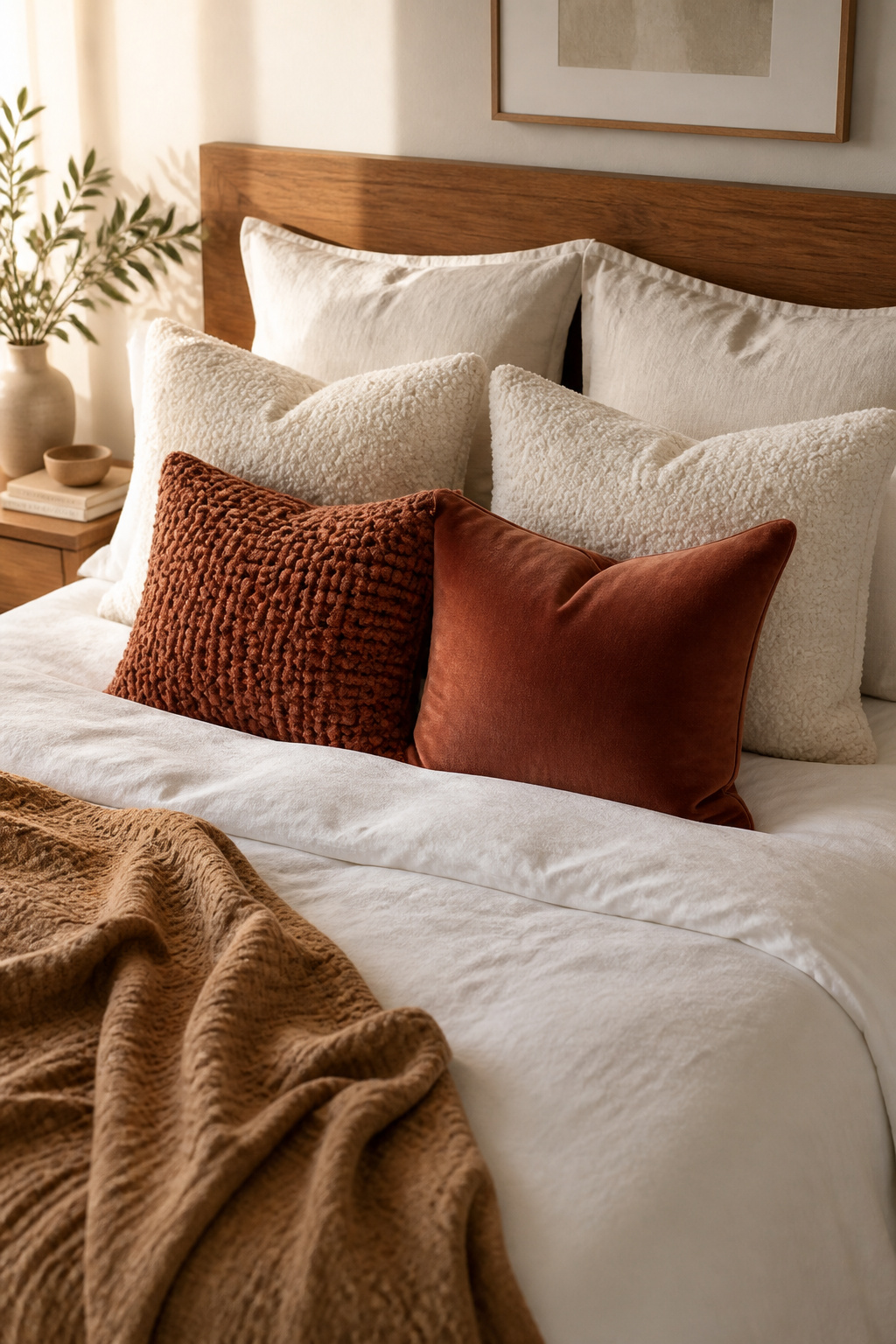
The standard formula for a cozy, layered look on a queen or king starts with two or three sleeping pillows in shams that match or contrast your duvet. Behind those, two standard or euro pillows in a different texture. In the foreground, one or two accent pillows — these are where chunky knits, velvet, and embroidered textures earn their place.
The key word is contrast. Pillows in the same material as your bedding add nothing visually. A smooth linen duvet looks extraordinary against pillows in chunky wool or textured boucle. A structured cotton duvet is transformed by one soft velvet pillow in a warm accent color.
Practical note on inserts: always size up. A 20-inch pillow cover needs a 22-inch insert to look full and plump rather than flat and deflated. This small detail separates a bed that looks professionally styled from one that looks a little tired despite good intentions.
For accent pillow colors, pull from the same warm-toned palette as your throws — terracotta, dusty rose, ochre, warm olive, and camel all work well together and with most neutral bedding palettes.
6. Soft Area Rugs That Anchor Your Bedroom Decorations
The right rug does something no other single element can. It unifies all the cozy bedroom decorations above it into a cohesive composition. Without a rug, furniture floats — each piece sits independently with no visual relationship to the others. With the right rug, the room is anchored and complete.
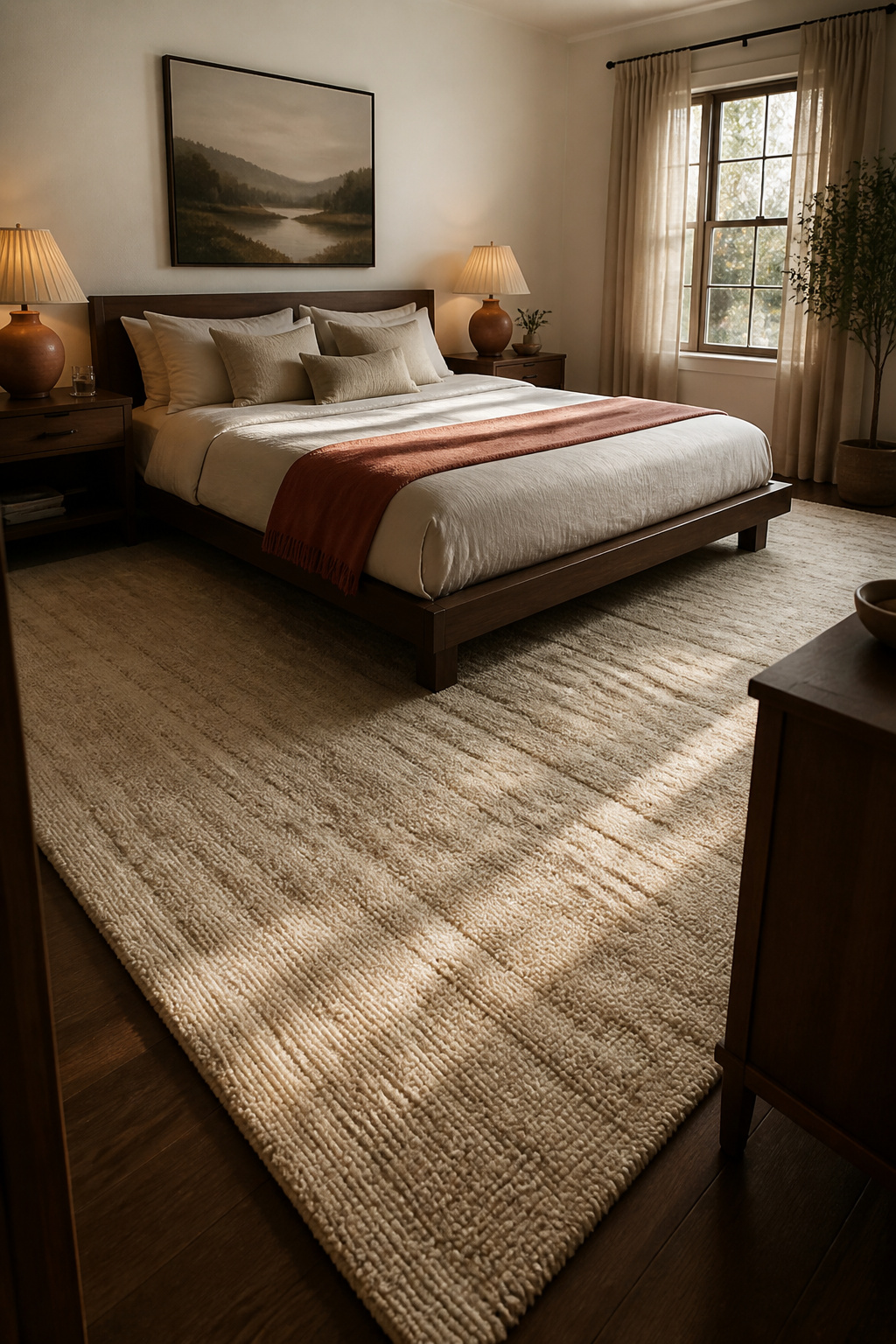
The most common bedroom rug mistake — by a significant margin — is going too small. A rug that barely peeks out from under the bed reads as an afterthought. The correct size for a queen bed is typically an 8×10 or 9×12-foot rug. It should extend at least 18–24 inches beyond both sides and beyond the foot of the bed. Waking up and stepping onto soft, warm material — rather than cold hardwood or tile — is one of the most immediately sensory cozy bedroom moments you can create.
For material, the softest underfoot options are hand-tufted wool, high-pile synthetics, and jute-cotton blends. Pure jute reads beautifully in a natural aesthetic, but it’s rougher underfoot than wool — worth noting if you’re barefoot in the morning.
For color and pattern, the safest cozy choices are warm neutrals and low-contrast patterns. Geometric or tonal textures anchor the room without competing with other cozy bedroom decor elements. High-contrast patterns and cool tones can look beautiful elsewhere. In a bedroom, they tend to work against the warm, enveloping quality a rug should create.
Place the rug *under* the bed, not in front of it. It should be visible on both sides and at the foot — not as a standalone mat.
7. Candles and Wax Melts for Multi-Sensory Warmth
Scented candles are, per dollar spent, the single most effective investment in cozy bedroom decorations — and the reason is neurological rather than aesthetic. They engage two sensory pathways simultaneously. The first is the warm, flickering light (discussed in item one). The second is scent, the only sense that bypasses the thalamus and connects directly to the brain’s limbic system — the emotional and memory center.
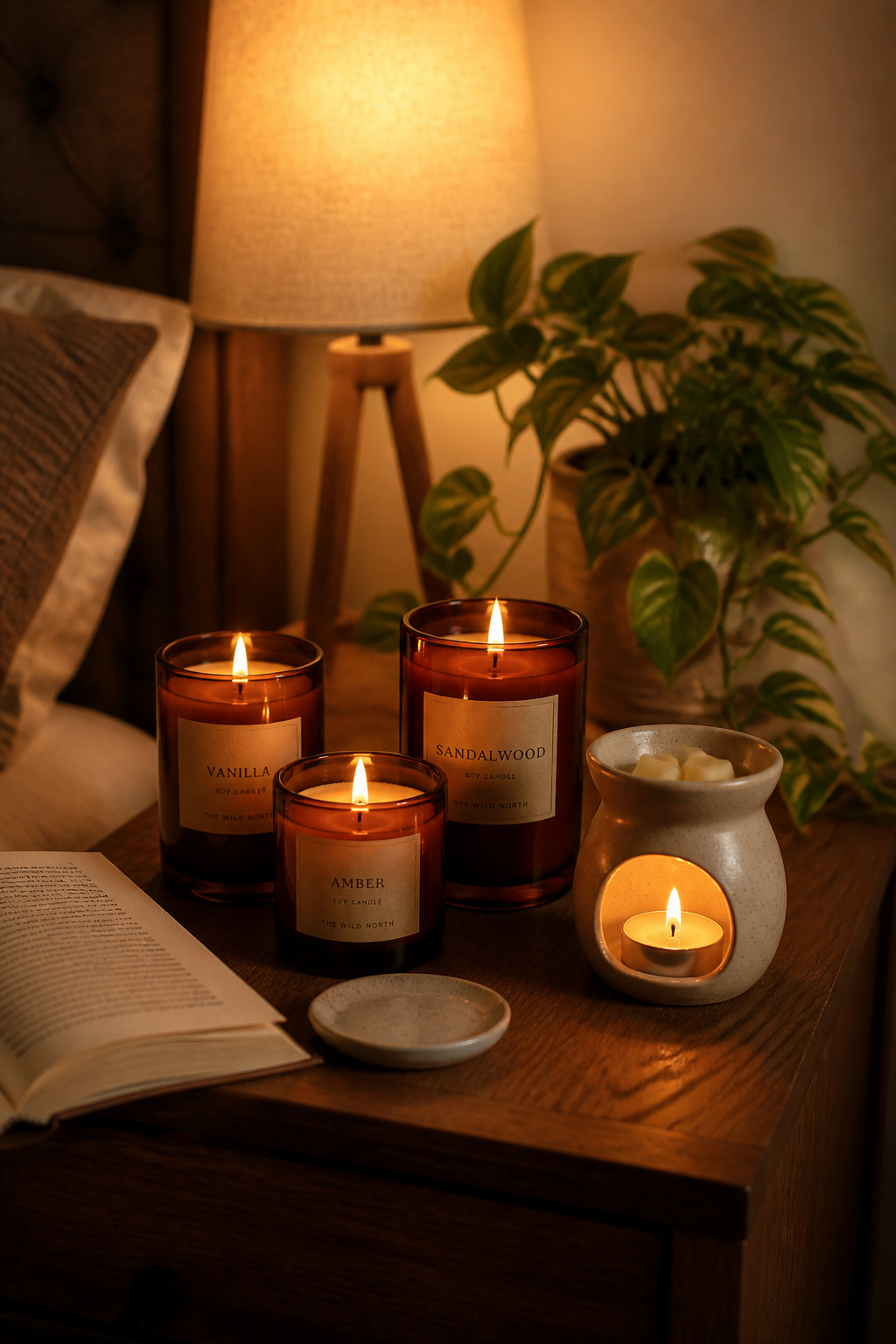
Specific fragrance compounds have documented physiological effects. Santalol, the primary compound in sandalwood, has mild anxiolytic properties in several studies. Vanillin, present in vanilla-based fragrances, activates associations with comfort and safety that are nearly universal across cultures. Lavender’s effect on sleep quality has been replicated in multiple controlled trials. These aren’t abstract aesthetic preferences — they’re real biological responses.
For bedroom candles, warm and grounding scent profiles work best: sandalwood, amber, vanilla, cedar, beeswax, and light musks. Cool, fresh, or citrus scents tend to feel energizing rather than restful — better suited to a home office or kitchen.
On the practical side: always burn a new candle until the melt pool reaches the full edge of the jar (typically two to three hours for the first burn). Stopping short causes tunneling — the wax burns down the center while the sides remain solid, wasting a significant portion of the candle and reducing scent throw on every subsequent burn.
Wax melts in a warmer offer the scent benefit without an open flame. That makes them an excellent option for households with children, pets, or light sleepers.
8. Floor-to-Ceiling Curtains in Natural, Cozy-Feeling Fabrics
Curtain rod placement is one of the most underused design tools in a bedroom. Getting it wrong is also one of the most common reasons rooms feel smaller, lower, and less cozy than they should.
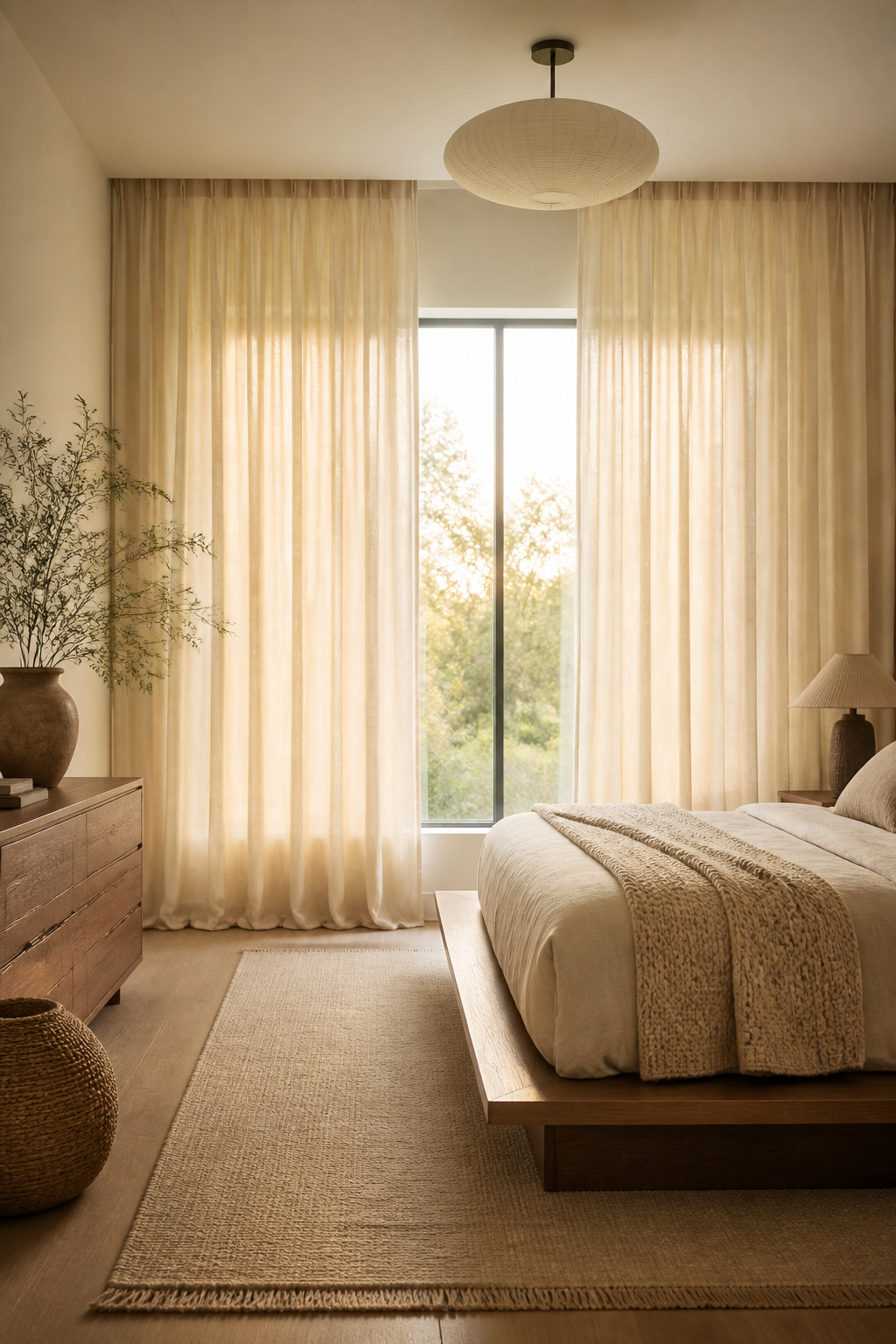
The rule is simple: mount your curtain rod as close to the ceiling as possible, not at window frame height. When the rod sits at ceiling height and panels fall to the floor, the eye reads the whole wall as one continuous vertical surface. Windows look dramatically larger. Ceilings feel higher. The room takes on an enveloping, tent-like quality — the visual equivalent of being cocooned. This is the mechanism behind why rooms in design magazines feel so different from the same-sized rooms in real life.
For fabric, the coziest-feeling curtains in a bedroom are linen (any weight), velvet, and heavyweight cotton. These materials have warmth, texture, and movement. Sheer polyesters and thin cotton-blend panels let light through but add almost nothing to the thermal or visual warmth of a room.
Blackout lining — available as an add-on for most curtain panels — serves both practical and psychological functions. It blocks early morning light for deeper sleep, and it adds thermal weight that makes the fabric hang more beautifully.
The measurement mistake that catches most people: standard ready-made panels are 84 or 96 inches. Ceiling-to-floor in an 8-foot room requires a 95–99 inch panel. In a 9-foot room, you need 107–111 inches. Always measure ceiling-to-floor before ordering.
9. A Reading Nook Corner With Ambient Layered Light
There’s a concept in environmental psychology called prospect-refuge theory. Developed by the geographer Jay Appleton, it explains the deep instinctive comfort of a space where you can see out but feel protected from behind. We evolved in environments where this configuration — a contained shelter with a view — meant safety. A reading nook recreates it.
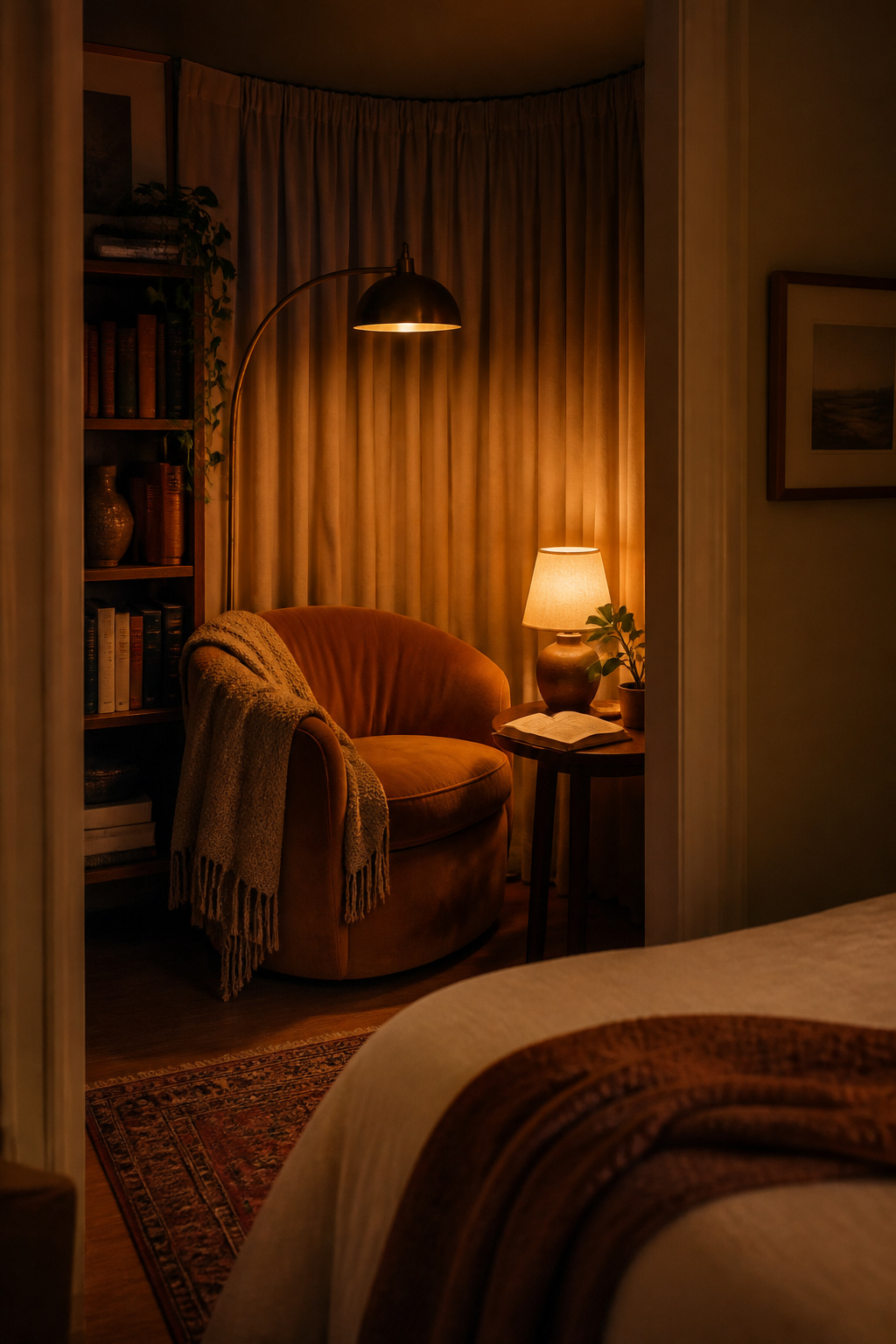
The essential ingredients are modest. A comfortable chair or low loveseat. A side table or surface for a drink and a book. Adequate warm light — a floor lamp at low output or a table lamp at shoulder height. And some degree of visual enclosure: a corner placement, a low bookshelf on one side, or curtains that can be drawn.
The nook doesn’t need to be large. Even a standard bedroom corner with a 28-inch wide chair, a small side table, and a floor lamp creates a defined space that reads entirely differently from the rest of the room. The psychological shift is significant — it transforms a single-function room into one with multiple zones. Research consistently links this with higher perceived comfort.
For smaller rooms, small bedroom paint ideas for tight spaces has specific guidance on using color to define zones without structural changes.
Position the nook away from the main door and traffic path. Enclosure only feels like enclosure when you’re removed from movement.
10. Vintage or Antique Touches for Timeless Cozy Bedroom Charm
Vintage objects carry something new pieces categorically cannot: the visible evidence of a history. A patina on a brass lamp, the soft worn edge of an antique mirror frame, a ceramic vase with a repaired crack — these details communicate that a room is inhabited and loved rather than assembled and staged.
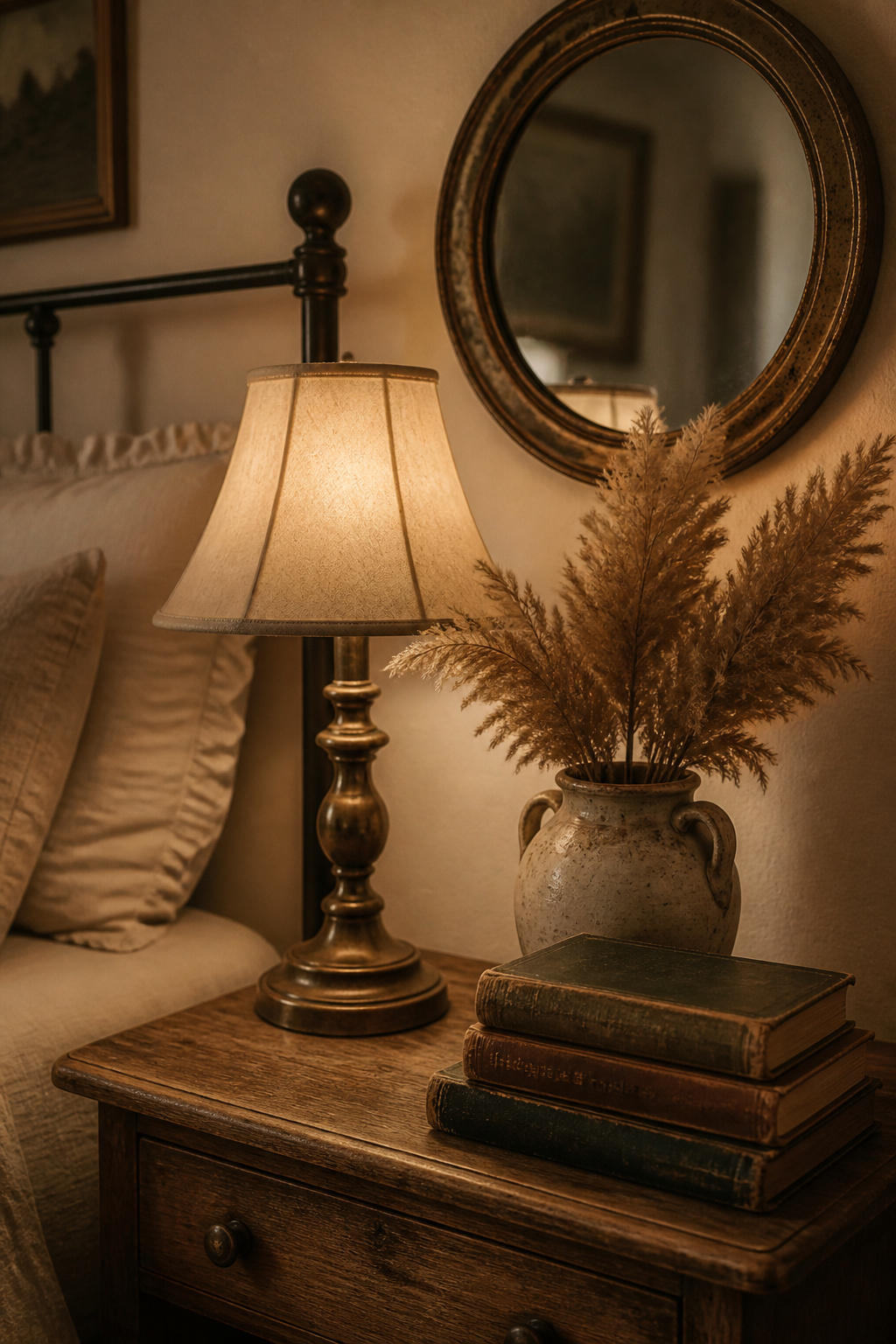
The psychological mechanism is straightforward. Coziness is fundamentally about authenticity and safety, not perfection. New-from-the-store perfection can feel impressive, but it often lacks the warmth and lived-in quality that makes a bedroom feel genuinely restorative. Vintage pieces provide exactly that quality — they bring the visual permission to relax, to be imperfect, to exist comfortably in an imperfect space.
You don’t need a room full of antiques to get this effect. One or two carefully chosen vintage pieces — a bedside table, a mirror, a lamp, a ceramic dish — add the authenticity that grounds everything else. Pair them with newer, cleaner-lined pieces and the contrast makes both better.
Sourcing doesn’t require antique shops with premium pricing. Estate sales, Facebook Marketplace, and thrift stores consistently yield high-quality vintage pieces at a fraction of retail. The approach that works best is knowing what you’re looking for in terms of material and approximate scale before you start browsing.
Scale is the critical variable when buying vintage online: measure your intended space carefully and compare against the listing before purchasing. A beautiful antique dresser that’s too tall for a low-ceilinged room will dominate the space rather than add to its cozy bedroom charm.
11. Natural Wood Accents and Organic Earthy Decor
Biophilic design research confirms that contact with natural materials — wood, stone, plant fiber — produces measurable reductions in cortisol and blood pressure. The bedroom is the most important room in the house to apply this principle. It’s where your nervous system needs to fully downregulate.
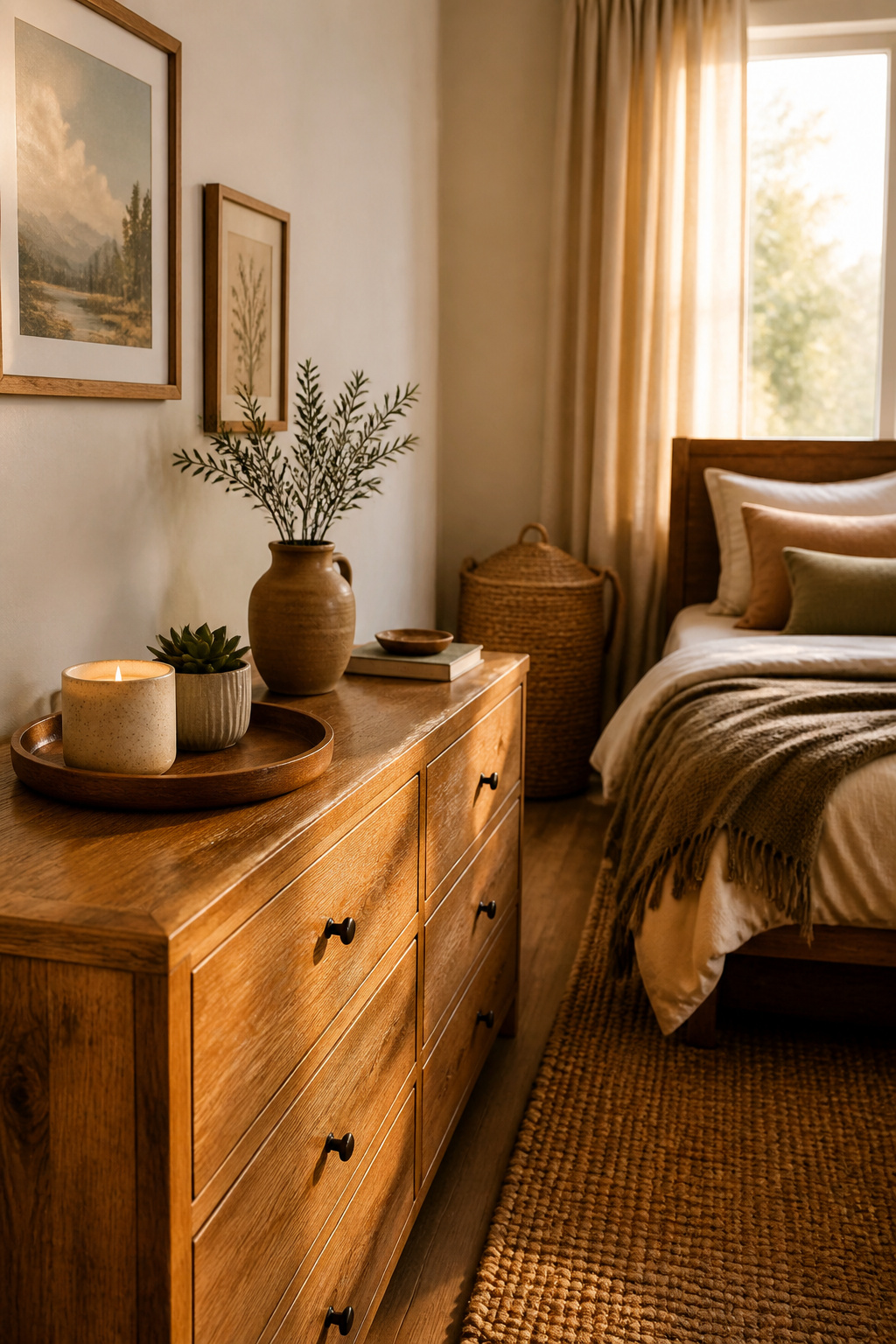
Among cozy bedroom decorations, wood accents are the most accessible entry point into biophilic bedroom design without any structural renovation. A wood bedside table with visible grain. Wooden picture frames. A low wooden tray on the dresser for a candle and a few objects. Woven baskets for storage. A ceramic lamp base in a warm earth tone. Each introduces the visual and textural language of the natural world — which your nervous system is literally wired to find calming.
The specific tones that read warmest are honey oak, walnut, teak, and white oak with visible grain. Very white-washed or bleached woods can be beautiful but tend toward the cooler, less cozy end of the spectrum. Very dark espresso stains can feel heavy without enough complementary warmth in the surrounding palette.
For mixing multiple wood pieces in one room — bedside tables, bed frame, dresser, shelving — the general rule is to choose a dominant wood tone and allow one complementary accent tone. Two distinct warm wood tones work beautifully together. Three or more start to read as accidental rather than intentional.
Ceramic, clay, and stone accessories complement wood accents well. Together they reinforce the organic, earthy character without introducing visual conflict.
12. Plants and Greenery for Biophilic Bedroom Warmth
The scientific case for plants in the bedroom has strengthened considerably in recent years. A randomized crossover study published in PMC found that interaction with indoor plants suppresses autonomic nervous system activity in young adults — a measurable physiological relaxation response, not simply a subjective preference. The visual presence of living greenery activates the same neural pathways as other natural stimuli, producing the cortisol reduction that makes biophilic environments feel restorative.
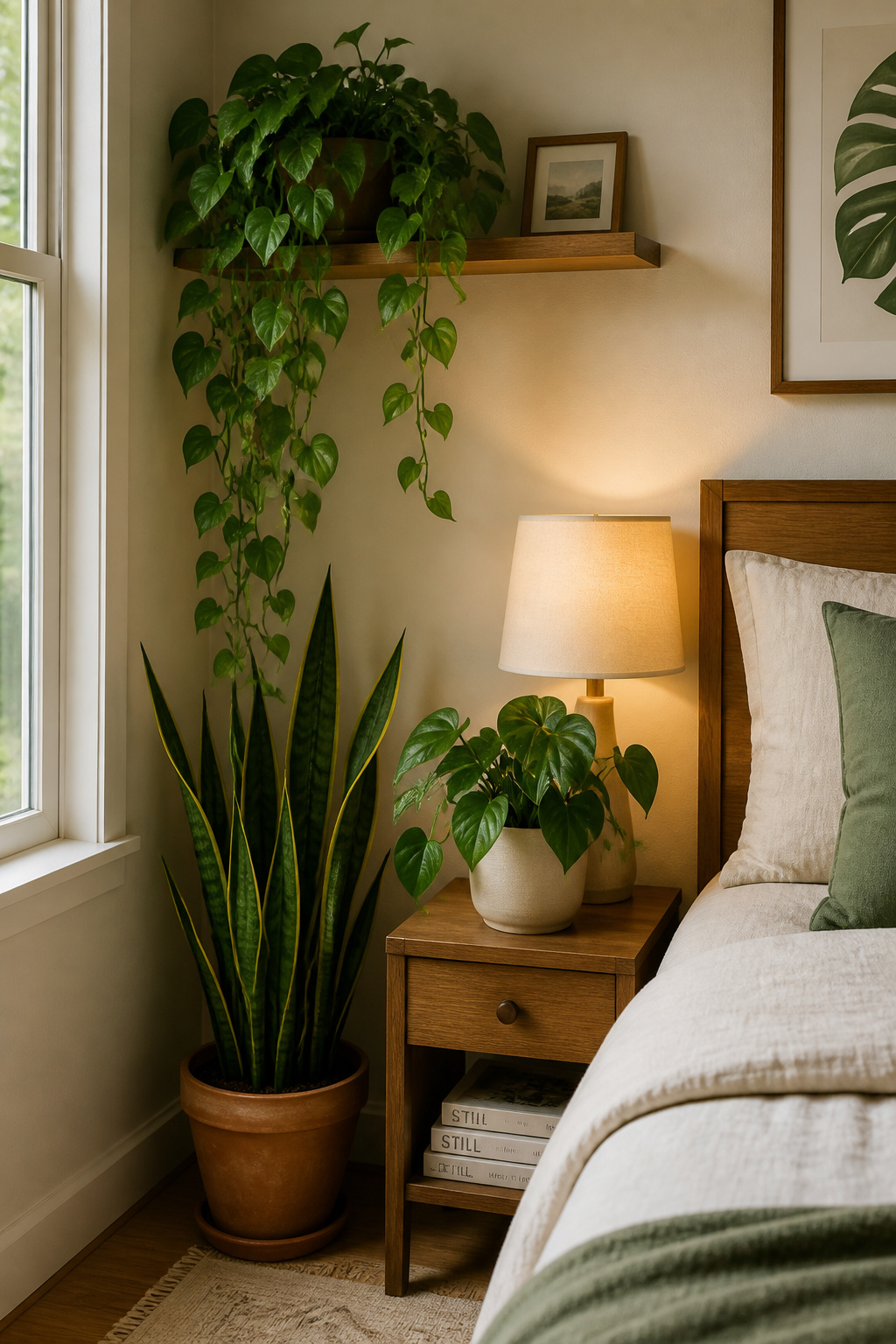
For bedrooms, the key constraint is light. Most low-light tolerant species — pothos, snake plants, ZZ plants, peace lilies, and heartleaf philodendrons — genuinely thrive in north-facing rooms with minimal direct sun. These aren’t plants that merely survive in low light. They’re adapted to it. Any of them adds the psychological and aesthetic benefit of living greenery without requiring a south-facing window.
In terms of placement, a trailing pothos on a high shelf or bookcase top creates a cascade of greenery that draws the eye upward. A snake plant in a corner adds height and structure without taking up floor space. A small philodendron on a bedside table brings the living element closest to where you actually spend time.
Avoid placing plants in rooms with zero natural light. Even the most tolerant species need some indirect source. A room with a covered window that admits diffused light is fine. A genuinely windowless interior room won’t sustain most plants long-term.
The visual warmth plants add works particularly well alongside warm-toned neutrals on the walls and natural materials in the furniture and textiles. Together they create a coherent, nature-connected palette.
13. A Headboard as a Bold Bedroom Decoration Statement Piece
A headboard is arguably the single piece of furniture with the highest impact on bedroom atmosphere per dollar. Its absence is also one of the most common reasons otherwise well-decorated bedrooms still don’t feel complete. Without a headboard, the bed floats awkwardly from the wall. With a substantial headboard, the bed becomes a defined, intentional destination. It’s the anchoring bedroom decoration that completes the room.
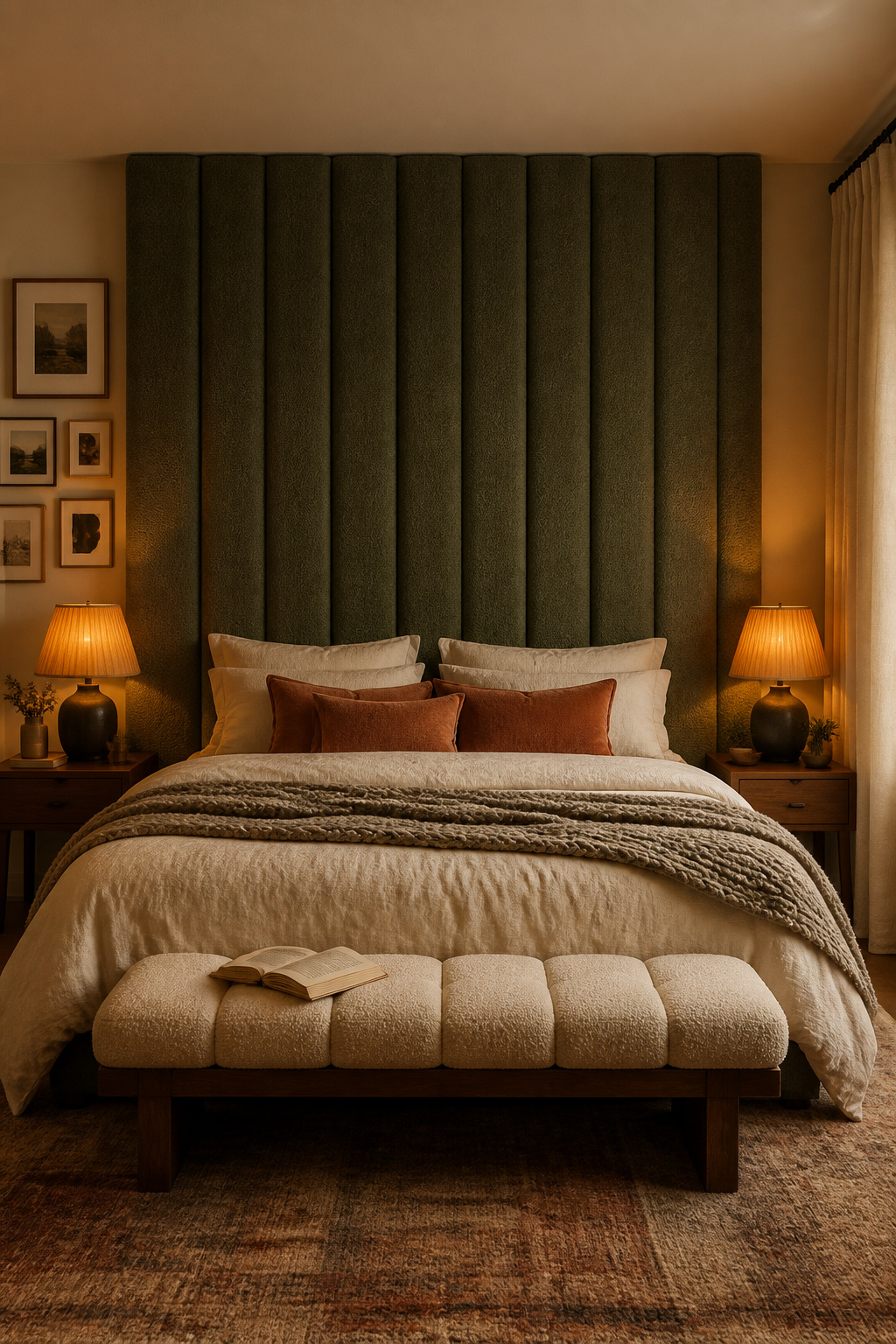
Upholstered headboards in warm fabrics — performance velvet, boucle, linen, or a nubby texture — are the warmest-reading choice. They add the textile softness of the bedding layer to the wall itself. That visually connects the horizontal softness of the bed to the vertical architecture of the room. Tufted styles add depth and shadow that read as richly tactile from across the space.
Floor-to-ceiling or oversized headboards make a bedroom feel deliberately designed. They become a clear focal point that organizes everything else in the room around them.
For proportions, the headboard should match the mattress width or extend up to two inches beyond on each side. A headboard narrower than the mattress makes the bed look smaller — working directly against the anchoring function a headboard should provide.
If you’re working with a budget constraint, bedroom decor ideas on a budget has excellent guidance on affordable headboard options and DIY approaches that deliver significant visual impact without premium furniture pricing.
14. String Lights and Fairy Lights for Whimsical Soft Warmth
At their best, fairy lights do something no lamp or ceiling fixture can quite replicate. They create a lighting environment that closely mimics campfire or candlelight — a very low-level warm glow with gentle movement. Research on preferred lighting environments consistently places this kind of diffuse, gently animated warm light among the most psychologically soothing conditions we respond to. It’s an instinctive response, likely rooted in the evolutionary safety of firelight.
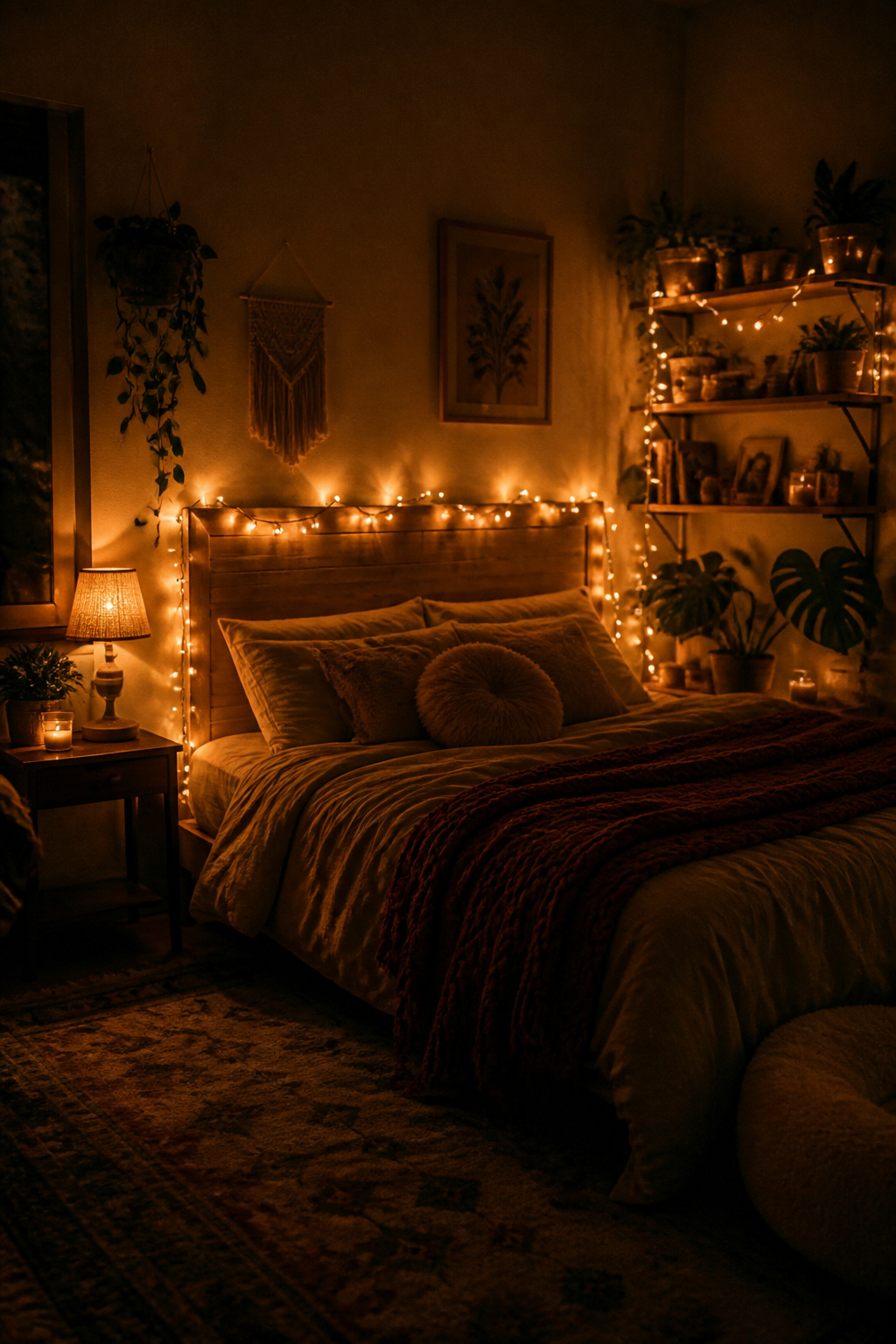
In a bedroom, the most effective fairy light applications are: draped along the top of a headboard or behind a canopy, arranged on a wall in a cluster or trailing shape, woven through a floating shelf display, or placed inside a glass jar or lantern as a contained warm glow source. The height and draping placement is important. Positioned high and falling softly, they soften hard architectural lines and create a ceiling-level glow that ordinary lamps don’t reach.
For the warmest light quality, look for fairy lights rated 2200K–2700K — often labeled “warm white” or “vintage amber.” Avoid “daylight” or “cool white” variants, which produce a harsh, cold quality entirely at odds with the cozy bedroom effect you’re going for.
A practical upgrade that makes a significant difference: add an inline dimmer or a smart plug with dimming capability. Full-brightness fairy lights can look surprisingly harsh. At 30–50% brightness, the same string becomes an entirely different, genuinely cozy effect. A smart plug with dimming runs $15–$20 and is the best-value upgrade you can make to an existing string light setup.
15. Woven Wall Hangings as Cozy Bedroom Decorations With Texture
Framed art and woven wall hangings both occupy wall space, but they do entirely different things. Flat framed prints add image and color. Woven hangings add texture, depth, and warmth — a tactile quality that our brains perceive from across the room. We register it as richer and warmer than a smooth surface. This is why a room with a large woven wall hanging often feels warmer than the same room with a comparably sized framed print.
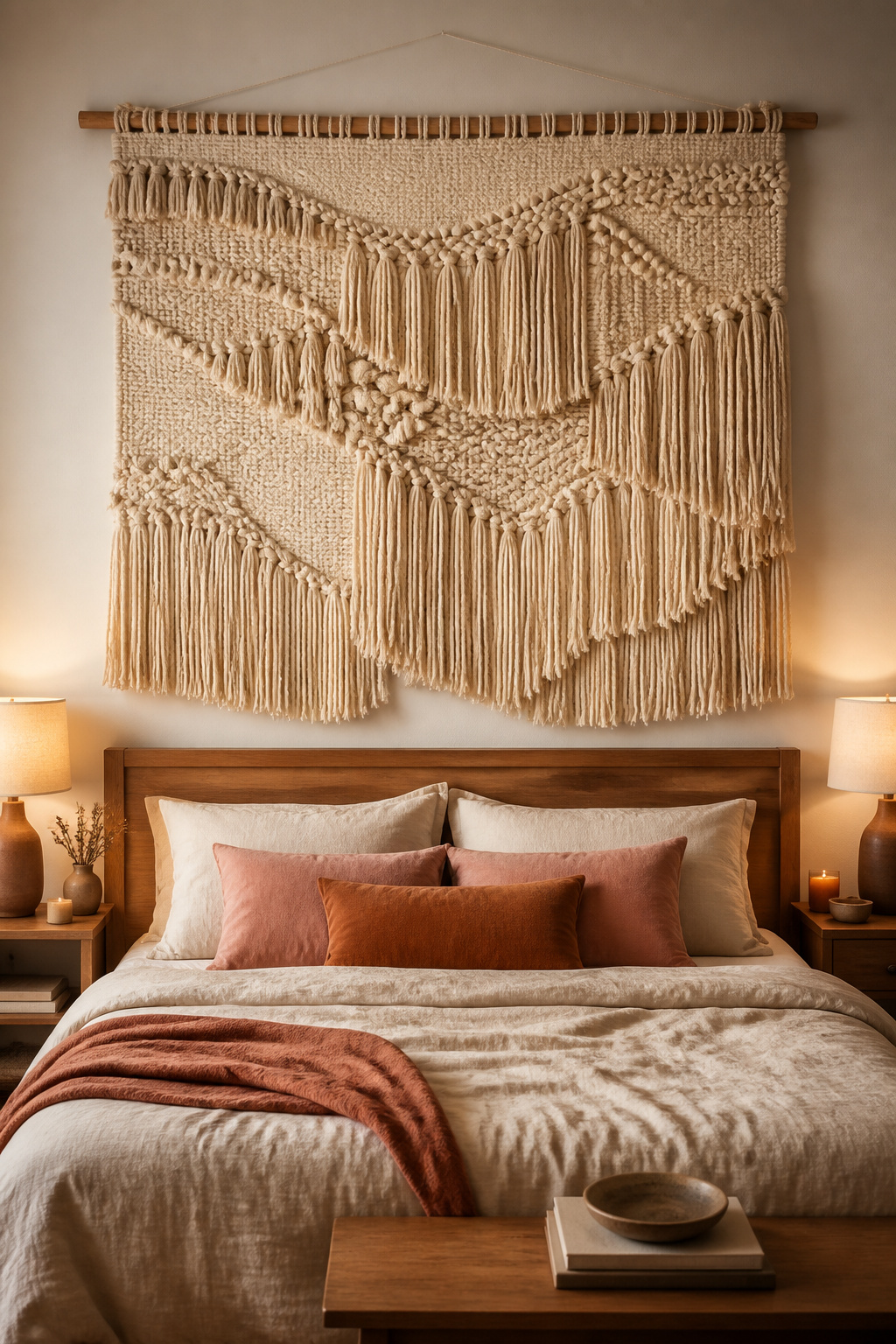
For cozy bedroom decorations specifically, woven hangings in natural cotton, wool, or a cotton-jute blend bring biophilic material warmth to vertical surfaces. The same principle that makes natural wood furniture feel calming applies to woven fiber art. The visible fiber structure, the warmth of natural tones, and the slight irregularity of hand-woven pieces all contribute to that authentic, lived-in quality.
In terms of sizing, a single statement hanging above the headboard should be approximately two-thirds of the headboard width. That proportion feels intentional and correctly scaled. Groupings of two or three smaller hangings at varying heights work well on a side wall — the arrangement creates visual movement without competing with the bed as the primary focal point.
The mistakes that most often undermine the effect: choosing a hanging that’s too small for the wall, and hanging it too high. Both errors make the piece look lost. The bottom of the hanging should clear the headboard or furniture below it by six to eight inches — close enough to feel connected, distant enough to avoid looking crowded.
16. Dark or Moody Accent Colors for an Intimate Bedroom Atmosphere
There is a persistent myth in home decorating that dark colors make rooms feel smaller. It leads people away from some of the most effective cozy bedroom choices available. Worth addressing directly: research on perceived spaciousness consistently shows that deep, saturated colors create intimacy and enclosure — not claustrophobia. In a bedroom, that’s exactly what you want.
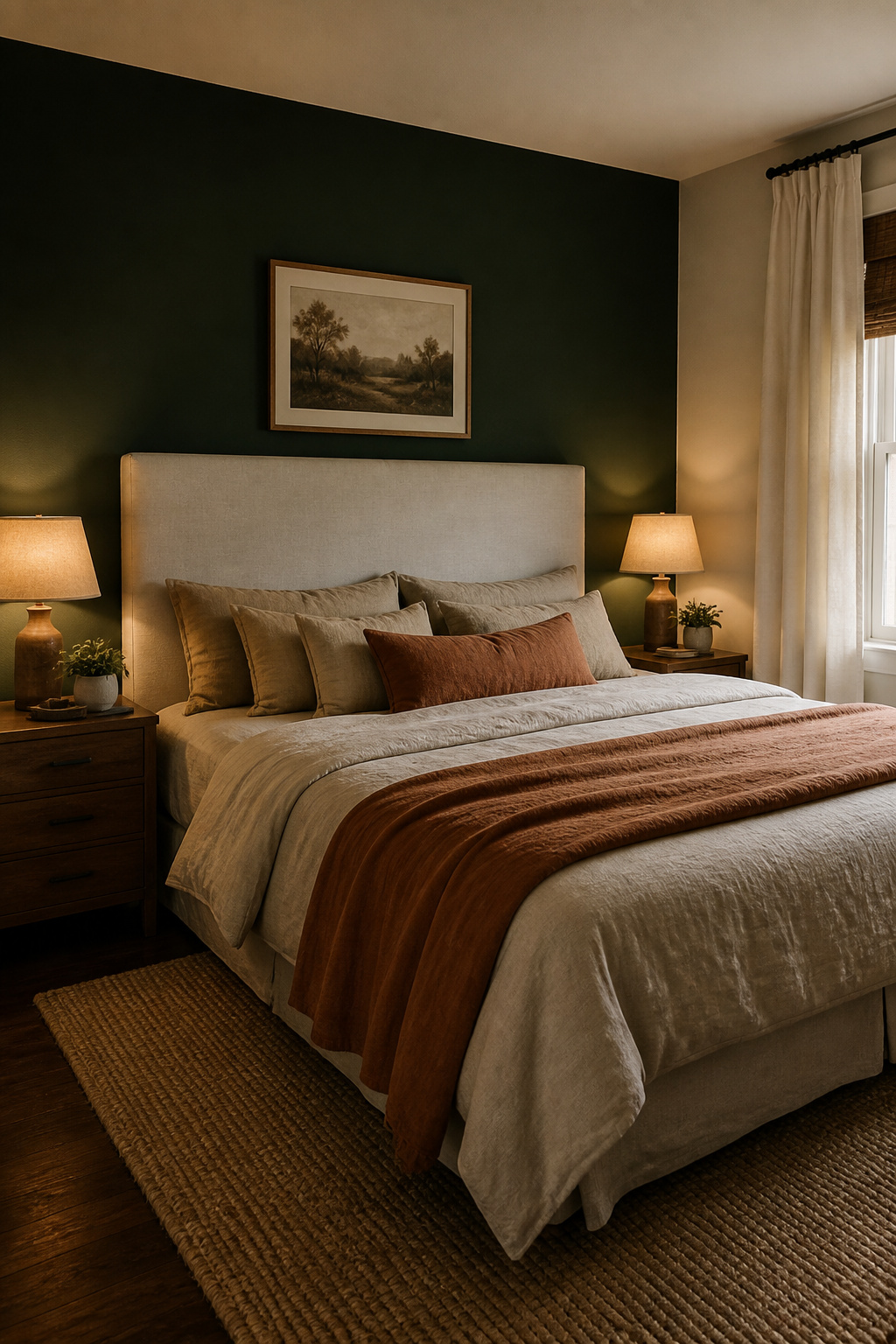
Color psychology distinguishes between intimate enclosure (desirable, associated with security and rest) and claustrophobic enclosure (undesirable, associated with anxiety). Dark bedroom colors almost always land in the intimate category when applied thoughtfully — especially deep forest greens, warm charcoals, dusty indigos, burgundies, and rich terracottas. These hues absorb light in a way that feels enveloping rather than oppressive.
The most practical approach is to use a dark or moody color on an accent wall behind the headboard, rather than all four walls. This creates a strong visual anchor for the bed while maintaining visual breathing room on the lighter surrounding walls. A deep green or charcoal accent wall paired with an upholstered headboard, warm-toned bedding, and layered lighting is one of the most reliably atmospheric combinations in bedroom design.
For inspiration on how specific dark colors look in real bedroom spaces, black bedroom inspiration ideas offers a grounded look at deeply saturated colors across different scales and styles.
The key adjustment when going dark: add warm-toned lamps to compensate for the light the paint will absorb. Dark walls absorb more light, so a bedroom that was adequately lit with light walls will feel dim with dark ones. Adjust the lighting first, then decide whether the color is too dark.
17. A Personalized Scent Strategy to Complete the Cozy Bedroom Experience
Scent occupies a unique position among the five senses. It’s the only sense that bypasses the thalamus and connects directly to the brain’s limbic system — the seat of emotion and memory. While all other sensory input is processed before reaching emotional centers, scent arrives there almost immediately. That’s why smells trigger emotional responses and memories far faster and more powerfully than sights or sounds.
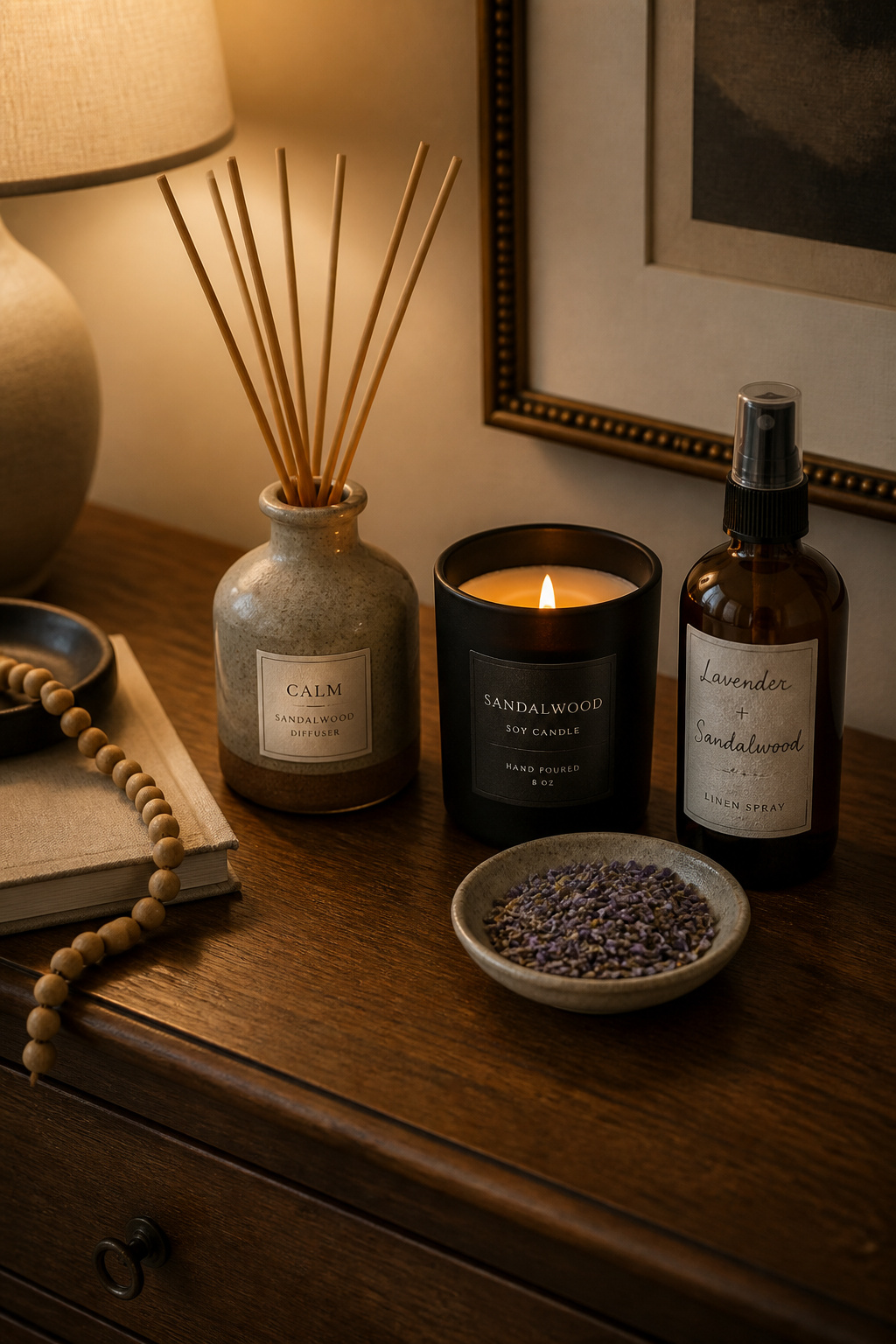
The implication for bedroom design is significant. A consistent, deliberate scent used exclusively in the bedroom becomes neurologically associated with that space over time. After enough repetition, simply encountering that scent begins to trigger the relaxation and safety response — before you’ve even registered where you are. The bedroom essentially programs its own rest cue. That’s a powerful cozy bedroom experience you can build in weeks.
Building a cozy bedroom scent strategy has three components. First, choose a warm, grounding base scent: lavender, sandalwood, vanilla, cedar, amber, or a blend of several. These should feel calm and comfortable rather than energizing or sharp. Second, choose a delivery method — candles for evenings when you want the additional warm-light benefit, a diffuser for a consistent low-level background scent, linen spray for immediate sensory association when you first enter the room. Third, and most often overlooked: the bedroom scent should not appear in any other room. The neurological anchoring effect depends entirely on specificity.
This principle connects to what makes the entire list of cozy bedroom decorations work together. Each individual item is effective on its own. But they compound powerfully when used as a layered, multi-sensory system in a single space.
Choosing the Right Cozy Bedroom Decorations for Your Space and Budget
Cozy bedroom decorations don’t require a renovation budget or a design degree. They require a clear understanding of which changes have the highest psychological impact per dollar — and a willingness to layer rather than replace.
Start with lighting and one large textile. Swapping overhead bulbs for warm 2700K alternatives ($15–$25 for a four-pack), adding a bedside lamp, and investing in a quality duvet and throw blanket will transform bedroom atmosphere more than any single piece of furniture. These two categories address the most fundamental sensory signals the brain reads as warmth and comfort.
The second tier — a rug and floor-to-ceiling curtains — addresses sensory discomfort that quietly undermines everything else. Cold floors and harsh morning light are the two most common reasons a room never quite feels restful, regardless of how well everything else is executed.
For everything beyond that, prioritize the changes that feel most personally meaningful. The psychological research is consistent: spaces that reflect your specific personality, history, and sensory preferences outperform spaces designed to generic standards of coziness — however beautiful those spaces may be on paper. A gallery wall of your own photographs, a plant you genuinely love, a scent you’ve always associated with comfort: these are the details that transform cozy bedroom decorations from a well-executed design concept into a room that is unmistakably and irreplaceably yours.