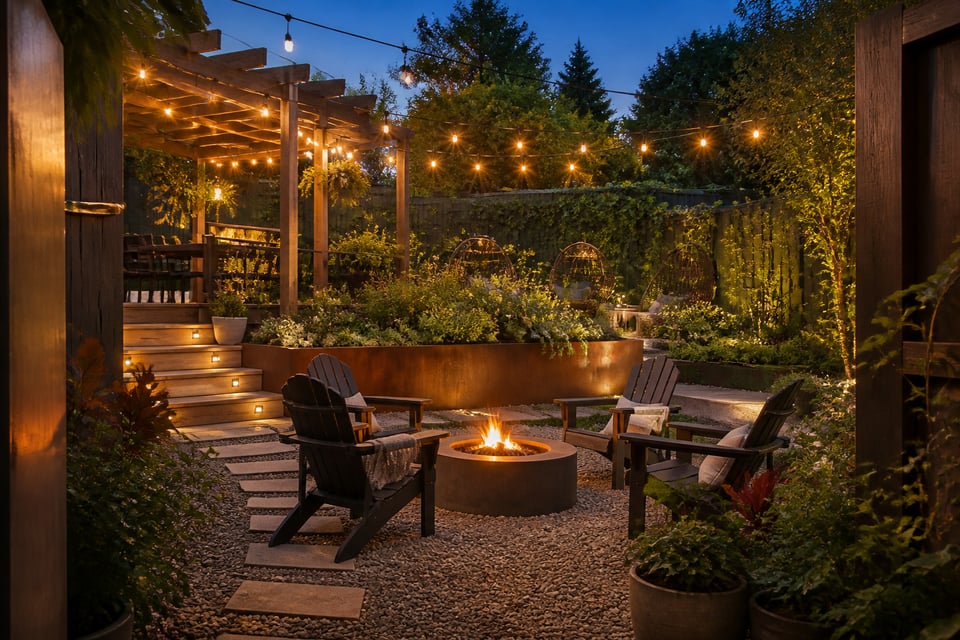
There’s a moment when a yard stops being a maintenance obligation. Suddenly it becomes a place you actually want to be. For me, it happened watching friends linger around a fire pit long after midnight. They weren’t staying because they had nowhere to go. They were staying because the space had made it hard to leave. That’s what good yard decor does. It creates the conditions for connection — for the conversations that happen because the setting invited them.
I’ve spent years designing outdoor entertainment spaces. I’ve thought hard about how furniture placement affects conversation flow. How lighting changes the emotional temperature of a gathering. How a well-placed water feature drops the ambient noise of a city neighborhood to something approaching peace. What I’ve found, consistently, is that the difference between a yard people glance at and one they stay in comes down to a few intentional choices.
These 18 yard decor ideas cover the full range — from the immediate (string lights, cushions, seasonal wreaths) to the structural (fire pits, raised garden beds, painted fence backdrops). Whether you’re starting with a blank slate or breathing life into a space that’s never quite come together, there’s something useful here.
1. String Lights and Lanterns for Magical Yard Decor at Night
After dark, a yard without lighting stops existing as a space. It becomes a shape of darkness beyond the glass. String lights are the fastest fix for this, and the one with the most outsized return on effort. A single 50-foot strand of warm Edison bulbs draped between a pergola and a fence post converts a utilitarian backyard into something people are reluctant to leave.
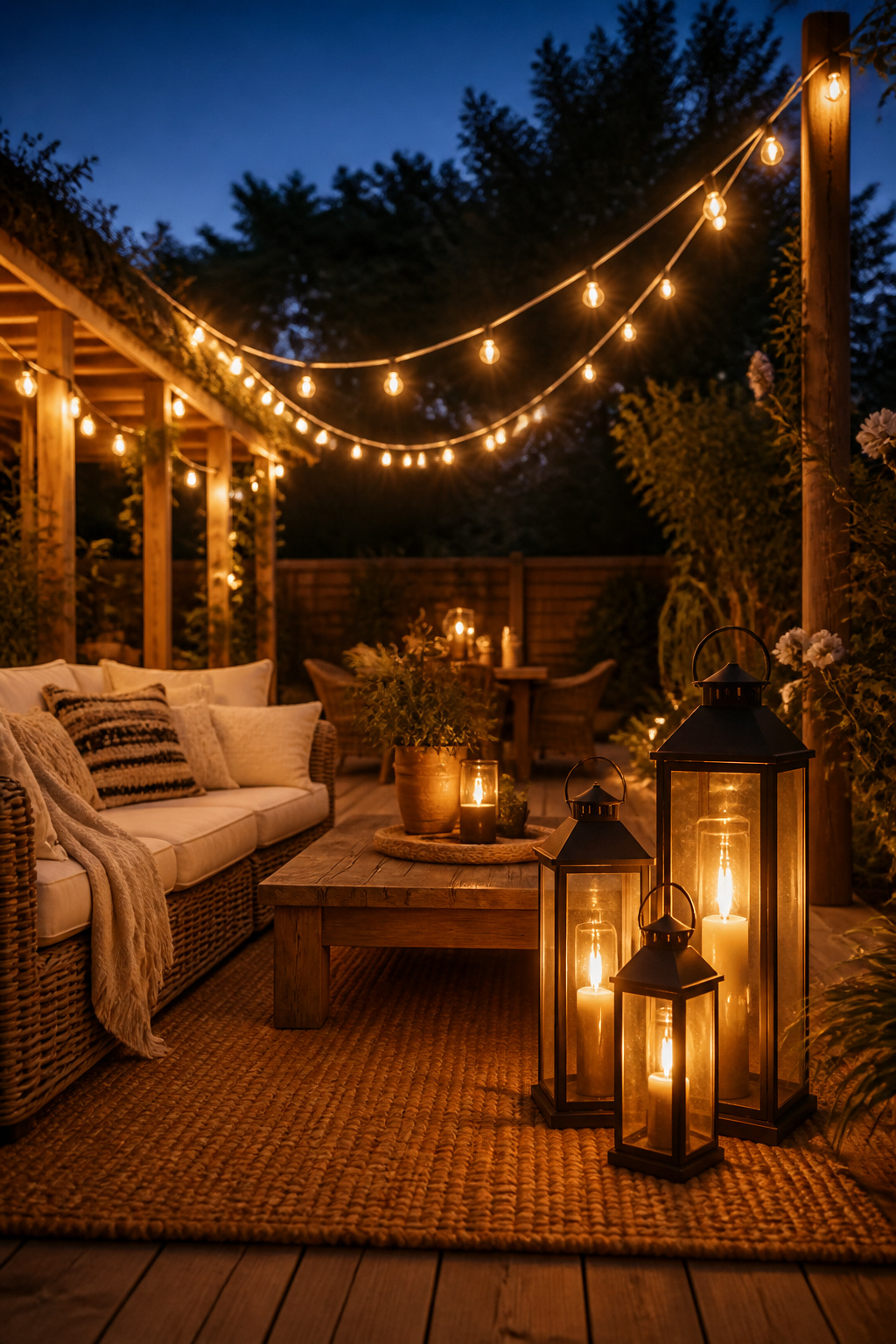
The bulb type matters more than most people expect. Edison-style filament bulbs (2700K, warm amber) give a nostalgic feel — the visible coil of light inside each globe has a warmth that bright white bulbs can’t replicate. G40 or G50 globe bulbs read more modern and are easier to source. Either way, aim for 50–200 lumens per bulb for ambiance. Higher than that, and you’re lighting a work zone, not a gathering space.
How to Hang Them
For installation, pergola beams are the ideal anchor. Loop the cord loosely from beam to beam in three-to-four-foot arcs and secure with zip ties rather than drilling. If you don’t have a pergola, four-by-four cedar posts buried 18 inches serve the same purpose. Space them 10–12 feet apart and run a guide wire between them to prevent cord sag over longer spans. The solar vs. plug-in decision has a simple answer: if your yard gets six-plus hours of direct sun daily, solar performs well. In any shaded yard, plug-in low-voltage is the reliable choice.
Floor lanterns clustered near seating complete the picture. A trio at varying heights — 8, 12, and 16 inches — with battery-operated LED candles creates a secondary light source at eye level. No installation needed. For more backyard inspiration ideas that take lighting into a full outdoor room design, that’s where these principles work together.
2. Outdoor Rugs That Anchor Your Seating Area Like a Room
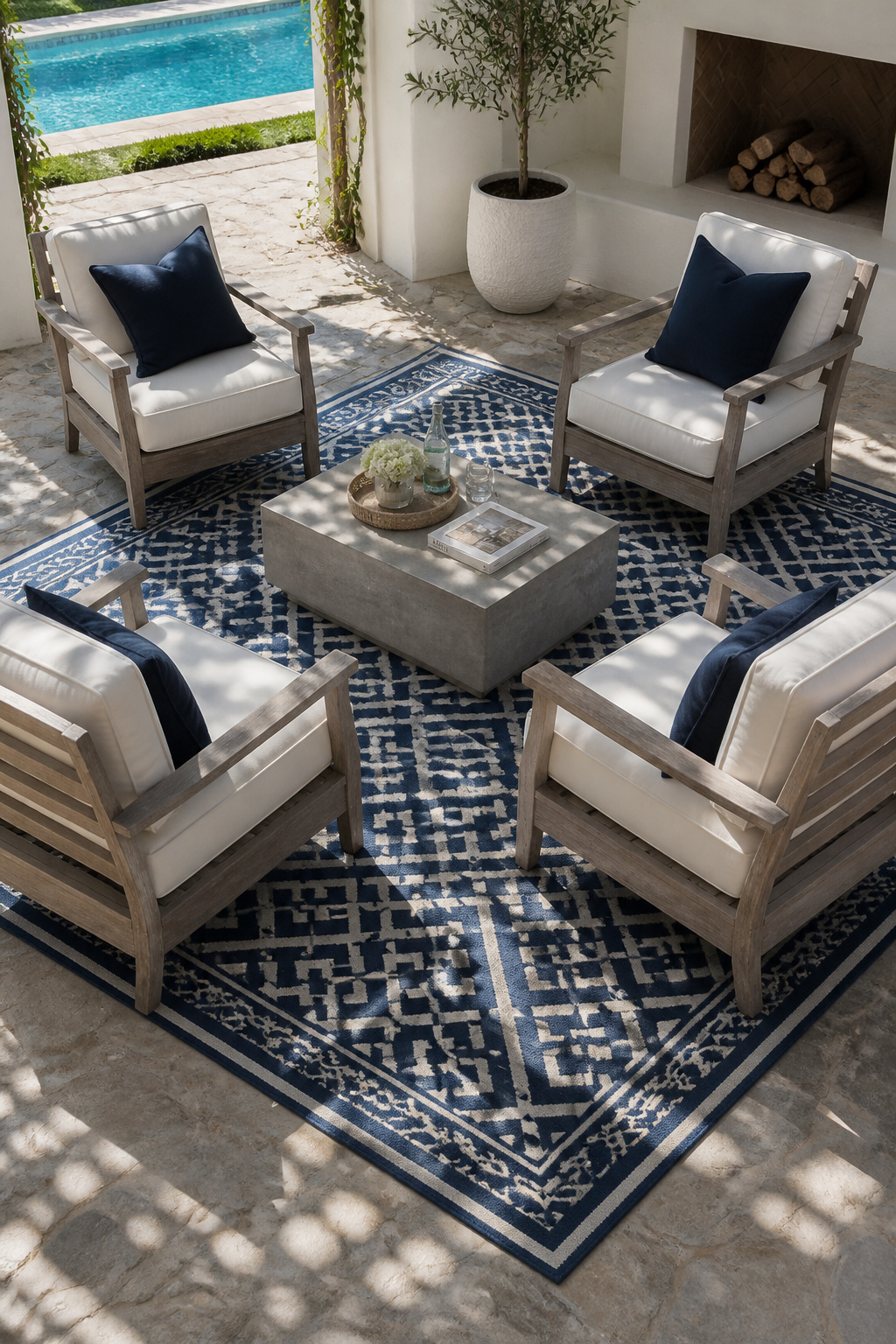
The single most common mistake in outdoor furniture arrangement is skipping the rug. Without one, a collection of chairs and a table looks exactly like what it is: furniture on a patio. Add the right rug and the same furniture becomes a room. It defines the zone, creates a visual boundary, and signals that the space was designed rather than assembled.
Polypropylene (also labeled olefin) is the material to look for. It’s UV-stable so colors hold through seasons of sun. It dries in hours after rain. And it resists the mold and mildew that claim cheaper rugs over a winter. Recycled PET rugs — made from post-consumer plastic bottles — offer similar performance with better eco-credentials. Look for Greenguard certification if that matters to your household.
Sizing is where the real decisions happen. For a small patio with two chairs and a bistro table, a 5’x7′ rug is the minimum. For a full four-person seating set, an 8’x10′ is the standard starting point. The rule is non-negotiable: every furniture leg should sit on the rug. When front legs rest on the rug and back legs float on the bare patio surface, the design reads as two separate elements. The rug’s whole job — pulling everything into a cohesive zone — is lost. Maintenance is low: hose off both sides seasonally and allow a full day of drying before rolling it back out.
3. Weather-Resistant Planters as Sculptural Focal Points
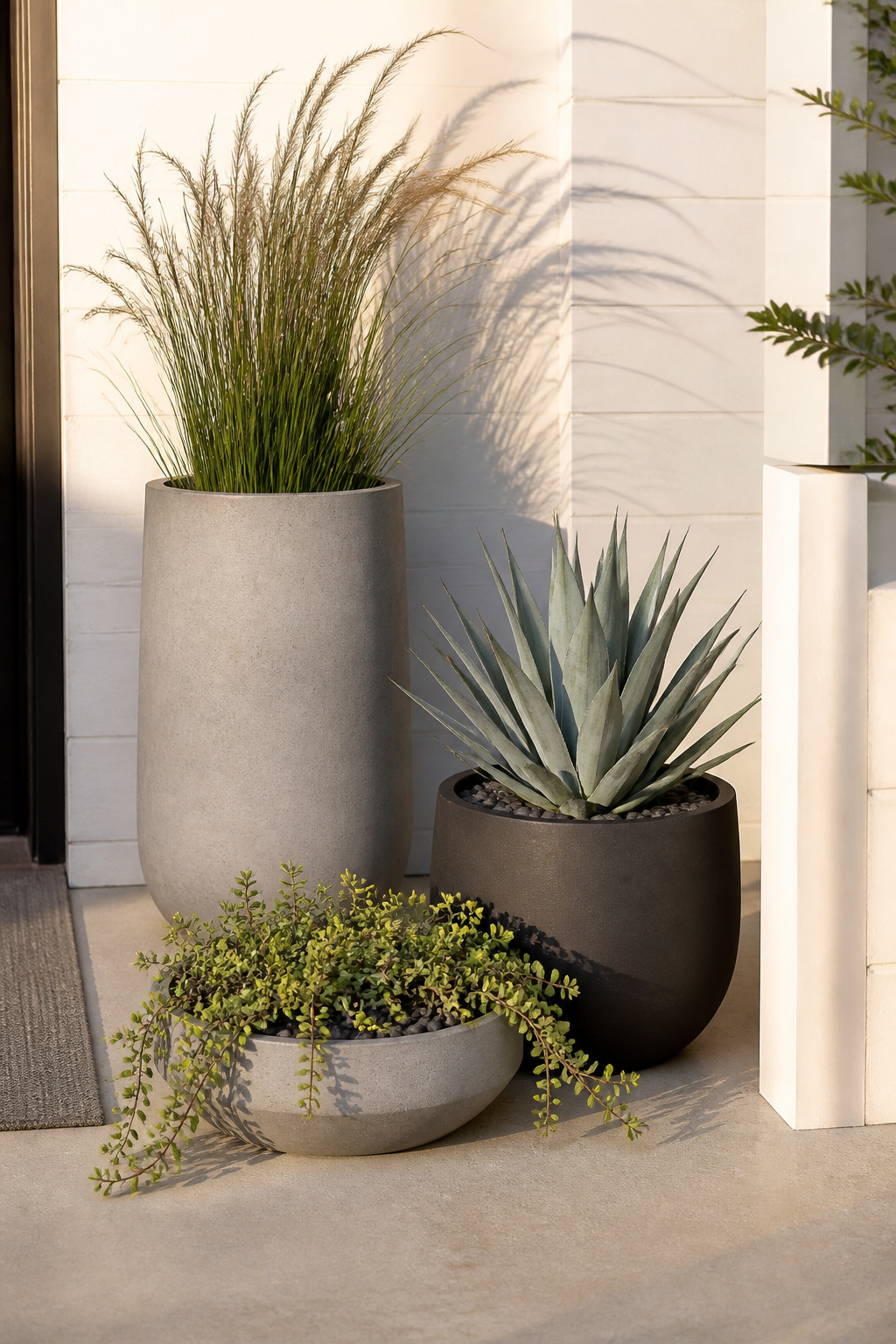
Planters earn their place in a yard not just as plant containers but as objects. They define space, create focal points, and give the eye somewhere to land. A single large planter (24 inches or taller) placed at the entrance to a seating area functions like sculpture. The plant is secondary to the form of the vessel itself.
Fiberglass is the material most professional designers reach for first. It’s frost-resistant and shatterproof — two things terracotta isn’t in cold climates. It’s also lightweight for its apparent size and available in finishes that convincingly mimic concrete, stone, and cast iron. High-quality fiberglass holds its finish for years. Terracotta is beautiful in mild zones and breathable for plants, but its porous walls absorb water. In freeze-thaw climates, that water expands and the pot cracks. For year-round outdoor use, fiberglass is simply the more durable choice.
Corten steel planters — the ones that develop a copper-rust patina — have become a design statement in contemporary yards. They’re maintenance-free and last twenty-plus years. Their warm weathered color looks deliberate in a way that resin never does. For grouping, the rule of three applies: one tall, one medium, one low. Stagger the heights and match the finishes. For thinking about what to actually grow in these, thriving patio plants goes deep on the plant selection side.
4. A Fire Pit as the Heart of Your Yard Decor and Gathering Space
If there’s one yard decor investment that delivers in both aesthetic and social terms, it’s a fire pit. Nothing else extends the outdoor season by weeks. Nothing else creates a natural gathering point from nothing. And nothing gives guests a better reason to stay past dark. The social psychology of fire is ancient — people orient toward it automatically, conversations form without arrangement, and the resulting circle of chairs is the most reliably active gathering format in any yard.
The decision between wood-burning, propane, and natural gas is worth thinking through. Wood-burning bowls are the most affordable entry point ($50–300) and provide the authentic crackle. However, they require 25 feet of clearance from any structure (the NFPA standard). In dry-climate areas, recreational fires may be restricted entirely. Propane fire pits ($300–1,500) are the practical middle ground. They’re smokeless, controlled, and comfortable for seating at just 18–24 inches from the flame — far closer than you’d sit around a wood fire. Natural gas fire tables ($800–3,000 installed) are the permanent option. They look the most integrated, but they require a gas line and professional installation.
Whatever the fuel type, the surrounding matters. A 10-foot diameter pad of pea gravel or paving under and around the pit creates a defined ‘fire zone’ that reads as intentional. Arrange seating in a ring with every chair facing center. For a deeper look at layout and configurations, fire pit backyard ideas covers the full range of what’s possible.
5. Decorative Garden Stakes, Sculptures, and Yard Art
The case for three-dimensional yard art is straightforward. Flat surfaces — fences, walls, ground cover — give the eye nothing to catch on. Stakes, sculptures, and garden art add vertical interest and depth that makes a planted bed feel populated rather than merely planted.
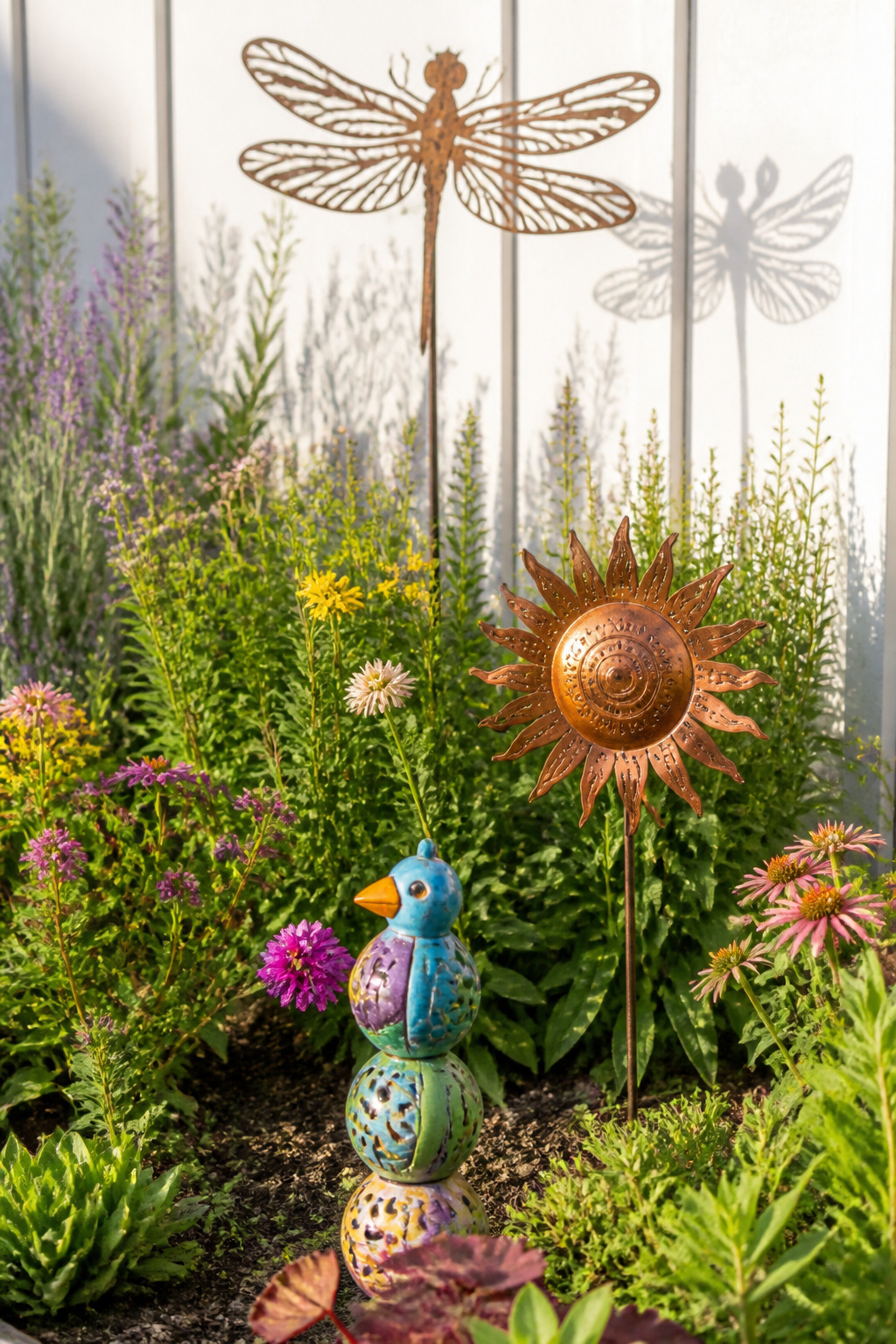
Metal silhouettes (laser-cut powder-coated steel) are the most accessible entry point, starting around $20–80. Animal forms, botanical shapes, and geometric cutouts all work. The key variable is scale. In a large bed, a 3–5-foot stake anchors the back of the planting and is visible from the house. In a compact border, a 12–18-inch piece reads at ground level. Bury any ground stake at least 6–12 inches — shallower than that, and the first significant wind relocates it.
Ceramic pieces — hand-painted totems, glazed spheres, sculpted tiles on fence panels — bring a handmade quality that metal can’t replicate. The caveat: glazed ceramics need to be frost-resistant or stored before winter. A season’s freeze-thaw will crack even a well-made piece. Copper garden stakes develop a warm patina over time. They tend to look better at year three than year one. For placement, always put a piece against a contrasting background. A dark metal silhouette in front of a white fence is instantly legible. The same piece in front of mixed plantings disappears. Three pieces maximum per defined zone — one dominant focal piece, two complementary accents. Beyond three, the effect tips from curated to crowded.
6. Repurposed and Thrifted Furniture as Yard Conversation Pieces
There’s a particular character that weathered, repurposed furniture brings to a yard. New outdoor furniture simply can’t manufacture it. An old cast-iron bistro set found at an estate sale, stripped of rust and painted deep forest green, looks like it’s been there for forty years. A worn wooden bench from a salvage shop, properly sealed, becomes the piece every new visitor asks about. New furniture signals money spent. Character-rich pieces signal stories accumulated.
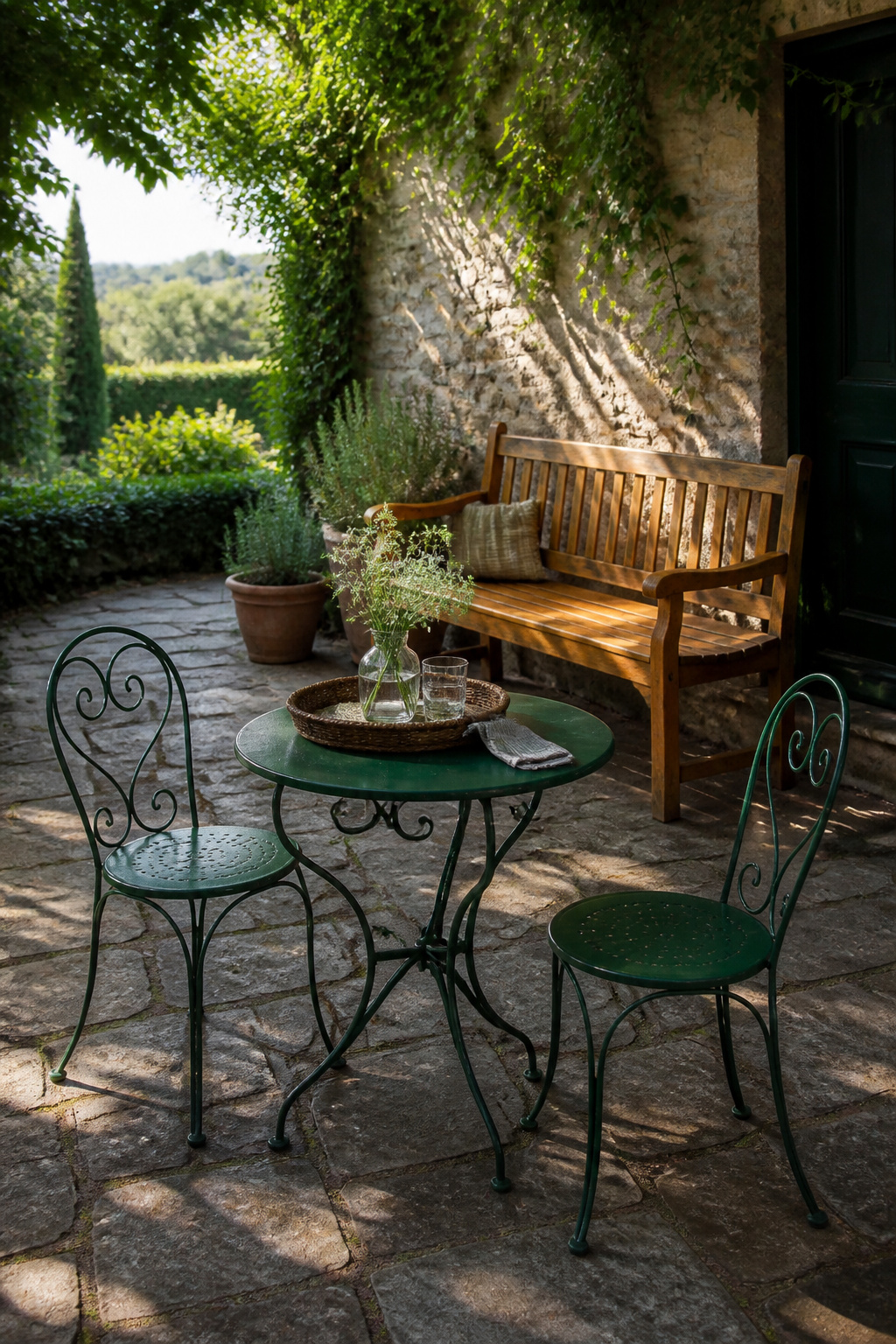
The materials to look for: cast iron and wrought iron (nearly indestructible — strip the rust, treat with rust converter, repaint, and the piece lasts indefinitely), solid hardwoods like teak, white oak, and cedar (worth the prep work), and concrete or stone pieces (no prep needed, they age beautifully). Avoid MDF, particleboard, and laminated pine. These absorb moisture and deteriorate in a single outdoor season, regardless of what you seal them with.
Prepping wood pieces for outdoor use requires commitment to the sequence. Sand to 400-grit, apply an exterior primer, then two coats of exterior latex or oil-based paint. For natural wood where you want to preserve the grain, spar urethane is the right clear coat — it contains UV absorbers that standard interior polyurethane lacks. Seal every surface including undersides, joint edges, and end grain. Even one missed edge causes faster rot than untreated wood. Plan to refinish every 1–2 years; no outdoor finish is permanent under real sun and rain.
7. Pathway Lighting: Subtle Yard Decoration With Outsized Impact
A yard that looks designed during the day needs to hold that feeling after dark. Pathway lighting is the surest way to make that happen. Beyond safety, low-profile path lights define the geometry of a yard at night. They turn a flat expanse into a series of illuminated zones connected by glowing lines. It’s the kind of detail that reads immediately to any visitor as intentional.
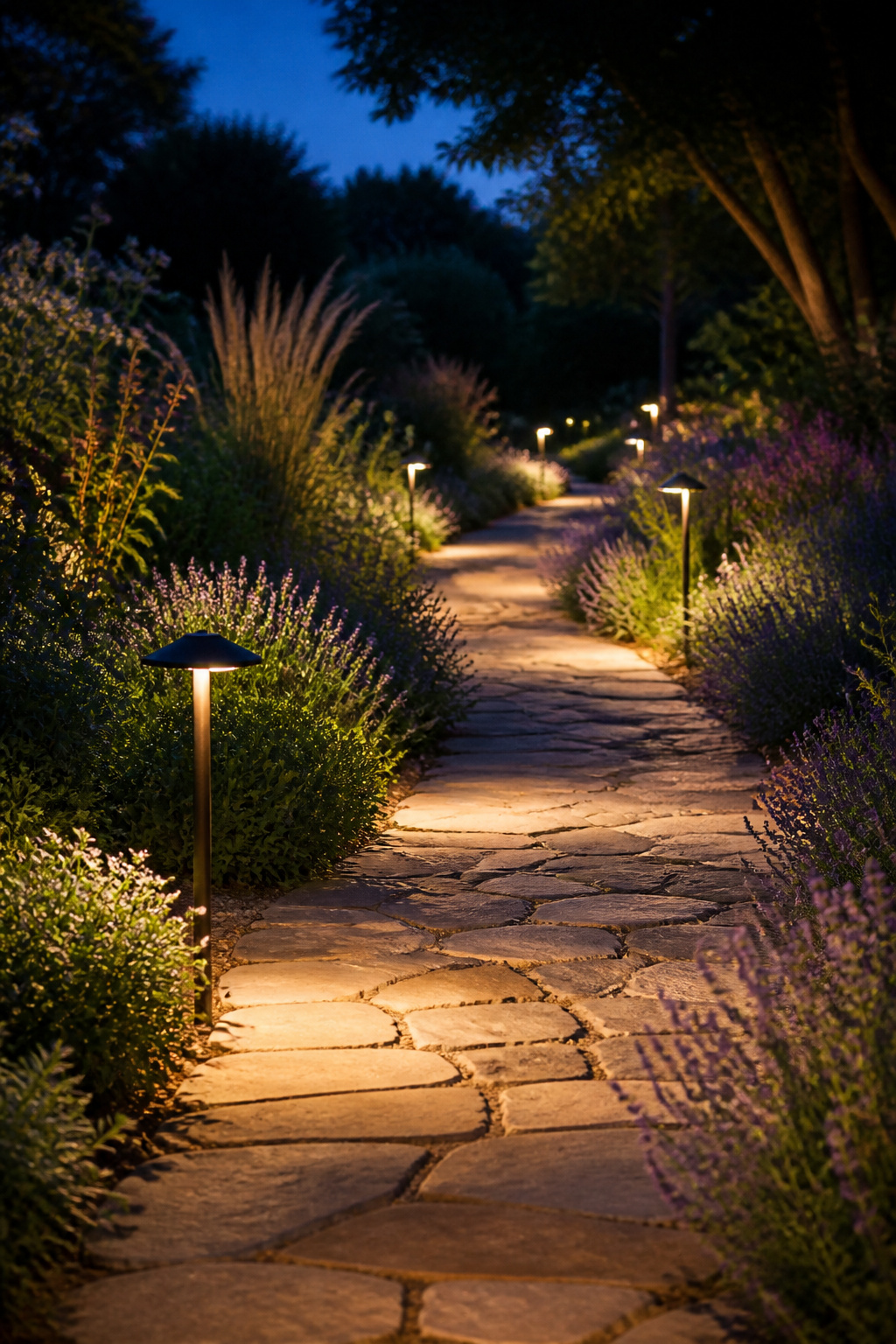
The solar vs. low-voltage decision has a cleaner answer than the marketing suggests. Solar pathway stakes are excellent along a sunny front walkway where six-plus hours of daily sun is guaranteed. In shaded yards or northern climates, however, they underperform significantly. Entry-level solar can drop to 5–15 lumens in poor charging conditions — barely visible after dark. Low-voltage LED (12V, connected to a transformer at an outdoor GFCI outlet) outputs 50–200 lumens consistently. It’s homeowner-installable with no electrician needed and performs identically regardless of weather.
Standard spacing is 6–8 feet between fixtures. Stagger them on alternating sides of the path rather than in pairs opposite each other. The staggered layout reads as natural. The paired placement reads as airport runway. For depth, mix fixture heights: low ground stakes mark the path edge, taller bollard lights address corners, and small LED uplights at the base of nearby trees add a dramatic layer. The combination of heights is what separates pathway lighting from utilitarian to designed.
8. Water Features That Add Sound, Movement, and Calm
Every design element in a yard works on the visual sense. Water features are the only ones that also work on hearing. That additional layer changes how a space feels from the inside in ways that are hard to replicate any other way. A tabletop fountain generates enough white noise to mask a neighbor’s conversation or the low-frequency hum that most urban yards carry. The effect is real: it’s the difference between a yard that feels exposed and one that feels private.
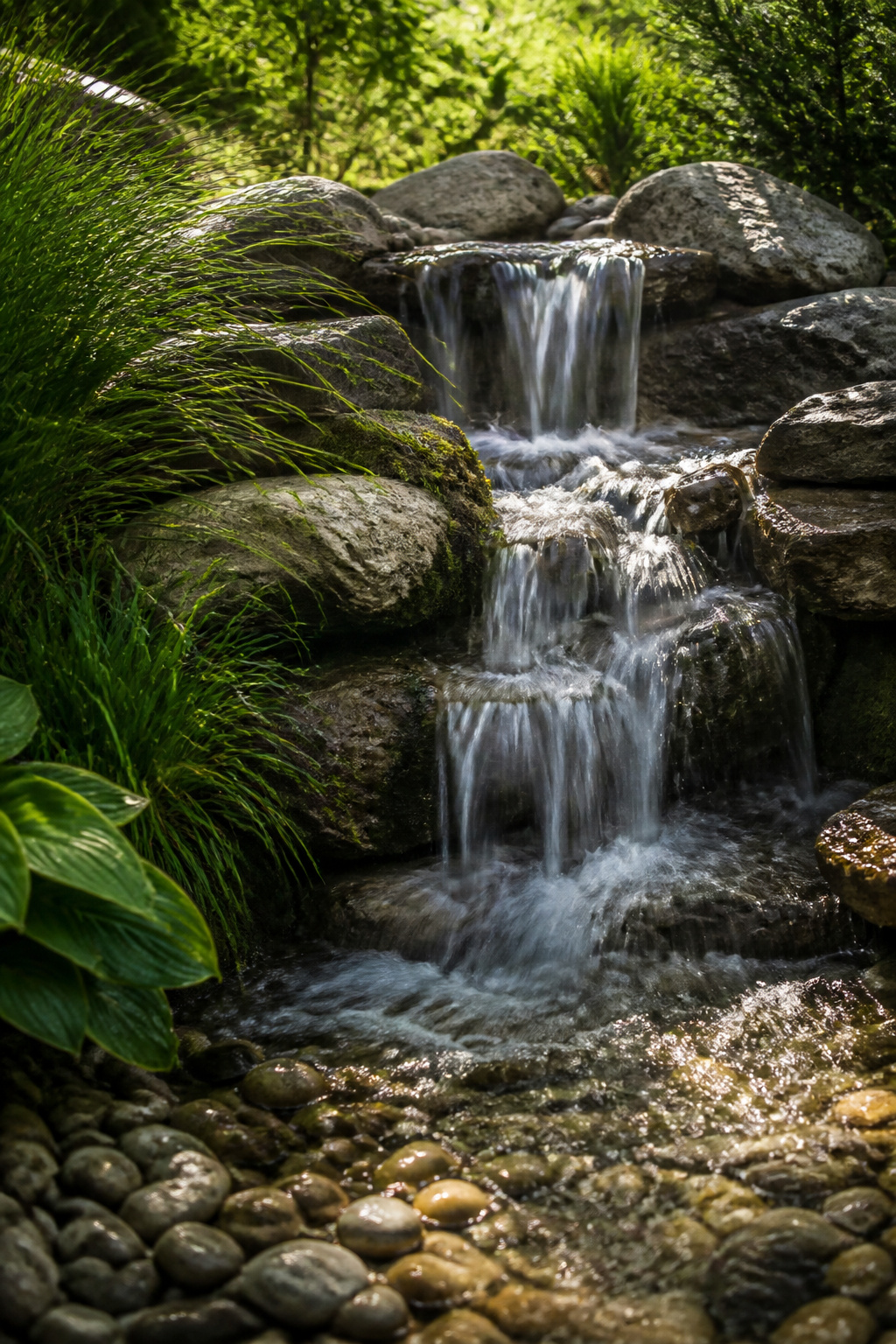
The scale range is genuinely accessible. A self-contained tabletop fountain ($75–300) plugs into any outdoor outlet, needs no installation, and can be repositioned or stored in winter. A pondless waterfall system ($500–7,000 professionally installed) circulates water from a buried reservoir through rock formations and back. You get all the sound and movement of flowing water with no standing pond and minimal mosquito risk. A full in-ground pond (average $2,735 installed) creates the most dramatic visual, but it carries real maintenance costs: weekly skimming in summer, seasonal algae treatment, and pump upkeep adding $300–600 annually.
For tabletop and small self-contained options, the running cost is remarkably manageable — roughly $10–30 per month in electricity. The one maintenance discipline that applies to any water feature: winterize properly in freeze-prone climates. Drain all lines and store the pump indoors. A frozen pump housing cracks, and that’s an entirely avoidable replacement cost.
9. Seasonal Wreaths, Flags, and Entry Accents for Year-Round Yard Decor
A yard that changes with the seasons signals something important to every visitor: this is a tended space, a cared-about space. It doesn’t require structural change. It requires the habit of a seasonal swap — new wreaths in October, garden flags in spring, a fresh planter for the entry in summer. That habit costs less time and money than most people expect.
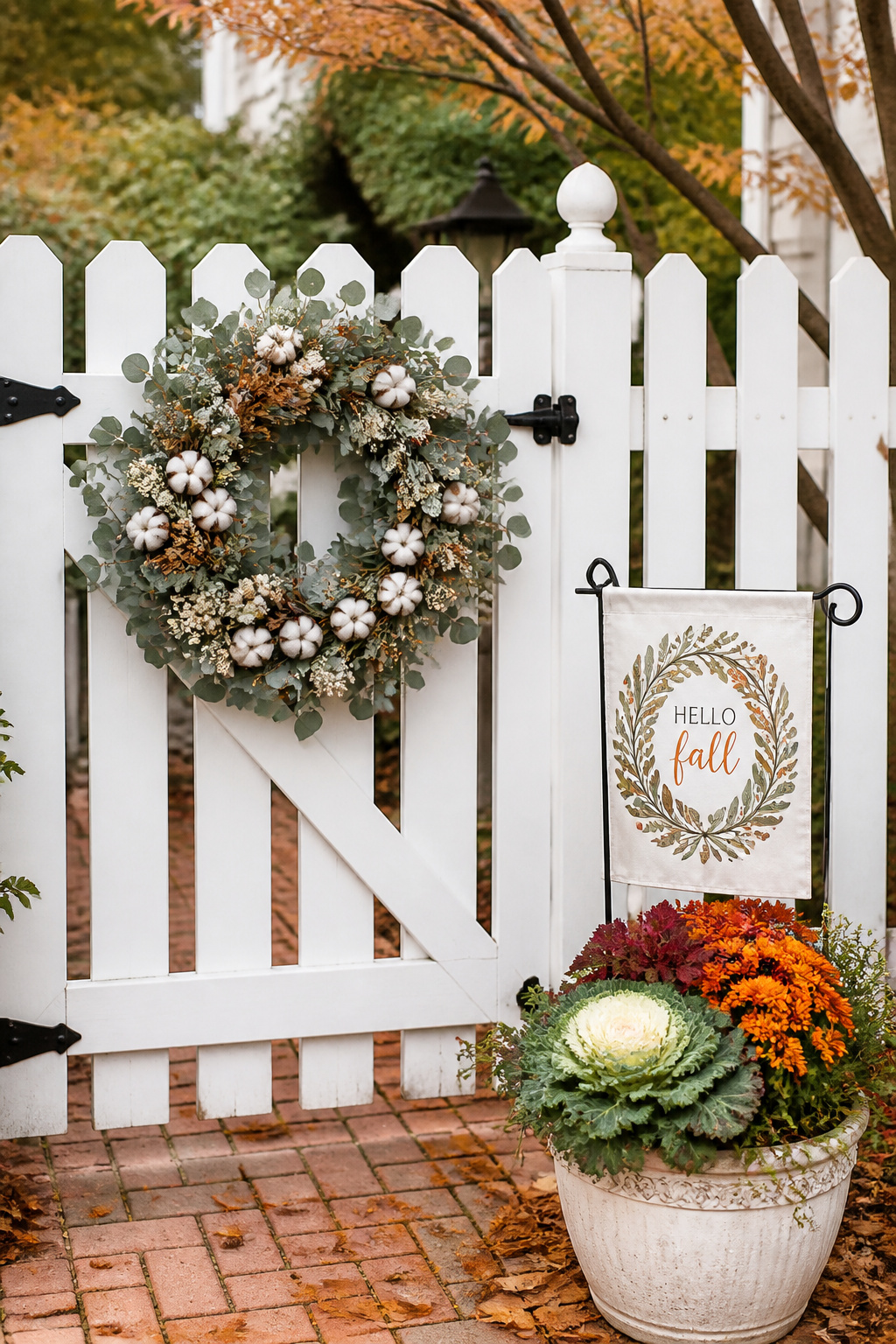
Garden flags at the property edge are the fastest seasonal statement. A two-prong metal stake ($8–15) pushed into the soil beside the front path takes 30 seconds to install. Standard 12″x18″ flags work on a stake; larger 28″x40″ house flags go on a bracket-mounted pole on a porch post. The flag changes with the season. The hardware stays in place year-round. Wreaths beyond the front door extend the seasonal effect into the yard. Mount them on fence panels, hang from arbor beams, or simply drop them over fence post caps. For outdoor use, real dried florals deteriorate in 4–6 weeks. Weatherproof artificial materials — UV-resistant silk, preserved eucalyptus with a resin spray seal, artificial boxwood — are the only viable option for extended outdoor display. For the front entry itself, front door decorations for your home covers the full range of entrance styling that pairs naturally with yard-level seasonal accents.
10. Raised Garden Beds That Double as Yard Decoration and Food Source
Raised garden beds have moved from the vegetable patch into the design repertoire of yards where aesthetics actually matter. The reason is simple: a well-built cedar or corten steel bed brings geometric order to a yard. The clean rectangular frame against the organic sprawl of what’s growing inside is a satisfying visual contrast. It makes the garden look considered rather than random.
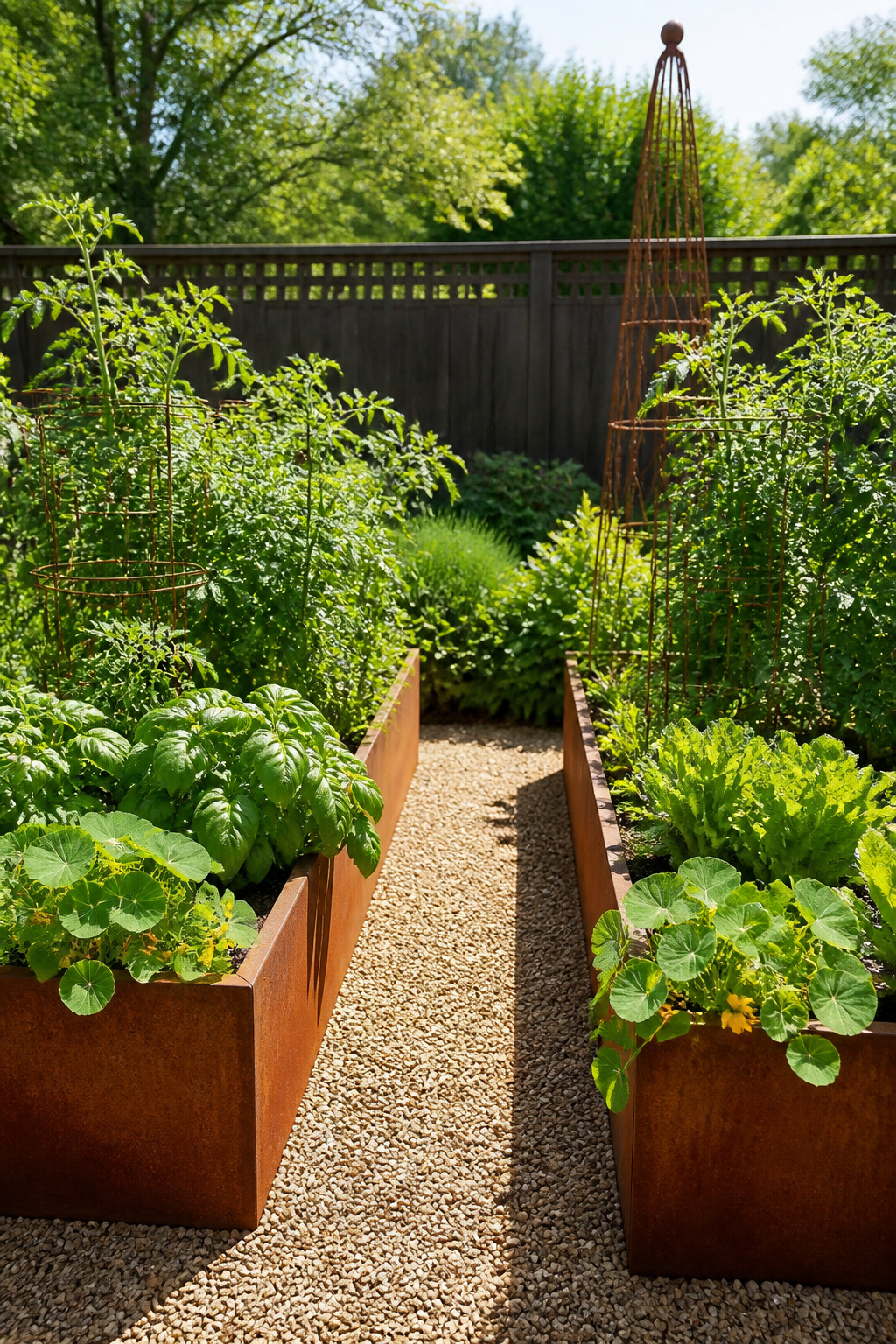
Cedar is the classic choice. A standard 4’x8’x12″ kit runs $80–200. The natural oils in the wood resist rot without any chemical treatment. It weathers to a silver-gray that looks honest in a garden. Expect 10–15 years before it needs replacing. Corten steel is the design-forward alternative — it develops a copper-rust patina in any climate and requires zero maintenance, lasting 20-plus years. The aesthetics are architectural in a way that basic pine boxes aren’t. Cost is higher ($400–800 for a standard bed), but the lifespan math works out. A dwarf lavender border or low ornamental grass edge along the outer frame blurs the hard line between bed and yard. A trellis or obelisk at the back corner adds height and takes the whole setup into yard decor territory rather than just food production. For the plant selection side of things, container gardening vegetables tips offers a solid parallel resource.
11. Vertical Gardens on Fences and Walls for Lush Backyard Decor
The fence is one of the most underused surfaces in any yard. Planted, it transforms from a boundary into a backdrop. A fully planted fence section converts a flat property edge into a living wall. It adds privacy, softens the hard line of the boundary, and in a small yard can effectively double the planting area without reducing the usable floor space below.
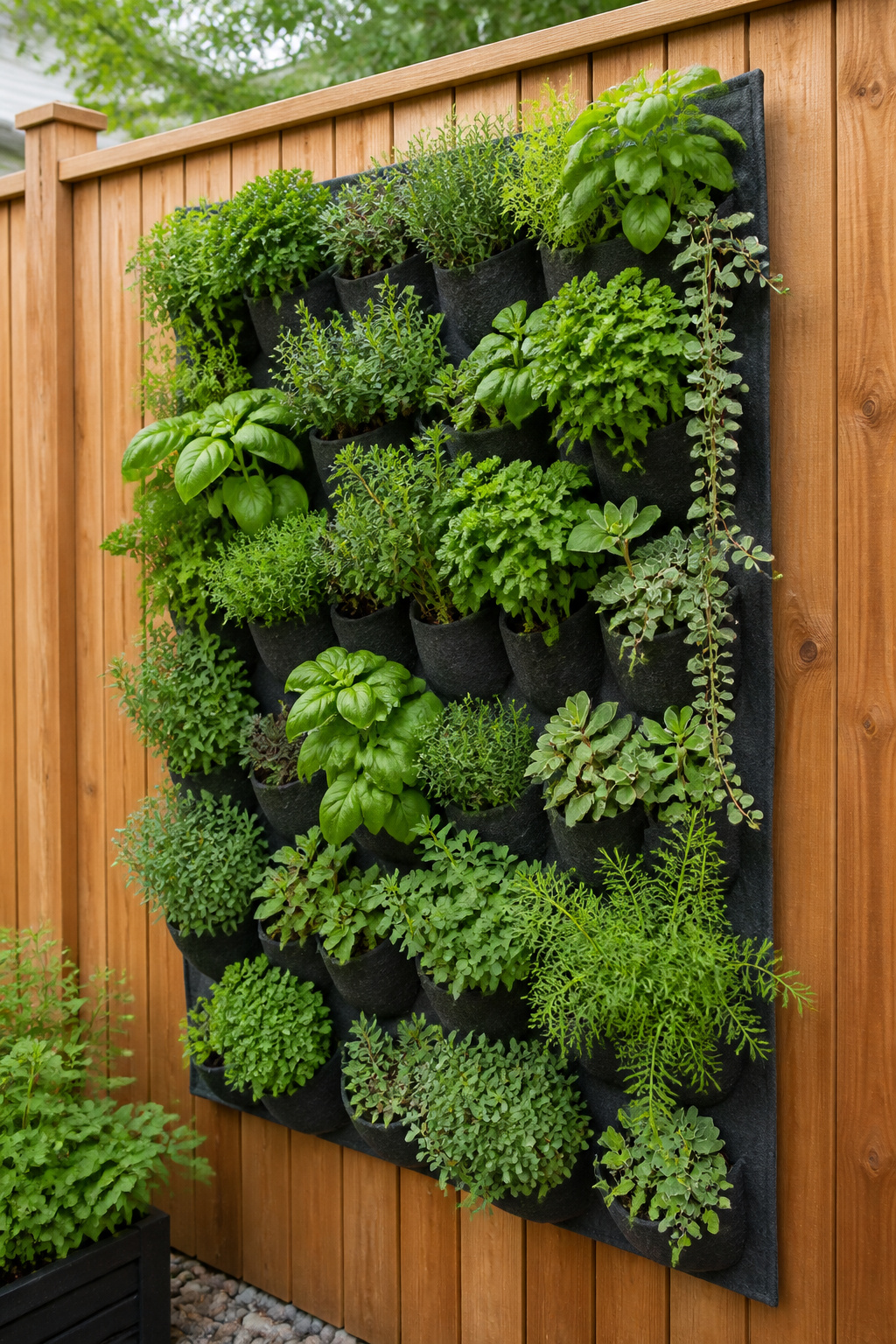
Pocket planter panels — fabric felt systems where individual pockets hold 3–4 inches of root space — are the cleanest-looking solution. Mount them flush to the fence surface, plant herbs or succulents or low sedums, and the result reads from a distance as an intentional green installation. Florafelt and similar systems run $25–80 per panel. For a near-zero-cost version, a single heat-treated wood shipping pallet (look for the HT stamp) leaned or mounted flat creates 15–20 planting pockets. Keep to shallow-rooted plants — the growing depth behind a pallet slat is only 4–6 inches. Also worth knowing: once planted and watered, a full pallet weighs 80–100 pounds. Your fence attachment points need to handle that load. For climbing plants on a trellis or wire grid, clematis and jasmine add fragrance, sweet potato vine provides rapid coverage, and cucumbers or peas bring an edible yield to the visual investment.
12. Outdoor Chalkboards, Marquee Signs, and Personalized Yard Lettering
There’s a particular warmth that comes from walking into someone’s backyard and seeing a chalkboard listing the evening’s drinks. Or marquee letters over the pergola entrance spelling out a family name. These elements do something that plants and furniture can’t: they communicate intention. They say someone thought about the gathering, planned for it, made the space ready.
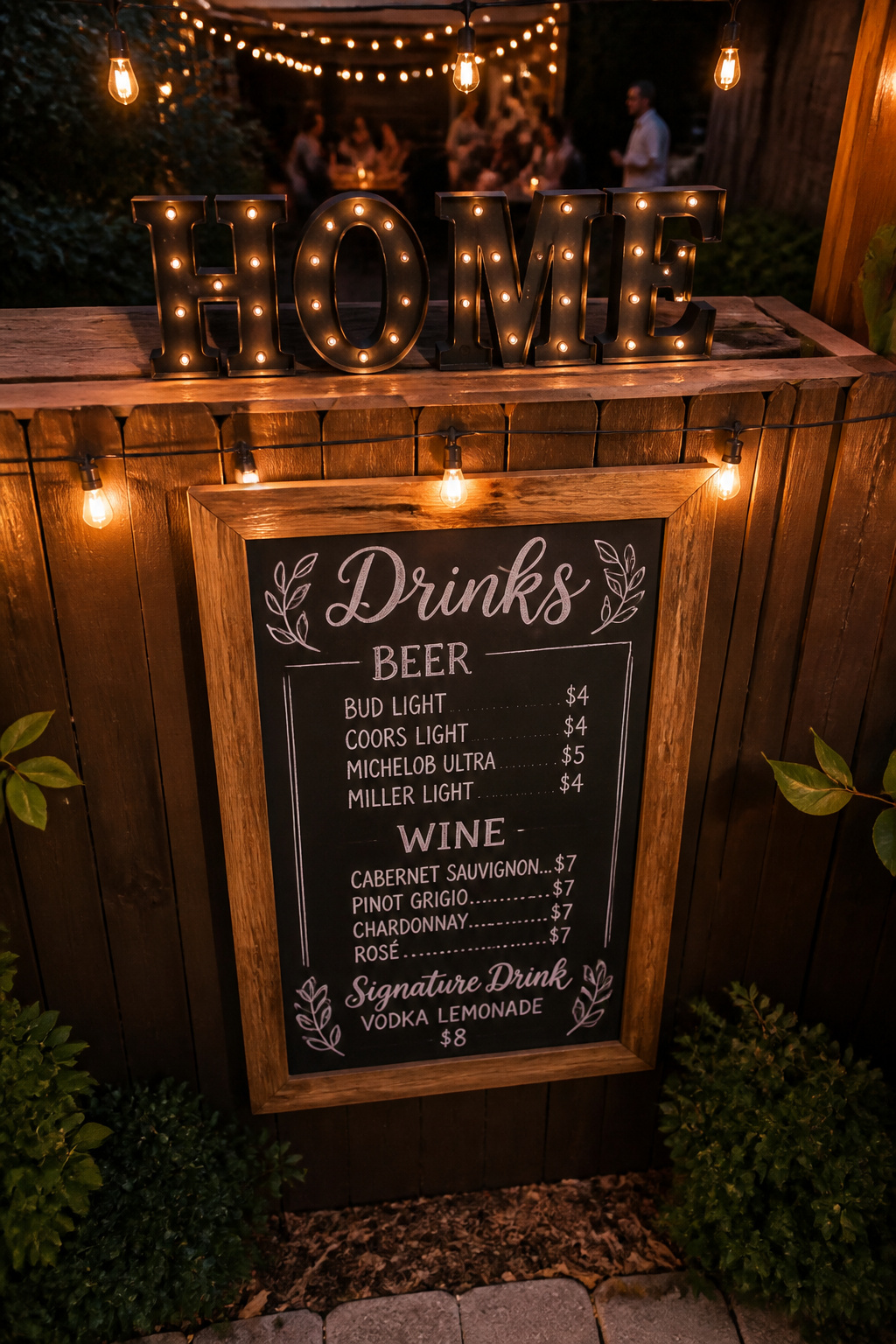
Outdoor chalkboards start with the right material. Interior chalkboard paint blisters outdoors within a season. Always use an exterior-rated formula (Rust-Oleum and Chalk-Tastic both make outdoor versions) applied to marine-grade MDO plywood or pressure-treated board. A finished board framed in treated 2×2 lumber and mounted to a fence or wall is a permanent installation that lasts years. Off-the-shelf weatherproof chalkboard frames in aluminum or treated wood start at $40–80.
Marquee lettering with embedded LED lights is primarily a dry-covered-space item. For full exposure, seal commercial-grade ABS plastic letters with exterior spray lacquer. Alternatively, powder-coated steel letters hold up in rain indefinitely. A 10-inch letter height is legible from 15–20 feet — the right scale for most backyard reading distances. The best placement for yard signage: beside the entry gate, along a pergola beam at seated eye level, or near the outdoor bar where a ‘menu’ format pays off most naturally.
13. Hammocks and Hanging Chairs as Backyard Decor That Gets Used
There’s a test worth applying to any outdoor furniture purchase: will people actually use this, or will it look good in photos and sit empty? Hammocks and hanging chairs consistently pass. They have a gravitational pull that standard chairs don’t. You don’t exactly decide to sit in a hammock so much as find yourself drawn toward it. In social spaces, they create a natural ‘chill zone’ separate from the main seating circle, giving guests a choice between conversation and something more contemplative.
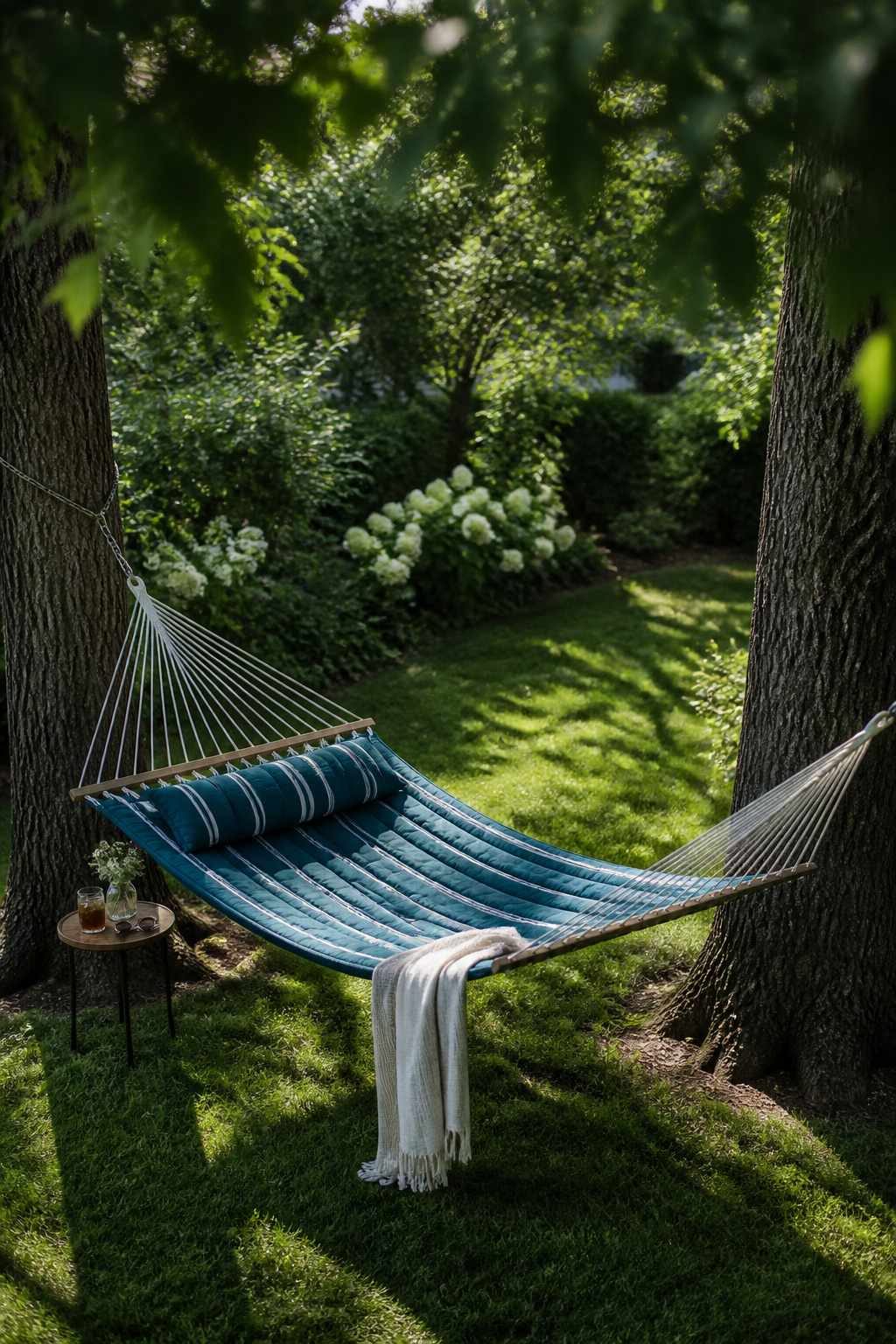
Between trees is the most natural installation. But it requires two mature trees 13–15 feet apart and wide tree straps — 1.5 inches minimum, rated for 9,000 lbs — that distribute the load without girdling the bark. Standard rope tied directly around a living trunk does real damage over a season. For most yards, a freestanding powder-coated steel frame (450–550 lb capacity) is the practical solution. It assembles in 15 minutes and moves when you want to rearrange.
Fabric selection determines how long the investment lasts. Cotton rope hammocks look beautiful but mildew when left wet — store them seasonally. Polyester options are weather-resistant and fast-drying, lasting 2–4 outdoor seasons. Sunbrella (solution-dyed acrylic) earns its premium: 5–10 years outdoors, bleach-cleanable without color loss, fully UV-resistant, with a genuine 5-year fade warranty. For the broader outdoor furniture and patio context, stunning patio decor ideas covers how these pieces integrate into a fully considered outdoor room.
14. Wind Chimes and Kinetic Garden Art That Animates the Space
Every design element covered so far works on the visual sense. Wind chimes and kinetic art are the exceptions — they introduce sound and movement, which operate on a different register entirely. A yard with both visual composition and sensory movement feels alive in a way that even the most beautifully planted static space doesn’t quite achieve.
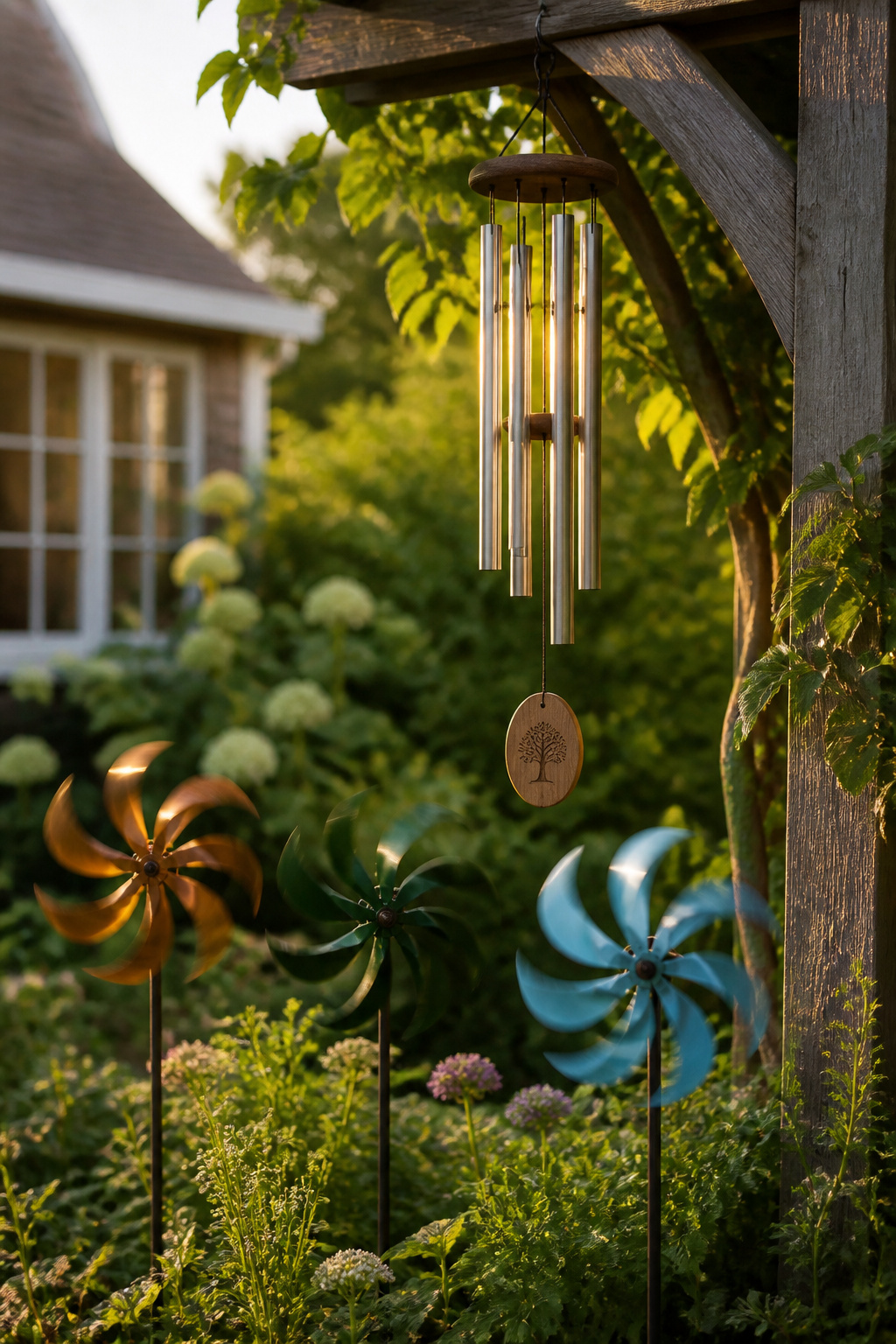
Aluminum is the outdoor material of choice for wind chimes. It produces a clear, musical tone. It won’t rust. And it handles strong wind without structural damage. A quality aluminum chime produces genuinely tuned notes — the kind that stop a conversation for a moment and restart it more relaxed. Bamboo chimes offer a softer, organic, percussive sound. They’re quieter and more neighbor-considerate than metal. However, bamboo weathers poorly in wet climates and should be stored in winter or kept under a covered space. Copper chimes develop a warm patina and produce a deeper, more resonant tone. The trade-off is some durability in high-humidity environments.
Kinetic garden sculptures — powder-coated steel spinners on stakes, driftwood mobiles hung from pergola rafters, folk-art whirligigs on fence posts — add movement the eye catches in peripheral vision. A slowly rotating spinner at the back of a garden bed makes the yard feel in motion on even a still day. They’re also reliably good conversation starters at the $25–80 price point.
15. Outdoor Mirrors to Create Depth and Borrowed Light in Small Yards
Small yards have a problem that more square footage doesn’t fix: the boundaries feel like they close in. An outdoor mirror addresses this more convincingly than almost anything else. A large mirror (30 inches or wider) mounted on a fence reflects the planting in front of it. It creates the impression of a garden extending beyond the property line. The brain processes the reflection as real space — at least in peripheral vision and from a seated distance.
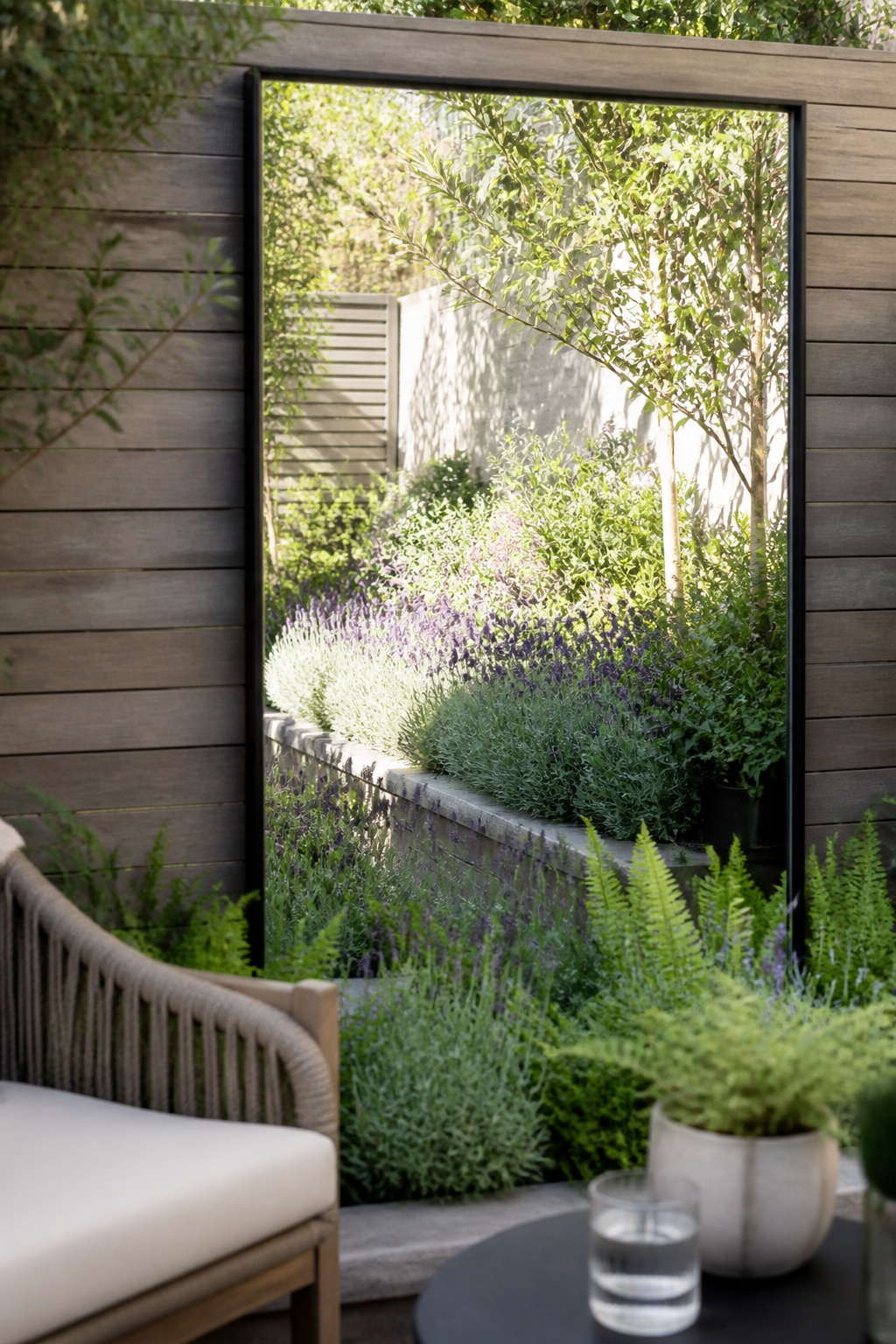
In north-facing or shaded yards, a well-angled mirror can also redirect morning light into dark corners — a functional gain that pairs with the aesthetic one. For materials, standard glass with a stainless steel backing works in covered outdoor spaces. For full-exposure fence mounting, acrylic mirror is the safer choice — 20 times stronger than glass, impact-resistant, and lightweight. It’s available from display suppliers at $15–30 per square foot. Polycarbonate mirror is the premium tier, 200 times stronger than glass with slightly better reflectivity — roughly twice the price of acrylic, and the best option for long-term exposed outdoor use.
Placement rules matter here. Never face a mirror toward direct sun. The concentrated reflection creates a genuine eye hazard and, in dry climates, a fire risk. Place mirrors on side boundaries rather than facing directly into the garden. Also, plant something in front — even a low shrub — between the viewer and the mirror. The planting creates the illusion that the reflection is a continuation of the garden rather than an obvious mirror, which is the effect you’re after.
16. Color-Coordinated Cushions and Throw Pillows: The Easiest Yard Decor Upgrade
If you have outdoor furniture and nothing else has changed, start with the cushions. No other single purchase delivers the visible design change per dollar that a coordinated cushion set does. The same aluminum frame chairs that looked like rental furniture become a considered outdoor room when the cushions shift from builder-beige to a deep teal-and-white stripe with a botanical accent pillow. Every interior designer discusses textiles before furniture when working on a space — the same principle applies outside.
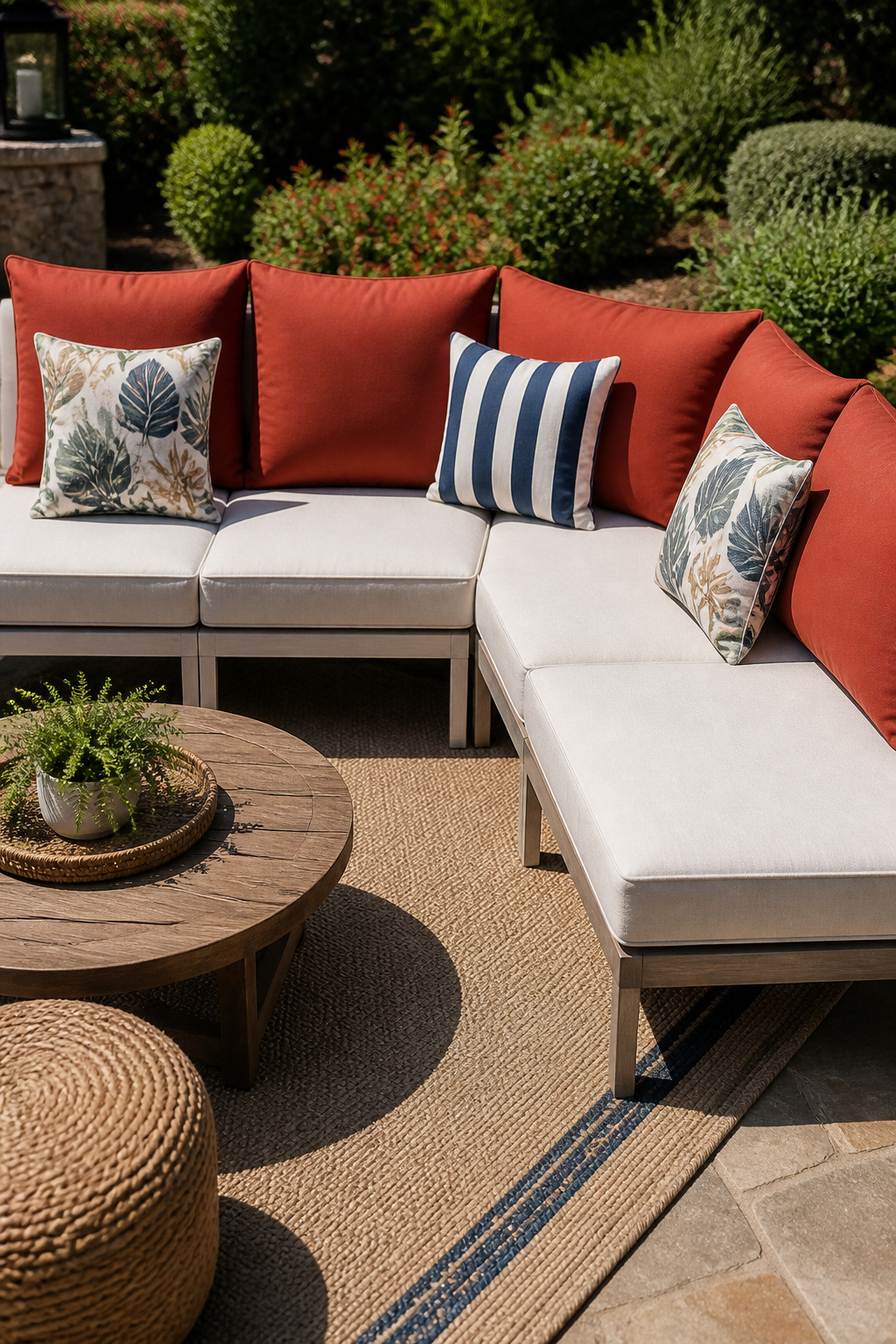
Fabric selection determines whether this investment lasts one season or ten. Polyester is the budget option: fine for a covered porch, but expect noticeable fading within 1–2 seasons of direct sun. Olefin (polypropylene fabric) is the mid-range choice at $30–100 per cushion — fast-drying, naturally water-resistant, 2–4 years of outdoor life, and a 2–3-year fade warranty from quality brands. Sunbrella (solution-dyed acrylic) is where cushions become a long-term investment: 5–10 years outdoors, a 5-year fade warranty, bleach-cleanable in place, and available in hundreds of patterns. The higher upfront cost — $60–200 per cushion — almost always pays back on a per-season basis against replacing cheaper sets every few years.
For building the palette: one neutral, one dominant color, one accent pattern. Mix one solid, one stripe, and one botanical or geometric — three pattern types in coordinating colors. That’s the design-industry standard for a curated-not-matching look that reads as intentional rather than assembled from a catalogue.
17. Decorative Stepping Stones and Pathway Borders That Define the Flow
A yard without a defined path is a yard that visitors feel uncertain in. Where do they walk? Which direction leads to the garden? Where’s the gate? A pathway answers all of these questions before they’re asked. In doing so, it creates the sensation that the yard has been planned from the visitor’s perspective. That’s a significant shift achieved with a few stones and some gravel.
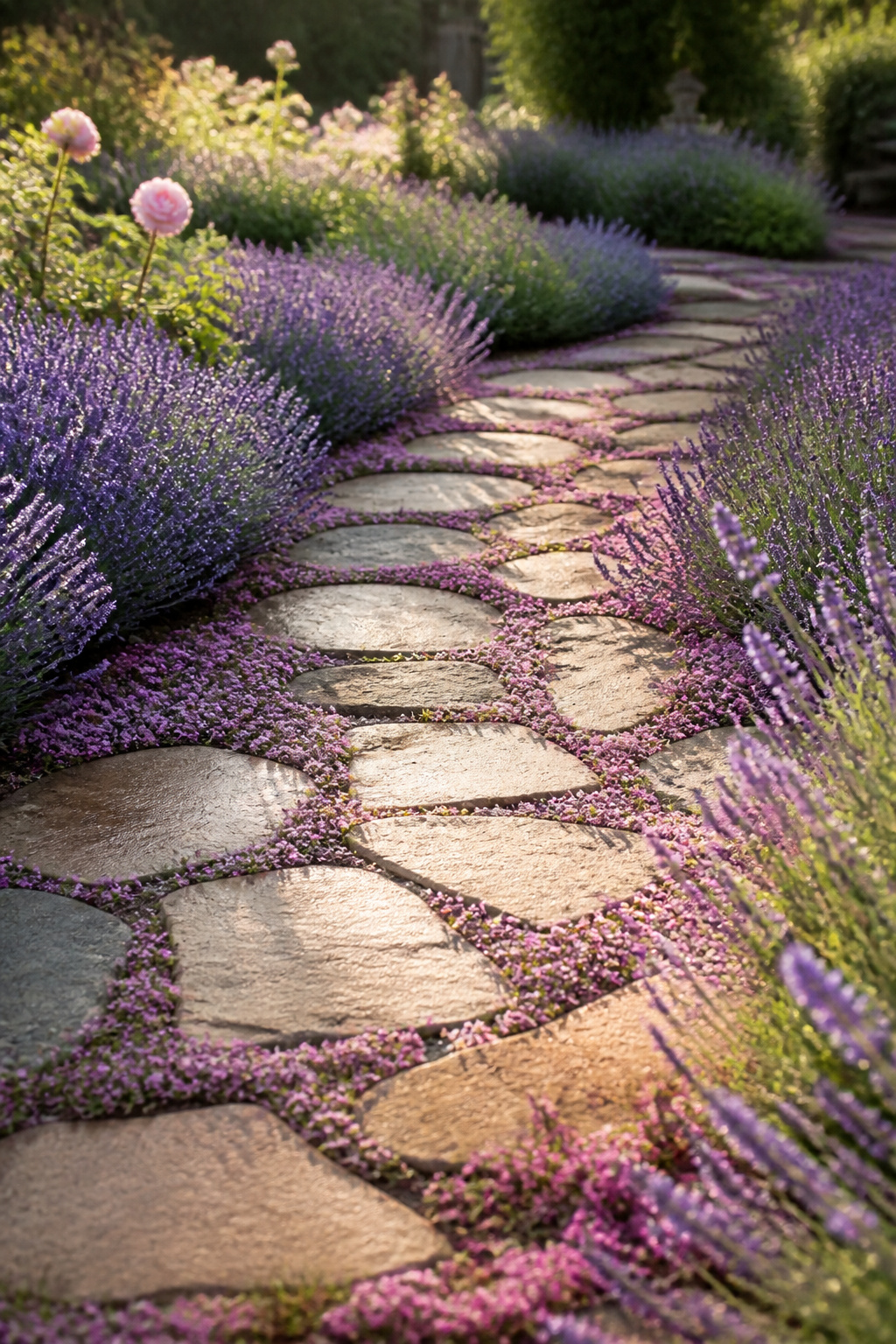
Natural flagstone is the most character-rich option: irregular shapes, each stone unique, organic edges that soften as ground cover plants fill in. Material cost runs $2.50–6.00 per square foot for the stone alone. DIY installation on a four-inch compacted gravel base is achievable for most homeowners over a weekend. Concrete pavers are the more affordable and uniform alternative — $1.50–4.00 per square foot, a huge variety of finishes and colors, and easier to lay in geometric patterns. Reclaimed brick is the warmest option: a herringbone or running bond pattern in warm red brick looks like it’s been there for decades. Source it from a salvage yard at $0.50–$3 per brick.
The border is what turns a path into a design element. Creeping thyme planted between stone gaps is fragrant when stepped on and handles foot traffic well. A low edge of dwarf lavender or ornamental grasses beside the path transforms a utilitarian walkway into a sensory experience. For more hardscaping ideas that complement pathways, creative hardscaping ideas for your backyard covers the structural elements that give a yard its permanent bones.
18. A Painted Fence Mural or Bold Color as a Yard Decor Statement Backdrop
The fence is the wall of your outdoor room, and most people treat it as a boundary rather than a design surface. A painted fence changes everything — not because it becomes the focal point, but because a deeply colored or artfully treated fence makes everything in front of it read more clearly and intentionally. It’s the same principle that makes art look better against a gallery wall than a white one.
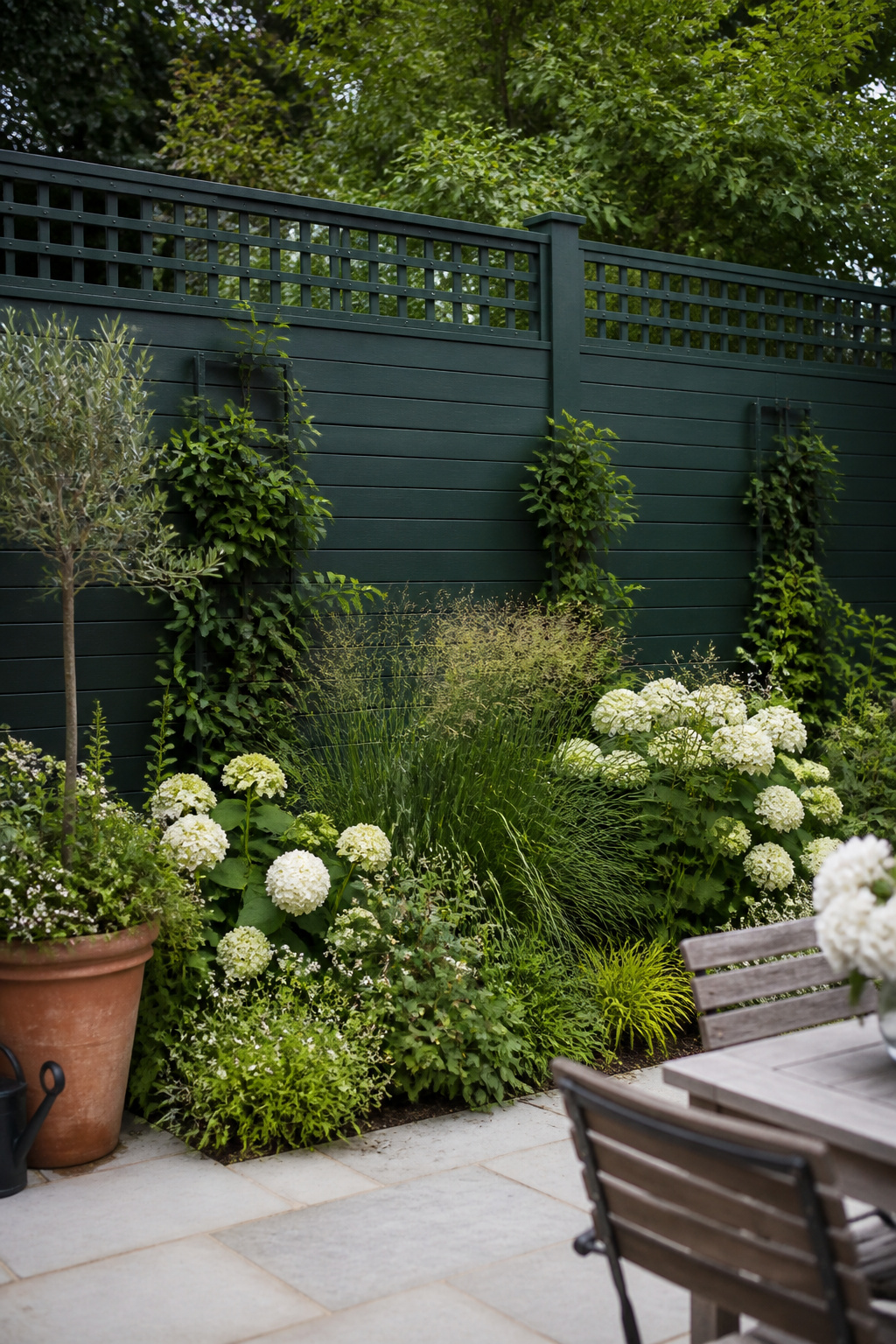
Deep colors are consistently the stronger choice for outdoor fences. Dark charcoal, deep navy, and forest green all recede visually and push the plants and furniture in front of them forward. Colors frequently cited in landscape design: Sherwin-Williams Urbane Bronze, Benjamin Moore Newburyport Blue, and virtually any deep sage from Farrow & Ball’s exterior range. The effect on perceived space is immediate — a dark fence makes the green of plants look more saturated and everything in front of it look more deliberate.
Prep is what separates a paint job that lasts from one that peels in eighteen months. For wood: clean with a wood brightener, sand rough surfaces, apply exterior primer, then two coats of 100% acrylic latex exterior paint. For vinyl: a bonding primer is non-negotiable — Insl-X Stix is the industry standard — followed by epoxy-based acrylic that flexes with the vinyl’s expansion and contraction. Murals are more accessible than they sound. Color-blocking with painter’s tape — two or three geometric zones in complementary colors — requires zero artistic skill and reads as contemporary from across the yard. Nature motif stencils are available for $15–40 and produce convincing results from an afternoon’s work. The fence as canvas is one of the highest-impact, lowest-cost changes on this entire list.
How to Layer Your Yard Decor for a Space That Feels Designed
The difference between a yard that looks designed and one that looks accumulated comes down to sequence and restraint. Start with the bones: lighting first (string lights or pathway stakes define the space after dark before anything else does), then a surface (a rug or paving creates the floor of the outdoor room), then one focal point — a fire pit, a water feature, a statement planter. Only once those three elements are in place do accessories like cushions, garden art, and seasonal wreaths have a frame to work within.
Restraint matters more outdoors than indoors. One focal point per defined zone — not three competing ones. A palette of three colors (two neutrals, one accent) running consistently across cushions, planters, and decorative accents ties the space together without looking over-planned. When in doubt about whether a new piece earns its place, the test is simple: stand at the yard’s entry and look in. Does the potential addition draw the eye helpfully, or does it add noise to an already busy view?
The yards that feel best to be in aren’t the ones with the most objects. They’re the ones where every choice was made with the gathering in mind — where the lighting encourages people to stay past dark, where the seating invites conversation, where something moves in the breeze and makes the space feel alive. That quality is what these 18 yard decor ideas are pointing toward.